
People who haven’t been a prairie manager (or any kind of land manager) often don’t understand everything that goes into the job. There is, of course, a lot of arduous fieldwork, including tasks like prescribed burning, mowing, fencing, invasive species control, seed harvest, and much more. Doing that kind of work well takes a lot of skill, and I don’t want to downplay that. However, because of the complexity of ecosystems and the challenges of restoring and maintaining them, it’s really the cerebral part of land management that is most important.
The strategic, intellectual aspects of land stewardship are probably underrecognized because they are literally less visible. You can photograph and share images of someone using a drip torch but you can’t photograph them devising a new way to minimize the impacts of an invasive species or rethinking a grazing approach that isn’t working as expected. As a result, many people (including employers) have a very limited mental image of what a land steward should be, especially in the Great Plains. That image is often of a stoic burly man who grew up on a farm or ranch, knows his way around engines and other machinery, and is an avid hunter and fisherman.
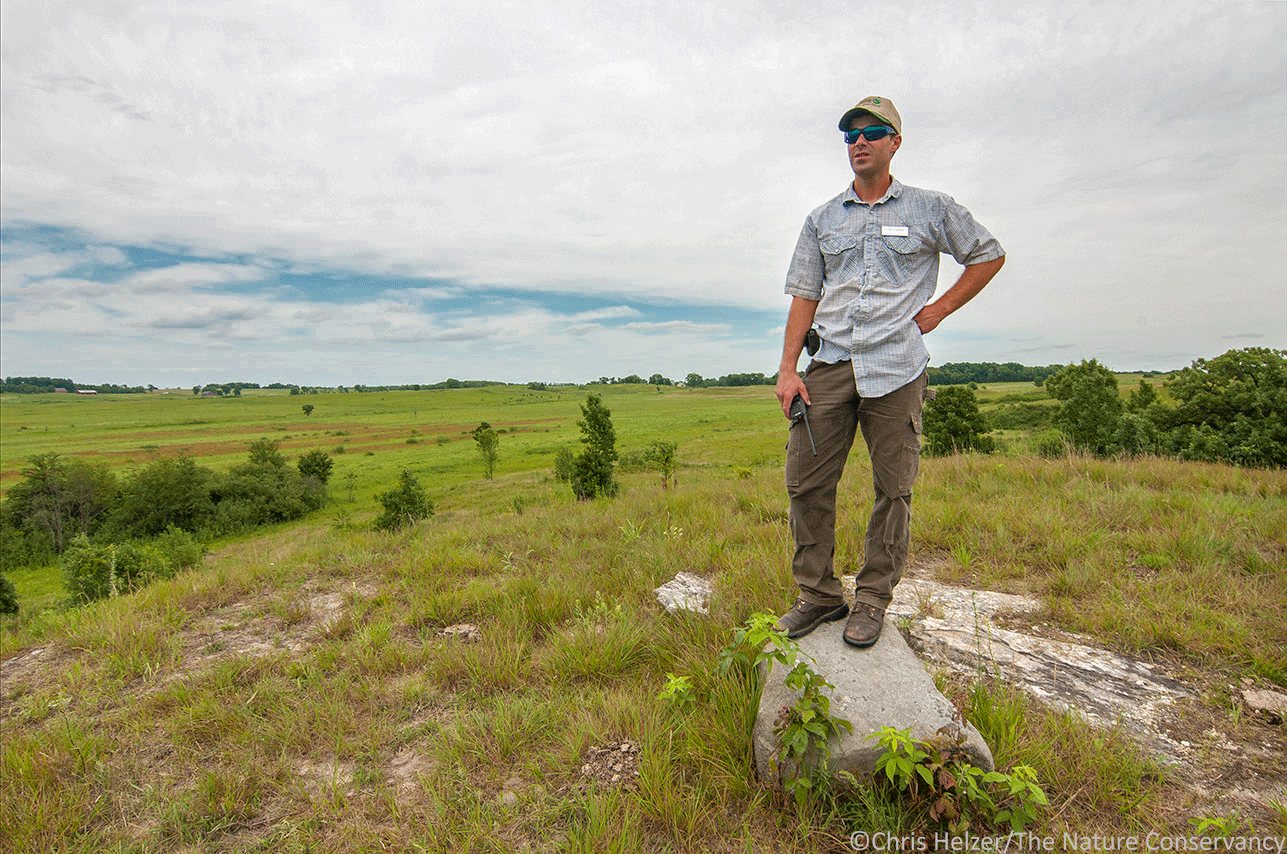
There are multiple problems with that image, of course. First, it’s unfair to stoic burly men who might have a lot more to them than just aptitude with a wrench and a nice bass boat. More importantly, however, it contributes to unfair, limited, and dangerous limitations on the kind of people who appear to be good fits for a career in land stewardship. Not only does it affect the way employers evaluate potential employees, it also restricts the number and kinds of people who aspire to be land managers.
I know lots of excellent prairie managers who aren’t men, burly, or stoic. Many (gasp!) don’t even hunt or fish. Regardless, they are really good at their jobs and we need more like them. To be fair, I also know some stoic burly men who are really good at their jobs and deserve more credit for their intelligence and creativity. In an attempt to help inspire future prairie managers and celebrate the good ones we already have, I’ve tried to describe (below) the kinds of traits I think are found in good land stewards. I also hope this will be helpful to those who hire and supervise land stewards and lead to a more diverse and effective workforce.
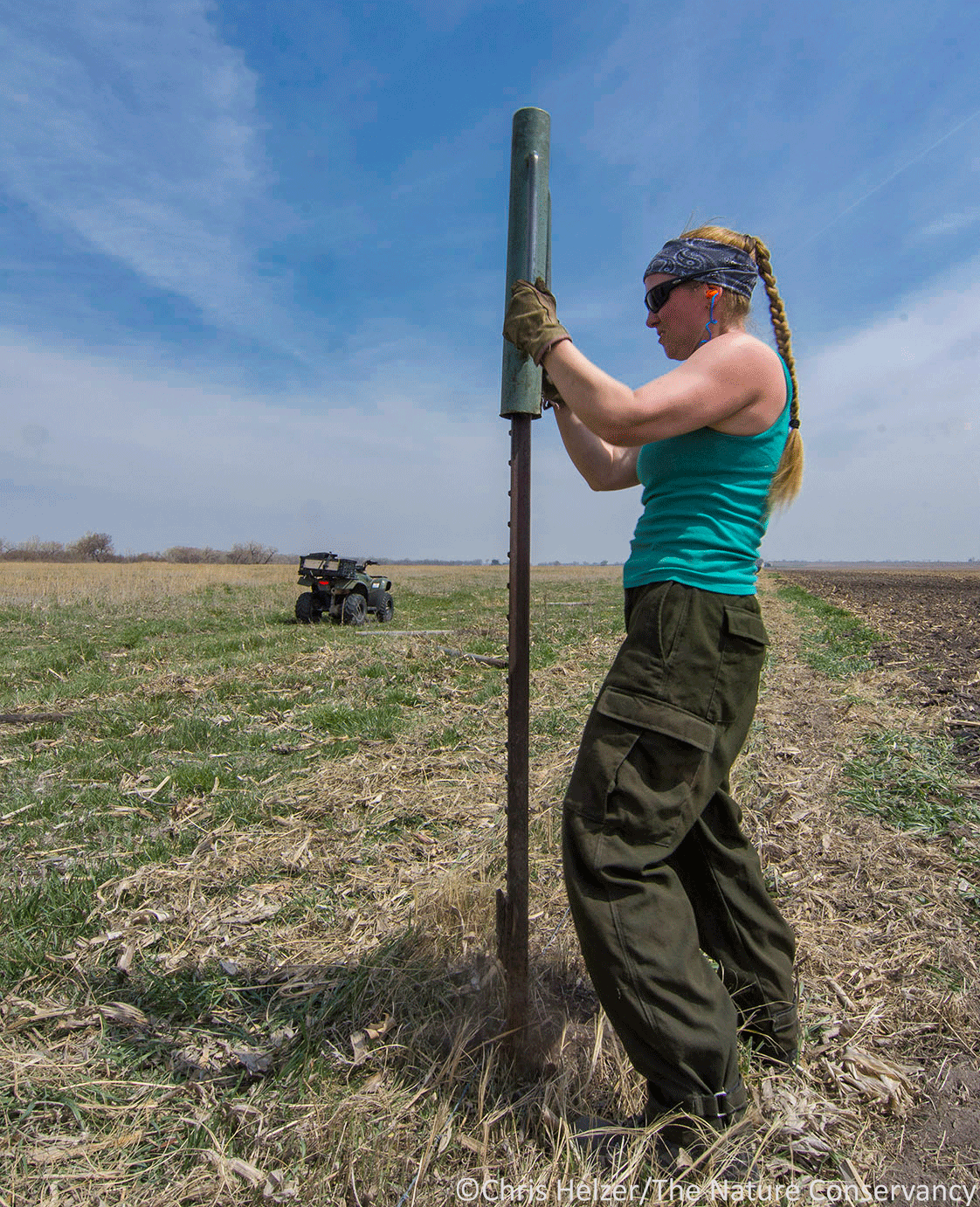
Prairie management starts with prairie ecology. A land steward needs to understand as much as they can about the ecological communities they’re working with. They need to recognize many of the species in those communities, but also how those species interact with each other and with changes in habitat and weather patterns. A formal background in biology and ecology helps, of course, but the most important training occurs through observation. Quality is as critical as quantity here – it’s not just how many years you’ve been working in prairies that matters, it’s how closely you’ve paid attention.

Gaining natural history knowledge takes time, but it can be sped up considerably if someone has access to mentors who can share their knowledge and experience. Even with access to mentors, however, most ecological knowledge is picked up through personal experience. That experience includes spending abundant time exploring and observing prairies, as well as looking up information on the species seen in the field. Some of that can happen while spraying weeds or fixing fence, but it also requires time dedicated simply to exploration.
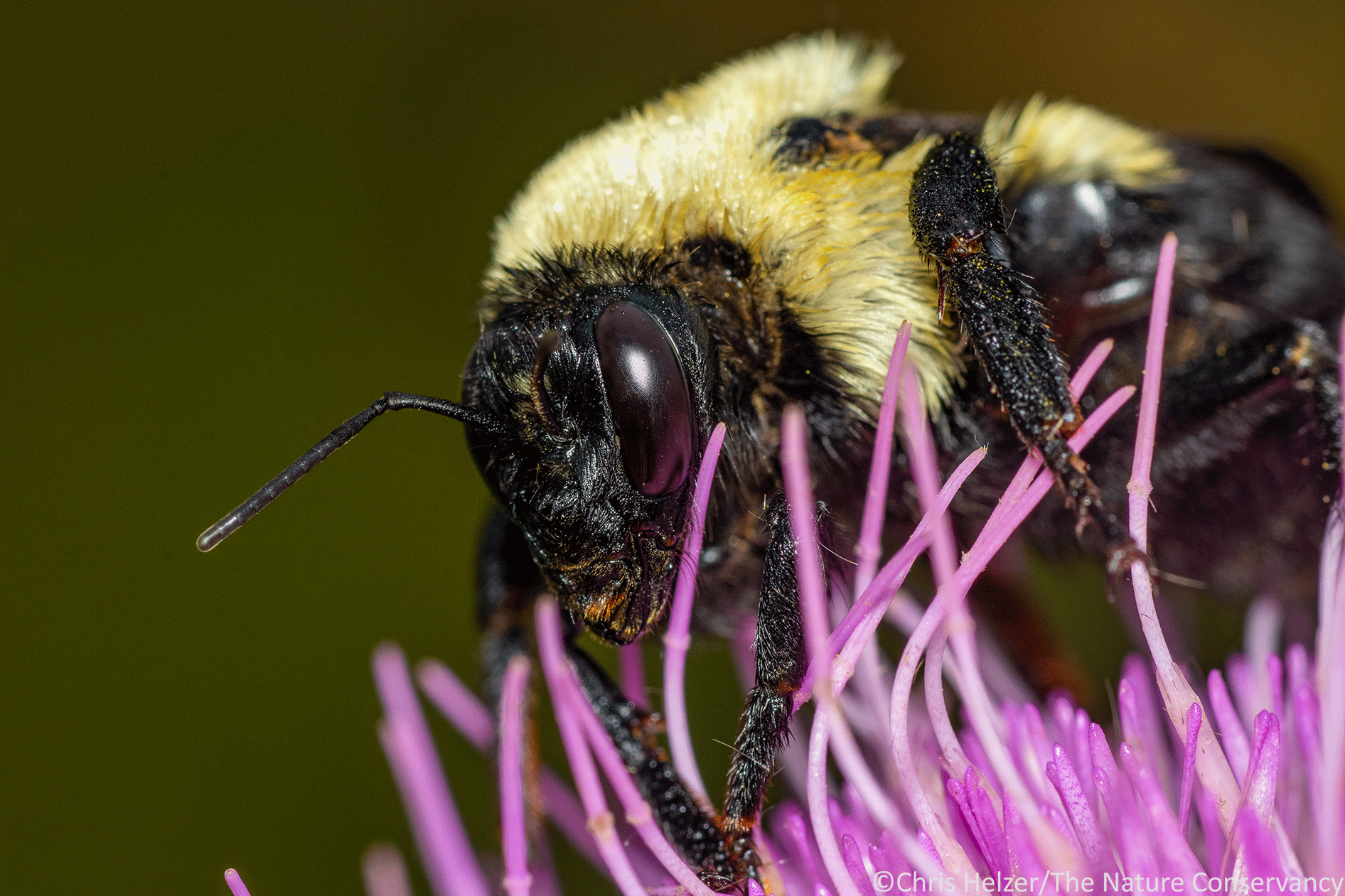
A good foundation in natural history allows a manager to predict how species and communities will respond to management treatments. That ability to predict responses is key to being able to devise and adapt plans for how and when to employ prescribed fire, grazing, mowing, and other treatments. It might be the most difficult skill to develop among land stewards. Here is a short list of the kind of responses prairie managers have to think about as they consider a particular action:
- How will the competitive balance shift within the plant community? What plant species will thrive and which will be stressed? Which will bloom, and in what abundance?
- How will habitat structure look? Which animals (large and small) will respond positively and negatively to that habitat structure?
- What kinds of interactions will take place because of changes in abundance/vigor of affected species?
- What are the short-term and long-term consequences of each occurrence? What will need to happen to allow stressed species to recover and how long will that take?
The more management treatments someone sees, the better they get at recognizing and predicting responses. Because of that, the best managers take every advantage they can to experiment. If a steward is planting prairie, they might try a different seed mixture or planting technique in a few small places to see what happens. If they’re using fire or grazing, they’ll include small patches where fire or grazing is excluded to provide a comparison. Alternatively, they might burn or graze one patch one way and try a different approach in other patches. There are countless ways to obtain more data points and speed up a manager’s learning curve.
In order to maximize that learning curve, it’s also important to set clear objectives and then assess whether those objectives are being met through various approaches. That may seem really obvious, but it’s surprising how many managers struggle to verbalize exactly what they’re trying to achieve (both short term and long term) with their current management or restoration strategies. Are they managing for a diversity of birds or the abundance of particular species? Trying to maximize plant diversity or ecological resilience? Just hoping to make through the next few years and retire?

Once a manager has specific objectives, they can define the specific outcomes or metrics that will tell them whether or not they’re succeeding. That might involve collecting some data, but it doesn’t have to. Sometimes measuring success can be as easy as walking around with a critical eye to see what happened and taking some notes for later reference. I’ve written much more on monitoring in previous posts, so I won’t belabor it here. The key point is that good managers know where they’re trying to go and are always checking to see whether they’re headed in the right direction.
While a lot of land management is repetitive manual labor (cutting down invasive trees, harvesting seed, fixing fence, etc.) the most important work – and what sets the best managers apart from the rest – relies on observation, creativity, and strategic thinking. Good stewards have an understanding of natural history, an ability to predict how various management approaches might work, and devise and test strategies experimentally. Prairie management is full of challenges and those challenges are ever-growing. We need smart, innovative people to meet those challenges on both private and public lands. That can certainly include some stoic burly men, but we have to expand that profile if we’re going to be successful.
…
This has already been a long post, but if you hire or supervise land managers and you’ve read this far, here are a few last thoughts for you:
- Be thoughtful about job descriptions and work plans for your land managers. In some situations, a lot of the manual labor of land management could potentially be done by contractors or technicians, freeing up your land managers to have time for the more important aspects of their job – the aspects that can only be done by a real land steward with the qualities described above.
- Be open minded about what a land manager can look like. That includes sex, race, and other demographics, of course, but also skillsets. Make sure you’re not overly limiting who is qualified because they might have a different mix of skills than who you’ve hired in the past. There are many ways to build an effective land management team (see first bullet).
- Work with stewards on strategic planning. When buried by work, it can be hard to step back and think strategically about how best to deploy resources. Make sure they’re putting together short and long-term work plans that lay out objectives, strategies, and metrics.
- Encourage land managers to take the time to explore and be curious. Allowing them to grow as naturalists and ecologists will make them more effective stewards, but will also keep them motivated and energized. Make sure they have the time to explore and learn, as well as your explicit permission to do so.
- Encourage (force?) land managers to take the time to visit other sites and exchange ideas with other managers. It’s really easy to focus on the work in front of them, but it is invaluable to see what others are doing and brainstorm with their peers.






 The Prairie Ecologist