
Here are some photos from the last several weeks that I haven’t yet shared here – though a couple of them have showed up on my Instagram account, for those of you who follow me there (@prairieecologist). Speaking of shameless plugs, I appeared on a podcast released earlier this week by ‘The Good, The Bad, and The Science’. On the episode, I was paired with comedian Greg Proops (‘Whose Line is it Anyway’) as we and the host discussed/reviewed the Discovery documentary Attack of the Murder Hornets. You don’t have to have seen the documentary to listen to the podcast – we talked about the Asian giant hornet, but also a lot about bees, the relationship between people and nature, and – for some reason – horse racing. I really enjoyed the conversation, and was especially impressed with Greg and his thoughtful perspectives.
Here are some recent photos and some accompanying commentary that probably goes on a little too long.
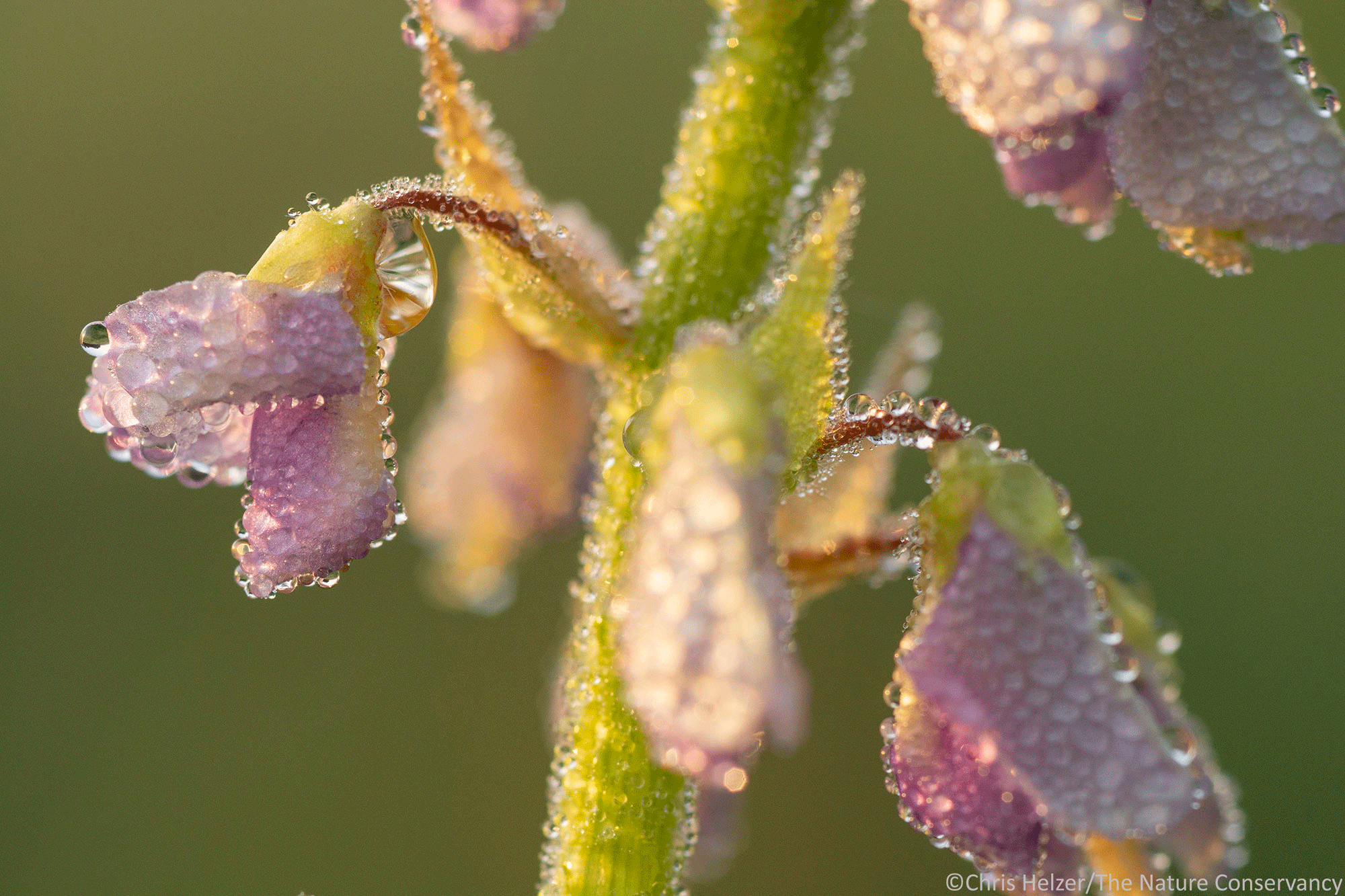
The Illinois tickclover photo above was taken back in early August. That species has mostly ripened its seeds by now, which means every trip to certain prairies takes some forethought about clothing choices. The little Velcro-like envelopes around the seeds stick to almost everything, but cotton or other clothing with any kind of slight ‘fuzzy’ texture is especially vulnerable. I also have to factor in extra time to scrape/pick seeds off my clothes, either before leaving the site or after getting home. If I miss any and put clothes through the laundry, the seeds either stay attached or end up on other articles of clothing in the same load.
Despite the logistical challenges of hanging around the species, it really is a wonderful plant. It doesn’t often bloom in prairies being actively grazed, so I see it most in small ungrazed prairies like Lincoln Creek Prairie here in Aurora, or along roadsides or in parts of our Platte River Prairies that aren’t currently exposed to cattle grazing. A few years ago, I found a patch of these plants at Lincoln Creek Prairie that seemed to have caught numerous insects on their fuzzy stems. It looked like some kind of a sticky substance was being exuded by the plant (through the hairs?) and the result was lots of dead bugs of multiple kinds that got stuck and died. Each year, I look for that again – both on the same patch of plants and elsewhere – and I have yet to see it. Very curious. Has anyone else seen this?

I can’t seem to walk past a praying mantis without trying to photograph it. The one above was no exception. It was hanging upside down and covered in dew during an early morning walk at Lincoln Creek Prairie and the light was just right. How am I supposed to pass that up? You can’t see Lincoln Creek Prairie through its eyes, but you can see a lot of it through the big dew drop on its eyes!

Sideoats grama is another species that’s hard for me to walk past without stopping. It’s a tricky one to photograph if there’s any kind of breeze, and depth-of-field becomes a real issue if I want to have a clean background but still get most of the flowers in focus. In this case, the long flowering stem had become lodged between a couple neighboring plants, holding it pretty steady and mostly horizontal. I positioned my tripod so all the flowers were the same distance from my lens, and got low enough that everything in the background was far enough away to fade into a smooth blur. I have many many sideoats photos, but I guess I’ll just keep building that library. For some reason.
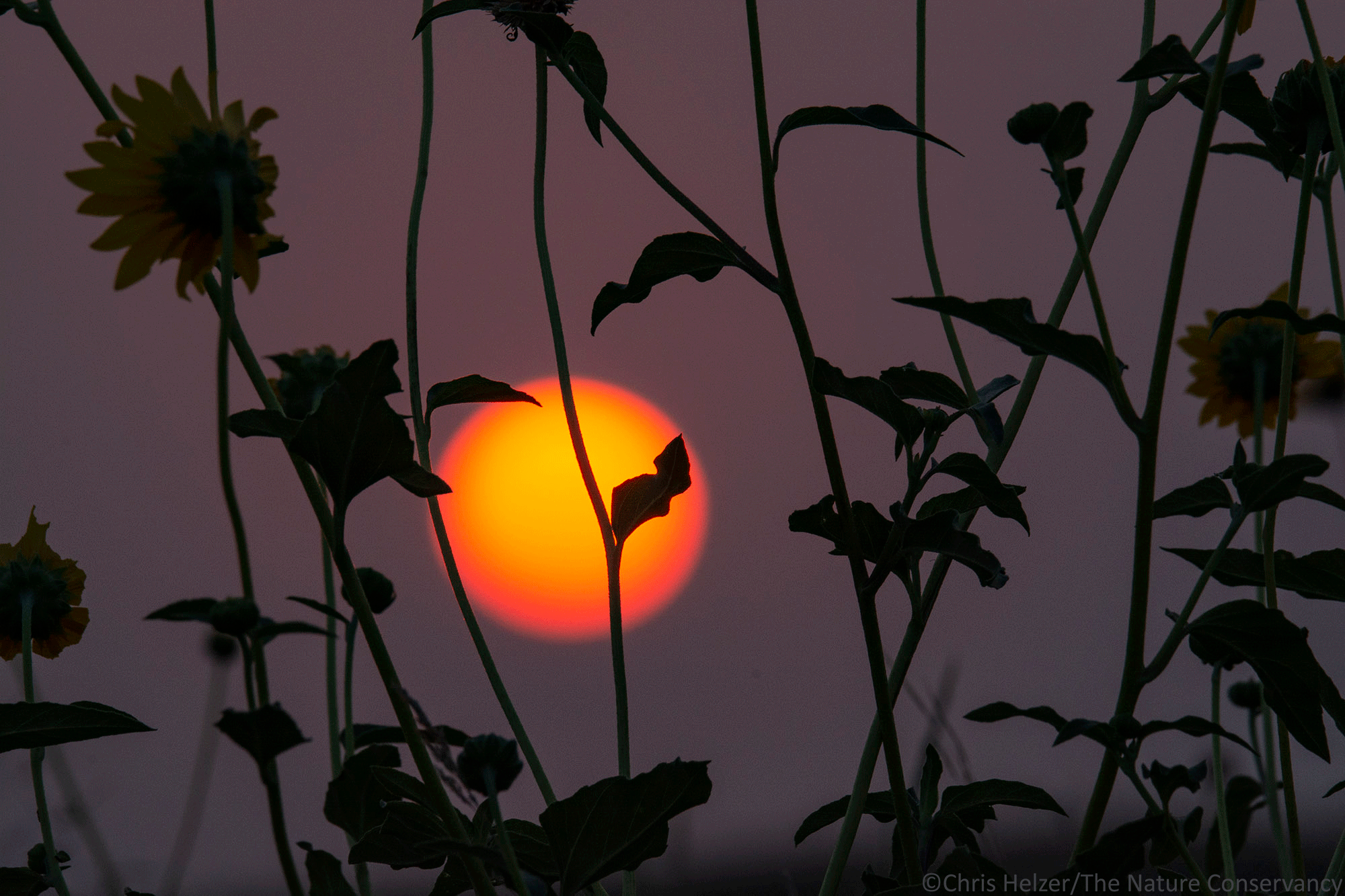
The sunrise photo above was taken in the small range of sandy hills at the Platte River Prairies. I was having trouble finding something to put in front of the sun and fell back on my regular crutch of sunflowers. I took several photos that prominently featured a sunflower head with the sun right behind it or next to it, but this more abstract image ended up being my favorite from the day.
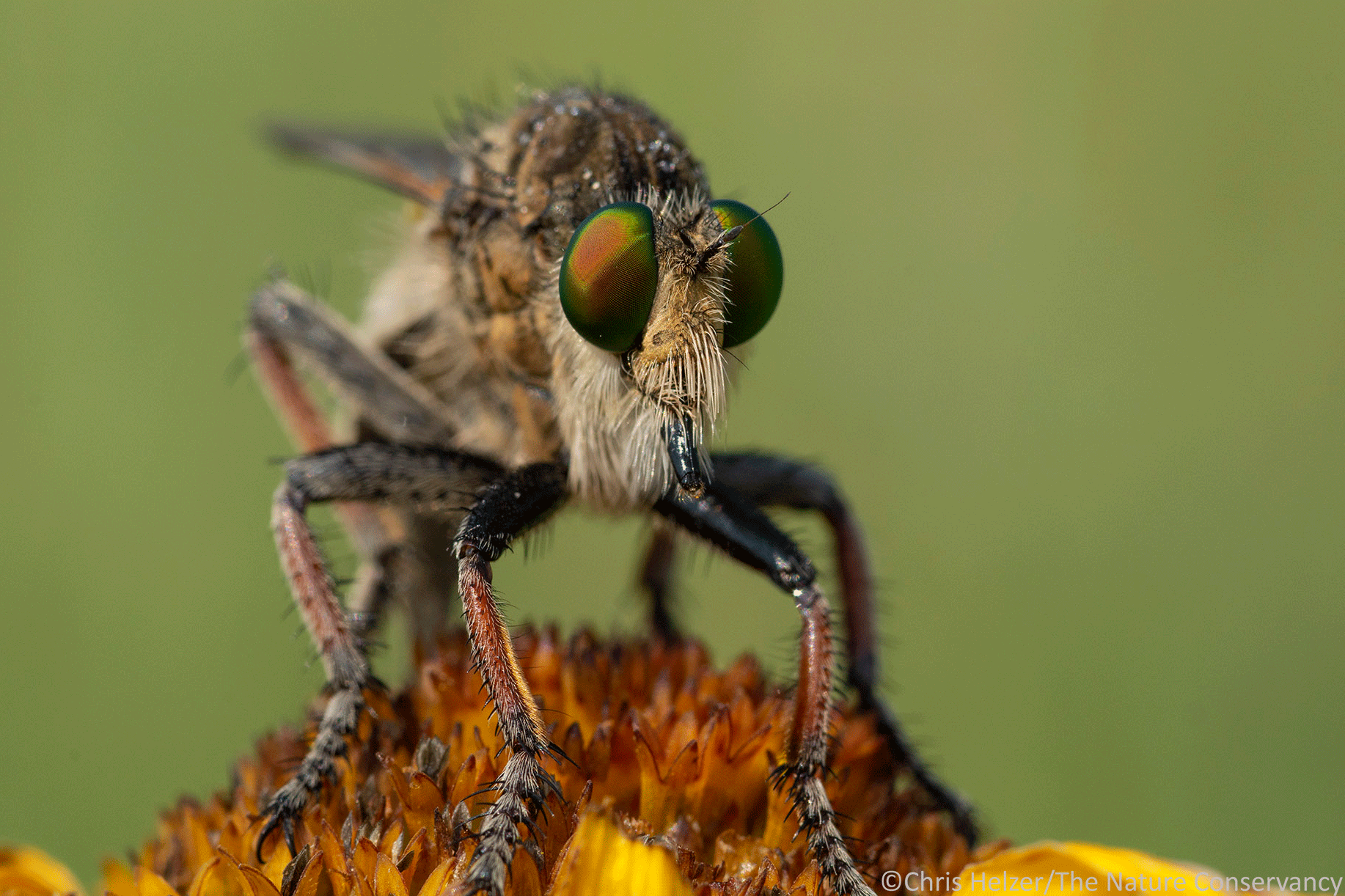
I see a lot of these big green-eyed robber flies this time of year, but this one was perched on a stiff sunflower and seemed to be laying eggs in it. I’d never considered that robber flies might lay eggs in flowers since their larvae are predators in the soil. This one certainly appeared to be doing that, though, moving in a slow circle and repeatedly curving her abdomen so the tip touched the flower. I looked this behavior up when I got home and found that it’s a thing with a least some robber fly species. They seem to target species in the sunflower family (Asteraceae), but the larvae still drop to the soil after hatching, so I wonder why they put the eggs in flowers instead of into the soil?
When I saw this one from far away and noticed what it seemed to be doing, I wanted to be sure I got a photo without scaring it, so I started by photographing it from a distance with my 400mm lens. After I got a couple decent shots that way, I switched to my macro lens and started creeping closer. As it turned out, I needn’t have worried – it was so intent on its activity that it didn’t pay me any mind. I was moving very slowly and deliberately, but I photographed it up close for several minutes before sliding away and it continued to lay eggs even after I left. That helps make up for all the robber flies that never let me get within 10 feet of them, I guess.
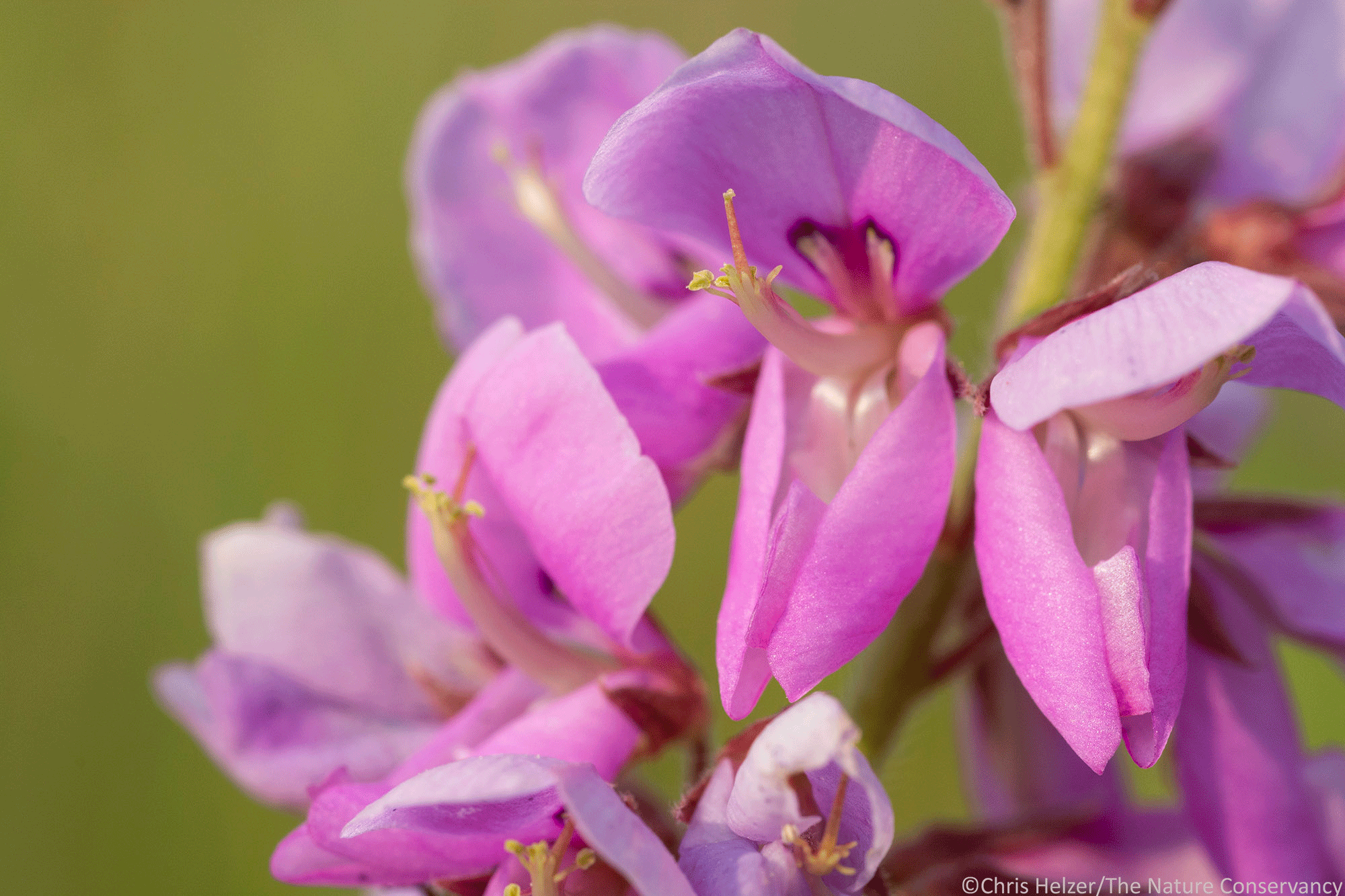
As pretty as Illinois tickclover flowers are, I think showy tickclover, aka showy tick trefoil, is even more gorgeous. I guess whomever came up with the common name of the plant agreed. Not only are the individual blossoms bigger and more colorful, there are also many more of them per plant. Don’t get me wrong, I love both species, but in terms of the aesthetics of the individual flowers, I have to give showy tickclover the nod.
Earlier, I said tickclover flowers are hard to find in actively grazed areas. That’s usually true with showy tickclover too, but this photo was actually taken in a grazed site in our Platte River Prairies. It’s a patch-burn grazed site and tick clover plants in the unburned portion had only been nipped at by the cattle. The plants were shorter than usual, but still had a lot of blossoms. We have a pretty light stocking rate in that particular unit this year, which lets the cattle be very selective about what they eat – and that, in turn, means a lot more wildflowers are ungrazed, including some of their typical favorites.
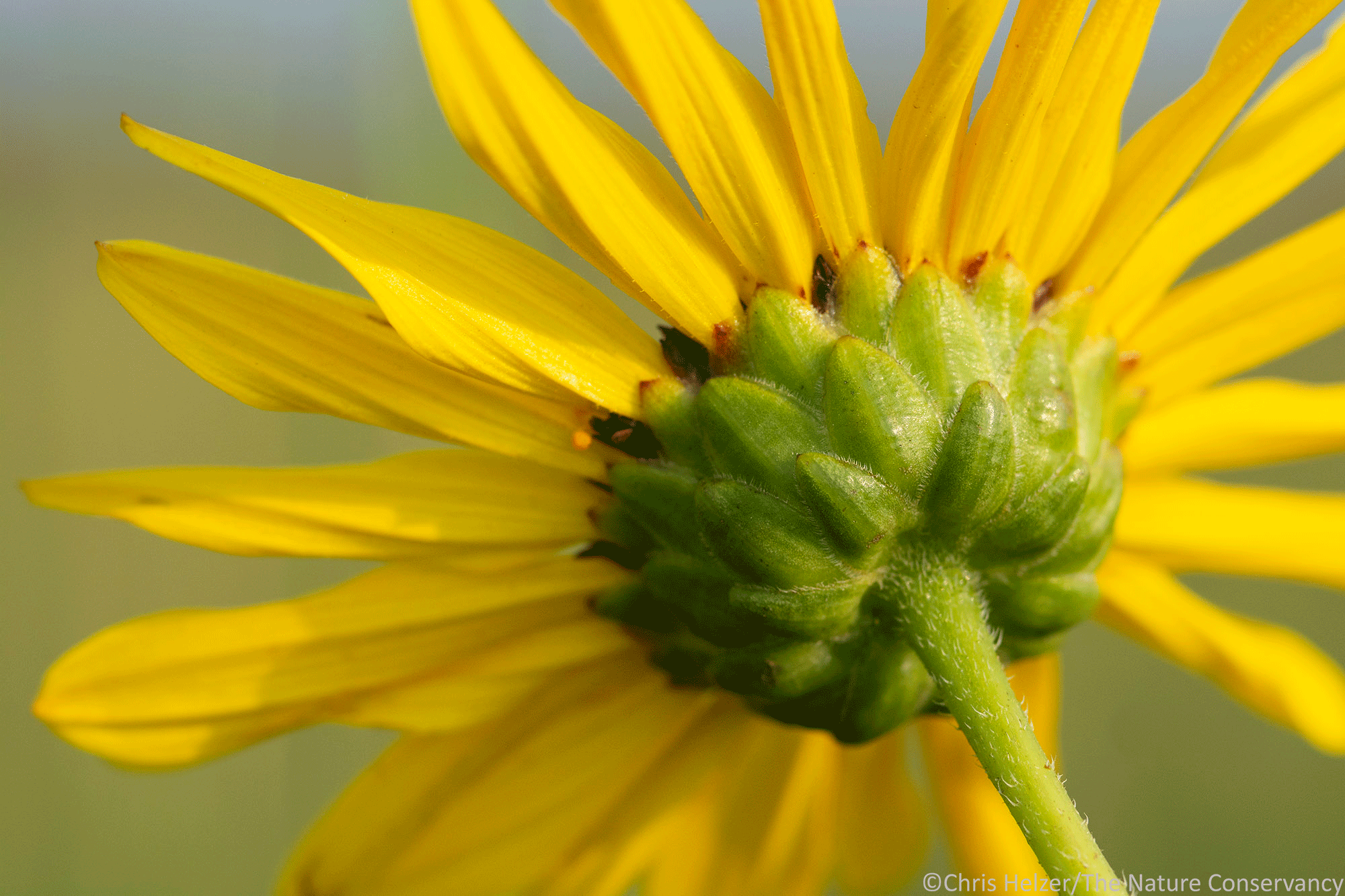
I’ve led several plant identification workshops over the last month and one of the emphases has been the various sunflowers that grow in our prairies. There are nine native sunflower species in Nebraska – two annuals and 7 perennials. When I talk about how to identify stiff sunflower, one the perennials, I talk about the stiff, sandpapery slender leaves and the low density of leaves toward the top of the plant. But if it’s blooming, I always point out the neat, round and compact shape of the bracts behind the flowers. Other sunflowers have long curving bracts, but stiff sunflower’s bracts are short and curved. It’s a great flower to photograph from behind and I probably have way more photos from that perspective than makes any sense.
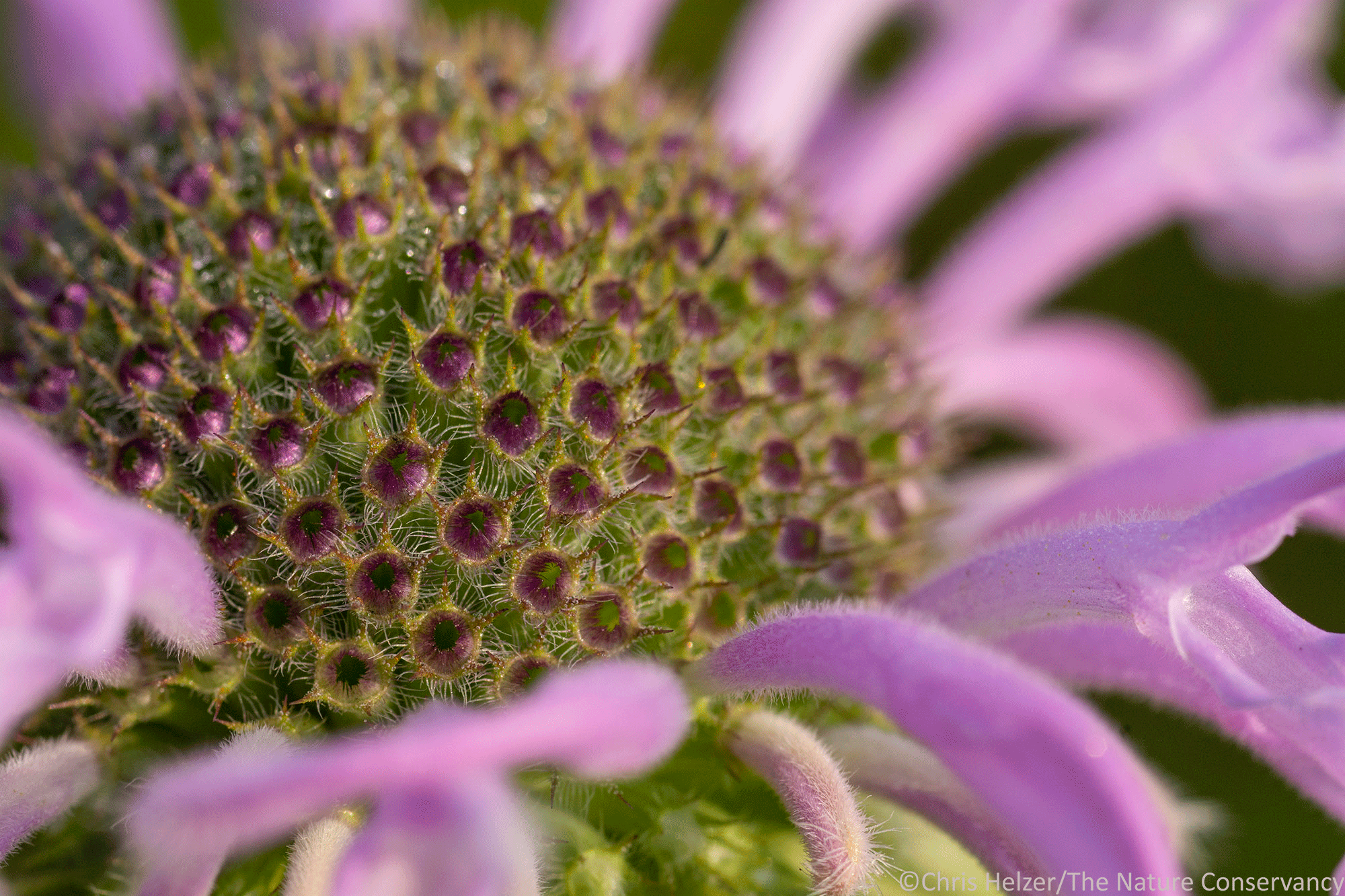
This post is going to get way too long if I keep writing two paragraphs about each photo. Wild bergamot is a gorgeous flower and really attractive to bees – especially bumblebees – and other long-tongued pollinators like butterflies and moths.
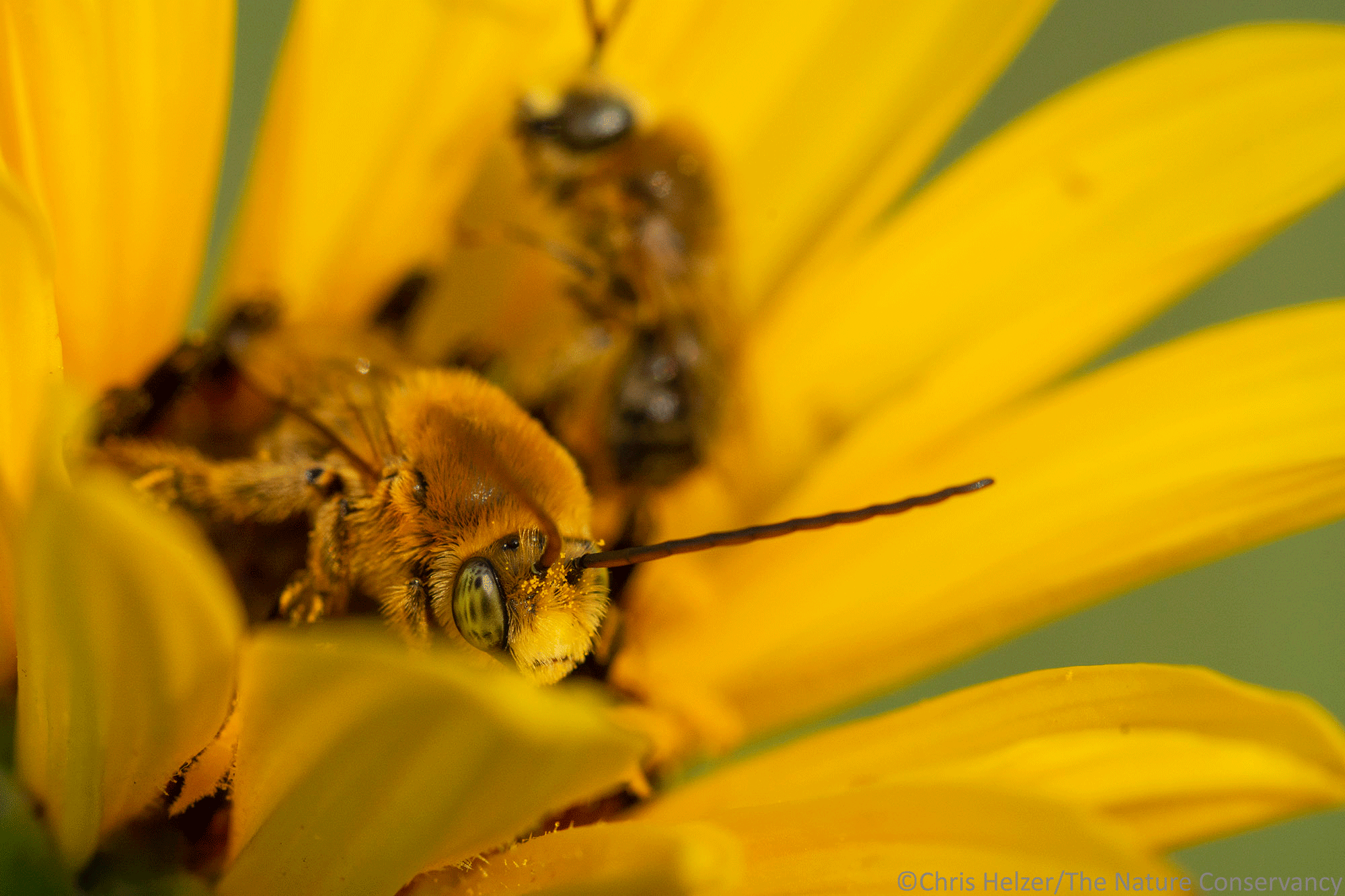
Most of the 4,000 or so bee species in North America are solitary (single females build and provision a nest). The numerous males of those solitary bee species don’t have a nest because their only job is to try to intersect females and interrupt their foraging long enough to mate with them. At night, those males just find anyplace they can to sleep. Often, that includes inside a flower, especially if it provides a little compartment that helps hide the bees. The two long-horned bees above spent the night in a partially opened sunflower and were still there the next morning.

My favorite thing about katydids is that they hear through their elbows (you can see the opening on its leg at the far left of the above photo). There’s much more to them than that, of course, but it’s a fun fact to share. They also have very long antennae, which helps separate them from grasshoppers, which have short antennae. Both groups of insects, though, have complicated communication strategies that include both visual and auditory clues. They’re far from just plant-eating machines.
Have a great weekend!



 The Prairie Ecologist