Monday afternoon, I looked out my window and noticed the sky was covered by a combination of diffuse clouds and some hazy smoke, creating some beautiful soft lighting. The wind was light too, so I was obligated (OBLIGATED) to stop working on other projects and take my camera out for a walk. I mean, whaddya gonna do?
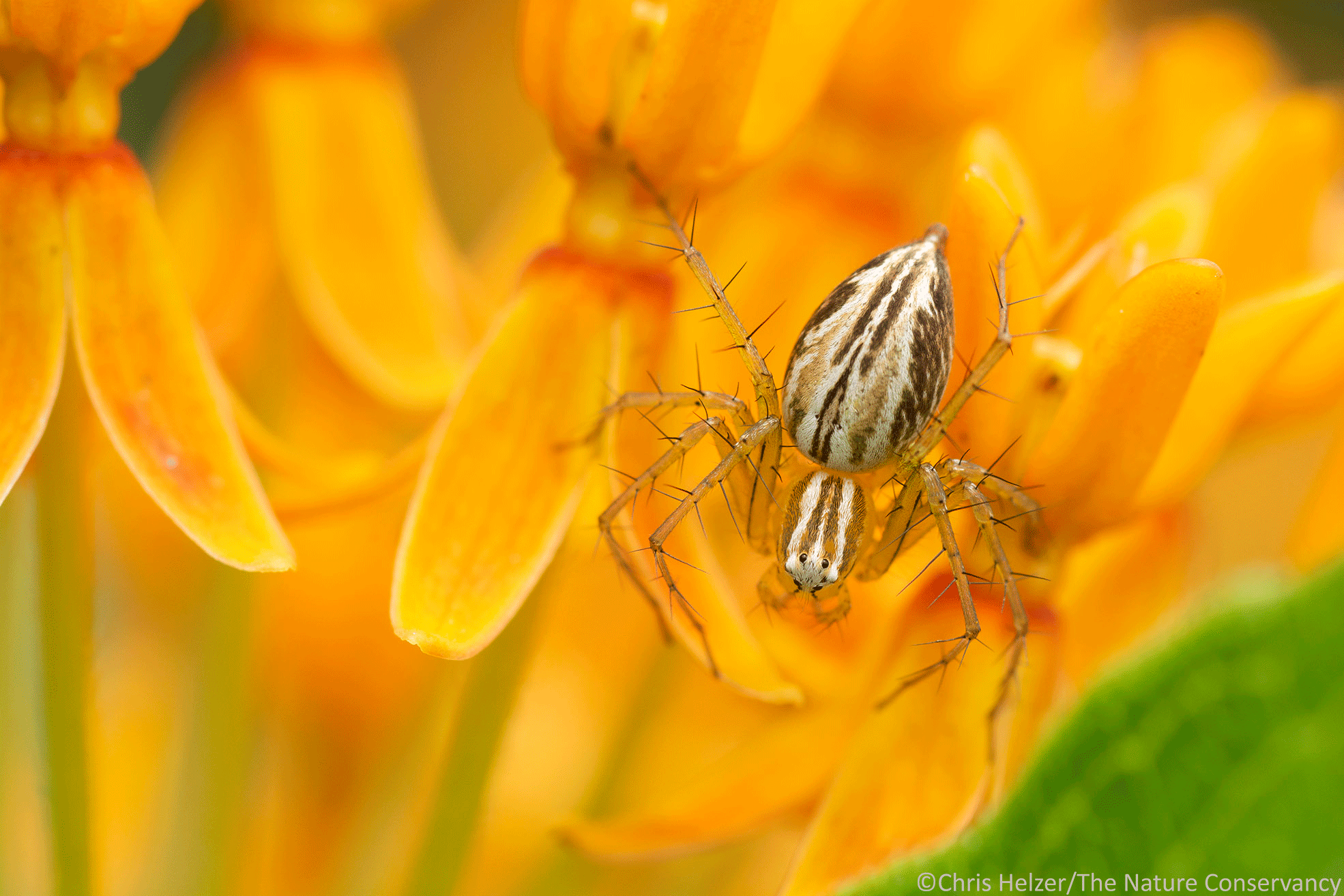
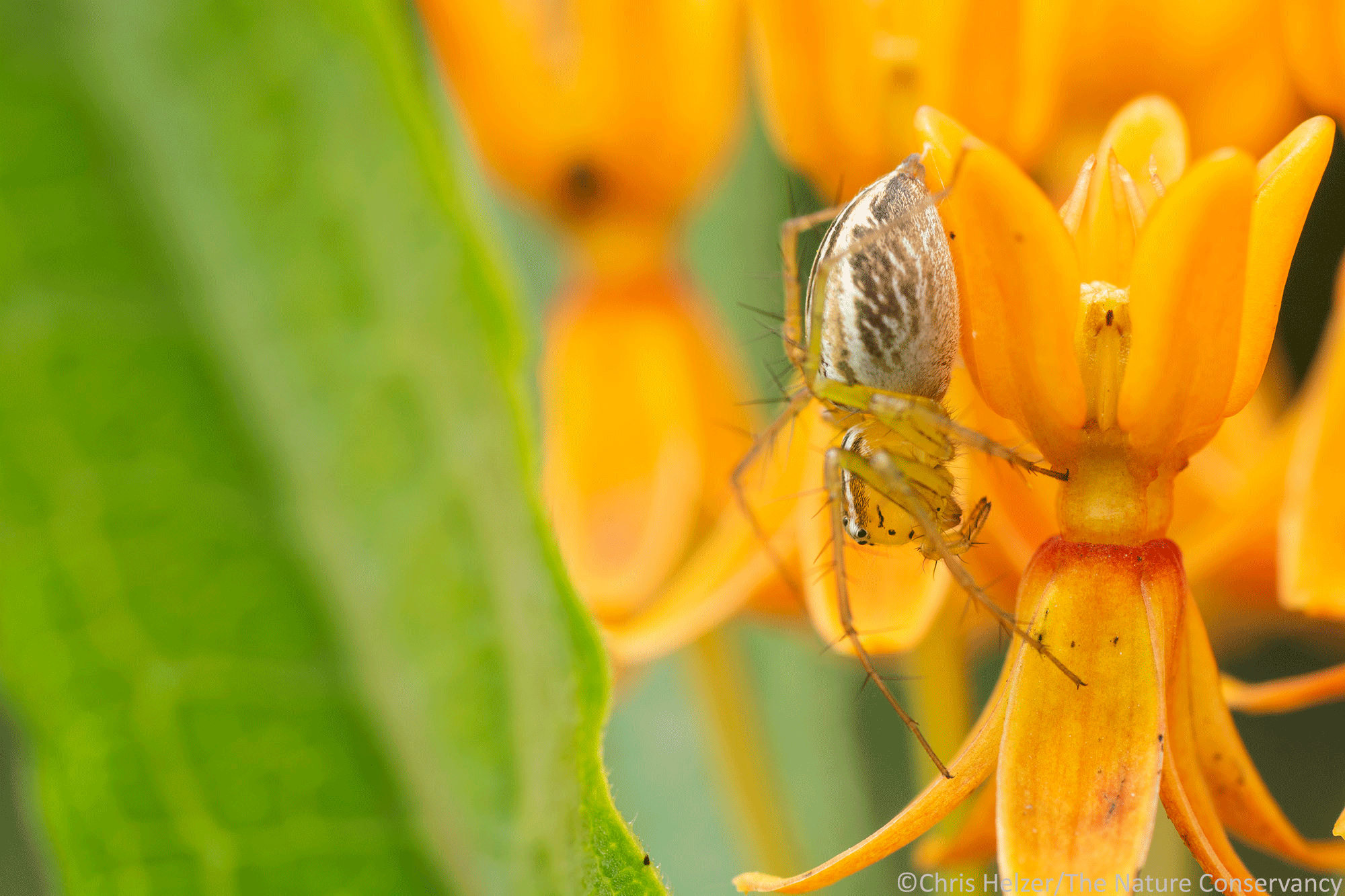
I headed across town to Lincoln Creek Prairie and spent a pleasant hour with flowers and inverts. During that time, I spent quite a while watching one particular butterfly milkweed plant. A small wasp was intent on feeding from the flowers and would repeatedly forage for a while, fly off a few feet, and then return. There was also a lynx spider hanging around on the same set of flowers and it looked to me like the two might run into each other eventually.
The wasp. Nikon 105mm macro lens. ISO 320, f/16, 1/125 sec.The spider. Nikon 105mm macro lens. ISO 320, f/13, 1/200 sec.
The other reason I stayed with the scene is that I was trying to figure out what, exactly, the wasp was doing. Normally, when I see insects feeding on milkweed flowers, they seem to be extracting nectar from the tops of the flowers. This wasp was focusing very intently near the bottoms of the flowers. It would approach a flower and cling to it for a few seconds before moving to the next. Even through my macro lens, I couldn’t quite tell what it was up to, but I assumed it was accessing nectar.
Is this wasp chewing through the flower to get the nectar? Nikon 105mm macro lens. ISO 320, f/16, 1/125 sec. Nikon 105mm macro lens. ISO 320, f/16, 1/125 sec.
This made me realize that I don’t actually know exactly where the nectar is stored in a milkweed flower or what openings might exist from which hungry invertebrates can extract it. I tried to find diagrams online but didn’t have any luck. Any milkweed flower anatomy experts out there? I’m guessing this wasp was chewing through the flower to get to the nectar, but that’s just guesswork since I don’t even know where the nectar was!
Regardless, the meeting of spider and wasp did eventually occur, but nothing very exciting happened. The wasp seemed to ignore the spider and nudged it a little (accidentally?) as it moved between flowers. The spider seemed a little startled, but didn’t try to attack the wasp – it just scooted itself over a smidge and both went on with their lives. I guess the wasp, which was about the same size as the spider, didn’t fit the spider’s profile for a prospective meal. Fair enough.
The spider, after having been slightly dislodged from its first spot by the wasp. Nikon 105mm macro lens. ISO 320, f/14, 1/125 sec.
A few minutes after I left that butterfly milkweed plant, I stopped at another and photographed the stilt bug shown below. I don’t have any other stories to tell about the stilt bug. It was just sitting in a way that was photogenic and it let me get close enough to photograph it. I liked the photo, so I threw it into this post. How about that for an anticlimactic end to this post?
A stilt bug (Berytidae) on a different butterfly milkweed plant. Nikon 105mm macro lens. ISO 320, f/11, 1/400 sec.
I’ve been in a couple discussions lately that have highlighted the many tradeoffs we have to consider when making prairie management decisions. Every manager faces these, and they can start to feel paralyzing if we let them. Just as in all aspects of life, we just have to make the best decisions we can. We can’t not act, but we can evaluate the actions we take, learn from what happens, and try to learn and adjust.
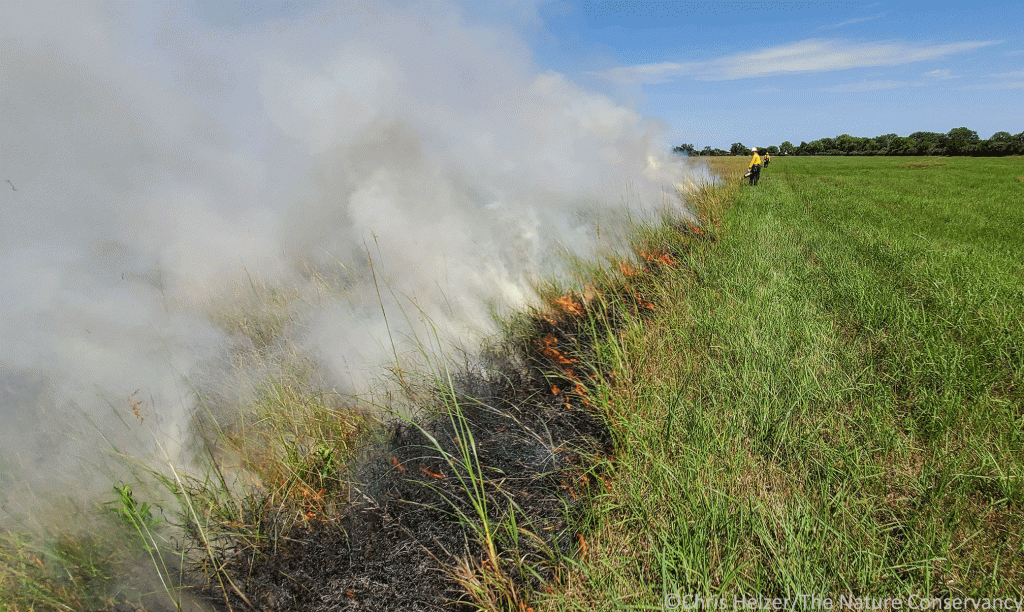
The use of prescribed fire has been an integral part of the maintenance and management of prairies since the last of the glaciers retreated from central North America.
I’m going to focus on tradeoffs around prescribed fire in this post, but there are many others – especially with regard to the use of grazing and herbicides. Each of those topics will get their own blog post in the near future.
Prescribed fire is a great tool for removing thatch, litter, and other aboveground vegetation. It can kill some trees – like eastern red cedars around here – and can top kill other woody plants and set them back (with variable degrees of effectiveness). Fire can also play a key role in manipulating the competition between prairie plants, especially in terms of reducing the dominance of some species and releasing others from that competition, at least for a while. Because recently-burned areas are attractive to grazers, combining fire and grazing can open up a lot of interesting and useful options for managing habitat structure for animals and growing conditions for plants.
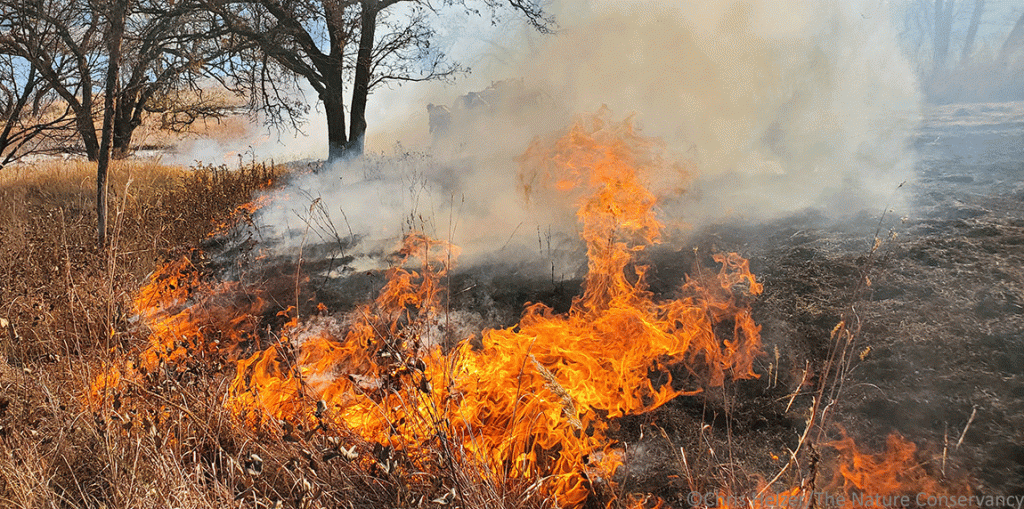
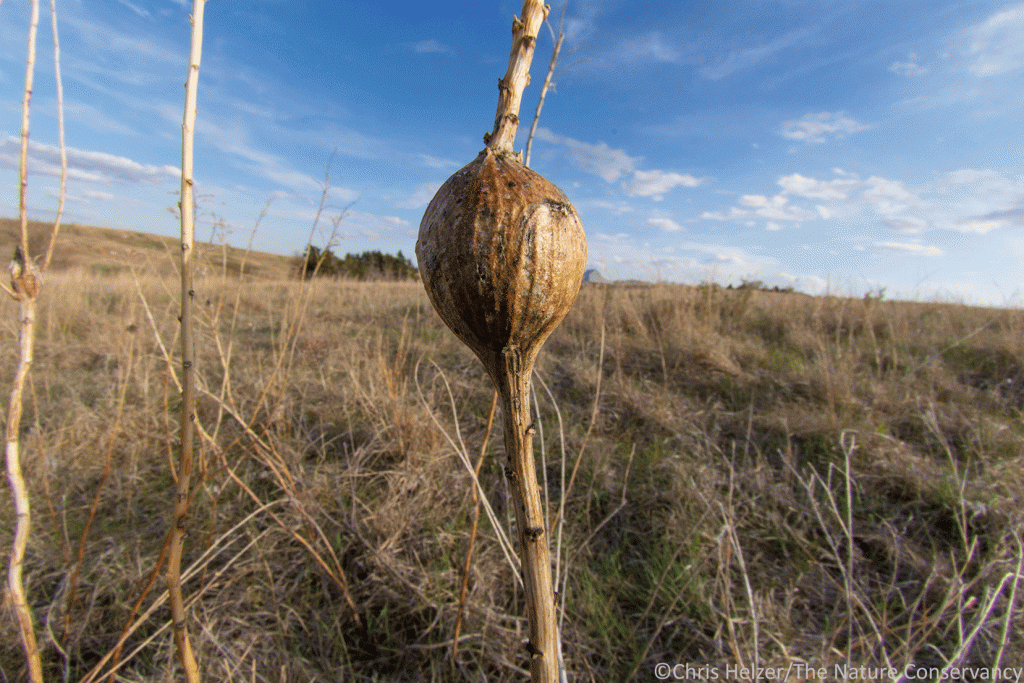
At the same time, fire is inherently destructive. Even fires conducted during the dormant season can kill small animals, including both invertebrates and vertebrates. Animals overwintering in the thatch or inside aboveground stems are especially vulnerable to fire. So are any animals who might be active during the winter but not able to quickly move to safety in the face of oncoming fire.
The fly that overwinters inside galls on goldenrod plants is one example of the many invertebrates that are vulnerable to fires conducted during the dormant season.
Growing season fires can also be problematic for animals, though. Whether prescribed fire is employed during the spring, summer, or fall, if animals are active, they’ll be at risk from fire and smoke. Some, like birds or strong-flying invertebrates, have an advantage in trying to escape fires, and others have burrows they can use as cover. Others have to find other options to stay safe, but not all of them will be able to.
Within the plant community, fire always favors some species over others. The winners and losers are often determined by the season of fire. A fire during the dormant season tends to favor plant species just getting ready to germinate or start their annual growth. The removal of aboveground cover means the sun will warm up the soil earlier than in unburned areasa and that can give early season plants a real jumpstart. Because fire exposes the soil, it also facilitates the germination of seeds that rely on exposure to light. The consumption of thatch by fire also means that any seeds falling to the ground later in that first season after the burn have an increased chance of making the seed/soil contact they need for future germination.
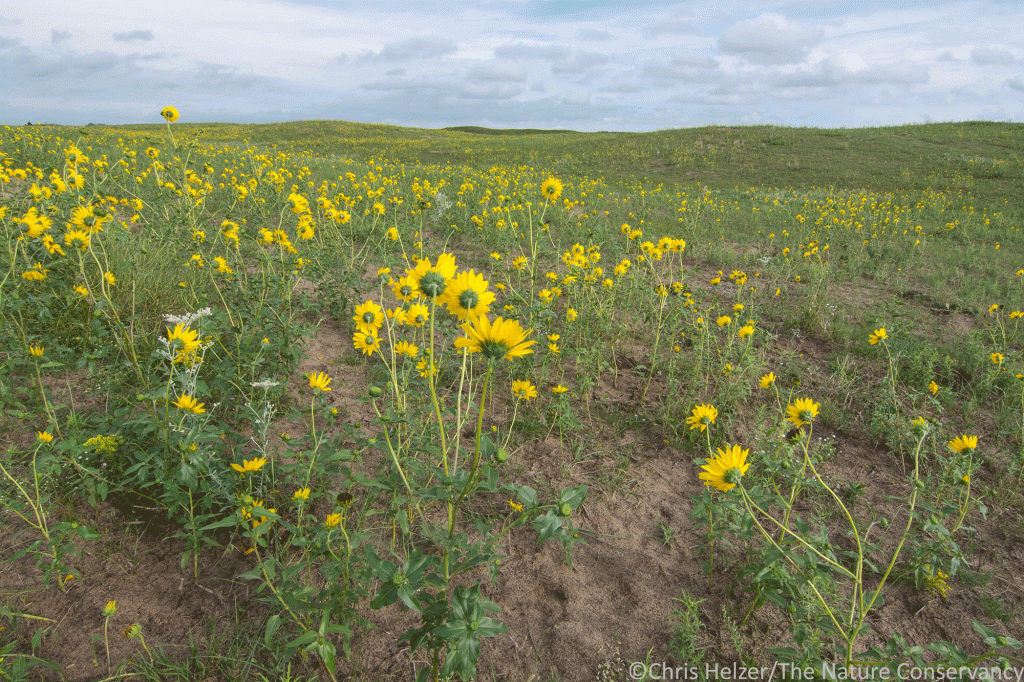
In Nebraska, annual sunflowers – including plains sunflower (Helianthus petiolaris) – are an example of a species that germinates particularly well in bare soil created by prescribed fire.
Fires conducted later in the growing season will have a negative impact on any plants in the midst of their peak growth phase or flowering period. However, plants that are poised to germinate or begin their peak period of growth immediately after the fire occurs will get a big boost. A May burn in our area, for example, will suppress the vigor of many spring grasses and wildflowers, giving early summer plants fairly unimpeded access to light and nutrients as they start growing. Smooth brome is a big invasive species challenge for us and burning when that species is just beginning to bloom can really knock it back, helping to flip the competitive balance between brome and many summer plants. At the same time, however, many native cool-season grasses, not to mention lots of spring wildflowers, will be similarly impacted, so we wouldn’t want to burn any site in May every year.
Summer fires can help create habitat heterogeneity and provide impacts very different from spring and fall fires. They can also have negative impacts on both plants and animals, though, highlighting the importance of only burning portions of prairies ad prairie landscapes.
The impacts on plants from fires set later in the growing season are similar, in that the timing of the fire determines which species will be positively or negatively impacted. Most plants that have already flowered and produced seed won’t be much affected because they will be shutting down for the year, though that year’s seed crop might be consumed by the fire. Any plants actively growing and trying to produce flowers, rhizomes, or buds, will be interrupted by the fire and lose a lot of their energy investment from the season. Some may attempt to start again, but others will give up and wait for next year. Either way, they will be mostly removed from the field of competition for the season. In contrast, any plants that start their growth or hit their stride soon after the fire will have a big advantage because the fire will knock back their competition and allow them full access to sunlight.
No prescribed fire is benign. Regardless of when a fire happens, it will have both positive and negative impacts. Because of that, it’s really important to provide refuges (unburned areas) whenever a fire is conducted. Refuges can give mobile animals a safe place to escape to during or after the fire. For plants and less mobile animals, refuges can help ensure that at least some portion of populations aren’t affected by a fire.
Refuges are particularly important in fragmented landscapes, where prairies persist as small isolated remnants. The smaller and more isolated a prairie is, the bigger (as a percentage of the whole) a refuge needs to be. In landscapes where the burned area is surrounded by miles of other prairie, that surrounding prairie can provide adequate refuge (assuming it’s not also being burned in the near future).
In a small isolated patch, it can be important to make sure at least 1/3 or ½ of a site is unburned, and that no habitat type (wet areas, hill tops, etc.) is completely included within the burned area. Refuges can also be left within a burned unit by burning when humidity is relatively high (as one example) and/or by refraining from ‘touching up the interior’ after a fire by igniting any patches that didn’t happen to catch fire during initial burn operations.
One great way to help manage the tradeoffs of prescribed fire is to manage for a ‘shifting mosaic of habitat types’. Burning only a portion of a prairie at a time is part of creating a shifting mosaic, and that helps ensure abundant refuges any time a prescribed fire is conducted. However, creating the kind of habitat heterogeneity characterized in a shifting mosaic approach also relies on varying the way fires are conducted each time. It can be helpful to avoid burning each portion of a prairie in a predictable order or sticking to the same season of fire and burn conditions each time an area is burned. Instead, try to change up the season and/or intensity of fire applied to each portion of that prairie over time so no patch gets the same treatment over and over.
Varying the timing, intensity, and frequency of fire applied to any portion of prairie will also help spread the risk from negative impacts and ensure no group of species is consistently being managed against. If one corner of a prairie has usually been burned in the early spring, for example, consider burning it at a different time of year next time to break that pattern. Playing with timing and intensity of fires can also increase the diversity of habitats and growing conditions for plants that are available at any one time across the whole site (and the surrounding landscape).
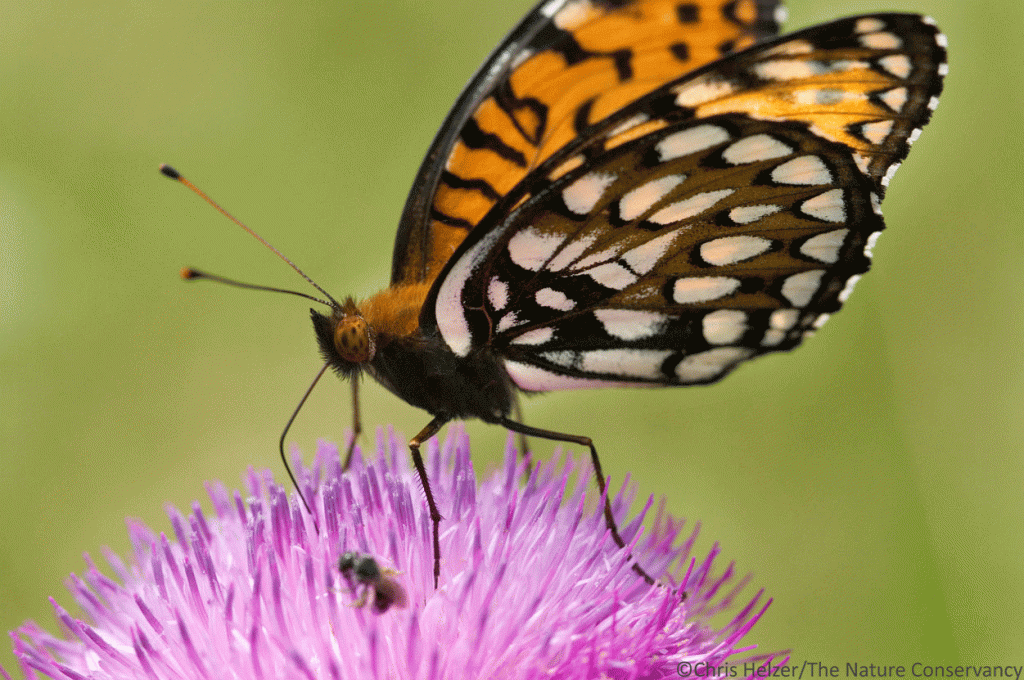
Regal fritillary butterflies are particularly sensitive to dormant season fire because their caterpillars overwinter aboveground. Providing adequate refuges from fire is an important part of conserving these kind of vulnerable species, but protecting them doesn’t necessarily mean fire can’t be part of a management regime.
Even under the most thoughtful and careful management, prescribed fire is going to include tradeoffs. These can be especially tricky to navigate when vulnerable species include insects or others that are rare within that prairie and/or the surrounding area. It can be tempting to avoid fire altogether to prevent losses within species that are already struggling to survive.
Sometimes, complete cessation of fire might be the right answer. Just be sure to consider what that lack of fire will mean for the prairie as a whole. That larger community needs to be in good shape to support the at-risk species you’re concerned about, so if it starts becoming overrun by woody vegetation, buried in thatch, or otherwise impacted by a lack of fire, that might affect the fire averse species just as much or more than patchy fire would. If fire isn’t included in your toolbox, make sure you have other ways to provide the management the site requires.
Most importantly, as I said at the beginning of this long ramble, make the best decisions you can and take some kind of action. Afterward, evaluate the results, learn what you can, and incorporate what you learn into what you do next. Be thoughtful, but don’t let unknowns or concerns keep you from being an active manager. Prairies are pretty resilient – it’s why they still exist today. Lean on that diversity and resilience and you and the prairie will come out just fine.





 The Prairie Ecologist