
Between work time and personal time, I’ve been in prairies quite a bit over the last week. It’s been nice. While walking around, I’ve had a number of miscellaneous observations. Here are some of them.
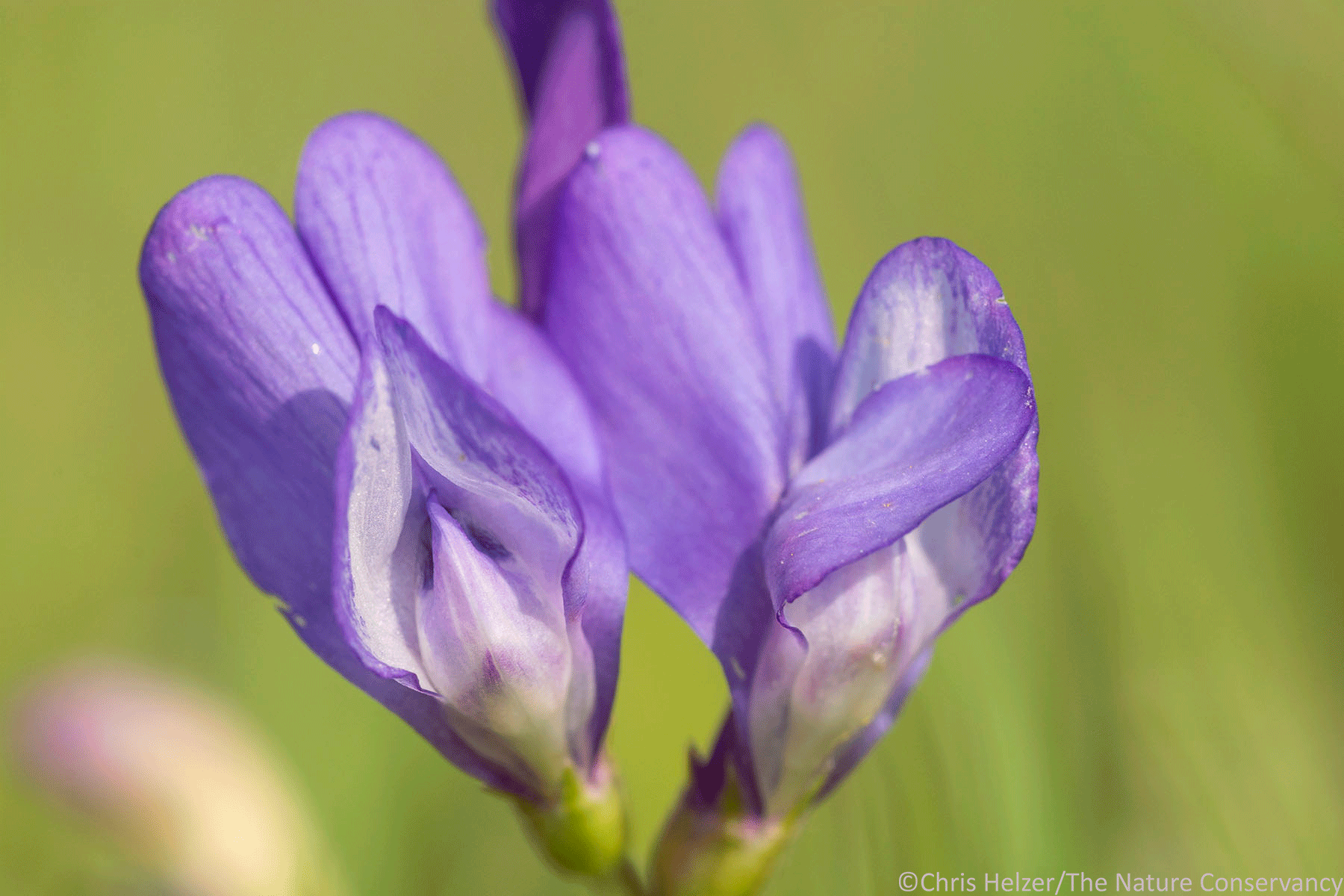
American vetch (Vicia americana) is really enjoying the part of our family prairie that has been grazed the most intensively over the last two years. There are both a lot of populations and really big populations this year. Or maybe there are more plants blooming this year. Or maybe I’m just noticing them more because the grass is so short. Whatever the explanation, I’ve been seeing an awful lot of this cool little plant with its big purple pea flowers and cute curly tendrils on the leaves.
I was just thinking earlier this week that I don’t see snakes very often in our prairie. (I considered that a bad thing, by the way, since I both like snakes and recognize their importance.) After making that observation to myself, I then observed two snakes in two days. The first was one of the biggest red-sided garter snakes I’ve ever seen, which Cody spotted during a walk-around at my family prairie. The second was either a huge lined snake or a particularly drab-looking plains garter at the Platte River Prairies. The second one dove into some tall grass before I could get a good look and the first sat still long enough to admire it but not long enough for a photo op.
One of the predictable patterns of grazing in our Platte River Prairies is that cattle will graze the dry and mesic portions of the prairie much harder than the wetter areas. Except when they don’t. Many of our lowland prairies are mostly mesic (not too dry, not too wet) soils with some sloughs and small ridges passing through them. Those sloughs and ridges are old river channels and sand bars from long ago. Normally, sloughs get very little grazing pressure. I assume that’s the result of a combination of forage quality (lots of cordgrass, switchgrass, rushes, and sedges in sloughs versus big bluestem and Indiangrass in mesic prairie) and factors related to topographic position (more flies and other insects in low-lying areas, less breeze, wet feet, etc.)
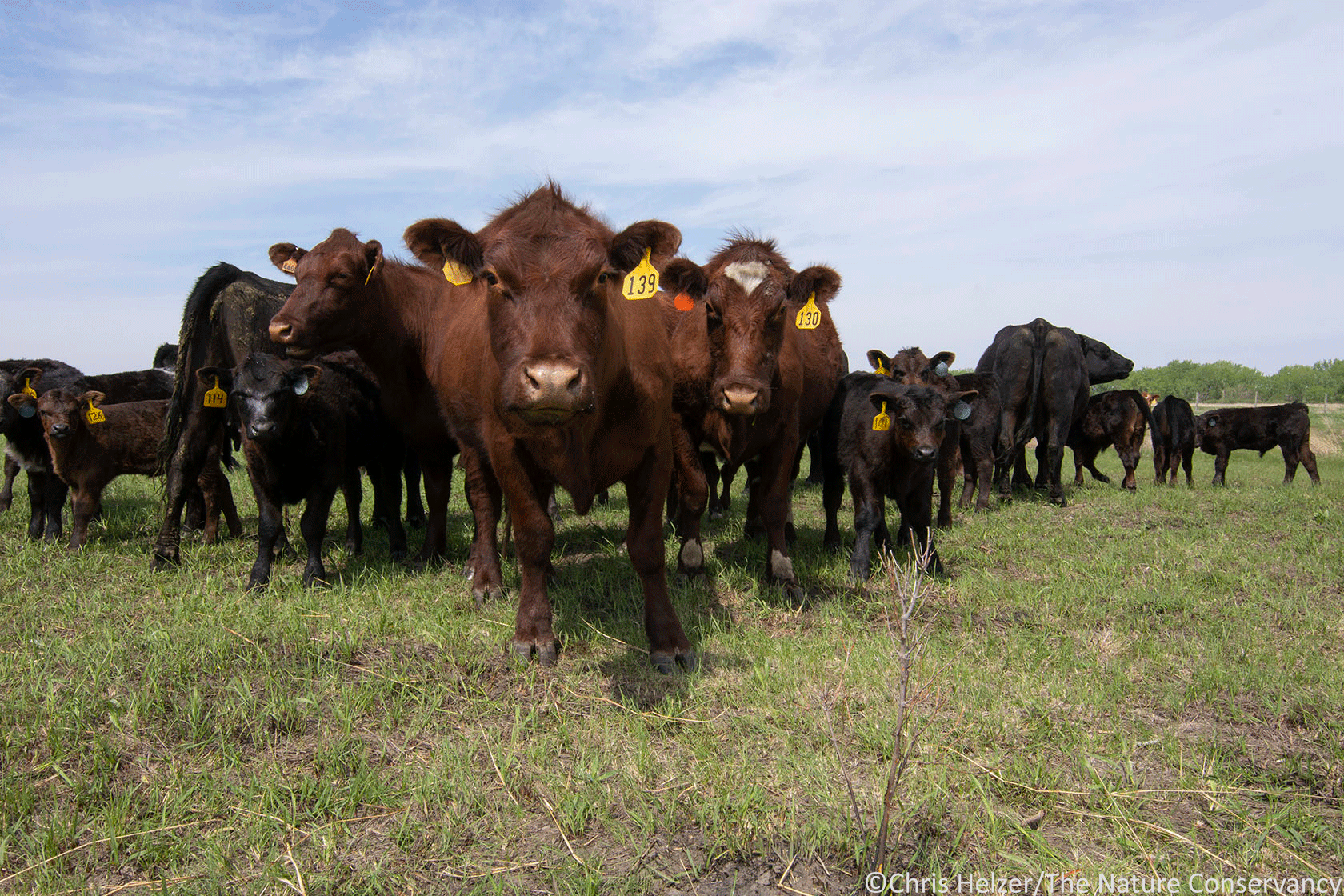
Whenever I start thinking I’ve got cattle figured out, though, they surprise me. In the past, I’ve seen cattle graze sloughs in the fall after a summer fire (soils are drier then and the fire got rid of thatch and created lovely fresh and nutritious regrowth). I’ve also seen a few random patches of wetland sedges get grazed within a larger area of ungrazed wetland slough. It’s as if the cattle just wanted to remind themselves they didn’t like wetland sedges as much as they like grasses. Yesterday, though, I found a large stretch of a slough that was dominated by wetland sedges and had been grazed intensively while the surrounding mesic grassland was still tall, thatchy, and mostly ungrazed. I have a number of hypotheses about why, but the leading one is that the cows just like to mess with my head.
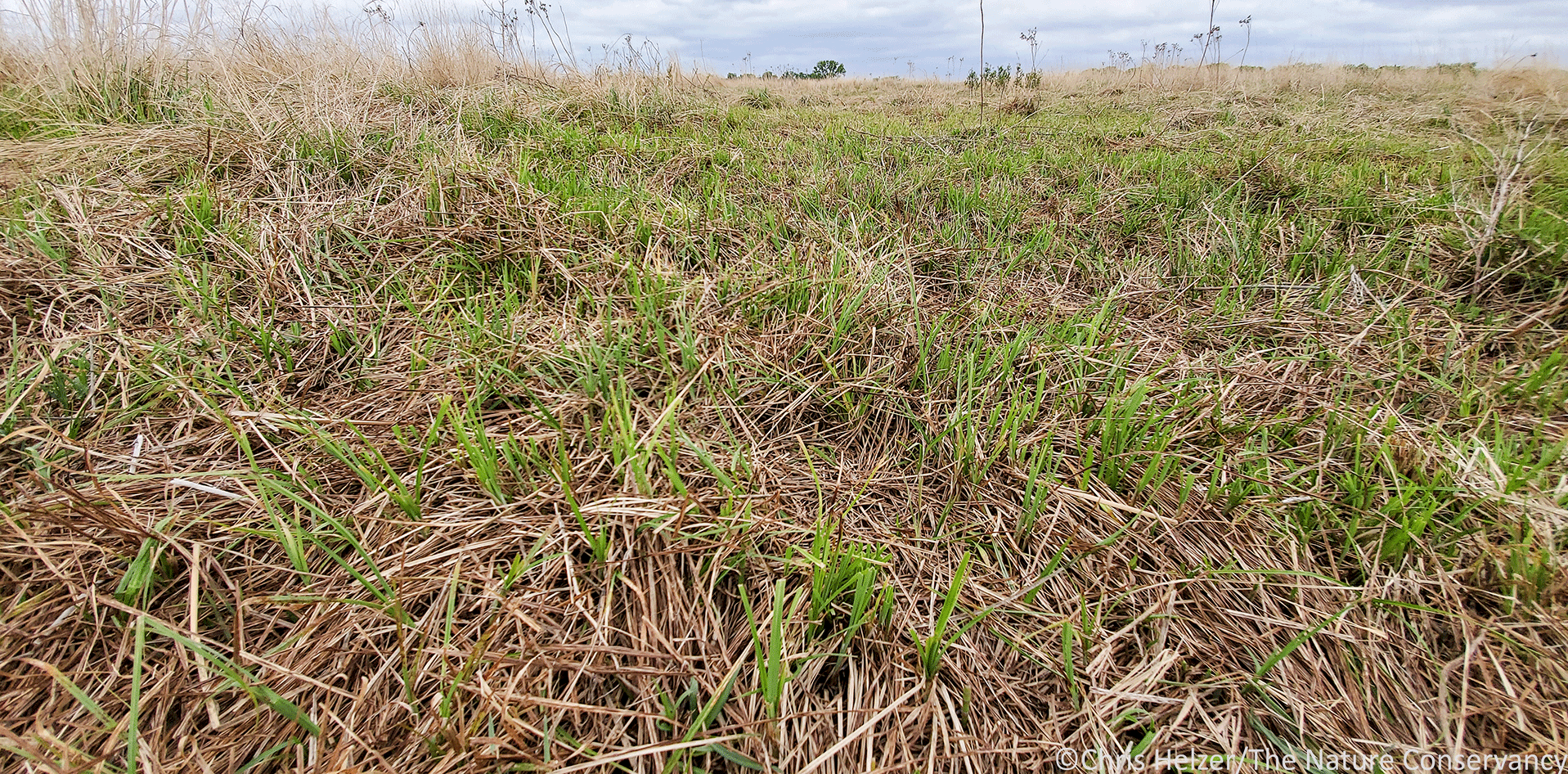
While walking around our family prairie on two occasions this week, I’ve found several patches where something is making lots of shallow scrapes in the soil. It almost looks like the top of the sod is being peeled back in some places. My assumption is that it’s a skunk looking for grubs and other big invertebrates in the soil, but I’m not sure. I didn’t manage to get any good photos of it, but looking online, what I saw resembles photos other people have posted of skunk ‘damage’. I wish good hunting to whatever it is and I hope I get to see it happening sometime so I can know for sure who the shallow digger is.
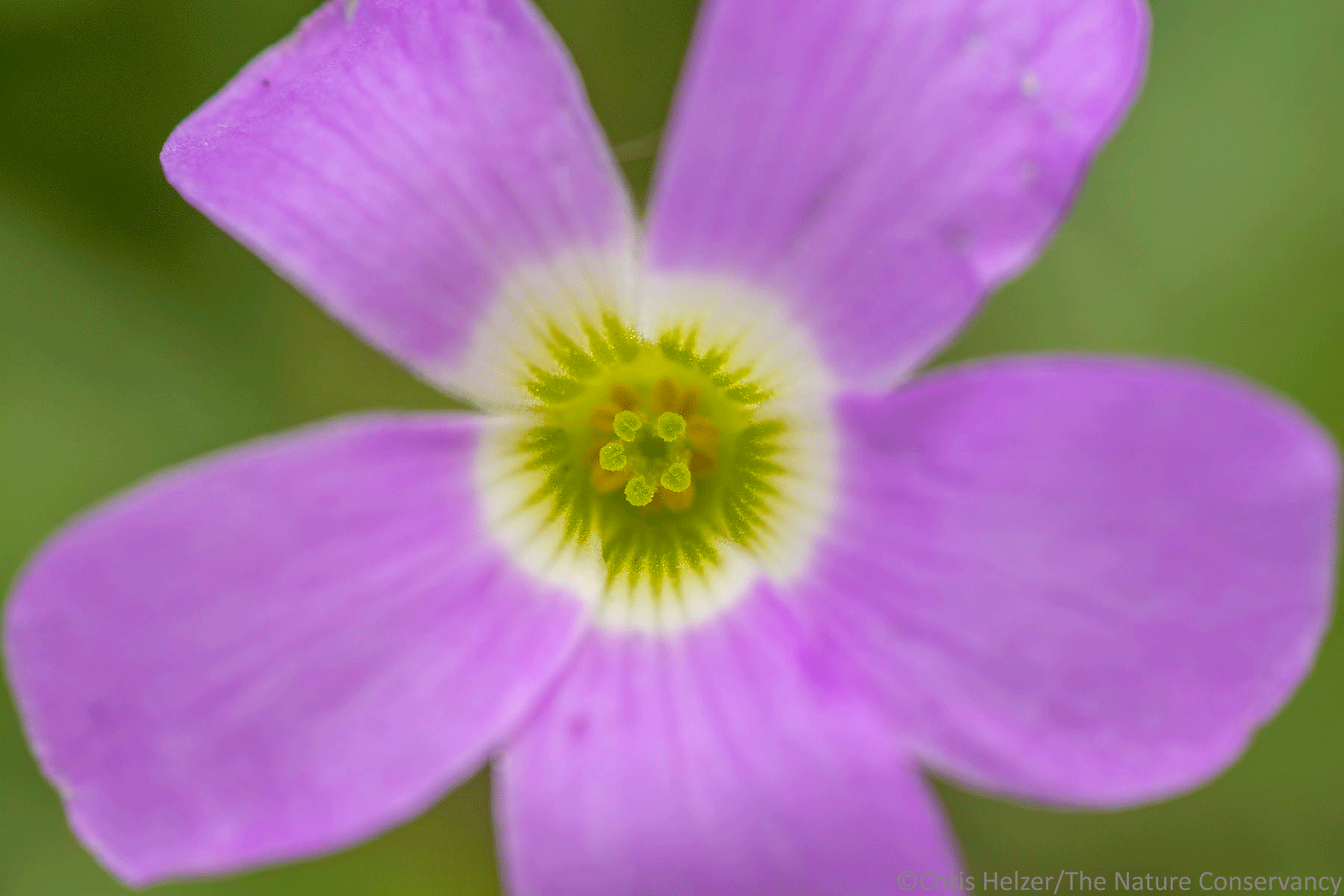
I like the taste of violet wood sorrel (Oxalis violacea) more than that of yellow wood sorrel (Oxalis stricta). Both grow at our family prairie and I had a couple other biologists compare the flavors this week while we were out there for other reasons and they agreed with me. I don’t have a sufficiently sophisticated palate or vocabulary to explain or describe the difference, but while I enjoy nibbling on both species, there’s something much more pleasant about violet wood sorrel. Since they were already grazing my pasture for me, I also introduced the same biologists to the delightful sugar-snap-pea-like flavor of the young fruits of buffalo pea, aka ground plum (Astragalus crassicarpus). That also received positive reviews.
While we’re on the topic of how plants taste… I’ve been paying a lot of attention to milkweed over the last several years – as have many others, of course. Some of my increased attention is because Tim Dickson at the University of Nebraska-Omaha and I have been collaborating on projects related to cattle grazing and common/showy milkweed. We’re trying to better understand why and when cattle eat milkweed and what kinds of seasonal grazing patterns are most and least compatible with strong milkweed populations in prairies.
As part of our research, we built a number of small grazing exclosures around milkweed plants this spring. We took cattle panels (thick wire fence sections) and bent them into triangular cages and set them each up around one or two common or showy milkweed plants. We’ll be removing a few exclosures at a time over the season to see how cattle react to the plants at different times of year (at what times of year do they eat all or most of the plant versus just the tips, the flowers, or newer leaves, etc.?).
We also have some milkweed plants that are marked but are outside the exclosures and we’ve been checking on them to see when they are first grazed. Yesterday, Sarah and Kate came with me to check on those non-exclosed plants. None of the plants outside the exclosures had been grazed yet. Instead, the only grazed milkweed plant we found was INSIDE an exclosure. Now, I know I just talked about cattle messing with me, but I’m pretty confident that a cow didn’t untwist the wires holding these cages together, slip inside, grab a milkweed plant, and then slip back out – re-twisting the wire fasteners behind it.
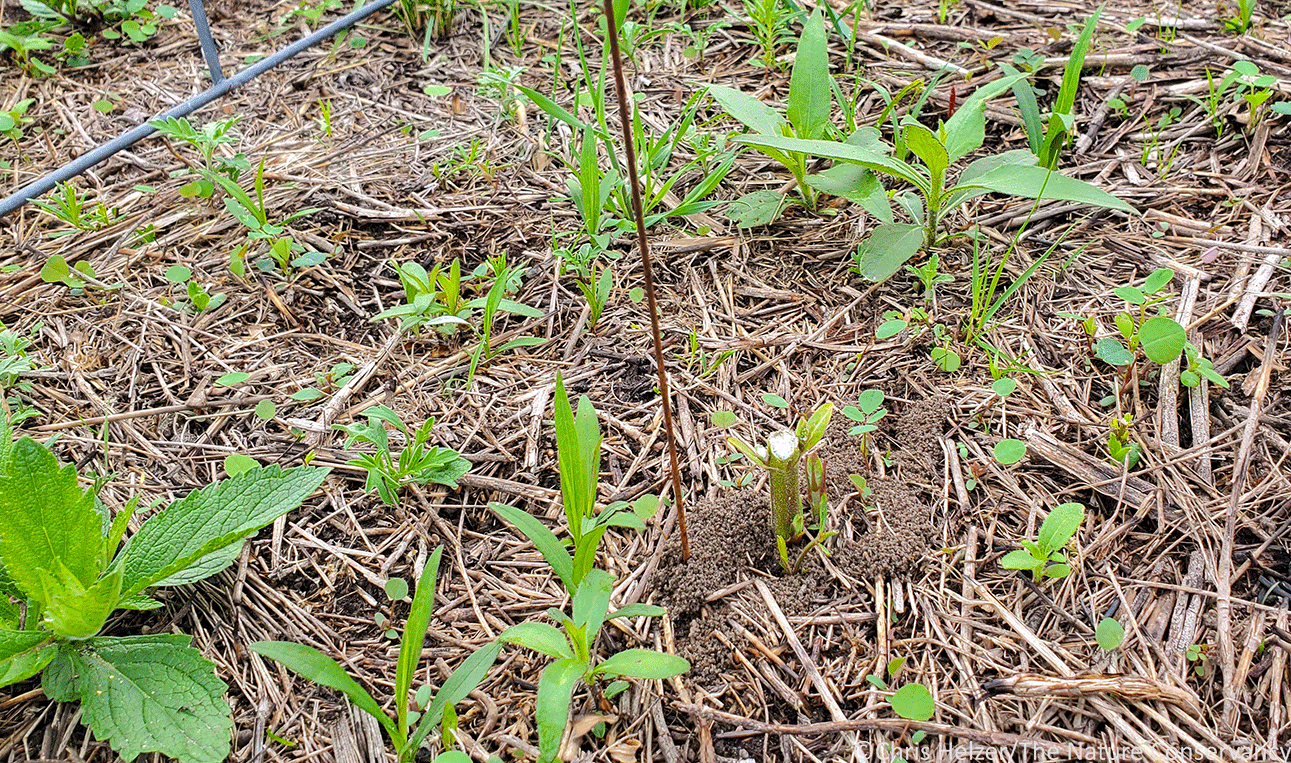
That means something much smaller than a cow slipped through the openings in the exclosure and ate that milkweed plant. I’m guessing rabbit. We have both cottontails and jack rabbits and the plant was cleanly sliced off at the base, so it had to have been something with pretty big teeth. In a weird stroke of fortune for our research design, there was one more milkweed stem in that same exclosure and it didn’t get nipped off, so the little varmint didn’t do any significant damage to our carefully crafted replicated study. Yet. We’ll see what happens in the next days and weeks…
What I don’t understand, though, is why ANYTHING is eating milkweed plants. I know that various invertebrates like long-horned milkweed beetles, milkweed bugs, oleander aphids and monarch caterpillars have adaptations that allow them to deal with the white, toxic, sticky, and bad-tasting latex inside the plants. Good for them, and it gives them a kind of monopoly on that food source. But bison, cattle, and – apparently – rabbits eat milkweed plants too. With all the tasty plants out there, why would those animals eat milkweed? And they’re not just eating them along with other plants. We often see grazed milkweed plants in the middle of a big patch of ungrazed grass. Goofy animals….
Oh, I almost forgot! Yesterday, I was glad to see that the little carpenter bees (Ceratina sp) have returned to our prairie garden and are busily excavating nest tunnels in the ironweed (Vernonia baldwinii) stems we left for them. By the way, these are not the same carpenter bees you might dislike because they sometimes chew on old wood structures. These are much smaller and a gorgeous blue color. I sat and watched a few of them yesterday as they worked to build nests. Mostly I just saw their rear ends sticking up out of the cut stems as they busily dug through the pith of the stems and kicked the excavated bits out with their feet. I’m really happy they’re back.




 The Prairie Ecologist