Photos of the Week – March 12, 2021

I don’t know why I keep trying. There’s just something about wildlife photography that lures me in. Sitting in a small blind, concealed from wild animals you’d never otherwise get close to, and coming home with fantastic photos and a good story to boot? Sign me up!

Except it never works that way for me. I build a blind, lie uncomfortably in it for hours, and nothing comes near. I nap, I work on my laptop, I listen to podcasts – all of which I could do more effectively and enjoyably in a more comfortable setting. And for what? Nothing.

This week, I sat in two different uncomfortable blinds, waiting for sandhill cranes that never materialized. The first was along the edge of the Platte River. I army crawled to the blind in the darkness last Saturday morning. It is in a spot that frequently has thousands of roosting sandhill cranes. The river levels looked great for crane roosting too – exposed sand all over the place, including near the bank where my blind was hidden. As I entered the blind, though, and took my first look at the river, it was clear this wasn’t going to work out. First of all, I could see the river – all of it – an nice view, unobstructed by any birds. Upstream, I could see the vague white of a horde of snow geese, but just as I was trying to decide if I was going to stay or go, the horde lifted noisily into the sky and left. I left too.
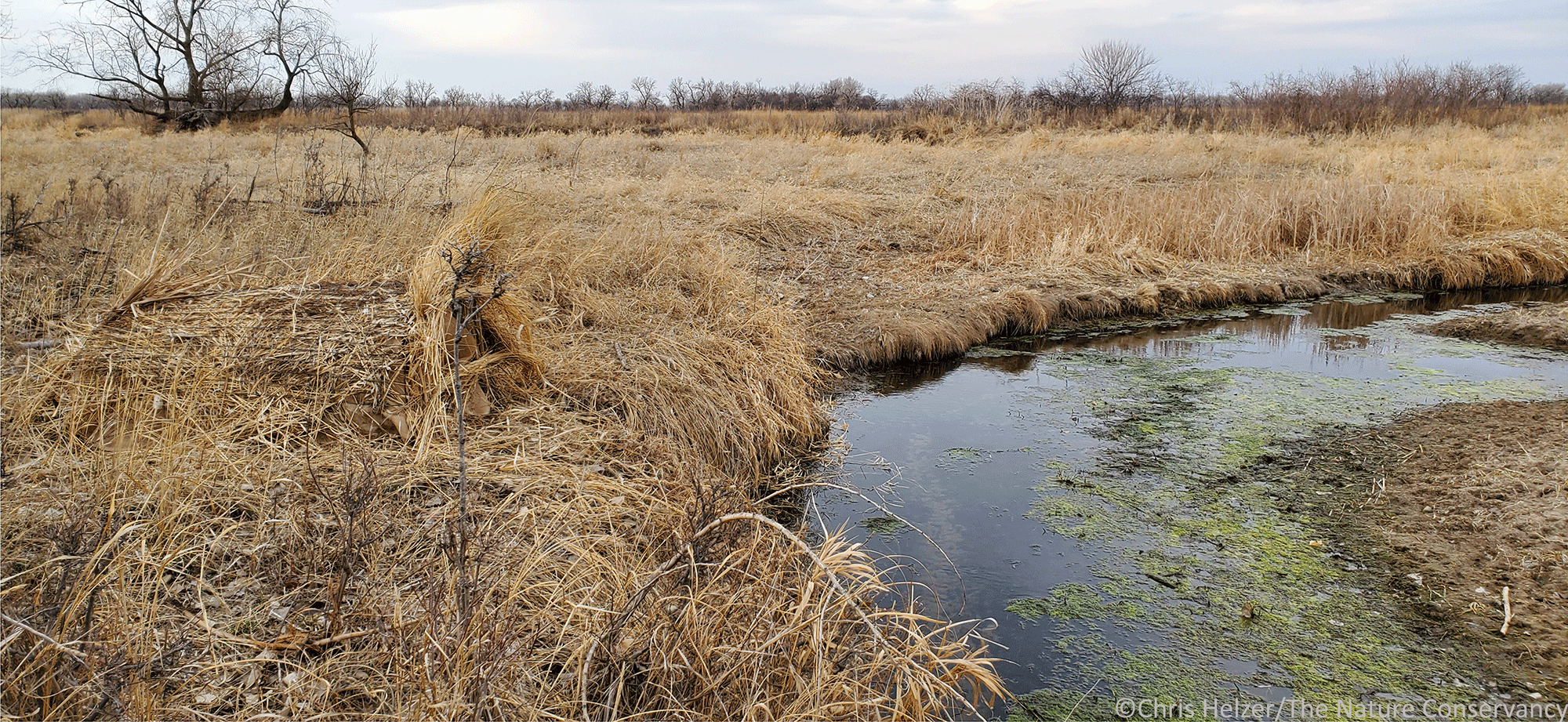
Look how well my blind is hidden! (click to see a bigger version of the photo) Fat lot of good it will do…
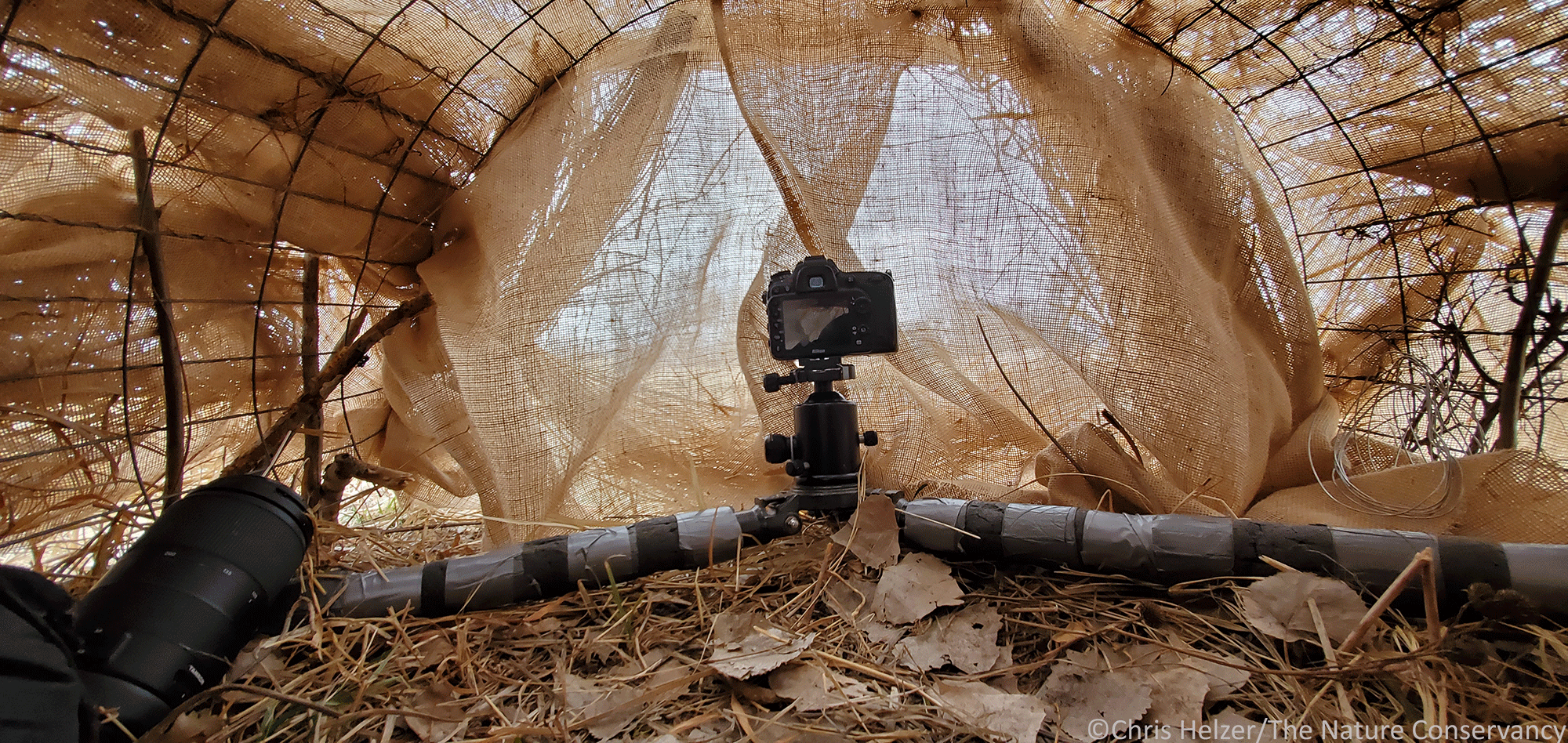
The inside of my blind during my most recent fruitless wait for wildlife.

My second blind is along the edge of a small creek where we’ve been seeing sandhill cranes hang out during the day. We’ve known for years that they use the creek, but don’t really know much about what they’re doing there or why they choose to do it in a wooded area that is so different from the open treeless sites where they normally hang out. My brain told me the way to figure it out would be to hide in a small uncomfortable blind and watch them. My brain is stupid.

I’ve made two attempts to use that blind in the last week. The first time, I had to retreat during my approach because there were cranes in front of the blind. The second time, I got in and sat there for three and half hours while nothing happened. Will I try again? Probably. Did I mention my stupid brain?

Here’s the thing, though. When I stick to my lane as a naturalist and photographer and just look for interesting stories among invertebrates and flowers, I have great luck. This week alone, while getting skunked by sandhill cranes, I found and photographed two great insects without working hard at all.

The first was in my yard. After getting home from not photographing cranes from my blind, I wandered back to our prairie garden to see what might be moving around in the warm sunshine. There were several different insect species around, but the most abundant was a bunch of false milkweed bugs (Lygaeus turcicus). In fact, they were so abundant, I spent a minute trying to count how many were in a square foot and got over 20. Many of them were mating with each other, while others were just crawling in and out of the stems and leaf litter. A few seemed to be feeding on something. I wondered what they were eating.

False milkweed bug (Lygaeus turcicus) in my prairie garden. Nikon 105mm macro lens. ISO 400, 1/250 sec at f/14.

Lying on my belly in the warm sun (comfortably) and hoping, as always, my neighbors weren’t watching me, I inched close enough to a few bugs to get photos. Many of them spotted me and ran away, but that was fine – there were plenty more around. I even managed to get a few good photos of one holding and feeding (through its long proboscis) on a seed.

Using a combination of experience and context clues, I figured out that the bug was feeding on the seed of a false sunflower seed. That made sense since this was happening in the part of our garden where we have a lot of false sunflowers and the plants drop a lot of seeds. I glanced around and saw a few other bugs with the same kind of seeds. Later, I looked online and learned that false sunflower seeds are a favorite food of false milkweed bugs. An irony, of sorts, since it is one unfairly named species eating another. (It’s not the fault of either the bug or the plant that an uncreative person named them after another similar-looking species that happened to have been named first.)

A false milkweed bug feeding on a false sunflower (Helianthus helianthoides) seed. Nikon 105mm macro lens. ISO 320, 1/200 sec at f/14.

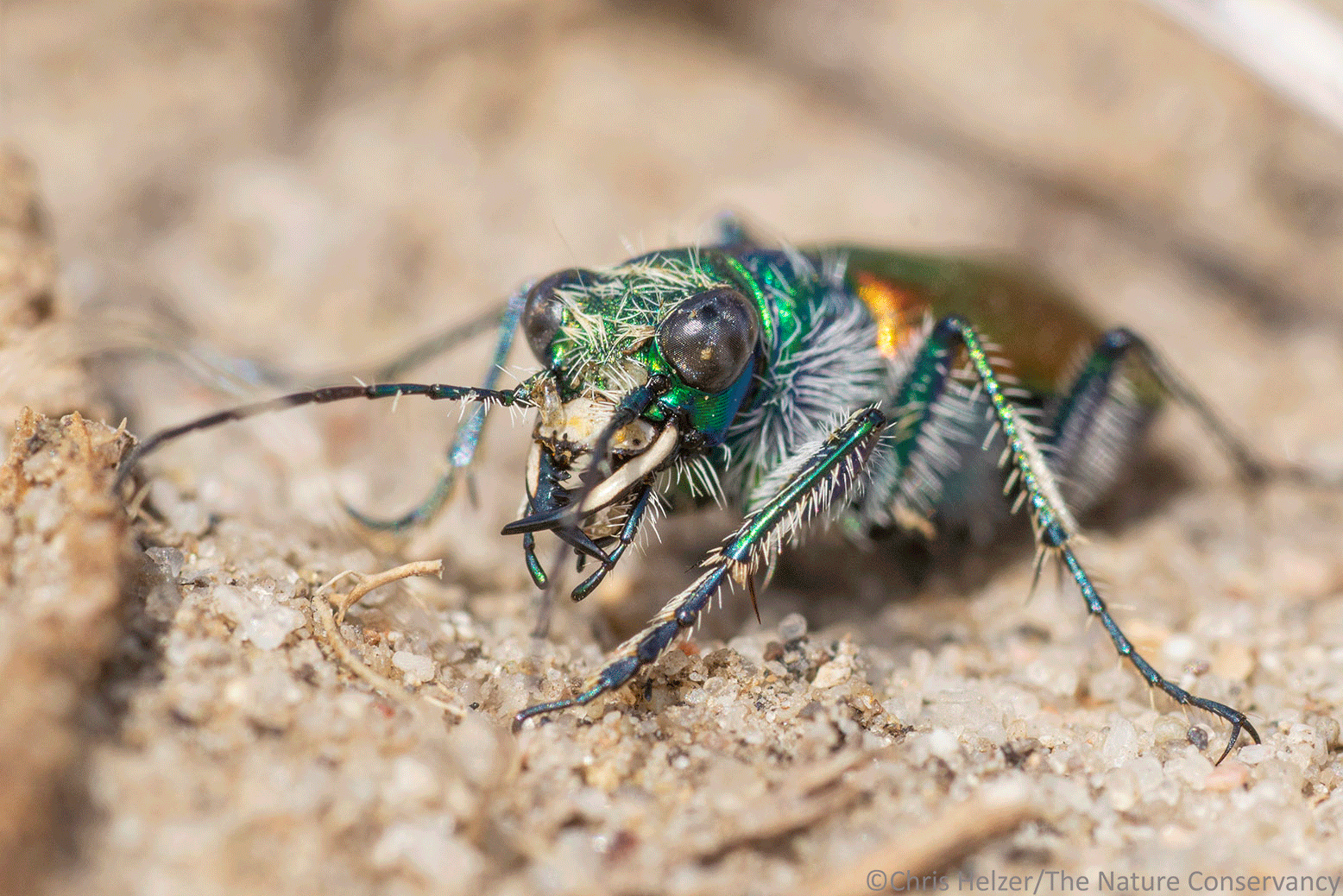
My second success came while on a hike with Kate and Sarah, our Hubbard Fellows. We were exploring the sandy hills along one of our Platte River Prairie hiking trails and stopped at a small area of bare ground. I was going to point out some interesting aspects of the exposed soil. Instead, we all got to enjoy a great look at one of the most colorful insects in the state – the festive tiger beetle.
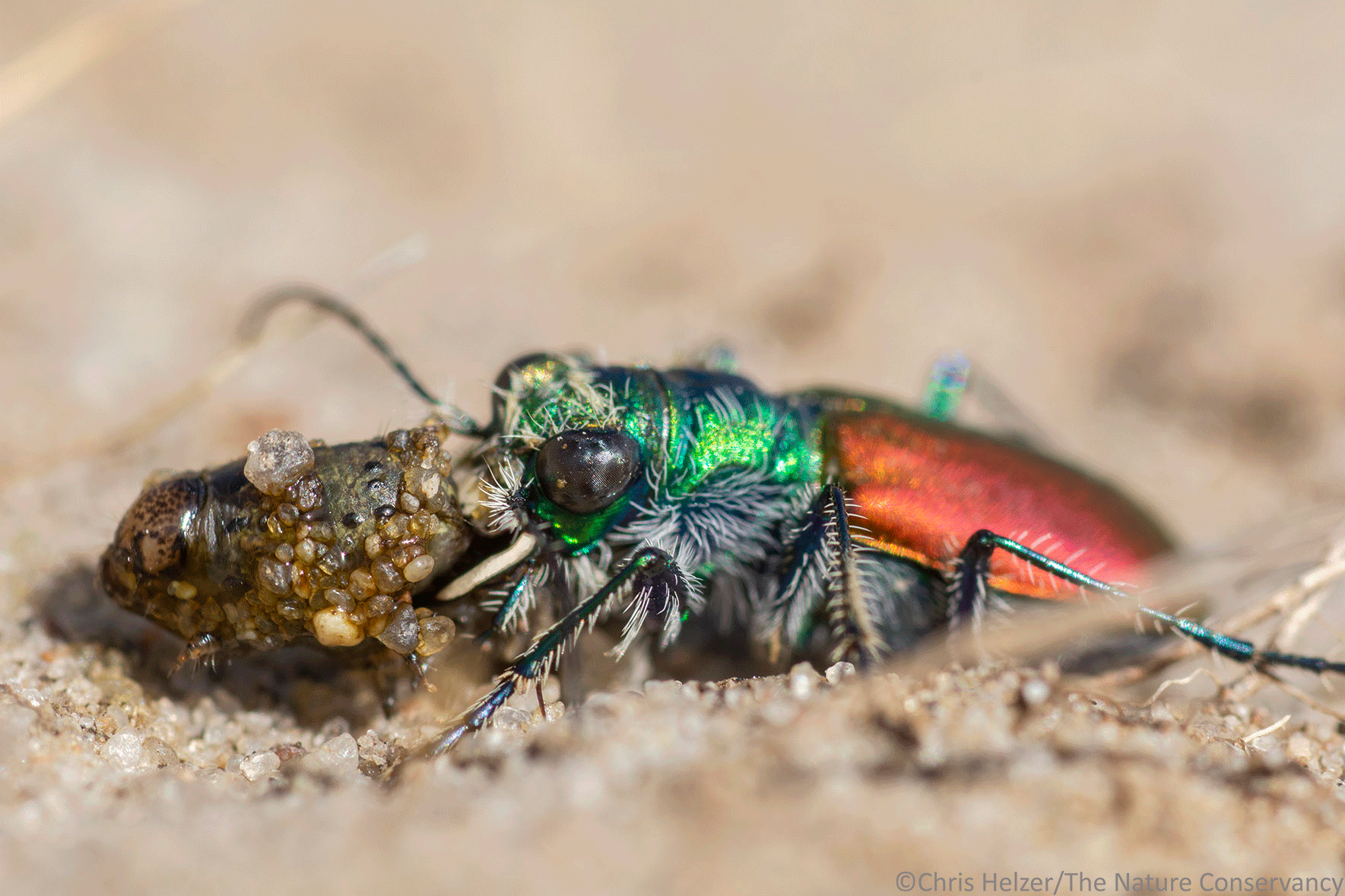
Festive tiger beetle (Cicindela scutellaris) eating a caterpillar (leaving the head for last). Nikon 105mm macro lens. ISO 400, 1/250 sec at f/14.

The beetle was very accommodating and sat nicely for photos. I figured that was because it was eating something, but even after it finished its meal, it hung around for a few more minutes. Maybe it was feeling satiated and happy? Or just warming itself in the sun? Either way, the presence of three people staring at it didn’t seem to bother it at all.

At the time, I couldn’t quite tell what the beetle’s sand-covered prey item was, but when I got home and looked closely at the images, I saw it was a caterpillar. I’ve never seen a tiger beetle eat a caterpillar before – I’ve always thought of them as catching faster prey. It makes sense, though. Why chase after fast prey when there’s a big ol’ slow-moving enchilada right there?
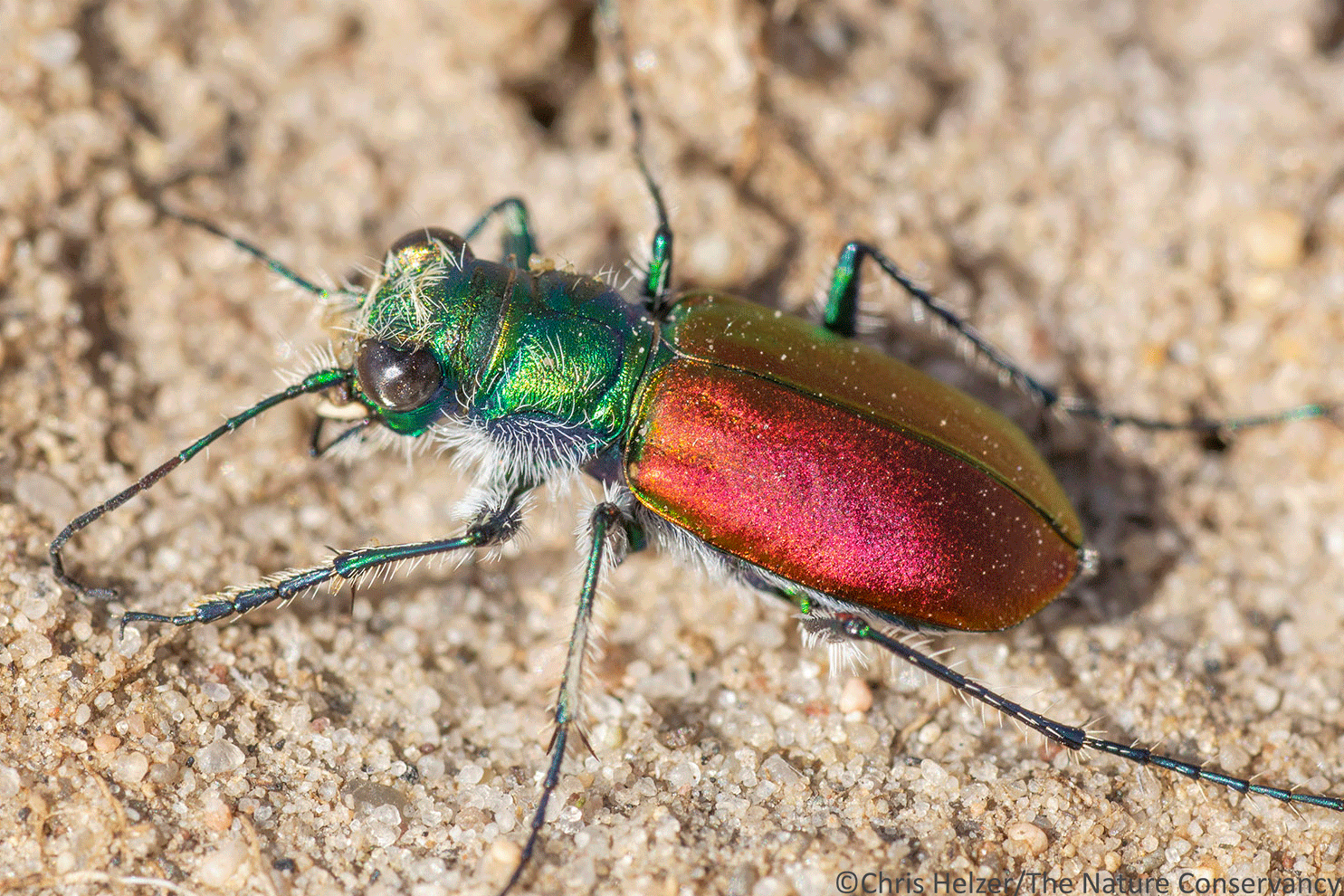
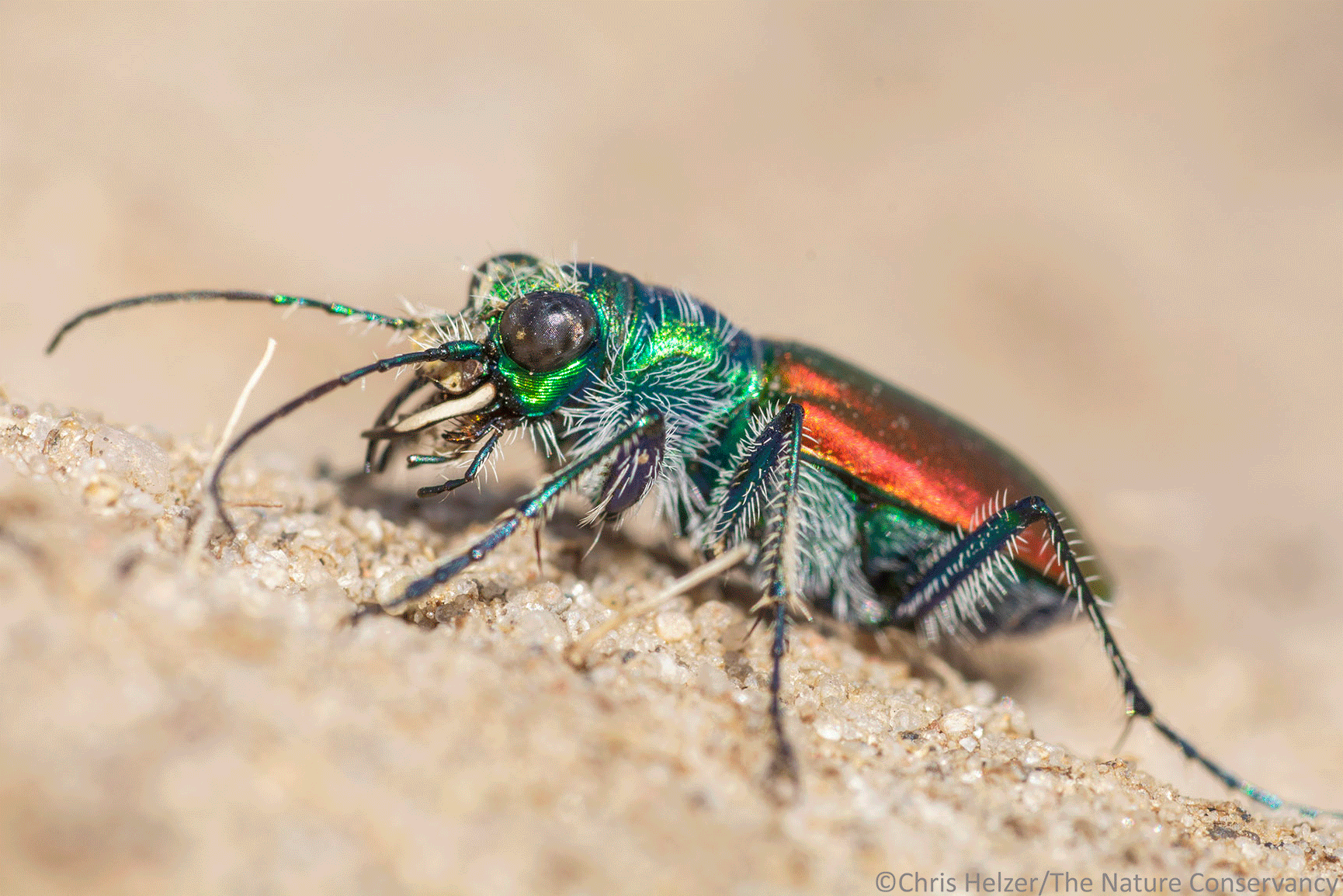
Festive tiger beetle (Cicindela scutellaris). Nikon 105mm macro lens. ISO 500, 1/250 sec at f/16.

The lesson here, of course, is that I can get good photos and see interesting things when I do what I do best – wander around in prairies with my eyes looking down. It’s only when my brain talks me into trying to be a wildlife photographer that things go badly. You’d think I’d learn. Instead, I’ll probably try to find some time next week to squeeze myself into my uncomfortable blinds again. Stupid brain…

Be The Spark Plug

Before jumping into today’s post, I want to put out a call for questions again. It’s been a while since we’ve done that, but if you have any questions about prairies, prairie management/restoration, prairie photography, or anything else you think I might be able to answer, please ask them in the comments section of this or other posts. Those questions often lead me to write a full post on a topic, but I also sometimes dedicate one post to answering a number of questions.

I owe a huge debt of gratitude to everyone (more than 60 of you!) who responded to my call for stories about how you were first drawn to prairies. A few more of you emailed me with your tale. While preparing to write this post, I re-read all those stories again and they are really lovely. In addition, as I was hoping, they provide some helpful insight into how people fall in love with prairies – and how we can help!

Bill Whitney, retired co-founder of Prairie Plains Resource Institute, has been a major inspiration to people around Nebraska, me included.

Based on those stories, most people discovered prairies when they were led to them by someone they knew. A friend, relative, professor, or local naturalist took them to a local prairie and showed them the wonders of grasslands. The second most common path was either growing up around prairies or moving to someplace where prairie was nearby and/or part of nearby recreational sites. Proximity led to familiarity, and that gradually built a relationship between that person and prairies.

Those who didn’t find prairies through a particular person or physical proximity tended to find them by either reading about prairies or because prairies were a place to pursue other interests such as birding, butterfly watching, or art/photography. For many of those people, of course, proximity still played a role. You have to have access to prairies in order to go look for birds, butterflies, or artistic opportunities. The path to those prairies, though, started with another pursuit.

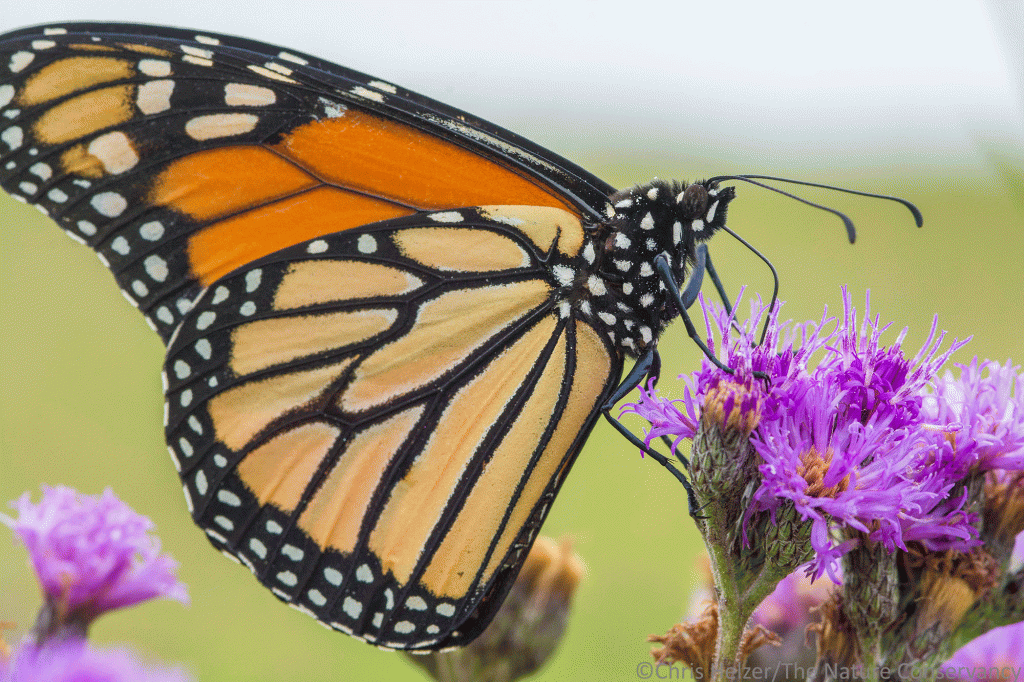
Monarch butterflies are familiar to many people and their plight has helped bring attention to their habitat needs – which, around here, largely means native wildflowers and prairies.

Interestingly, a combination of factors was necessary to get most people hooked. The majority of people who said they grew up around prairies, for example, also mentioned an experience or a person who really got them to notice and appreciate those grasslands. People were fueled up by living near grasslands or by enjoying outdoor recreation, but it took a spark to finally ignite their prairie love.

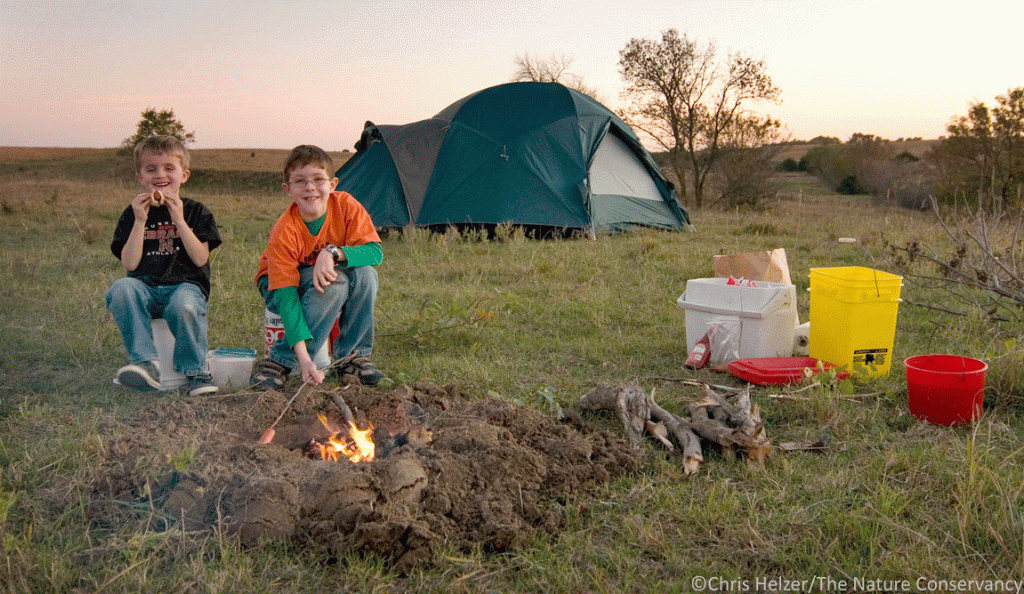
My own story, it turns out, is a great example of that. I grew up in a prairie landscape and liked being outside, but it took a conversation with my friend Steve Winter to finally inspire me to fall in love with the prairies that had been in the background all along. Steve was my spark plug.

There’s a lot to learn from these stories. One takeaway for me is that for most people, there’s a two stage process to falling in love with prairies; a fueling stage and then a spark. The fuel can come from living in a landscape or neighborhood where prairie is nearby or all around you. Alternatively, the fuel might be a general love of the outdoors and/or a special attraction to a particular group of animals or plants. It might be gardening, birding, nature photography, or trail running. There are a lot of ways to fuel up a potential prairie enthusiast.

The second stage is the spark, and the spark almost always comes from another person. That person might be a relative or a field trip leader, a writer or photographer, or just a friend who is already excited about prairies and shares some of that enthusiasm. In one way or another, that person ignites the fuel within someone and off they go!

My kids had plenty of prairie experiences while growing up, but a lot of their friends will never associate their youth – or even their adulthood – with the prairies all around them. They need a spark.

Here’s where you come in – all of you reading this. How can you help built up the fuel in people around you? You can’t (usually) get people to move to a landscape full of prairie, but there are ways to bring prairie to people’s yards or neighborhoods – or to draw attention to what already exists. Initiating local prairie restoration projects, encouraging and facilitating the use of native wildflowers in gardens, and educational programs that get people interested in birds, butterflies, or plants are all terrific examples of building fuel. There are countless other options.

And then… Be the spark plug. Share your passion about prairies with those around you. You don’t have to be an expert, you just have to care. Talk about why you care. Invite people to visit the prairie with you so they can see it through your eyes. If you’re a photographer, don’t just share your photos, share the stories behind the photos – not just the subject matter, but how you felt and why you were there in the first place. If you’re someone who likes to organize things, organize an event at a local prairie. There are lots of ways to do this. Choose the ones that fit your personality.

However you do it, just do it. Be the spark plug.