This week, I went against form and did some flash photography. I bought a flash set up years ago and have used it maybe 5 times since. For a variety of reasons, I just enjoy using natural light more than flash, and I also don’t like carrying any more equipment around than I need to. However, some of my favorite macro photographers, including Clay Bolt, Piotr Naskrecki, and Thomas Shahan, show very clearly how fantastic flash photos can work – and there are times when natural light isn’t cooperative.
I was watching some YouTube videos this week, dreaming about equipment upgrades, and was inspired by a very simple flash setup Thomas Shahan was using. He was just using his on-camera flash with a diffuser made of a paper towel and some clear plastic. It looked like something I could do, so I made my own modified version and tested it. Here are some of the results.
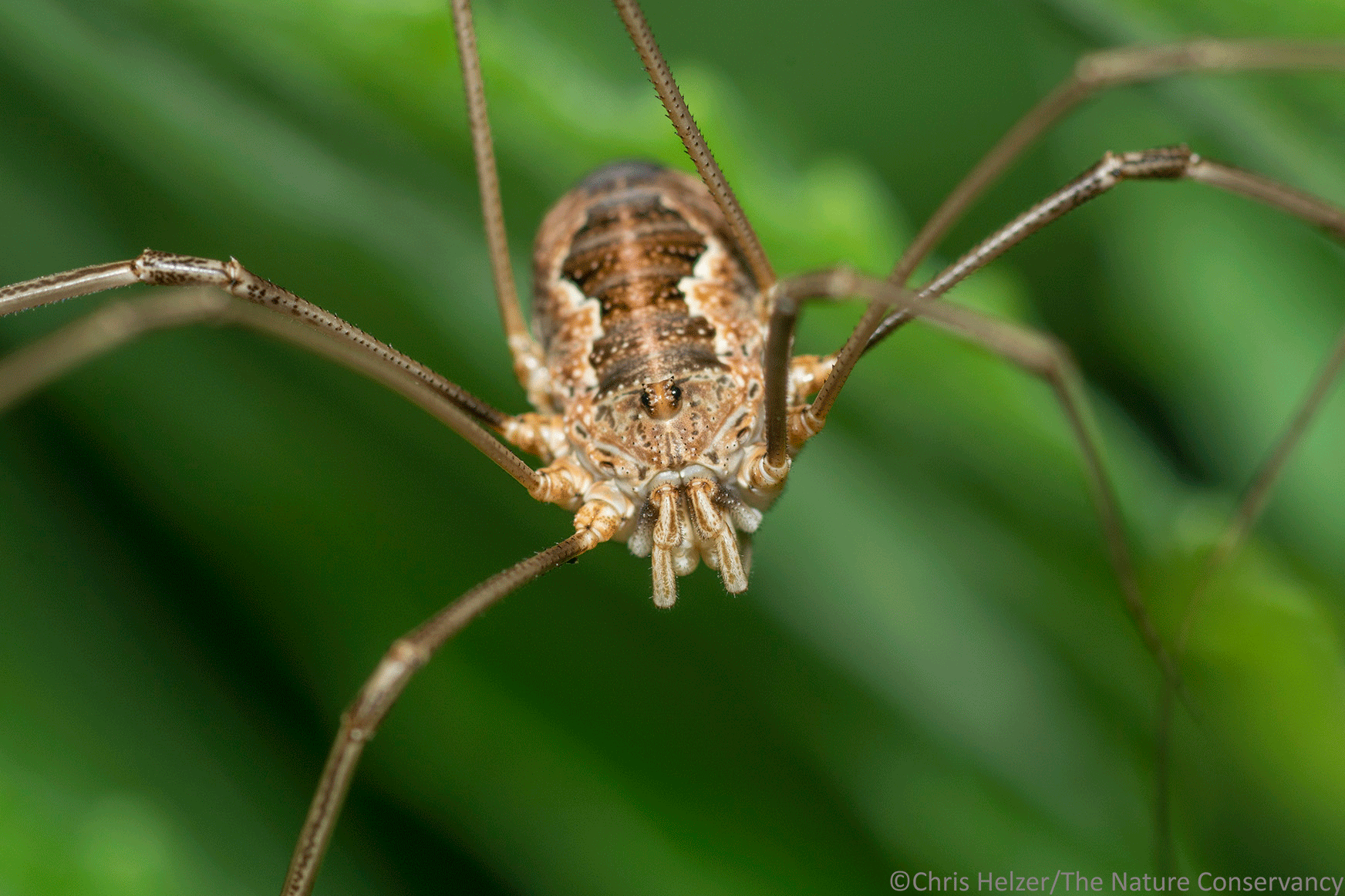
This was my first attempt with the flash. This little hover fly was hiding in the shadows of our prairie garden and I was able to illuminate it and get a photo. Nikon 105mm macro with flash. ISO 200, 1/250 sec @ f/20.This harvestman was in our backyard prairie garden and was patient with me while I fiddled with my technique. Nikon 105mm macro with flash. ISO 200, 1/250 sec @ f/16.
It seems like it’s been cloudy for the last month around here. One nice thing about a flash is that I can still get insect photos when the natural light is too dark to work with otherwise. I still don’t understand a lot about how to get the most out of flash photography, but if all I have to do is carry around a small flat piece of cardboard and paper towel, I should be able to get some practice.
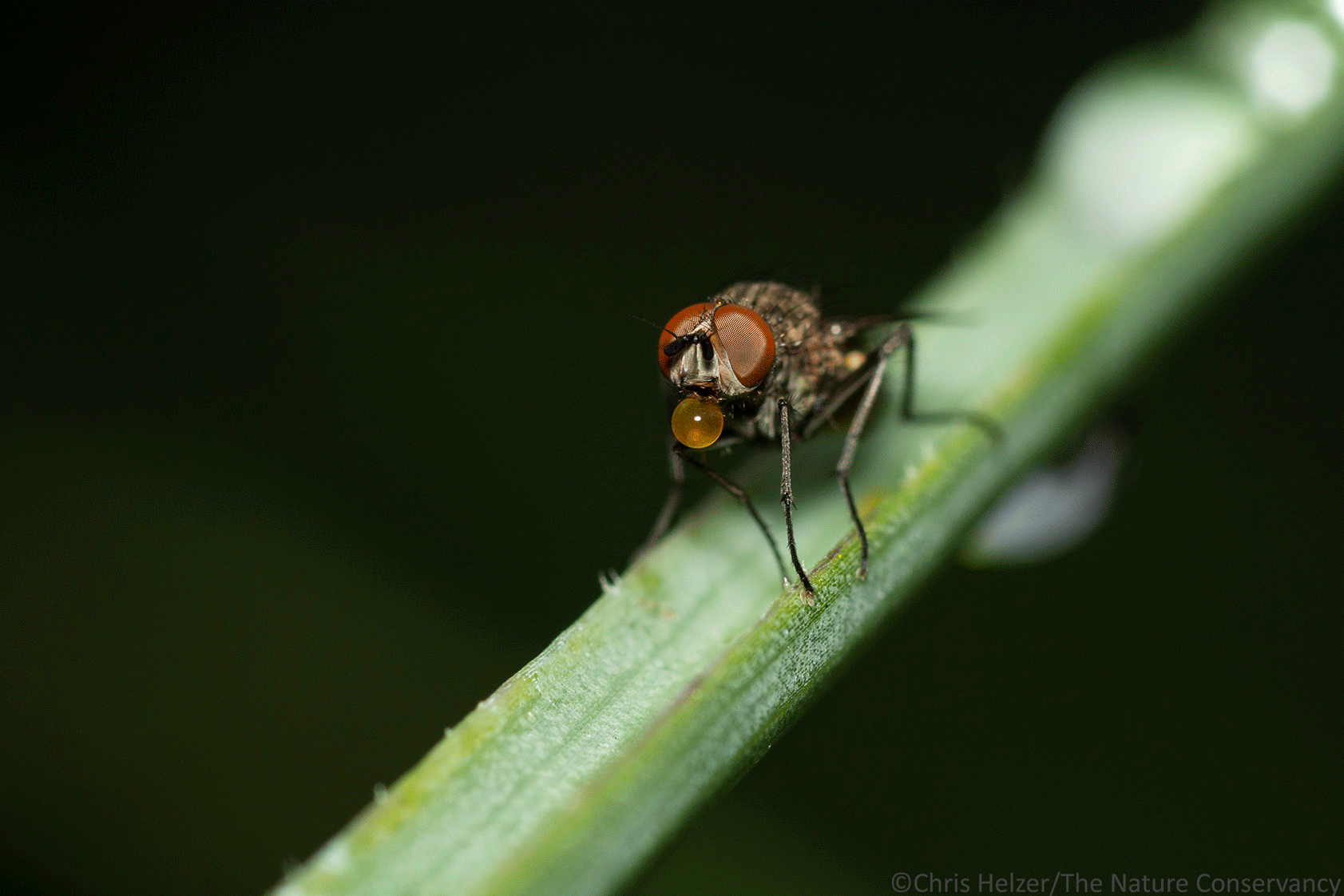
This little fly had a bubble of regurgitated food dangling from its mouth. I know some flies do this to attract females (?!) but I don’t know if that’s what this one had in mind. Nikon 105mm macro with flash. ISO 200, 1/250 sec @ f/16.Rain drop on spiderwort – with flash. It’s not my favorite photo in the world but I wanted to see what the flash did with water droplets. Nikon 105mm macro with flash. ISO 200, 1/250 sec @ f/16. Our friends’ young son has been seeing little beetle larvae like this in their backyard for a while. I told him to catch one and bring it over. I photographed it and submitted it to Bugguide.net, where we got confirmation that it is a lightning bug larva. In this case, I used a paper towel for the stage and for the flash diffuser. What a great invention…! Nikon 105mm macro with flash. ISO 200, 1/200 sec @ f/25. Here’s the basic frame of the diffuser – combination of cereal box, wire, and tape. Very complicated… I’m not sure the wire is even necessary, but I wanted to be able to adjust the angle of the diffuser and didn’t want it to get floppy in the wind or after repeated uses.Here’s the full set-up on my Nikon D7100 camera. The diffuser wraps around the macro lens before I attach it to the camera and is tight enough to stay upright. So far so good.
I don’t think this is going to change my general approach to photography. I’ll still use natural light when it’s available. But it might be pretty handy to have this little diffuser in my bag when I find a cute snake, leaf hopper, or jumping spider on a cloudy day and want to make a portrait…
I started working on a serious post this morning – one I’ve started several times and haven’t yet figured out how to write. I spent nearly an hour fighting with it and then gave up and decided to just do another quiz. Quizzes are definitely a lot more fun for me to write, and probably more interesting to you too.
Question #1. What color are the eyes of this ladybird beetle?
A. White
B. Black
C. Cerulean
D. Chartreaux
E. It’s not a beetle, it’s a bug. LADY BUG. It’s right there in the name
.
Question #2. What species of ladybird beetle is shown in the above photo?
A. Five-spotted lady bug
B. Seven-spotted lady bug
C. Thirteen-spotted lady bug
D. I’m pretty sure Chartreaux is a kind of cat, not a color
E. Ok, but seriously, is it a bug or a beetle?
F. It’s a beetle.
.
Question #3. When they named the seven-spotted lady bug (shown above) why did they only count the black spots and not the white ones?
A. Because ‘thirteen-spotted lady bug’ is a dumb name
B. Thirteen-lined ground squirrels might disagree
C. At least they didn’t count the black eyes as spots
D. Good point
E. Was it? Or was it just a clumsy way to provide an answer to #1?
.
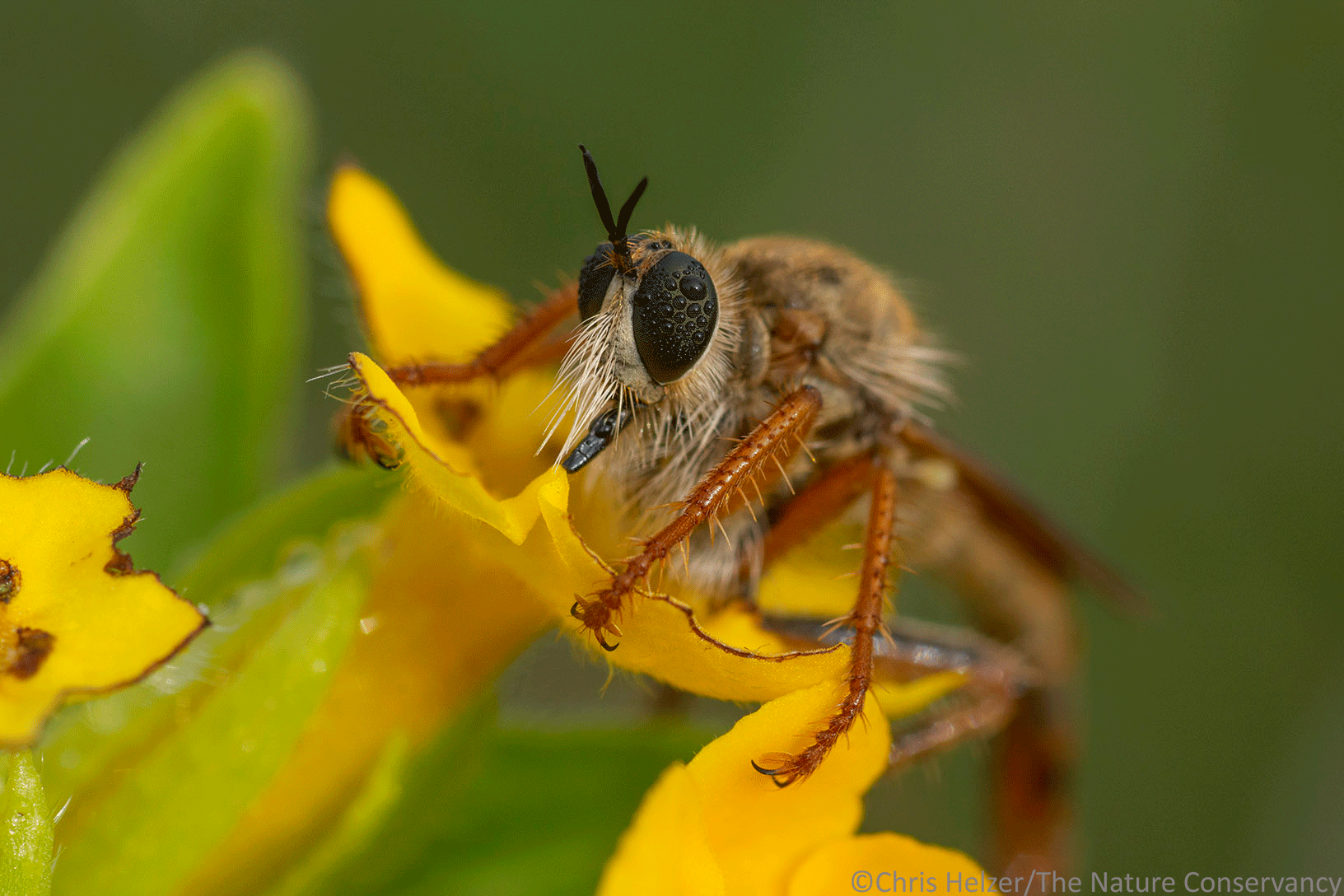
Question #4. What kind of creature is this?
A. Murder mosquito
B. Robber fly
C. Shoplifter wasp
D. Notorious B.U.G.
E. I don’t know, but its legs look an awful lot like centipedes
F. Wow, they really do!
.
Question #5. What is the technical term for a robber fly’s ‘moustache’ that helps protect it against dangerous prey?
A. Van Dyke
B. Scapula
C. Mystax
D. Trilby
E. Pro bono
.
Question #6. Who said, “Mistakes are part of being human, mystax are part of being robber flies”?
A. Nobody. Nobody has ever said that.
.
Question #7. What kind of legal assistance did the lead singer of U2 hope to get?
A. Pro Bono
B. Why are you like this?
.
Question #8. Why did Chris include this photo?
A. Because it’s a gorgeous little native bee (NOT a honey bee)
B. Because honey bees get way too much attention and Chris is sick of it
C. Because there are more than 4,000 species of native bees in the U.S. but all you hear about on the news when people talk about threats to bees is honey bees and even if they don’t specifically say honey bees they talk about the importance of honey which is only made by honey bees and not any other bees so they might as well be talking about honey bees which are basically just introduced livestock species that aren’t even all that helpful in prairies and other ecosystems where they actually compete with native bees and other pollinators who don’t really need more challenges in the lives thank you very much.
D. Because Chris needs to lighten up just a little bit
.
Question #9. What are the white structures in the above photo?
A. Fruiting bodies of a fungus
B. Flowers of a grass
C. Eggs of a katydid
D. Larva of a wasp
E. Honey bees have humans to manage their populations so they’re not even in real danger of extinction!
F. Yes, we get it. Let it go.
.
Question #10. What kind of grass is shown flowering above?
A. Prairie cordgrass (Spartina pectinata)
.
Question #11. What is the best description of the above photo?
A. It’s an unfortunately cropped photo that doesn’t show the tree trunk this hawk collided with and is now embedded in like a dart on a dart board.
B. Chris’ reflexes are not what they once were and he didn’t quite press the shutter button fast enough.
C. He’s not such a talon-ted photographer after all, is he?