Photos of the Year – December 30, 2024

While I spent a lot of 2024 staring at (and photographing) my square meter prairie plot, I did also take photos elsewhere. Here are some of my favorite 2024 photos from those other locations.

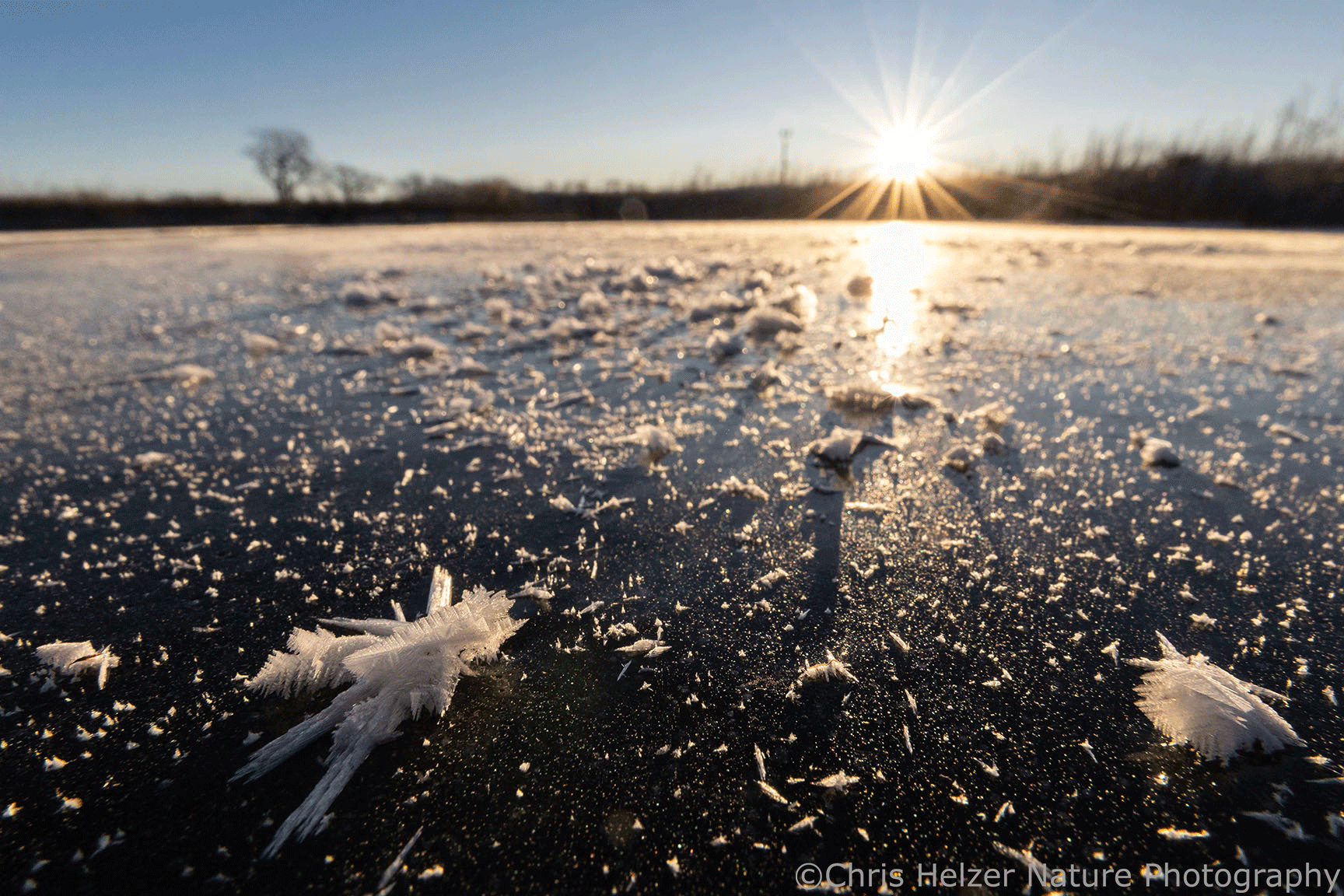
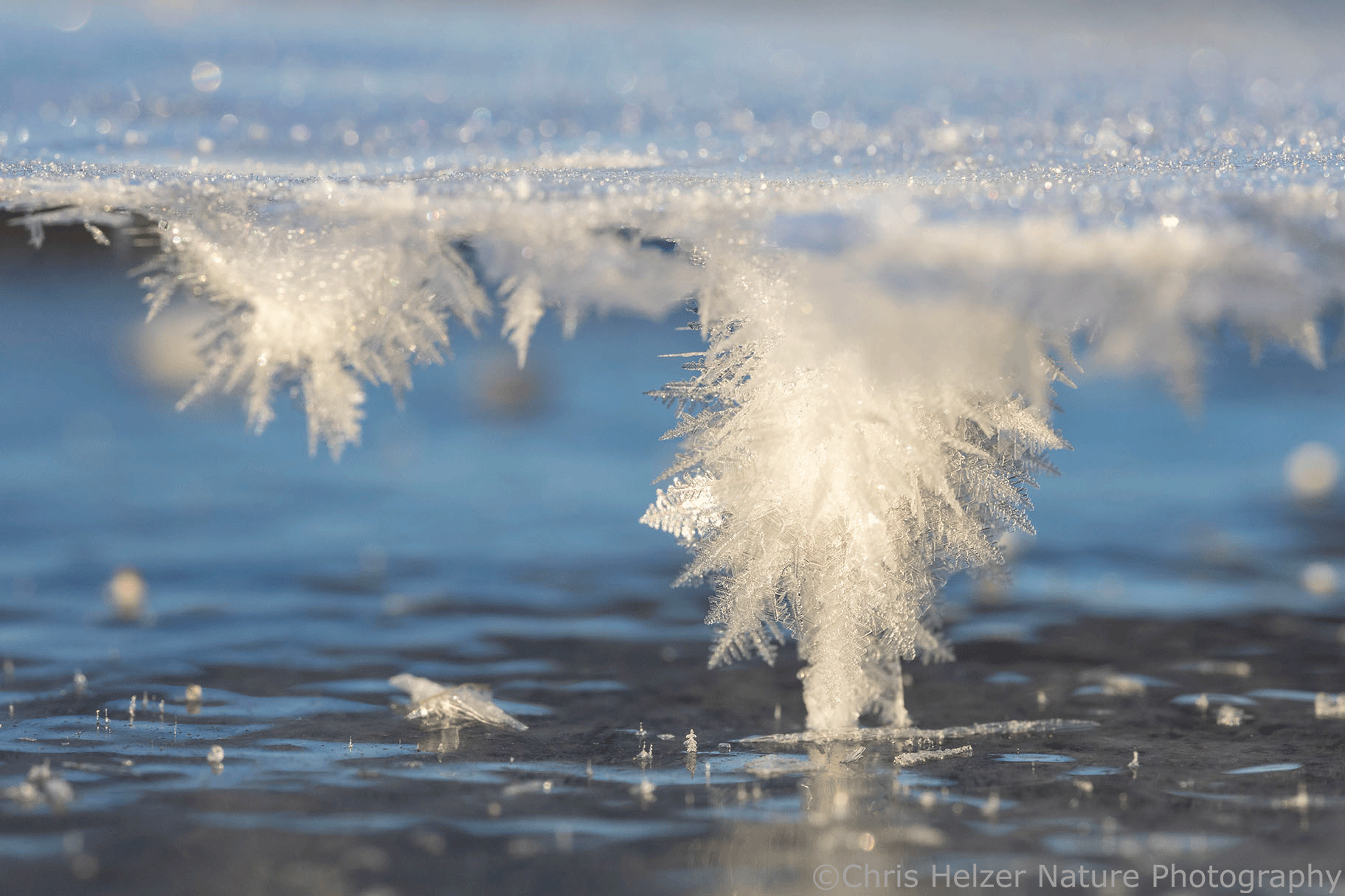
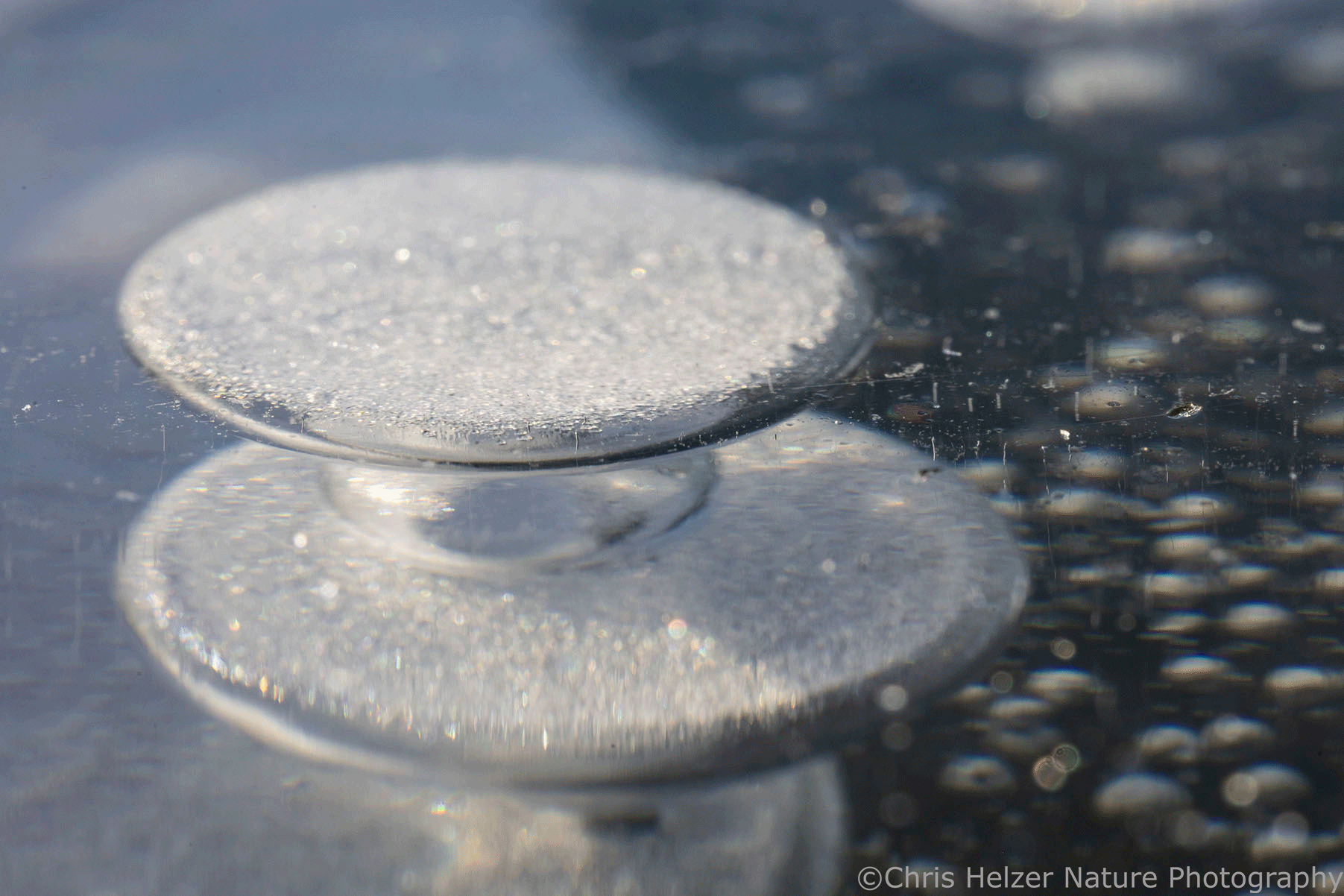
Of these four winter photos, the first three were taken on January 7 and the last one was photographed on December 13, bookending the year nicely.

Frost and ice at a restored Platte River wetland.
Rushes and frost on a frozen restored Platte River wetland
More frost on the same frozen wetland
Ice around the base of a sunflower on the edge of a small reservoir north of Aurora, Nebraska.

By late March, I was starving for wildflower photos. It was a real pleasure to wander around Prairie Plains Resource Institute’s Gjerloff Prairie on March 30 and find some prairie false dandelion (Nothocalais cuspidata) in bloom. That was a great way to kick off the 2024 growing season.

Nothocalais cuspidata

I only photograph prairie dogs that don’t seem concerned about my presence. That’s not really so much an ethical stand as it is a reality. Prairie dogs that are concerned about my presence dive into holes when they see me. That makes photography much more challenging!

While on a quick trip to the Niobrara Valley Preserve in early April, I drove to the edge of a small prairie dog town and noticed that one of the little critters didn’t immediately zip into its burrow. I edged out of the truck and army crawled toward it, pausing for long periods to let it relax. Eventually, I captured the below photo of it chewing on some early-season plant growth.

Prairie dog, Niobrara Valley Preserve
Crab spider with captured fly on white-eyed grass. Helzer family prairie.
This colony of mound building ants (probably Formica obscuriventris according to James Trager) was very active on May 2 at the Platte River Prairies.

I took another trip up to the Niobrara Valley Preserve in late May and spent a really nice couple hours watching the sun come up in our east bison pasture. The following three photos are all from that morning.

Bison bull grazing before sunrise.
Sunrise and bison
This looks like a sweet photo of a mom caressing her calf. Actually, I think she was scratching an itch, using her calf as a convenient scratching post.
Stemless hymenoxys (Tetraneuris acaulis?) and sunset at The Nature Conservancy’s Cherry Ranch – Nebraska Panhandle.

In June, I had a speaking engagement in the Nebraska panhandle and took advantage of the opportunity to visit the Conservancy’s Cherry Ranch nearby. Rather than getting a hotel, I just pitched a tent there. That gave me the opportunity to photograph some evening primroses in the evening (after sunset, technically – is that still evening?).

These flowers are named because they open late in the day and are mostly pollinated by night-flying insects. I’ve always wanted to photograph them at night. This photo was taken with my camera set on the ground and propped in the right position by a sweatshirt. It was a four second exposure, so I needed the camera to be stable.

Evening primrose (Oenothera caespitosa, I think) after sunset
Caterpillar on Scribner’s panic grass – Niobrara Valley Preserve
I’m pretty sure this is a variegated fritillary caterpillar – photographed at the Niobrara Valley Preserve in June.

In late July, we had a research meeting at the Niobrara Valley Preserve to discuss options for a potential project. The night before the meeting, a friend and I stood up on a ridge above the Niobrara River and watched a massive thunderstorm move across the sky to the south of us. The thunderhead was so big I had a hard time getting it all in one frame, even with my ultra wide angle lens. As it moved away, there was a lot of lightning on the back side and I scrambled to find something to put in front of it for photos. The photo below was my favorite from the batch.

Lightning storm at the Niobrara Valley Preserve
September sunset and Niobrara River – Niobrara Valley Preserve
Moonrise and campfire at the Niobrara Valley Preserve

When I photograph small animals, I often try to capture their face because I feel like that makes them more relatable. Since insects and spiders aren’t always the most popular with the general public, I have to work extra hard to make them seem less scary and more interesting. Photos alone don’t usually do the trick, but combining a charming portrait with a good story about how the creature lives its life can often create a feeling of connection. That’s a start.

Dogbane beetle on its favorite plant. Lincoln Creek Prairie
Polyphemus moth – Niobrara Valley Preserve
My favorite bee! A blue sage bee at Lincoln Creek Prairie. I think this is a male that had roosted overnight on the only food plant for this species – pitcher sage, aka blue sage (Salvia azurea).
Big sand tiger beetle at Niobrara Valley Preserve
Bee sticking its tongue out at me. Lincoln Creek Prairie
A big female wolf spider with a captured katydid nymph
Lesser earless lizard trying to look casual. Niobrara Valley Preserve

In late July, Kim and I took a vacation excursion to the Flat Tops Wilderness in Colorado. For various reasons you can read about here, we cut the backpacking portion of our trip short and ended up camping at a nearby reservoir and doing some day trips. While it was a different trip from what we’d planned, it was still great, and I ended up with some nice photos as well. Here are a few of my favorites.

A smoky sunset in the Flat Tops Wilderness
One of many salamanders in a small lake at about 11,000 feet elevation.
More of the Flat Tops Wilderness
Lupine and rainbow at Stagecoach State Park near Oak Creek, Colorado

Most of my photography is done in an exploratory fashion. I don’t start out with a plan, other than to find interesting light and then look for subjects that catch my attention. Working on assignment, where I have a particular story I need to capture, is less fun for me. It also constrains me – I’d much rather be able to just find whatever happens to be the most fascinating at the time. Sometimes, that includes dangling, dew-covered grass flowers. Other times, it’s a butterfly that happens by, or a leaf with an attractive color scheme.

Big bluestem anthers. Lincoln Creek Prairie.
Common buckeye butterfly perched (briefly) on big bluestem. Platte River Prairies.
Velvety gaura leaf (Gaura parviflora)
Summer wildflower party at the Helzer family prairie.
Sunrise and Maximilian sunflower at the Platte River Prairies
Stiff sunflower (Helianthus pauciflorus).
Stiff sunflower and sunrise. Platte River Prairies.

Every year brings new adventures. While 2025 may bring anxiety and strife, I’m confident there will also be lots of opportunities for exploration and photography. I rely on the latter to help me get through the former. I hope each of you has a similar coping mechanism – prairie-related or otherwise.

Be well, friends.

Best of 2024 – Square Meter Prairie Photos

As 2024 winds down, there’s a lot to look back on. Photographically, there’s no question what my strongest memories are tied to. Starting in late April, I made 112 trips (and counting) to a 1×1 meter plot of prairie along Lincoln Creek on the eastern edge of Aurora, Nebraska. There, I found an incredible bounty of beauty and complexity that kept me spellbound – often for more than an hour at a time.

To celebrate my square meter prairie year, I’ve chosen 30 of my favorite portraits taken within that little plot of land. I hope you enjoy them, but I’m not finished with the project. There are still four more months to go before I’ve completed a full year of visits and I plan to take full advantage of that time – especially when there is snow, frost, or sky to provide a little extra accent to the story.

In the meantime, here are my favorite 30 photos (so far!) from my square meter of prairie.

Dectes stem borer (Dectes texanus) on a Maximilian sunflower leaf with butterfly milkweed flowers behind. June 28, 2024
Indian grass (Sorghastrum nutans) flowers. September 2, 2024
A backlit ant (Formica paledifulva) searching for extra floral nectar produced by Maximilian sunflower. June 22, 2024
Butterfly milkweed flower buds (Asclepias tuberosa). June 19, 2024
A wood tick (Dermacentor variabilis) perched on a sedge flower (Carex gravida), waiting for something to pass by within reach. May 21, 2024
A harvestman (aka daddy longlegs) on butterfly milkweed. June 22, 2024
Lead plant flowers (Amorpha canescens). June 28, 2024
Green lacewing, backlit by early morning light. June 25, 2024
A midge (Chironomidae) on big bluestem. September 27, 2024
Lead plant leaves and dew. May 26, 2024
A male crab spider with butterfly milkweed in the background. June 28, 2024
Seven-spot ladybug (Coccinella septempunctata). May 30, 2024
Common milkweed leaf (Asclepias syriaca). August 8, 2024
Red milkweed beetle (Tetraopes tetrophthalmus). July 12, 2024
Female crab spider hiding on butterfly milkweed. June 30, 2024
Striped lynx spider (Oxyopes salticus) with captured long-legged fly (Dolichopodidae). August 12, 2024
Fallen butterfly milkweed flower in morning dew. July 3, 2024
Big bluestem (Andropogon gerardii) flowers and morning sun. August 25, 2024
A wasp nestled among butterfly milkweed flowers on a dewy morning. July 7, 2024
Lead plant leaves and dew. May 30, 2024
Prairie tree cricket (Oecanthus argentinus) on lead plant with butterfly milkweed behind. July 6, 2024
Maximilian sunflower (Helianthus maximiliani) and big bluestem with the “hunter’s super moon”. August 25, 2024
The maize calligrapher (Toxomerus politus), a hover fly, feeding on big bluestem pollen. August 25, 2024
Goldenrod soldier beetle (Chauliognathus pensylvanicus) on Maximilian sunflower. September 2, 2024
Red-legged grasshopper (Melanoplus femurrubrum) on Maximilian sunflower seed head. September 27, 2024
Little bluestem flowers (Schizachyrium scoparium). September 6, 2024
Woodland meadow katydid (Conocephalus nemoralis) on big bluestem. September 25, 2024
Metrioidea beetles feeding on Maximilian sunflower. September 14, 2024
Butterfly milkweed seeds. October 11, 2024
Maximilian sunflower and morning sky. November 6, 2024

If you take nothing else from this project, I hope you’ll come away with a sense of how much happens beneath the canopy of a prairie. Even in a small, isolated, restored (planted in 1980) prairie next to the local pet adoption center, there was a stupendous abundance of life, activity, and wonder to admire and photograph. Now multiply that across acres, square miles, and landscapes of grassland. Come on, now!

Grasslands are not flat, boring places full of grass. They’re full of complex, interacting species and communities that combine to form a beautiful and resilient ecosystem. Please share this post and project with anyone who still hasn’t discovered that.