The Beauty and Diversity of an Abandoned Road Lined with Invasive Species

A couple weeks ago, I found myself in Kansas for another of Kim’s ultramarathon races. This time, my son John was also running his first ultra, so I was crewing two people.

(I know, I know, it appears ultramarathon running is contagious, doesn’t it? Don’t worry – I’ve been very careful and have so far avoided catching it, despite repeated exposure to infected people.)

This particular race was on the rocky Elk River Hiking Trail in southeastern Kansas. It’s a site we’ve visited often enough that I’ve developed some favorite spots for photography. You might be surprised by what those favorite spots look like. There’s not a lot of grassland available along the trail, and much of it is pretty heavily infested with invasive plants. I’m sure there are pretty prairies in the vicinity. However, I’m trying to fit photography into prescribed windows of time, so I have to stay close to the aid stations where I meet my runner(s) to hand them food, water, dry socks, and whatever else they need. I

As a result, those small, invaded sites are what I have to work with. And I’ve found some pretty great photographic opportunities in them over the years, actually. On this trip, I was fighting some wind and working in small windows of time, but still managed to enjoy myself.

I think this is a western leaf-footed bug (Leptoglossus clypealis) on eastern redcedar.

One of those favorite sites is an abandoned road that leads down to a shallow bit of Elk City Lake. The road is lined with eastern red cedar trees and has both sericea lespedeza and Caucasian bluestem growing up through the cracks in the asphalt. What more could a nature photographer want?

The abandoned road I used as a photography location.

Eastern red cedar is a native tree in North America, but is acts as an invaider because of fire suppression after European colonization. Sericea lespedeza and Caucasian bluestem are non-native and invasive plants that can form big monoculture patches (and are extraordinarily difficult to control/contain). BOOOOO!

On the other hand, there was a lot of insect action on those invasive plants, and as a photographer with limited time, I was happy to use what was before me. My first observation was that the cedar trees were loaded with what I think were western leaf-footed bugs. There were hundreds of them, both adults and nymphs. I’m pretty sure they were feeding on the fruits of the cedars (see the photo below) but most of them seemed to be mainly lounging around.

This bug looks like it might have its mouthpart inserted into the fruit of the cedar tree.
Three nymphs of the same leaf-footed bug.
Hi there!

After returning home, I did some research, but didn’t find mention of eastern red cedar as a food plant for the western leaf-footed bug. That doesn’t necessarily mean much, since my investigation consisted solely of a brief Google search. It does appear the bugs feed on other trees, at least. Plus, I could have my insect identification wrong in the first place, which would make my Google search meaningless. I’d be curious to hear from anyone who has seen this species before, especially if you’ve seen big congregations on cedar trees.

The race was back in late September, and even in southern Kansas, a lot of wildflowers had finished blooming for the year. Sericea lespedeza, though, was still going strong. Whether because of the limited options or because it’s really nutritious, a lot of nectar-feeding insects were hanging out on the invasive lespedeza. Most of those were butterflies. I’ve given up on guessing the identity of skippers, but I recognized some of the other butterfly species.

Some kind of skipper butterfly on sericea lespedeza.
Another species of skipper (or the male/female of the first species, because what do I know?). See the little spider in the foreground?

One of the butterflies I recognized was the American snout butterfly – the first I’ve ever seen in real life. They’re not common in the prairies I most often hang out in, so it was pretty cool to see one, and nice of it to hang around long enough for several photographs. I also photographed a gray hairstreak, which is also pretty, but very familiar to me, so it wasn’t quite as exciting.

This one is a snout butterfly. For obvious reasons.
Gray hairstreak butterfly on sericea. It is gray and has little hairs, or tails on its wings, which apparently led it to being called a gray hairstreak. Don’t blame me – I didn’t name it.
I don’t know if this bug was feeding on the lespedeza or just perching on it.

The surrounding area did have a few other flowers blooming here and there, including a little patch of broom snakeweed and a native thistle (maybe tall thistle?). Those flowers also had a lot of pollinator activity. The snakeweed was attracting mainly flies and small bees, and the thistle attracted several butterflies during the few minutes I watched it.

Broom snakeweed. I promise there were pollinators on it. I just didn’t photograph any of them.
Two skippers on the same thistle flower head. Are they different species of skipper? It looks that way, which probably means they’re the same species.

I followed the road all the way to the upper reaches of Elk City Lake and found the water all gone. I wandered around on the mostly dry lake floor, which had been free of standing water long enough for lots of little annual grasses and sedges to sprout. I found some cricket frogs and chased them around a little with my camera. There were also lots of carcasses of European carp and some kind of gar. I’m sorry I’m not proficient enough in my dead fish identification to tell you what kind of gar it was.

A little cricket frog on the dry lake bottom.
The remnants of a gar lying on the same dry lake bottom.

One of the last photos I took that day is a mystery. It was a cocklebur hanging from a grass leaf in the middle of the abandoned road. The bur was half coated with dried mud, which also appeared to be what was sticking it to the grass leaf.

How did it get there? Was it placed intentionally or did it get rubbed off as a person or other animal brushed past the grass? Because insects are often on my mind, I wondered if there was something living inside the mud or bur, but didn’t open it up because I needed to get to the aid station before Kim did.

Mysteries are always fun, but they’re especially fun when you can figure out the solution. Help?

Cocklebur stuck to a grass leaf by some dried mud.

So, there’s my adventure in the great wilds of southeastern Kansas. I think there are a couple important lessons from the day. One is that even invasive species can provide some value. The species themselves aren’t inherently bad, after all. They’re trying to survive where they are and it’s not their fault they’ve been placed where they are problematic to others (or that there was a change in the people managing their landscape and that most of the new people don’t much like fire). The insects I photographed on the cedar and lespedeza were benefitting from those species, and good for them.

That doesn’t mean, by the way, that sericea lespedeza and eastern redcedar aren’t problematic. Of course they are. But it’s nice to be reminded that there’s some complexity to the way they interact with their surroundings.

The other big lesson is one I’ve learned many times. You can find amazing nature stories and species just about anywhere. I spent a couple hours happily exploring an abandoned road lined with invasive plants. There was plenty to observe and photograph. My square meter photography project, of course, is another example of how much can be found within a small area.

This is a lesson we need to share with everyone around us. Nature isn’t just for people willing to venture into remote areas high in the mountains, out into expansive grasslands, or deep into forests. Nature is all around us and worthy of our attention and admiration.

Even More Photos From The Same Square Meter of Prairie – Mid-Late September (Part 2 of 2)

Here’s part two of a deluge of September images from my square meter photography project at Lincoln Creek Prairie. As with Part 1, these images all came from the period of September 8-25, 2024.

The real joy of this project comes not from the species count, but from all the stories that occur at my plot. Some of those are natural history stories I get to observe. Others are related more to me as the observer, and the process of exploring, experiencing, and enjoying the beauty and diversity of life at a small scale.

Blah, blah, blah. Here we go:

The insect shown below is an adult spittle bug. Specifically, it is the sunflower spittlebug (Clastoptera xanthocephala). I didn’t know that when I took the photo. Bugguide.net experts identified it for me. Now that I know that, of course, I can be pretty confident that it is the species that created the spittle bug bubble clusters I saw on two different Maximilian sunflower plants within my plot.

Sunflower spittle bug.

Here’s a photo (below) of one of the two larval habitats of spittle bugs I found this month. I showed the same cluster of bubbles in an earlier post, in which you could see two larvae within the froth. This time, if you look closely, you can see a circular object in the middle of the bubbles. I assumed when I took the photo that it was another spittle bug larva. That seems like a reasonable assumption, right?

(Probably) the frothy mass of spittle bug larvae.

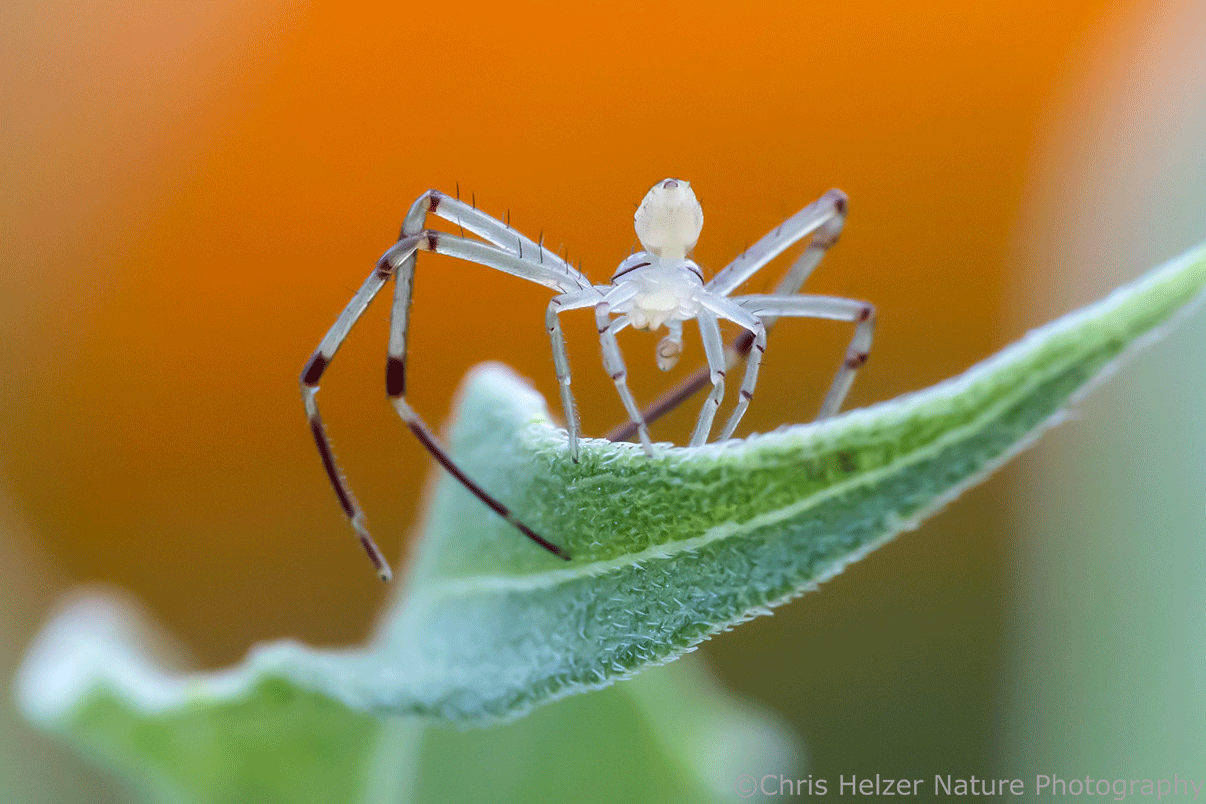
When I got home, I looked at the image more closely and it didn’t look quite right for a spittle bug larva. I drove back over to Lincoln Creek and took some more photos, using a higher magnification. Then, I extracted the object to see what it was. In the photo below, you can see some legs. That’s because the object turned out to be a tiny spiderling. I’m pretty sure it was a lynx spider baby, a topic that I’ll return to later in this post.

A tiny spiderling lies dead among the bubbles created by spittle bug larvae.

Did the spider crawl into the spittle on purpose? Was it pursuing the larvae? Whether on purpose or not, did it get caught in the bubbles and die? Or was it already dead from other causes and got dropped (or fell) into the bubbles?

I don’t know, but some online searching reveals that it’s not an isolated case. Dead invertebrates have been found in spittle bug masses before. I couldn’t tell, though, whether there’s any consensus about what’s going on. Is it just the mass of bubbles doing their job to protect the larvae? Why would a predator crawl into something that will kill it? Is it surprised to find itself stuck? Does it suffocate as it would if sprayed with soapy water? So many questions. I’d love to hear if others have seen something like this.

On September 15, I arrived at the plot to find a tree cricket pulling the last bit of its body out of its old exoskeleton. It was apparently completing its final molt into full adulthood. I’ve included the first photo I took of it, along with a series of others from the next hour and fifteen minutes or so. I’ve seen this kind of a thing many times, but I’m always amazed at how scrunched up the insects are before molting, and how well they expand and elongate after emerging.

Tree cricket at 7:46am on September 15
The same tree cricket as it stretched out and hardened over the next hour and change.

I’ve seen at least 15 species of spiders in the plot this year. Most of those came early in the summer. Lately, it’s slowed quite a bit, though I still see lynx spiders fairly regularly. Given that spider diversity, I was surprised that my first jumping spider observation came pretty late in the year (September 14). The two photos below were taken the second time I saw the jumping spider (maybe the same individual – who knows!), which was on September 18.

The big, gorgeous eyes of a jumping spider

I got some decent, but not great photos when I first saw it on September 14, so I was excited to get a second chance a few days later. A few seconds after I took the above photo, the spider went to the other side of the sunflower stem for a short period. When it re-emerged, it had a little bug (Hemipteran) in its clutches. It moved around a little over the next few minutes while it fed. I, of course, followed it, trying to get photos. I saw the spider once more, three days later, but not since.

Jumping spider with its prey (a small true bug)

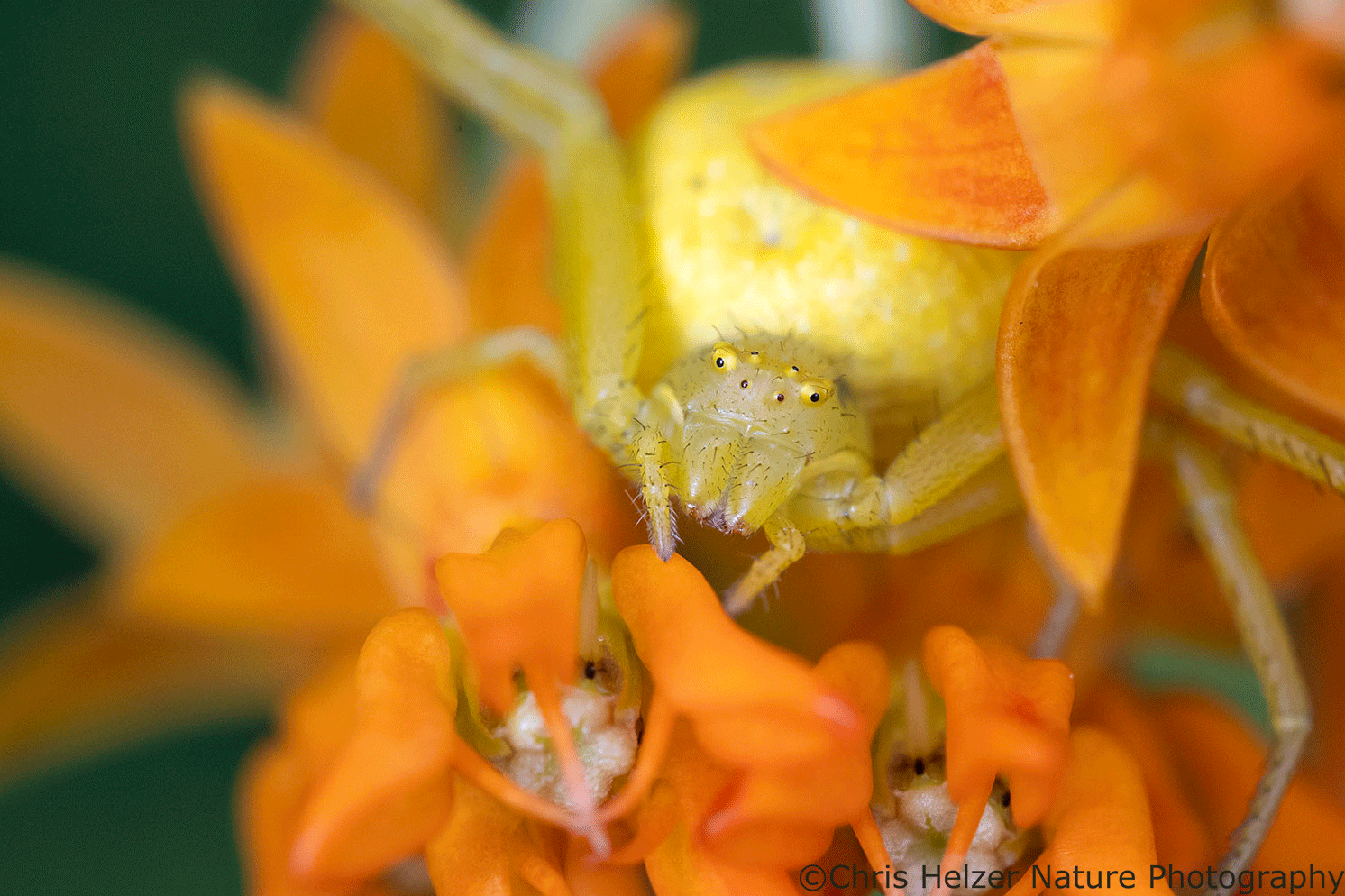
Lynx spiders have been the most abundant and consistently seen spider in the plot all year. That’s great for me – they’re one of my absolute favorites. I love their spiky-haired legs and the fact that they often sit still for photos if I’m careful about my approach.

I’ve seen both female and male lynx spiders this year, though most of what I’ve seen have been females. I’m sure I’ve seen many different females, but it’s fun to wonder how many times I’ve seen the same one over and over.

This month, I’m pretty sure I got to watch the same female over multiple visits because she was defending her egg sac. I first noticed the egg sac on September 18. It was only about 6 inches off the ground, but it was (fortunately) right on the edge of my plot where I could contort my body and get my camera into position for photos.

A female lynx spider and her egg sac.

Three days later, on the 21st, it looked like the sac was opened up and I started seeing some little spiderlings around. Interestingly, the spiderling I found in the spittle bug mass was there on September 15, so I’m guessing it came from a different litter.

Momma spider was still defending her eggs, even though at least many had hatched and the spiderlings seemed to be out moving around.

Obviously, I don’t know for sure that the little spiderlings I saw within a few feet of the egg sac had hatched from that particular sac. It seems likely, though, doesn’t it? Here are a few photos of tiny spiderlings from that week. For context, these spiderlings were about 3 millimeters in length.

Lynx spiderling
Lynx spiderling
Lynx spiderling
Lynx spiderling

Small milkweed bugs (Lygaeus kalmii) have been hanging around for about a month or so. As I understand it, they (and their offspring) feed primarily on the seeds of milkweed plants, using their long mouthpart. In fact, they can insert that straw-like mouth appendage through a milkweed pod and into the seeds within. Now that the butterfly milkweed pods in my plot are opening, access is even easier.

Small milkweed bug on butterfly milkweed seeds

I was confused one morning, though, when I found a small milkweed bug that appeared to be feeding on sunflower seeds (below). I double and triple checked to be sure it wasn’t the very similar-looking Lygaeus turcicus, which feeds on the seeds of oxeye, aka fabulous oxeye (or, if you insist, “false sunflower”). It wasn’t. I’m confident it was a small milkweed bug feeding on sunflower seeds that were about 2 feet away from butterfly milkweed seeds.

Why was it eating the “wrong” food?

I have no idea. Why do I like to dip my french fries in a strawberry shake and eat them? It’s not good for me but I do it anyway. I suppose bugs should get the same leeway.

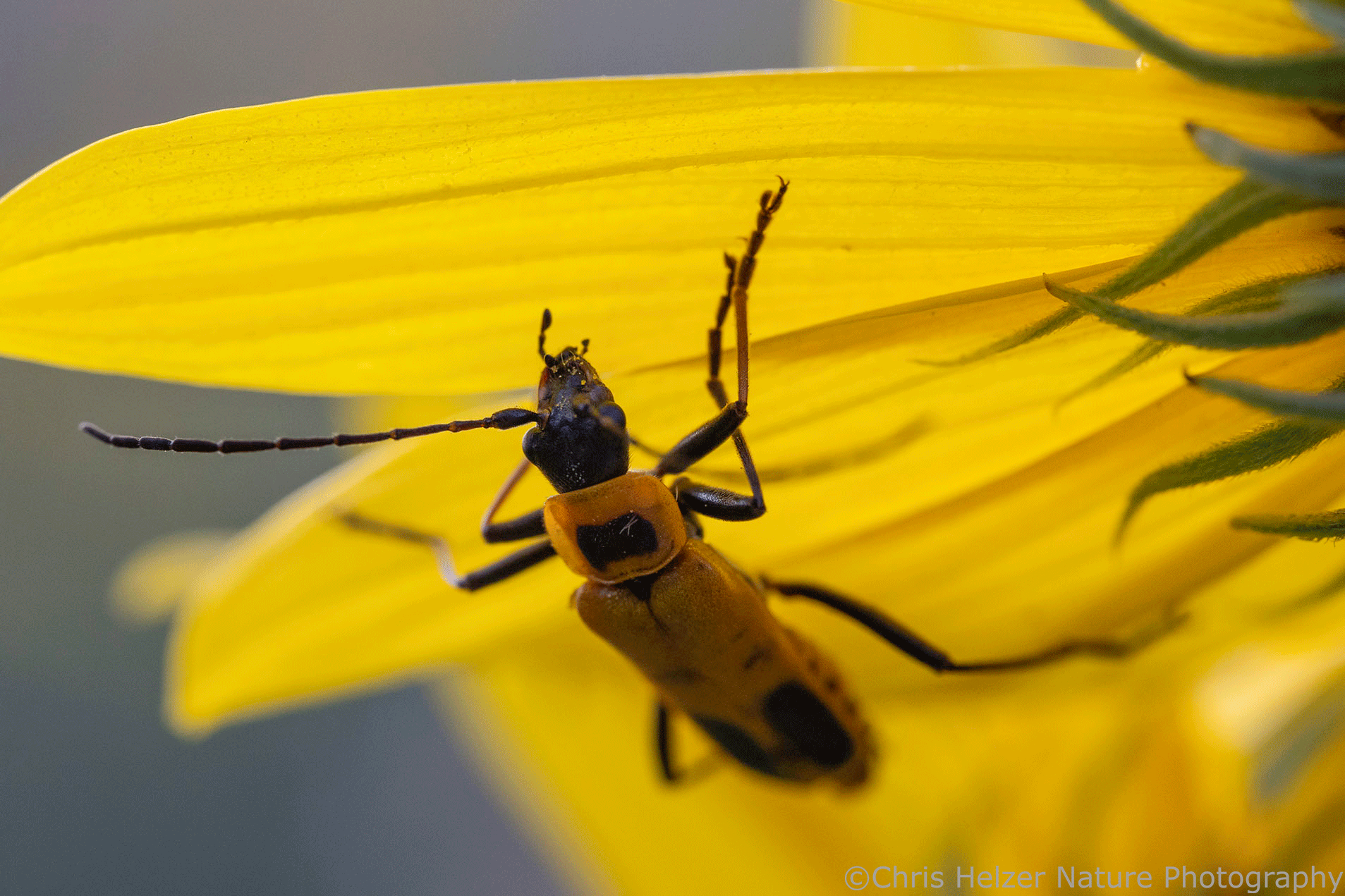
Another consistent visitor to the plot has been the spotted cucumber beetle. This is a native species that has taken very happily to huge fields of corn across North America and also likes to eat several popular garden vegetables. Because of that, it’s been labeled a pest, which seems unfair. In fact, you might recognize it from its other common name – the “southern corn rootworm”.

I think it’s a charming little beetle that, at least in my plot, fed mostly on the pollen of Maximilian sunflower, and maybe some of the pitcher sage flowers. In a previous post, I explained why I think we should stop using the terms ‘beneficial and pest insects’. Feel free to join me in this effort.

Spotted cucumber beetle.

A few days before I took the above photo, I found the same, or a similar, cucumber beetle on a pitcher sage plant before sunrise. I photographed it in silhouette and then stuck with it over the next few minutes as the sun breached the horizon. The three photos below show the results of the changing light during that short period (and some changes to the angle I shot the beetle from).

Spotted cucumber beetle on pitcher sage at sunrise (1)
Spotted cucumber beetle on pitchers sage at sunrise (2)
Spotted cucumber beetle on pitcher sage at sunrise (3)

This is one of the luxuries of late September photography in my plot. With lower temperatures and fewer flowers, I don’t see as many invertebrates moving around. That gives me time to stay with the ones I do see for more time without worrying about missing something else. It also allows me to explore more artistic choices.

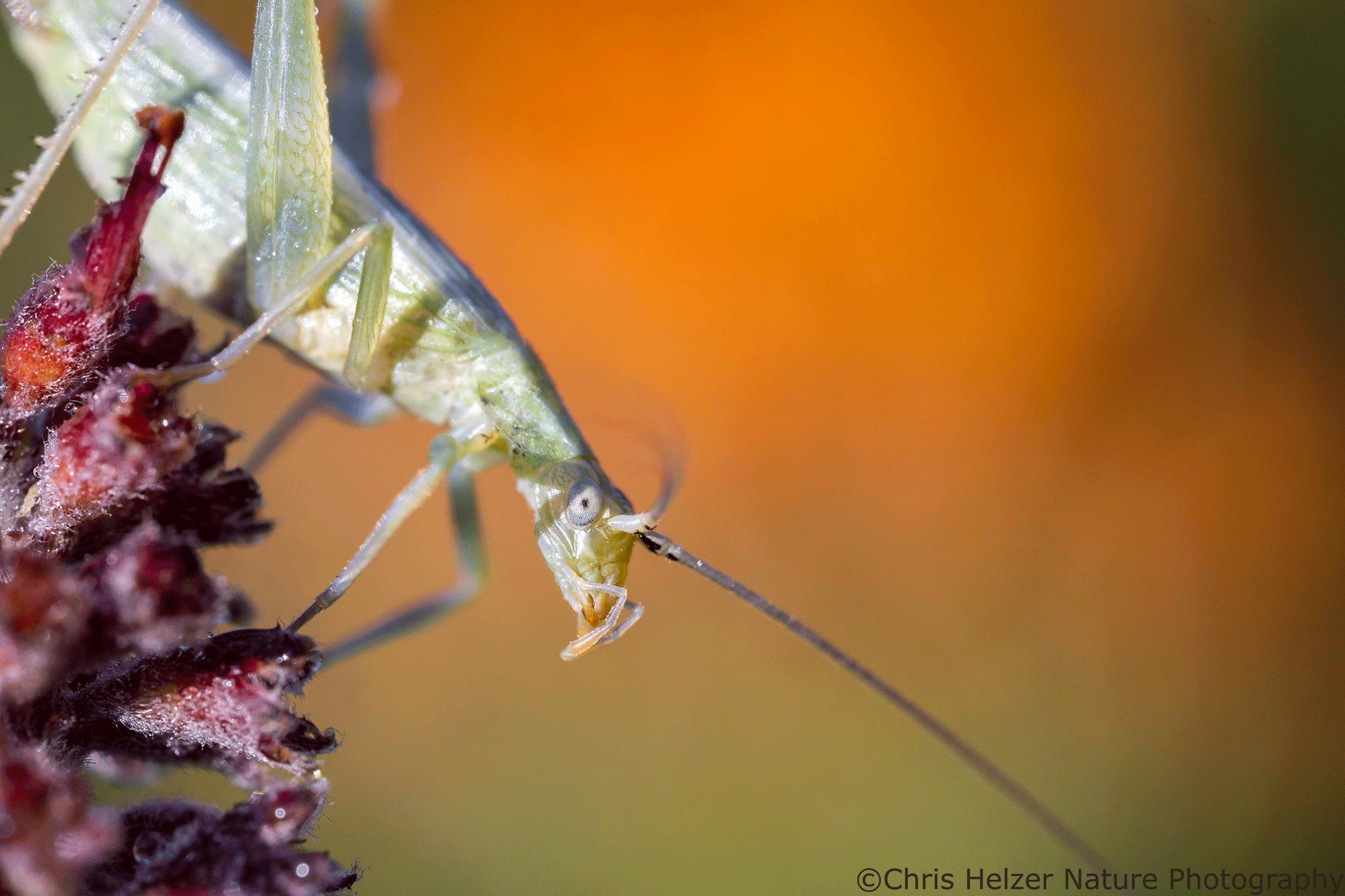
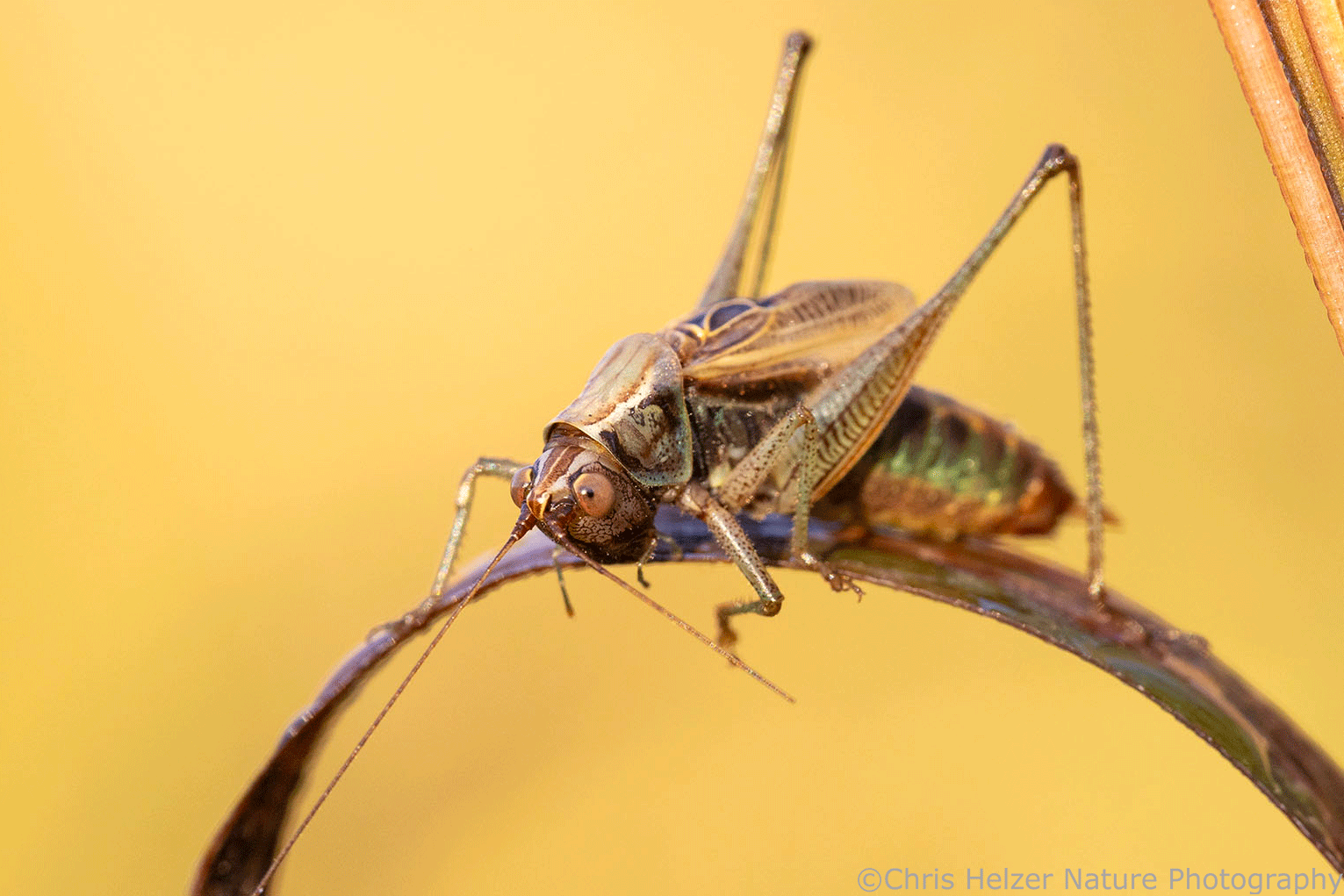
That time to focus came into play recently with a katydid. I saw my first katydid nymph back in late May, but then didn’t see another until late September, for some reason. Then, within a week, I saw two different species. They are both meadow katydids: the straight-lanced meadow katydid and the seemingly-contradictorily named woodland meadow katydid.

Straight-lanced meadow katydid (Conocephalus strictus)
Woodland meadow katydid (Conocephalus nemoralis)

On the morning of September 25, I arrived to find a woodland meadow katydid perched on a nicely-curled leaf of big bluestem. I know it wasn’t the same individual I’d seen a couple days before. How? Because the first one (above) was a female with a long ovipositor and the second was a male. Very helpful!

I photographed it with a colorful background. Pretty, huh?

Woodland meadow katydid

I tried a couple different compositions. Then, I scanned the rest of the plot to see if there was anything else of note. Seeing nothing more interesting than the katydid, I came back and photographed it for a while longer. It started moving around, warming in the sun. I stayed with it and photographed it in different positions.

The same woodland meadow katydid. Isn’t he charming?

I did eventually find a few other things to photograph, but I kept coming back to the katydid. I really liked the way it was framed within (or on top of) that curled leaf. As a result, I ended up with a big variety of similar, but different shots of the same individual (below).

So, there you go. Those are some of the stories from the last few weeks at my square meter plot at Lincoln Creek Prairie. Stay tuned for more action, including a slug I’ve seen a couple times, more milkweed seeds, and who knows what else!