
When I think back on my career so far, it’s hard to come up with anything that’s been more gratifying than my work in prairie restoration. After all, what could feel more conservation-super-hero-like than taking a low-productivity row crop field and converting it to high-diversity prairie? Today, I can walk through hundreds of acres of restored prairies for which I harvested the seeds, planted the seeds, and have managed/overseen management over the last 20 years or more.
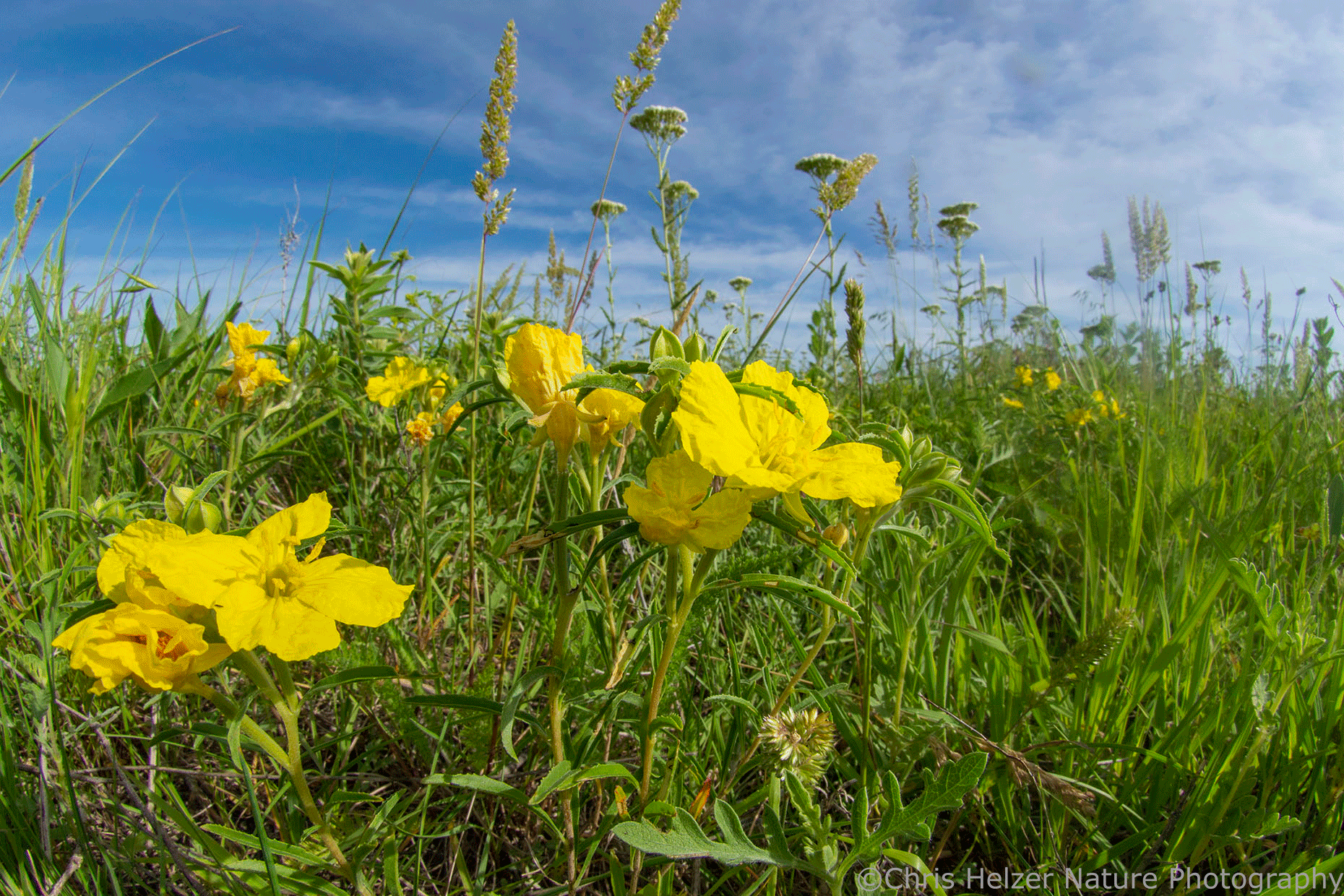
Yowza. That’s a great feeling!
That’s why it’s awfully frustrating to hear people say something like, “well, but it’s not REALLY restored, is it?”
What are you even talking about?
“Well, the amount of soil organic matter in your previously farmed site is a lot lower than in that unplowed prairie over there… It’ll take another 100 years or more before your site matches that real prairie.”
“Look, it’s pretty and everything, and I guess you’ve got most of the right plant species, but the relative abundance of the species is completely different in that real prairie over there.”
“Where are the bison, prairie, dogs, elk, and wolves? If it was really restored, you’d have all those functional components of prairie. You’ll just never be able to really restore the prairie – it’s gone forever.”
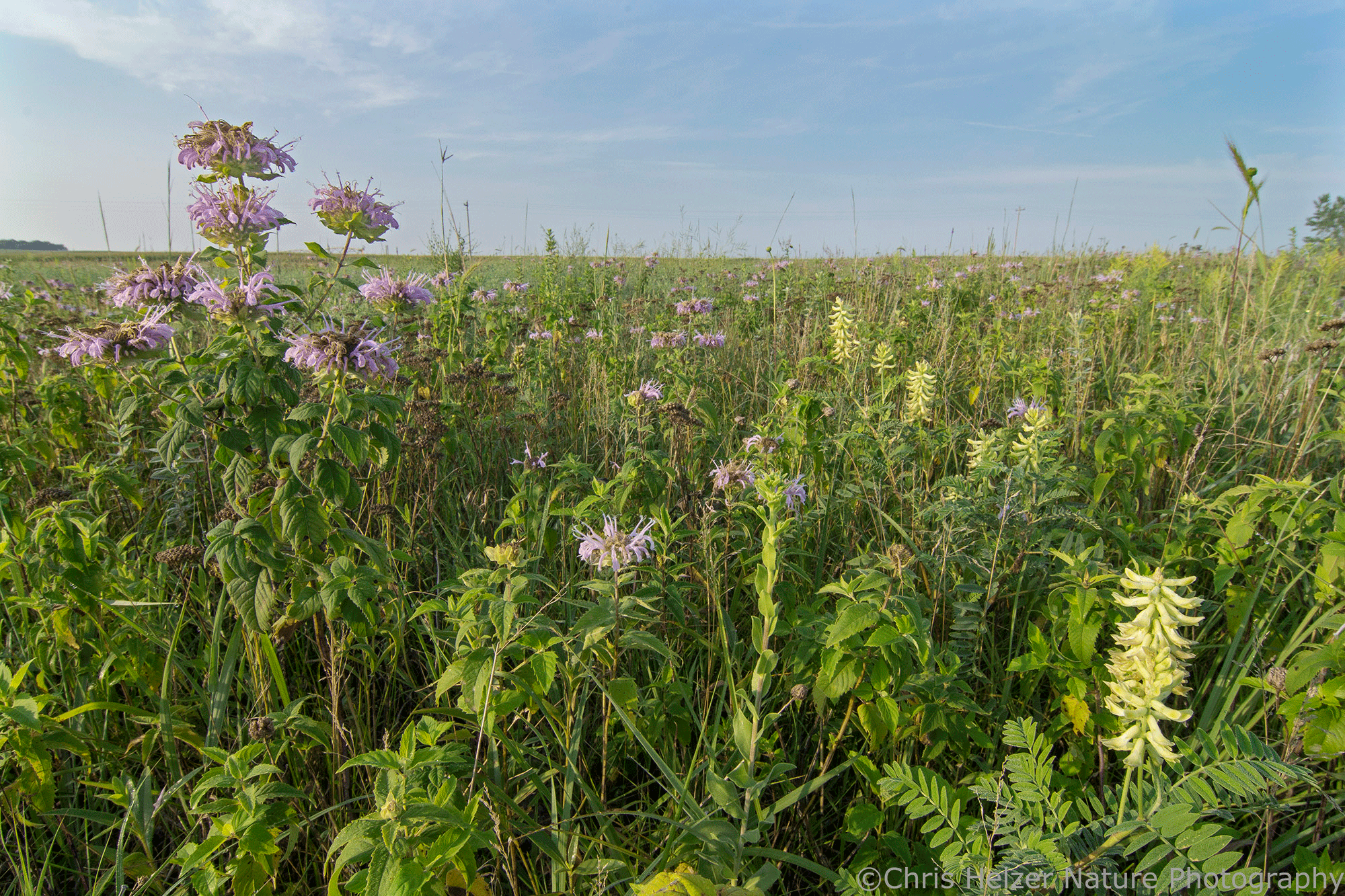
Ok, look. Let’s talk about expectations, objectives, and the apparent lack of joy and wonder in some people’s lives.
Why do we do prairie restoration? There’s no single answer to that question, but having an answer is key to deciding whether you’ve been successful or not. (You might have noticed that I’ve been using a lot of italics in this post. Italics help with emphasis and ensure you’re reading the text in the same way I’m thinking as I write it. I’ll try to refrain, though, because eventually it’ll become irritating.)
Anyway, it’s important to know why you’re restoring a site. Are you trying to create bird habitat? Something pretty look at through your dining room window? A place where you can see lots of bees and butterflies? All those are very achievable objectives, and no one can say you’ve failed if you see birds, beauty, butterflies, and/or bees. Actually, knowing some people, they might still say it, but you can ignore them because you know you were successful.
From a conservation standpoint, I think the most powerful objective for prairie restoration is to help stitch a fragmented landscape back together. For example, the stated objective for the prairie restoration work at our Platte River Prairies in Nebraska has been to enlarge and reconnect prairie fragments in a landscape dominated by row crops. We started with small, isolated patches of prairie that were separated by crop land. We wanted to make those little fragments function as larger, more connected units increase the viability of the populations of prairie plants and animals and strengthen the ecological resilience of the whole community. That felt important, but also testable.
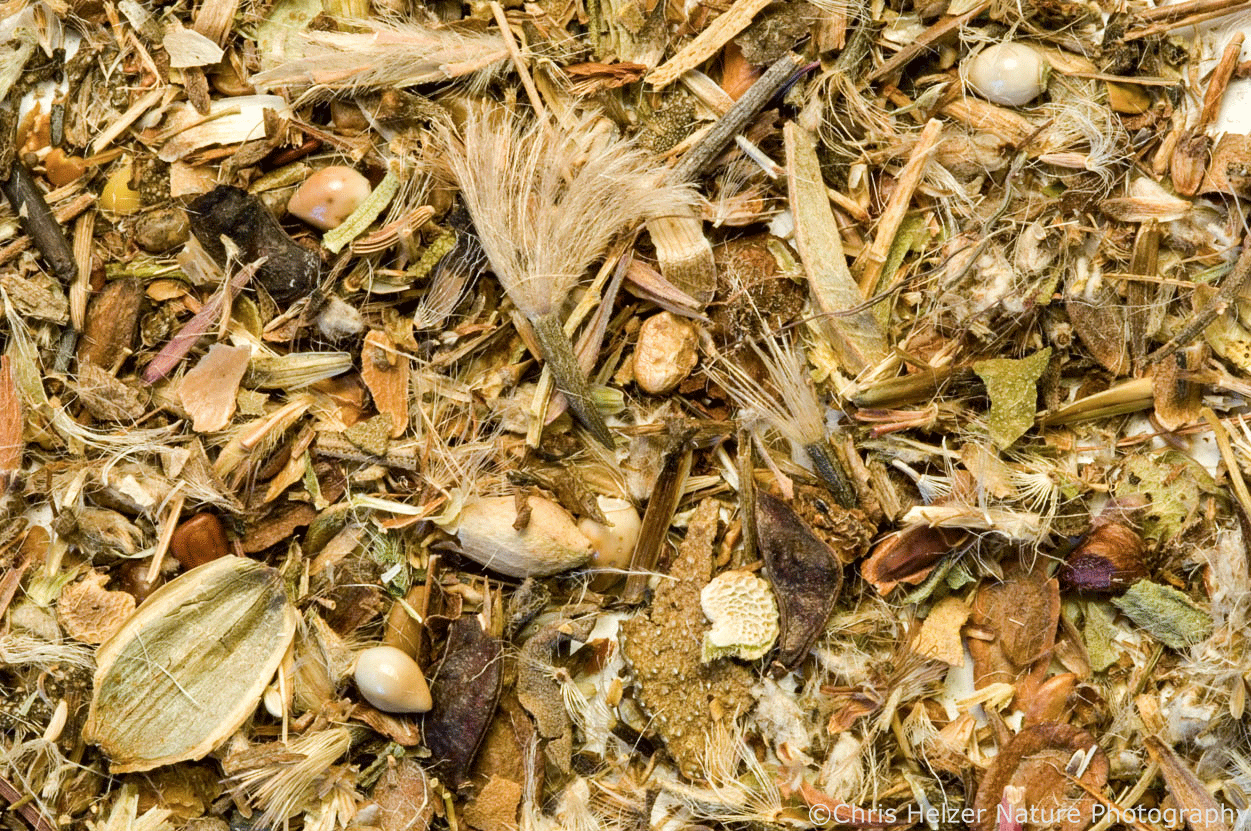
To build restored prairies and meet that objective, we harvested seeds from as many prairie plants as we could – harvesting from the prairie fragments we were hoping to improve, but also from similar sites within a few counties from the project area. Those seeds were planted in crop fields adjacent and/or in-between prairie fragments. We used seed mixes of 160-215 species of plants for most of the projects I supervised (including seeds for some wetland habitat we embedded within many of those sites). As those restoration projects became established, it sure looked like we’d created some nice connective tissue between those fragmented prairies.
Over the years, we’ve tried to evaluate our success in multiple ways. I’ve done a lot of data collection to ensure that the plant species we harvested seed from became established and have stuck around in the restored sites. They did, and they have. The sites have experienced lots of fire, grazing, and drought and have maintained their plant diversity. That feels like a good indication of ecological resilience.
The planted prairies, though, are really just the means to an end, and that end is the viability and resilience of the formerly isolated prairie fragments. Because of that, the most important measures are those that evaluate whether those prairie fragments are better off now than before. Testing is ongoing, and will be for a while, but the news so far as been very good.
Through some basic species inventory work, we’ve shown that most of the ant, bee, mouse, bird, and grasshopper species in the prairie remnants (unplowed prairies) can also be found in the restored habitats. That’s a crucial first step. We hope to keep digging to see how those species are using the restored habitat. Is it meeting their requirements for nesting, foraging, sheltering, etc.? Those are more difficult evaluations, but important.
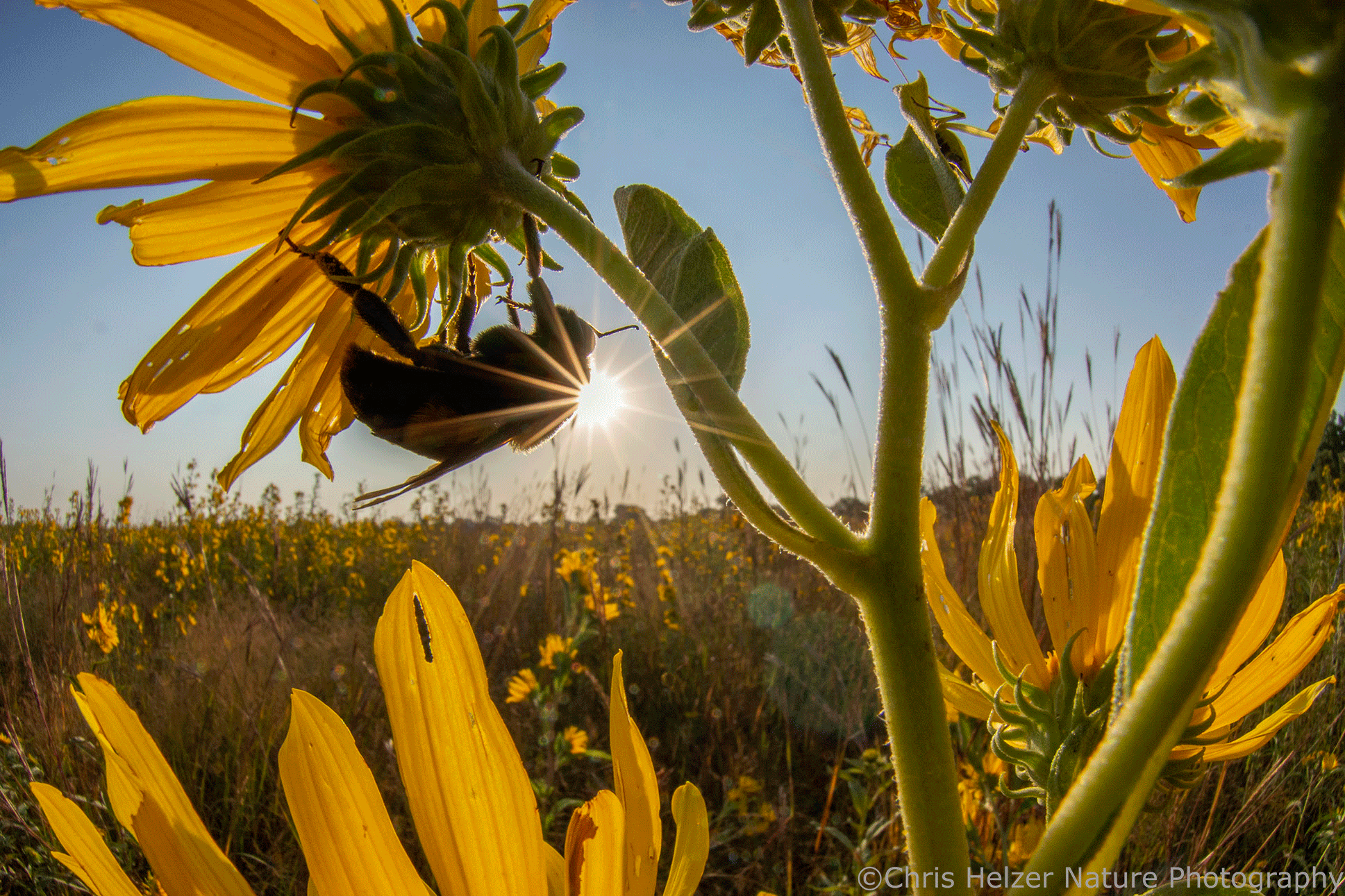
The restored habitat often looks different than that of the remnants. That doesn’t bother me. In fact, there are advantages to it. For example, Emma Greenlee, a 2022 Hubbard Fellow, showed that our restored prairies often complement the pollinator resources (flowering plants) available in adjacent remnant prairies. Emma showed that when flower numbers dipped for a while in remnant prairie, the adjacent restored prairie habitat usually compensated by having a big pulse of available flowers at the same time. The reverse was also true. In other words, because we’ve added restored prairie to the neighborhood, bees and other pollinators have a much more stable supply of food throughout the season.
We’ve also enjoyed the benefits of larger prairie expanses when it comes to prairie stewardship. It’s a lot easier to manage for the habitat needs of all our target prairie species when we’ve got more space to work with. Because every animal has its own requirements for vegetation structure (height, density, patchiness, etc.), we try to provide all the possible habitat types we can in every prairie. Creating a shifting mosaic of habitats is really tough in small prairies because there’s not room to make them all – especially because many animals (notably birds, but also others) need habitat patches to meet certain size requirements. In larger prairies, we can provide the full range of habitat patch types, and at what we think are appropriate scales.
Larger prairies also reduce the exposure to habitat edges where lots of bad things can happen. The boundaries of prairie habitat, for example, are often places where invasive plants try to enter. As a result, the border zones of prairies require a lot of extra work to scout for and suppress trees, shrubs, or herbaceous plants trying to infiltrate the site. In a small prairie, the entire site can basically count as a ‘border zone’. If you make that prairie bigger by restoring adjacent habitats, you can create some interior ‘core areas’ where invasion pressure is reduced.
I could continue, but the point is that we’re seeing strong evidence that we’ve achieved our restoration objective. The small, isolated prairies we started with seem to be functioning as larger, more connected units and are reaping the conservation benefits of our restoration work. That sure smells like success to me!
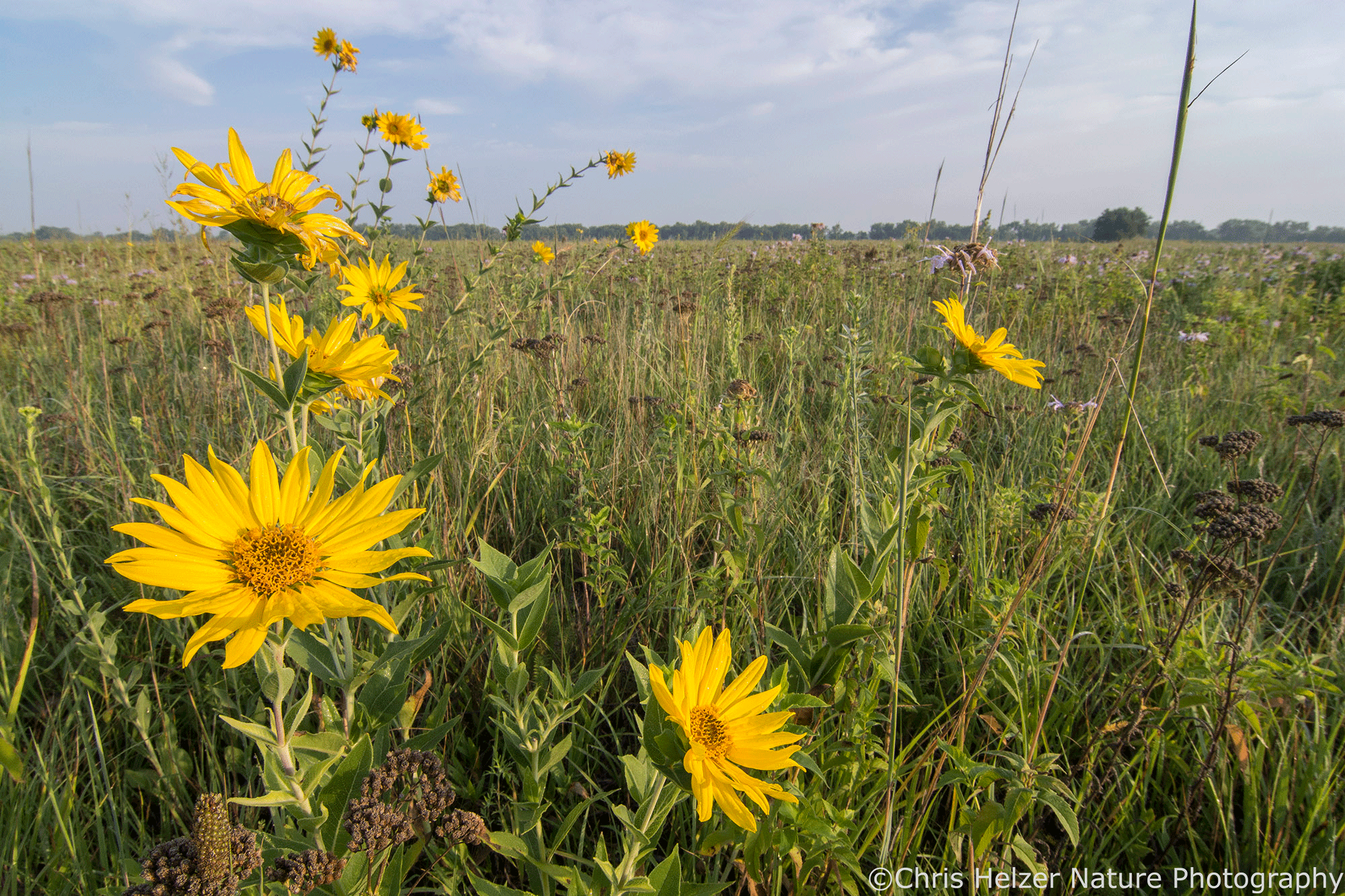
Sure, the soils beneath a site that was in row crops for 60-100 years still look different than those beneath adjacent unplowed prairies. Plant communities planted 20 years ago aren’t going to look exactly like those in prairies that have been around for thousands of years and were shaped by various iterations of human stewardship during that whole period. And, no, we don’t have bison, elk, prairie dogs, or wolves (though we are seeing more prairie chickens). Guess what? None of those variables are particularly relevant to our objectives.
We wanted to use prairie restoration to improve the resilience and long-term survival chances of our small prairies and their inhabitants. I think we’ve done that, though we’ll keep trying to evaluate our success. The fact that restored habitats have soil organic matter levels that are different from remnants, or that some plant species are more or less abundant, doesn’t mean that we’ve failed. After all, we’re not trying to replicate our prairie fragments; we’re trying to save them!
Habitat loss and fragmentation are the biggest threats to prairies in many places. It’s extraordinarily difficult to sustain populations of species in tiny, isolated prairie patches. Countless events, including fire, grazing, haying, or herbicide treatments by prairie managers could wipe out a species of leafhopper, snake, or toadflax in a small site. It’s hard to see how those species might recolonize when the nearest prairie is miles away, across expanses of crop fields and/or urban development. As a result, successful stewardship of small grasslands is extraordinarily challenging.
I don’t know how we can possibly save those prairies without making them bigger and more interconnected. The only way to do that is via prairie restoration in surrounding areas. Many restoration projects, including ours, have shown that restored habitats can enlarge, connect, complement, and otherwise improve the viability of small prairie fragments. That’s great news!
So, why should we let people tell us why our restored prairies don’t look right, don’t have the right soils, or are otherwise not measuring up to what they think a restored prairie should be? Prairie restoration is incredibly important and gratifying. Let’s celebrate our successes and keep looking for more ways to make bigger and better prairie landscapes!
.
Additional information you might find interesting:
A short philosophical post that puts prairie restoration into a helpful context (according to me).
The Bureau of Land Management’s Seeds of Success Program aimed at “increasing the quality and quantity of native plant materials available for restoring and supporting resilient ecosystems.” The program includes a strong set of protocols, many of which are relevant to site-based restoration programs.














 The Prairie Ecologist