The annual Platte River Prairies field day is THIS SATURDAY, July 13.
It’s free! You can peruse the full agenda by clicking here.
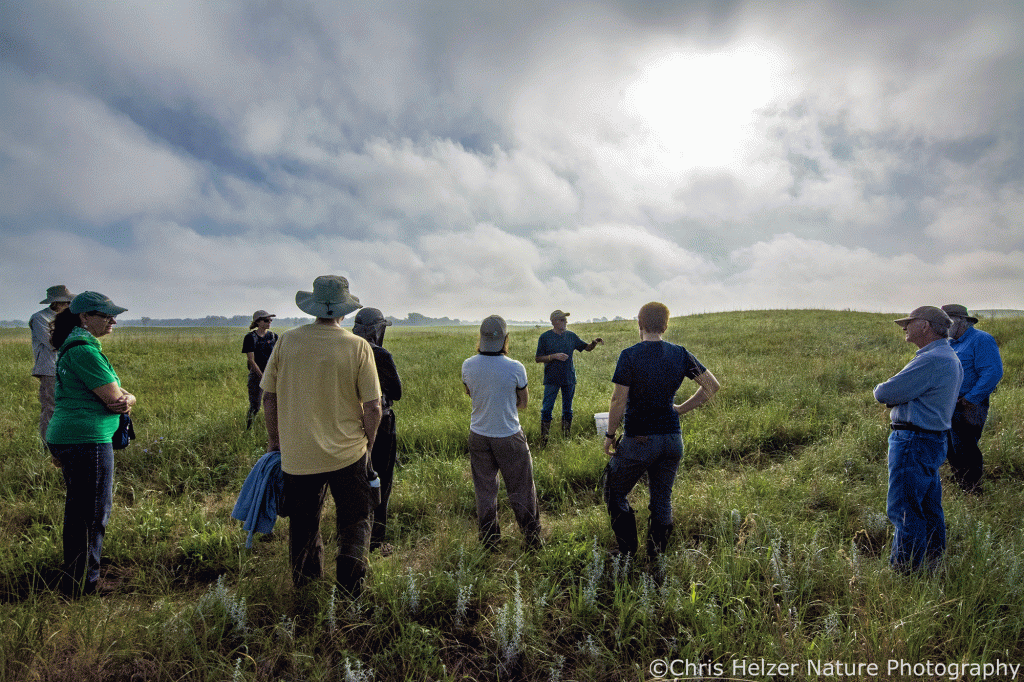
Master Naturalist Mike Schrad talks about plains pocket mice at the 2022 Field Day.
The day will start at 7am, but you can come and go as you like. The 7am start is for anyone who wants to do some bird watching (no experience or binoculars required!). After that, we’ll go check some live traps to see what kinds of small mammals (mice, mostly) live in the prairie and learn about their lives.
Then, between 10am and 2:30pm, there will be three sessions – each with multiple choices. You can learn about prairie restoration, prairie management, reptiles and amphibians (with live animals), how to use iNaturalist, and more! You can pick whichever topic you like during each session. It’s all very informal.
Restored prairie that was grazed the previous year.
This event is for all ages. Anyone who’s interested in learning more about prairies is welcome! There is no cost, but we’d love for you to email Kate Glause at katelyn.glause@tnc.org if you’re planning to attend so we can plan accordingly. Please let her know if you need any special accommodations.
Bring your own lunch and drinking water, along with insect repellant, sunscreen, and anything else you need for a summer day in the prairie (long pants recommended). The forecast shows sunny skies and warm temperatures. We’ll hopefully be done before it gets too hot!
Specific directions to the site are included in the agenda, but we are roughly 2 miles south of the Wood River Exit (#300) off of Interstate 80 – between the cities of Grand Island and Kearney in Nebraska.
Well, June is over, and what a month it was! My second attempt (2024 vs. 2018) at photographing everything I can within a single square meter of Lincoln Creek Prairie has been a blast. I’ve spent an inordinate amount of time peering at one little plot of grassland and I’ve loved every minute of it. Today’s post includes a small percentage of the photos I’ve taken within that plot during the second half of June.
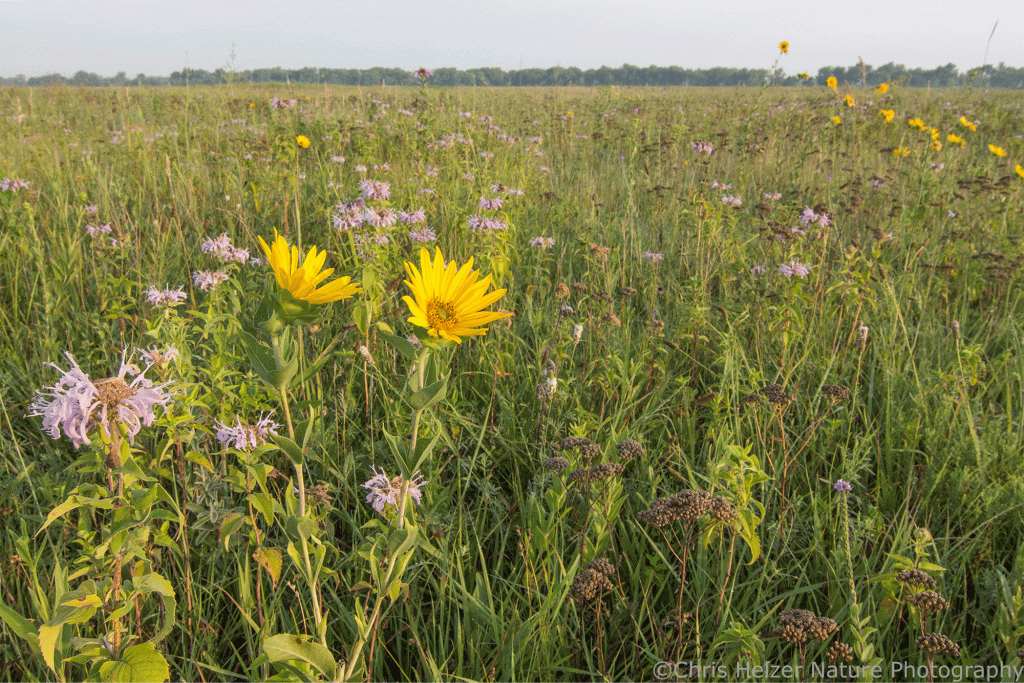
Sunrise at my square meter plot, as seen through the leaves of Maximilian sunflower and the flowers of butterfly milkweed.
It’s astonishing how much diversity I’ve found so far. I’ve already photographed over 170 species of plants, animals, and fungi within my plot and I’m only two months into the project. That feels especially impressive because I’m exploring the exact same square meter of prairie I used for my 2018 project. In that year, I photographed 113 species (in the entire year) and felt pretty good about it. This time around, my previous experience, some new camera gear, and an unquestionably healthy obsession about this project have all led to a species count that seems likely to more than double my previous attempt.
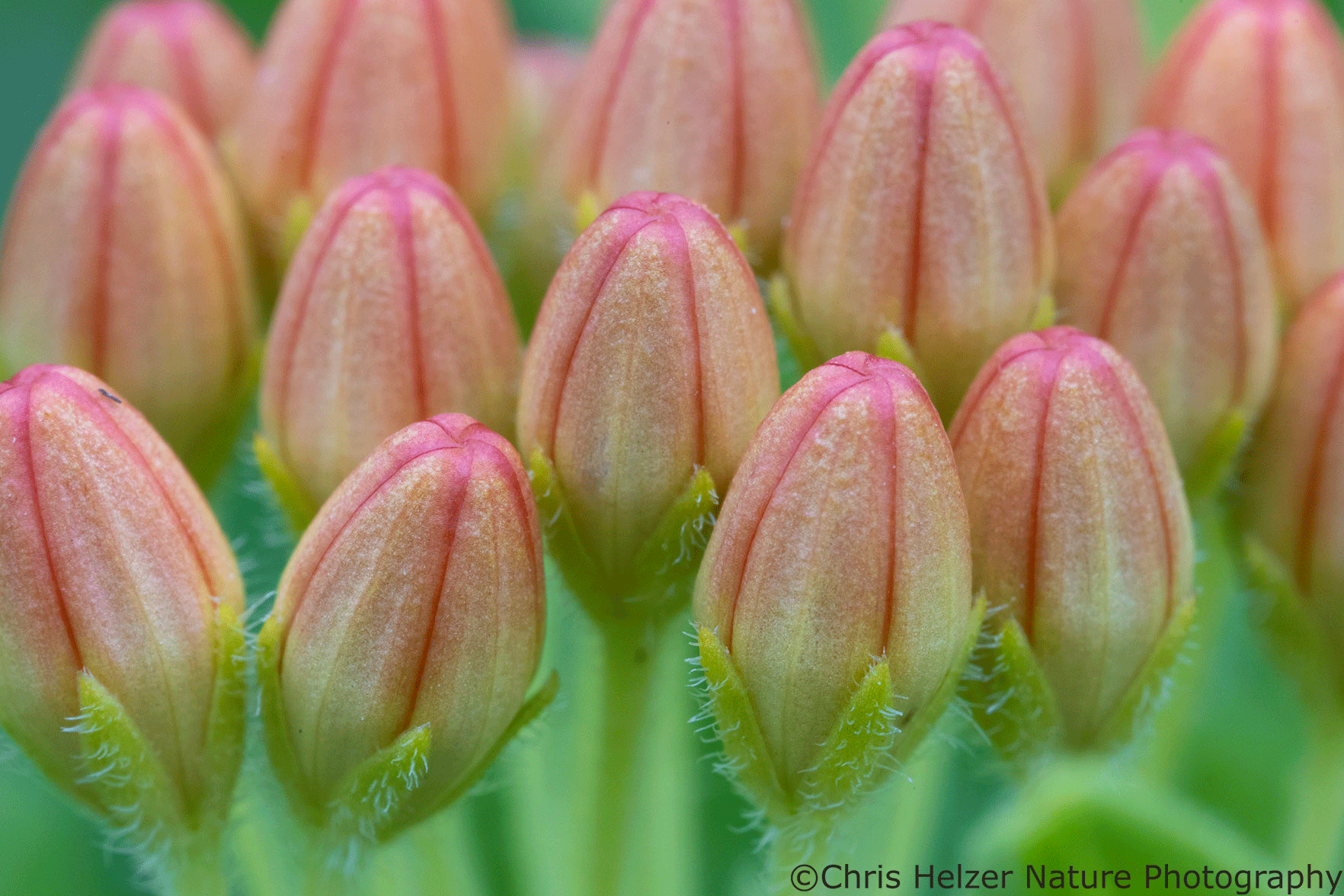
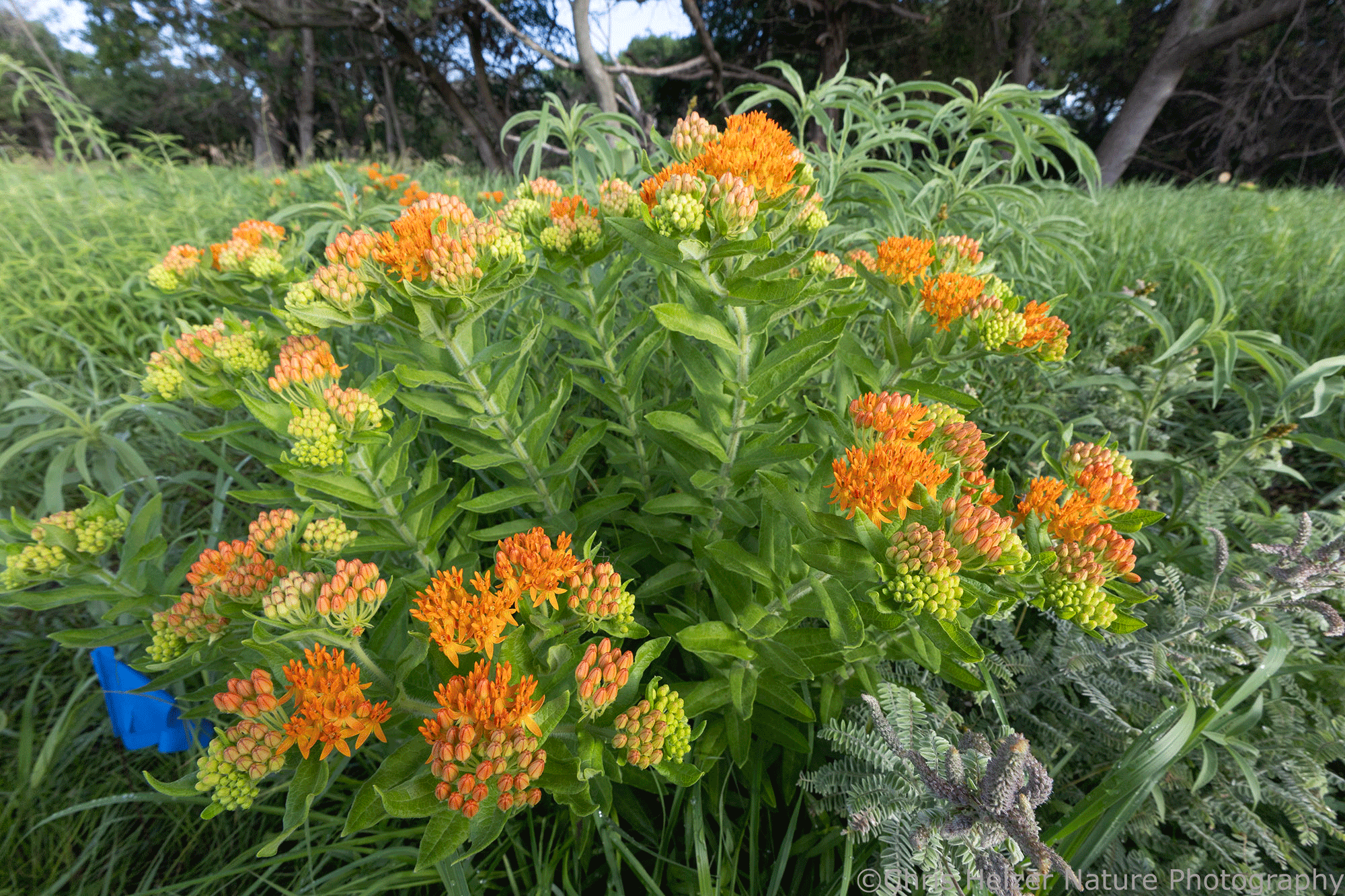
The big star of late June has been butterfly milkweed (Asclepias tuberosa). Here are some flower buds right before they opened.A single blossom that opened before its neighbors.Fully-blooming butterfly milkweed.
Of course, this project is much more than a species inventory project. There are much more efficient ways to count the number of species found in a square meter of prairie. I’m only counting the ones I get good, sharp photos of. That means I’ve missed quite a few, including (recently) the great spangled fritillary that landed for about 1.6 seconds before immediately departing and an incredible picture-winged fly that sat stoically in full view until the very moment I lifted my camera to my eye.
This project is really about capturing diversity, beauty, and stories within a tiny fraction of a complex and fascinating ecosystem. I’m not just looking for new species to photograph when I stare into the plot. I’m looking for anything that I find interesting or attractive – patterns, textures, evocative light, rain drops, and more. I’m also enjoying all the events that play out in front of me. I’m sharing a few of those in this post, but there have been way too many to fit here.
Look how much is happening! A lynx spider is digesting a plant bug in the background behind this broad-nosed weevil, resting in the shade of butterfly milkweed leaves.
Although the project isn’t solely about species diversity, it is notable that I can honestly make the following claim: in the more than 30 visits I’ve made to the plot during May and June, I’ve never failed to photograph at least two or three new species. Sometimes, the first thing I see is something new. Other times, I photograph familiar acquaintances for a while before a new face appears to greet me.
This lynx spider (or several that look alike) has been a constant in the plot over the last several weeks. I don’t always see her right away, but she’s always there somewhere if I look hard enough.
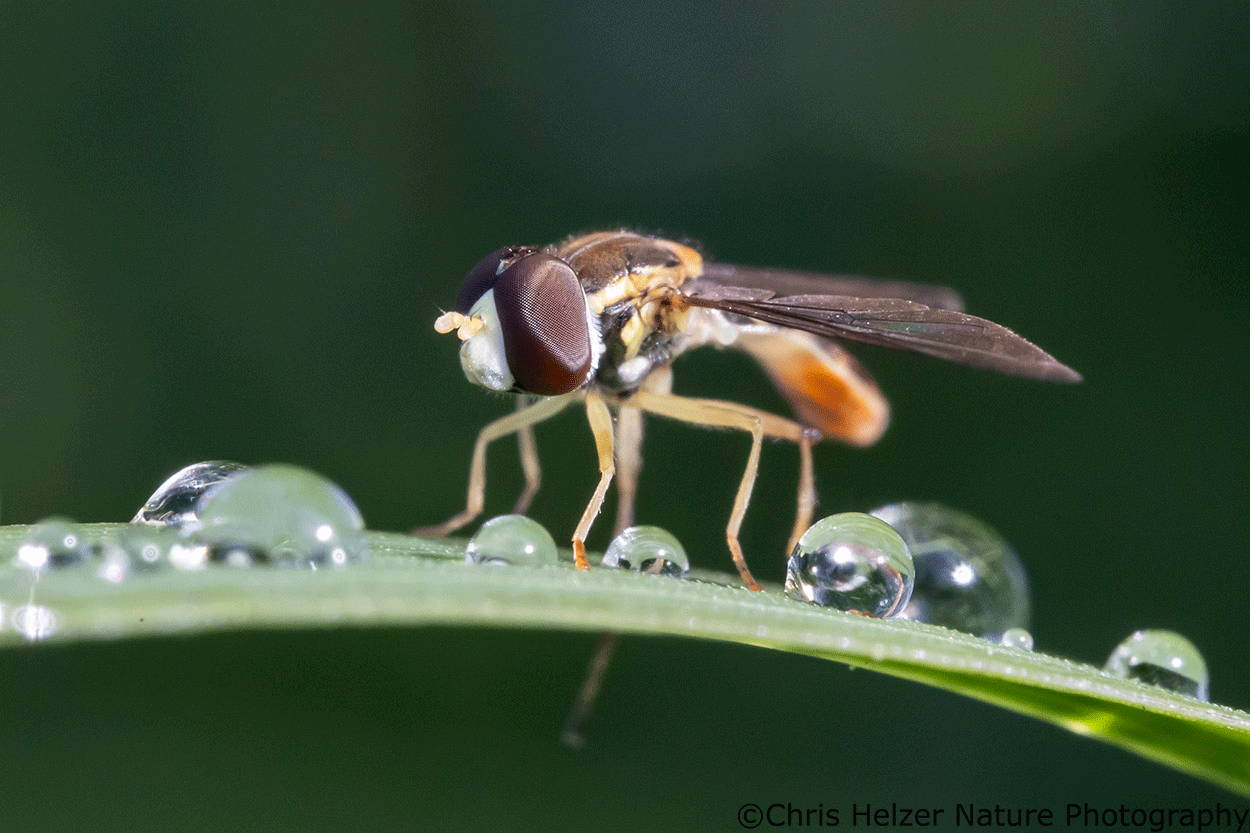
Some of the species I’ve photographed are familiar, including the margined calligrapher hover fly (Toxomerus marginatus) – a common fly species that I’ve photographed countless times over the last 30 years. When I see it in the plot, though, I always try for a photo. In part, that’s because it’s a charming little fly, but it’s also because I’ve learned never to make quick assumptions about fly identification. There are something like 61,000 species of flies in North America and a lot of them look alike at first glance. Being conservative in my identifications, I think I’ve already photographed at least 34 fly species in my plot so far this year!
Margined calligrapher hover flyA different photo of the same hover fly species
While some species have been familiar, many others have been brand new to me. For most of those, I don’t have solid identifications yet, despite the helpful experts at bugguide.net. Some of that uncertainty comes from the fact that a lot of insects are difficult to identify from photos, especially when the photographer doesn’t know which part of the insect contains the distinctive features.
It also doesn’t help, though, that my photos are often more artistic than scientific. In particular, I’m pretty sure there’s a particular beetle expert on the bugguide website who would gladly tweak my nose if he saw me because I insist upon submitting photos of beetles that don’t show the top (dorsal) view. I really do try to get dorsal perspectives when I can, but the beetles don’t always stick around long enough for that to happen!
I don’t know what beetle species this is yet because I keep taking photos from this angle.
Other insects are distinctive enough (and/or I stumble into photographing the right angle) that I can get identifications from experts. That includes the white-margined burrower bug (Sehirus cinctus) shown below. When that happens, I get to look the species up and learn as much as I can find about them. That’s how I know that the female white-margined burrower bug lays its eggs in shallow burrows and then takes care of her babies after they hatch. For the first several days of their lives, at least, the babies’ mom brings them food until they eventually wander off into the world to make their own fortune.
The white-margined burrower bug – a good mom
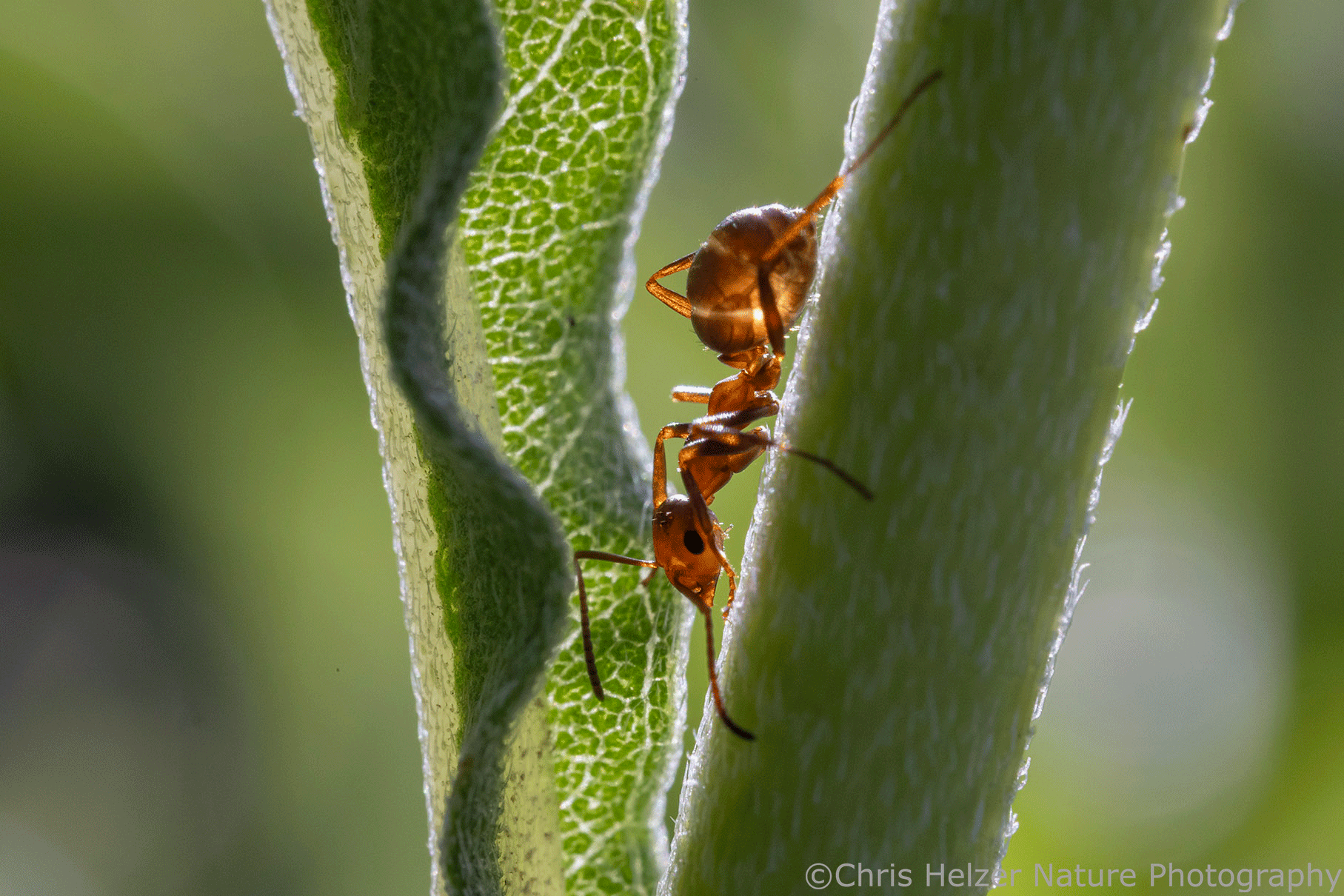
The identification of insects (and spiders, mites and fungi, etc.) isn’t key to the success of the project, though. It’s nice to be able to tell if two creatures are from the same species so I can decide whether or not my species count goes up. However, I’m perfectly happy to photograph the same species over and over, enjoying the different lighting and perspectives I find each time. For example, I’ve photographed the same red ant (below) quite a few times, but couldn’t resist another shot when light was passing sublimely through its partially translucent body the other day!
Backlit ant looking for extrafloral nectar on Maximilian sunflower
One lesson I learned from my 2018 experience is that I need to step back and photograph the plot and its surrounding context now and then. That broader perspective helps people envision what I’m looking at as I peer into the foliage to find insects, light, and dew drops. I’ve been taking overhead views of the plot from the same angle every week or two so I can eventually string those together in a series. Even better, the team at Platte Basin Timelapse has set up a timelapse camera to help document the change across the season! Ethan and Dakota from PBT have also visited the plot with me a couple times to gather some video (and still) footage of the plot, its inhabitants, and the weirdo ecologist who lurks nearby with his camera.
Butterfly milkweed has been the big star of late June, though lead plant (on the right) is also starting to bloom now. From a slightly different angle, you can see the timelapse camera set up to photograph the plot through time.
The stories, though, are what have turned this project into an obsession. I’m getting to know the species, and sometimes the individuals, within the plot pretty well. I greet them each time we meet – sometimes audibly, hoping no one is walking the nearby hiking trail when I do. The little fly in the below photo, for example, is a species I see pretty frequently. I don’t know yet what its species name is, but that doesn’t keep me from enjoying its company.
This fly species is common in the plot, but I don’t know its name.
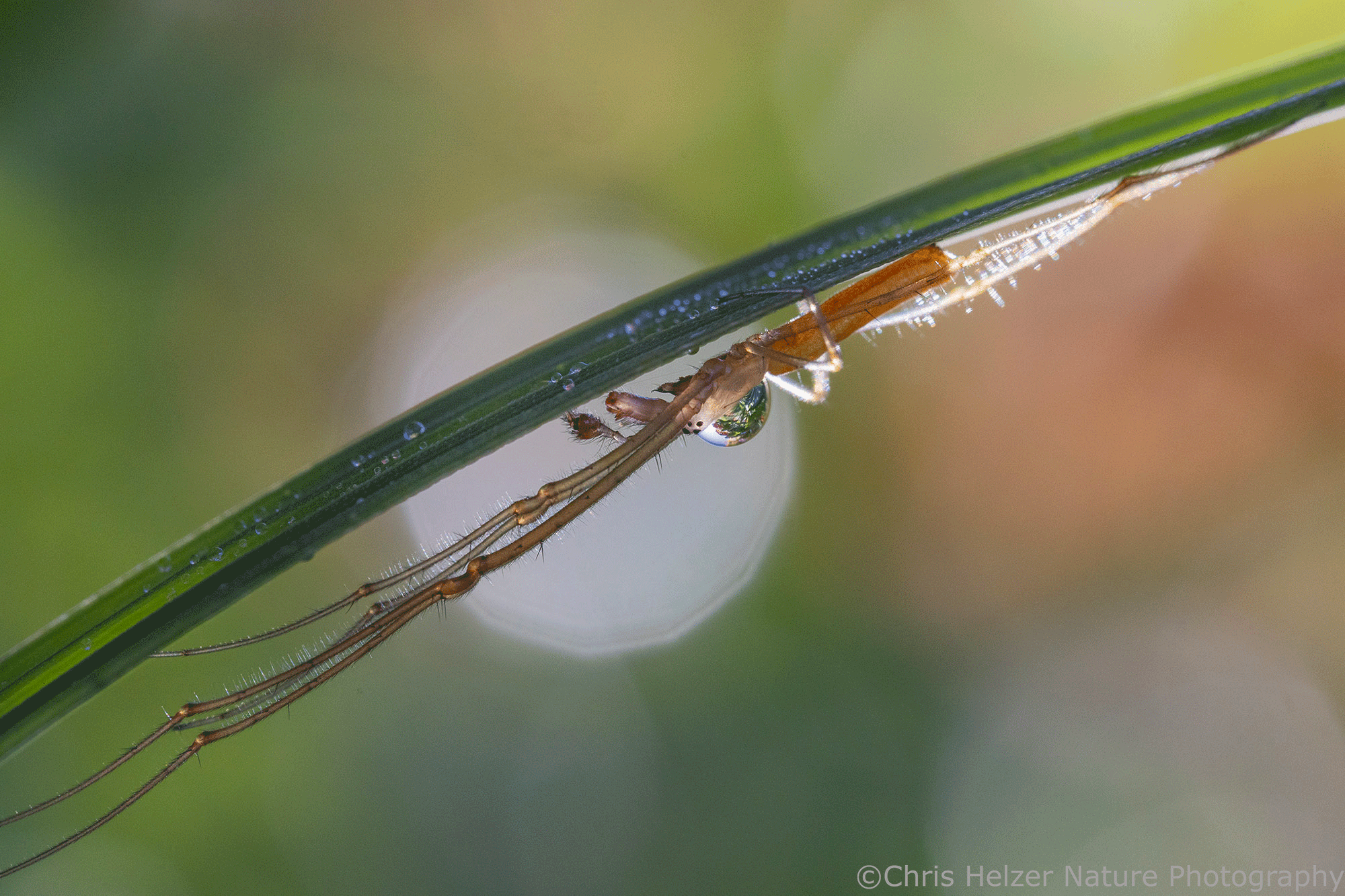
There’s also a long-jawed orbweaver that makes its web in roughly the same place most days. I can usually find it if I stare long enough into the Maximilian sunflower stems in the northeast corner of the plot, though it can take longer than you might expect to spot the web or spider. The spider and the aforementioned fly species interact periodically, though only the spider benefits from those interactions. For some reason, that particular fly species seems especially prone to being captured in the web – it’s by far the most common species I’ve seen the spider feeding on so far.
The long-jawed orb weaver feeding on the common fly.
During my most recent visit, I photographed what I’m pretty sure is a different species of long-jawed orbweaver (below), but I haven’t seen it on a web yet. I wonder if the two will fight for the best spot. There’s plenty of room, you two – play nice!
A second (probably?) long-jawed orb weaver in the plot
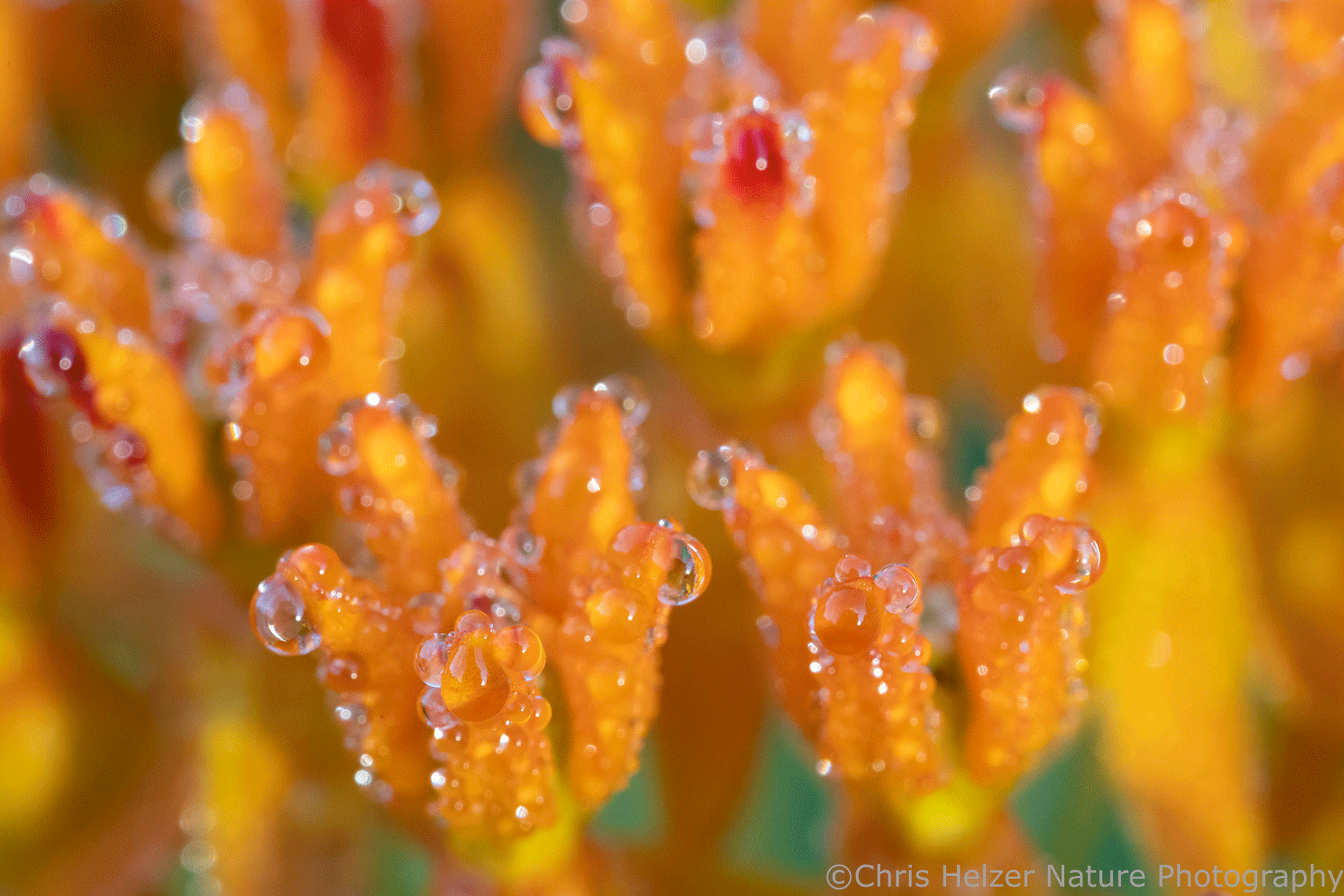
On most mornings, my boots are wet by the time I arrive at the plot. That means I get to photograph dew drops as the sun first pops over the trees on the horizon. The drops are beautiful, but they also slow down invertebrate activity – especially among pollinators. Ants, though, don’t seem slowed by the dew and have been busily feeding on the nectar of butterfly milkweed, even on dewy mornings.
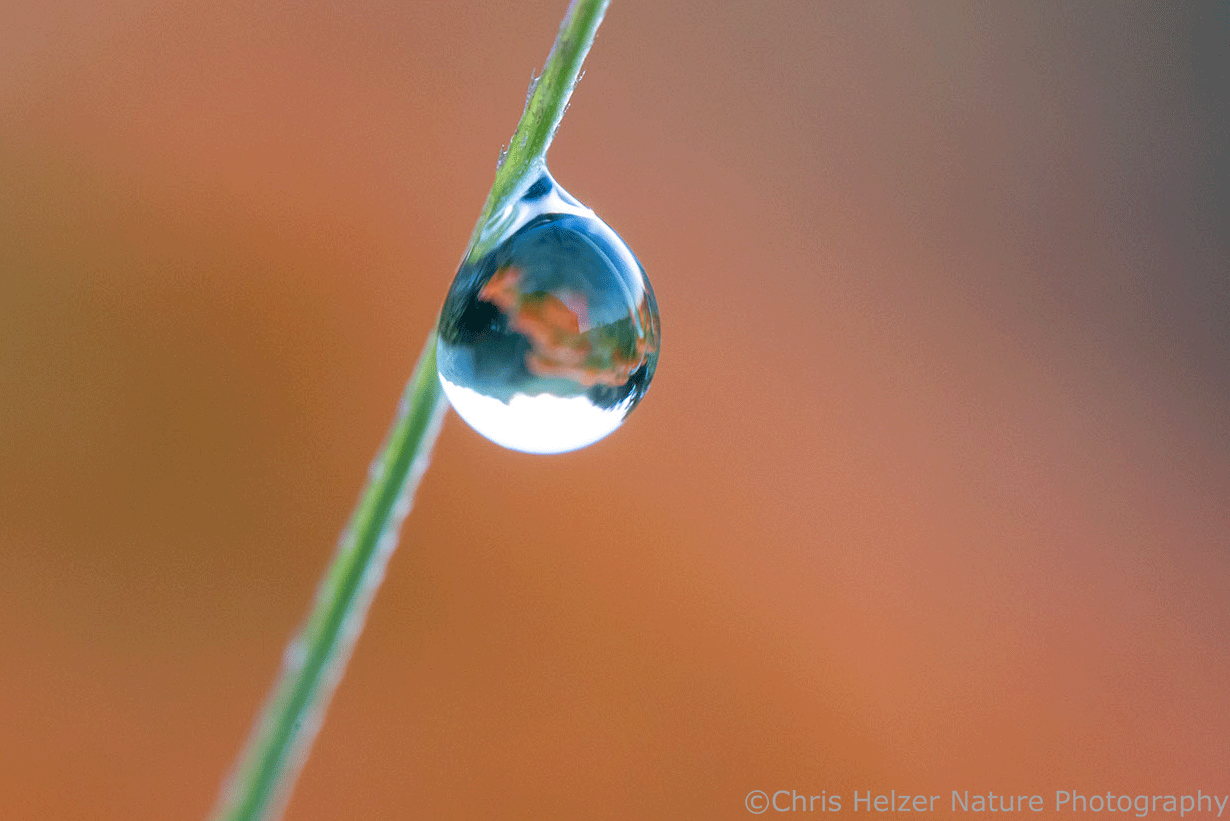
Dew drops and butterfly milkweedOne of many ants looking for nectar (I assume) on the milkweed flowers
The first non-ant visitor I saw on the butterfly milkweed flowers was a beetle (Podabrus tomentosus). Visitation was slow, though, for the first week or so the milkweed was blooming. In 2018, I saw almost no insect visitors to butterfly milkweed, which was a big disappointment. I was worried that pattern was going to repeat itself six years later, but activity increased dramatically toward the end of June. I’m seeing little bees and wasps, along with bugs and beetles. I haven’t photographed any butterflies or moths on the milkweed yet (including that dang fritillary that didn’t hang around) but I’m hopeful.
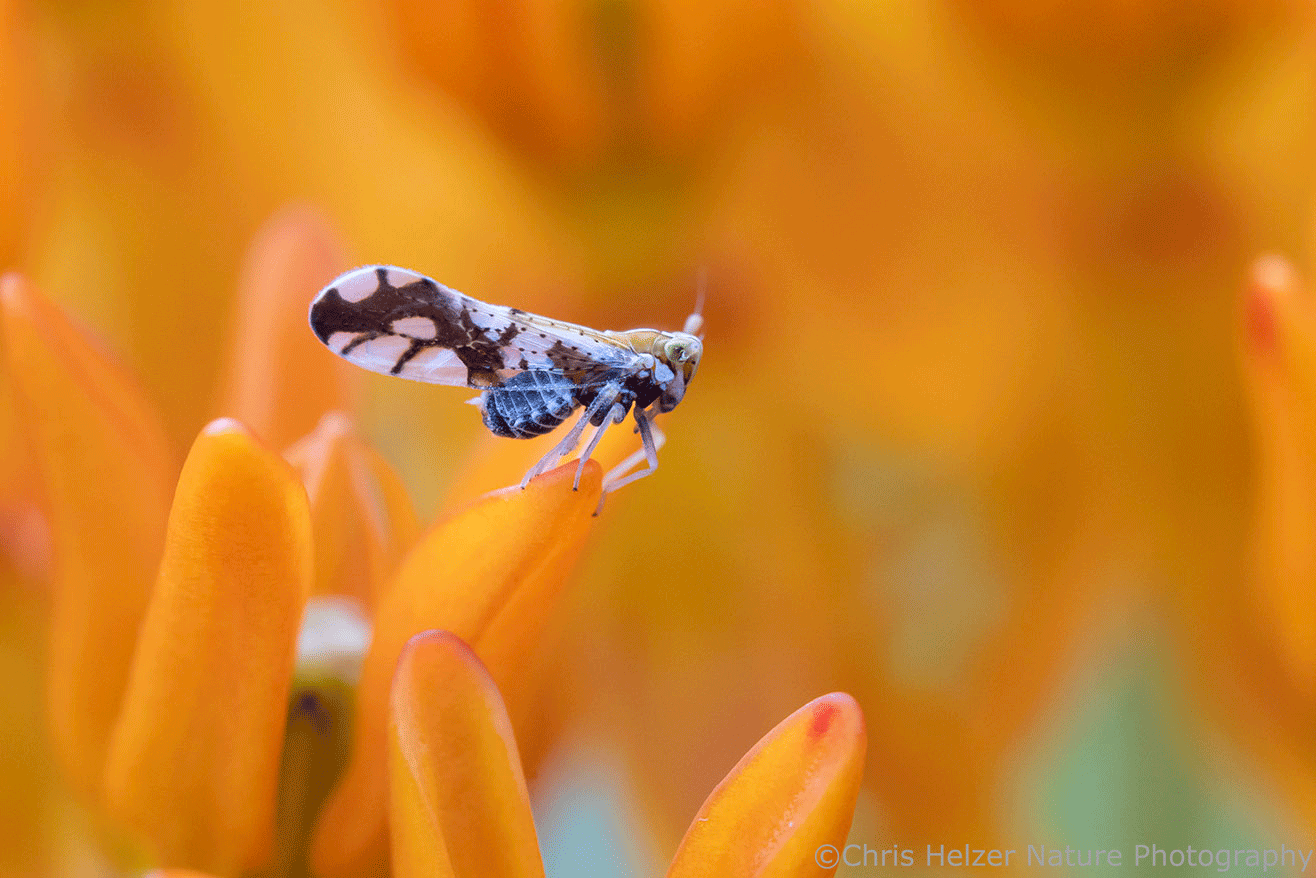
Podabrus tomentosus is a kind of solider beetle that apparently likes butterfly milkweed nectar.A harvestman (daddy longlegs) on butterfly milkweed.A delphacid planthopper perched on a butterfly milkweed flower.Heavy sedge (Carex gravida)Green lacewing in fun light.
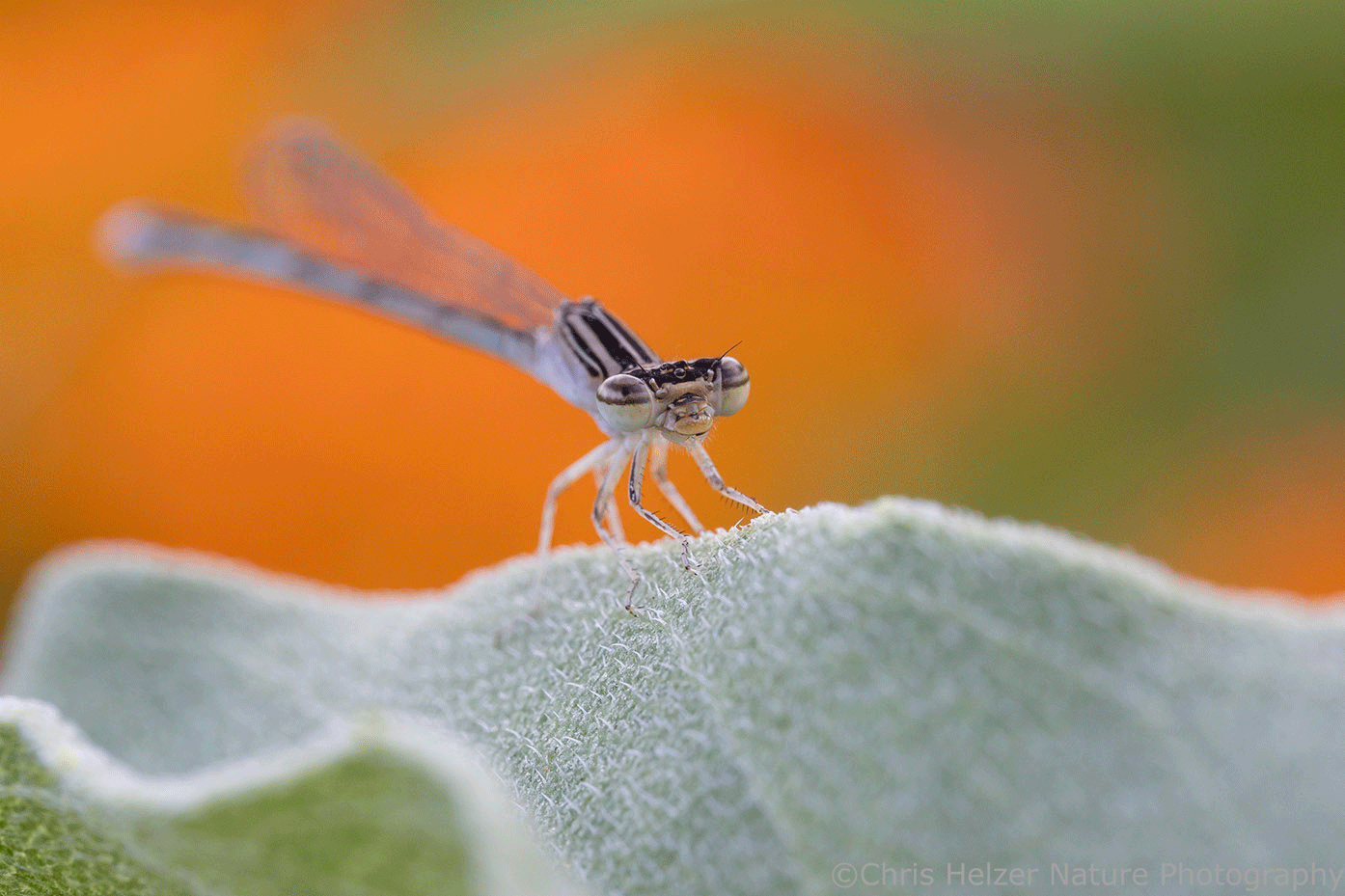
The orange blossoms of butterfly milkweed are pretty on their own, but they also make a great background for invertebrate photos. I’ve had fun playing around with that during the last couple weeks. Once I get a photo of an insect, I’ll often try to swing around for a different perspective that includes some orange color behind the subject.
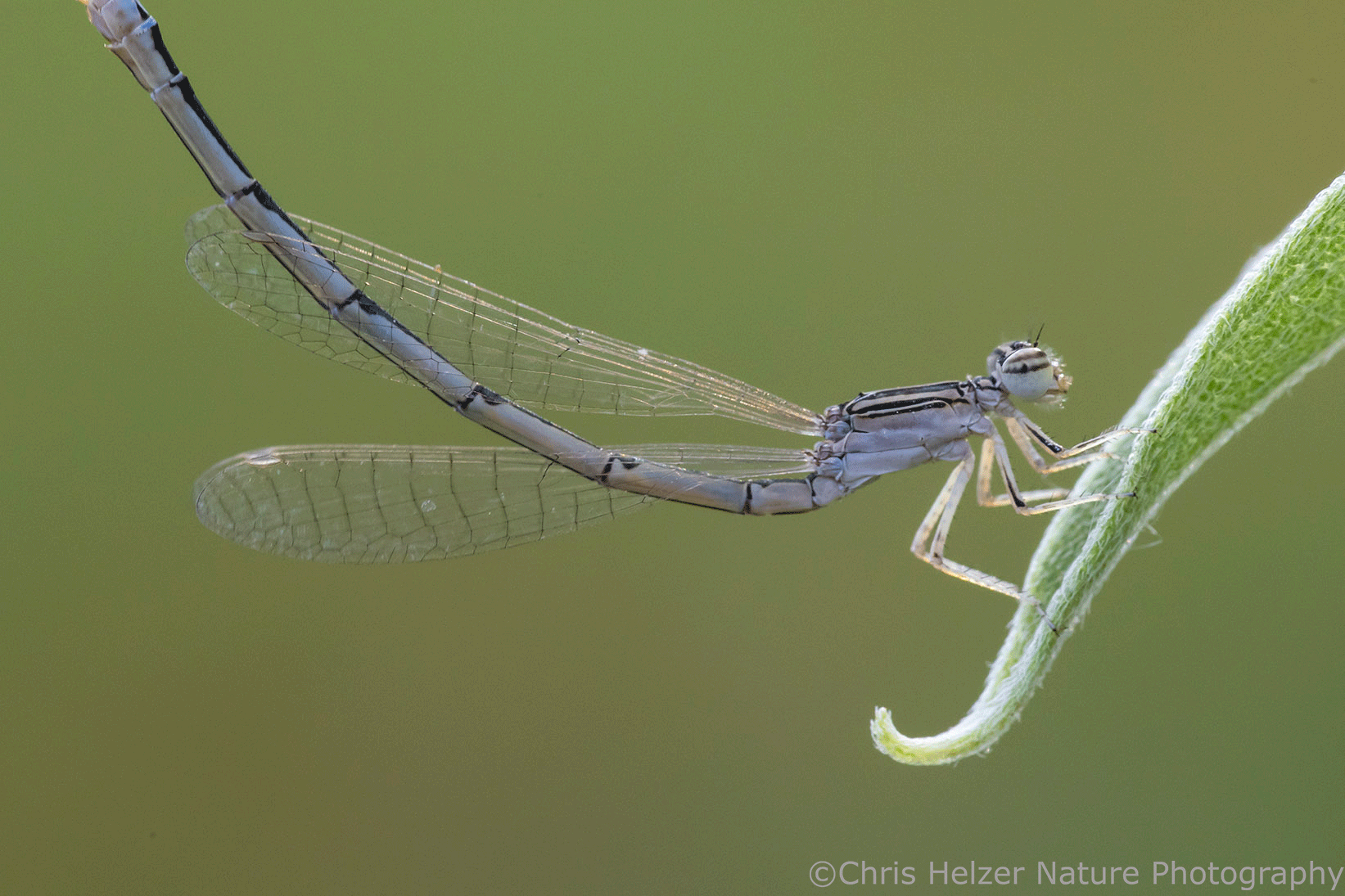
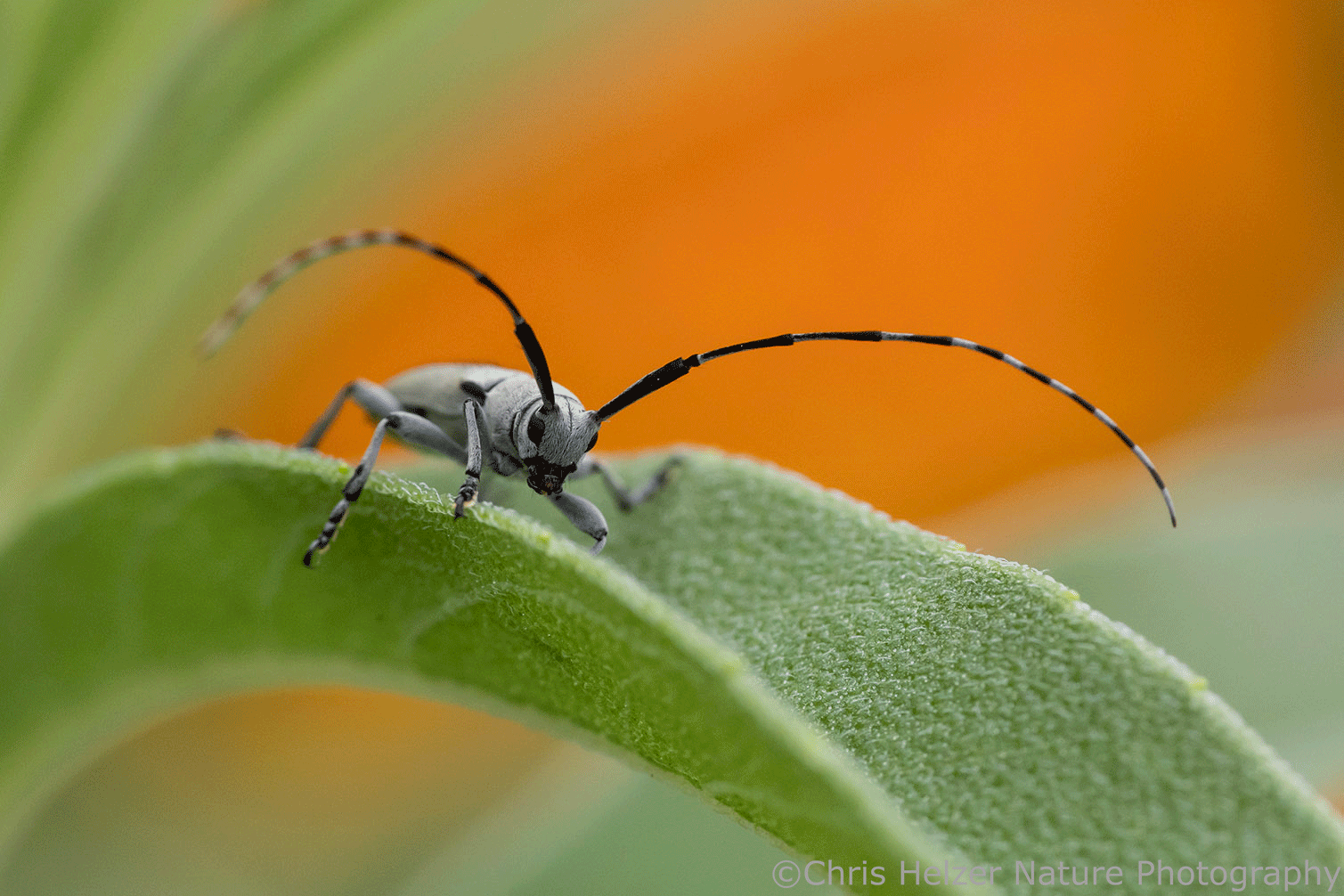
Butterfly milkweed flowersDamselfly with a green background.The same damselfly with an orange backgroundA male crab spider with orange backgroundA stem borer beetle with an orange backgroundIt’s fun with rain drops, too
My first bumble bee appeared a few days ago – a brown-belted bumble bee (Bombus griseocollis) – to feed on butterfly milkweed. Since I didn’t see any bees on the same milkweed plant six years ago, that was pretty exciting. It would have been more exciting if it had been the first bee of the year, but by the time the bumble bee appeared, I’d already photographed several other bees feeding on the milkweed. The most abundant of those bees has been the European honey bee, for better or worse. I’m not sure if there’s a managed hive nearby of if these are part of a feral population, but they’ve been very active.
Brown-belted bumble beeEuropean honey bee
Since honey bees aren’t native to the U.S., they aren’t always the most effective pollinators of our prairie wildflowers. They seem to do the job on milkweeds, though, dragging the gel-like pollinia from flower to flower. There’s growing, but complicated evidence that honey bees can compete with native bees, sometimes to the detriment of the natives. I’ve seen plenty of both honey bees and native bees on the milkweed so far, but have also seen several instances where a honey bee arrived and chased off a smaller native bee that was trying to find food. All I have is anecdotes, though, so it’s hard to draw any conclusions.
All this is to say that I wasn’t unduly upset when I arrived (with the Platte Basin Timelapse guys, actually) to the plot to find a honey bee that had just been caught and fed upon by a big crab spider. By the time we arrived, the spider seemed done with the bee, but there were several little flies congregating on the bee’s carcass. Interesting…
A big female crab spider with its prey and some little flies.
I’ve seen little flies hanging out on crab spider prey before, but haven’t ever looked into the phenomenon. This time, however, I submitted a photo of one of the flies to the Bugguide experts and found out it was in the Milichiidae family, also known as the freeloader flies. What a great name that is! There are lots of freeloader fly species, many of which hang around invertebrate predators to scavenge upon what they catch and kill. The flies apparently feed on the liquids from within the recently-killed insects.
“My” flies might be specialists that are specifically attracted to honey bees when they’re caught, perhaps because of a pheromone (scent) released by the bee as it dies. The scent, which can warn other honey bees to be careful, seems also to attract the flies, which take advantage of the spider’s work to immobilize the big bee so the flies can easily feed upon it. Other species of freeloader flies are known to hang around and clean up the mandibles of the invertebrate predators they follow. Nature is incredible, huh?
Freeloader flies on the recently-killed honey beeThe same (probably?) crab spider a few days later, ready to catch another meal.
Again, this post shares just a tiny fraction of the species and tales I’ve seen in my plot so far this year. I haven’t even mentioned lead plant, which is also blooming right now, and has been attracting its own pollinators and other visitors. One of those, a miner bee, is probably the same species I saw in 2018, which has a strong affinity for lead plant nectar. Another repeat visitor from 2018 has been less welcome – the Japanese beetle. A group of them have been busily feeding (and mating) on the flowers during the last couple weeks.
Lead plant is also flowering!
I have a whole series of photos showing a range of prey items captured by lynx spiders in the plot. One of those prey species is a damsel bug, which is itself a predator, but has also been feeding on butterfly milkweed nectar. Cascades of interactions!
Finally, though I’m serious that species counting isn’t the main point, it’s pretty cool that, in addition to 34 fly species, I’ve also counted 29 different beetle species, 15 different spiders, and at least 13 kinds of bees. It feels like the number of species I end up photographing will be a direct reflection of how many trips I manage to make over to the plot between now and the end of the growing season. (I plan to make A LOT of trips.)
Stay tuned! Better yet – find your own little space to watch and see what you can find close to home! If you have friends who might be inspired to go on their own adventure, please forward this post to them. There’s plenty of room out there for everyone, and no shortage of stories to discover!















 The Prairie Ecologist