
This is going to be a long one, but I haven’t had a lot of time to write lately and am going to try to make up for lost time. To make this post more palatable, I’m splitting it into three acts. Act 1 includes a couple brief announcements. Act 2 is a series of photos from my trip to the Niobrara Valley Preserve this week. Act 3 is a fun game. You and pick and choose as you like.
Act 1: Announcements
Here are two big announcements. The first is a reminder, which is that we will be having a public field day at The Nature Conservancy’s Platte River Prairies on July 13, 2024. The day will start at 7:30am and run through about 2pm, but you can come and go as you like. We’ll have sessions on reptiles/amphibians, small mammals, prairie restoration, prairie ecology, bird and plant identification and much more. There is no cost for the field day. Please bring your own lunch and whatever you want to protect yourself from the sun and chiggers. Final details will be coming later.
Second, we are hiring a land steward for the Platte River Prairies. This person will be supervised by Preserve Manager Cody Miller and help with all aspects of our restoration and land stewardship work. Please spread the word. Interested applicants can learn more and apply at nature.org/careers.
.
Act 2: NVP Photos
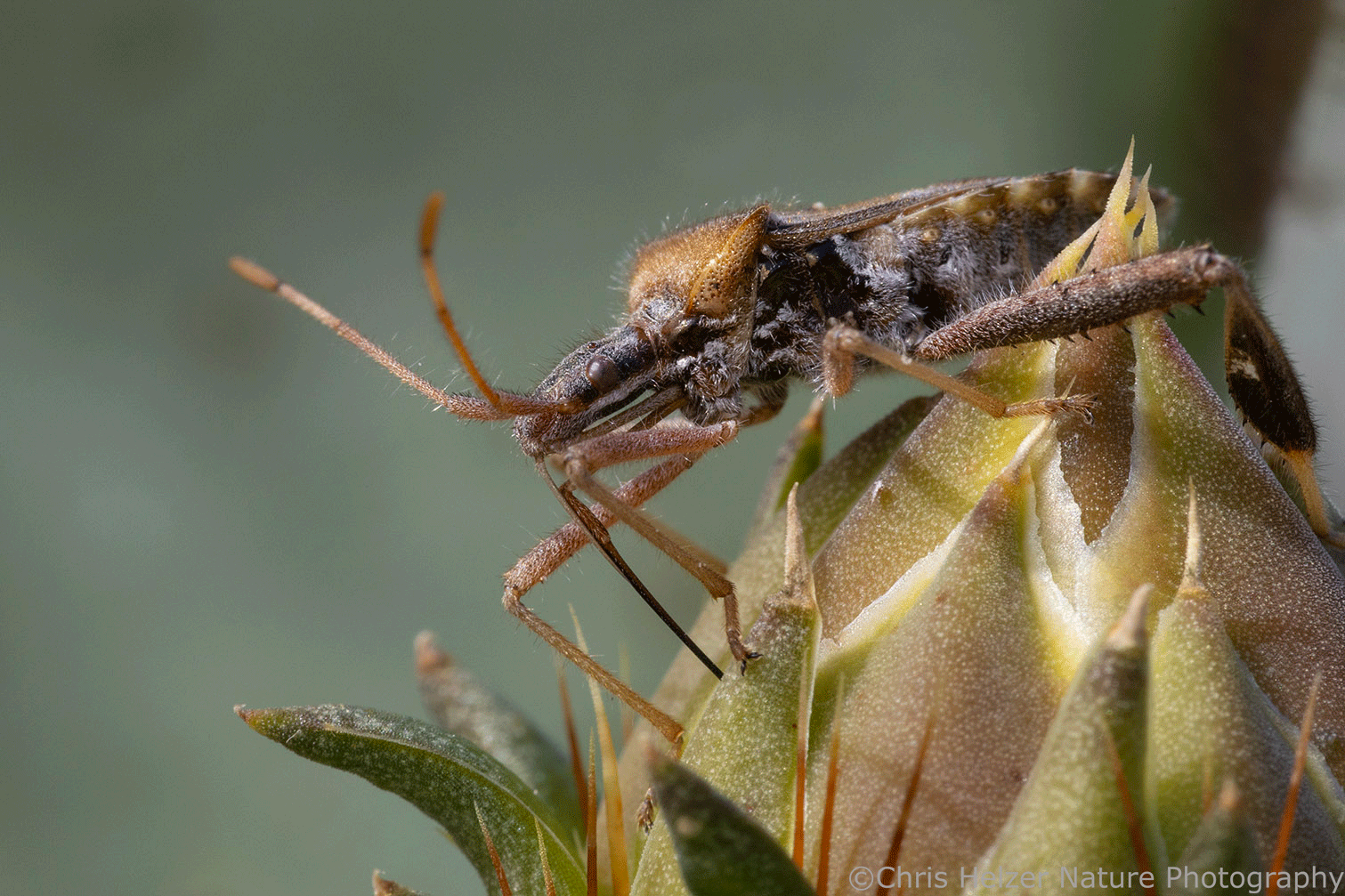
I spent a couple days at the Niobrara Valley Preserve this week. More and more wildflowers are starting to bloom, but most of them are the small and more scattered species. That just makes them extra fun to search for. Wildlife is very active, however, including more and more invertebrates. That’s good news for weirdos like me, who enjoy lying on the ground with a macro lens.

I say that, but many of my photos from the week ended up focusing on bison. For the most part, that happened only because I was looking for other photo subjects within the big east bison pasture at the Preserve. I photographed other things, but ended up near groups of bison as good lighting conditions developed. It was hard to keep my eyes on wildflowers and insects when big shaggy beasts were posing nearby.


This year’s calf coterie is growing fast. Most of the calves have probably been born now, though there are usually a few stragglers throughout the summer. There’s been a noticeable change in the protective behavior of the herd around those calves. When I was last at the Preserve, I had to be really cautious about my approach to keep the animals from gathering up the calves and running off. This time, as I approached in my vehicle, moms sprinted toward any calves that had strayed a little away from them, but once everyone was accounted for, the herd seemed to calm pretty quickly.
I thought about cutting down the number of calf photos I included below, but I know my audience…


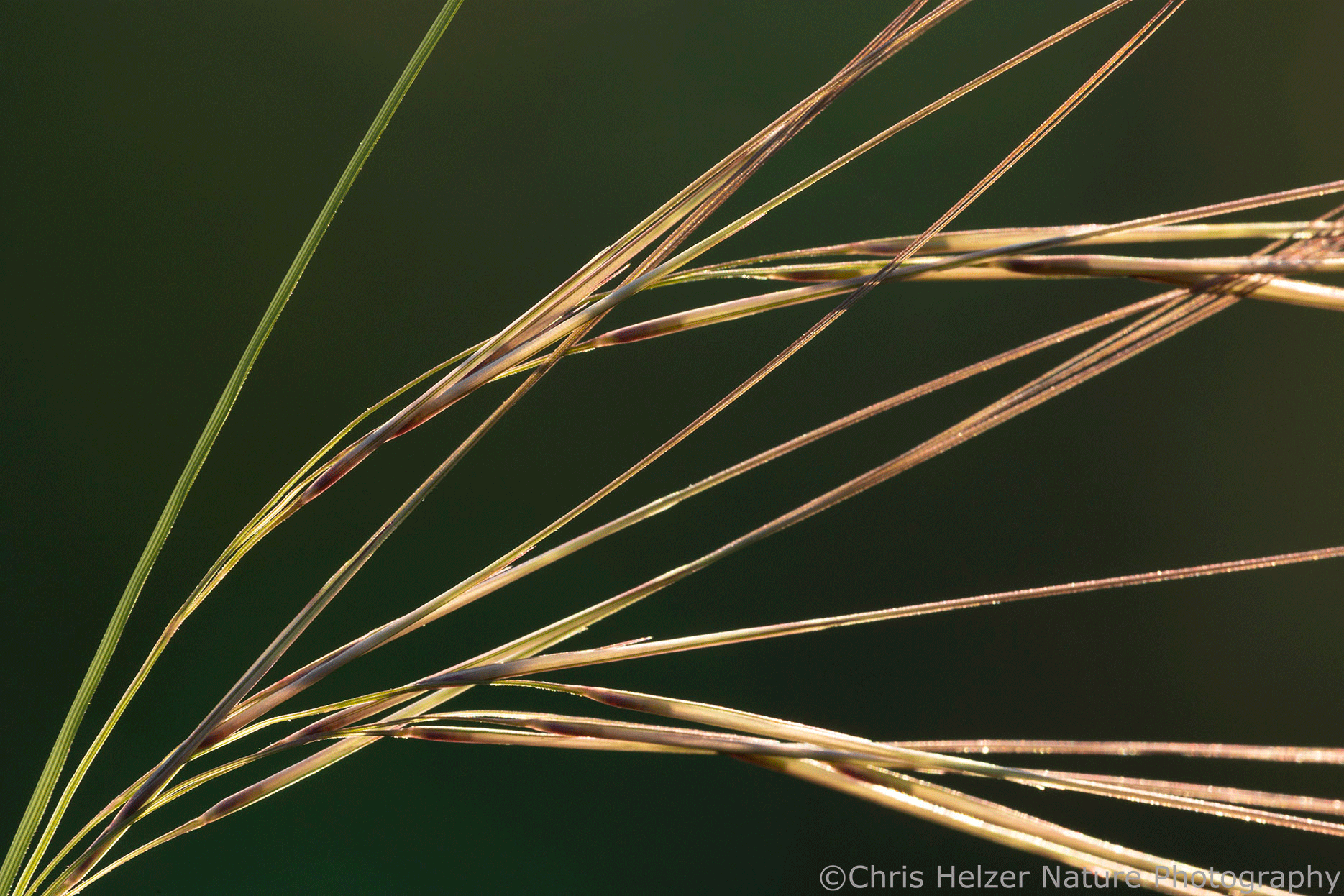
I did manage to photograph something other than bison, though. Lots of grasses were flowering, including junegrass, needle-and-thread, green needlegrass, porcupine grass, Kentucky bluegrass, Scribner’s panicum, and others. Locoweed, prairie turnip, hairy puccoon, western wallflower, white penstemon, and shell leaf penstemon were a few of the wildflowers in bloom.


A few years ago, I wrote about some leaf galls on goldenrod plants that seemed to have little flowers growing from the galls. Upon further research (by which I mean I did an online search, not that I set up a scientific study), I found out that there’s a fascinating relationship between a midge and a fungus that combine to create galls that are safer for the midge larvae inside them. Apparently, a similar relationship occurs within the leaves of shell leaf fungus because I saw the same kind of fungal fruiting bodies growing on the colorful galls on penstemon leaves. Click here to read the goldenrod/midge/fungus gall story.

I spent time poking around a couple sand blowouts and photographing tracks. I found a lot of sharp-tailed grouse tracks, but my favorite photo ended up being one with beetle tracks heading uphill (I think?).

The public hiking trail was looking great, so I stopped by for a little while one morning. There were some big patches of western wallflower (Erysimum capitatum), as well as hairy puccoon (Lithospermum caroliniense) blooming along the trail, and the river was gorgeous in the early day light. We installed bathrooms at the trail head last year, along with some treat interpretative signage. If you’re in the area to float the river or for other reasons, and need to use the facilities, please feel free. You’re welcome to hike the trails, too.


I was able to photograph two snakes this trip, which was fun. The first was a hognose snake I found on the gravel road while I was driving. It didn’t feel like performing either of its two defensive strategies for me, but that was fine. I didn’t press.
The second snake was a bull snake we found while showing some guests around a burned portion of the bison pasture. Carson Schultz, our NVP stewardship manager, managed to grab the snake to show it to people up close. When he released it, I grabbed a few photos before we let it go about its business.
I also got to photograph a black-tailed jackrabbit that thought it was hiding from us as we drove our guests out to see some bison. It ran off, but not very far, and tried hide in a pretty insubstantial patch of cover.


.
Act 3: The Game
I call this game “Sunrise or Sunset?”
It’s easy to play. I’ll show you a bunch of bison photos from the Niobrara Valley Preserve this week. Some were taken at sunrise. Others were taken at sunset. All you have to do is decide which are which. Easy, right? (Hint: the sun comes up in the east and sets in the west. Bonus hint: don’t take this game too seriously.)
I’ll give you the answer below each photo, so be careful where you look if you want to make serious guesses without having the answer spoiled ahead of time.

#1. This photo was clearly taken as the sun was going down. See how the bison’s tail is pointing downward? That’s a good clue. Also, I was facing west, which – as I told you already – is where the sun sets. Did you get this one right? If so – congratulations! If not, don’t worry, you’ll have more chances to apply what you’ve learned here.
.

#2. This is a trick one because you can’t see the tails very well. However, clever observers will note that the bison is facing east, which means the sun behind it must be in the west. Thus, it’s a sunset photo! Also, all the bison have that ‘end of day’ energy as they graze. Bonus note: The young bison bull closest to the camera appears to be watering the grass. Clicking on the photo will give you a better view if that’s of interest to you. (If you’re reading this in an email, click on the title to open it online so you can click on photos.)
.

#3. Ok, this is a tricky one. The tail is down, which might make you think sunset, but notice that the bull is grazing uphill as it’s silhouetted against the sun in the eastern sky. The combination of all those factors tips the balance toward a sunrise photo, which it is. Don’t feel bad if you got this one wrong. The next one will be easier.
.

#4. See? This one’s easy – mostly because it’s the same bison as in the earlier photo, which we already determined was a sunrise shot. Also, notice how some of the sand being thrown up by the wallowing bull is kind of clumped together? That’s a likely indicator of some early morning dew/moisture in the sand.
.

#5. If you were just guessing at these, you might guess sunset on this one because the last two were sunrise photos and it would be pretty wild to have three sunrise photos in a row. However, if you did that, you’d be wrong. This is another sunrise photo. Yes, I know the tails are down, but the bison are grazing uphill again, so you have to balance those two factors. Also, the sun is in the east, which pretty much seals the deal.
.

#6. Surely, I wouldn’t put yet another sunrise photo here? Correct! This is a sunset photo, as you can tell from the fact that the sun is in the west. Also, the bison in the foreground has obviously had a long day and is looking forward to a break from the hot sun.
.
Important disclaimer: Whether a bison’s tail is up or down doesn’t really have anything to do with sunrises or sunsets. I was just pulling your leg. A tail up in the air usually means a bison is either relieving itself or feeling like stomping you into the ground. It’s a good idea not to take any chances that it’s the former. Stay safe out there. Also, bison will graze uphill or downhill whenever they feel like it, no matter what people tell you. What you can take to the bank, though, is that the sun rises in the east and sets in the west. That’s just facts.







 The Prairie Ecologist