This post was written by Evan Barrientos, one of our Hubbard Fellows.
Have you ever explored a restored prairie and stopped to marvel at how the site was once a cropfield? Do you ever wonder how that transformation happens? Would you like to do it yourself? If so, then do I have an opportunity for you. On Saturday, February 13, 9:00am you are invited to help seed our newest prairie and wetland restoration at the Platte River Prairies! A potluck celebration will be held afterwards!
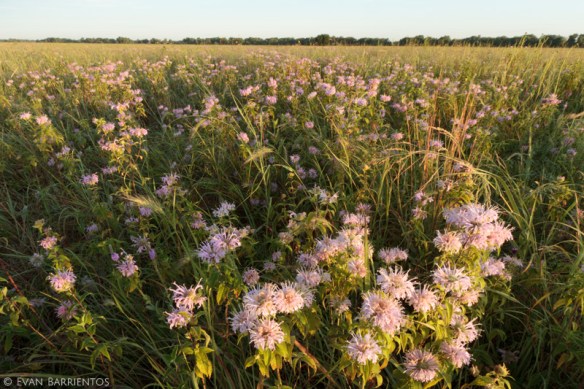
It amazes me that prairies like this were crop fields just two decades ago. On Feb 13 you can help plant another.
Last summer, TNC staff and volunteers collected seed from 141 species of prairie and wetland plants, mostly by hand. In August we even hired a contractor to excavate the historic sloughs found on our restoration site. Doing so will greatly add to the site’s biodiversity by creating wetland habitat. Creating diverse habitat is a key part of our restoration strategy, which is why this restoration has sandy ridges, wet sloughs, and mesic ground in between. On February 13 we will start seeding the ridges!

Dirt now, prairie and wetland later. This re-excavated slough and former weed field is ready for seed!
Although all steps of our restoration work are equally important, I’m especially excited about seeding this prairie. How often do you get to create habitat? Imagine bringing a grandchild to the restoration 20 years from now, bursting with flowers, birds, and insects, and telling her that you helped plant it. Maybe those prairie clovers over there even sprouted from seeds that you picked with your own hands.
If this sounds like a good use of a Saturday morning to you, please RSVP to evan.barrientos@tnc.org! Volunteers should be prepared to walk over muddy and uneven terrain for up to 2.5 hours in cold weather. Please bring water, clothes and footwear suitable for mud and cold, and a potluck dish or drink if you would like to. We will meet at TNC’s Derr House (13650 S. Platte River Dr., Wood River, NE 68883. On I-80 take exit 300; go south approx. 2 miles; turn right onto South Platte River Dr.; big red brick house on top of the hill.) We usually have volunteers come from Lincoln and Omaha; if you’d like to arrange a carpool you can do so here.
 The Prairie Ecologist