
I drove up to the Niobrara Valley Preserve last Thursday afternoon. I needed to be there to help with a prescribed fire on Friday, but I scheduled my trip so I’d have a little alone time to wander Thursday evening. My schedule has been pretty full lately and I needed some quiet time to explore.
On my last trip to NVP, I’d tried to photograph some pasqueflowers, but they were all either covered with snow or wilted from cold and frost. This time, as soon as I arrived, I headed that direction again to see if I’d have better luck. On the way, though, I saw the little prairie dog town nearby and decided to start there.

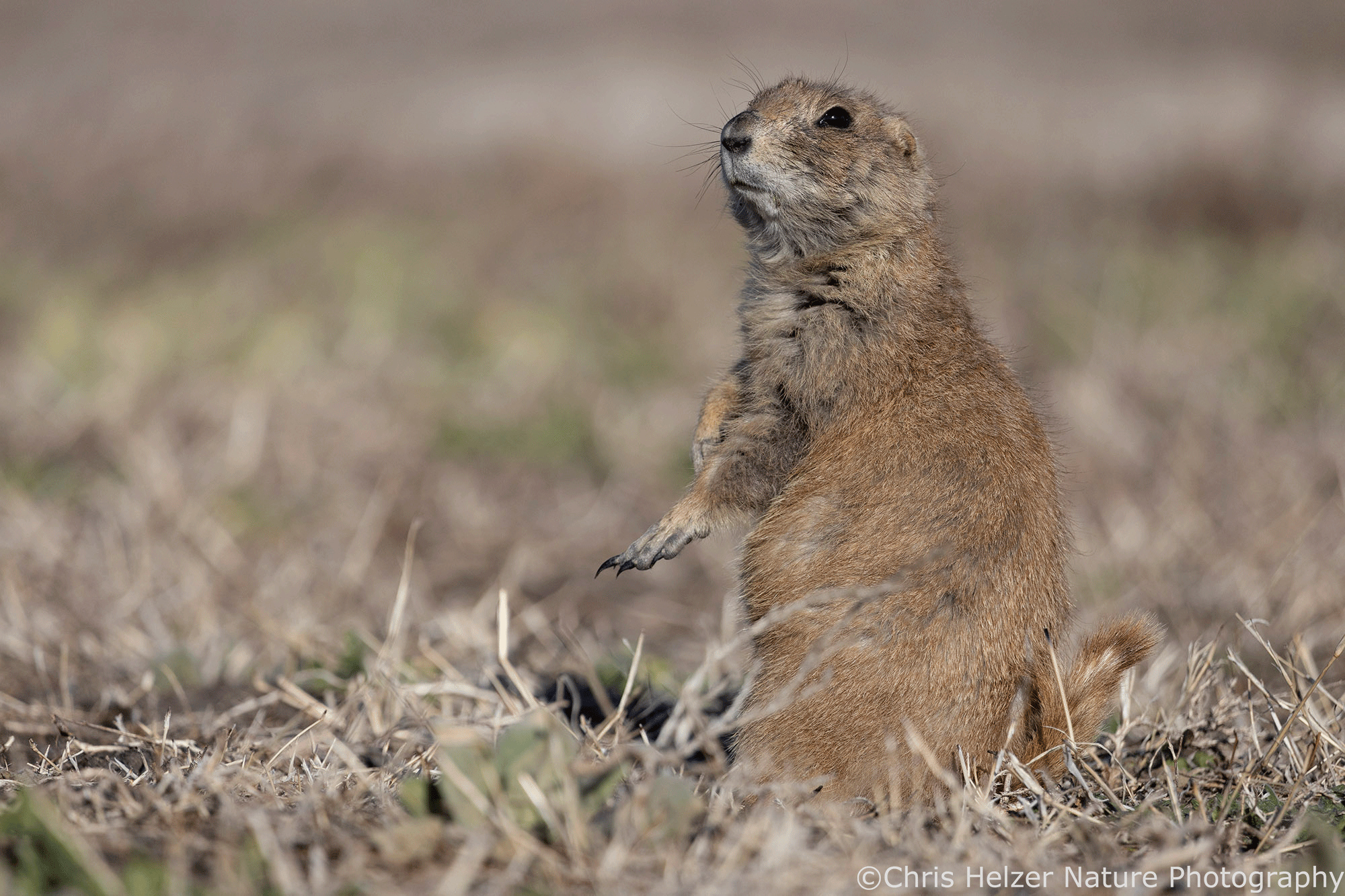
The photo above was my favorite from the prairie dog town. Between my arrival at the prairie dog town and the moment I took that photo, I had about an hour’s worth of slow army crawling and lying on my belly, trying to look innocuous. I’m still finding sandbur spines in my legs and elbows and my neck. That’s not a complaint, mind you, just context.
When I first got to the prairie dog town, I used my typical strategy of looking around for any prairie dogs that didn’t immediately dive for cover upon seeing me. A grand total of one prairie dog fit that criterion, so I pulled my hood over my head to hide my shape a little and started a very slow belly crawl in its direction. Every time it twitched toward its hole, I’d stop until it relaxed. Then I’d continue to slither across the ground, trying to ignore the tiny stabs from sandburs and the occasional cactus (Opuntia fragilis – if you know, you know).


I eventually got into range and tried to stay as motionless as I could, hoping the prairie dog would get used to me and go back to its normal routine. It took a while, and it came in stages. For the first 15 minutes or so, the prairie dog mostly stared at me from various upright poses, periodically taking a few steps away from its hole and then quickly returning. Eventually, it got comfortable enough to move a few feet from the burrow entrance and do a little foraging. Even then, it frequently stopped and stared at me.
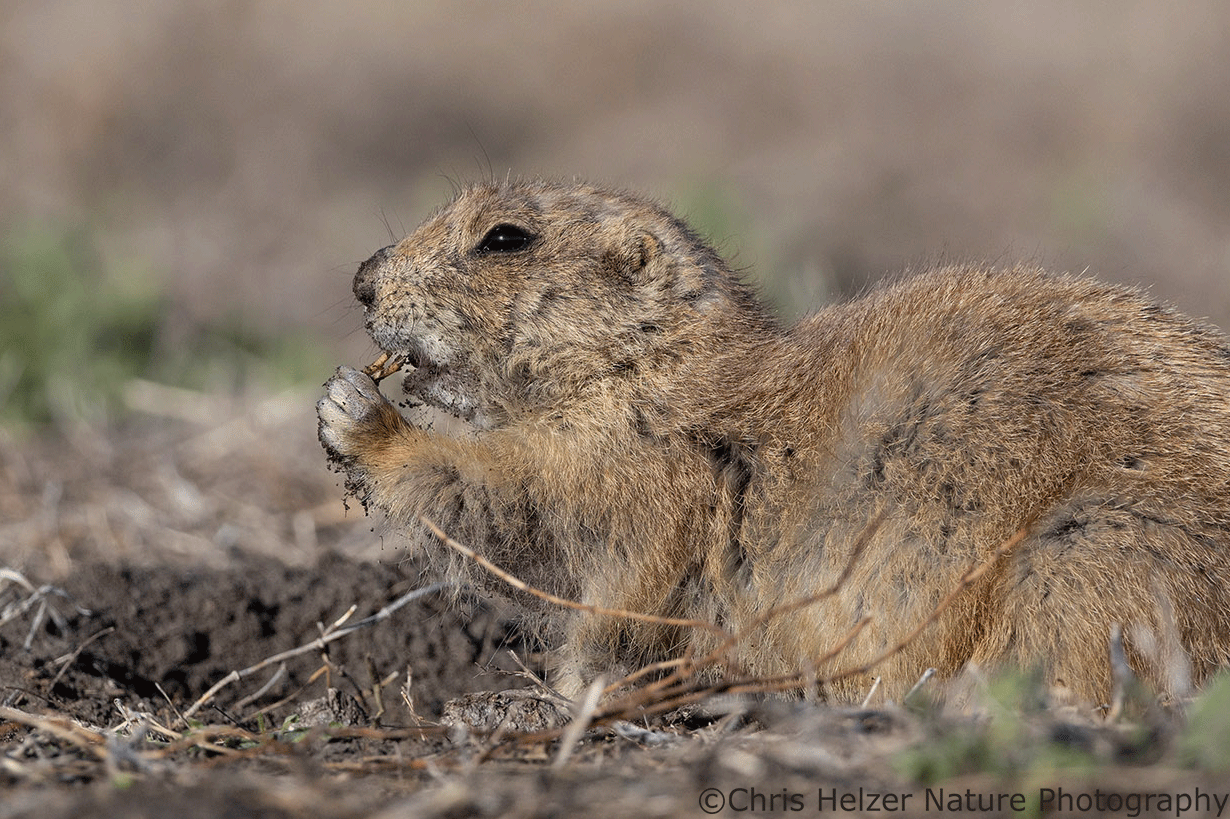
Finally, after about 30 minutes or so, the prairie dog seemed to settle in. It kept one eye on me most of the time, but also started moving around quite a bit. Interestingly, it kept digging in the ground and then eating something it found there. I’m pretty sure it was either a root or rhizome, but I couldn’t tell which. I was hoping I’d get a photo that I could enlarge enough to identify it, but the photo below was the best I got and it wasn’t very revealing. I’d never seen a prairie dog dig for its dinner before, but it certainly makes sense at this time of year when there’s not much for available green vegetation.
Toward the end of my time, I remembered to do a little video work. A clip of the prairie dog chewing on a dandelion leaf is embedded below. As always, if the video doesn’t work, click on the title of this post to open it online. Then you’ll see the video and also be able to click on individual photos to see better versions of them.
I also managed to get a few photos of the prairie dog making funny faces. Here’s one of them. I feel a little bad posting it because it seems unfair. After all, we all make funny faces, but usually don’t get caught by someone with a camera. Don’t tell the prairie dog, ok? We’ll just hope it’s not a follower of this blog.

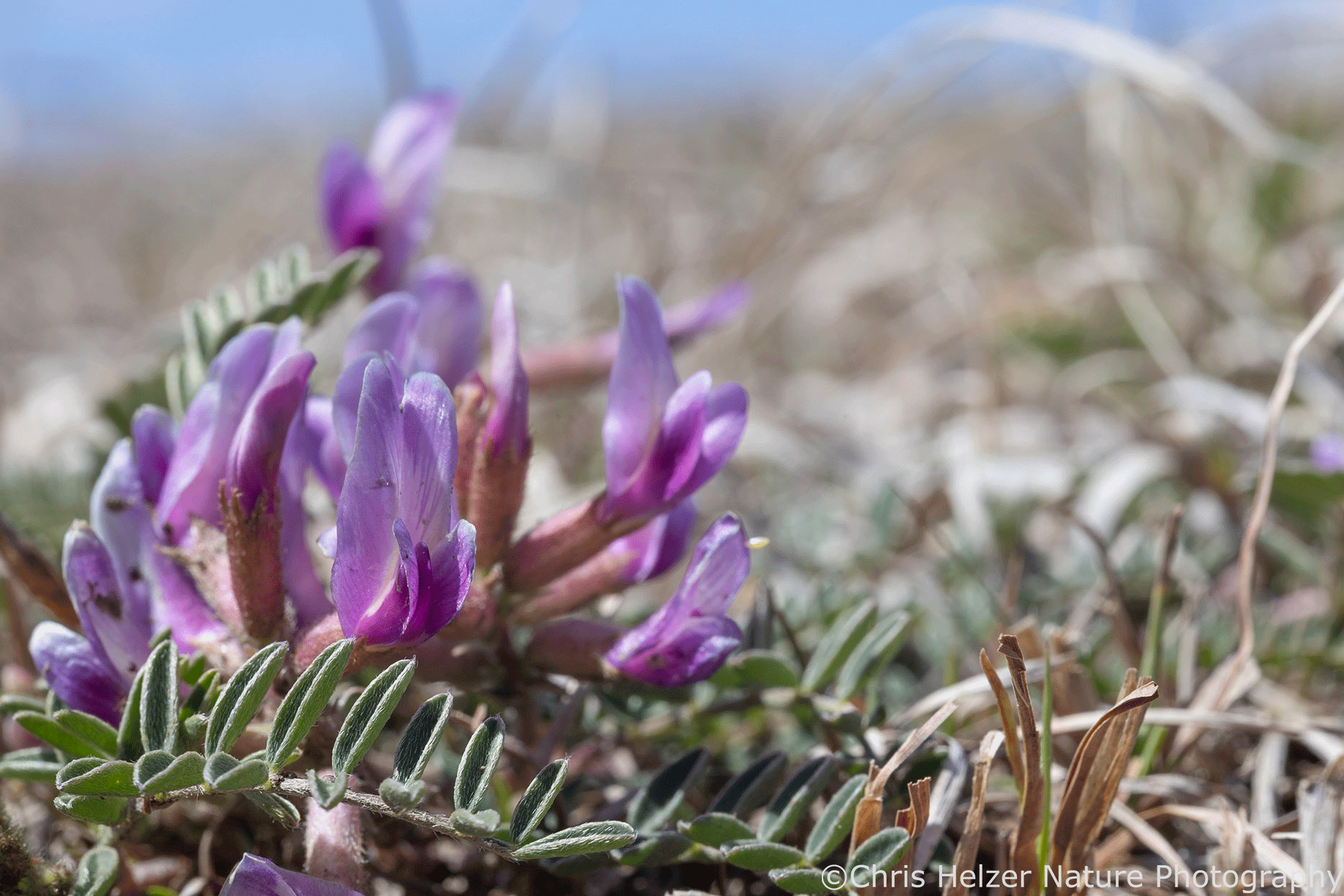
After a while, I noticed the sun was getting lower and I figured I’d better go check the pasqueflowers while there was still decent light for photography. I knew the stiff breeze would be whipping them around a little, even as short as they are, so I needed a little extra light for fast shutter speeds. When I got to my favorite patch, most of the pasqueflowers had finished blooming for the season but a few were still going – though they appeared to be closing up for the night.
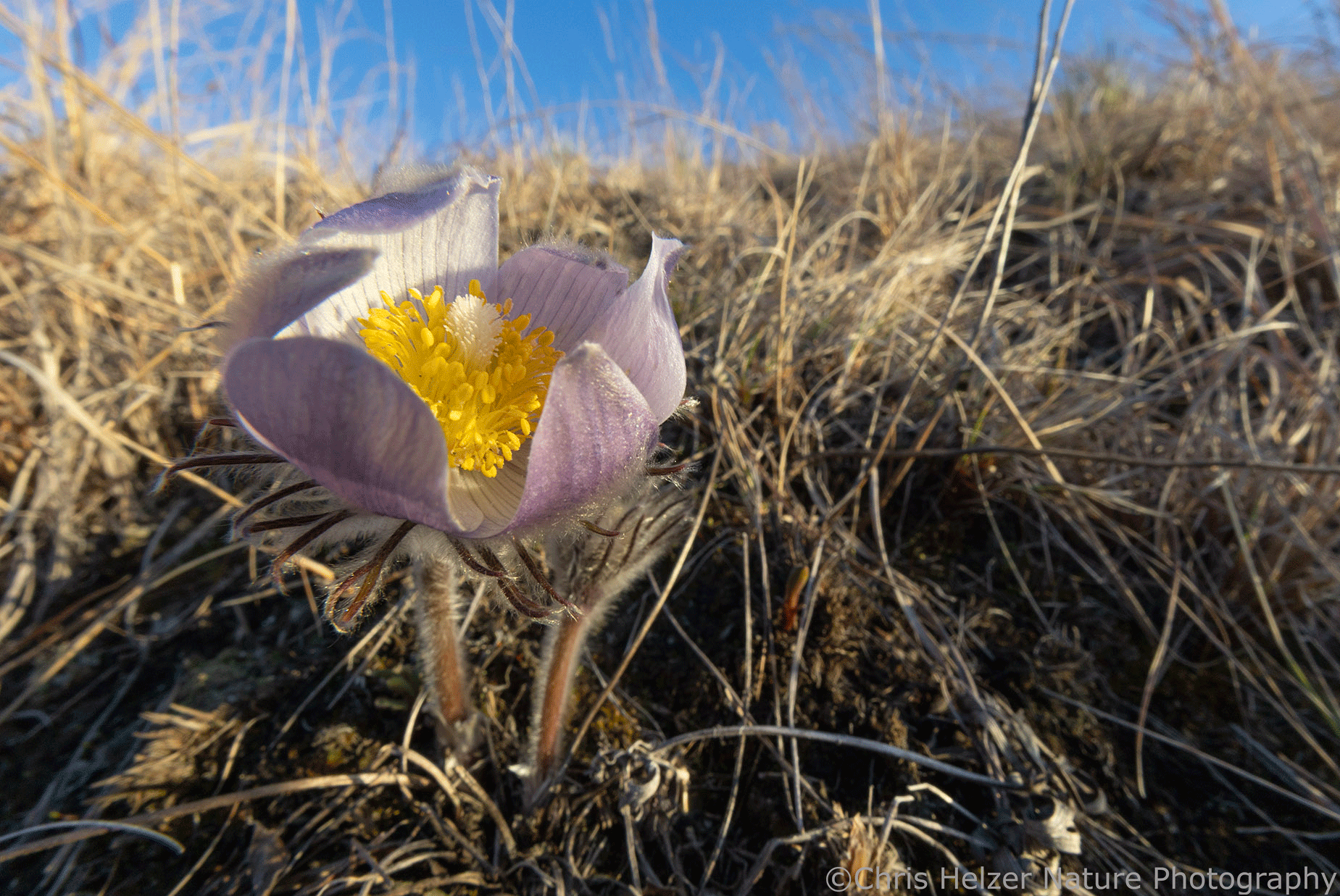

As seems to happen nearly every time I visit this flower patch, there were some oil beetles around. If you don’t know the story of oil beetles and their relationship (?) to bees, please stop right now and read this post.

Anyway, this is the only place on earth I’ve ever run into oil beetles, and I’ve never seen them doing anything other than eating pasqueflowers. As far as I can tell (from some quick Google searching), oil beetles have a pretty broad diet, but I’ve never seen evidence of that. In my world, oil beetles appear when pasqueflower blooms and then disappear for a year. My world is pretty limited, apparently.

The strong breeze added a few degrees of difficulty to my flower and beetle photography. I tried to wait patiently for brief dips in wind velocity and then pushed the shutter button lots of times, hoping at least a few images would turn out sharply focused. I guess it worked.
The next morning, we met early to get everything ready for the burn. We planned to burn about a square mile (645 acres, to be precise) of Sandhills prairie in our east bison pasture. The bison pasture is 10,000 acres in size and we were hoping the green vegetation coming in after this burn would be where the 500 or so bison (including this year’s calves) would focus most of their grazing this year – in addition to some other recently-burned patches. If they do that, they’ll leave the rest of the pasture mostly ungrazed and create a good mix of habitat conditions for plants and animals across the whole site.

I had a pretty easy job for most of the burn. I very slowly drove a truck carrying a couple hundred gallons of water along the mowed firebreak while someone else walked next to the truck and sprayed water on the ground to create a ‘wet line’ to help hold the fire. Periodically, I got to crawl out of the truck and take some photos while we waited for the ignition crew to catch up.


Because we were in the bison pasture and the bison are there year-round, we got to watch some of them react to the fire. There wasn’t much to see. For the most part, they seemed wholly unbothered by what we were doing. Most of them sidled out of the way as we came near – in that kind of “I’m too cool to care” way.


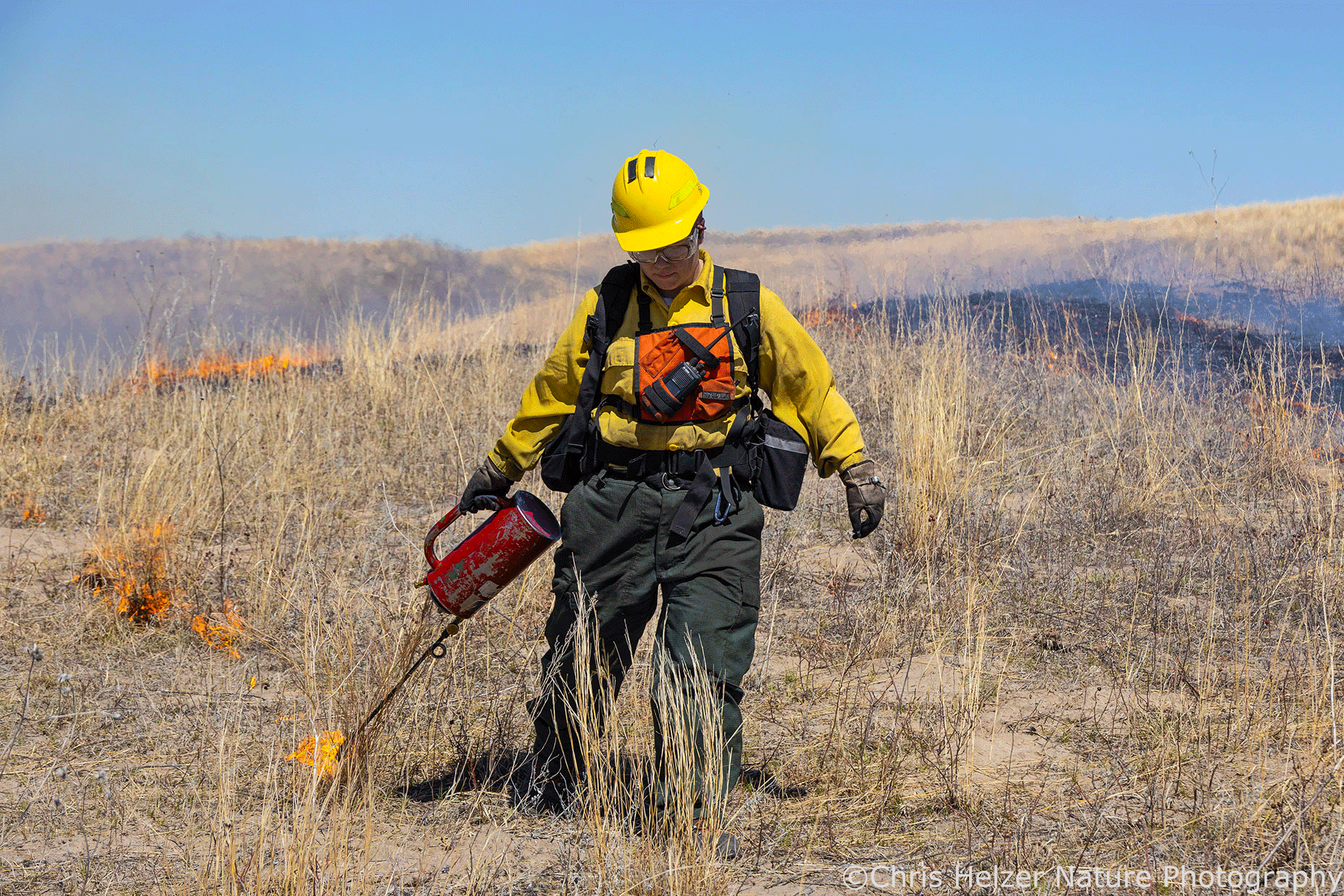
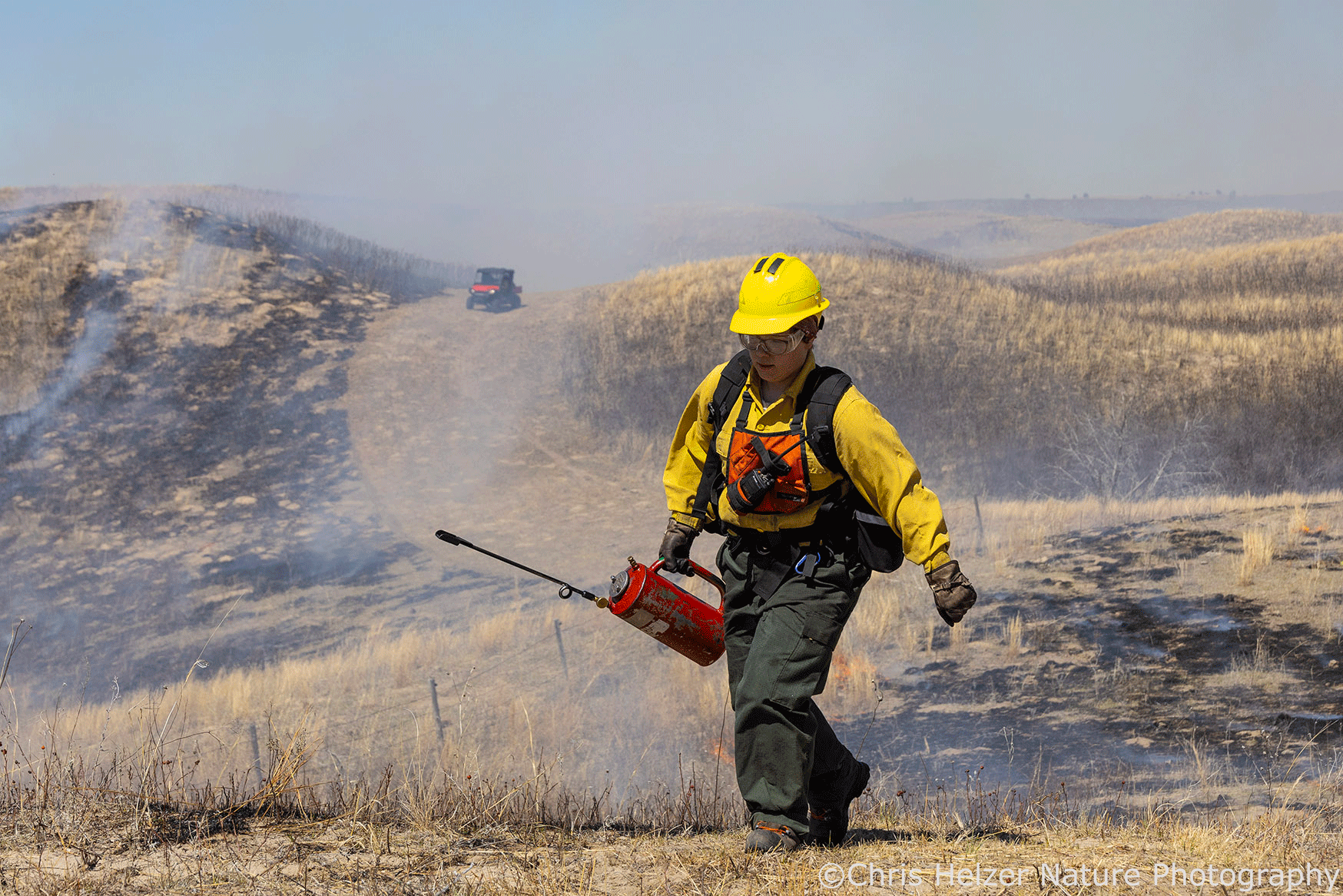
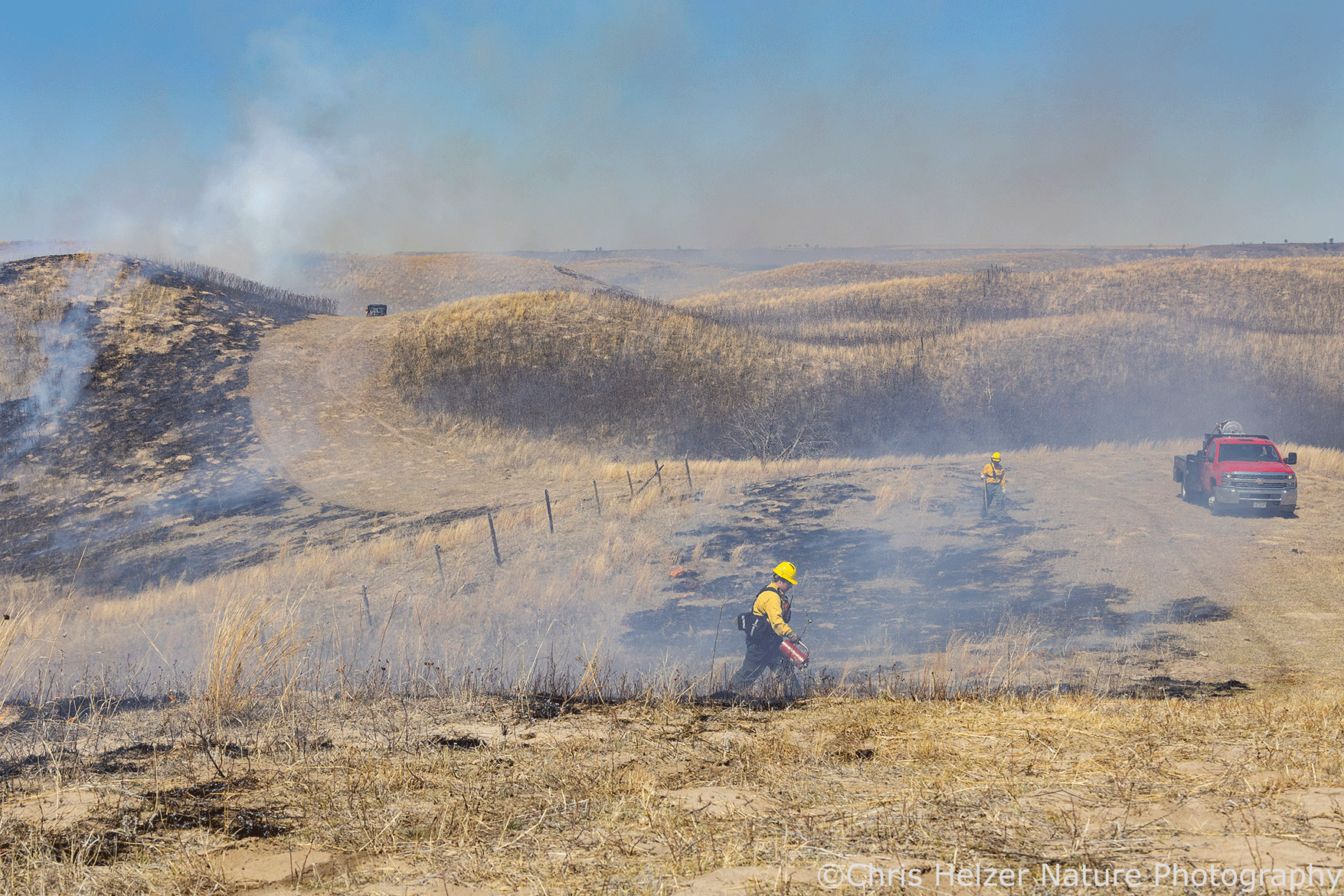
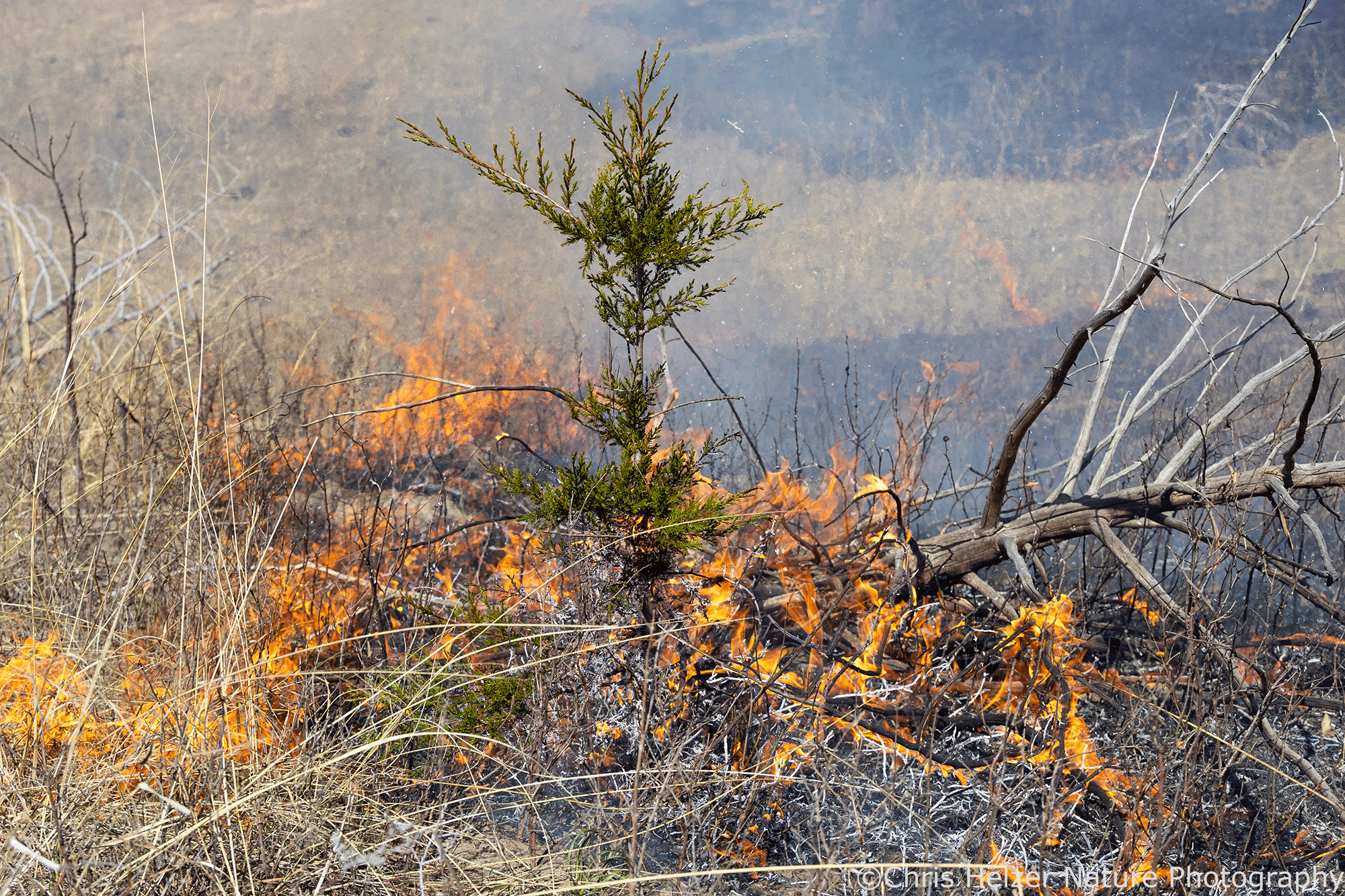
This was not a very intense fire, especially compared to many other prairie burns. The grass fueling the fire was relatively sparse, both because it’s the Sandhills and because patchy bison grazing made it that way. We probably ended up burning about 80% of the whole patch, but that was only because of some extra work at the end to light off areas that didn’t burn the first time. There were lots of lesser earless lizards, tiger beetles, grasshoppers, and other little creatures that probably sheltered in those unburned refuges – as well as in the thousands of unburned acres outside the burn unit.

It’ll be fun to watch the bison graze the new burned area this season. Some of them were already back inside the burned area as we left, checking it out. As soon as the vegetation starts to green up, they’ll be eagerly nipping it off, just as they’ve been doing for thousands of years.
The short, sparse habitat created by that grazing will be fantastic for animals like lesser earless lizards, kangaroo rats, band-winged grasshoppers, and horned larks, among many others. A lot of plant species will take advantage of reduced competition from grasses and other perennial plants being grazed by the bison. Many of those opportunistic plants will be wildflowers that will bring a bounty of nectar, pollen, and/or seeds and draw even more wildlife in to feed on them.
Maybe some oil beetles will fly in to feed on some of that plant diversity, too. If so, I probably won’t see them.



 The Prairie Ecologist