A couple weeks ago, I posted some photos I took along a couple creeks at the Niobrara Valley Preserve. Shockingly, those weren’t the only photos I took during that visit to that 56,000 acre property full of expansive vistas, bison, and prairie.
I also took a photo of some bison.
Big hairy animals in the middle of sweeping Sandhills prairie. Some people find this kind of scene aesthetically-pleasing. I know that because I was with a group of people who were doing so as I took the photo.
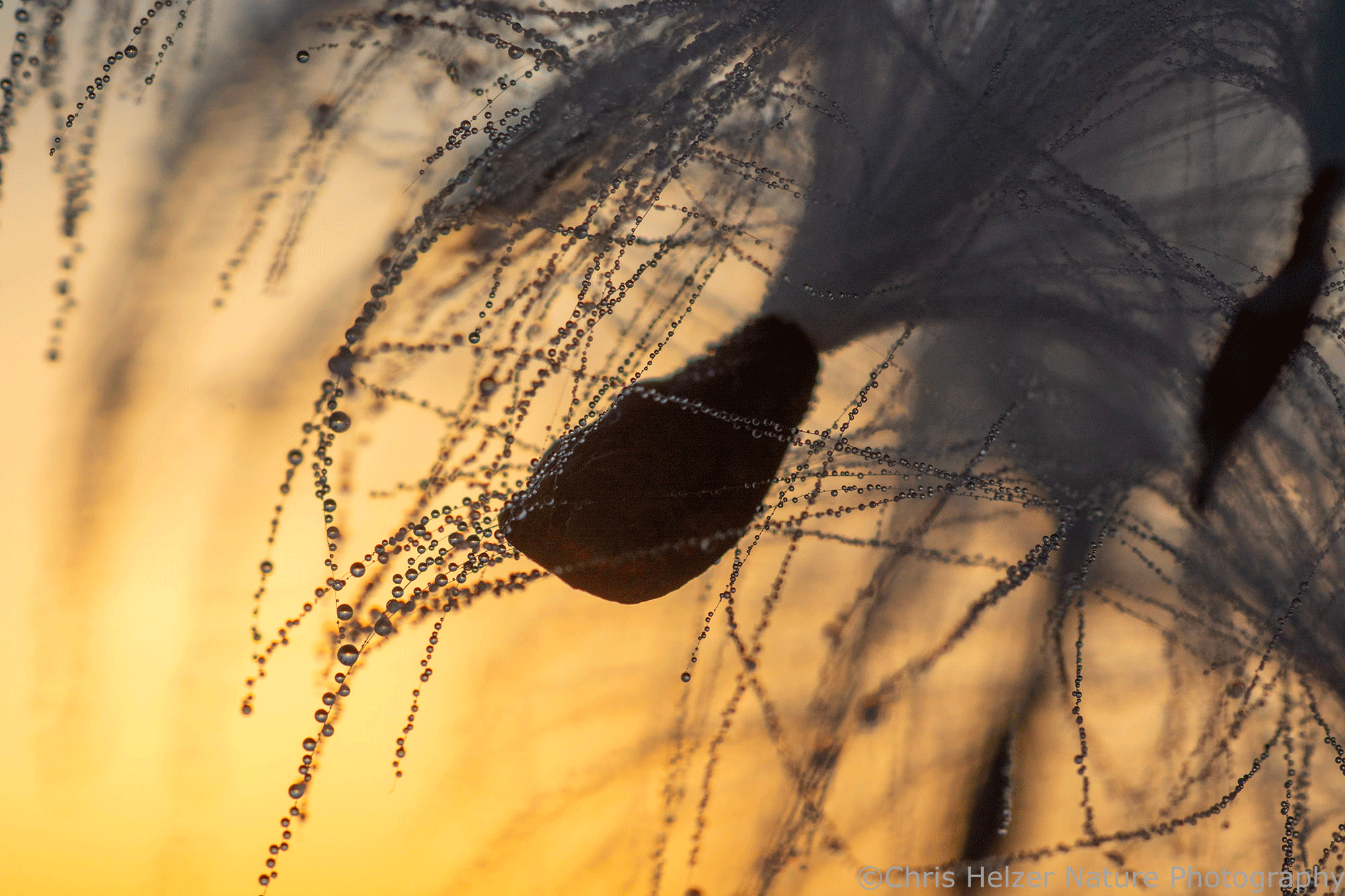
The following morning, more fitting with my photography personality, I was lying in wet grass photographing milkweed seeds and looking for dew-covered insects.
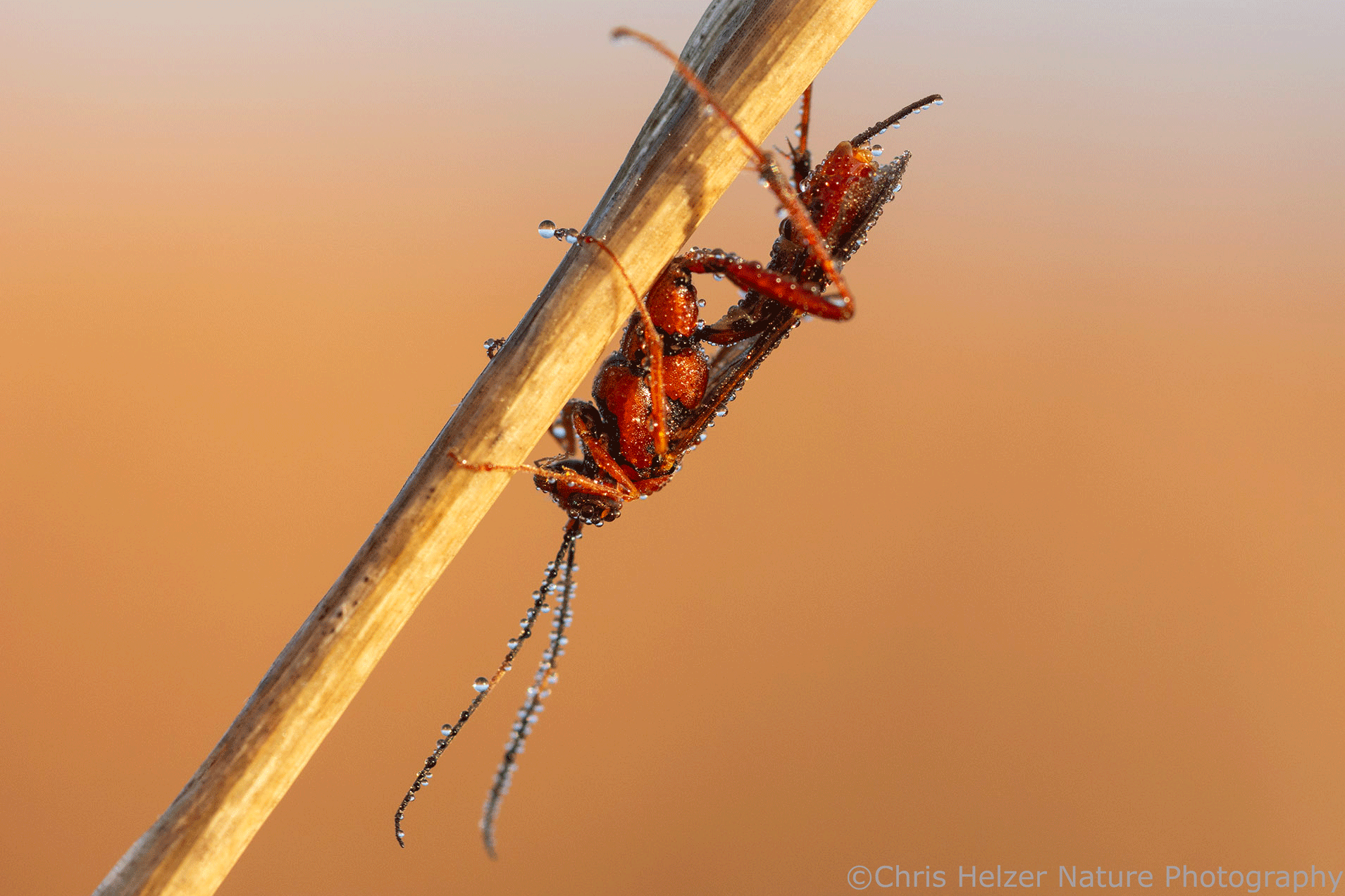
Now THAT’S more like it. Look at all those water droplets on the pappus of the whorled milkweed seeds! Everyone wants to ride out in a comfortable truck to see bison, but nobody wants to lie prone in the wet prairie to get a better look at milkweed seeds with me.This gorgeous little wasp seemed appreciative of the effort I was putting in.Since I was adding to my library of photos I’ve already got plenty of (milkweed seeds), I went ahead and added another photo of sideoats grama. Look – water droplets again!
As the sun rose, the breeze started kicking up a little and the fog nestled down in the river valley started to dissipate. I decided to hike over to a little overlook above the river to see about photographing that foggy valley scene. Instead, I found a bunch of bejeweled spider webs and never made it to the overlook at all.
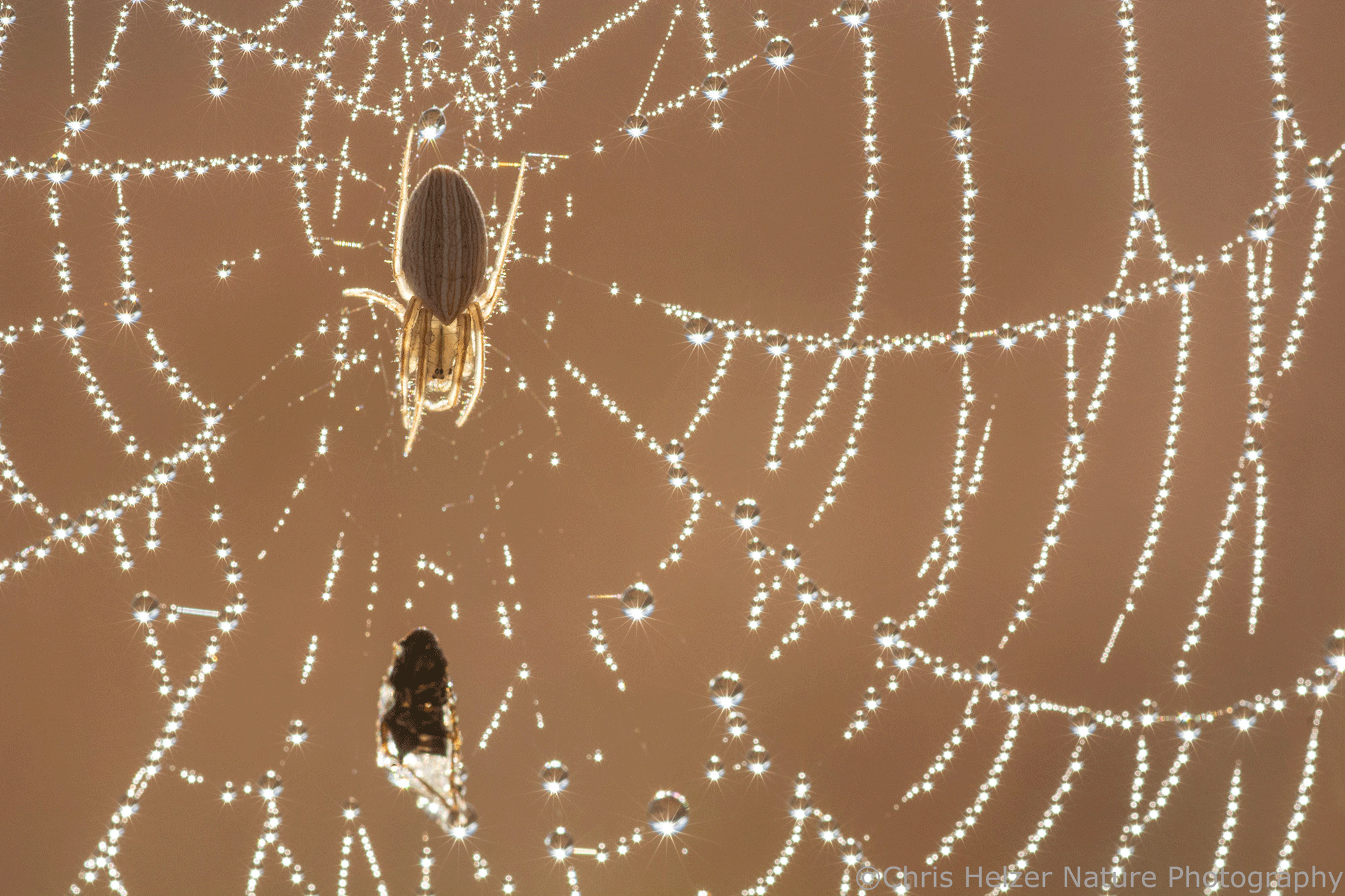
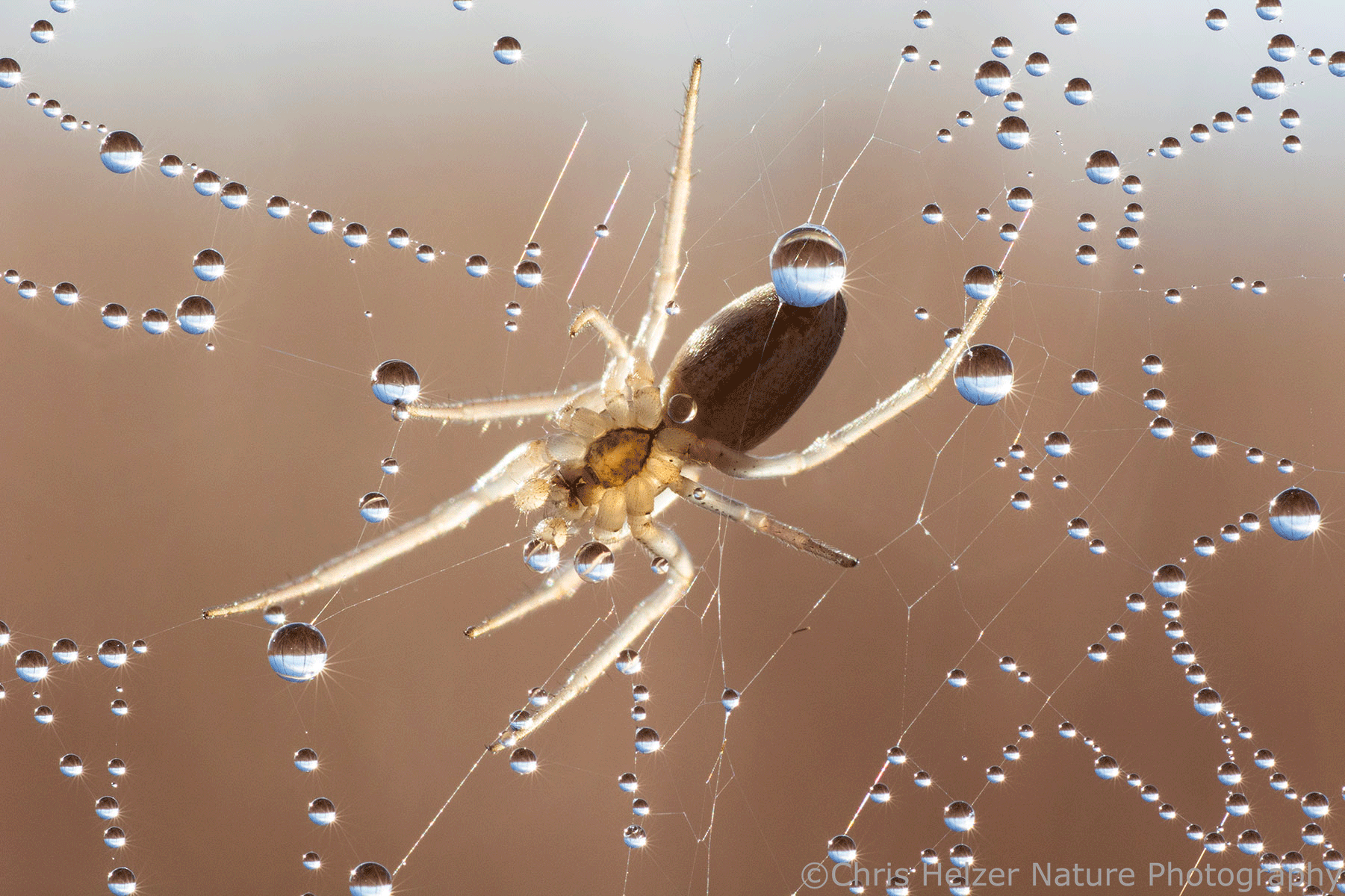
Sparkly water droplets on spider silk. Oh, and a spider and its recent meal were there too.
Because the breeze was rocking the webs back and forth, photographing these spider webs came with an extra degree of difficulty. I had my camera on its tripod and tried to rock the tripod in synchrony with the webs. Mostly, that stratagem failed miserably, but there were a few times when it didn’t. Obviously.
Did you ever notice that the word ‘stratagem’ has an ‘a’ before the ‘g’ but the word ‘strategy’ has an ‘e’ there? I’m sure you have. Doesn’t that seem needlessly confusing? It seems like those two very similar words could get together on this one and make life easier for those of us trying to spell them correctly. Also, the word ‘strategy’ would probably have been a better choice than ‘stratagem’ to describe what I was doing with my tripod, but I feel like I use ‘strategy’ a lot in my writing and wanted to try something different. Actually, ‘tactic’ might have been even more appropriate. Oh well, too late now.
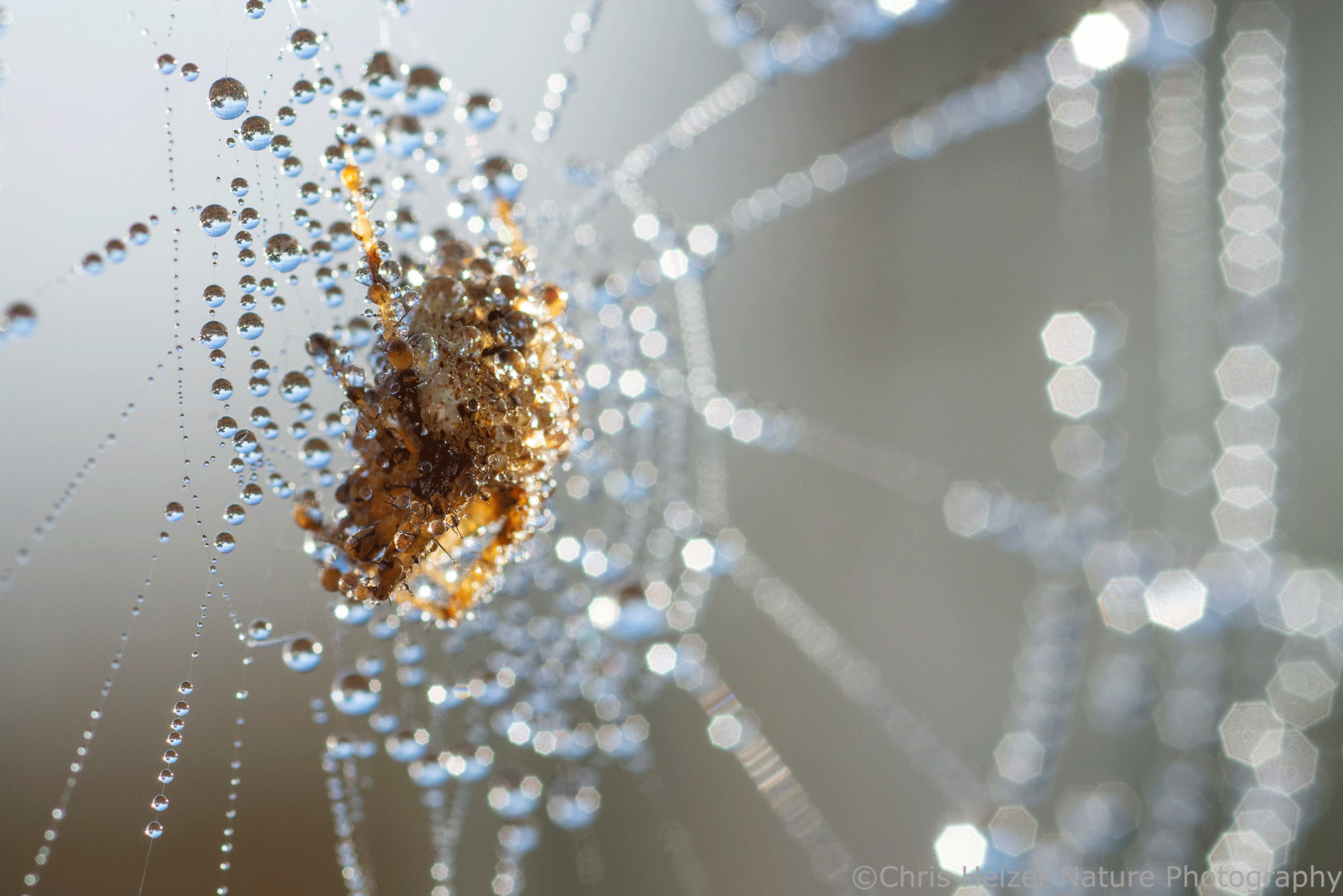
This little lady didn’t appear to have moved yet, leaving abundant water drops on both her and the web surrounding her.Whether because of my presence or because the sun was warming up, she decided to crawl up to the top of her web for a little while. (It was almost certainly because of my presence, so I left her alone after that.)
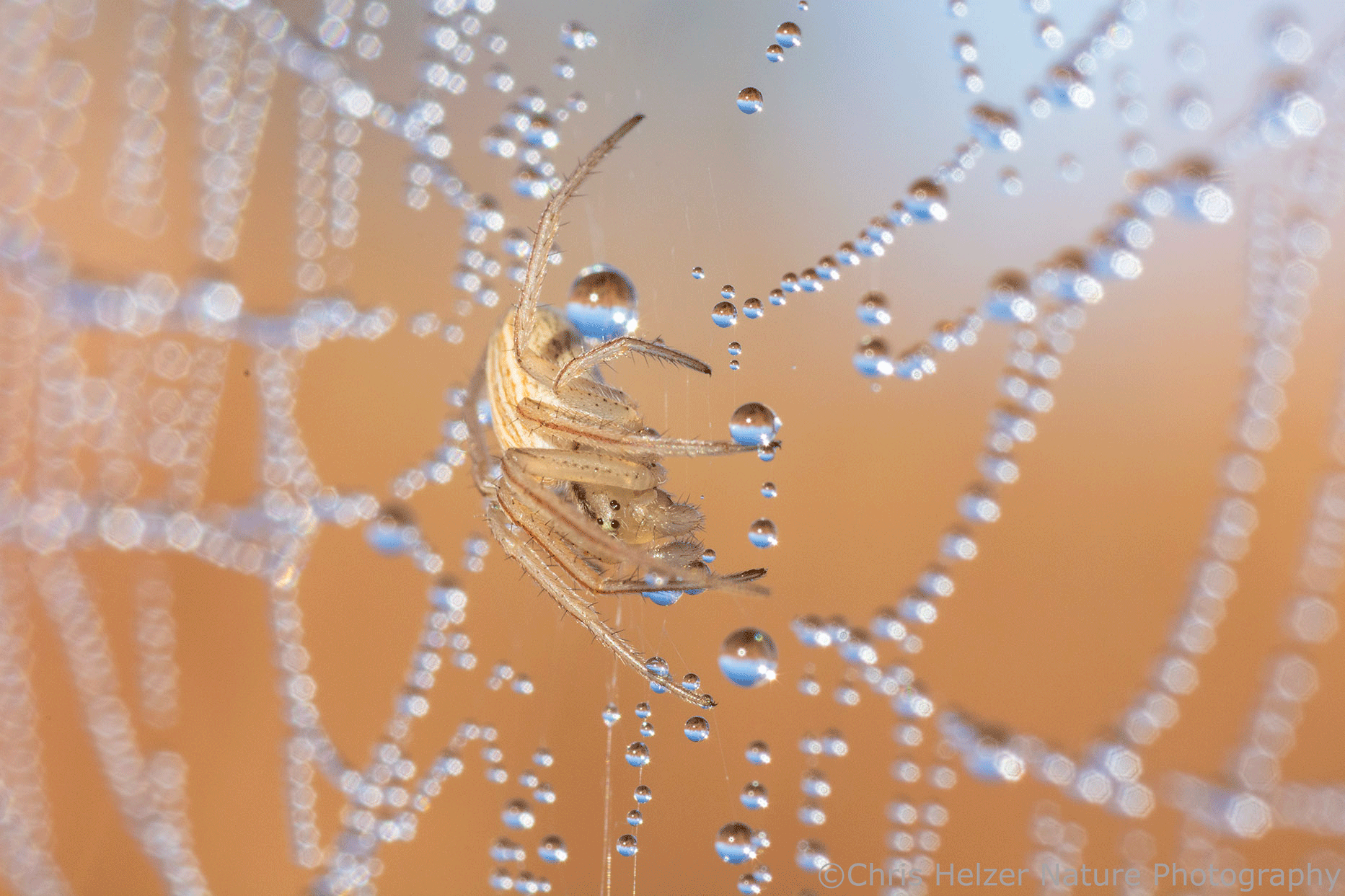
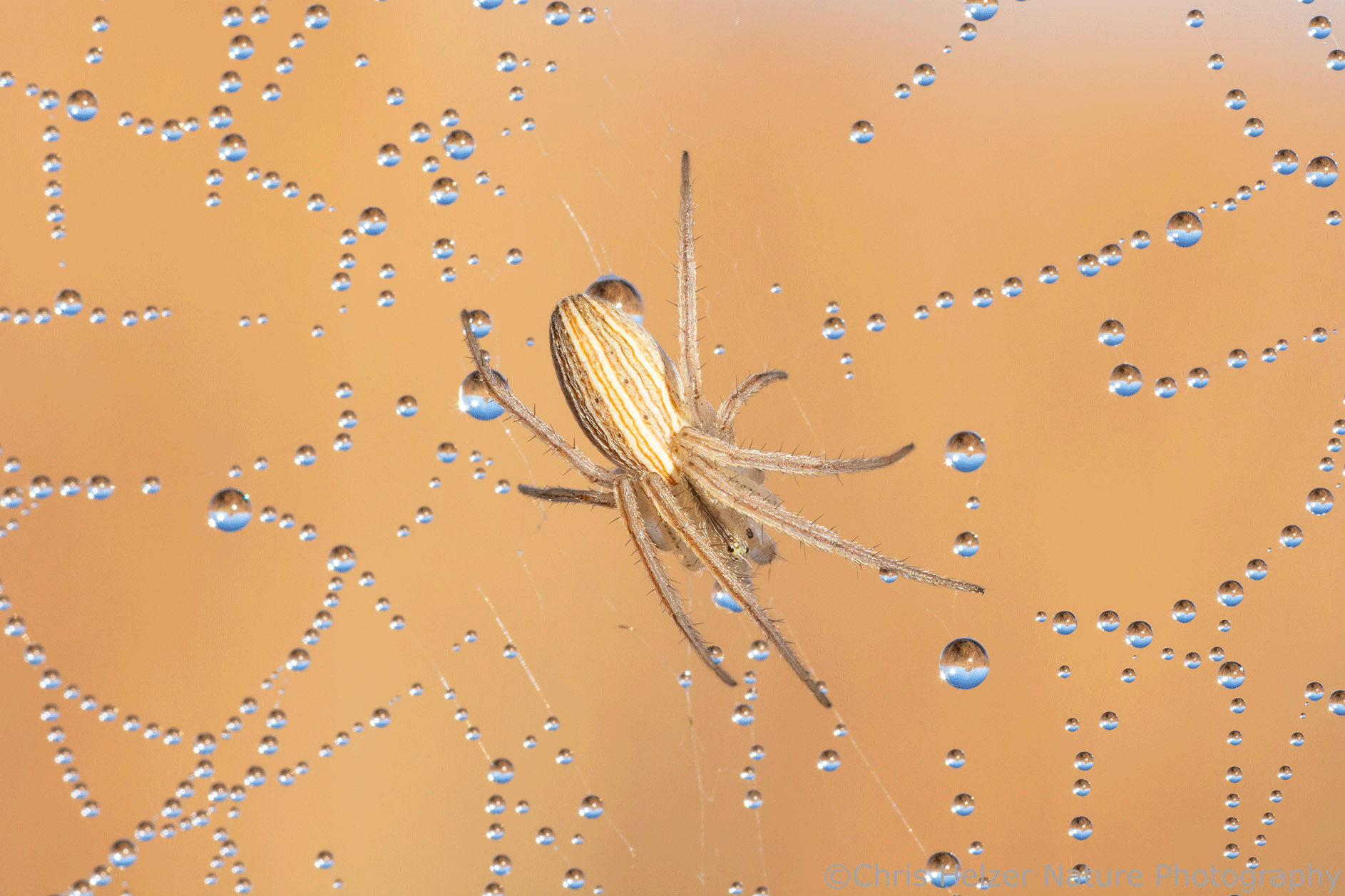
The next three photos are of the same spider from three different angles. He seemed perfectly fine with me hovering around his web. It was probably all the gentle swaying I was doing that placated him.
I don’t know what the fly in the picture below was thinking, getting caught in a web covered in bright sparkly balls of water. Given its brain size, maybe it wasn’t thinking much at all, but still – it had a whole prairie (and plenty of sky above) to fly through and it collided with a deadly, but clearly marked spider web. On the other hand, I guess that kind of behavior is what spiders rely on, isn’t it?
There’s probably a life lesson for all of us there. I sure wish I knew what it was.
Maybe it’s this: “No matter how much you think your elaborate strategy to catch flies has been thwarted by a dew point that matches the air temperature, don’t give up. Maybe you’ll get lucky and there will be a fly that’s too wound up in its own thoughts to notice a cluster of bright sparkling balls of water floating in the middle of the air.”
Or maybe: “Even in the midst of vast expanses of incredible beauty, keep your head on a swivel. There are predators out there, just waiting for you to lose focus and blunder into their poorly-disguised traps.”
Don’t you love that nature always has something to teach us?
(If you’re reading this in an email, you’ll want to click on the title to open it online so you can see the photos better and watch the short video clip. It’ll be worth your while.)
Two weeks ago, I posted a story about caterpillars and parasitoids and promised another one was coming. Here it is, just in time for Halloween. Prepare yourself – this is going to be an amazing journey. And graphic. It’s going to be an amazing, graphic journey.
.
We painted our garage this year. As a result of that nice clean paint job, it was easier for me to notice that something small was stuck to the wood siding as I walked by. What I saw was very confusing. There was a green caterpillar sitting atop a mass of yellow fuzzy somethings. The caterpillar was moving around, but stayed on top of the yellow mass.
My first illogical thought was that it was protecting its eggs. Hang on, though. Caterpillars don’t lay eggs. They’re not adults.
Ok, maybe another creature laid eggs and then captured the caterpillar and tethered it to the eggs so it would be there for the hatched larvae to eat. Wouldn’t that be wild?
As I was pondering that mystery, I glanced to the right and saw, just a few feet away, a second green caterpillar. It, too, was behaving oddly. In this case, there was no yellow fuzziness. Instead, there was an obscene number of small creatures that seemed to be wriggling their way out of the caterpillar’s body.
WOW! I immediately recognized that I was seeing parasitoid larvae emerging from their host. Some creature, either a wasp or fly, had obviously laid eggs in or on the caterpillar, and when the larvae hatched the burrowed into the caterpillar and fed on its insides. Now they were emerging, well-fed and ready to pupate. I’d read about this, but had never seen this part of the process in real life.
Obviously, my first move was to run for my camera. I took lots of photos, and even some video, while marveling at what I saw. As I watched, the caterpillar was wriggling around as if it was still alive. How could it be alive after having that many larvae inside it and feeding on it?
Here, watch this video clip and you’ll see what I mean:
Short video of the scene. Click to watch it on YouTube. If that’s not working, you’re probably trying to read this post in your email. Click on the post’s title to open it online and activate the link. Trust me, it’ll be worth it.
The other part of the scene, of course, is the adult insects that appear to be supervising the proceedings. Initially, I thought they were flies, but they’re obviously wasps (long antennae, smaller eyes, and a skinny waist are all clues I initially missed.). Aha! Maybe they were the parents and they’d come back to make sure everything went smoothly? Or they’d been hanging around and protecting the caterpillar? That seemed unlikely, and yet, there they were.
Well. Not only did she have ideas, she’d just published a paper related to what I was seeing! How about that for a coincidence!
Here’s the story, as I understand it. Any errors in this tale are mine, not Dr. Ghosh’s.
First of all, the caterpillar is the larva of a cabbage white butterfly (Pieris rapae), which many of you will recognize as a species that eats big holes in plants like broccoli, cauliflower, and cabbage, among many others. It’s a non-native species in North America, and widely reviled by gardeners. Does that help you feel any better about its fate in this instance?
The larvae emerging from the hapless caterpillar are almost surely those of a wasp called Cotesia glomerata. It doesn’t have a common name. For the purposes of this article, I’m going to call it Cora because there are going to be a lot of Latin names running around. Why “Cora”? Why not?
Cora was introduced to North America in the 1880’s to help control the cabbage white butterflies that had already been here for a few decades. It lays lots of eggs inside young caterpillars (up to 30!) that emerge about 15-20 days later. When they emerge, the larvae immediately start spinning cocoons to pupate in.
So far, we’ve solved several of the mysteries. We know the identity of the caterpillar and (probably) the larvae. In addition, the yellow fuzzy things are the cocoons of the larvae and if you watch the video again, you’ll notice the larvae are actually creating cocoons while their tail ends are still in the caterpillar. However, we still don’t know why the caterpillar seemed to be alive, and we don’t know who the adult wasps are or why they’re hanging around.
Well, it turns out that when Cora inserts its eggs into a caterpillar, it also introduces a virus at the same time. The virus (actually a polydnavirus) does at least two things. First, it neutralizes the immune system of the caterpillar so its blood cells don’t attack the wasp eggs. Second, it alters the nervous system of the caterpillar (neuromodulation). More specifically, the virus helps keep the caterpillar alive and moving, even after most of its insides have been devoured by ravenous wasp larvae.
Scientists think keeping the caterpillar alive and moving helps repel a hyperparasitoid. What’s a hyperparasitoid? Well, it’s not a frenetic wasp, though that’s what it sounds like, huh? A hyperparasitoid is actually a parasitoid that attacks other parasitoids. In this case, there’s a wasp called Lysibia nana that lays eggs on the larva of Cora, either while they’re in the caterpillar or after they emerged and formed cocoons. Again, Lysibia nana has no common name. I’ll call it Lisa.
One way Lisa can find Cora is by detecting airborne chemicals (‘kairomones’) released by plants when they’re attacked by caterpillars. The same kairomones are also used by Cora to find the caterpillar in the first place. Even cooler, there is a difference between the chemical signal from plants being eaten by parasitized and non-parasitized caterpillars! Read more about that here, if you want.
Anyway, if Lisa manages to track down Cora, Cora’s best hope is that the virus-infected mostly-dead caterpillar will be thrashing around enough to prevent Lisa from being able to lay eggs on Cora’s larvae. That behavior by the caterpillar can continue even after Cora’s larvae have crawled out of it and spun themselves cocoons. In fact, this probably explains the confusing behavior of the first caterpillar I found on my garage (first photo above). It was almost surely doing it’s ‘job’ of defending Cora’s pupae from attack.
Dr. Ghosh says the caterpillars do eventually die because they starve to death. I would expect that even if the virus wasn’t forcing them to defend Cora’s kids instead of eating, the caterpillars would starve because those kids ate the caterpillar’s stomach and other inside parts. (I did warn you this would be graphic.)
Now, we’ve only got one mystery left. Who are the small wasps hanging around the second caterpillar while Cora’s babies are emerging from its body and spinning cocoons?
Dr. Ghosh says the wasps are Pteromalids – another kind of parasitoid wasp that can either parasitize the caterpillar or Cora. She didn’t know what species and that’s ok. Dr. Ghosh doesn’t have to know everything. I’m going to call the Pteromalid wasp Pterry.
While it’s hard to know for sure, Dr. Ghosh thinks Pterry was probably hanging around, hoping to lay eggs in the cocoons created by Cora’s babies. That brings up the biggest question of all. Will the thrashing virus-infected mostly-dead caterpillar manage to protect Cora’s cocoons from Pterry like it’s supposed to protect them from Lisa?
I don’t know. I wasn’t able to catch the rest of the story. The caterpillar sure didn’t look to me like it was moving around enough to dissuade Pterry from laying eggs in Cora’s cocoons, but I couldn’t stick around to watch forever. I checked the cocoons periodically over the next few weeks, hoping to see something crawling out of them. Finally, 22 days after I photographed Cora’s larvae exiting the caterpillar, the cocoons were empty.
The cocoons of Cotesia glomerata (Cora) 22 days after I photographed larvae crawling out of the cabbage white butterfly caterpillar. What species of wasp emerged from the cocoons? I don’t know.
Who came out of those cocoons? Was it Cora’s kids, all grown up? Or did Pterry manage to lay eggs in those cocoons? If so, Pterry’s kids probably ate Cora’s kids and pupated inside those same cocoons, eventually emerging as adults to go find their own caterpillars or wasp larvae.
Either way, I’m incredibly grateful to have witnessed parts of this saga, and to have been able to learn so much from Dr. Ghosh about the incredible context around it. It doesn’t matter how many times I say it, it’s no less true. “There is an amazing story behind every single invertebrate species.”
>>>><<<<<
I tried really hard to distill this complicated story into a digestible short tale. If you’re still a little overwhelmed or confused, I don’t blame you. Here’s a quick recap, if it’s helpful:
A wasp named Cora found a cabbage white caterpillar and laid eggs in it. Those eggs hatched and the larvae ate most of the inside of the caterpillar. However, the caterpillar stayed alive because Cora also infected it with a virus that took over its brain and nervous system and forced it to keep moving.
Hyperparasitoid wasps named Lisa and Pterry like to lay their own eggs on Cora’s larvae, either before or after they form cocoons, but Cora hopes the virus-infected, mostly-dead caterpillar will fend them off. In the example I watched, I didn’t see Lisa, but it looked to me like Pterry might have had the tenacity to wait around and lay eggs in Cora’s cocoons, regardless of the bodyguard caterpillar.
Since I didn’t see who came out of the cocoons I don’t know if Cora, Pterry, or even Lisa ended up on top after all the dust settled in this particular case. However, I think we can all agree the caterpillar came out the loser.
How you feel about that is up to you. I find it incredibly fascinating.







 The Prairie Ecologist