Photos of the Week – August 31, 2023

Late summer might be my favorite time of the year for prairie photography. Sunrise is at a reasonable time of day and is often accompanied by calm winds and heavy dew. Many of the tall summer wildflowers are in full bloom, as are a lot of the warm-season grasses. Insects are super abundant, active, and (some of them) noisy. Perfect.

The last week has been particularly great for all of those reasons and I’ve had an unexpected amount of time for photography. As a result, I’m only sharing a fraction of my favorite images from that period and will probably share at least another post’s worth next week. I sure hope you are all getting a chance to explore late summer prairies wherever you are. Unless you’re in the southern hemisphere, of course. In that case, happy spring!

Big bluestem and sunrise light. 105mm macro lens. ISO 640, f/16, 1/100 sec.

A lot of grasses are blooming right now. Big bluestem, Indiangrass, sideoats grama, and other tall-to-mid-height grasses are full of anthers. I’m not going to make a joke about what questions they might have anthers to. That would be puerile. Also, I don’t get the chance to use the word ‘puerile’ very often.

Because grasses are wind-pollinated, they don’t have showy flowers or nectar to attract insects, but they do still have flowers. Grass pollen, though, is nutritious enough that at least some pollinating insects are drawn to grass flowers to feed. There’s a little leaf beetle I see on those flowers pretty often, along with lots of little hover flies (both pictured below).

Big bluestem flowers. 105mm macro lens. ISO 500, f/16, 1/100 sec.
Big bluestem flowers. 105mm macro lens. ISO 800, f/14, 1/320 sec.
Leaf beetle on big bluestem flowers. 105mm macro lens.  ISO 800, f/14, 1/80 sec.

Sideoats grama flowers are always my favorites because they hang so nicely from their stems. They often look like laundry on the line. Neat and tidy.

Except when they aren’t. Then the flowers look like they are full of static electricity and stick out as far as they can from the stem.

Sideoats grama flowers. 105mm macro lens. ISO 500, f/14, 1/160 sec.
Sideoats grama. 105mm macro lens. ISO 800, f/11, 1/80 sec.
More sideoats grama. 105mm macro lens. ISO 800, f/11, 1/80 sec.
Sideoats grama after sunset. 105mm macro lens. ISO 800, f/18, 1/250 sec.

Our family prairie was full of bees, butterflies, and grasshoppers this week. We’re still stubbornly in extreme drought, according to the Drought Monitor, but we’ve caught enough rains that most of the vegetation is green and flowers are blooming. The biggest indication of the drought is the slowness with which grass is recovering from grazing, which is why we will be pulling cattle out soon and reducing next year’s stocking rate significantly.

A sachem (a skipper – a kind of butterfly) warming itself in the morning sun. 105mm macro lens. ISO 500, f/18, 1/60 sec.

Meanwhile, when walking through the prairie now, grasshoppers are like popcorn at our feet, exploding in every direction with each step. I imagine that’s providing a lot of food for animals that enjoy grasshoppers. Interestingly, I don’t see a lot of obvious impact of those grasshoppers on the vegetation. That’s clearly a sign of me not knowing what to look for, of course, because they have to be eating. But I sure don’t see evidence that they’re reducing vegetation height. Hmm.

Two-striped grasshoppers are common, but so are lots of other species. 105mm macro lens.  ISO 640, f/16, 1/80 sec.
Grasshopper exoskeleton left behind after molting. 105mm macro lens.  ISO 500, f/9, 1/200 sec.
Katydids are abundant now too, including this one on stiff goldenrod. 105mm macro lens.  ISO 500, f/14, 1/60 sec.
Katydid, face to face. 105mm macro lens.  ISO 500, f/20, 1/60 sec.

Late summer also seems like the peak time of year to find male bees roosting overnight on vegetation. I’ve always assumed that those males just find a random roost site each night, but observations in my backyard prairie are making me question that. We have a strip of prairie garden along the back alley and there is one Indiangrass plant among mostly wildflowers and sedges. During much of the summer, I’ve been finding several male bees on that Indiangrass plant each morning I remember to check.

While I can’t tell one bee from another within the same species, it sure appears that I might seeing the same bees every night, or at least that some of them are repeat visitors. That makes me want to drop everything and do a research project in which we mark bees one morning and see if they return. Of course, if we mark them while they’re on their roost, that might dissuade them from returning… Hmmm. How do we set this up? Oh, wait, I don’t have time to do that study anyway. You should, though.

Sweat bee settling in for the evening on big bluestem. 105mm macro lens.  ISO 800, f/13, 1/60 sec.
Bumble bee in dew on pitcher sage (Salvia azurea). Lincoln Creek Prairie. 105mm macro lens.  ISO 800, f/16, 1/100 sec.

I also wonder about flies and other insects that get covered in dew overnight. Do they select roost sites where they feel protected from predators? Or places where they’ll get early sunlight to warm and dry them the next morning? Or do they just gradually slow down as evening comes along as if they are clockwork toys winding down? What an evocative image that is!!

(Do you young whippersnappers know what clockwork toys are? Do you know what whippersnappers are?? Actually, I don’t think I really know what whippersnappers are…)

Hover fly in dew on stiff sunflower (Helianthus pauciflorus). 105mm macro lens.  ISO 800, f/18, 1/60 sec.
Goldenrod soldier beetle on stiff sunflower. Lincoln Creek Prairie. 105mm macro lens.  ISO 800, f/18, 1/80 sec.
Stink bug in dew. Lincoln Creek Prairie. 105mm macro lens.  ISO 800, f/16, 1/200 sec.

One of my favorite discoveries this week was a snail at Lincoln Creek Prairie, right across town from me. I’ve been exploring and photographing Lincoln Creek Prairie for 26 years or so and have never seen a snail in the prairie until this week. In fact, I can’t think of where I’ve seen a land snail in a Nebraska prairie anywhere close to here. Why now? Where was it hiding? Are there more? What species is it? Why does Wendy’s make square hamburgers??

Land snail! Lincoln Creek Prairie. 105mm macro lens.  ISO 800, f/18, 1/60 sec.

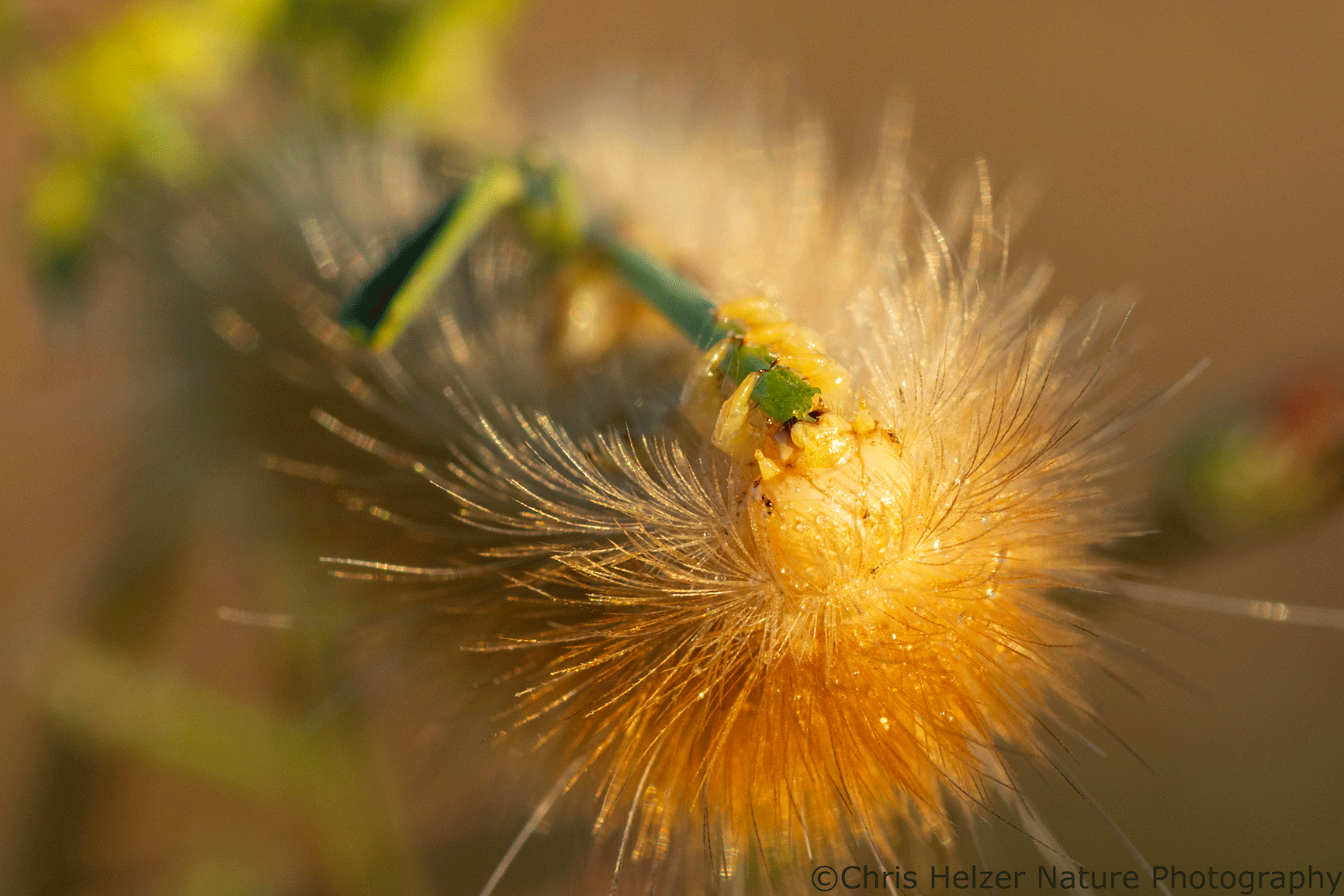
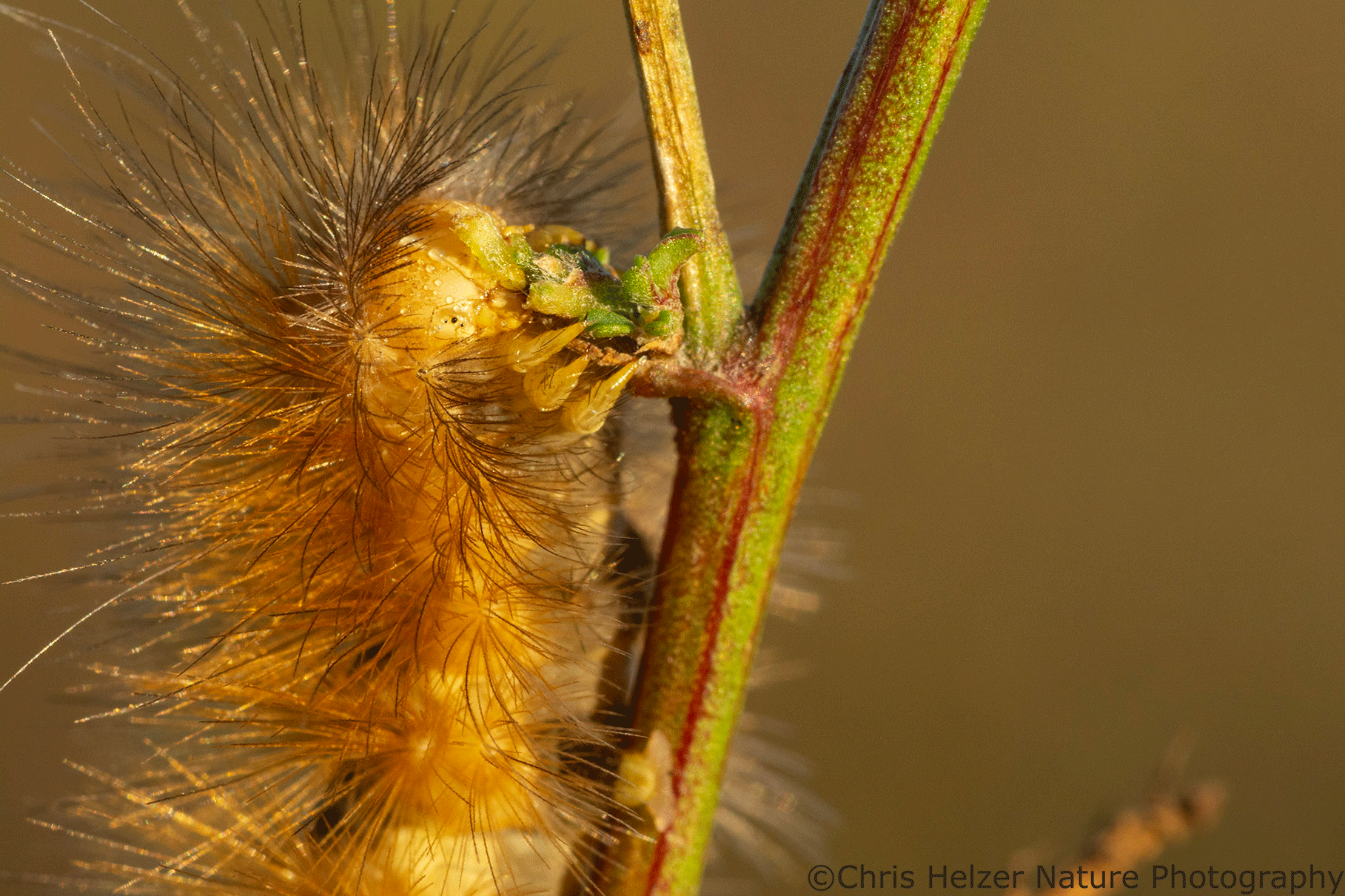
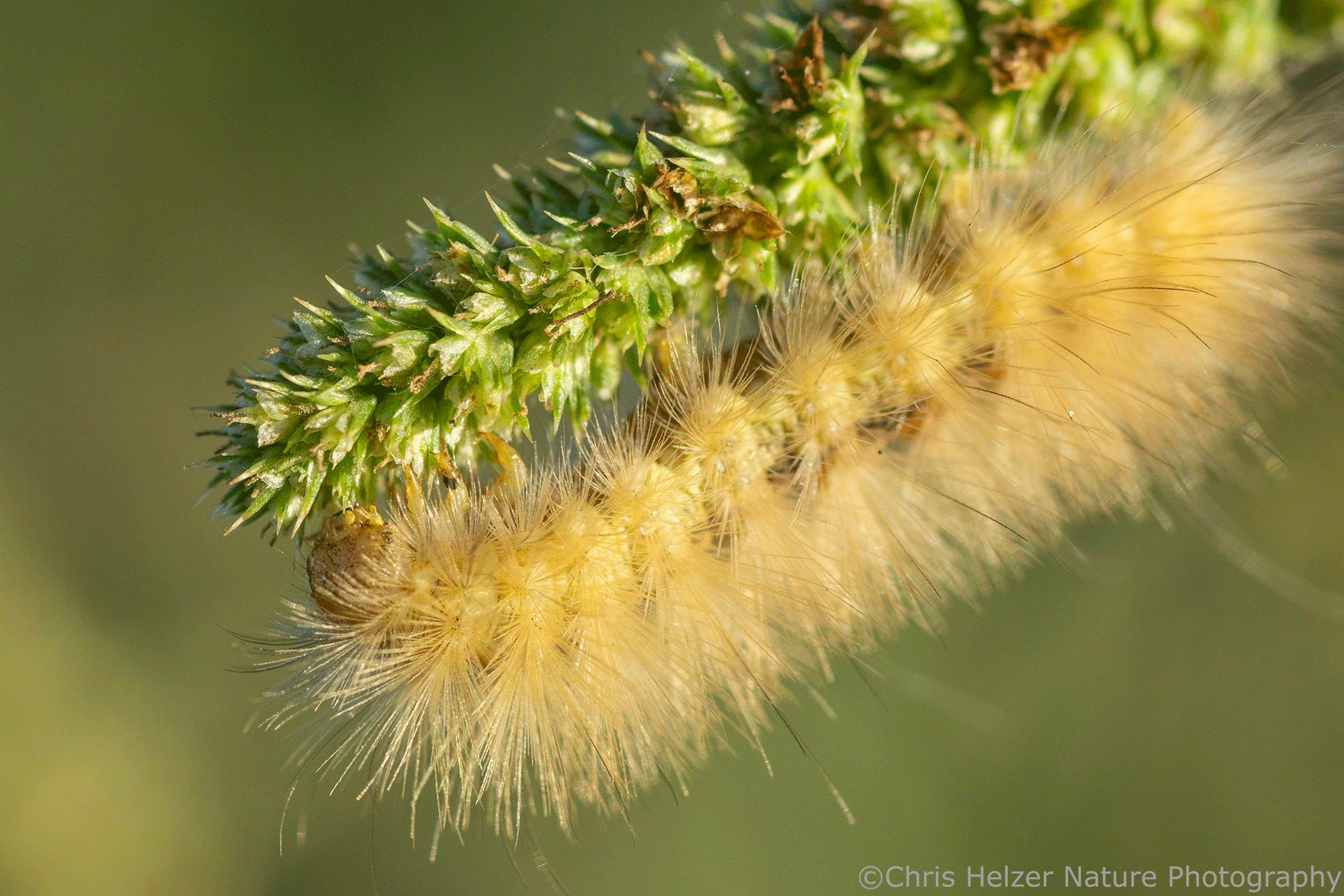
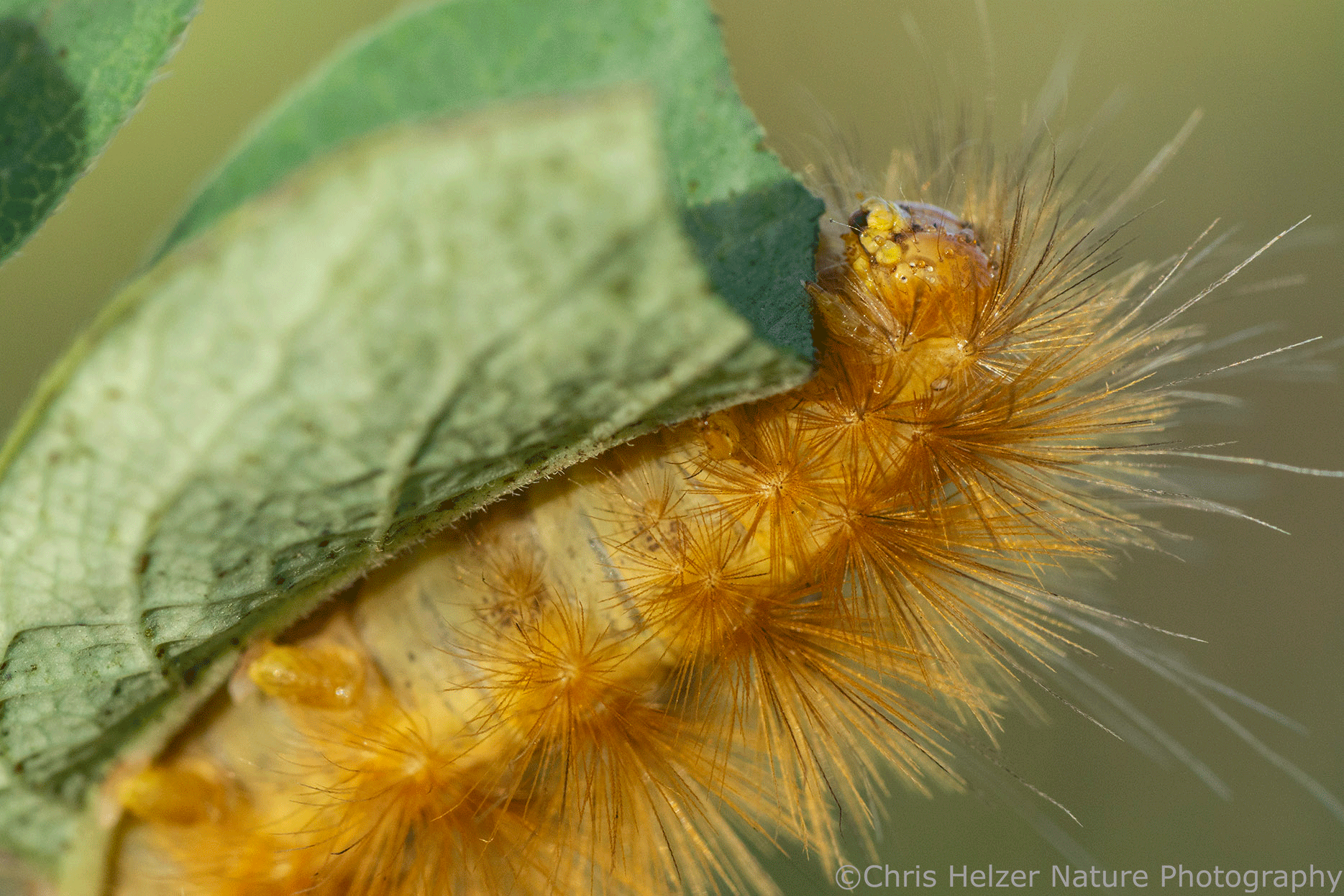
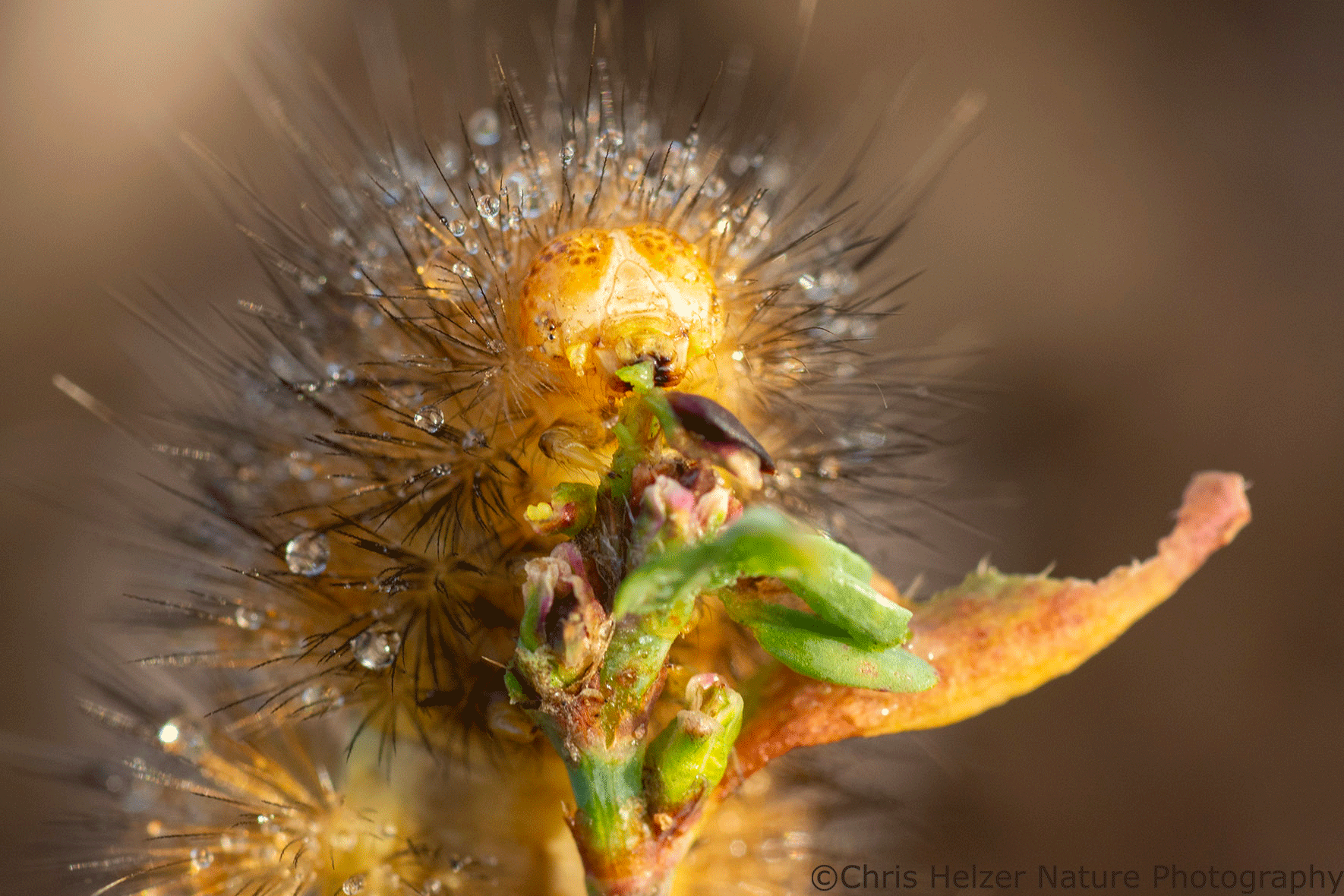
I was doing some work on the exterior of our house this week, but kept getting distracted by insects, including a couple monarch caterpillars in our swamp milkweed patch. I watched them munch away for a while and finally got to capture a phenomenon I’d heard about but hadn’t seen in person. Sometimes, larger caterpillars will chew through part of the leaf petiole (the stem of the leaf) before feeding on the leaf itself. It apparently cuts off the flow of sticky white latex into the leaf, making it easier to eat the leaf material. That seems eminently sensible, but what a cool adaptation! The third photo below shows that happening.

Monarch caterpillar. 105mm macro lens.  ISO 800, f/16, 1/125 sec.
Monarch caterpillar upside down. Helzer yard. 105mm macro lens.  ISO 800, f/18, 1/500 sec.
Monarch caterpillar chewing the leaf petiole of a swamp milkweed leaf. Helzer yard. 105mm macro lens.  ISO 800, f/13, 1/320 sec.
Monarch caterpillar feeding on swamp milkweed. Helzer yard. 105mm macro lens.  ISO 800, f/18, 1/500 sec.

There were quite a few monarch adults in the yard too, most of them feeding on Kim’s zinnias. Take that, purists who don’t think anything but native flowers should be in our yards! (There’s nothing wrong with putting only native plants in your yard. There’s also nothing wrong with adding some non-native flowers that make you happy, as long as they don’t have systemic pesticides in them and aren’t invasive species.)

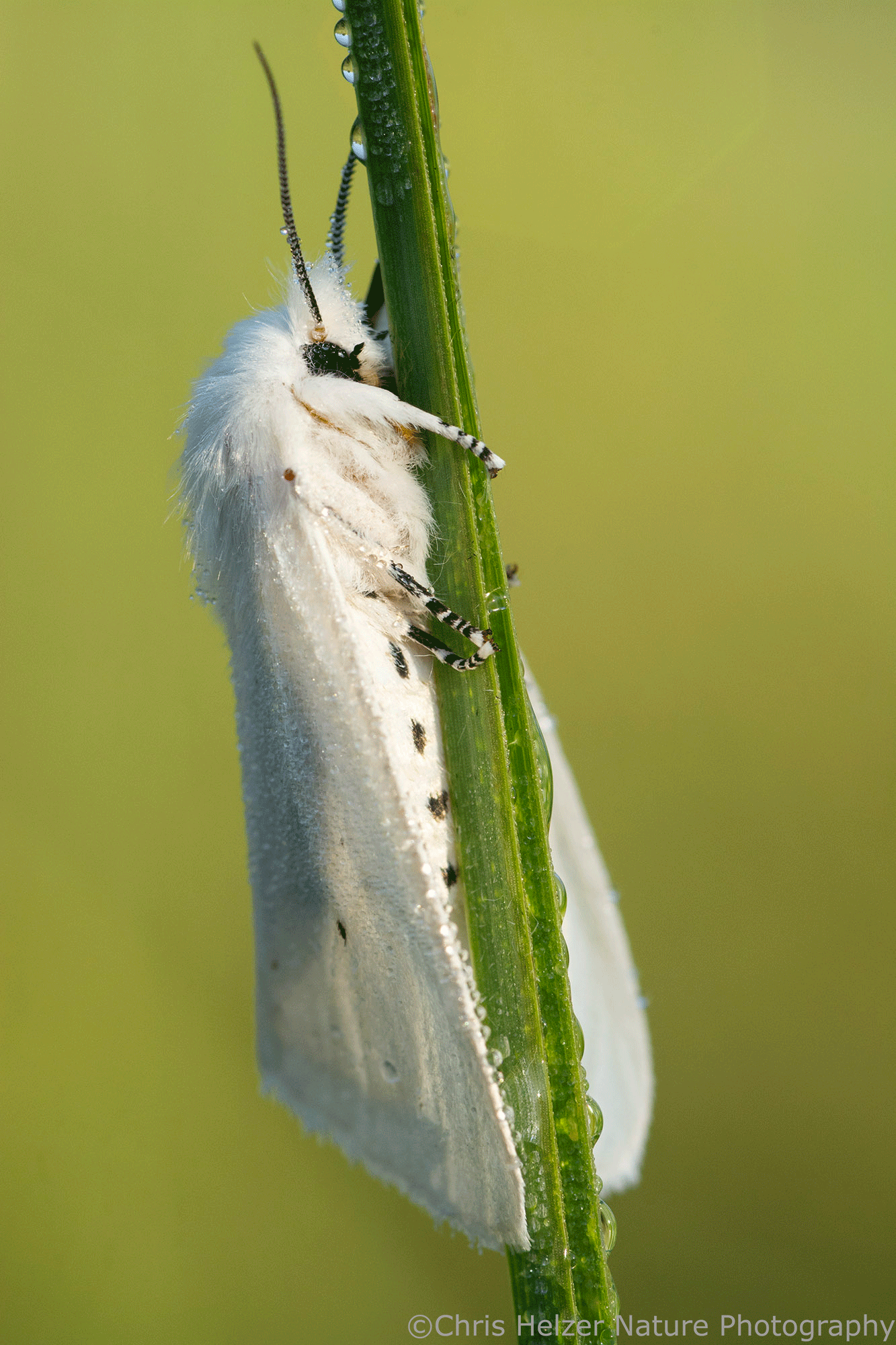
During one of my many ‘breaks’ from working on the house, I chased a plume moth for a while until it finally sat for a photo. There was also a Carolina mantis hiding in the milkweed patch, too. I saw it several days in a row. It was mainly lurking in the shadows, which is why I enjoyed getting the photo I got, which captured that very well. I haven’t finished that house project yet. Weird.

Plume moth in my yard. 105mm macro lens.  ISO 800, f/16, 1/125 sec.
Carolina praying mantis in the shadows of a swamp milkweed plant. Helzer yard. 105mm macro lens.  ISO 800, f/13, 1/160 sec.

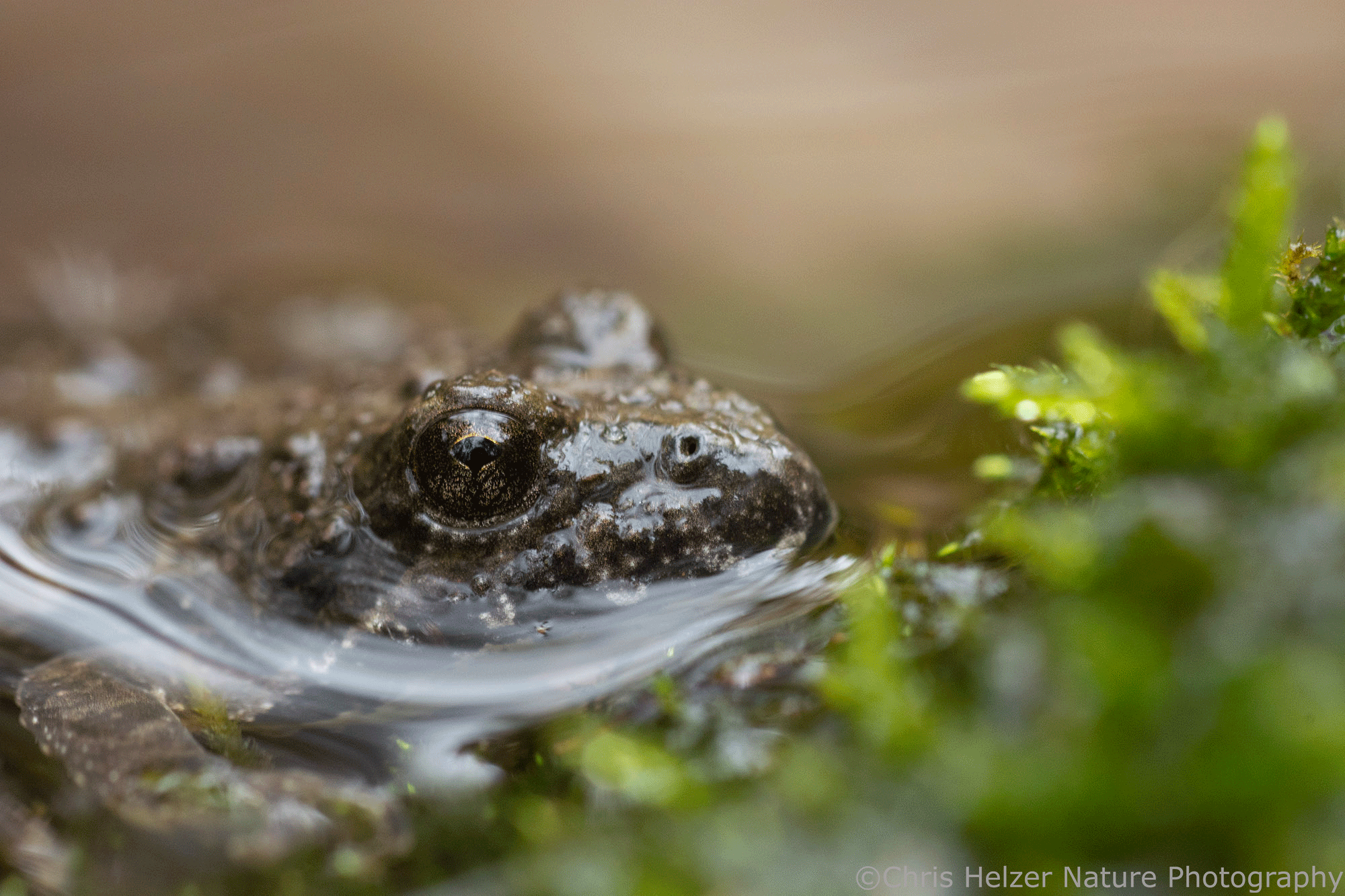
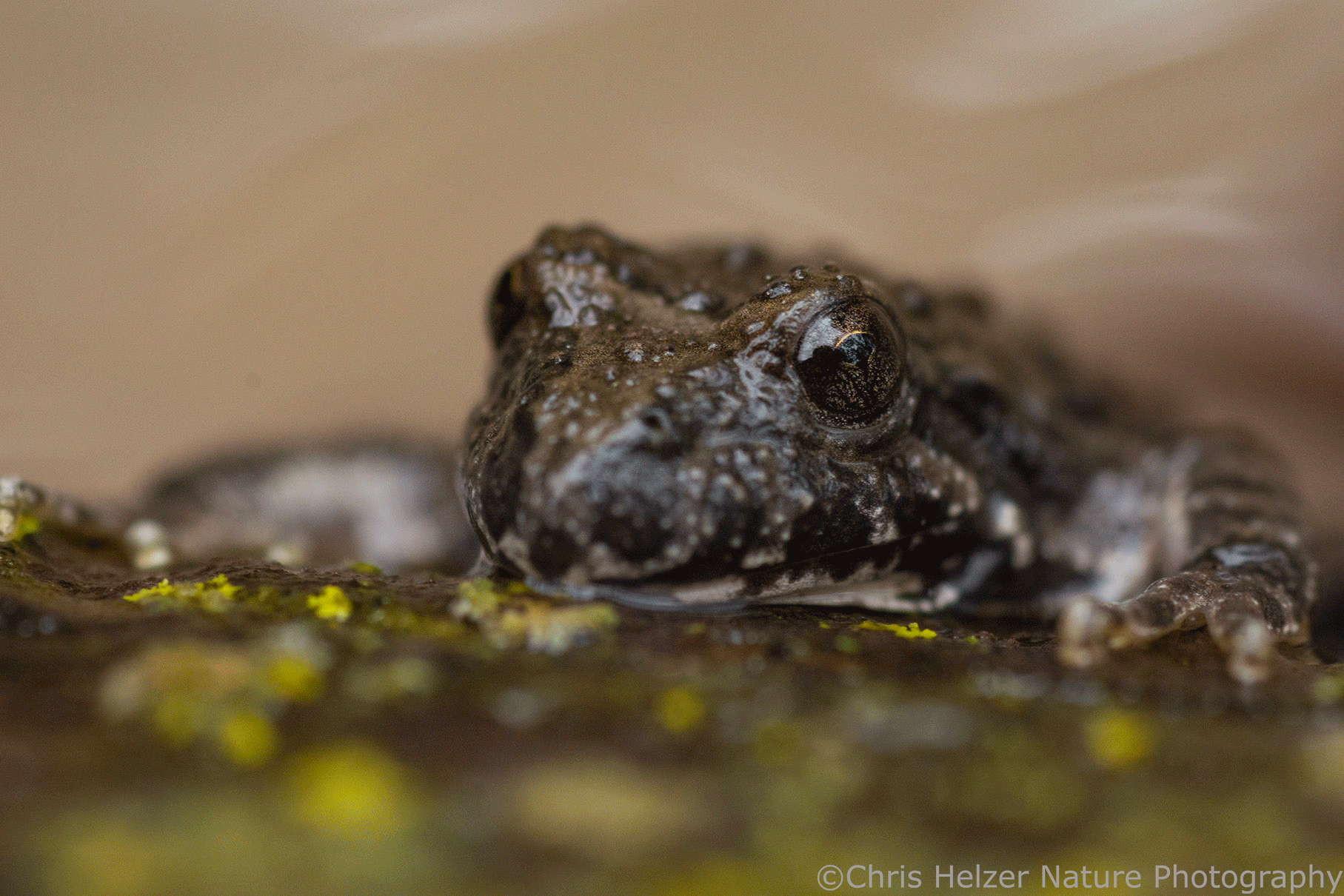
Finally, here’s a toad.

Woodhouse’s toad. 105mm macro lens.  ISO 500, f/16, 1/100 sec.

2023 Grassland Restoration Network – Report from Southwest Minnesota

The Fellows and I traveled to southwest Minnesota (Windom, MN) this week for the 2023 Grassland Restoration Network’s annual workshop. This version was hosted by the Minnesota Department of Natural Resources and spearheaded by Jeff Zajac. We looked at five prairie restoration sites, each of which stimulated conversation and provided helpful lessons. I’ll try to share some of my bigger takeaways in this post.

If you’re interested, please check out Bill Kleiman’s summary of the meeting at the GRN blog site. Following that blog is also a great way to find out about next year’s meeting, as well as to get a wide range of valuable and practical information on prairie restoration work.

Some of the approximately 70 participants in this year’s workshop explore a 2019 prairie seeding.

The point of these workshops is to bring together people from around the country to compare notes and learn from each other. To that end, we didn’t just want to see examples of where everything had gone right. How much can you learn from that, after all? Fortunately, Jeff and his colleagues were willing to share the full range of their experiences, including some gorgeous prairies and some that hadn’t yet lived up to expectations.

As an example, Jeff took us to a site where he’d been planning to use herbicide to kill smooth brome before re-seeding an old Conservation Reserve Program (CRP) planting with a diverse prairie mix. Because of various factors, including abundant gopher mounds, discing issues, soil erosion potential, unrelenting wet weather, and worries about seed viability over time, he wasn’t able to get the spraying done. Faced with difficult choices, he went ahead and planted the seed. You can probably guess what kinds of issues he faces now.

Here’s part of the site Jeff planted without first killing smooth brome. Good news: lots of whorled and common milkweed. Bad news: especially on lower slopes, brome (and some sweet clover) was pretty dominant, though there were native species mixed in as well.

While it might sound silly to plant expensive seed into a site you don’t feel is ready, I think Jeff made a very sensible decision, given the difficult circumstances he faced. Most of us who have been restoring prairies for a long time have faced similar challenges. Plus, the site isn’t a total disaster. There are parts that look like the above photo, where plant diversity is relatively low and smooth brome and other invasives are abundant. But there are other parts of the site, especially on higher, drier areas, that are much more diverse and look promising.

Jeff’s plan is to try to incrementally increase the plant diversity and habitat quality of the site over time. He figures it’s already better than it was, since a major project goal was to create grassland bird and insect habitat. The alternate choice would be to start over. That’s always a difficult choice, and rarely an easy one. Do you push forward with a site that will need frequent and intensive management to deal with invasives and/or increase plant diversity? Or do you cut your losses and hope that by starting over you can spend a bunch of time and money briefly, in return for much less expensive and time consuming stewardship needs afterward? This site provided an excellent platform to contemplate and discuss those kind of choices.

This crab spider (and the captured bee before it was captured) seemed to find the brome-dominated site perfectly usable habitat.

Another frequent topic of discussion during the two-day workshop had to do with how much, and what species of grass should be in seed mixes. This has been an intriguing topic that has evolved considerably over the last 21 years of this workshop series. There’s a decided trend toward using lighter seeding rates of grasses. Data and lots of experience show that if you put too much grass seed in a mix, it doesn’t much matter how much forb (wildflower) seed you use because the grasses will end up dominating anyway.

What kind of grass to use, though, is also a big topic. Traditionally, big bluestem, Indiangrass, and switchgrass were major components of seed mixes. There are various reasons for that, including the price and availability of seed and the quick establishment and space-filling ability of those grasses. However, many restoration projects have more recently chosen to greatly reduce, or even eliminate seed from those big, strongly-rhizomatous grasses in planting efforts. Instead, they focus on shorter species and bunchgrasses, including prairie dropseed, little bluestem, sideoats grama, and others.

Even when using these other species, grass seeding rates are still quite a bit lower in many of today’s plantings than they were in the past. On the flip side, forb seeding rates are often higher. Using lots of forb seed can be helpful, not only in ensuring a nice (and quick-to-establish) diverse plant community, but also to help outcompete weedy plants during the early years of a project. The weed competition aspect seems to be especially important in more productive soils in the more eastern parts of the tallgrass prairie region.

This well-established prairie planting (planted in 2011) has some big bluestem and Indiangrass, but those species are far from dominant.
This 2019 planting had very little seed from big warm-season grasses like big bluestem and lots of wildflower seed.

Speaking of controlling weeds during the early years of plantings, we had some good discussion about the necessity of mowing. In Nebraska, most of our high-diversity prairie restoration plantings use relatively low seeding rates and we don’t typically mow weeds. Further east, mowing weeds has been seen as more of a necessity, mostly because soils there support stronger, more dense growth that can suppress new prairie seedlings.

It sounded like mowing has been a frequent part of the Minnesota DNR’s restoration process, but a recent study might change that. Dr. Brian Wilsey from Iowa State University was on hand to talk about an experiment he helped the DNR staff with. One of the results was that weed mowing seemed not to have any significant impact on prairie establishment.

Does that mean no one in southwest Minnesota should mow weeds anymore during prairie plantings? Probably not, but it’s always helpful to check to see if common practice is actually the best practice. In this case, think of all the hours local DNR staff can save by not having to drive tractors/mowers across each site multiple times!

Monarch butterflies seemed to be in the early stages of migration while we were in Minnesota. We saw lots of them, often feeding on Liatris species like this one.
Here’s a painted lady butterfly, also enjoying Liatris nectar, as our tour passed by.

The topic of mowing and weeds was an excellent example of the kind of practices that vary in necessity and effectiveness from place to place. There are numerous examples of restoration and stewardship techniques that work well in some locations but not others. Sometimes, that variance is explained by precipitation patterns and other factors tied to geography. Other times, two sites close to each other might face very different weed problems just because of local differences in soils and the kinds of weed legacy found at each site.

Not only do the species of weeds and their abundance differ between places, the way stewards need to deal with them can too. Canada thistle is a good example of this. The DNR site managers leading this workshop said Canada thistle usually doesn’t need much control in the restorations. It is often abundant soon after prairies are planted, but it tends to diminish over time with or without mowing.

I’ve seen other sites in places like Illinois and Wisconsin where the Canada thistle story is similar, though sometimes they feel like mowing during the first couple years is helpful. In the sites I’m familiar with in Nebraska, Canada thistle expands dramatically, even in remnant prairie, without aggressive suppression, usually with herbicide. It’s flabbergasting to me that it’s so tame further east. Good for them, I guess.

On the other hand, I don’t worry about sweet clover or Canada goldenrod in our prairies – restored or otherwise. Sweet clover comes and goes without changing plant diversity and our cattle grazing helps suppress it during its flowering years. Canada goldenrod can be abundant in young restorations, but tends to become less common over time. That’s very different from how those species seem to act in some other locations. Good for us!

Is the Canada goldenrod in this planting going to spread and become more dominant? That depends upon who you ask. The site managers, based on local experience, didn’t seem worried.

We talked for a while about Canada goldenrod because it is seen as a real threat in many locations (most sites in Illinois, for example). There were very different predications among the group about how the current amount of goldenrod in the DNR plantings we saw would change over time. Most of the locals, who probably know best, weren’t concerned. They were more focused on other invasives like crown vetch, birdsfoot trefoil, and wild parsnip.

All of this reinforces a major theme of these GRN workshops over the years – every site is different. There are certainly some commonalities, however. For example, years ago, there was unanimous agreement among workshop participants that a dormant season broadcast seeding on a recently-harvested Roundup-ready soybean field is a consistently successful approach. That doesn’t mean other approaches can’t also be successful, but it was striking to find so much agreement on that particular one. Also, I wonder how many hyphens that previous sentence should actually have (dormant season, broadcast seeding, recently harvested, Roundup ready, consistently successful). The world will never know.

The variation between sites, though, even within a fairly small geographic area, is really important. To me, it highlights the value of starting small on any new project, and of trying a variety of approaches during that early experimental period. Lessons learned from trial plots can inform larger efforts that follow and it’s relatively painless to start over when something goes catastrophically wrong on a small project. We don’t always have the option of building restoration projects incrementally and evolving our tactics as we go. It sure seems like a smart approach, though, when possible.

I’m very grateful to Jeff and all of the Minnesota DNR staff who helped put on a terrific workshop this year. I also appreciate the disparate ideas and experiences shared by the participants, all of whom made our conversations thought-provoking and constructive. I’ve included only a few highlights from those conversations. I’ll surely weave other bits into future posts.

Maybe I’ll see you at a future GRN workshop. We’re looking at Missouri, Kansas, Illinois, and Indiana sites as potential hosts over the next few years. Regardless, stay tuned to this platform and the wonderful GRN blog to keep the discussion going.