Photos of the Week – August 21, 2023

I only had an hour or so between sunrise and when I needed to be at the Niobrara Valley Preserve headquarters to prepare for the day’s workshop. I ended up spending most of that hour with bison, but that hadn’t been the plan. It wasn’t exactly a ‘life handed me lemons’ moment, though. When life hands me bison, I am appropriately grateful.

Bison bull and sunflowers. Tokina 100-400mm telephoto @300mm. ISO 500, f/6.3, 1/640 sec.

Last week was the final plant identification/habitat workshop we hosted for conservation professionals. The night before the workshop, we scouted out the driving route and stops and then I set up a flagged/numbered line of plant species for workshop participants to test themselves with at the end of the day. By the time I finished, the sun was nearly down and, while I got my camera out and walked around a little, I was too tuckered out to really concentrate on photography.

The next morning, though, I bounced out of bed and was up in our east bison pasture before the sun came up, ready to capture as many macro photos as I could. There were big patches of plains sunflower (Helianthus petiolaris) blooming, and I gave them special attention because I know how popular they are with insects. First, though, I framed a few of them against the rising sun and orange horizon with my long telephoto lens.

Plains sunflower and sunrise. Tokina 100-400mm telephoto @300mm. ISO 500, f/9, 1/8000 sec.
Plains sunflower and sunrise – alternate version. Tokina 100-400mm telephoto @320mm. ISO 500, f/9, 1/8000 sec.

Next, I spotted what initially looked like a bunch of orange and black moths crawling around the sunflowers and nearby lead plant. Upon closer inspection, I realized they were actually beetles. I knew I’d seen them before, but didn’t know what they were. Later, I looked them up and I’m pretty sure they’re net-winged beetles in the genus Calopteron. Interestingly, there are moths that look very much like them, and might gain some advantage from resembling beetles that release foul-smelling and foul-tasting chemicals to repel predators.

One of many net-winged beetles (Calopteron sp.) crawling around in the prairie. Nikon 105mm macro lens. ISO 640, f/11, 1/100 sec.

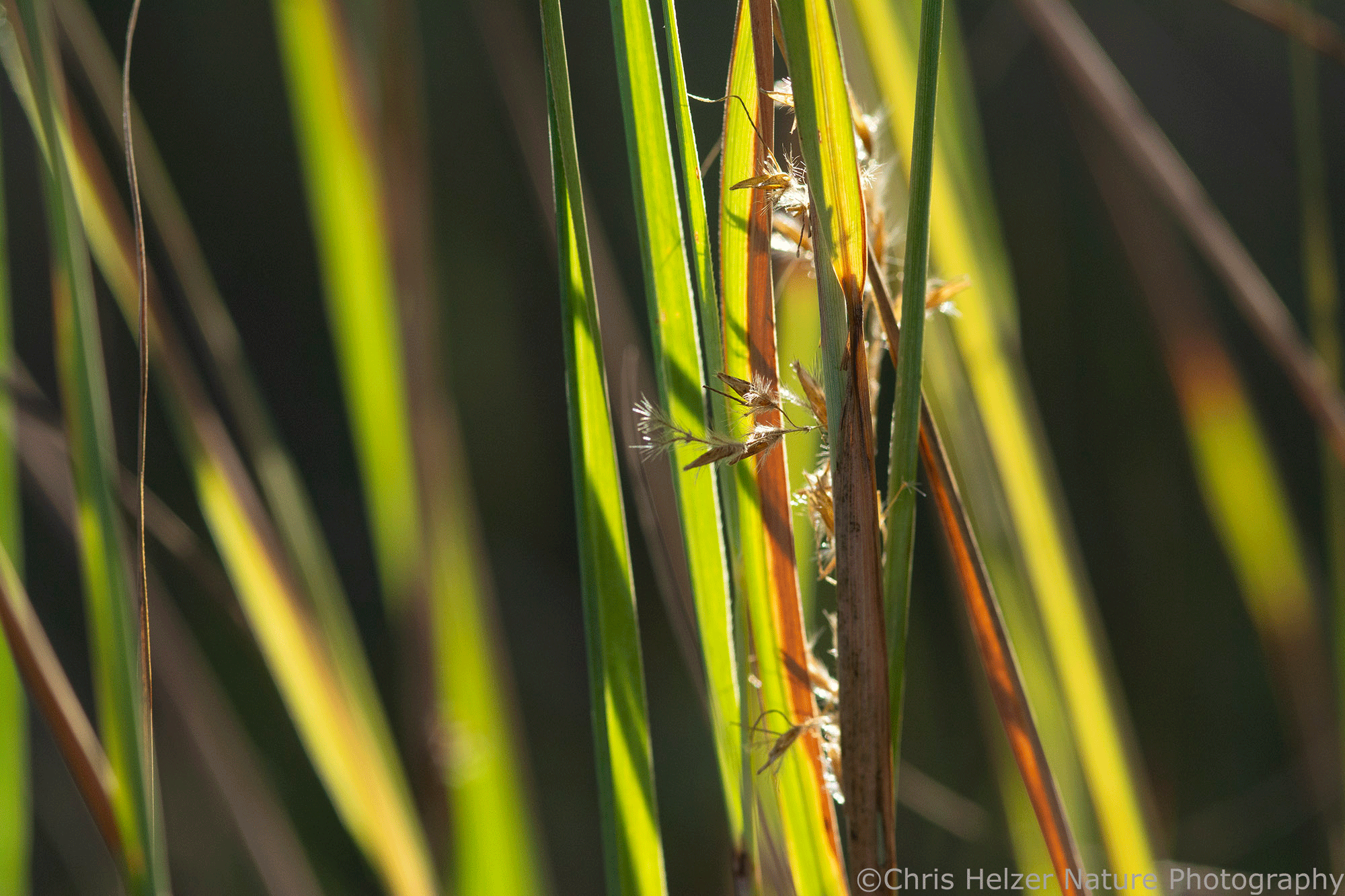
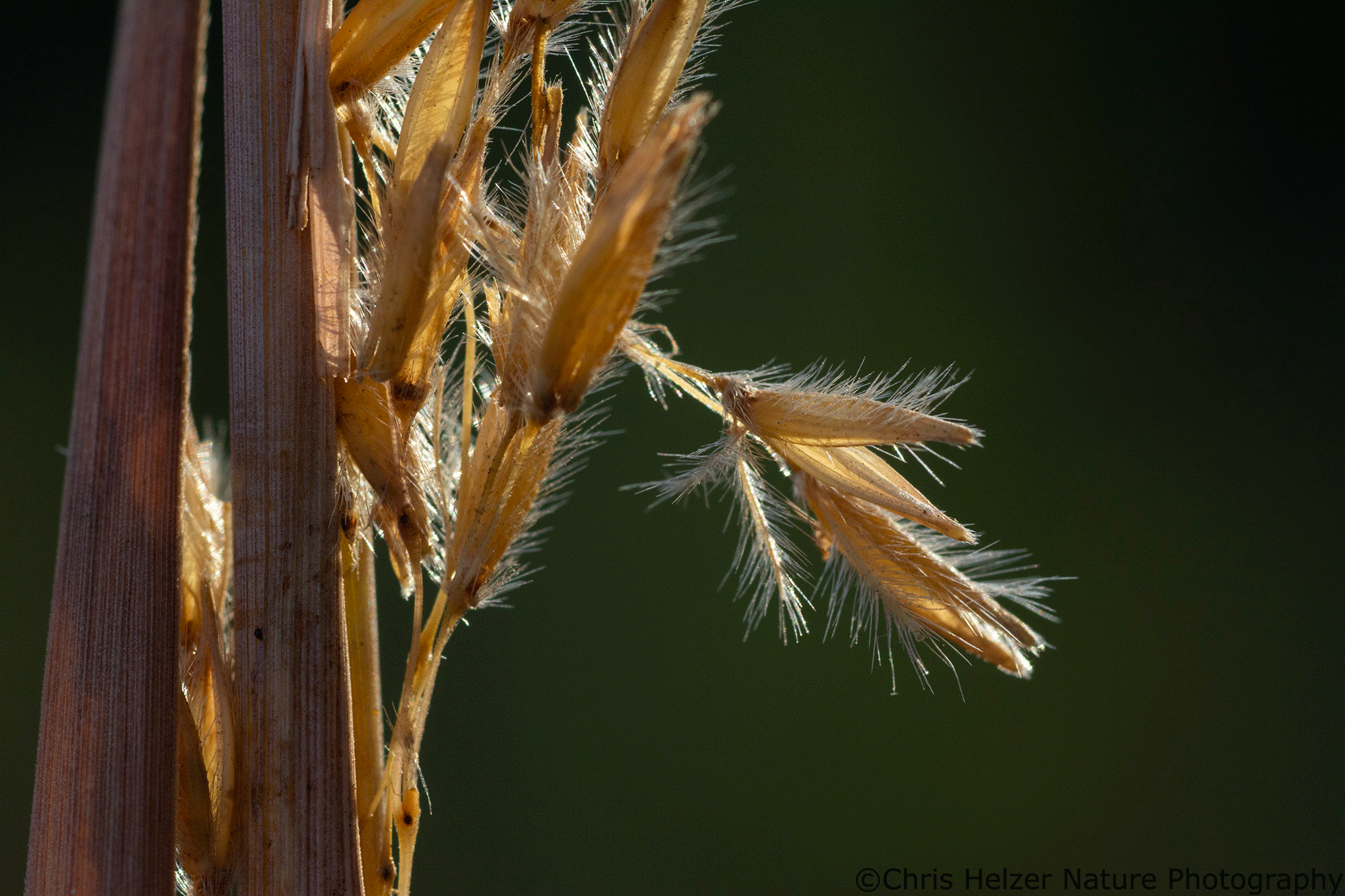
Looking up from the beetles, I noticed that the flowering heads of sand bluestem were glowing attractively in the early sunlight. I spent a little time finding just the right individual bluestem plant to train my macro lens on. Then I spent even more time trying to find the composition I liked best. As I focused on that task (yes, literally and figuratively), I could hear the distant grunts of bison over the hills to the south.

Sand bluestem flowers (Andropogon hallii). Nikon 105mm macro lens. ISO 640, f/7, 1/500 sec.

It was hard to tell how far away those bison sounds were. Hilly topography can play tricks on your mind. Apparently, they weren’t far at all because as I finally found the right composition for the bluestem, the first bison crested the hill nearest me. For safety, I knew I had to get back to my vehicle (which was nearby). After doing that, I needed to choose between driving somewhere else to keep looking for close-up photo ops or just turn my lens on the bison.

I’m very fortunate to have a lot of bison photos in my library from numerous visits to the two bison pastures at the Niobrara Valley Preserve. That familiarity doesn’t make me immune to their charms, though. I can find beetles, grass flowers, grasshoppers, and other small subjects in other prairies. I moved the truck into an advantageous position and waited for the bison to keep grazing toward and (hopefully) past me. They were very accommodating.

A young bull looks suspiciously at me (or speculatively? how do I know?) as it walked/grazed past my truck. Tokina 100-400mm telephoto @220mm. ISO 500, f/6.3, 1/640 sec.
A bison cow grazes in the midst of a sunflower patch. Tokina 100-400mm telephoto @270mm. ISO 800, f/6.3, 1/1000 sec.

The last time I’d spent time with this herd, the calves were still red. Now, most were nearly the same rich brown color as their moms, and only occasionally nursing. They seemed a little less playful too, but that could have been age or just the time of day or other circumstances. All the animals seemed pretty intent on their grazing (apart from the randy bulls and the cows they were paying court to).

A calf checking me out. Tokina 100-400mm telephoto @300mm. ISO 800, f/6.3, 1/800 sec.
A big bull taking a quick dust bath in a small wallow. Tokina 100-400mm telephoto @170mm. ISO 800, f/6.3, 1/1000 sec.
A different bull shakes the dust off his head after using the same wallow. Tokina 100-400mm telephoto @170mm. ISO 800, f/6.3, 1/1000 sec.
Another calf checking me out. Tokina 100-400mm telephoto @340mm. ISO 800, f/6.3, 1/1000 sec.
Bulls were following cows very closely and checking to see if they might be ready for a little calf-making action. This bull is ‘reading’ the pheromones from a cow by using what’s known as a ‘Flehmen response’. Tokina 100-400mm telephoto @400mm. ISO 500, f/6.3, 1/800 sec.
Yet another calf checking me out. Tokina 100-400mm telephoto @185mm. ISO 800, f/6.3, 1/1250 sec.
“Mom! Not in front of the scientist!” Tokina 100-320mm telephoto @170mm. ISO 800, f/6.3, 1/1250 sec.
This bull was traveling at a fast walk/slow trot in a very deliberate and straight line to a cow about 100 yards away. Once he arrived, he stuck with her for at least the next 10 minutes or so until I lost sight of them. What drew him to that particular cow from that far away?? Tokina 100-400mm telephoto @400mm. ISO 800, f/6.3, 1/1250 sec.
This calf had better things to do than check me out. Tokina 100-400mm telephoto @320mm. ISO 800, f/6.3, 1/1000 sec.
Another bison bull, just standing around looking regal. Tokina 100-400mm telephoto @150mm. ISO 800, f/6.3, 1/1000 sec.
A couple yearling bulls started sneaking up on the truck from behind me. I spotted them before they licked the truck, which I’m guessing was how they would have won the game. Tokina 100-400mm telephoto @165mm. ISO 800, f/6.3, 1/1000 sec.

I repositioned the truck slightly a couple times (for lighting and composition purposes) but mostly just let the slow river of bison flow past me. That gave me time to watch behaviors, but also to just soak in the soft sounds of their grunting, chewing, and walking through the prairie.

Eventually, time moved on far enough that I needed to do the same. I started up the truck and eased myself slowly out of the bison river (which had nearly passed by anyway). They didn’t seem concerned one way or the other about my departure, but I was certainly glad they’d found me. I didn’t get as many butterfly, flower, or grasshopper photos as I’d expected, but the morning had gone pretty well anyway.

This bull was both vocal and visual in his declaration that he was interested in the cow next to him. Tokina 100-400mm telephoto @200mm. ISO 800, f/6.3, 1/800 sec.
Bison slowly making their way across the prairie past me. Tokina 100-400mm telephoto @160mm. ISO 800, f/6.3, 1/1000 sec.

Summer Burn Update

Yesterday, I found myself at one of the two prairies where we conducted a summer prescribed fire back on July 20 of this year. The burn was nearly four weeks ago, and it was fun to look at the regrowth. Cattle have had access to the 45 acre burned patch (and the surrounding 450 acres), but grazing pressure has been surprisingly light, mostly because they are also focusing their grazing on a nearby burn conducted back in early May. I’ll admit I’m surprised they haven’t switched more to the recent burn. That’s one of the joys of working with grazers – they aren’t always completely predictable.

I didn’t have a lot of time to explore, but I managed to get a few photos. Some of you expressed an interest in seeing updates after my first post about these fires, so this will be a quick first update. We’re still in a drought here, and the week after the summer fires, we had a long week of temperatures close to 100 degrees F. Things got pretty crispy out in the grassland that week. Shortly after, though, we got some nice rains and those have helped perk up our prairies – both burned and unburned.

This photo shows unburned prairie in the foreground, the mowed firebreak behind that, and the July 20 burn in the background (top left). The prairie has had cattle in it since April, but grazing pressure has focused mostly on a spring burn to the east of this area.

The site shown here is a remnant (unplowed) prairie, but it had lost a lot of its plant diversity by the time The Nature Conservancy acquired it in the early 2000s. In particular, it was missing a lot of summer wildflowers. Sedges, rushes, and some early-season wildflowers (including violets for regal fritillary butterflies) were in pretty good shape. Through time, we’ve added back some of the missing summer flower species by broadcasting seeds after prescribed burns within a patch-burn grazing context. Most of the flowers seen in the above photo are a result of that overseeding.

This photo shows the area burned on July 20. The dark stems are mostly perennial sunflowers and goldenrods, and you can see some of the regrowth underneath them. Many other plant species are present too, but were more completely consumed by the fire.

Most of the plants coming back after the fire are perennials and are growing from buds at their bases, or on rhizomes. We haven’t seen a lot of germination of seeds in the seed bank. That’s not unexpected, especially in a dry year, though I anticipate seeing at least some germination or ‘weedy’ broad-leaved plants later this fall and next spring.

Not all the re-growing plants are natives. Smooth brome and Kentucky bluegrass are also coming on, and will benefit from the fire’s suppression of big bluestem, switchgrass, and other warm-season grasses. That’s where grazing should come in handy. Cattle are normally drawn strongly to that fresh growth and, if so, will keep those invasive grasses from gaining a competitive edge.

Here’s a close-up of one small patch of prairie, showing Maximilian sunflower, white prairie clover, wild bergamot, whorled milkweed, and big bluestem, among other species.

Next year, cattle will probably focus significant grazing on this summer burn. They’ll have access to it all season, at least based on current plans. That’ll provide habitat for animals that require short habitat and/or bare ground. It will also favor opportunistic plants that are good at filling in space when normally-dominant plants are being suppressed. Following next year, those dominant plants (perennial grasses and wildflowers) will regain their status as grazers shift their attention elsewhere.

In other news, there were a lot of monarchs around this week, including at the prairie featured here. I saw at least a dozen of them while I was driving in and out of the site. I stopped and watched one lay eggs on some whorled milkweed. I even got out and checked a plant to make sure that’s what she’d been doing. Sure enough – there was an egg right where I saw her put it. Later in the day, I stopped at our family prairie on the way home and found a little caterpillar on a common milkweed plant. Those eggs and that caterpillar should end up in Mexico this fall if all goes well for them.

Well, the eggs and caterpillars won’t go to Mexico. It’ll be the adult butterflies they turn into. You know what I meant.

Anyway, that’s my quick update on one of our summer burns. The other one is also looking good but I haven’t stopped to photograph it yet. That burn is in a restored prairie (former crop field). After that week of hot temperatures, all the prairie outside the burn turned brown – the loss of organic matter during farming reduces water holding capacity in the soil. However, the burned area stayed vibrant and green. The rest of the prairie looks a little better after our recent rains, but the burned area is still starkly more verdant than its surroundings. Is that ecologically significant? I don’t know, but it’s pretty.