The Flat Tops Wilderness in northwest Colorado is flat and boring and no one should go there.
At least, that seems to be its reputation, given the scarcity of people during my backpacking trip last week. That was nice in terms of my desire for solitude, but it’s a shame more people don’t take advantage of this huge and gorgeous landscape.
Afternoon rainstorms came through each day. If you look really closely, you can just barely see my gray tent hidden beneath the trees near the enter of the bottom of the photo (to the right of the patch of snow).
In 2022, my son Daniel and I tested out the Flat Tops Wilderness Area with a short backpacking trip that started at Trapper’s Lake and let us explore that area. This year, I went by myself and started further east at Stillwater Reservoir. It was fantastic.
If you’re interested, I started at Stillwater Reservoir and hiked up to the plateau on Bear River Trail. I then followed Chinese Wall trail south for a while before heading off trail to the west toward a few small lakes I’d found on Google Earth that looked like they’d provide a great place to camp. I was right – it was a terrific spot. I camped there two nights and then hiked back out. During the days, I explored the area with my camera, not going too far because of the frequent thunderstorm activity.
Much of the Flat Tops Wilderness is relatively flat grassland, which makes it pleasant and easy to wander around in. It also means you can see storms coming and see the sun relatively soon after sunrise and before sunset.
My goal was an easy trip that gave me plenty of time to wander. I wanted to backpack just far enough to find a good campsite and use that as a hub for day hiking. That worked out really well.
Only two things got in my way. One was the near-constant threat of thunderstorms that made me a little nervous to get too far from camp, especially up on the high flat (exposed) ground between a lot of the places I wanted to explore. I still got to see a lot, but there were a couple spots I’ll have to hit on future trips. That’s fine.
The second was my own fault, which was that I did a poor job of acclimating to the altitude. I camped one night near Stillwater Reservoir before heading out on my trip. The reservoir is at about 10,000 feet, which is a lot of feet higher in elevation than Aurora, Nebraska (1,800 feet). My backpacking campsite was even highat about 11,300 feet… I figured I’d be uncomfortable for the first day or two, as has happened before, but my symptoms never did clear up and I actually cut my trip short by a day as a result. I’ll be smarter next time.
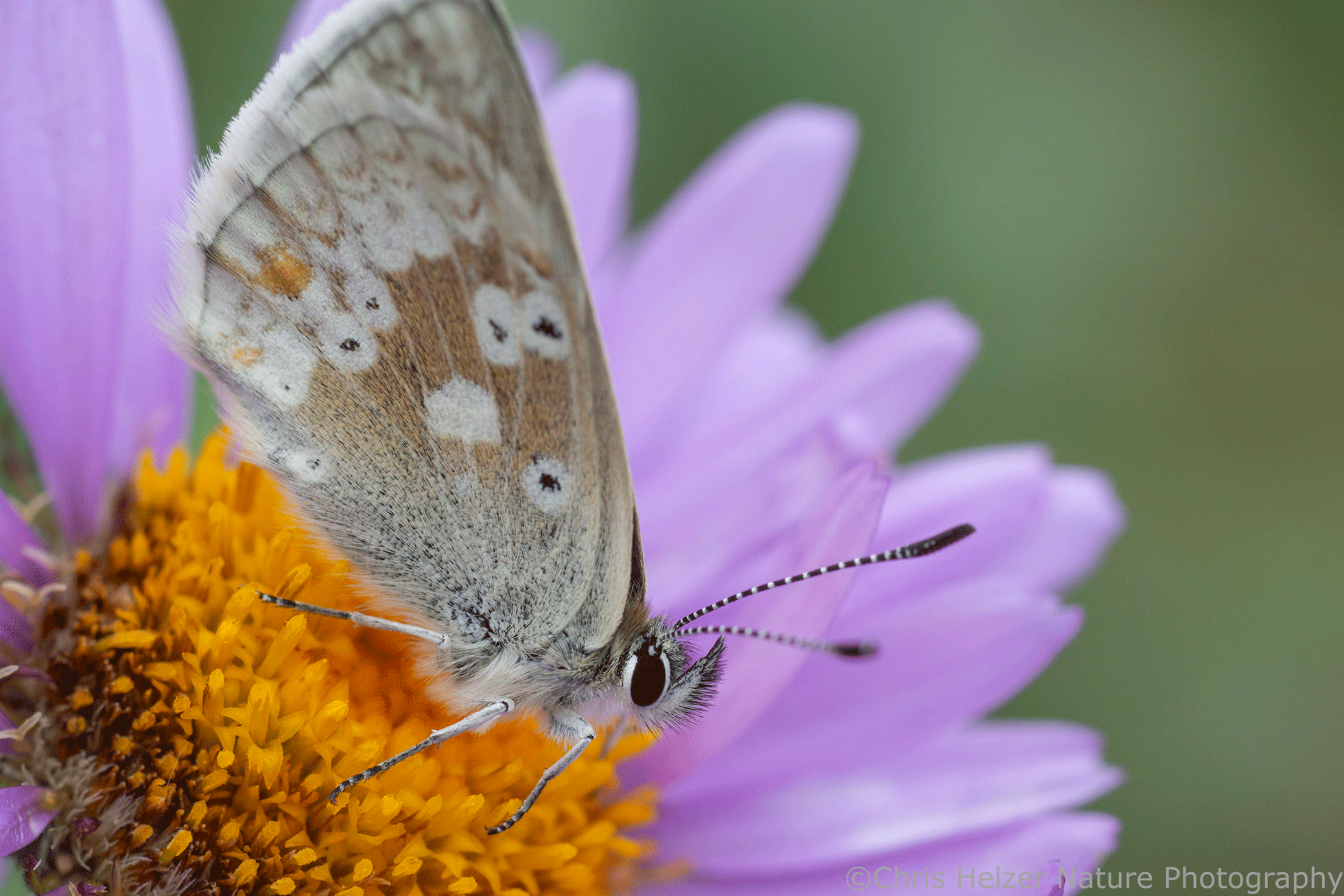
I’m pretty sure this is an arctic blue butterfly (Agriades glandon), which I saw pretty often through my trip – almost always on this same flower, which I believe is an aster of some kind, but I’m not willing to guess more specifically.Another shot of an arctic blue butterfly – this time through a fisheye lens.I also saw a lot of mosquitos, though they weren’t too bad during the middle of the day, especially when I wasn’t right next to lakes (you know, like where my tent was…)
For someone who loves the aesthetics of wide open plains, the Flat Tops Wilderness is a pretty perfect mountain vacation destination. Being on a high elevation plateau full of grasslands eliminates the claustrophobia I feel when surrounded by tall mountains and trees. I could see storms coming from miles away and didn’t have to wait hours for the sun to climb over high peaks before it hit me in the morning.
At the same time, there is plenty of topography to create spectacular views. The plateau has lots of embedded peaks and ridges to climb and countless little lakes and streams to explore. Once up on the plateau, though, traveling between those features is really easy – and navigation is aided by the fact that you can see lots of landmarks the whole time you hike.
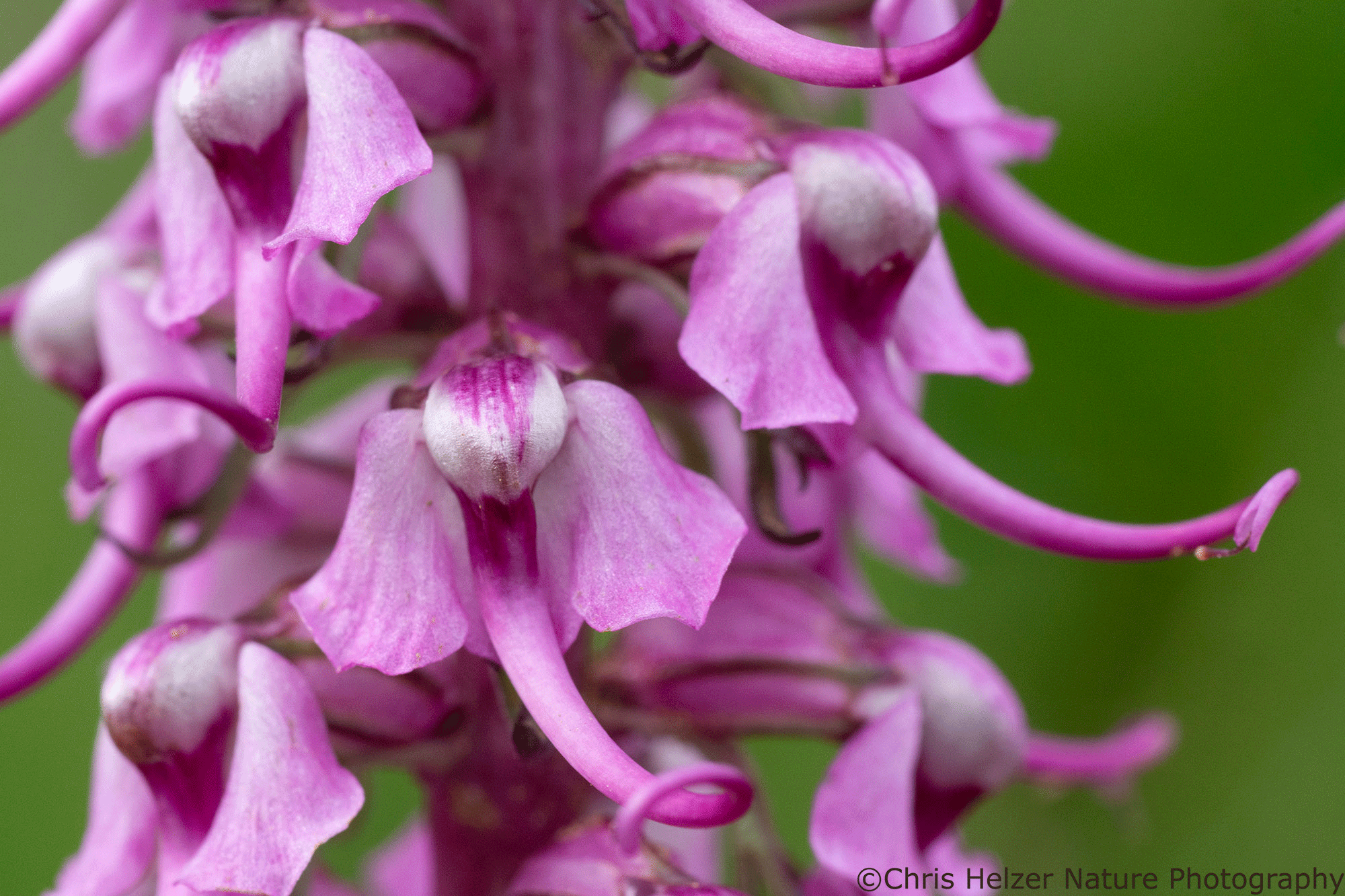
The Flat Tops has a lot of embedded ridges and peaks that provide a great view of the surrounding area. This photo shows the area near Surprise Lake (which is out of view toward the upper left of the image).Elephant’s head (Pedicularis groenlandica) grows commonly along streams and in other wet areas.I think this is white marsh marigold (Caltha leptosepala), which I saw along seeps, streams, and wet meadows.Distant rain and mountains to the east of my campsite.
Since I only carried my backpack 7 miles in and 7 miles out, I figured I could pack a little heavier than I otherwise would. I didn’t bring a stove and used Kim’s very lightweight one-person tent (uses hiking poles for support). Because of that, I gave myself permission to bring quite a bit of camera gear. I didn’t weigh my pack because I knew the result would be well above the recommendations of people who know about such things (like Kim).
On the other hand, photography and a couple books (for rainy periods) were the two primary objectives for my trip. It was a vacation, after all. I didn’t want to spend all my time trudging along trails with a big pack. I wanted to scramble up ridges with a camera and wait patiently for marmots and butterflies to pose for photos. I wanted to take afternoon naps, if I felt like it. I wanted to watch hundreds of salamanders hanging out in the shallows of an alpine lake. …Ok, I hadn’t anticipated that last one, but was glad for the opportunity! (More on that in a future post.)
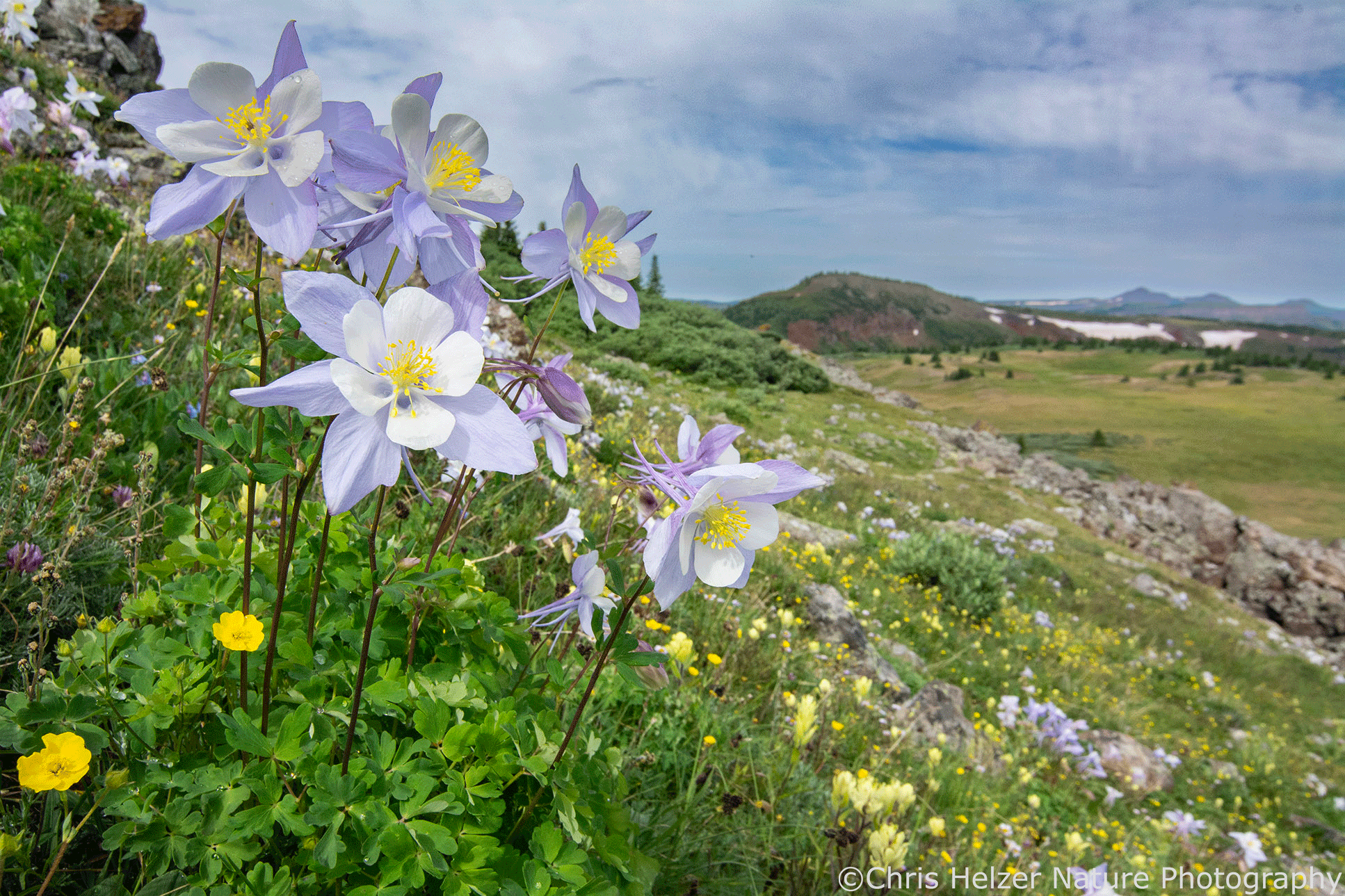
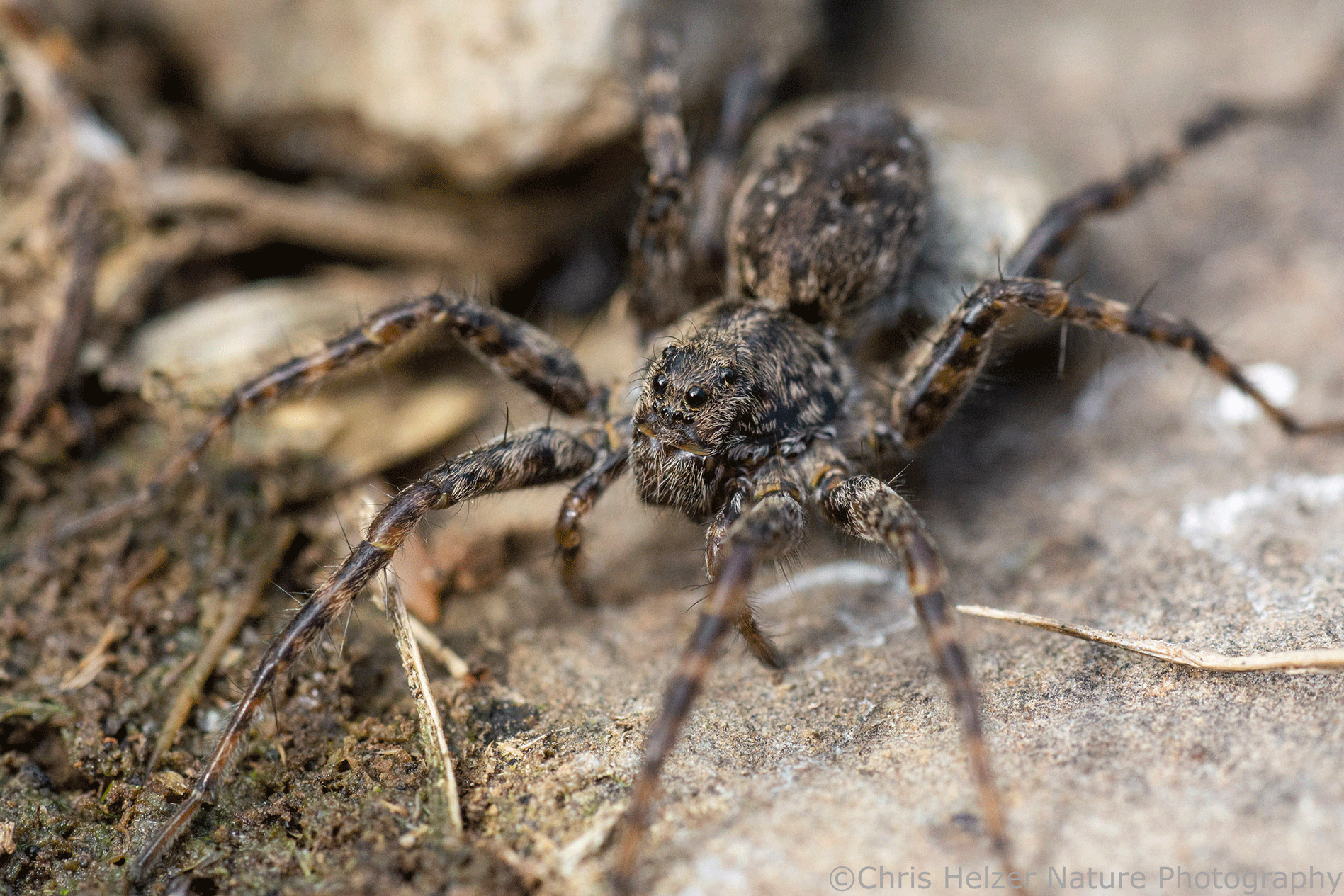
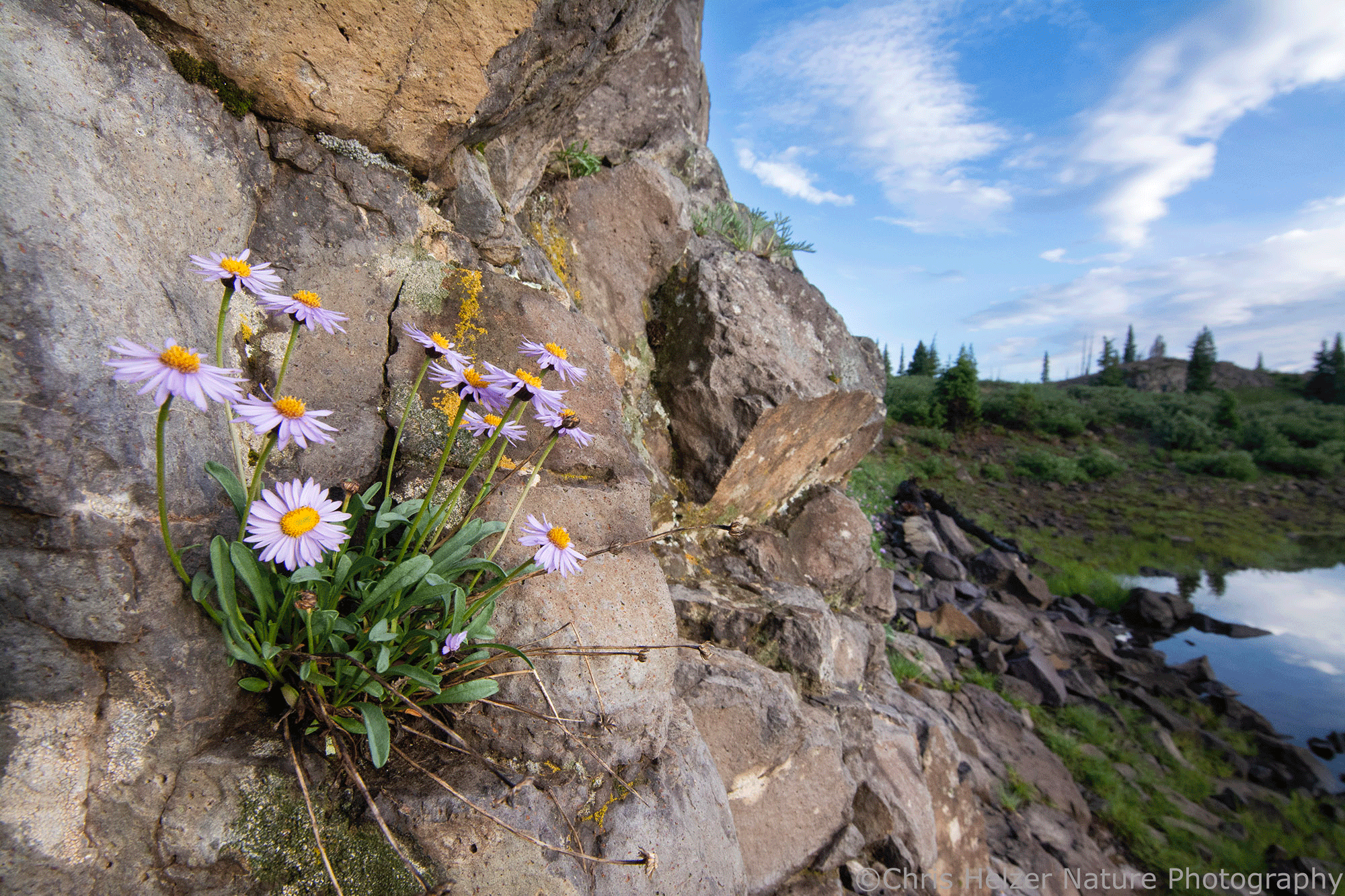
Colorado blue columbine (Aquilegia coerulea) on a ridge above my campsite.This female wolf spider (carrying her egg sac – barely visible under her thorax) was one of many spiders and other invertebrates clambering about in the rocks along the banks of alpine lakes.I always admire plants that grow in seemingly impossible substrate – such as the tiny crack in this rock face. I think this is a kind of fleabane (Erigeron sp.)American bistort (Bistorta bistortoides) growing out of the crack in a large rock near my camp.
I didn’t see any really big wildlife species, but that didn’t bother me. There were plenty of marmots and pika, along with a fox that played peek-a-boo with me for a while from the top of a ridge. Birds sang all around me, including some I knew and some I didn’t. Most importantly, I saw multitudes of bees, flies, butterflies, spiders, and other invertebrates and had plenty of time to photograph them (in-between thunderstorms).
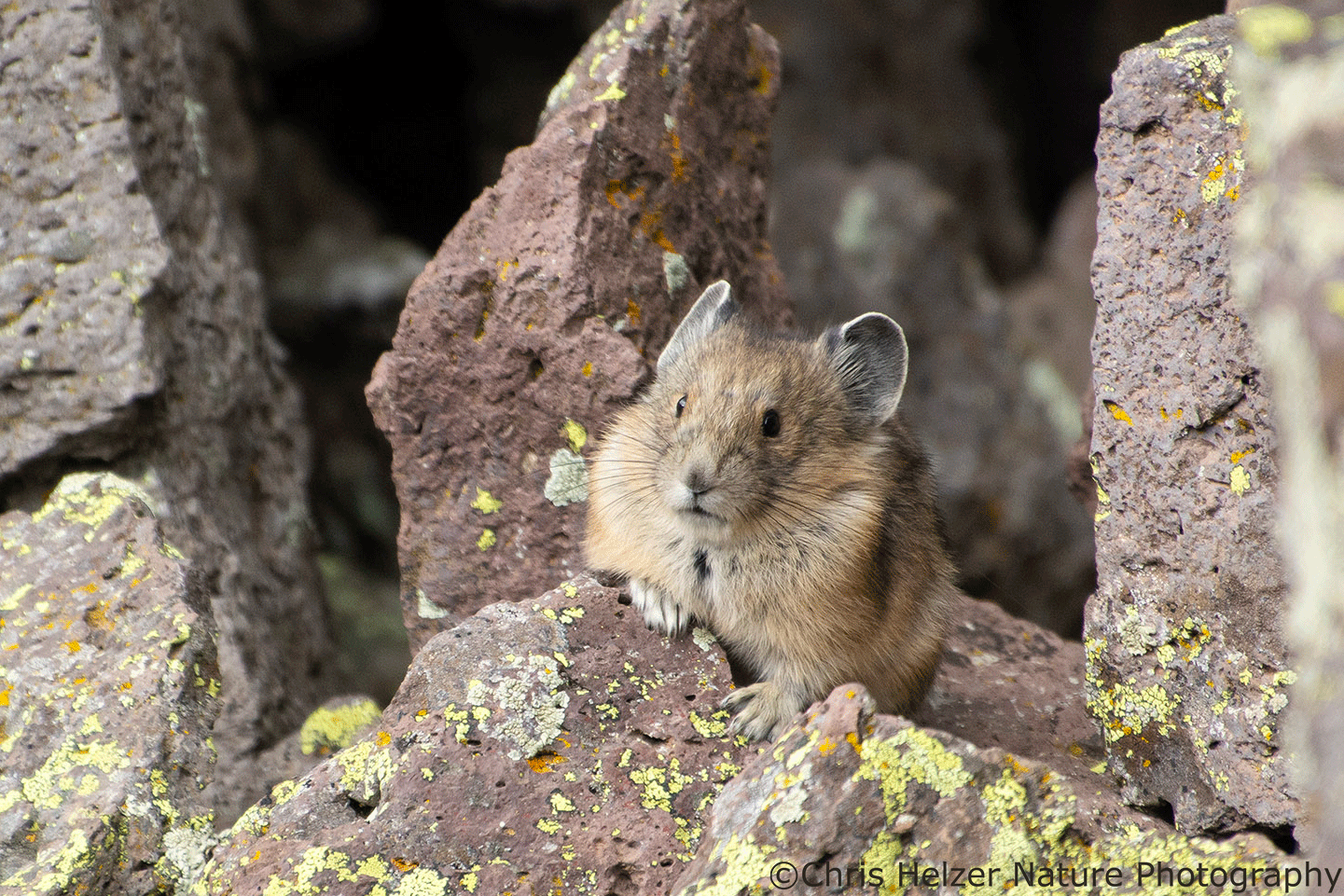
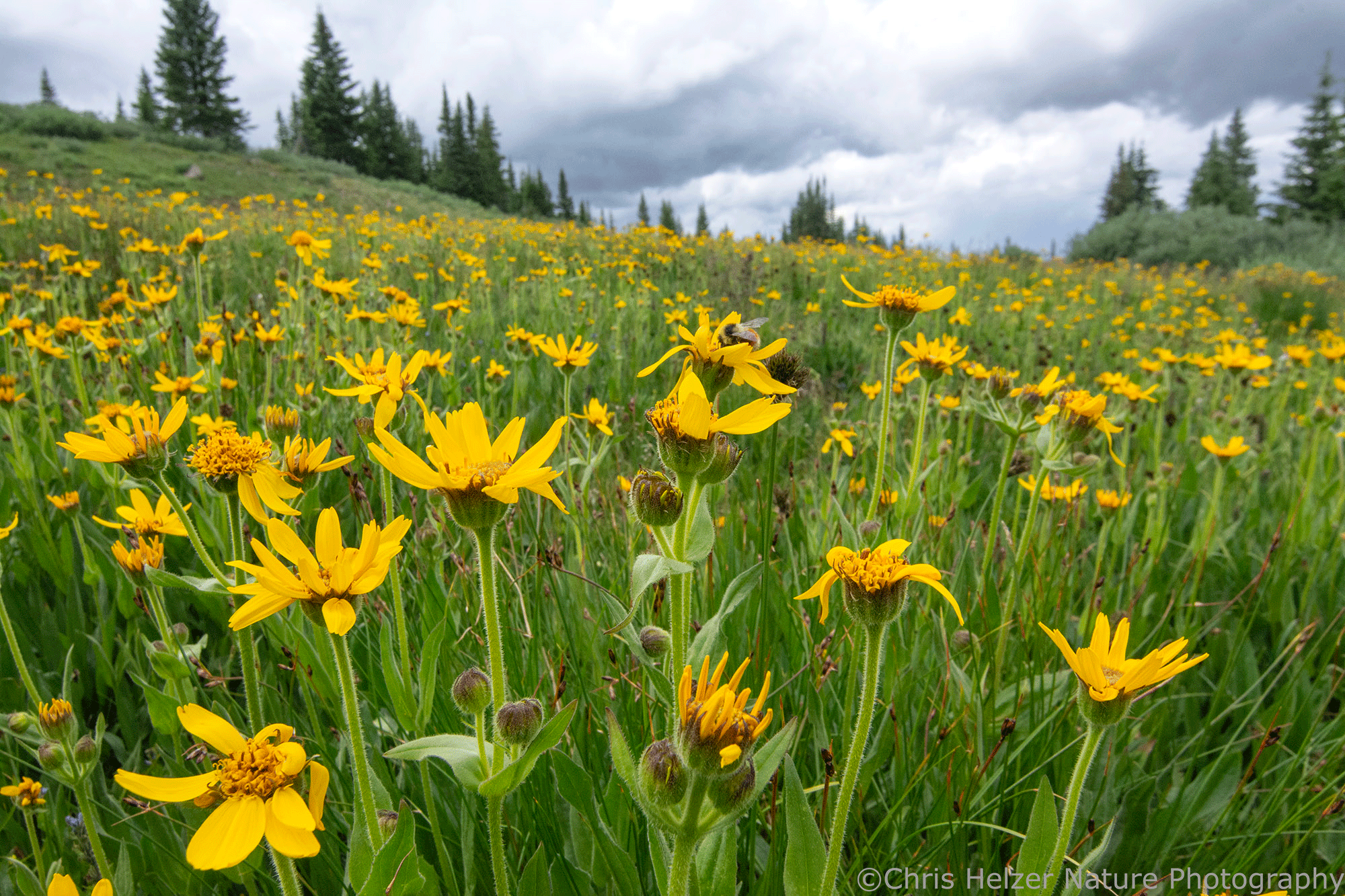
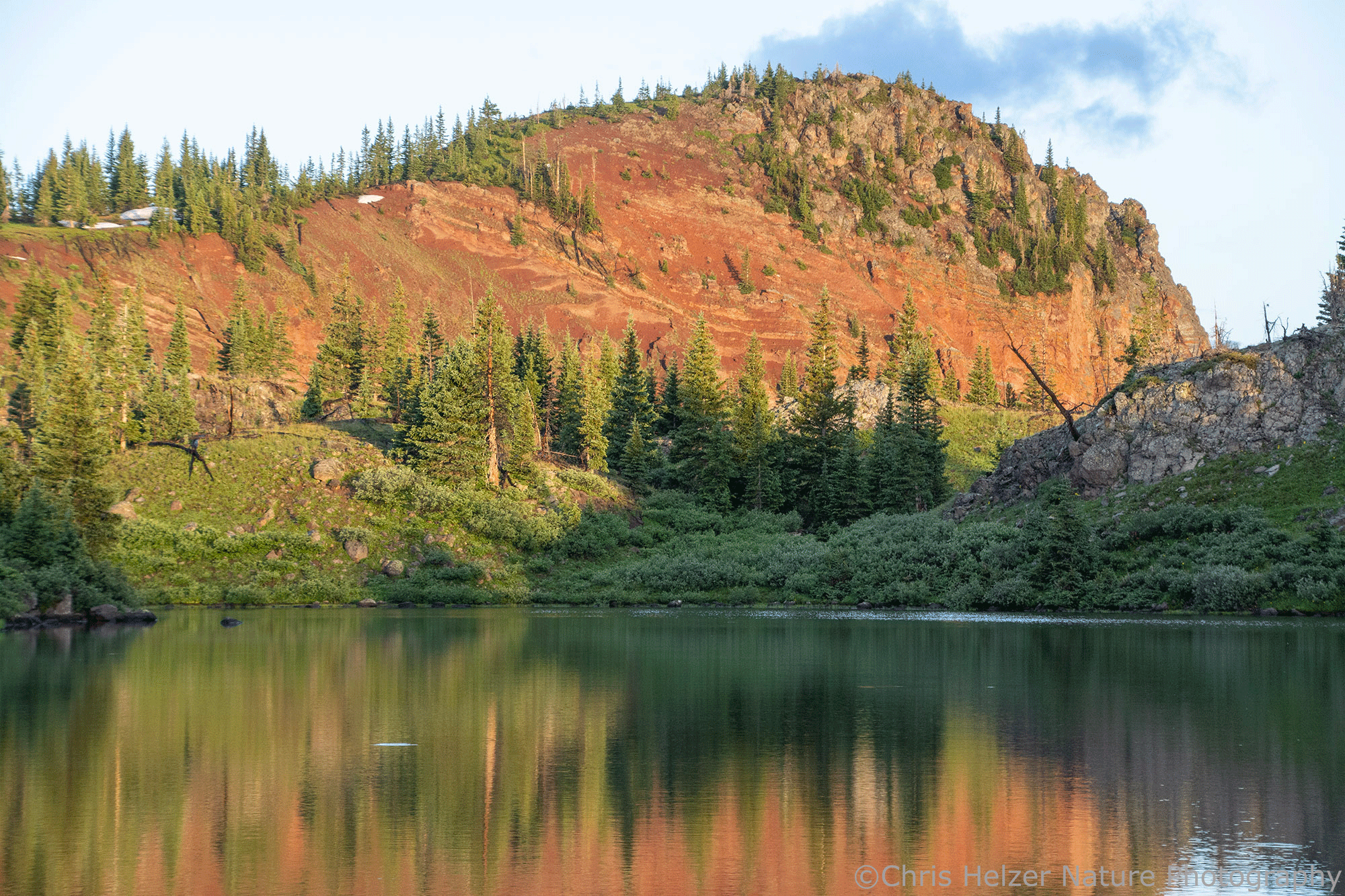
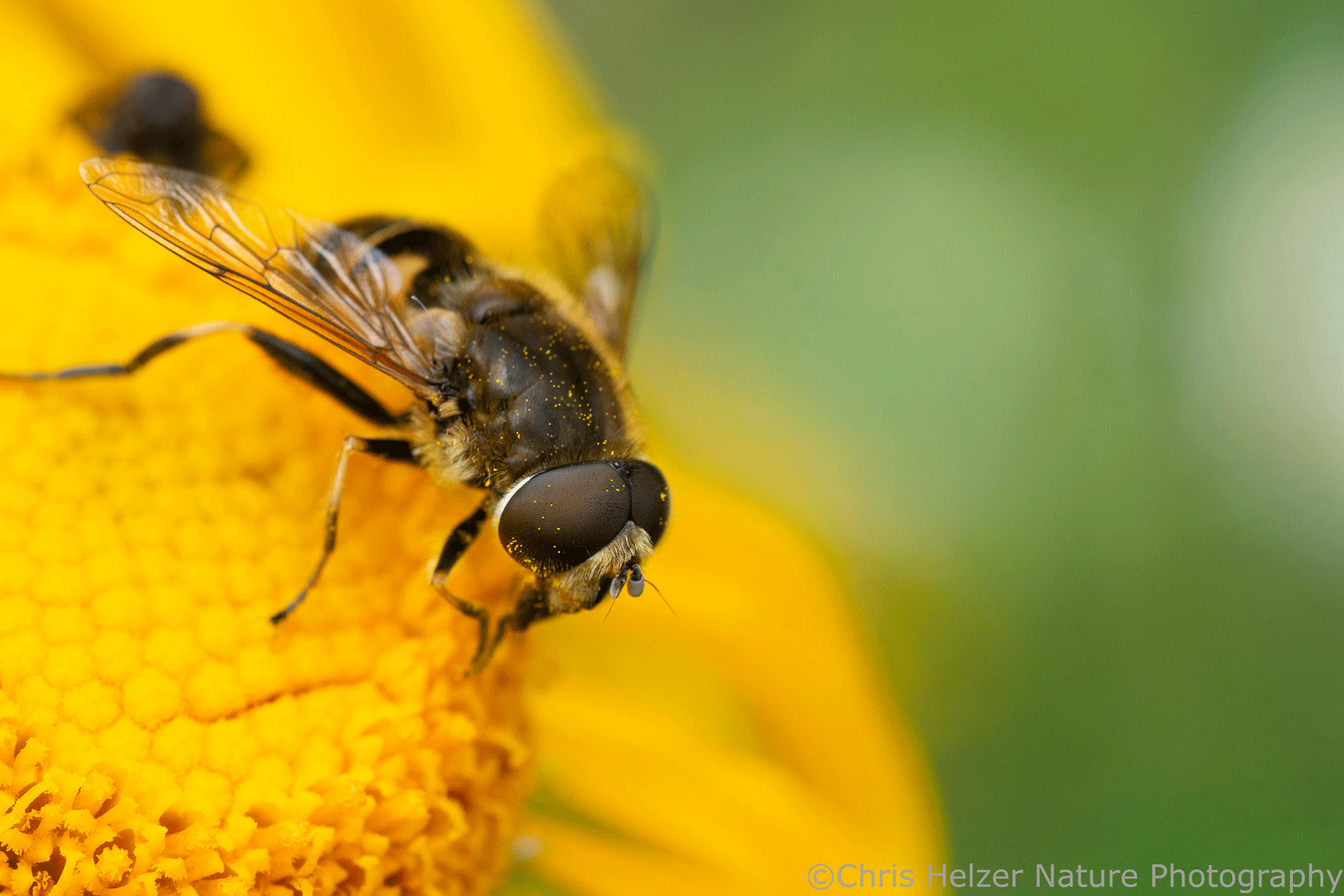
This is one of many yellow-bellied marmots I saw this year. A couple were on the ridge above my campsite and posed for photos if I was patient enough to wait for them. (I didn’t bother any of them for very long.)This was one of at least two bumble bee species I saw (I don’t know the species). It was feeding on a thistle while I was waiting for a marmot to reappear.This pika also appeared to scold me while I was waiting for a marmot to pop back into view.There were a lot of patches of snow still hanging around this year, including this one. There was more in early August this year than in mid-July last year. I’m guessing that was related to heavy snows over the winter.This patch of yellow flowers was growing in a fairly wet area below some melting snow near my campsite. I think they’re in the Arnica genus?This reddish-colored ridge was visible from my campsite and reflected nicely in one of the small lakes nearby. This photo was taken in the evening with indirect and subdued lighting.Here’s the same ridge and the same lake, photographed the following morning in direct light.One of many hover flies helping to pollinate the many flowers around.Here’s another hover fly on another flower.
The American West has no shortage of great public land to explore, and I hope to keep finding new spots. The Flat Tops, though, is a place I will definitely return to in the future. Maybe I’ll run into you there sometime. If so, I’ll probably be lying prone trying to photograph an arctic blue butterfly or something when you hike past, so please don’t step on me.
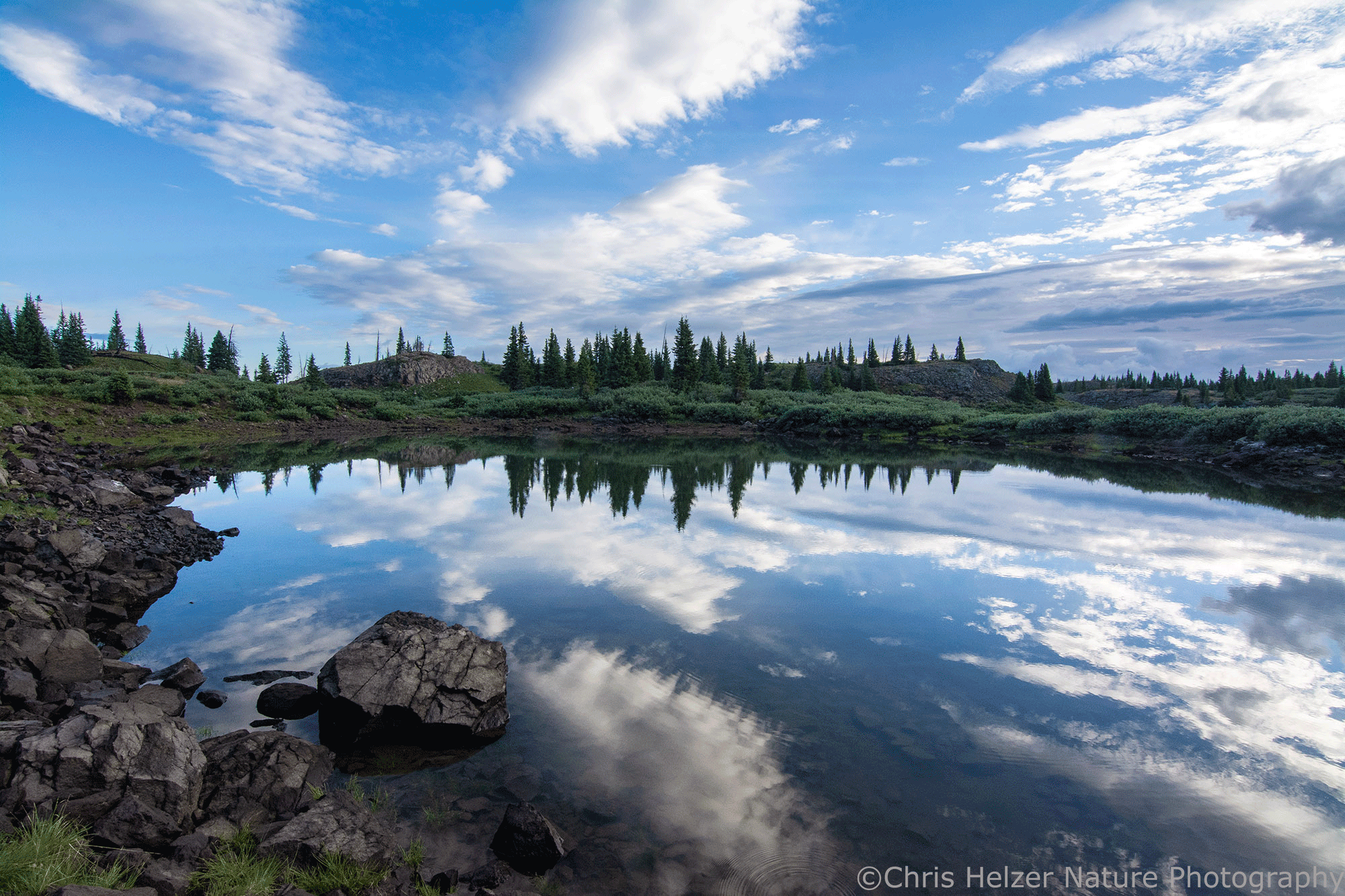
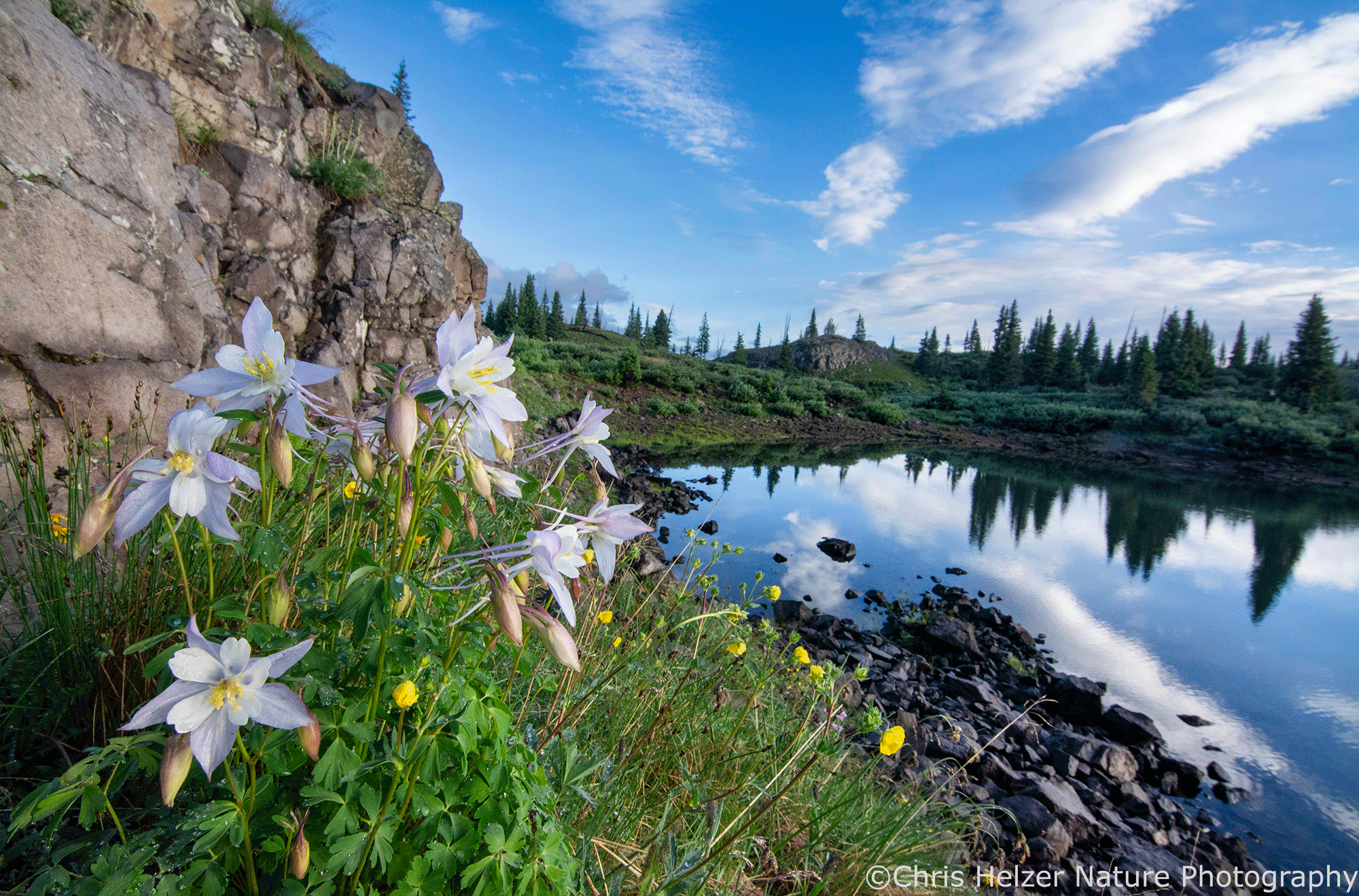
On my last morning, the skies provided some terrific clouds for reflection photos in the lakes near my campsite. They also helped dry out my tent a little before I packed it up.Here are some more columbine flowers along the edge of a lake.
Last week, our crew conducted two summer prescribed burns at the Platte River Prairies. One was around 45 acres and the other was about 15. Both burn units made up less than 10% of the total area of their respective prairies. Weather conditions were mild – temperatures in the high 70’s (Fahrenheit) with wind speeds of 5-10 miles per hour and relative humidity around 50%.
The objectives for both units were the same. Cody (Preserve Manager) wanted to shift grazing pressure to the new burns (and thus away from previously burned areas. He hoped the fire and grazing combination would create additional habitat heterogeneity and alter competition in the plant community to temporarily favor plant species that respond well to this kind of disturbance. Another objective was to continue learning about the impacts of various prairie management options, both for our own education and that of those who visit our sites and/or read this blog.
Whenever I post something about summer fire, I get lots of great questions, so I thought I’d try to anticipate some of those and answer them in the main feed so everyone can see both the questions and the answers. Here we go!
Question 1: Can you describe the two prairies you burned?
Answer: Yes. I’m very familiar with them.
Here’s one of the burned areas, just moments before ignition. This is a remnant prairie that was degraded through chronic overgrazing and probably broadcast herbicide applications ( both prior to our ownership) and that we’ve been overseeding to enhance plant diversity.
Better Answer: The first site is the remnant described in the above photo caption. Cattle had access to the site (and watched us curiously during the fire) but hadn’t been grazing much because they were focused on a different part of the prairie that had been burned this spring.
The second site is a high-diversity (more than 200 spp in seed mix) restored prairie planted in 2000 with very nice plant diversity. It has been excluded from grazing this year and only lightly grazed the previous couple years, so it was getting dense and thatchy.
This was our test fire at the first site (remnant) during which we tested how well it would burn to see if it would be a safe fire and achieve Cody’s objectives.
Question 2: How does a summer fire even burn? Everything looks so green!
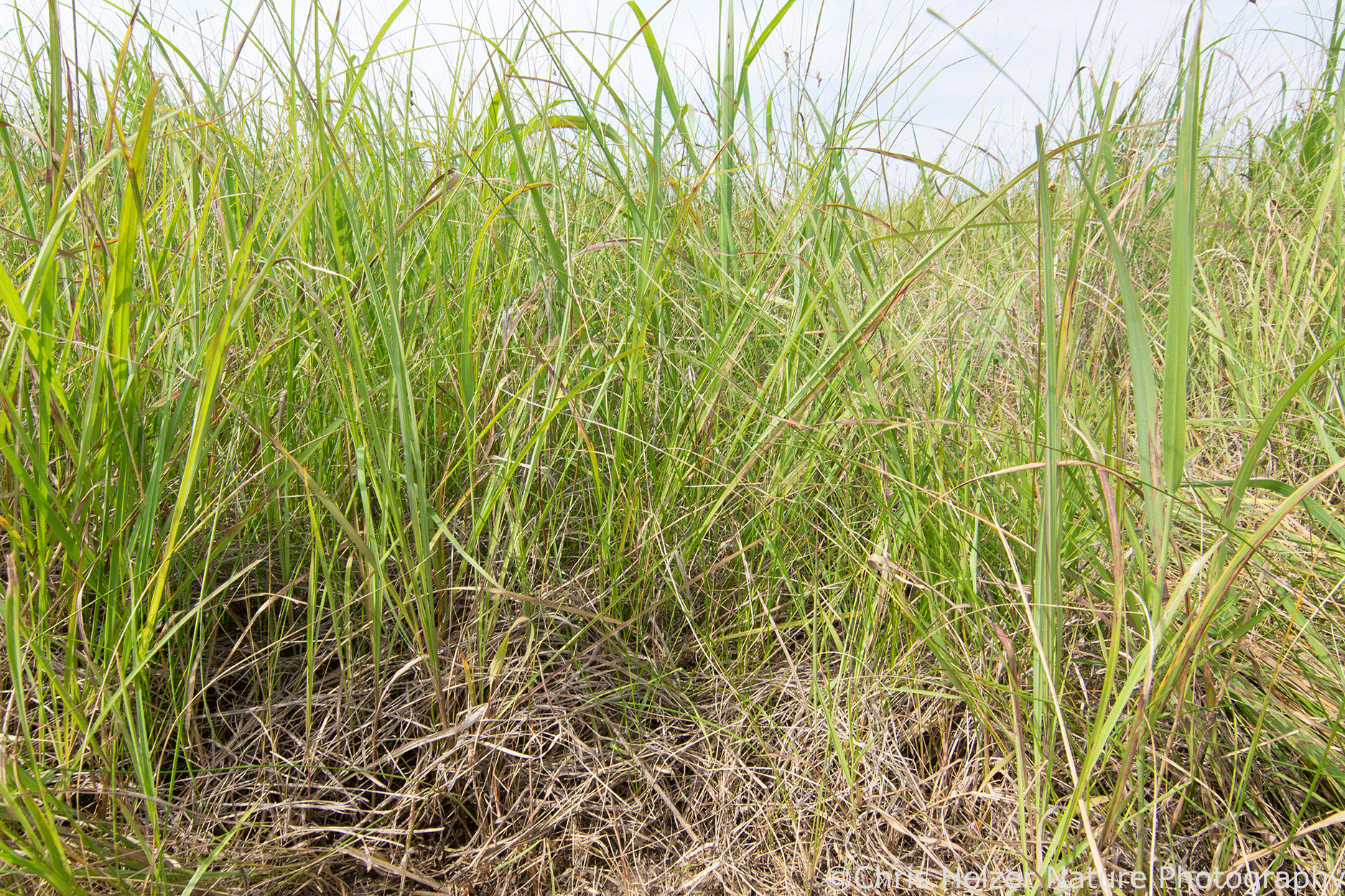
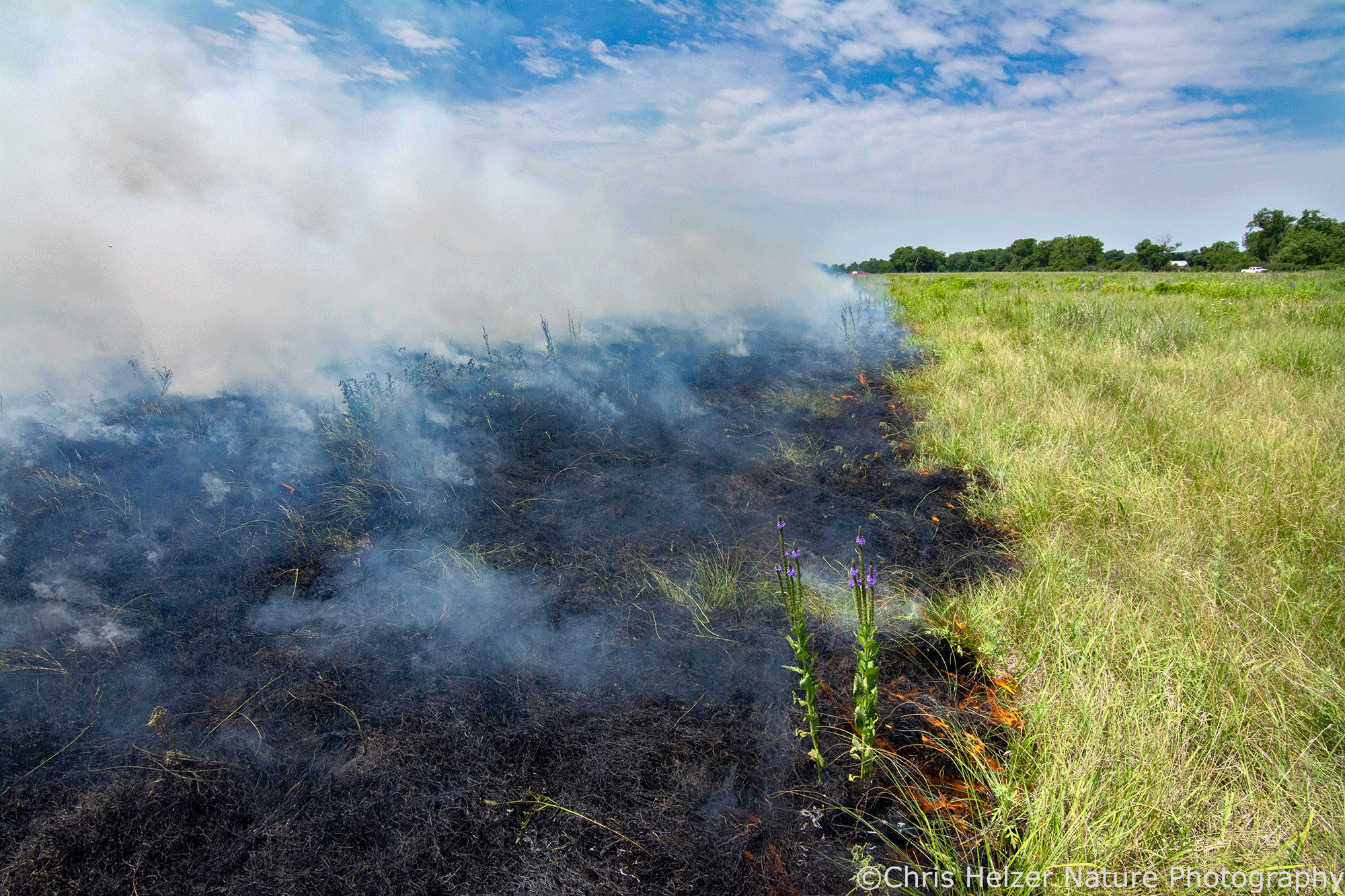
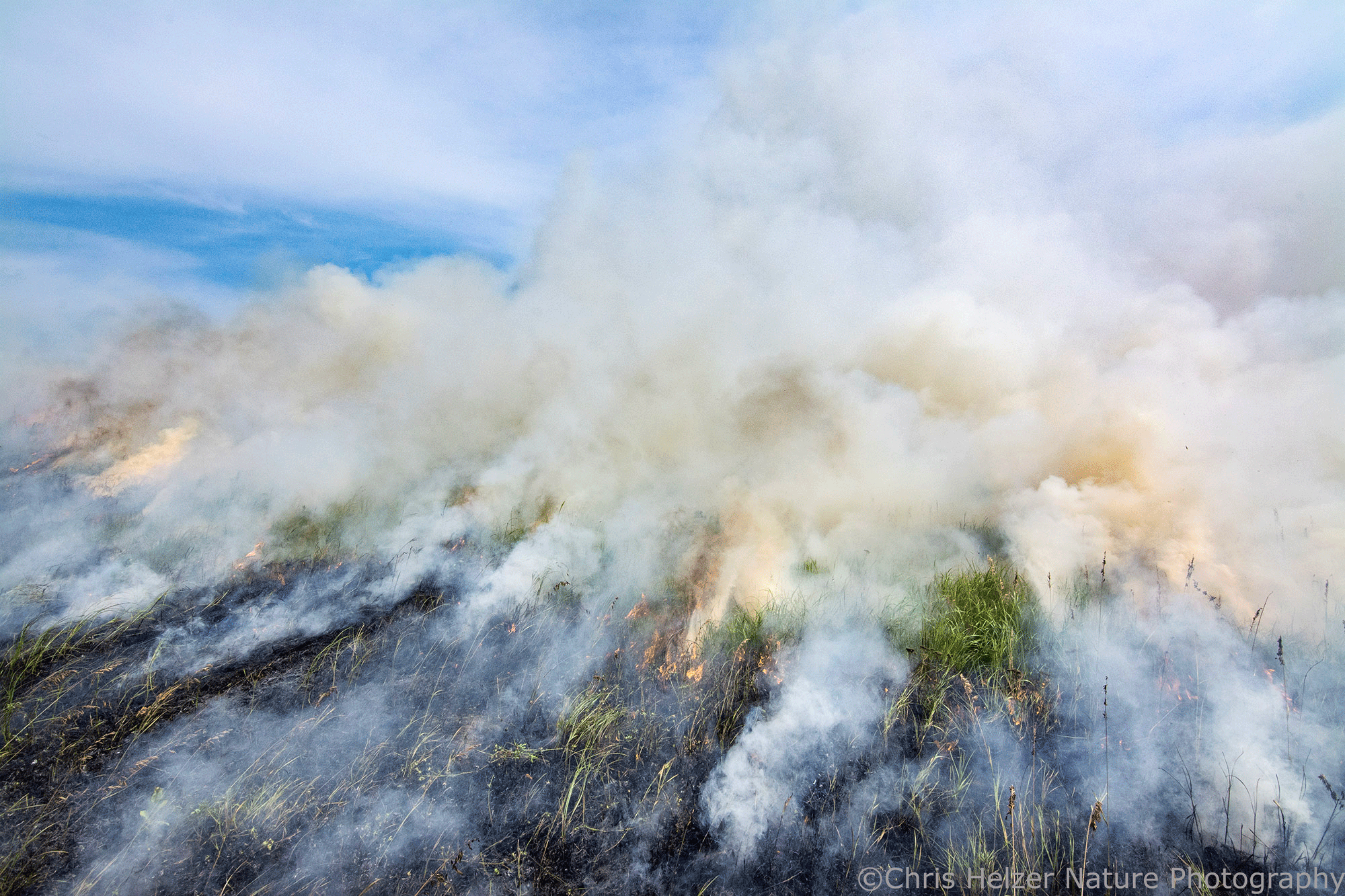
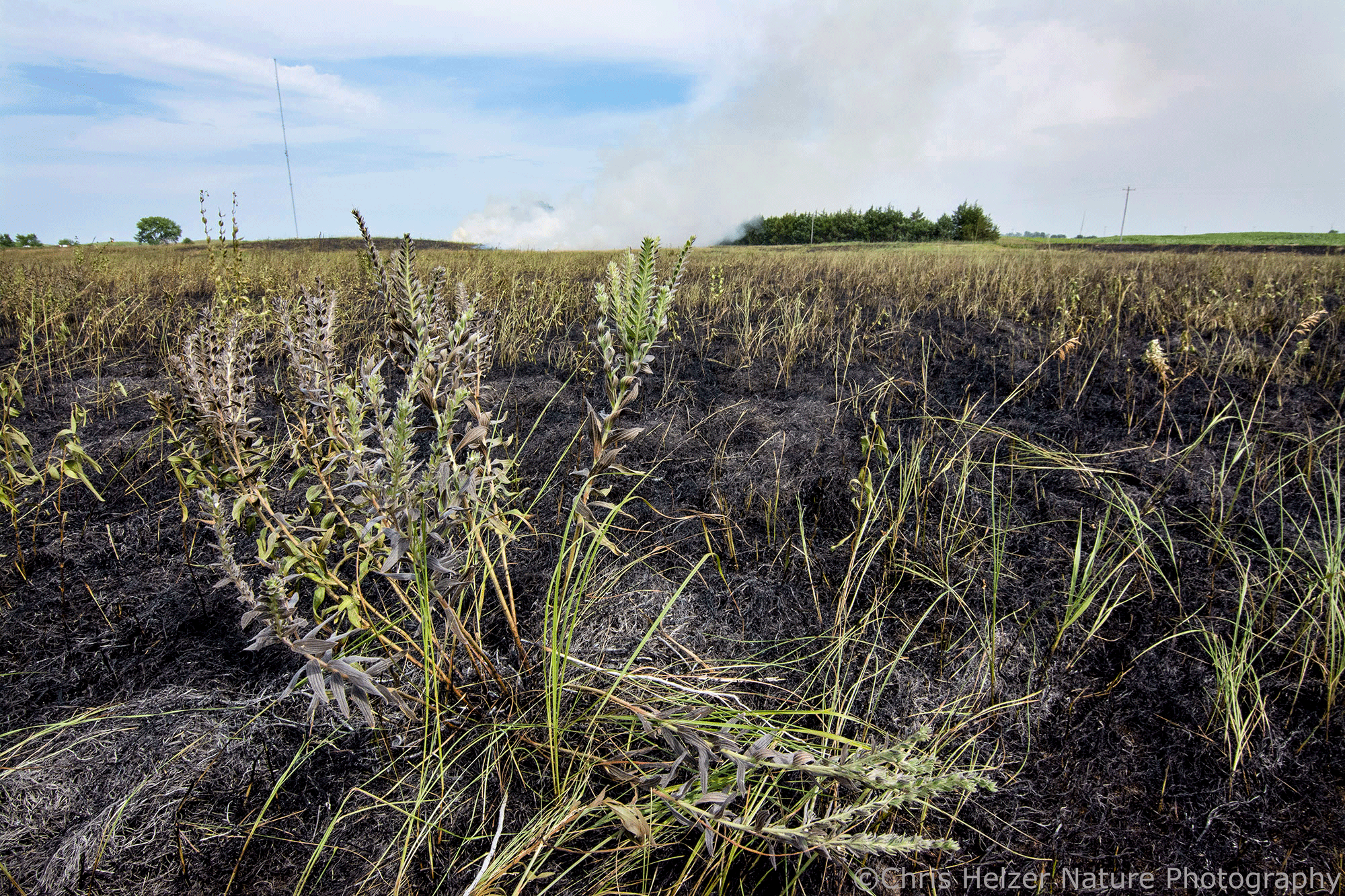
Answer: Yeah, it’s pretty wild to watch. What actually carries the fire is the dead vegetation that has accumulated from previous years – especially the layer of thatch along the ground (see below photo). While much of the green vegetation is consumed, the dry thatch is what really makes it go. Summer fires tend to be slow and very smoky, but both of last week’s ended up consuming nearly 100 percent of the burn units.
Here’s the layer of thatch beneath the restored prairie we burned. While much of the vegetation is green, there was more than enough dead matter to carry the fire.
Question 3: Isn’t it dangerous to work in that much smoke?
Answer: It’s always risky to work in and around smoke, but yes, summer fires need particular planning. We work extra hard to limit the amount of time people spend in the smoke during a summer burn. On the first burn unit, we made our downwind fire breaks extra wide and used a strong wet line (sprayed water in a strip along the edge of the burn before igniting). That gave us extra trust in those breaks to hold the fire. As a result, after igniting along that line, we could wait and let a lot of smoke dissipate before going in to make sure the line was holding. If it wasn’t, the wide breaks gave us plenty of time to respond and catch the fire while it was still within the mowed break. For the second unit, we used a gravel road as our downwind break, which meant we didn’t need to check that line at all.
A backing fire (burning into the wind) at the first unit.
Question 4: Aren’t there a lot of risks to animals from a summer fire?
Answer: Yes, but there are a lot of risks to animals with any fire, regardless of season. Dormant season fires consume lots of invertebrates, for example, that are overwintering in thatch or in the stems of plants. Any growing season fire can be dangerous for animals because more of them are active and aboveground than during the dormant season. However, many of those animals are mobile enough to escape the fire (as opposed to overwintering invertebrates – and vertebrates – in a dormant season burn).
Having said that, though, summer fires can obviously present significant hazards for animals. There are ways to help mitigate that. One is to burn only a small percentage of a total area. My personal perspective is that 10% seems about right, but that’s not based on any science.
The tactics used during a burn can also affect the ability of animals to escape. Burning a site gradually so that animals have time (and escape routes) can be better than quickly ringing a burn unit. On the flip side, of course, the longer a burn takes, the longer crew members are exposed to smoke and the more chances there are for something to go wrong, so there are tradeoffs!
A head fire (flames being driven forward by the wind toward the already-burned areas downwind). It burned a lot slower than this photo might indicate – slower than a comfortable walking speed.
Question 5: How does a summer fire affect the plant community?
Answer: It varies wildly, and depends upon a lot of factors – some of which we don’t yet understand very well. Every prairie is different, so it’s hard to predict how a particular plant community might respond to a summer burn. The follow-up management is also important. In our prairies, a summer fire is usually paired with grazing, so the impacts on the plant community are as much driven by the grazing as by the fire.
Without grazing, the effects of a summer fire (without grazing) can be similar to what you’d see from haying. While they’re not identical treatments, both fire and haying remove the vegetative growth plants have produced so far that season. Plants that have completed their life cycle before the event are interrupted in their growth and don’t have a chance to flower or store energy for next year. If the plants more significantly affected are normally dominant within the community, that can open up temporary opportunities for plant species that aren’t strong competitors.
At the Platte River Prairies, our results vary from year to year and site to site. Many opportunistic plant species, including annuals, biennials, and some perennials often flush in abundance for a year or so, but it can be hard to predict which ones will respond in a particular year. Species that may do well include black-eyed Susans, upright prairie coneflower, yarrow, hoary vervain, stiff goldenrod, purple and white prairie clovers, shell-leaf penstemon, and others.
There are a couple species that seem to respond consistently to the combination of summer fire and grazing at the Platte River Prairies. Wedgegrass (Sphenophilis obtusata) usually becomes much more common in our prairies during the year following a summer fire. I’ve only seen Carolina anemone (Anemone caroliniana) three times in one of our sand prairies, and two of those sightings came after a summer burn. Neither of those species depends on summer fire, but they seem to be examples of species that – at our sites – respond well.
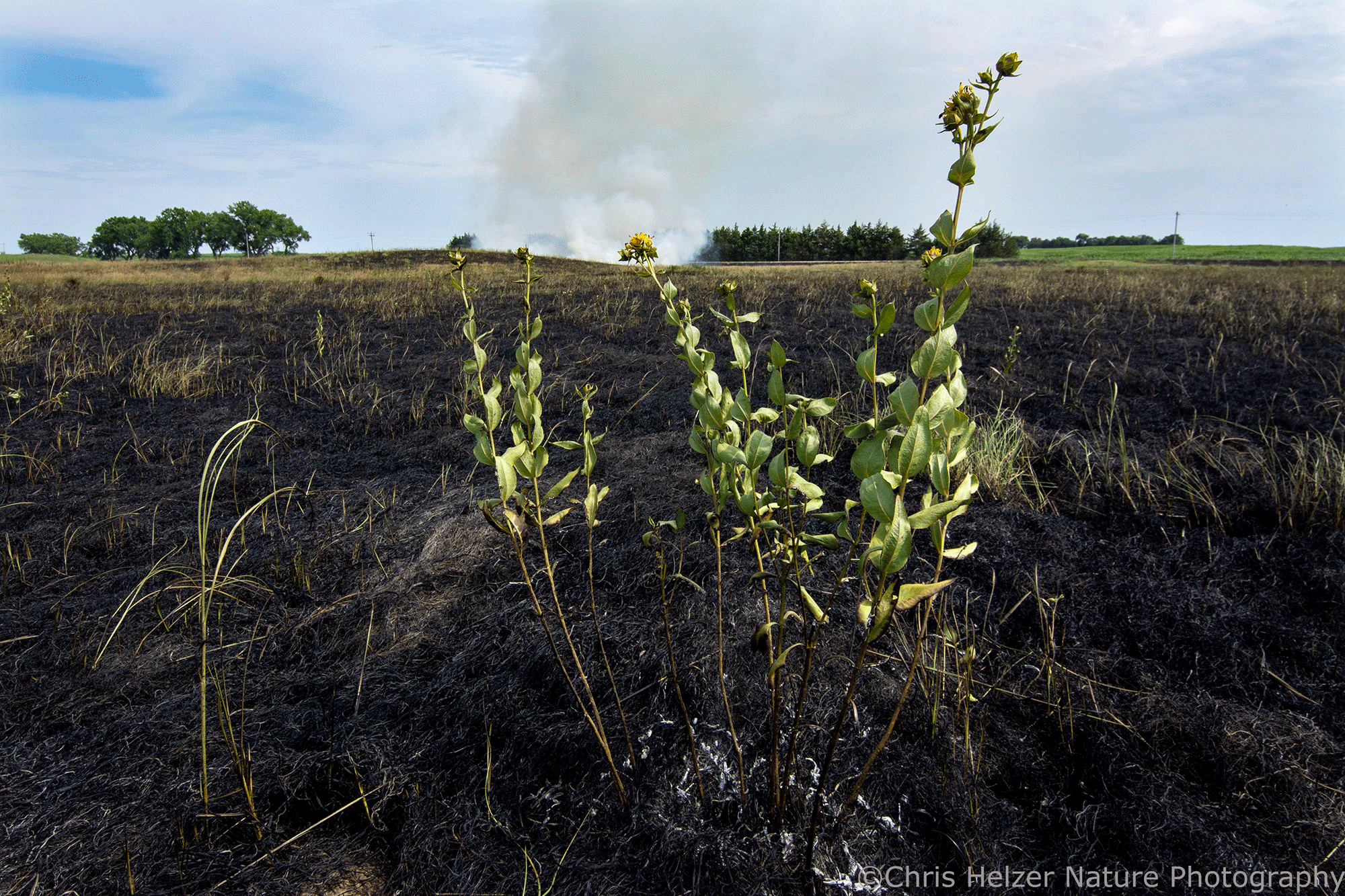
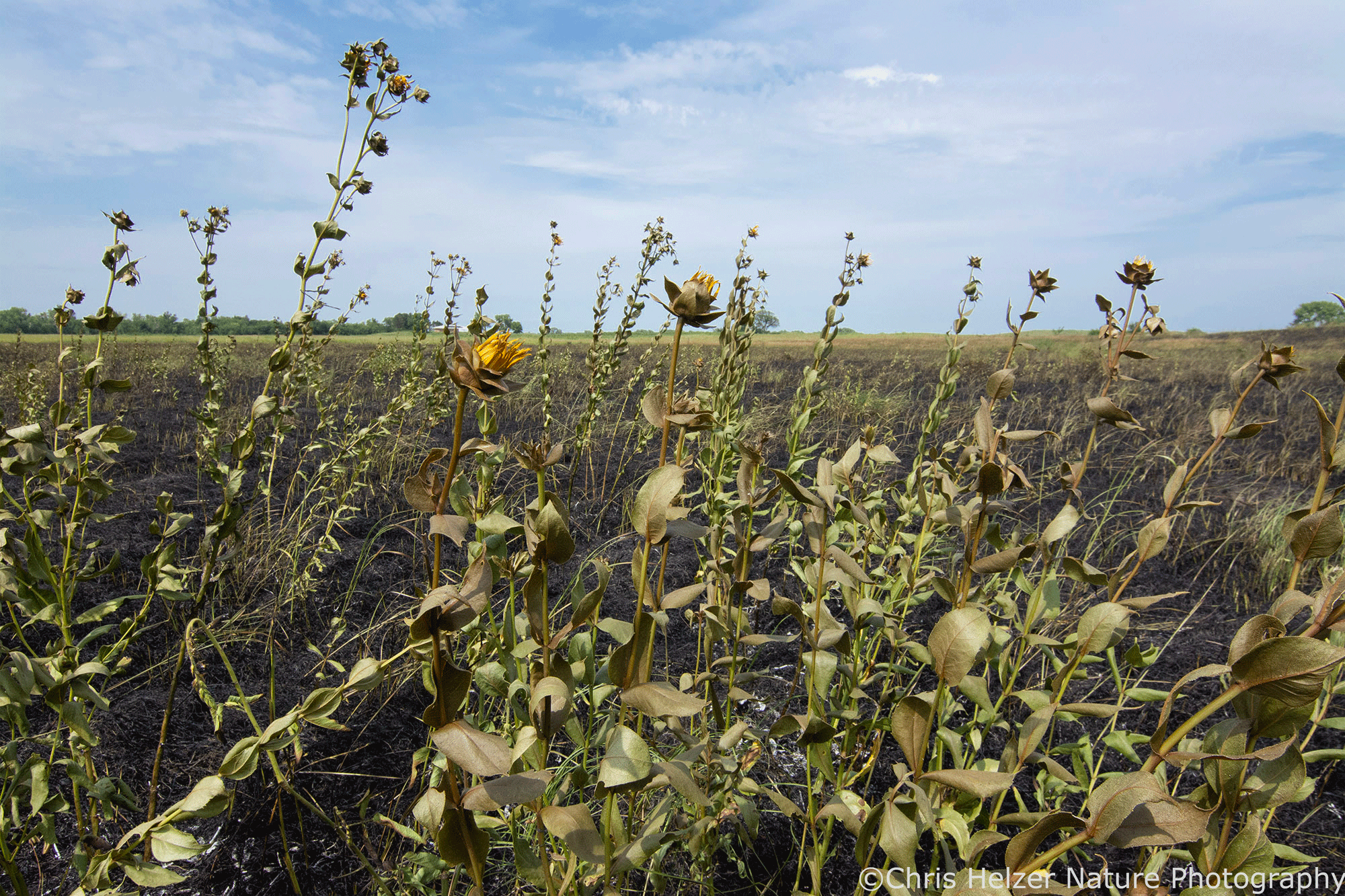
Entire-leaf rosinweed after the fire. These plants have been top-killed for this year, but will return.More rosinweed.
Question 6: Why not just burn the same areas in the spring or fall?
Answer: We sure could have, though the results would have been different. In addition, recent springs have been really difficult for prescribed fire and that may be a trend for the future. We’ve had a tough time finding days with appropriate winds and other weather conditions during the spring, so we’ve tried harder to find other burning windows. That’s especially important for sites that are using fire to combat woody encroachment (not really an issue on either of the two units we burned last week). If you need to kill eastern redcedar trees, for example, and can’t get a spring burn done, burning in the summer or fall can still accomplish the same goals.
Additionally, one of our objectives at the prairies owned by The Nature Conservancy in Nebraska is to experiment and learn what we can about land management and restoration. We try lots of stewardship tactics, evaluate them, and have them available for others to come look at during our field days, workshops, etc. There’s still a lot to learn about summer fire, so each one is another opportunity to learn.
False gromwell, aka marbleseed, and other plants with smoke from the fire in the background.
Question 7: Will conducting summer fires make me popular with other prairie people?
Answer: Not universally, apparently. I had someone on Instagram respond to a post on last week’s summer fire by calling me foolish and arrogant. Of course, he also said prairies aren’t disturbance-dependent systems, which I would strongly disagree with. Interestingly, he seemed to be in favor of winter burns and periodic haying, both of which I would categorize as ‘disturbances’.
Many people opposed to growing season burns are concerned about changes in the relative abundance of plant species. That’s obviously one important factor, though I have frequently argued that it’s important to manage for a broader set of objectives than just the plant community. If your prairie has rare plant species, however, it’s entirely fair to slant your management toward helping those plants thrive. (On the other hand, if the same prairie also has rare insects with management needs that conflict with those of the rare plants, you’re in a pickle, aren’t you? Prairie stewardship is complicated and hard!)
Regardless, there are certainly people with strong objections to summer fires. There are reasons to be skeptical of summer burning, of course – including some I’ve mentioned above. It’s certainly not something I think should be done regularly or at large scales in most places, but I also think it’s an option worth considering, depending upon your site and objectives. I don’t think a single summer fire on a small portion of a prairie is going to be catastrophic, and it will almost certainly be an opportunity to learn something helpful. A few people might be snarky about it, though.
A drone photo shows the tail end of the fire at the 15 acre site last week. You can see lots more unburned prairie adjacent to the burn, as well as across the road in the background.
Question 8: What’s the best time of year to burn a prairie?
Answer: That’s a trick question. It depends upon your objectives, how your particular prairie responds to fire, and whether you’re combining fire with other management like grazing or spot-herbicide-treatment of shrubs afterward. Fire is just one of many options for managing prairies and it should be used intentionally and thoughtfully, especially because it comes with significant risks – for both prairie species and fire crew members.
.
Question 9: Do you think prairies are important enough to warrant continued experimentation, especially in the face of rapid climate change, woody encroachment, high rates of nitrogen deposition, invasive species, and other threats?















 The Prairie Ecologist