
It’s an injustice. And it’s lazy. Is it the biggest issue facing society today? Nope. But it’s one we can take care of quickly and easily. Join me – it’ll be fun.
For some reason, biologists sometimes name plants, animals, and other organisms because they bear resemblance to something they already knew. Whomever came up with the name for false boneset thought it looked kind of like boneset plants. Instead of coming up with a cool name that was descriptive of the new plant itself, they just called it “false boneset” and moved on with their life.
An even bigger travesty exists with another plant and the insect that relies on it. I don’t know which was named first, but both were maladroitly named and we need to do something about it. I’m talking, of course, about the plant currently known as “false sunflower” and the insect named the “false milkweed bug.”
Ridiculous.

Let’s start with the plant. It sure does look like a sunflower, but it’s apparently not enough of a sunflower for taxonomists to lump it in that austere group. As a result, it ended up in the genus Heliopsis, along with 17 or so other similar species.
I don’t really have a problem with that. What I don’t like is that the given Latin name for the species is (Heliopsis helianthoides). The suffix -oides means ‘resembling’. Because of that, it was given the common name, “False Sunflower”.
Totally uncalled for.
(False boneset, by the way, is Brickellia eupatoroides because Eupatorium is the genus for boneset plants.)

Fortunately, for those of us willing to take up the cause of this plant, it has a second common name, which has been given to most (all?) of the other species in the Heliopsis genus. That name is ‘oxeye’. It’s a little weird, but it’s at least distinctive, and not just a name that compares it unfavorably to something else. So we have a starting point. Can we all agree to stop calling the poor plant false sunflower and make sure we call it oxeye?
Of course, oxeye is tricky because there are 17 other species also called that, so we should make the name a little more specific. Some have tried. Unfortunately, the common names for this plant include both “smooth oxeye” and “rough oxeye”, according to the premiere source for plant taxonomy information (Wikipedia). Which is it? Is it smooth or rough? No one knows, apparently.
Given what this poor plant has lived through with its nomenclature history, I propose a different adjective for its first name. How about “fabulous”? It think it looks pretty dang fabulous. Who’s with me?
Great. “Fabulous oxeye” it is. Or, just to have fun, the alternative, “Fabulous ox-eye” because no one can seem to agree about when to put a hyphen in the common names for plants. Or maybe “Fab-u-lous ox-eye” for extra emphasis and to compete for a new record for hyphen use. If you like, you can snap your fingers between each syllable.
Well, then. We’ve settled the first half of my cause.
Now let’s address the poor false milkweed bug.
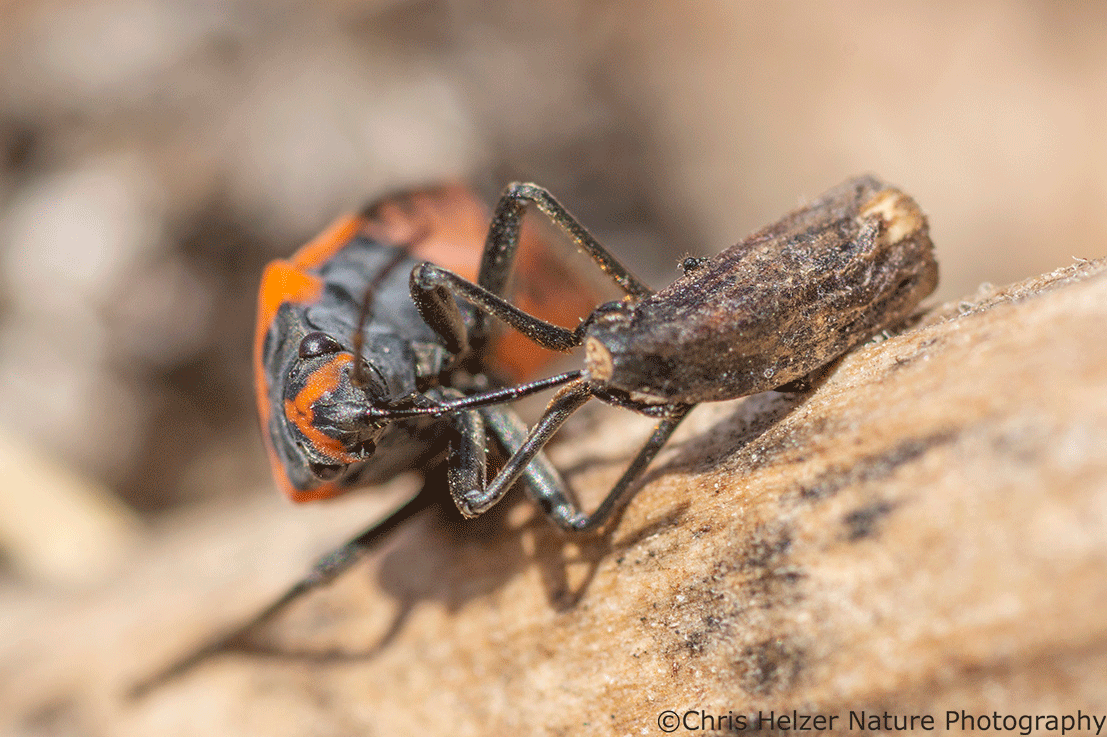
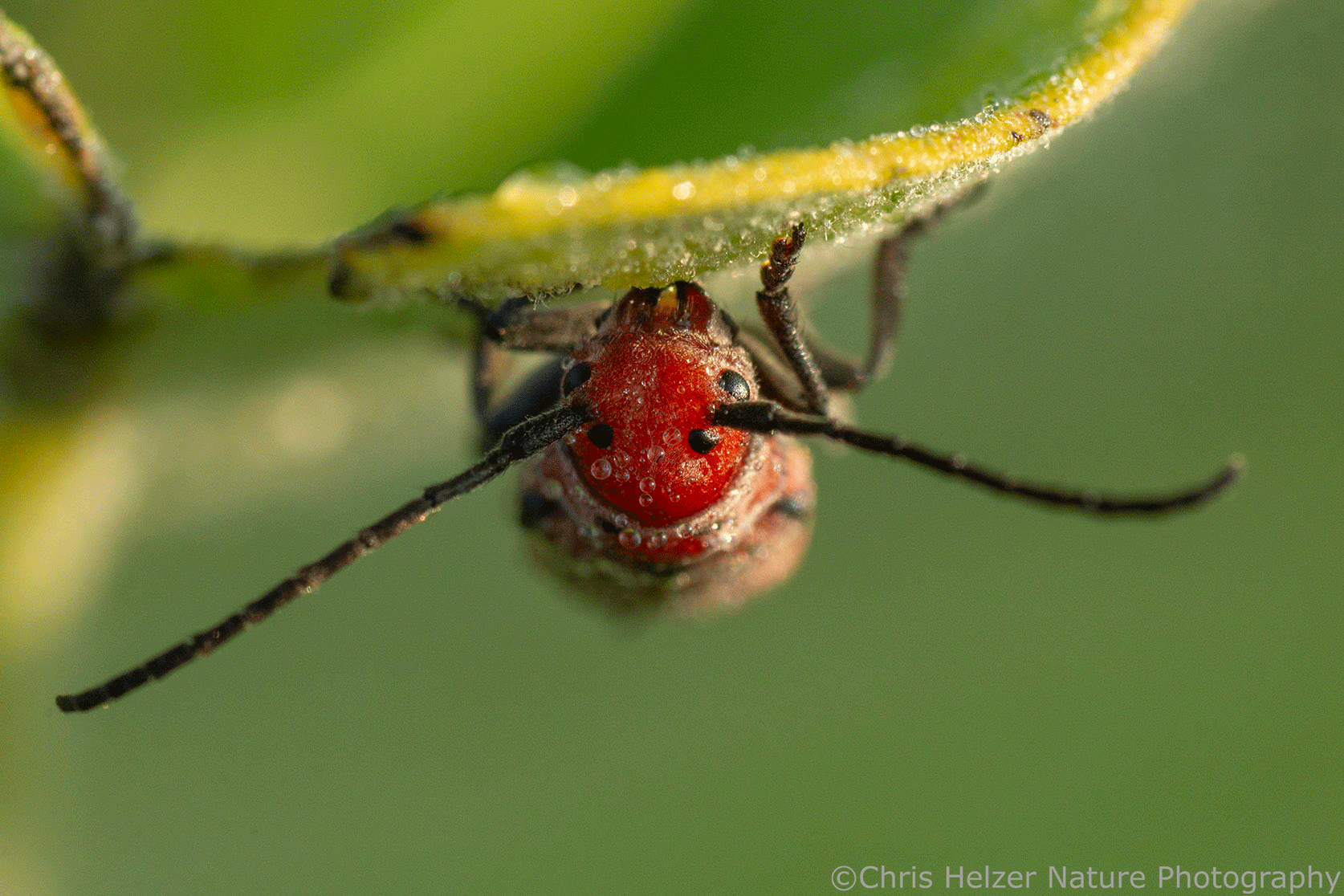
The small milkweed bug, shown below, is a charming little insect that feeds on milkweed plants. It’s called the small milkweed bug because there’s another milkweed bug called the “large milkweed bug” (seriously, who gave these people the responsibility of naming organisms??). The large milkweed bug is in a completely different genus (Oncopeltus) but is at least in the same family as the small milkweed bug and does look sort of like it. But bigger.

The so-called false milkweed bug is in the same genus as the milkweed bug, but it doesn’t feed on milkweed. It feeds on fab-u-lous ox-eye, previously known as false sunflower. You’d think they could have gone with “false sunflower bug”, except that then people would think it was an insect that resembled a sunflower bug, which – as far as I know – isn’t an actual kind of bug.
So maybe they could have called it “real false sunflower bug” to clarify it.
Ok, probably not.
Alternatively, and stick with me here, they could have called it ANYTHING ELSE IN THE WORLD. They could have called it a skunk if they’d hurried. Then some poor slob would have had to come up with a different name for skunks when they discovered them. I shudder to think what they might have come up with. Probably something appalling like “stink weasel” or “false polecat”.
Now that we’ve come up with the updated name for the plant it depends upon, we could call the previously-named “false milkweed bug” the “fab-u-lous ox-eye bug”. But it’s a little long. Plus, what if the bug doesn’t want to be named for what it eats? I bet biologists wouldn’t like being called “fry folks” just because they like eating fast food.
I think we can challenge ourselves to come up with something unique and better. I’ll throw out a few ideas and then you can join in.
It’s a seed bug that with a distinctive orange and black pattern. The gives us a few things to work with. Also, “turcicus”, its specific epithet (second part of its scientific name) apparently means “from Turkey” in Latin.
So the default name might be “Turkish seed bug”. We’d already better off than we were, but it seems unfair to give one country all the credit. Canada geese, for example, don’t all belong to the perfectly-nice country of Canada. Canada didn’t invent that particular brand of goose, as far as I know. (Did they?)

What do you think about “spark bug”? It’s orange-colored, after all, which connotes flames or sparks. I kinda like it. It’s succinct, snappy, and memorable.
Yes? No? What are your suggestions?
Thank you for your attention to this important matter. Together, we can make a difference. If we all band together, the spark bug and its fab-u-lous ox-eye host plant will get the names they deserve!



 The Prairie Ecologist