My camera gear has been getting stale lately. It’s late winter, we haven’t had much snow or ice to draw me out, and I’ve had a really busy several weeks. This week, though, I had a couple opportunities and tried to make the best of them. I nearly failed on the first one.
We had snow over the weekend and on Sunday morning I drove out to the Platte River Prairies, hoping overcast skies would lighten enough that I could photograph some snowy prairies. When I arrived, I reached back behind me to grab my camera bag, opened it up, and realized I’d pulled out all my favorite gear the previous day and put it in a different bag (took a family trip to our prairie). Then, I’d forgotten to put everything back in my main camera bag.
All was not lost – I did have a camera body (whew!) and two lenses: a fisheye lens and a long telephoto. That’s an odd combination of lenses, but since I’d driven more than half an hour in less-than-ideal road conditions, I wasn’t just going to pack it in and head home. I grabbed the fisheye lens and headed toward some trees near the river where the driven snow had created some aesthetically-pleasing lines.
A snowy woodland area near the edge of the Platte River. Nikon 10.5mm fisheye lens. ISO 320, f/13, 1/320 sec.An alternate view of the same wooded site. Nikon 10.5mm fisheye lens. ISO 320, f/13, 1/320 sec.
I carefully checked the river to see if any sandhill cranes were hanging around. I thought I could probably crawl into a nearby viewing blind and take advantage of my long lens. No luck. All the cranes had left the river for the day. On the way back to the truck, I played around with a few prairie scenes, but eventually decided to head back to town.
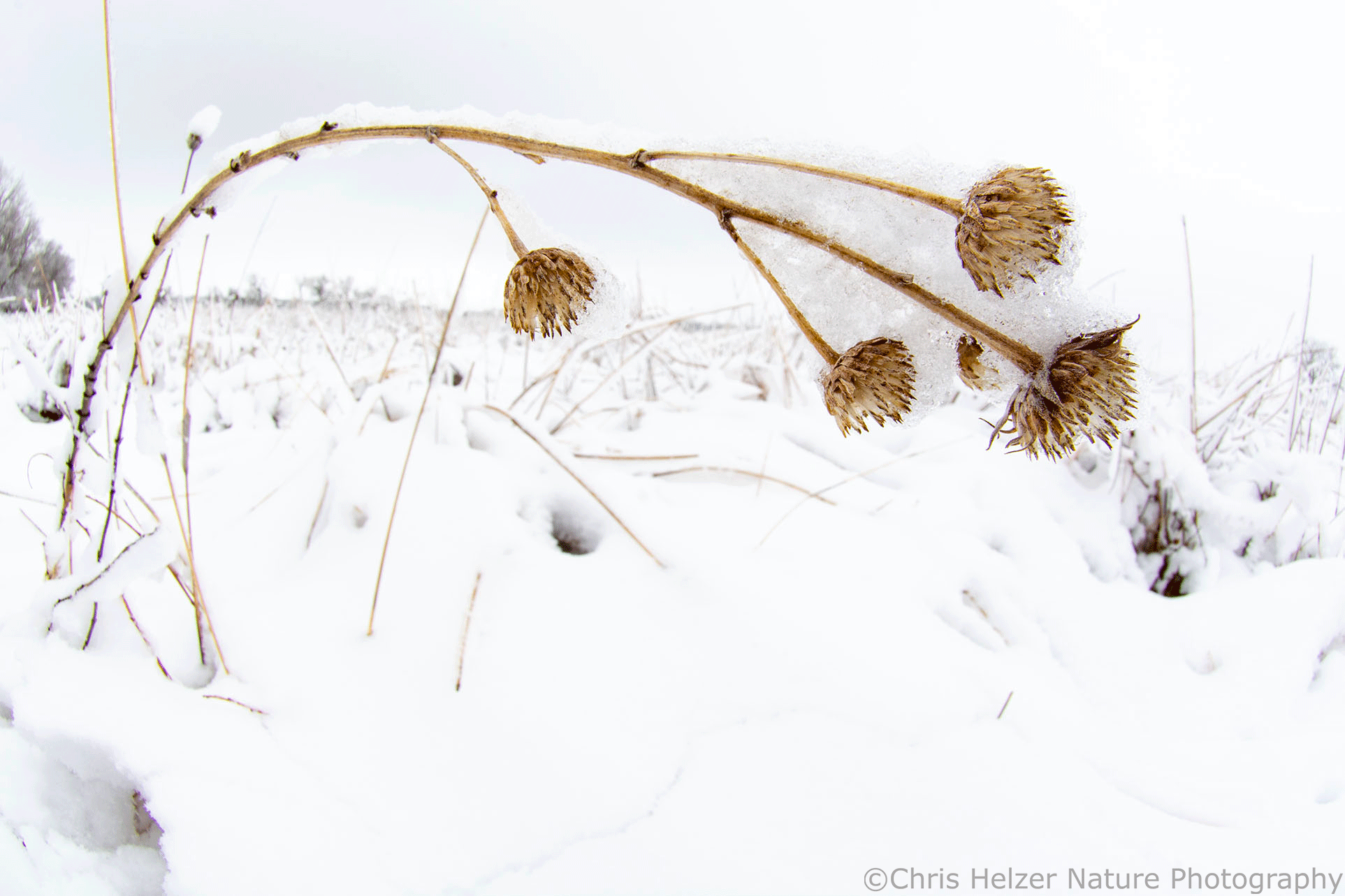
Maximilian sunflower in restored prairie near the Platte River. Nikon 10.5mm fisheye lens. ISO 320, f/18,1/200 sec.
I got home and grabbed an early lunch. As I was eating, the sky outside started to brighten a little, so I grabbed ALL my camera gear, and drove across town to Lincoln Creek Prairie and wandered around there. The brighter sky didn’t last long, but I managed to get a few shots and had a pleasant walkabout, regardless of photo results.
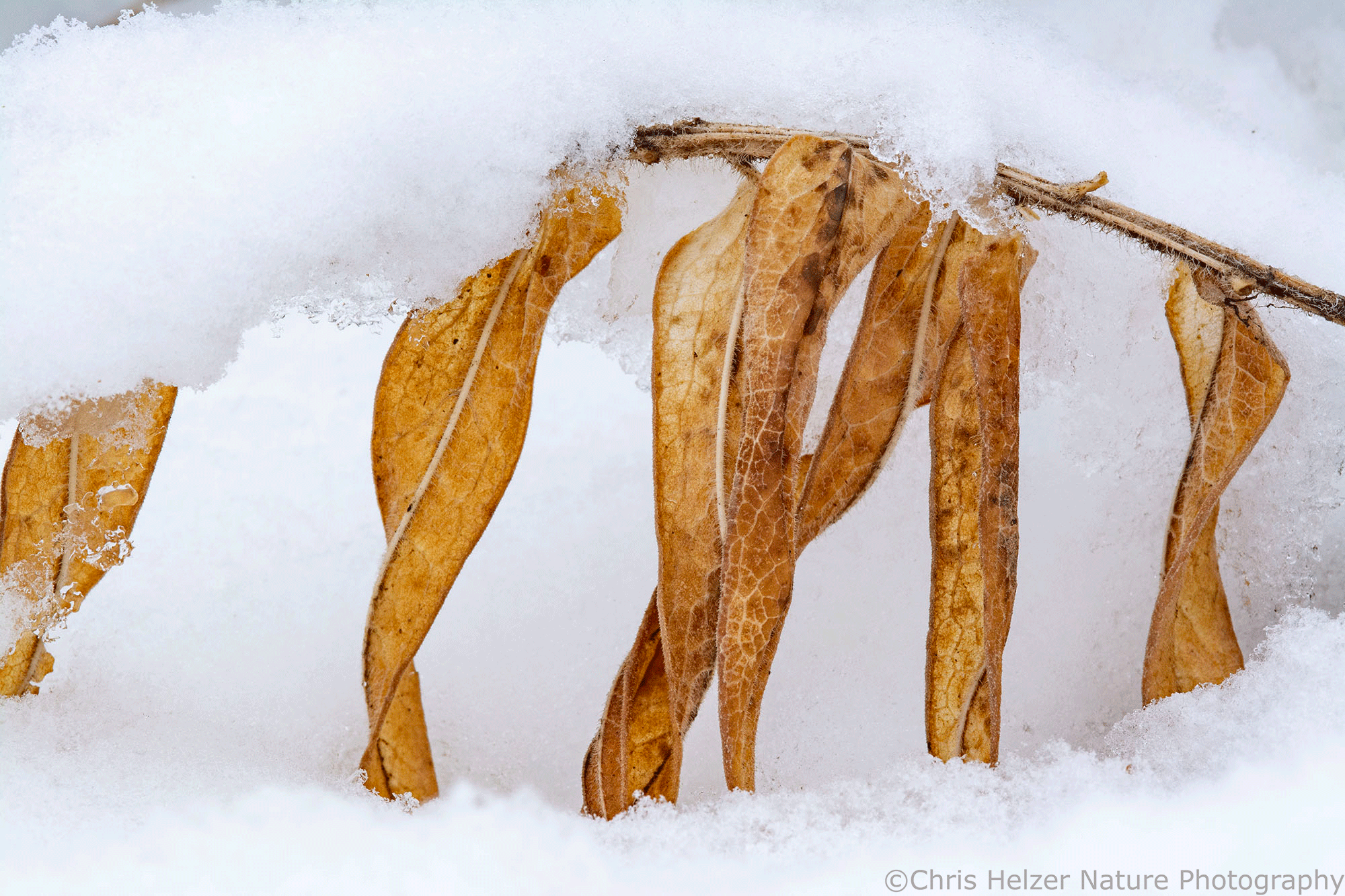
Butterfly milkweed leaves and snow. Lincoln Creek Prairie. Nikon 105mm macro lens. ISO 250, f/16,1/640 sec.
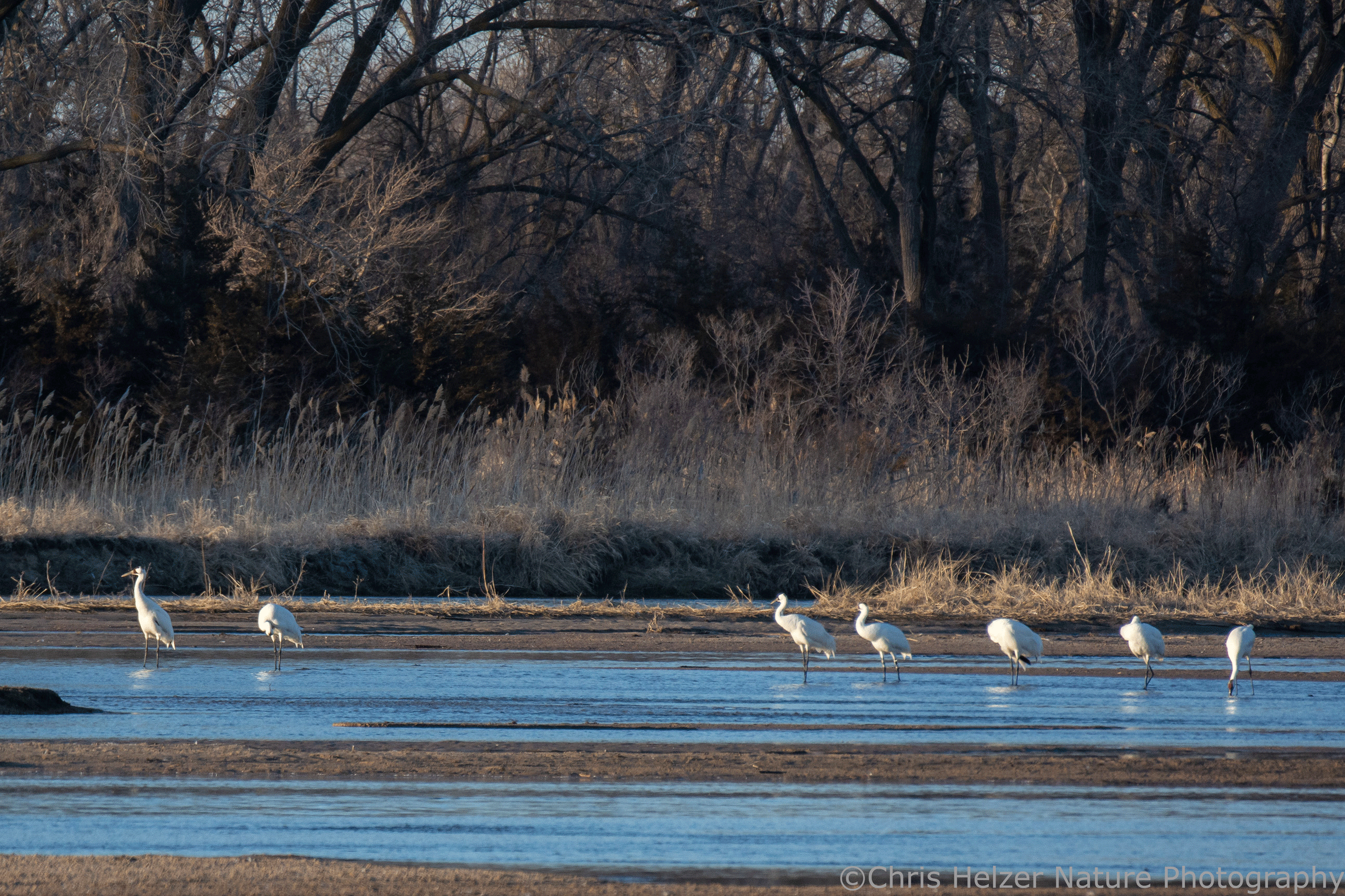
Tuesday night, I had the chance to take some supporters of The Nature Conservancy into a viewing blind to watch sandhill cranes come in to roost on the Platte River. We’re very fortunate to have a front row seat to the annual migration of sandhill cranes and their staging along the Central Platte River. Nearly 1,000,000 of them spend a good portion of March in the Platte Valley each year. It was a beautiful night, made even more spectacular by the seven whooping cranes waiting for us when we arrived at the blind. They were too far away for terrific photos, but it was really nice to see them!
Seven whooping cranes across the river from our viewing blind Tuesday night. Tamron 100-400mm lens @400mm. ISO 500, f/6.3,1/1000 sec.
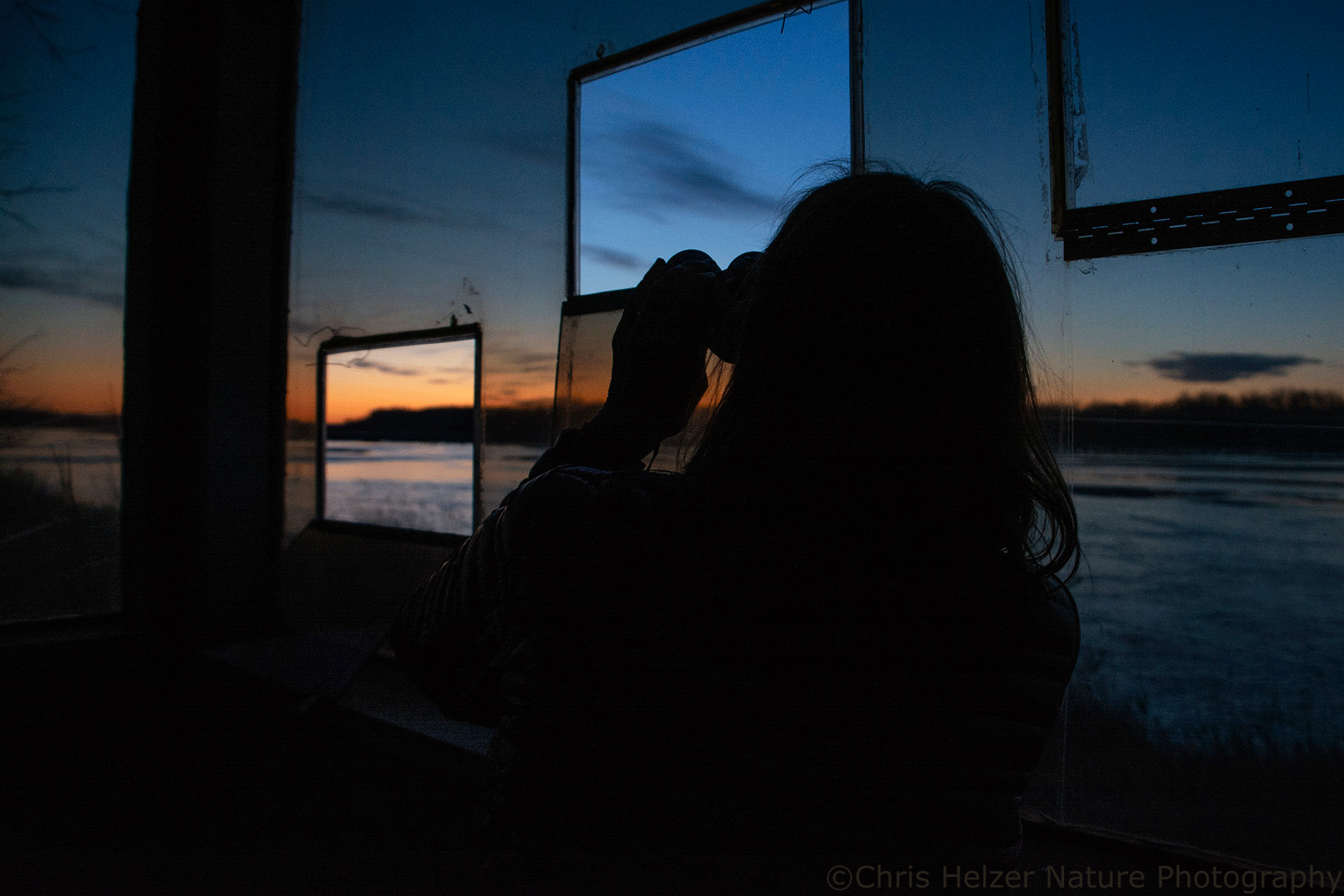
As the sun set, sandhill cranes started pouring in upstream of us, dropping out of the sky against a nice orange glow near the horizon. I didn’t have my tripod with me (limited space in the blind) and I had other responsibilities (tour guide) but I did manage to squeeze off a few photos of the cranes and crane viewers.
Sandhill cranes dropping into the river. Tamron 100-400mm lens @100mm. ISO 800, f/4.5,1/1250 sec.Flyover of sandhill cranes. Tamron 100-400mm lens @400mm. ISO 800, f/6.3,1/800 sec.More sandhills falling out of the sky. Tamron 100-400mm lens @270mm. ISO 1250, f/6,1/800 sec.And more. Tamron 100-400mm lens @400mm. ISO 1250, f/6.3,1/800 sec.One of our guests enjoying the view. Tokina 11-20mm lens. ISO 500, f/4, 1/60 sec.One of many groups of sandhill cranes arriving at the roost as the light faded. Tokina 11-20mm lens. ISO 500, f/9, 1/200 sec.
I’m hoping to build on this week’s momentum and find some more time for photography in the coming weeks. I’ve been seeing a few more insects moving around, early (non-native) flowers are starting to bloom in our garden, and my in-laws spotted a garter snake the other day. Spring is coming!
Yes, I’ve written and illustrated an entire blog post about dead insects. It’s a little morbid, but also fascinating, and often beautiful. Plus, it’s my blog and I can write about whatever I want. You’re not obligated to read it, though I would if I were you – there are some intriguing stories included.
Photographing insects is a lot easier when they’re not moving. It’s one reason I love early summer mornings when the dew is heavy and the small creatures are held in stasis by cool temperatures and a covering of sparking water droplets. There is another situation, of course, when insects are holding still and are easy to photograph.
It’s when they’re dead.
I don’t know why this poor deceased hover fly was hanging from this flower with its head at an uncomfortable angle. I didn’t realize it was dead until I started photographing it.Similar to the above photo, I just came across this fly sitting stone dead on this flower. Both of these flies were on beggarticks (Bidens sp.) flowers, but I’m not aware of any reason to believe that’s not just a coincidence.
It’s not that I photograph dead insects and try to pass them off as living. Even among recently-deceased creatures, there are tell-tale signs (curled up legs or antennae, for example) that reveal the truth. There are really three reasons I will stop and photograph them: 1) there’s an aesthetic beauty that strikes me; 2) there is a mystery behind the death; 3) there’s a good story involved.
(As always, these photos will look better if you click on them individually to see a bigger version. If you’re reading this in your email, you’ll need to click on the title at the top to open it online and allow you to click images.)
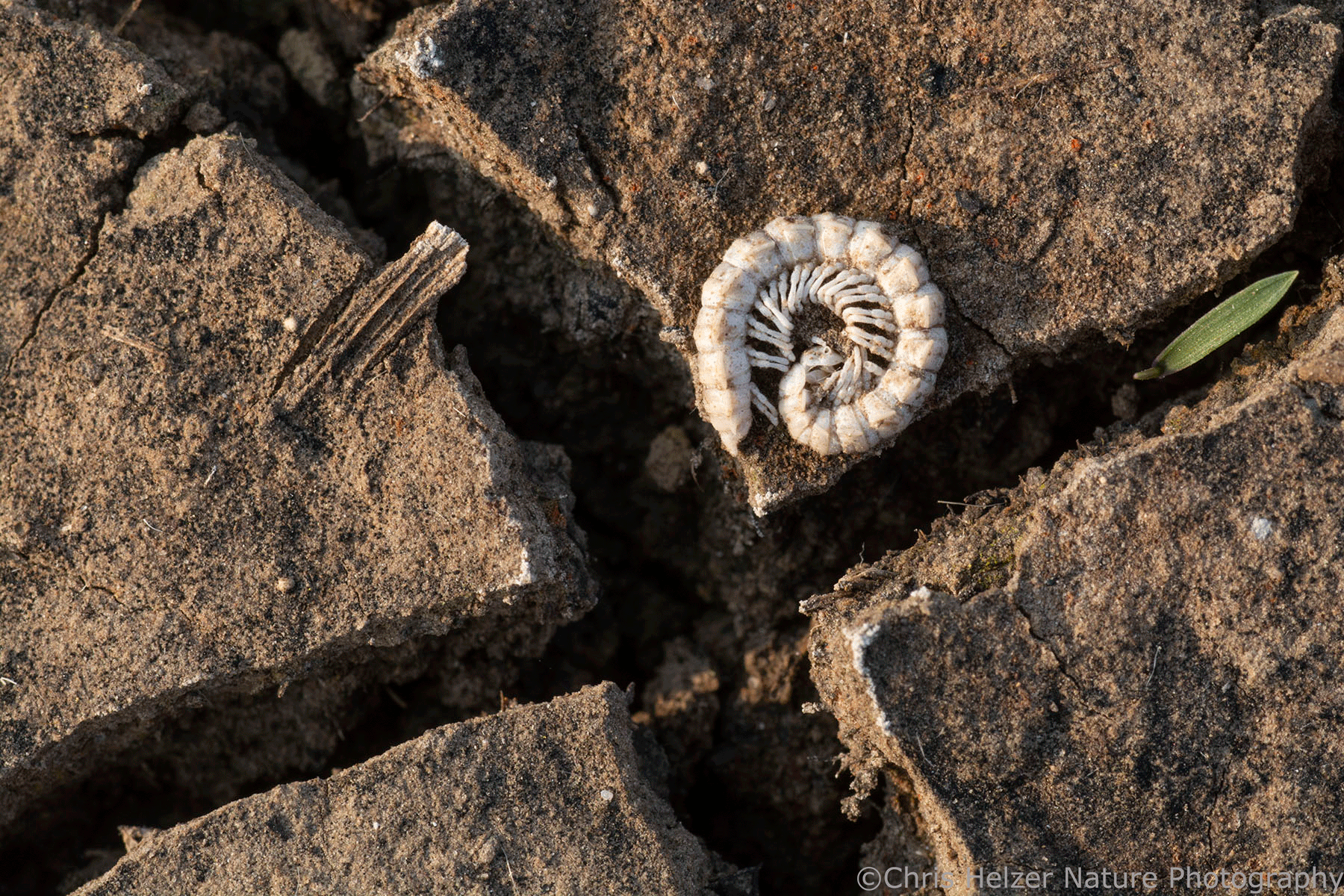
The following two photos are examples of the aesthetic beauty factor, but with a little mystery thrown in. I found a bunch of dead millipedes along the edge of the pond at our family prairie, for example. They were faded enough that they’d clearly been dead for a while, but I couldn’t tell why. Had they drowned and then been stranded as the water receded? I don’t know, but there were a lot of them and I found a curled one that was pleasingly-placed against a backdrop of cracked, drying mud.
A dead millipede at our family prairie.
In the same stretch of drying shoreline, I also found a mostly intact dragonfly corpse. Again, it wasn’t clear how it had died, but I liked the almost monochromatic scene, so I stopped to photograph it. In neither case did I have to worry about the subject trying to fly, hop, or skitter away.
A dead dragonfly in the same drying mud as the millipede above.
Sticking with the ‘mystery’ category, I photographed the pill bug (aka sow bug, roly-poly, etc.) back in 2017 after finding a whole bunch of them scattered across a prairie we’d recently burned. I wrote a post at the time, in which I pondered the possibilities for what I was seeing. I still don’t have a good solution to the mystery, but it’s fun to think about. Also, the bleached white skeleton of a pill bug has a certain aesthetic charm to it.
This was one of thousands of pill bugs found in the late winter on prairie we’d burned the previous November. I don’t know whether the fire killed it or if the fire just revealed its already-dead skeleton.
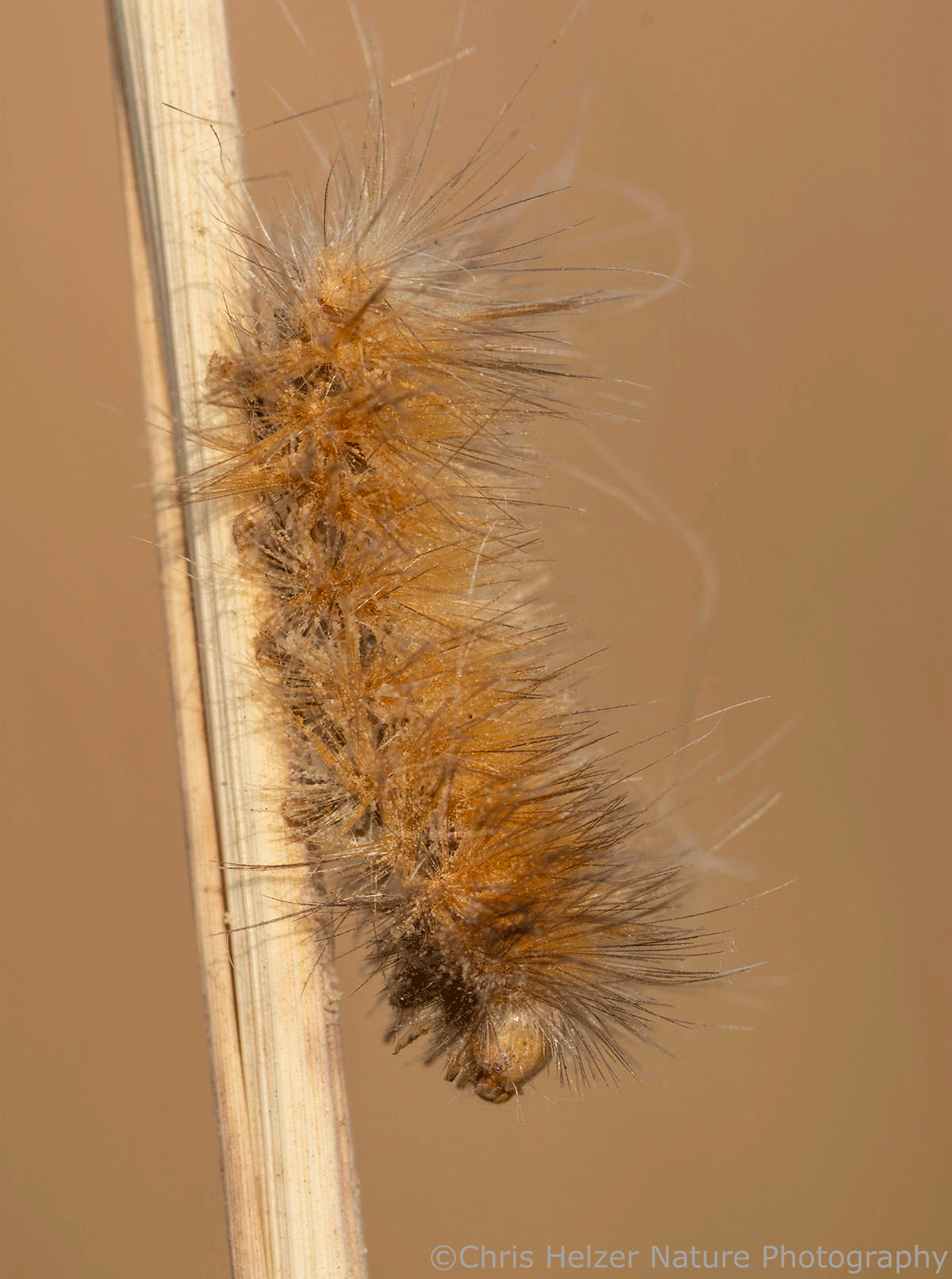
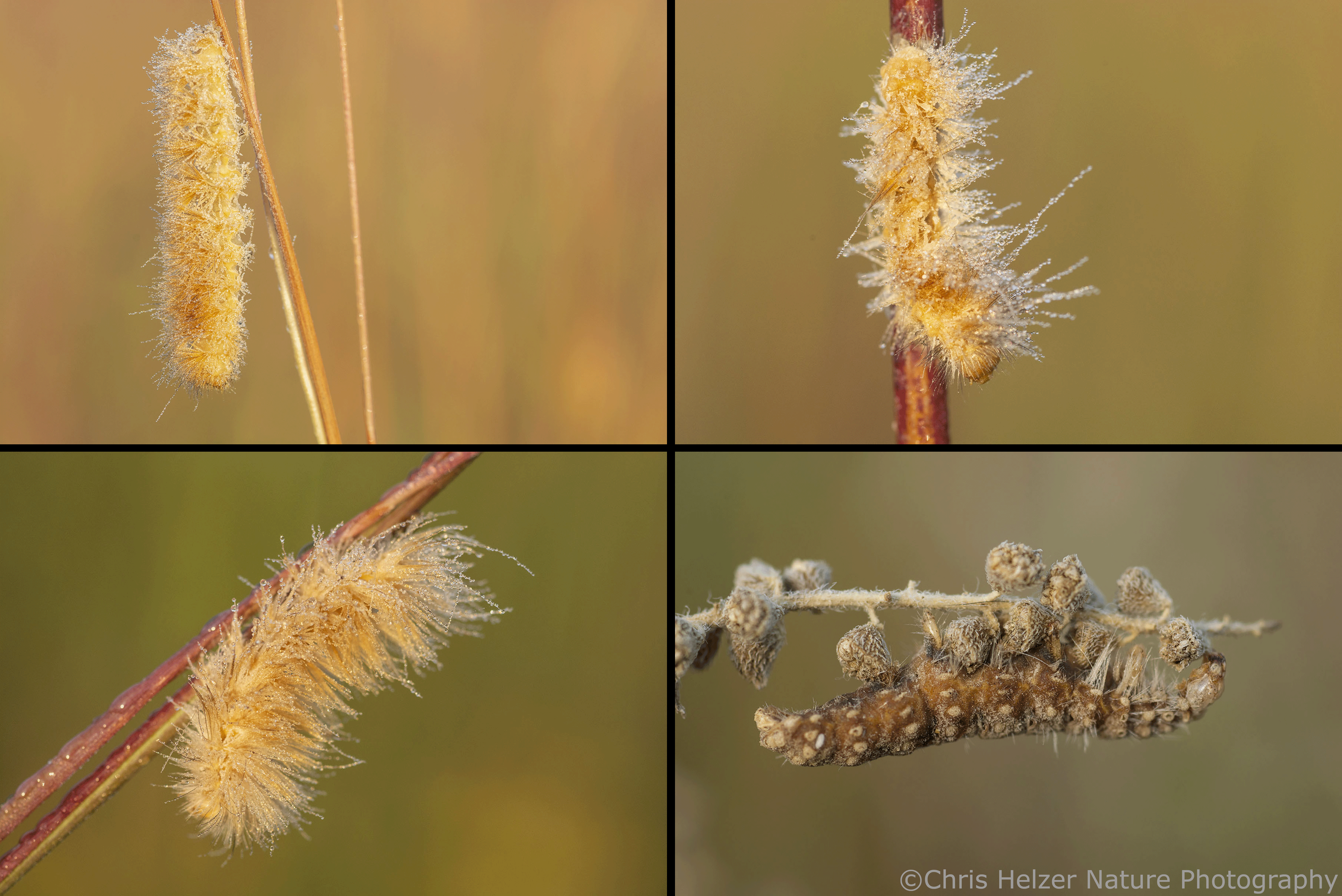
One of the most intriguing dead insect findings I’ve had was at our family prairie back in September 2020 when I happened upon hundreds of Virginian tiger moth caterpillars (Spilosoma virginica). I saw a bunch feeding on plants one week, and then when I returned a week later, many of them had climbed high into the canopy of the prairie and died. I hypothesized that it could have been caused by a fungus or parasitoid, but didn’t – and still don’t – have a solid explanation.
This is a dead Virginian tiger moth caterpillar near the top of a big bluestem plant.Here’s another one that had been dead long enough to have lost most of its hairs. Though sad, there’s also a poignant (if that’s the right word) quality to the image.Here are just a few examples of the many other caterpillars I found dead during the same weekend in September, 2020.
Dead insects aren’t always a mystery. Sometimes, I feel pretty confident about the reasons for their demise. That’s the case with all the remaining dead bug photos I’m sharing today. The first is a fly I found floating dead in the water trapped by the leaves of a cup plant (Silphium perfoliatum). I’m reasonably sure the fly drowned in the water. I’ve not found any source of information that provides any reason the plant might benefit from drowning small creatures, but it does seem to be a periodic side effect.
A drowned (probably?) fly in water trapped by cup plant leaves. Lincoln Creek Prairie, Aurora, Nebraska.
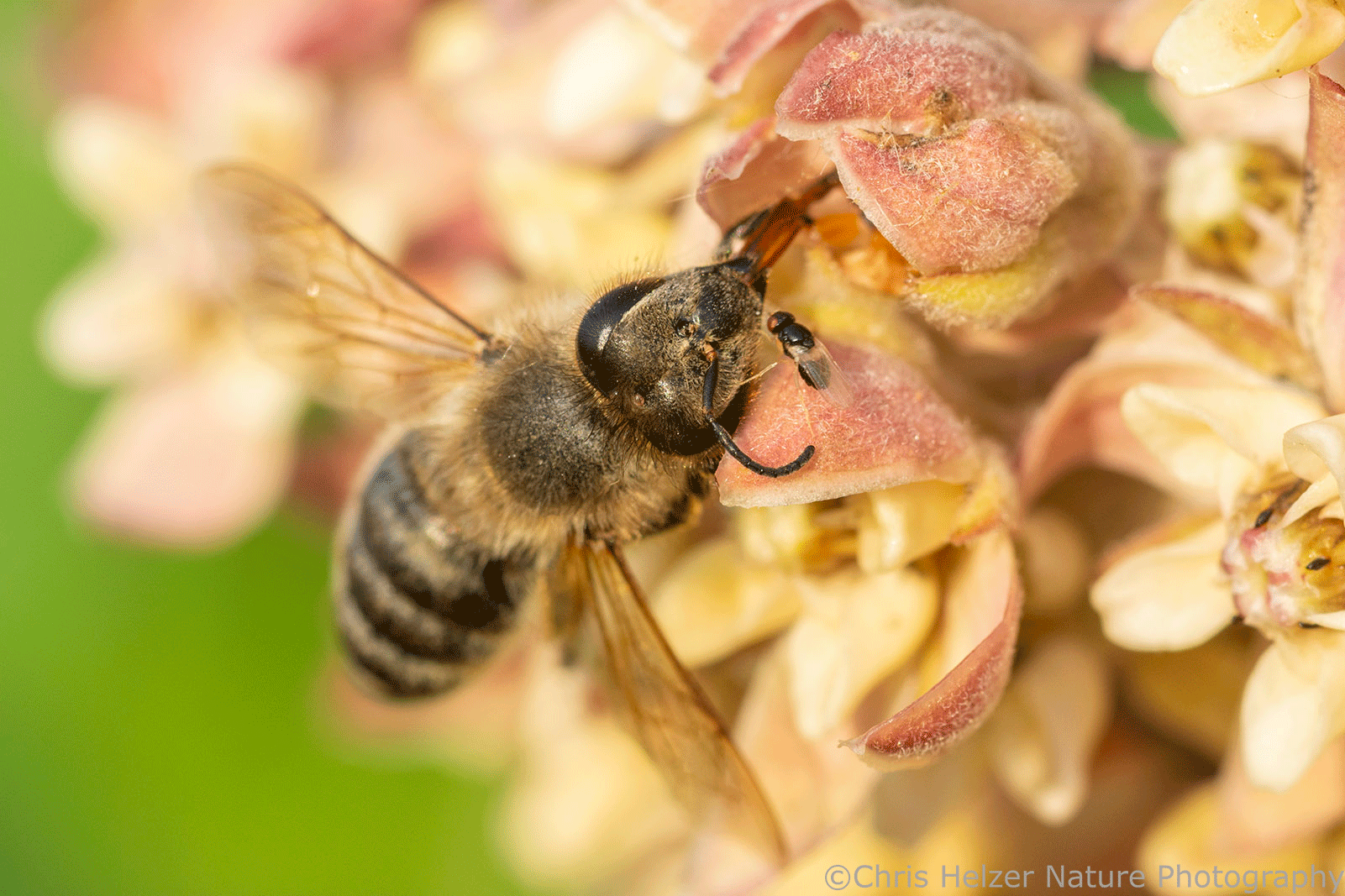
I’ve written previously about the seemingly illogical strings of events that have to happen for milkweed plants to be pollinated. As part of that process, insects accidentally slip a leg into milkweed flowers and then have to extract themselves again. Sometimes, that doesn’t work out well and someone gets stuck and ends up dying awkwardly right there. The photo below shows a bee that died in just that way.
A dead bee stuck in a milkweed flower and a tiny fly that is apparently investigating the crime scene.
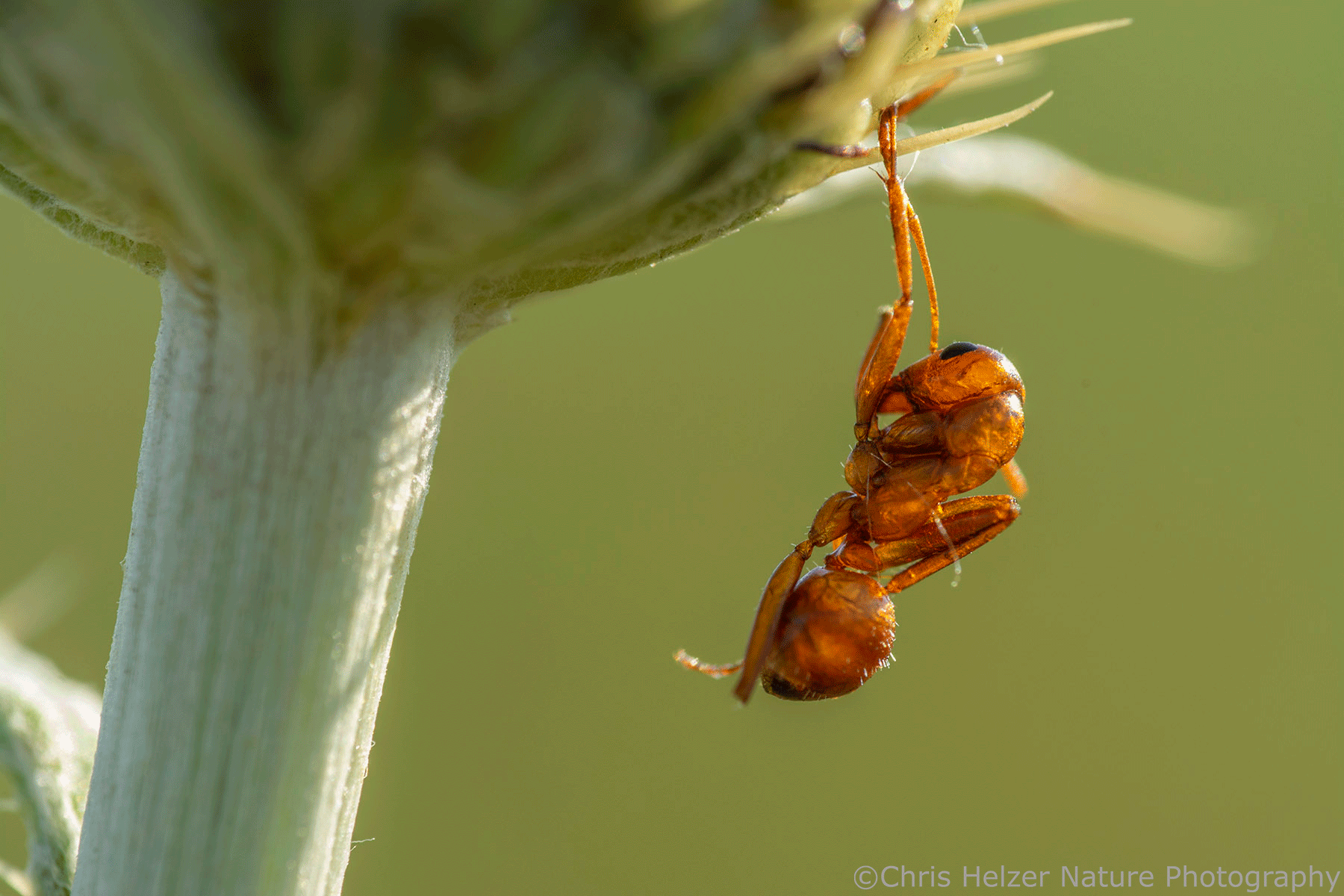
Speaking of plants killing insects in (probably) accidental ways, there are two other examples of that, from which I have gotten many opportunities to photograph insects holding permanently still. The first is a fascinating phenomenon, in which insects get often stuck to the bracts of thistle flowers and die. Those bracts become very sticky before and during the time the flowers bloom, and there are multiple hypotheses about why this happens.
Does it serve a purpose to the plant when ants (largely) and other insects become trapped on those bracts? Maybe. The research I’m aware of is inconclusive. Also, not all invertebrates are vulnerable. Some (stink bugs, for example) seem to be able to walk across the bracts with no consequences.
An ant that died while stuck to the bracts of a native thistle.A few examples of the many insects I’ve seen trapped and dead on thistle bracts (usually on native thistle species in the Cirsium genus). Included here (clockwise from top left) are a fly, a wasp (I think?), a cicada, and a soldier beetle.
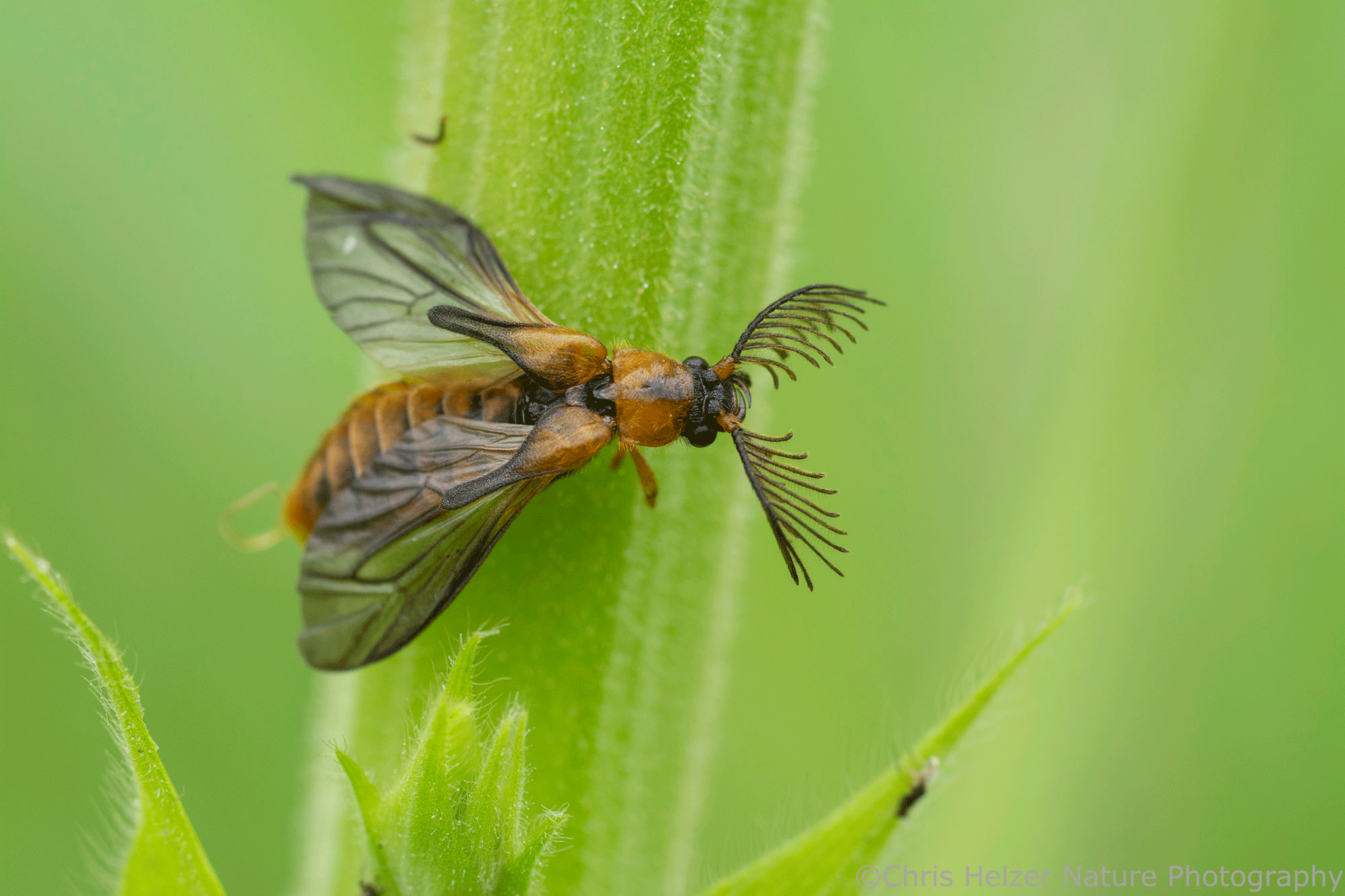
Another plant species that makes itself sticky enough to trap insects is one that I’ve not seen other people comment on. Illinois tick-trefoil (Desmodium illinoense) seems to exude a sticky substance from hairs on its stems during part of its life cycle, and those hairs then trap insects. I’ve seen this a couple times at Lincoln Creek Prairie here in Aurora but haven’t yet seen it elsewhere. I’d love to hear from anyone else who has seen this, either with this tick-trefoil species or others. I’d also welcome any hypotheses about why this might be something useful to the plant.
I don’t even know what this beautiful creature is, let alone why the tick-trefoil plant that trapped it might benefit from doing so. (Helpful commenters identified this as a gloworm beetle – Phencodes sp.)Here are four more examples of trapped insects on tick-trefoil, including a moth and a firefly, which are pretty big (but also have a lot of wing surface area to get stuck to the plant).
I’ll end with a subject that won’t surprise long-term readers of this blog, which is insects killed by crab spiders – one of my very favorite invertebrates. Often, the spider holding (and feeding on) an insect is well-enough camouflaged that I don’t immediately see it. I just see an insect, often in an odd position, on or near a flower, and then spot the spider when I get closer. Crab spiders are very good at what they do.
I didn’t see the crab spider holding this dead fly until I got really close. There was clearly something up, though, based on the way the fly was positioned on the edge of the flower.Four more examples of dead insects in the grasp of crab spiders including (clockwise from top left) an ant, a cicada, a sulphur butterfly, and a fly.
I recognize that a whole blog post about dead bugs is a little odd. I hope, though, that if you made it this far, you feel rewarded by either the beauty of the images or the intrigue of the stories – or both. There’s a lot to be learned from observation, and that includes observation of dead creatures. Plus, in case you missed it earlier, deceased insects are easy to photograph.
…………
This post is dedicated to the memories of all the insects that died to make the photographs and stories I’ve shared. Their lives were short, but that’s kind of the thing with insects anyway. Some obviously died at the hands (or whatever) of others (like crab spiders and whatever killed those caterpillars). Others seemed to die accidentally. Even those accidental deaths, though, weren’t wasted within the ecosystem. Something eventually consumed all the dead insects pictured here, even if it was something microscopic like bacteria.














 The Prairie Ecologist