Pardon the bulletin board nature of this post. I did include a couple prairie photos from yesterday to compensate you for suffering through a couple announcements that will be irrelevant to most of you. If you’re not looking for either a job or a grant (and you don’t know anyone else who might be) you can just scroll down to the photos. However, I’d sure appreciate you forwarding this to anyone who might be interested in either the job(s) or grant.
The Job:
I mentioned this job in an earlier post, but we’ve just extended the deadline to apply for our Science and Stewardship Technician position at The Nature Conservancy’s Platte River Prairies. It’s a seven-month position, but includes housing and full benefits (including health insurance). The technician will be housed at the Platte River Prairies south of Wood River, Nebraska, but will spend much of their time at the Niobrara Valley Preserve as well. The job runs from April 24 – December 1, 2023.
The Science and Stewarsdship technician will assist me with several field research projects this year. They will also work on grassland stewardship and restoration projects, including invasive species control, seed harvest, prescribed fire (weather permitting), and basic preserve infrastructure work. Read the full job description and learn how to apply by going to nature.org/careers. Click on ‘current job opportunities’ and then search for ‘Nebraska’ to find this and other open positions. The deadline for application is January 27, 2023.
While you’re there, check out the other jobs available at TNC Nebraska, including a seasonal prescribed fire technician position at the Niobrara Valley Preserve, an agricultural projects lead, and a finance director position. We’ve got a lot going on right now!
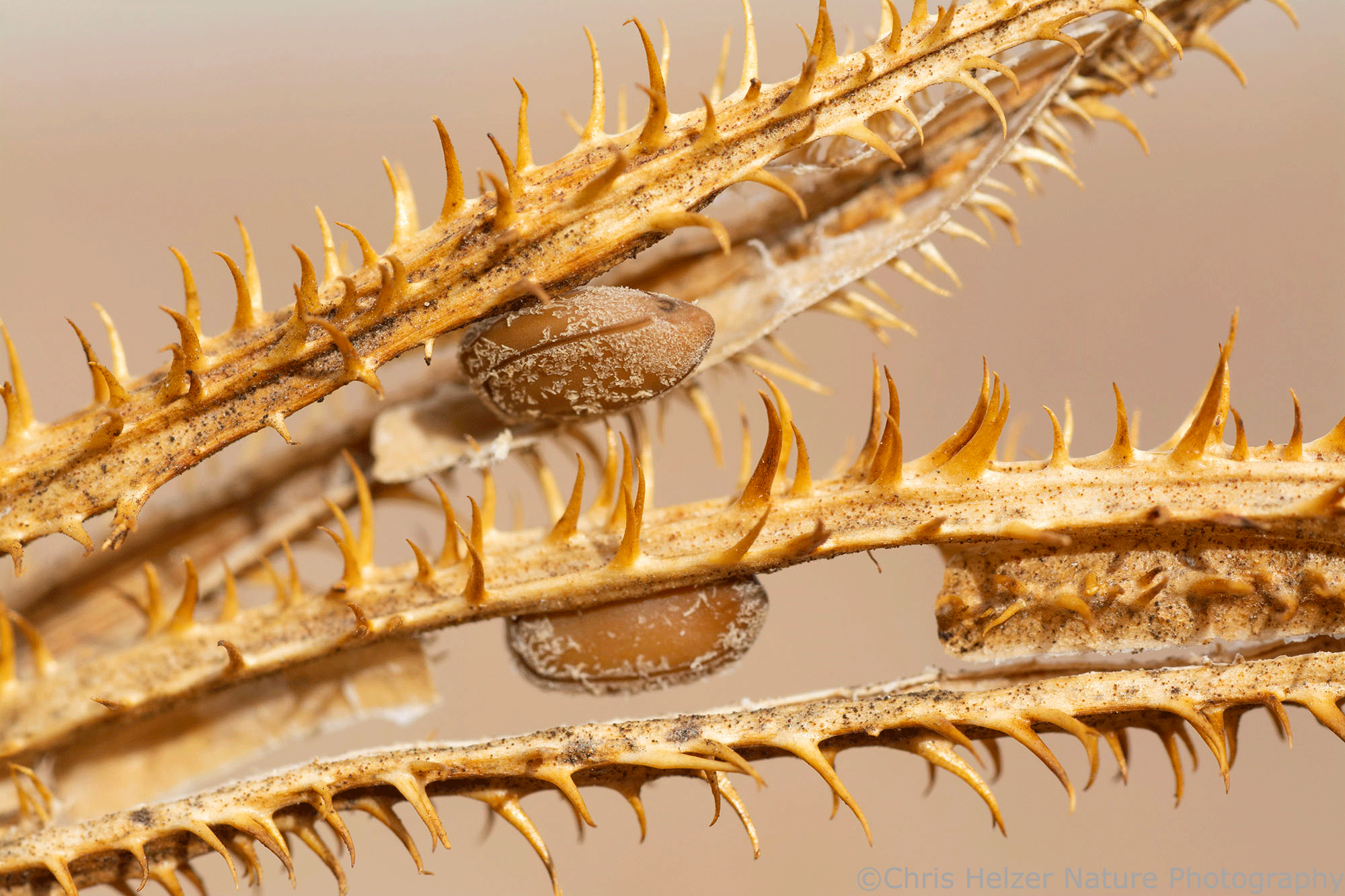
A couple sensitive briar (Mimosa quadrivalvus) seeds clinging to the open, dried, spiky seed pods. Or maybe the pods are clinging to the seeds? That’s probably more accurate.
.
The Grant:
The second piece of news is that we’re still accepting proposals for our J.E. Weaver grant program. The program awards $1,500 grants to graduate students working on research related to conservation needs in the Great Plains of North America. It’s an easy application to fill out and money will be awarded in early April of this year. Applications are due March 3, 2023. Information can be found here.
Prairie Stuff:
I took a long walk yesterday at Lincoln Creek Prairie, here in Aurora. The high thin clouds overhead created beautiful diffused light, making photography really enjoyable. I spent most of my time admiring seed heads in the prairie and ice bubbles along the creek. Today’s post includes three of the seed head photos I came home with.
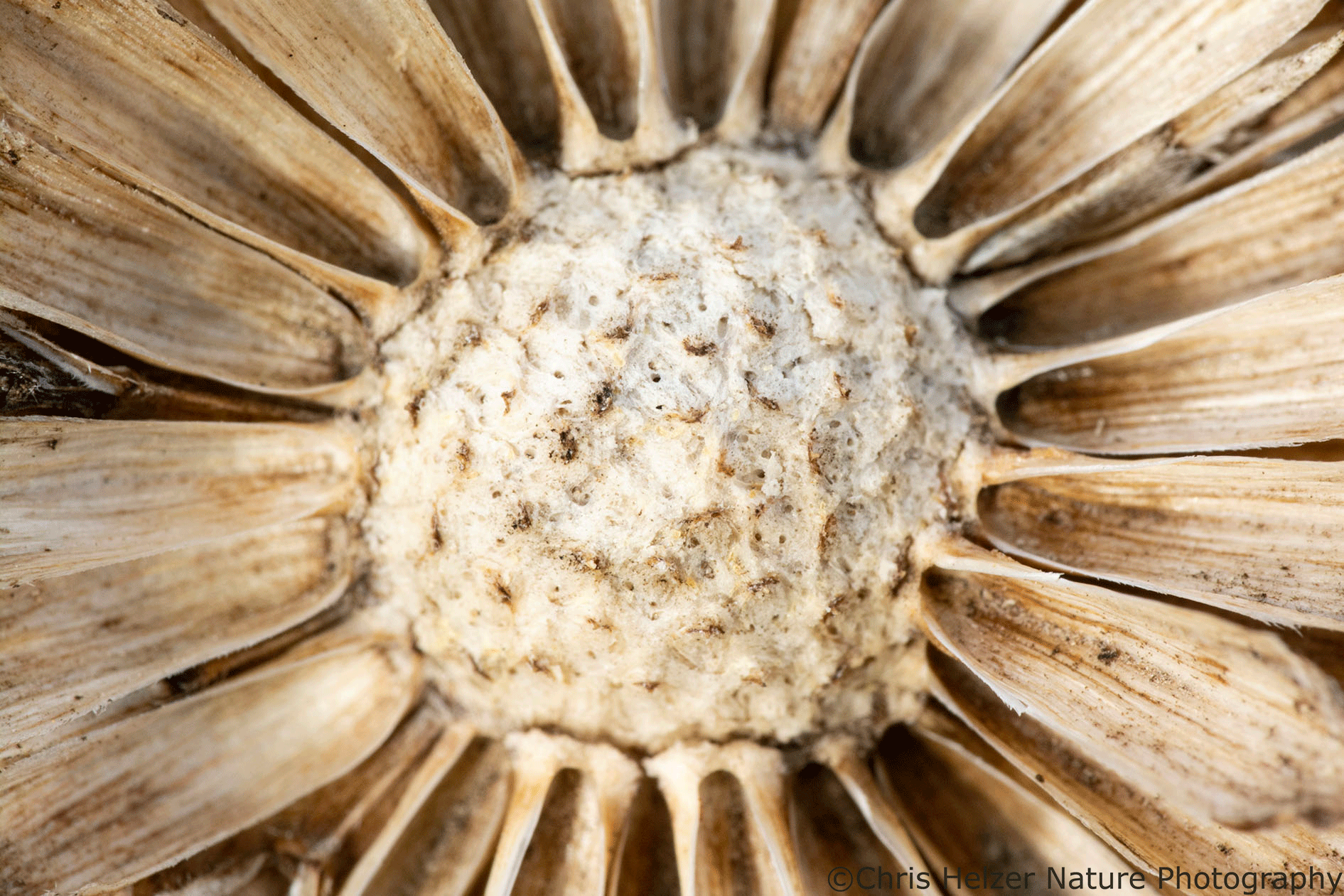
Stiff sunflower (Helianthus pauciflorus) seed head showing, I think, tiny exit holes where insects emerged last fall.Entire-leaf rosinweed seed head (Silphium integrifolium). Silphium seeds are some of my favorite. They are large, flat and shaped like fingernails. These reminded me a couple windmill heads.
I can’t keep living this life anymore. Therefore, I am officially announcing to the world that I no longer care about otters. A dozen river otters could be dancing the can-can outside my front window and I wouldn’t even get out of my chair to open the curtain. I am perfectly at ease with the (apparent) fact that I will live out my remaining life without seeing a river otter on the Platte River, despite spending my entire professional career working in an area known to have the highest concentration of otters in the state of Nebraska.
I fully acknowledge that I will never photograph an otter, along the Platte River or anywhere else, and that doesn’t bother me a bit. It’s not going to happen. Not only do I accept that, I welcome it. After all, there’s no shortage of flowers, insects, spiders, and other charming organisms for me to photograph. I don’t need images of scruffy, long-tailed fish-gobblers in my photo collection to feel good about myself.
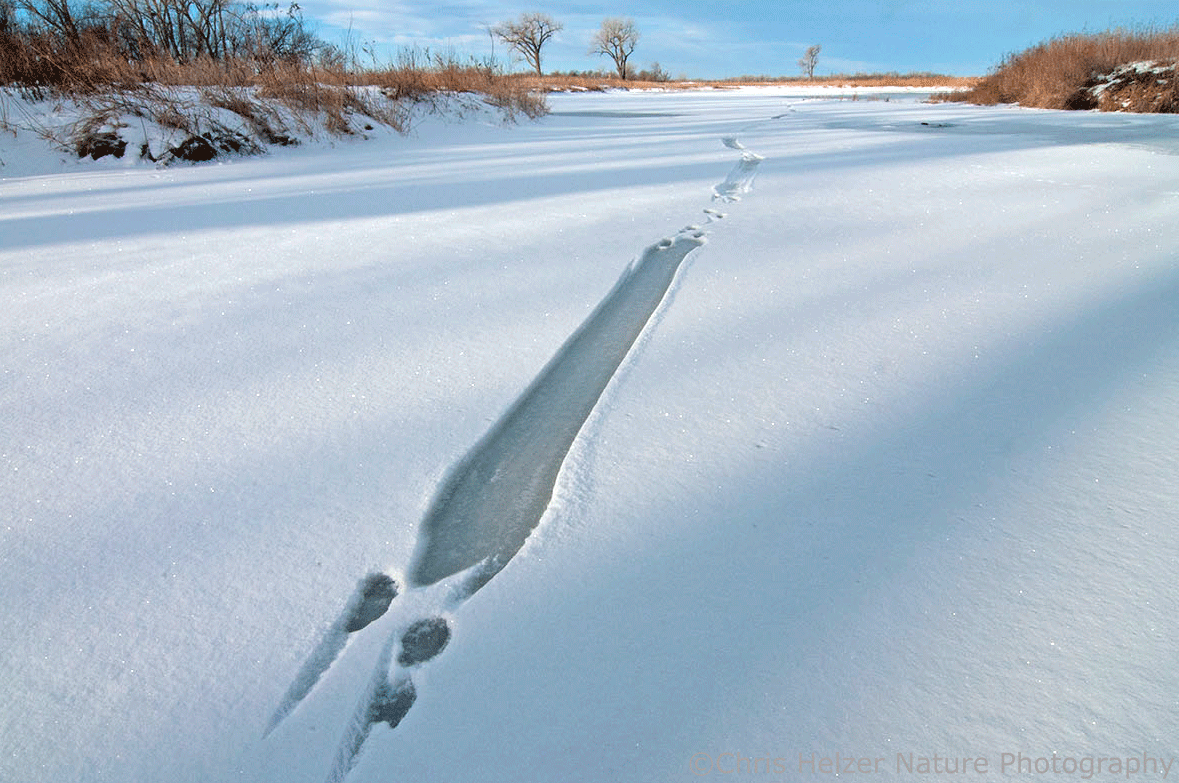
Otter tracks through the middle of the frozen wetland I visit frequently.
This official pronouncement is being made here and now because I need to get out from under the harassment I’ve been suffering since I first posted here about river otters about ten years ago. In that post, I very casually mentioned that it might be nice to see an otter sometime.
Ok, I might have called them ‘little dirtbags’, but it was all in jest. I was just a little peeved that so many other people saw otters along the Platte, even though they spent much less time there than I did. It was also somewhat irksome that, for two years, we housed a technician at our field site while he trapped and put radio transmitters on otters. He caught them on our property and nearby properties and periodically came back with videos of otters he just ran across while out doing other things. I went out with him to check traps. Did I see any otters? No. I saw him catch a beaver and a raccoon. Thrilling.
Anyway, none of it was supposed to be a big deal. It was just an odd, random, and therefore slightly humorous anecdote. Hey, guess what? I spend a tremendous amount of time where otters hang out, but I’ve never actually seen one. Hardy har har.
But you people made it a big deal. All of a sudden, I was the ‘has-never-seen-an-otter-guy’ wherever I went. When I’d meet someone, they’d introduce themselves by telling me their name and then immediately asking if I’d seen an otter yet. They’d do it with a big grin on their face like we were sharing some kind of inside joke. That’s not a joke. A joke has a set-up and a punchline. For example, I was going to tell you a joke about my experience with time travel but you didn’t like it. That’s a joke.
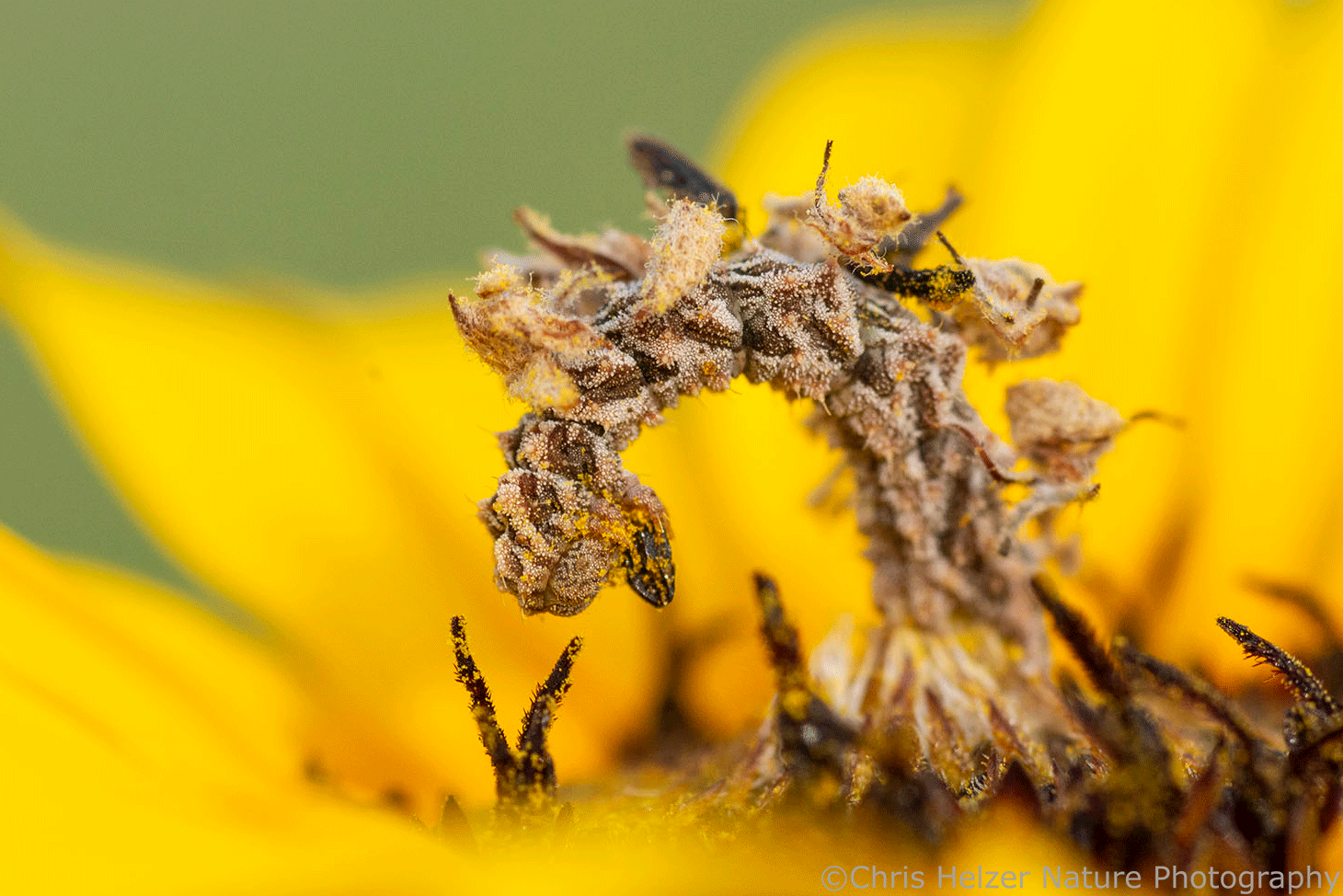
Besides, I don’t walk up to people, introduce myself, and then immediately ask, with a big smirk, if they’ve seen a camouflaged looper. Everyone knows camouflaged loopers are a thousand times more cool than river otters so mocking someone for not seeing one would be mean. After all, can river otters camouflage themselves with bits of the flowers they’re feeding on? Nope. They’re too busy chasing fish around underwater and couchsurfing in beaver lodges (rent free, by the way) as they travel up and downriver.
The noble camouflaged looper. Now there’s a creature worth photographing!
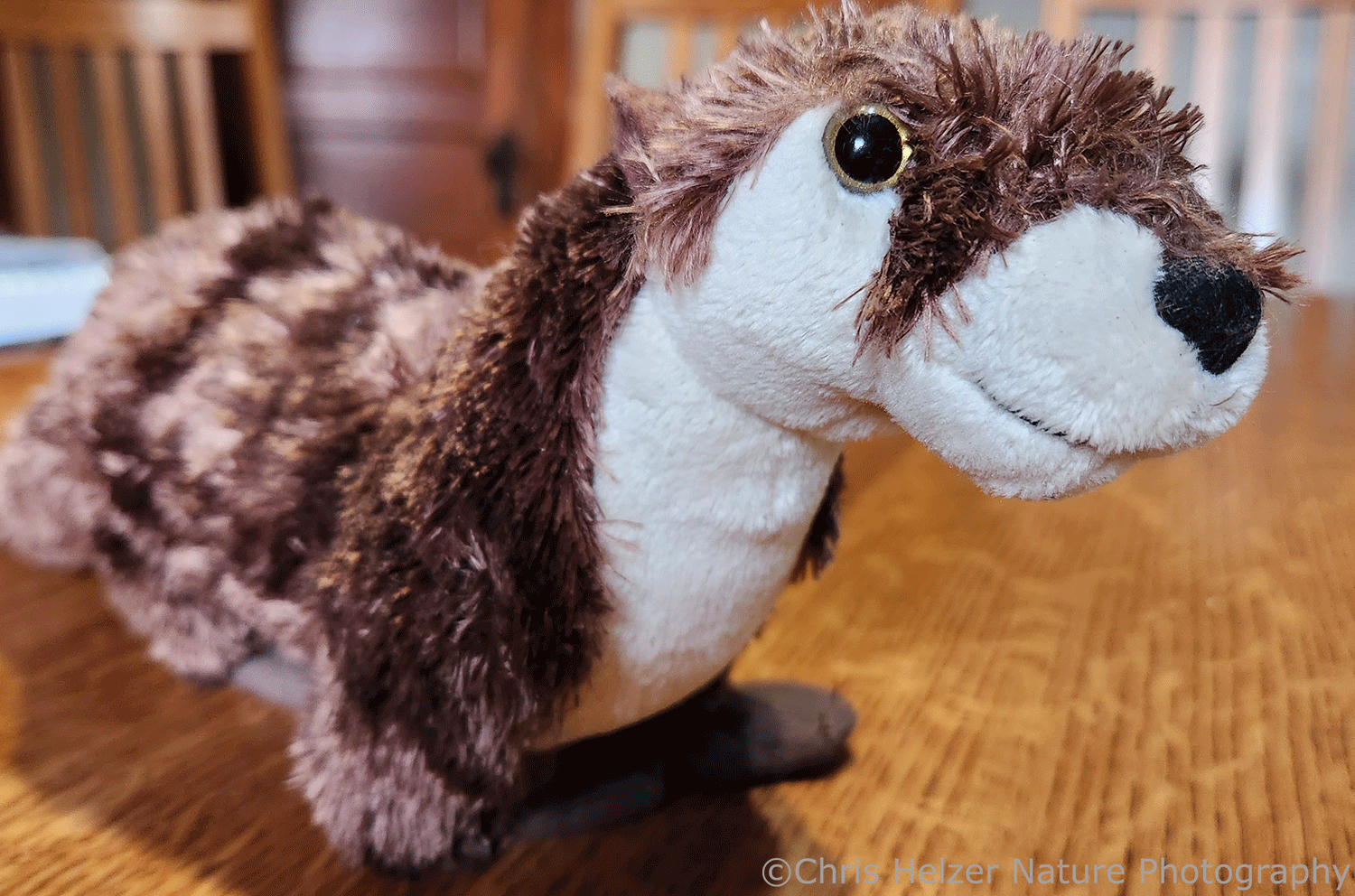
After a while, friends and family started sending me otter photos and memes. They sent me greeting cards with otters on them and gave me otter-themed presents. What am I supposed to do with a stuffed otter toy?? Sleep with it held tightly against my chest like a cuddly shield against the scary world? That’s juvenile. Besides, it starts to smell bad after a while.
I mean, what would anyone want with something like this?
And, of course, worst of all, people started telling me their stories of seeing river otters. “Oh, it was the cutest thing,” they’d say. “The otters spent about 15 minutes cavorting around right in front of us, as if they wanted to put on a show just to make us happy!” You know what would make me happy? Not hearing stories about other people seeing river otters.
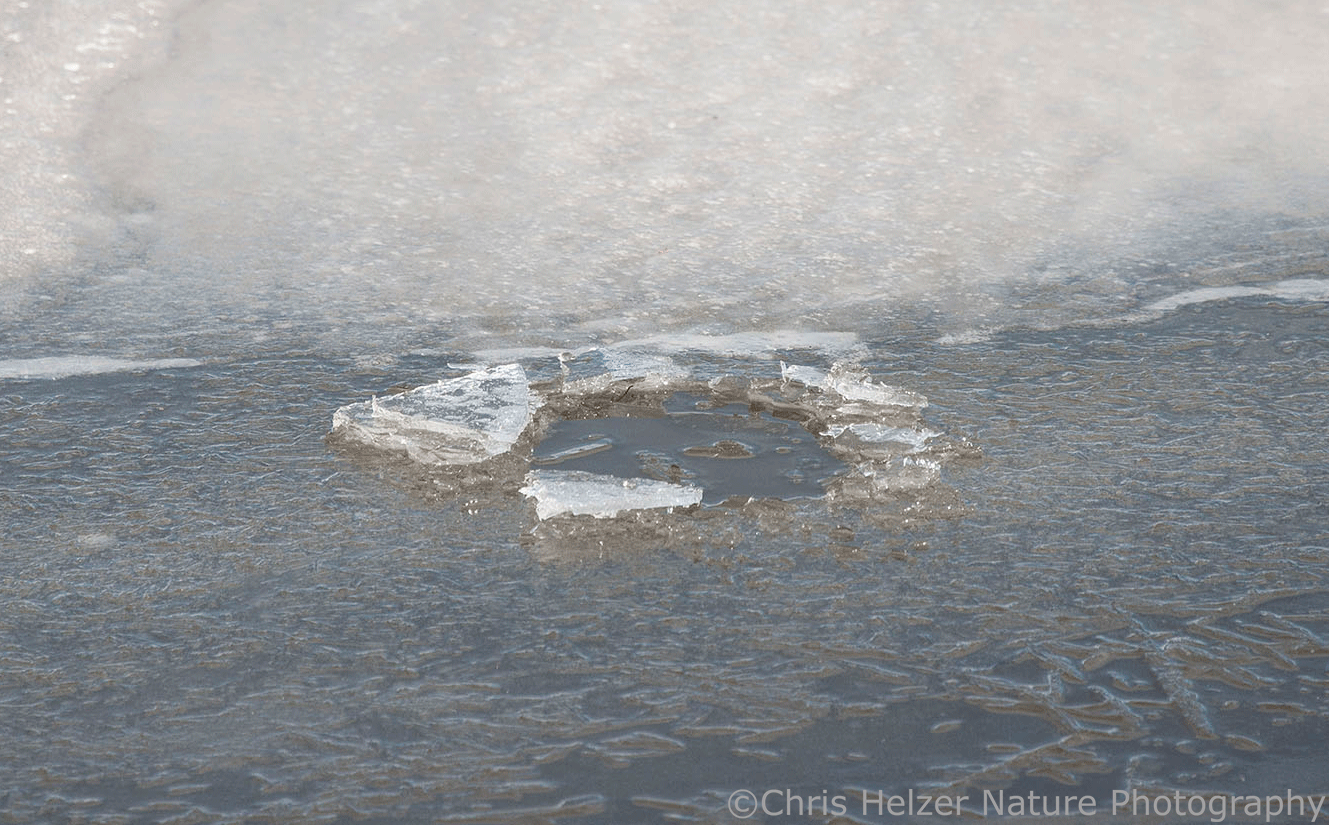
Several years after my first otter post, Kim and I actually saw an otter on a frigid winter day along the Niobrara River, though I didn’t get a photo of it before it disappeared beneath the ice. For some reason, my photo of the hole in the ice didn’t seem to get people off my back. They referred to my ‘alleged sighting’ and called it ‘sad’ and ‘just a hole in the ice’. “And anyway,” they said, “it wasn’t a river otter on the Platte, which is the whole point of our good-natured ribbing.”
Good natured ribbing…
Here’s the hole in the ice an otter had popped through just before the photo. It’s apparently not sufficient evidence and also on the wrong river. Not that I care.
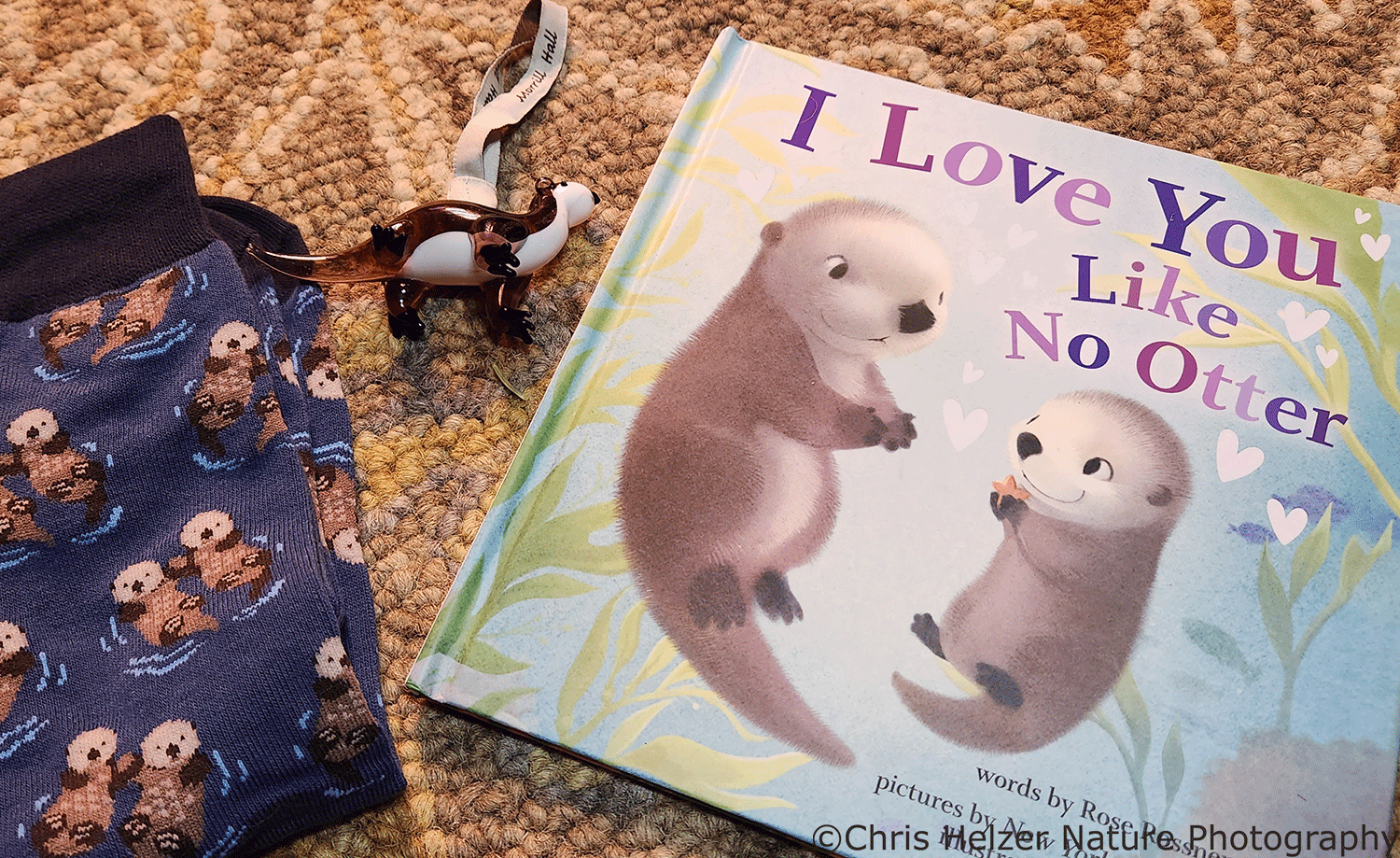
So I still haven’t seen a river otter along the Platte River. This year, for Christmas, my darling children gave me even more otter-themed gifts. It’s been TEN YEARS since that blog post. Ten years. I’ve accomplished things. I am a professional ecologist. People sometimes ask me to speak at events. I’m a known quantity in some (niche) circles. And yet, my own kids see me primarily as the guy who hasn’t seen an otter on the Platte River. As if anyone cares about that.
A selection of this year’s Christmas gifts from my children. And no, they don’t seem to care whether the otters are river otters or sea otters.
Well, I don’t care. Maybe I did once. I’ll admit there was a time in my life when otters danced in my dreams. There might have been a few occasions when I stood staring at the river from a crane viewing blind, saw a dark shape floating by, and tried to convince myself and others that a beaver or small log might have been something it wasn’t. I’m not proud of the person I was at those moments, but I am that person no more. I’m done.
And no, this isn’t some silly attempt to shift my karmic balance in the hope that otters will magically appear once I don’t care about them anymore. What a dumb and pitiful gesture that would be. I just don’t care about otters anymore. You hear that world? I DON’T CARE ABOUT OTTERS.
I’m not even going to make otter puns from now on. I will no longer look for opportunities to be amusing with words like ‘other’, ‘ought to’, or ‘utterly’ that kind of sound like ‘otter’ when used humorously in a sentence. Jokes like that are juvenile and not worth my time. Other puns, of course, are still hilarious, and I will stand by that, no matter what everyone else in my life seems to think. It’s only otter puns that are dumb.
Like otters.
See, I didn’t really mean that. That’s the kind of thing I would have said in the old days. When I was a different person. The new me doesn’t care about otters. I don’t know how much I can stress that fact.
Anyway, I don’t mean to make a thing out of this. I just wanted to casually alert everyone that I’m no longer obsessed with otters. Not that I was ever obsessed, exactly. Preoccupied, maybe? Definitely not haunted, plagued, or consumed. Otters were just something I used to think about now and then. But I don’t anymore. And I thought you should know that.
Thanks for listening.
.
By the way, some of you are going to read this and feel compelled to share your own story of seeing river otters in the comments section. Don’t. Spend your energy and time on something that matters. Instead of sharing an anecdote with me, send a nice letter to your grandmother or drop a note to your niece. They’ll appreciate it and you’ll both feel good.


 The Prairie Ecologist