The 2022 FORBY Awards – Part 3

It’s time for the final installment of the 2023 FORBY awards! If you missed them, you can click these links to catch up with Part 1 and Part 2. As a reminder, the FORBYs (Featured Organisms Rated Best of the Year) allow us to celebrate prairie species photographed during the past year. Many award winners are chosen by our esteemed judges, but others are left to you.

Remember, if you get this post via email, you can click on the title to view it on the website, which gives you a better experience and will allow you to vote on the polls. Also, you can click each image to see a better, more clear version of it.

Our first award in this final installment is for ‘Best House Construction’. The FORBY this year goes to these two cliff swallows, photographed at The Nature Conservancy’s Cherry Ranch back in June. These birds not only constructed cozy next compartments on the side of a sandstone cliff, they placed them under a ledge for extra protection from rain. Most impressively of all, of course, they built the homes from hundreds of tiny loads of wonderful-looking mud carried in their bills. I mean, look at the quality of that mud! You don’t often see mud like that just lying around.

Anyway, it was a painstaking task, but their diligent construction efforts rewarded them with terrific places to raise their families – and with a FORBY award! Congratulations. We don’t know how good they are as fathers, but no one can say these swallows aren’t great mudders!
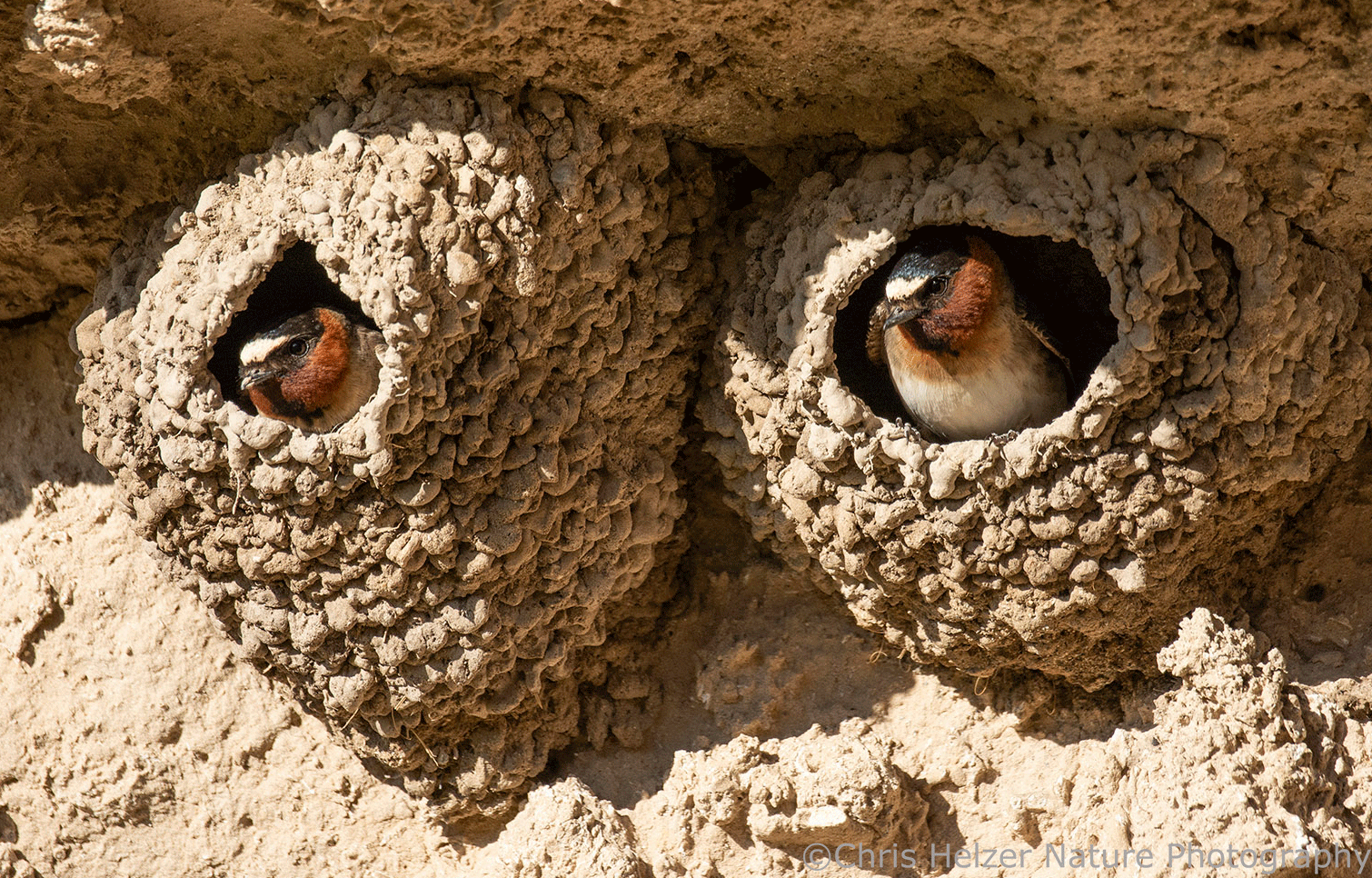
These cliff swallows were worthy recipients of the Best House Construction in 2022.

.

Next, we turn to a perennial favorite – the FORBY award for ‘Best Bee Duo that Spent the Night Clinging Upside Down to a Stem with their Mandibles’. It was a tight race this year, but in the end, our judges felt these two long-horned bees stood out in terms of style, grace, and fortitude. As everyone knows, male solitary bees don’t have nests, so they just sleep outdoors, wherever they can find a suitable spot. Many nestle up inside a flower or other semi-enclosed location. That’s a pretty smart tactic, but it doesn’t qualify them for the FORBY award for ‘Best Bee Duo that Spent the Night Clinging Upside Down to a Stem with their Mandibles’. This award is only available for male bees (or females, but they’re usually more productively occupied) that just grab a stem in their teeth and sleep upside down.
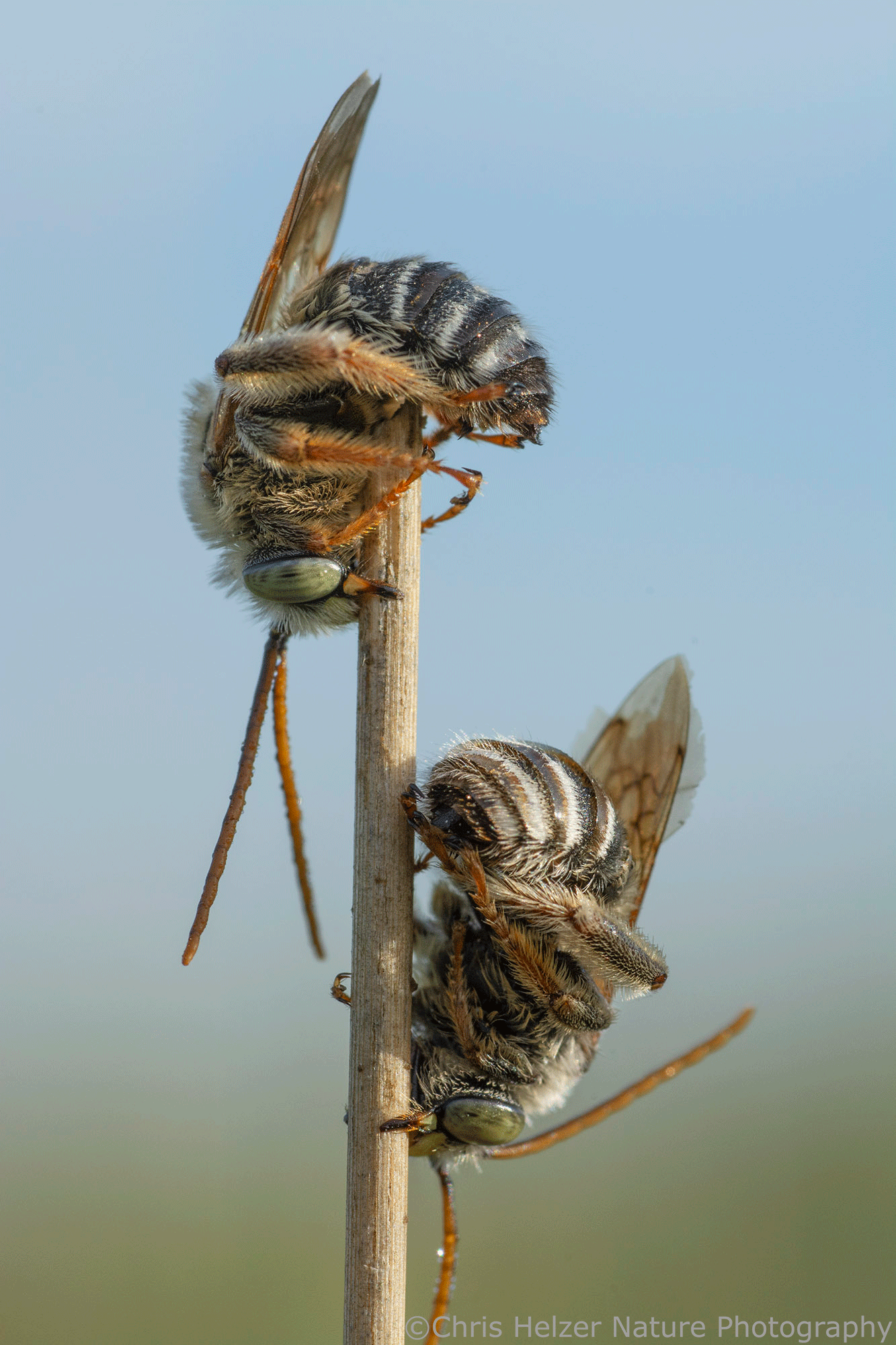
These two long-horned bees were awarded a FORBY for their gripping performance in 2023.

.

Now we move on to the FORBY for the ‘Best Low-Profile Rabbit’. We admit that this one was a little controversial this year since the cottontail that won spent the year growing up in the front yard of one of our judges. It had a favorite little depression in the grass where it would spend hours at a time resting and hiding while neighbors walked past, not seeing it, despite it being just a few feet from the sidewalk. As it grew larger, the rabbit’s ability to conceal itself in the grass was even more impressive. Though it kept itself hidden for most of the year, we’re now thrusting it into the spotlight as a FORBY winner. Congratulations, and keep a sharp eye out for that cat. You know the one.
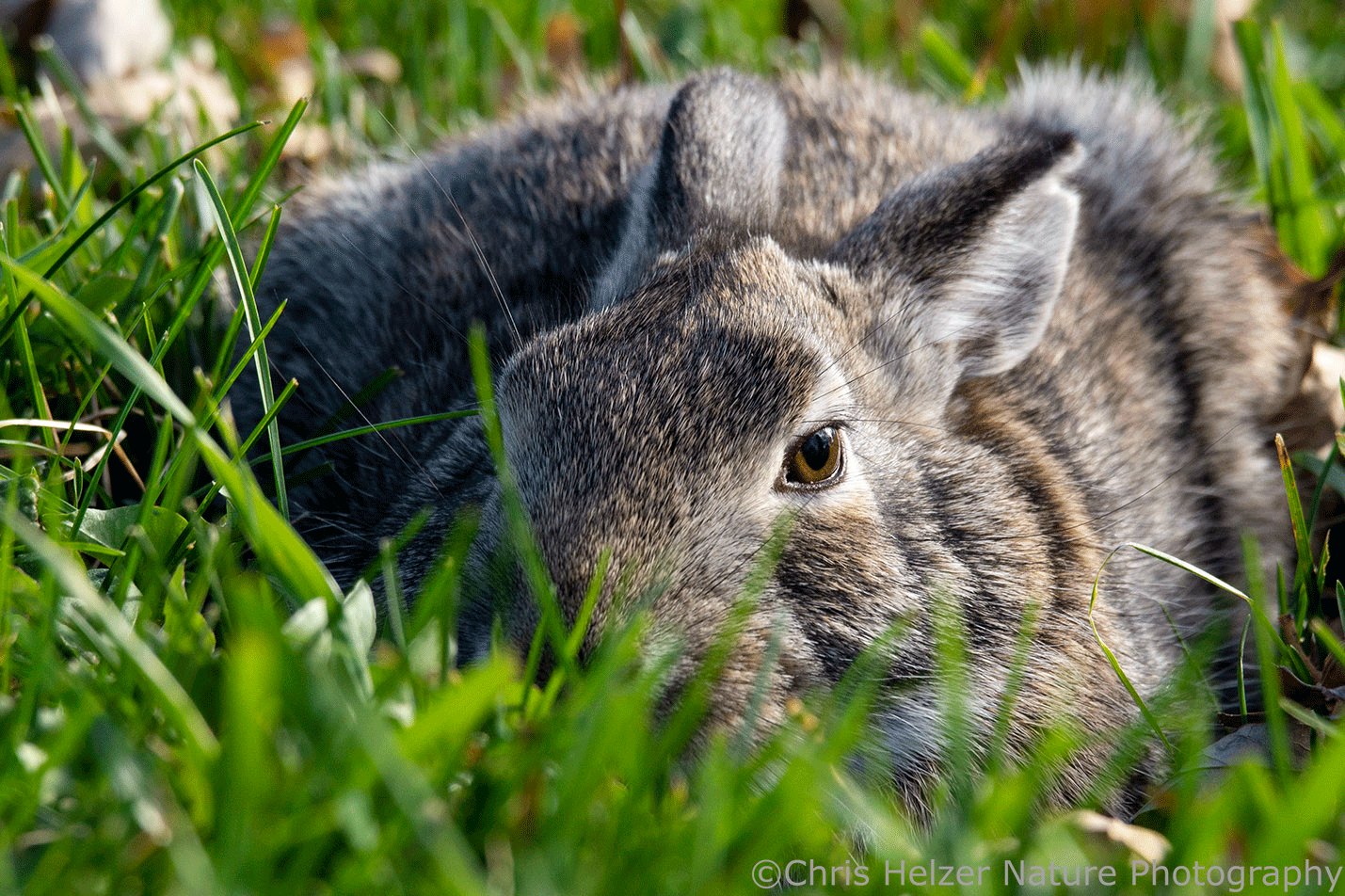
The FORBY winner for best low-profile rabbit shows off its technique.

.

The ‘Best Spider Mom’ award has historically been dominated by wolf spiders, much to the chagrin of countless other candidates. It’s really not fair, since many spiders are wonderful mothers and go above and beyond to ensure the survival of their eggs, if not their recently-hatched spiderlings. We’d like to say the pattern was broken this year, but it’s not the case. Once again, the FORBY for ‘Best Spider Mom’ goes to a wolf spider. This particular spider was spotted along banks of the Niobrara River, carrying its entire collection of eggs in a sac attached to her abdomen. Despite the bulkiness of her cargo, she still managed to be quick and nimble, making it difficult for our photographer to his job.
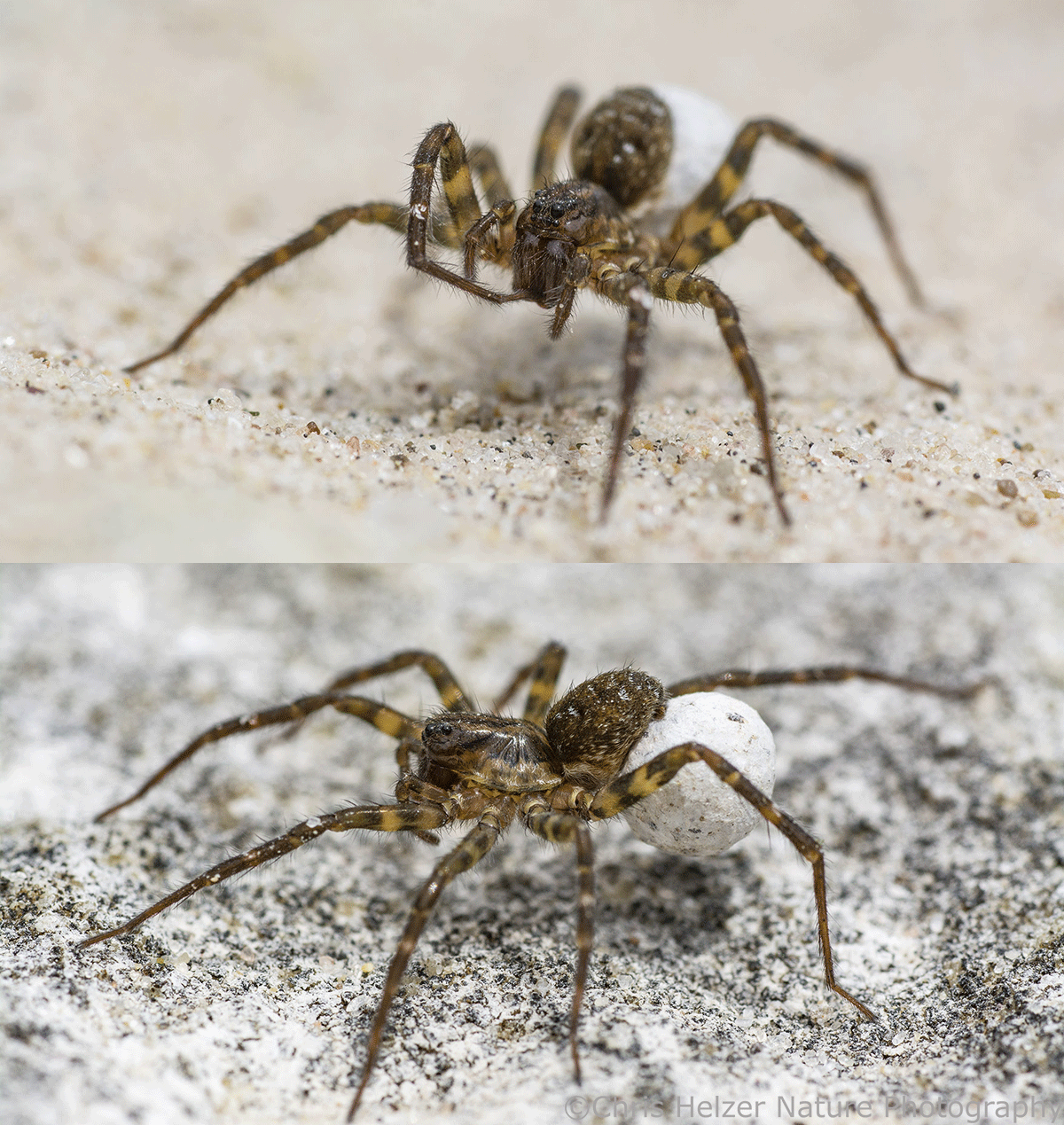
This wolf spider mom was awarded a FORBY for her conscientious efforts to protect her eggs.

.

The last of our judge-awarded FORBYs this year is the ‘Best Poopy Tail Defense’ award, which – as it has since very inception of the FORBYs – is once again given to a cluster of tortoise beetle larvae. In this case, it is a group of sunflower tortoise beetle larvae feeding on stiff sunflower at The Nature Conservancy’s Niobrara Valley Preserve. As they fed, they kept their tails held above them and tipped with copious amounts of their own excrement.

It’s a time-honored and effective strategy for repelling potential predators, though it is used surprisingly sparingly throughout the animal world. As a result, the number of nominees for this year’s ‘Best Poopy Tail Defense award’ was fairly limited. Regardless, these larvae were worthy recipients.

Also, we once again respectively suggest that a great nickname for tortoise beetle larvae would be ‘Turd-les’ but we understand that this will likely fall upon deaf ears again.

These stinkin’ cute tortoise beetle larvae were selected as 2022 FORBY winners!

.

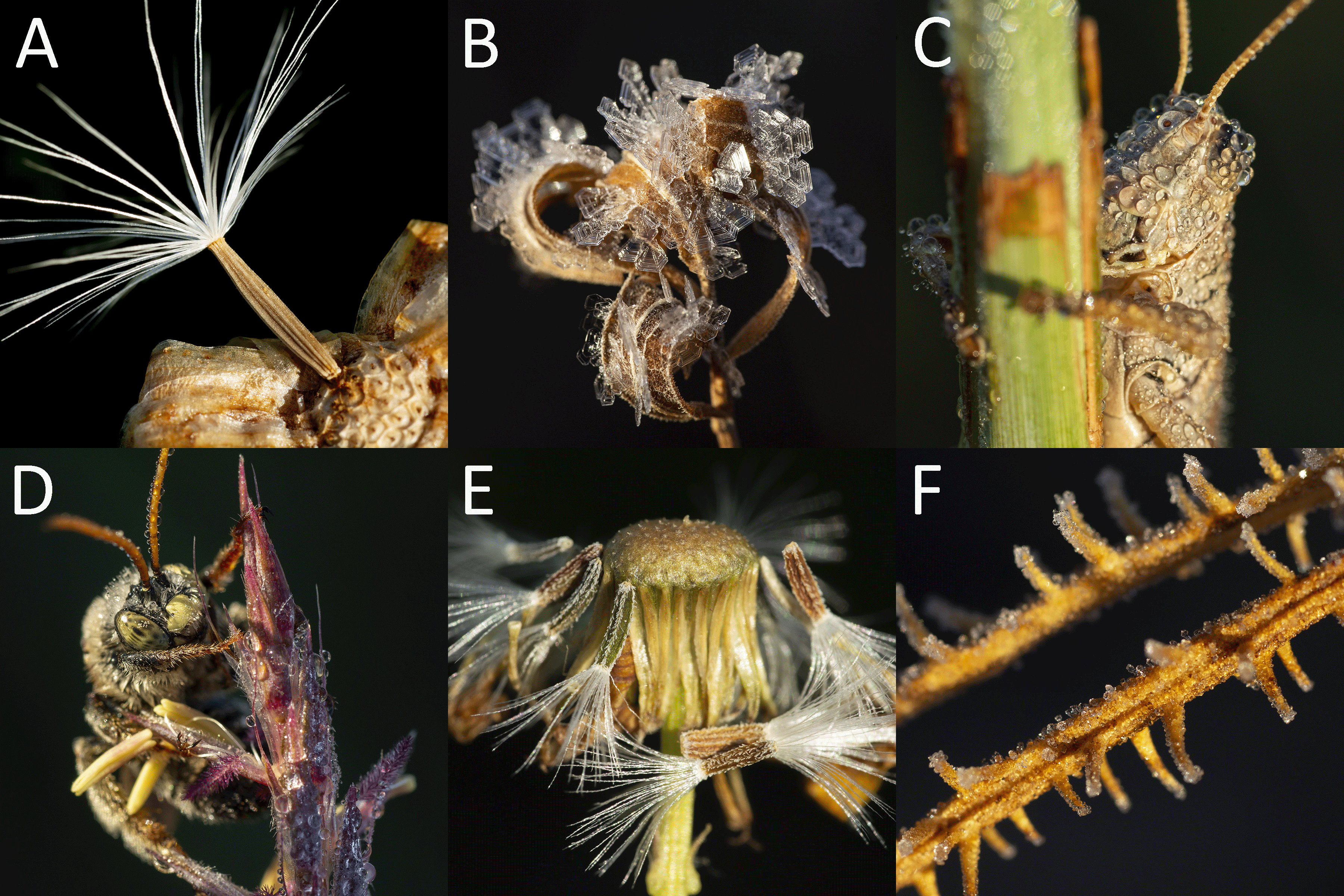
Winners of our final three categories of 2022 will be decided by your vote. The first of those three is the ‘Best Pose in Front of A Black Background’. This phenomenon occurs when a plant or animal is photographed in light that is so much brighter than the shadows behind it that a camera’s sensor can’t pick up the full range of available light. The result is a well-exposed image of the subject and a completely black background.

Six nominees managed to be in the right place at the right time this year and became eligible for the FORBY in this category. It’s up to you to choose the winner. Again, you can click on the image to see a better version of it. If you don’t see the poll below, or can’t click to indicate your choice, click on the title of this post to open it on the website.

Choose your favorite for ‘Best Pose in Front of A Black Background’.
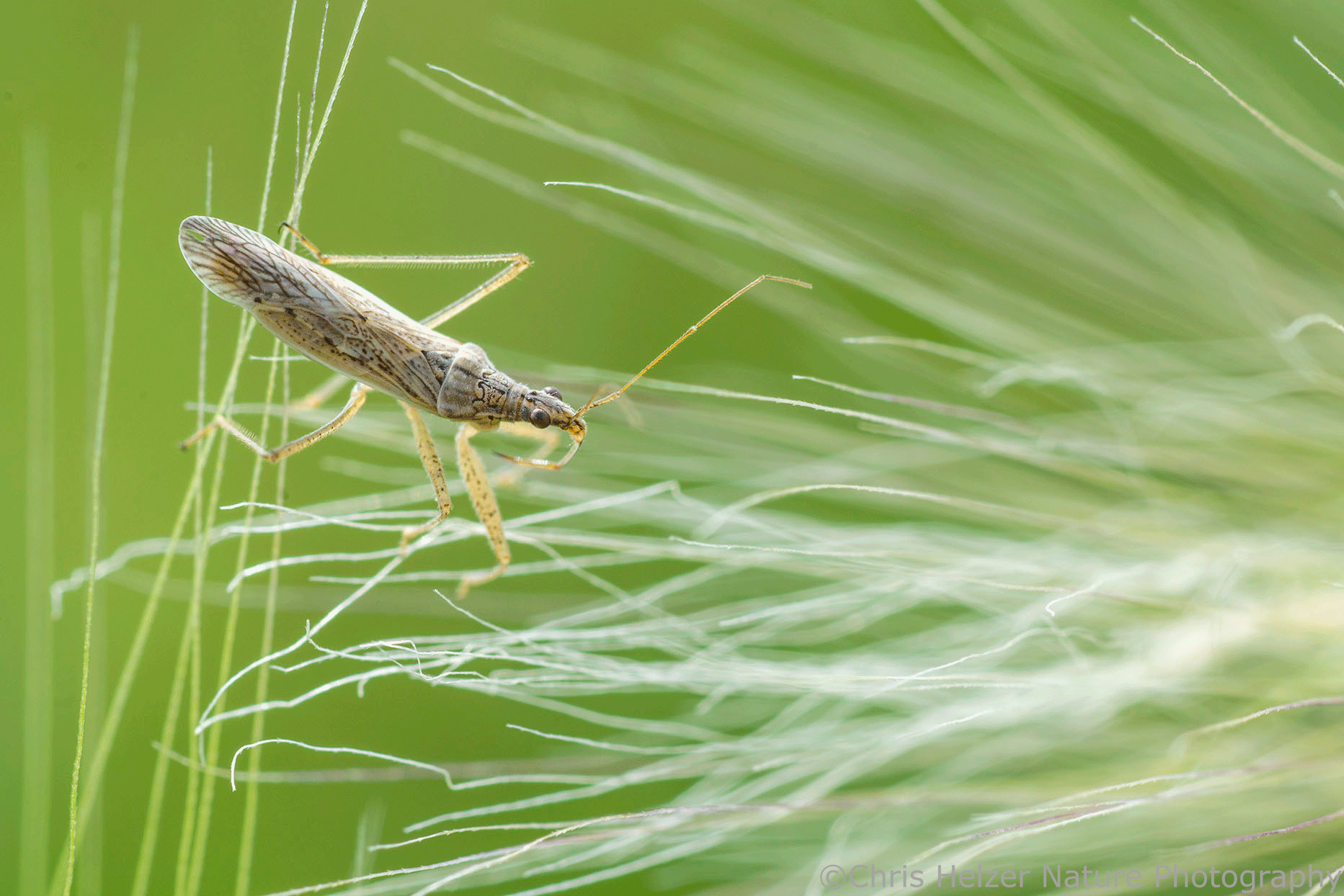
The next audience category came down to two worthy finalists. Both meet the basic criteria, but beyond that, present themselves in aesthetically-pleasing ways. It’s up to you to select the winner of the 2022 FORBY for ‘Best Predator in a Foxtail Barley Flower’.
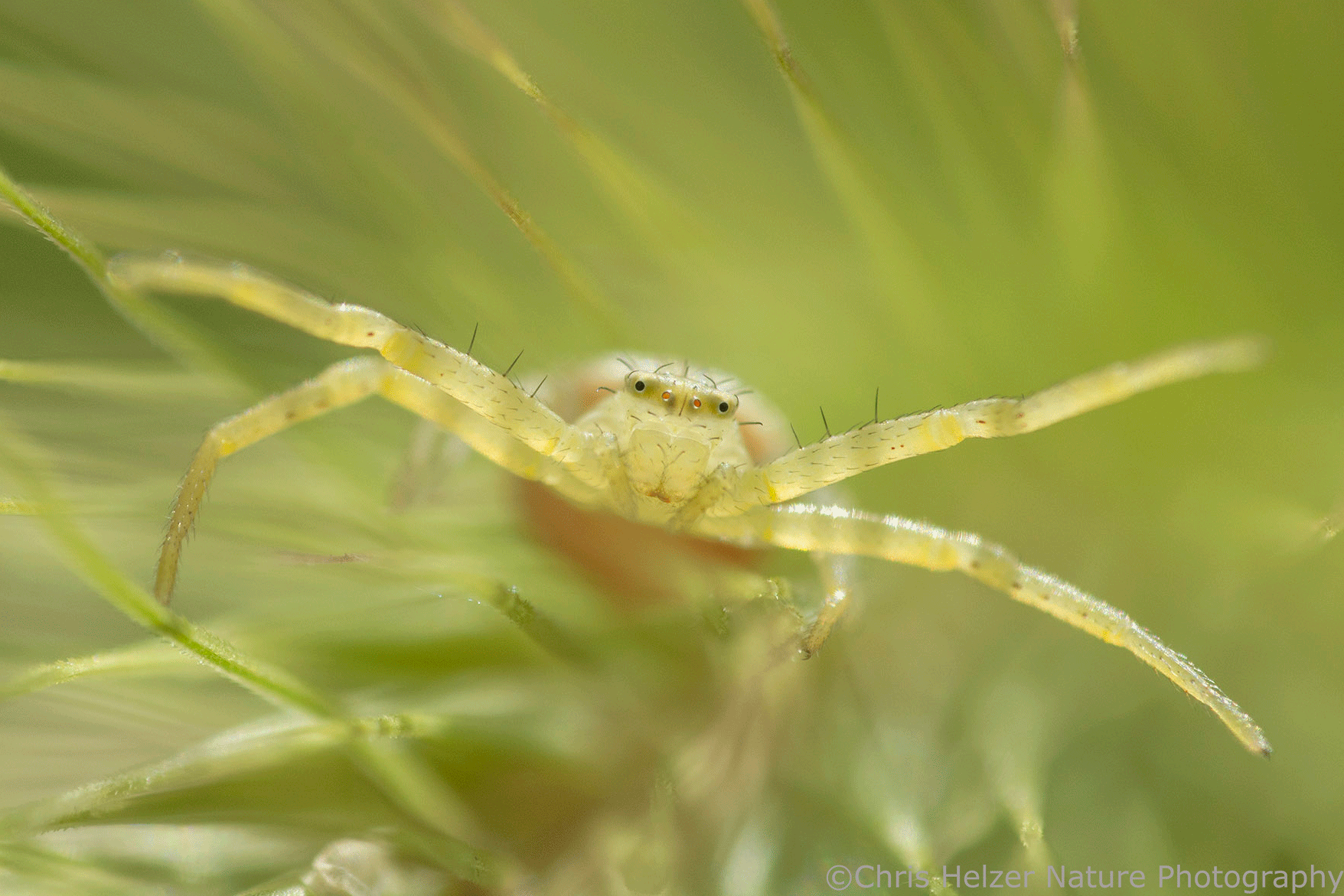
Nominee #1 – A crab spider with its front legs spread wide to capture any prey that comes within range.
Nominee #2 – A damsel bug hunts among a patch of foxtail barley flowers and stops to pose coyly for a photo.

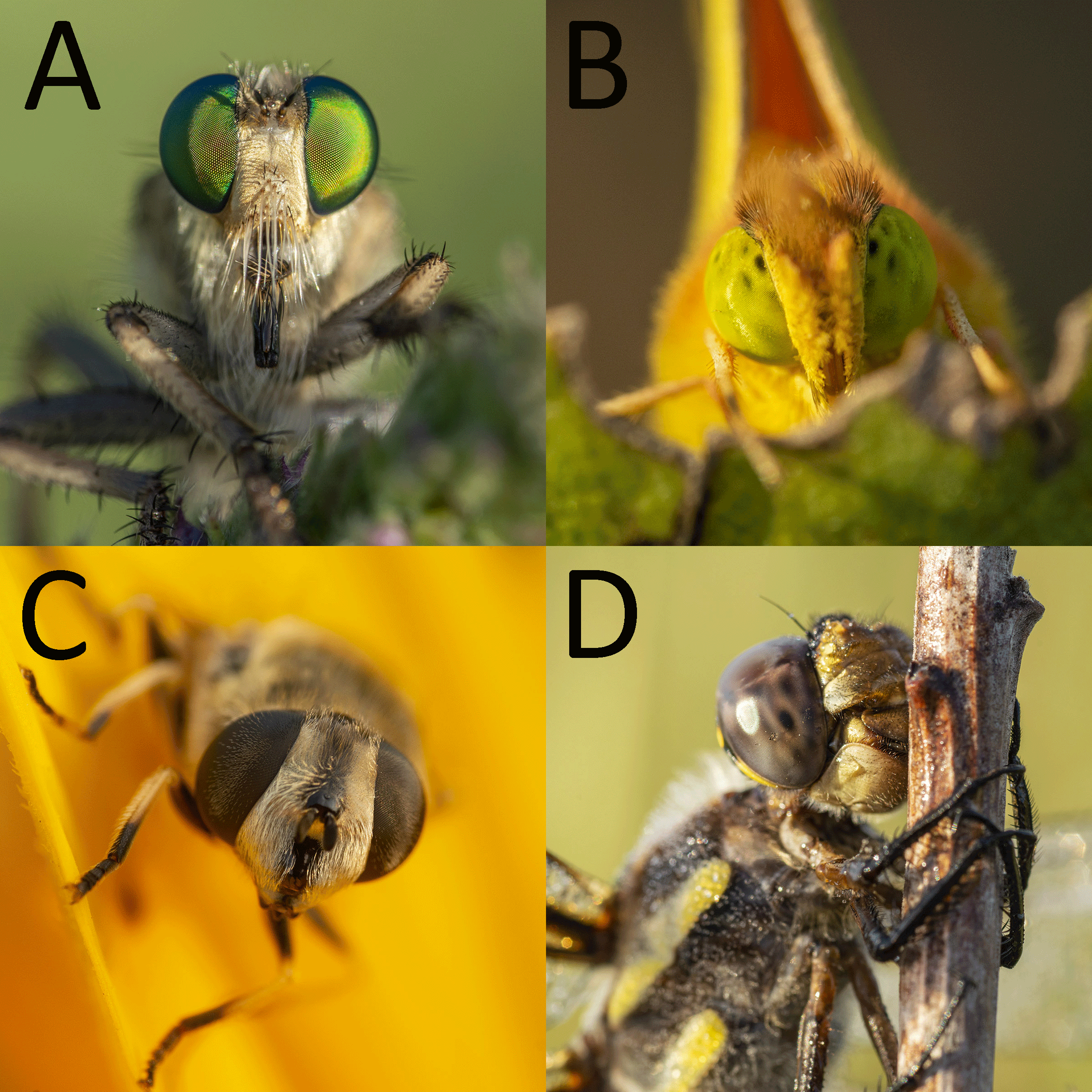
We end with what is perhaps the most popular award of the season – Best Eyes. While the title makes the award sound like it could be a broad category, it has perennially been dominated by invertebrates. Vertebrates have very nice eyes, but they are rarely impressive enough to warrant consideration for this award. This year, the judges narrowed the field to four finalists and it’s up to you to select which of these invertebrates has the ‘Best Eyes’.
Well, that brings this year’s FORBY award ceremony to a close. Thanks to all our judges for their time. Thanks also to our generous sponsors – especially Chuck’s Mud**, (“It’s Not Just Wet Dirt – It’s Wet SOIL!”) – for their support. If you’re looking to the best mud to build your cliff-side home with, choose Chuck’s Mud.

Mostly, thank you to everyone who reads this blog all year and puts up with all the goofiness and dumb attempts at humor. Have a terrific holiday season and go explore a prairie near you!

.

.

** While we acknowledge the coincidence and the numerous complaints we have received, our internal investigation has found no evidence that any of our FORBY award selections were influenced by sponsors or any bags of cash they allegedly left on the doorsteps of our judges. We will continue to be vigilant in our monitoring of this situation and appreciate the level of interest shown by our audience, our nominees, and law enforcement representatives.

Photos of the Week – December 16, 2022

I have two quick, but exciting announcements before I talk about this week’s photos. If you’re not looking for a job or research funding, feel free to scroll down to the first image.

First, the Nebraska Chapter has three job openings at the moment. Three! Two are seasonal positions and one is a regular full time job. The full time position is the Agriculture Projects lead, who will manage conservation projects within our row crop agriculture program – recruiting and supporting farmers, providing technical assistance and collecting data on conservation projects. They’ll also help with field days and other outreach events around those row crop conservation projects.

Of the two season positions, one is a nine-month fire technician position that will assist with prescribed fire planning and implementation on private lands, as well as Conservancy land. They’ll also work on other stewardship projects and are based at our Niobrara Valley Preserve. The second position is a science and stewardship technician position supervised by me. That person will help me design and carry out research and evaluation projects related to grassland ecology and stewardship. They’ll also assist with land management and restoration work, primarily at our Platte River Prairies. It’s a seven month position. Both those technician positions have full benefits and housing provided.

You can learn more about all three positions at nature.org/careers by searching for ‘Nebraska’. Applications for all three are due on January 17.

SECOND, we are inviting proposals from graduate students for our J.E. Weaver small grants program. This program provides up to five $1500 grants to graduate students working on research related to Great Plains conservation issues. You can see the full request for proposals at this link.

Ok, on to photos. Remember, you can always click on an image to see a better version of it. And if you get this via email, clicking on the post’s title at the top will take you to the website, where you’ll get a much nicer reading/viewing experience of all the content.

Thin ice covering a restored wetland at sunrise. The Nature Conservancy’s Platte River Prairies. Nikon 18-300mm lens. ISO 500, f/13, 1/1000 sec.

We’re still waiting for our first measurable snow here in east-central Nebraska. Much of the western part of the state got dumped on this week and is experiencing blizzard conditions that are shutting down schools and work and making life really difficult for ranchers and their livestock. That’s rough, but at least once the wind calms down a little, at least they’ll be able to do some snow photography. Hooray? If the roads are good enough on Monday, I’m hoping to make my way up to the Niobrara Valley Preserve. In addition to some actual work, I might try to do a little photography myself since they got about a foot of snow up there.

In the meantime, I’ve had to make do with ice and frost, in terms of weather factors that accent photography subjects. I shouldn’t make it sound bad – it’s been really fun to get out and search for little photography treasures. During the last week or two, I’ve managed to get back out to my favorite restored wetland at our Platte River Prairies, my favorite across-town prairie along Lincoln Creek, and our family prairie. All three held plenty of photography subject matter.

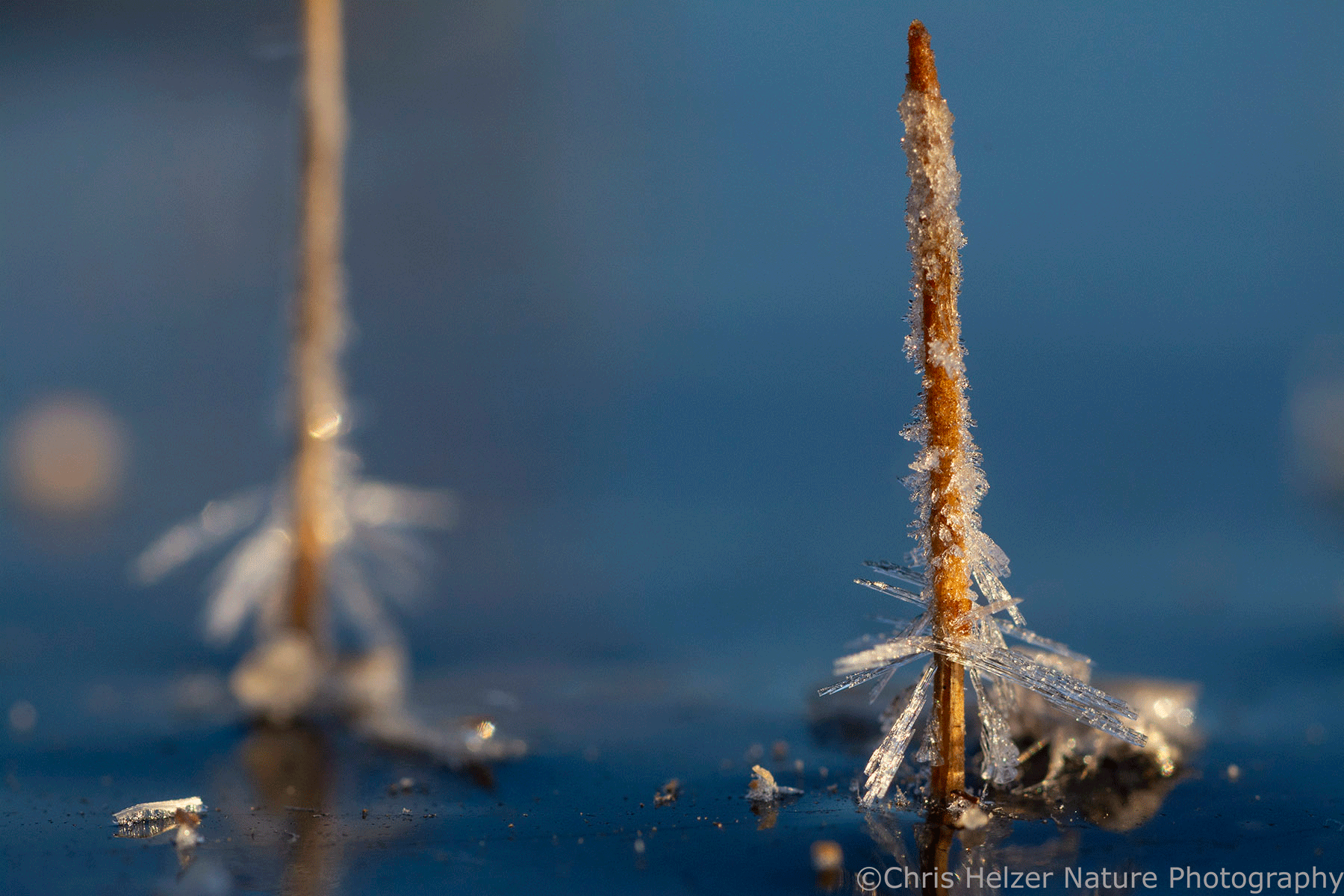
Frost crystals on wetland plants on the frozen surface of a wetland. The Nature Conservancy’s Platte River Prairies. Nikon 105mm macro lens. ISO 500, f/16, 1/200 sec.
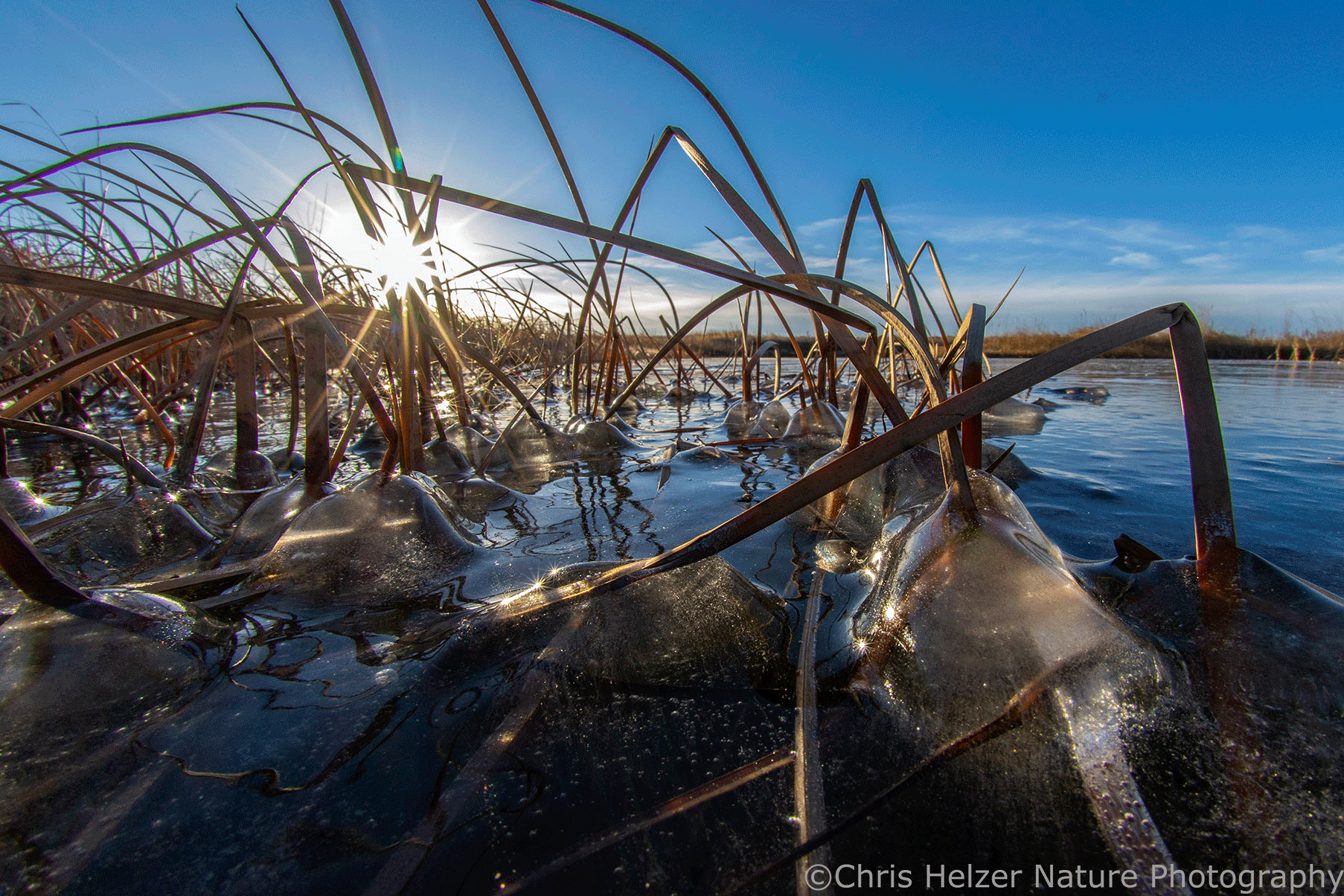
Ice and rushes on a frozen wetland. The Nature Conservancy’s Platte River Prairies.Nikon 10.5mm fisheye lens. ISO 500, f/16, 1/125 sec.

The morning I went to Lincoln Creek Prairie, I nearly didn’t. There was just barely any frost and I woke up a little later than I’d planned. I was drowsy and it looked cold out and I wasn’t sure I wanted to do. I waited around a little while and then finally decided it would be good for me to get out and wander. Of course, once I arrived, I slipped quickly into discovery mode and had a great time finding interesting photo compositions, even though the light was getting a little brighter than ideal. I didn’t come home with as many photos as I sometimes do, but given the lost time from dithering, I still felt good about the morning’s total – and I absolutely felt better for getting out.

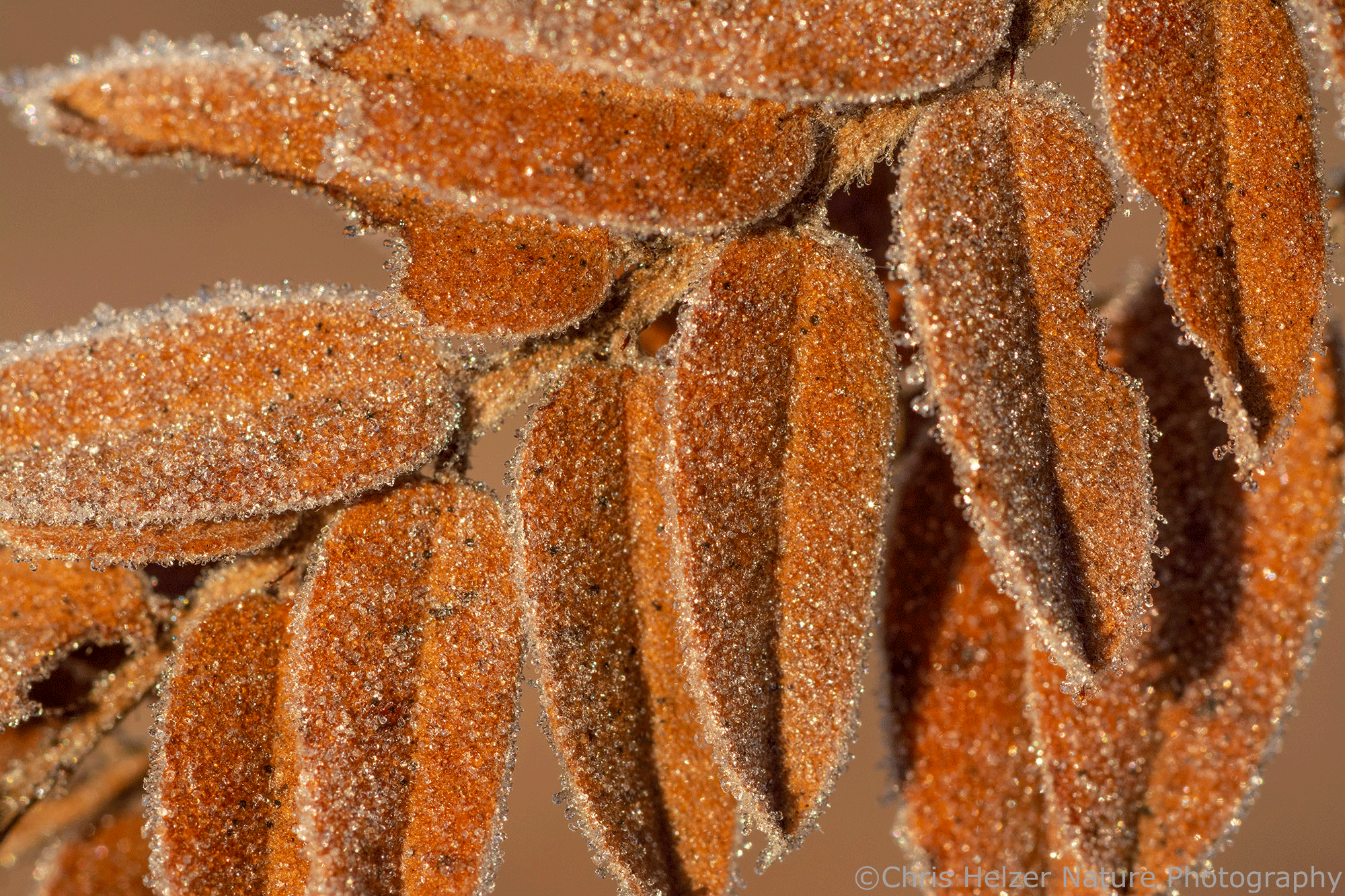
Lead plant leaves (Amorpha canescens) and frost. Lincoln Creek Prairie, Aurora, Nebraska. Nikon 105mm macro lens. ISO 500, f/16, 1/250 sec.
Sensitive briar seed pods (Mimosa quadrivalvus) and frost. Nikon 105mm macro lens. ISO 500, f/11, 1/800 sec.
Sensitive briar seed pods (Mimosa quadrivalvus) and frost. Nikon 105mm macro lens. ISO 500, f/13, 1/400 sec.
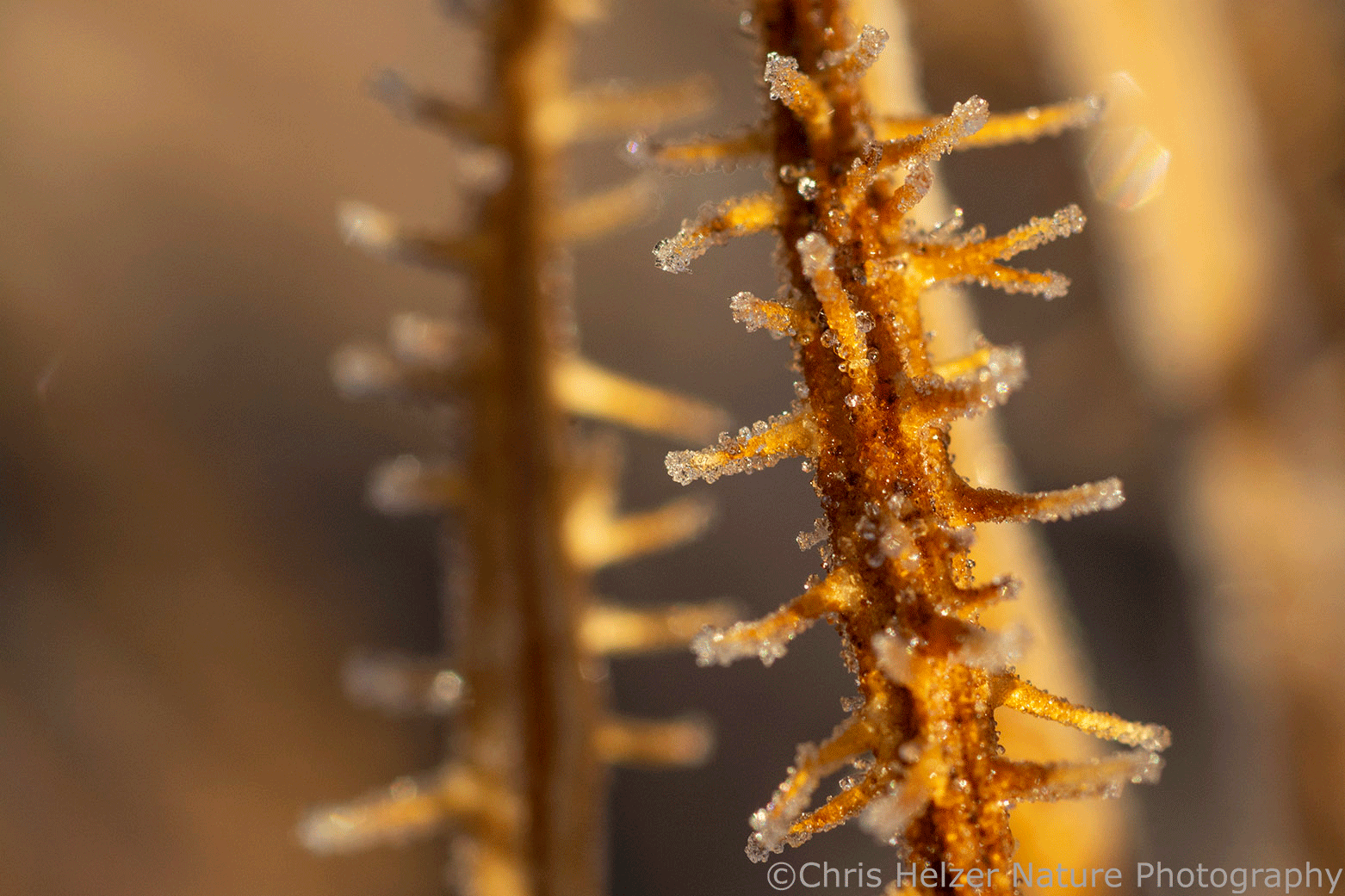
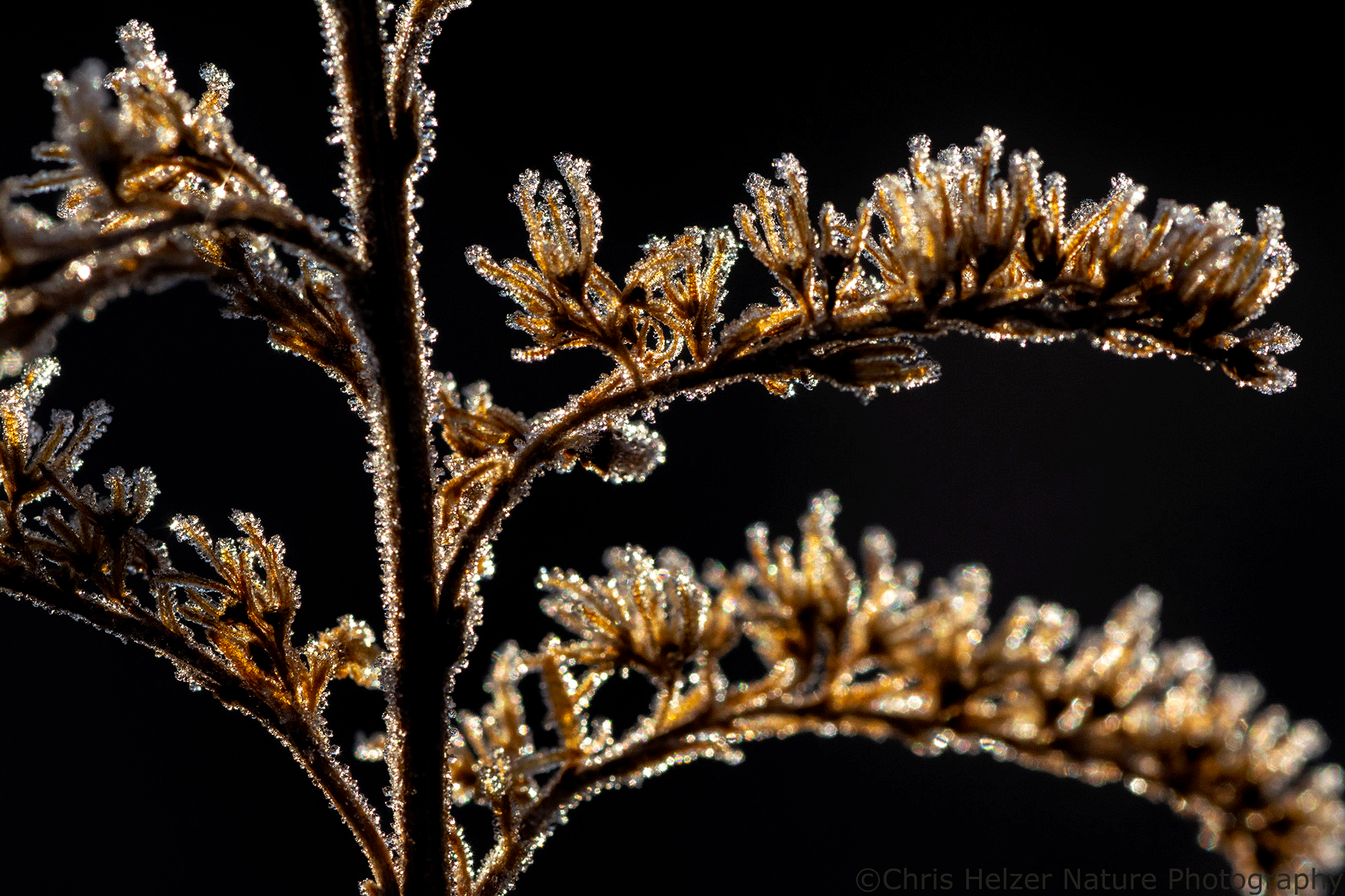
Backlit goldenrod and frost. Nikon 105mm macro lens. ISO 500, f/16, 1/400 sec.

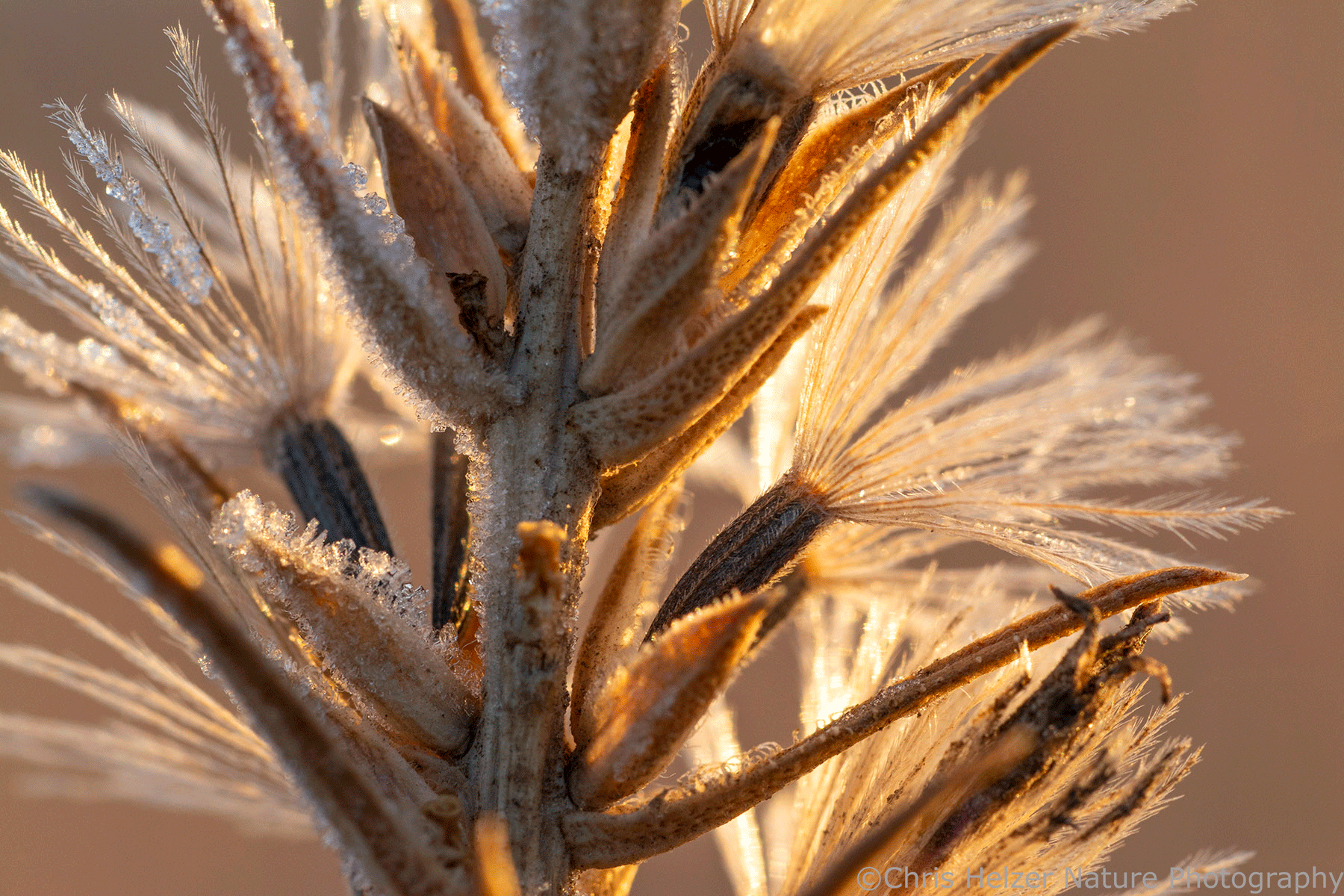
On the morning my friends met me at our family prairie to go hunting (see my last post), I arrived early and caught the sunrise light. This time, I really struggled to find anything I wanted to photograph and spent nearly an hour in enjoyable ambling (but without any photos to show for it) before I finally found inspiration. I came across a dotted gayfeather plant that had retained some of its seeds, which were now glowing in the morning light. Then I settled down to photograph one of my old reliable winter subjects – sideoats grama. I have hundreds of photos of this grass in frost, snow, ice, and other conditions, but I always get drawn back in by its delicate, dangling seeds and long slender stems.

Dotted gayfeather (Liatris punctata) seeds and frost. Helzer family prairie. Nikon 105mm macro lens. ISO 500, f/16, 1/100 sec.
Sideoats grama (Bouteloua curtipendula) and frost. Nikon 105mm macro lens. ISO 500, f/14, 1/400 sec.

I’d planned to cut some cedar trees between photography and hunting, but by the time I stopped photographing frosty sideoats, people were starting to show up, so I just switched lenses and started walking the prairie again, this time looking for very different quarry. Have a terrific weekend, everyone. If there’s a prairie near you, check it out – there’s always something worth finding!