
Last weekend, several of my friends and colleagues visited my family prairie to do some pheasant hunting. I grabbed my camera and tagged along. As we walked through the prairie, I had time to reflect on my personal progression when it comes to hunting and my views on the topic. Based on what I know about the readers of this blog, I’m pretty sure a number of you view hunting as I used to. Others are active and passionate hunters. Whether you’re reading this as a hunter or as someone who doesn’t understand why anyone thinks hunting is ok, I hope my story will be thought-provoking for you.

I didn’t grow up as a hunter. My dad hunted now and then when I was very young, but stopped before I was old enough to go with him. As a result, I wasn’t exposed to hunting, or guns, as a kid. Fishing, on the other hand, was a big part of my life from a young age through most of college – until I fell in love with photography and left my old passion behind.
As a 3rd or 4th grader in Bridgeport, Nebraska, I would frequently ride my bike to a small pond across town and spend hours catching small bluegill with worms. I also have some great memories of fishing with my family – especially my dad and grandpa. As I got older, a big part of my infatuation with fishing was that I saw it as a kind of game, in which I was trying to understand and outsmart the fish. The more I learned about fish, their habitats, and their natural history, the better fisherman I became.
I especially loved fishing for largemouth bass from the shore or a canoe. I would move around the edge of a lake, evaluating the habitat and guessing where the fish were hanging out. Then I’d try to predict, based on water and light conditions, what might trigger a strike. I’d see an old stump in the water, for example, and envision a big ole bass hiding beneath it. Then I’d be immensely pleased when I made a perfect cast and felt the pull on my line that told me I’d guessed right.
It’s important to mention here that I don’t like to eat fish. I’d like to like to eat fish, since it’s apparently a very healthy food. I just don’t like the taste, whether it’s smoked salmon, fried catfish, or any other supposed delicacy I’m told I’ll enjoy ‘if it’s just cooked right’. As a result, I was always a catch-and-release angler. I tried to make sure I released my fish with minimal injury, but I also know a fair number of them didn’t survive after I put them back in the water.
I say all this because fishing was a big part of why I fell in love with the outdoors. Camping, hiking, and other activities were a lot of fun too, but it was often fishing that got me out the door. A big reason I’m a prairie ecologist today is because I grew up going fishing. I tried multiple times to get my own kids interested in the activity, but they weren’t ever that excited about it. They still liked going camping and hiking with me, though, so I didn’t push fishing very hard. They didn’t need that particular hook to engage them with nature. And I won’t apologize for that pun.
Interestingly, while I was passionate about fishing as a kid, I was pretty staunchly anti-hunting by the time I got to high school. I’m not really sure why – especially because I read a lot of books as a kid that included ‘wilderness adventure’ stories in which kids or adults survived in the wild by (among other things) killing and eating animals. While attending junior and senior high school in Lincoln, Nebraska, though, I didn’t really have family or friends who hunted. Because of that distance from the topic, it seemed obvious to me that hunting was just needlessly killing wild animals, and therefore clearly wrong.

When I got to college, I started interacting with peers in my wildlife biology major, most of whom were hunters. Those interactions quickly changed my views, not only on hunting, but on hunters. Until that point, I’d been mostly reading and hearing from people who represented either anti-hunting or non-hunting perspectives. My mental picture of a hunter was of someone who enjoyed killing animals, mostly so they could brag about the size of that dead animal or its antlers. Now I was meeting people who were conservation advocates and loved being outside, were very knowledgeable about natural history, and who used hunting as an excuse to explore nature.
In short, they sounded a lot like me, except they were hunting instead of fishing (though most of them enjoyed fishing as well). Many of the hunters I met in college were certainly interested in shooting big deer with big antlers or other ‘trophies,’ but that was only part of what drew them to hunting. Most of their enjoyment came from gaining an understanding of the species they were hunting, as well as the habitat those species used. In large part, hunting was fun because they had to solve the puzzle of where those animals were and what they were doing. Also, of course, hunting took them outside where they got to explore interesting places and discover much more than just the tracks of their quarry. Again, it sounded a lot like why I enjoyed fishing.
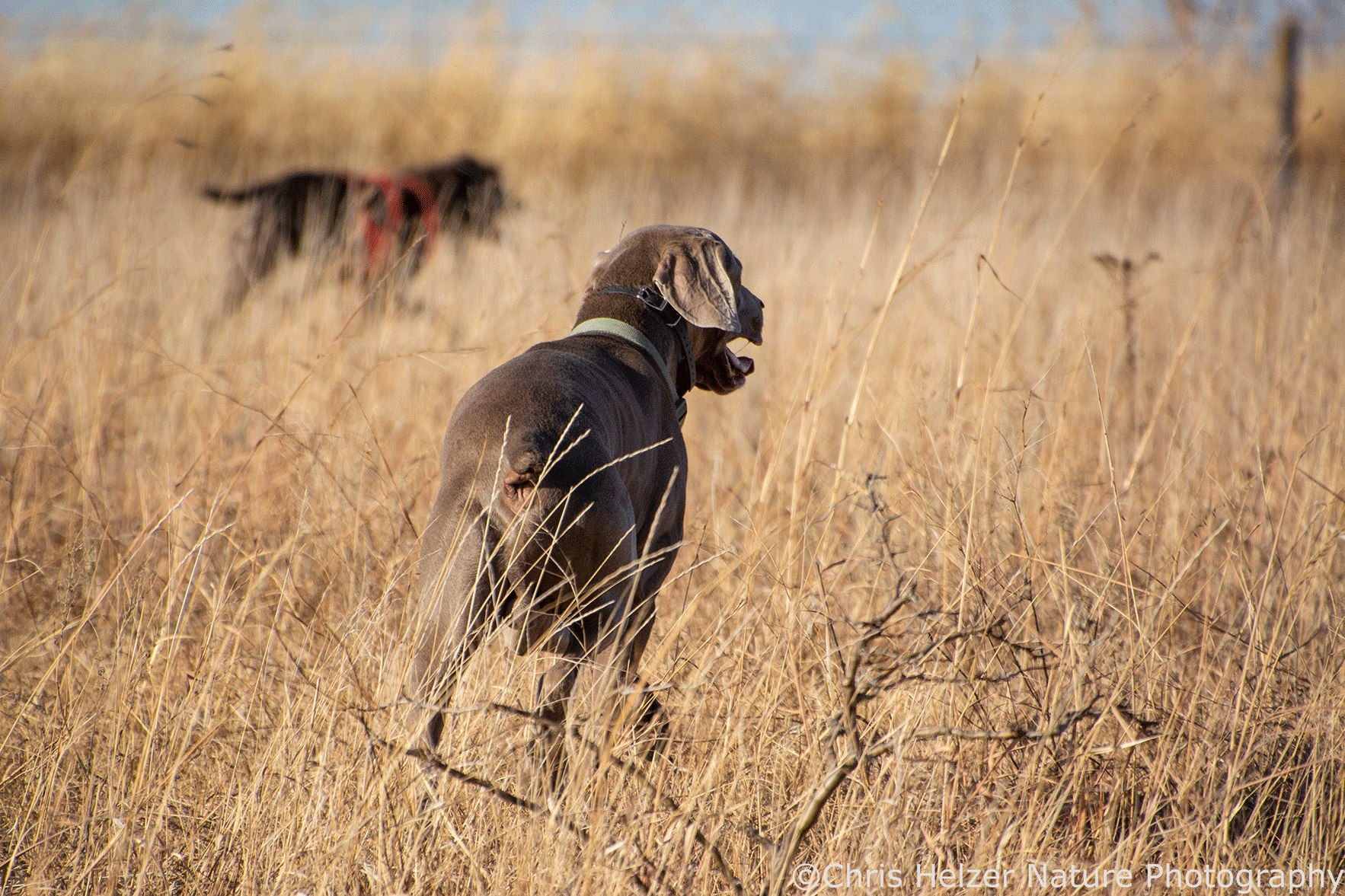
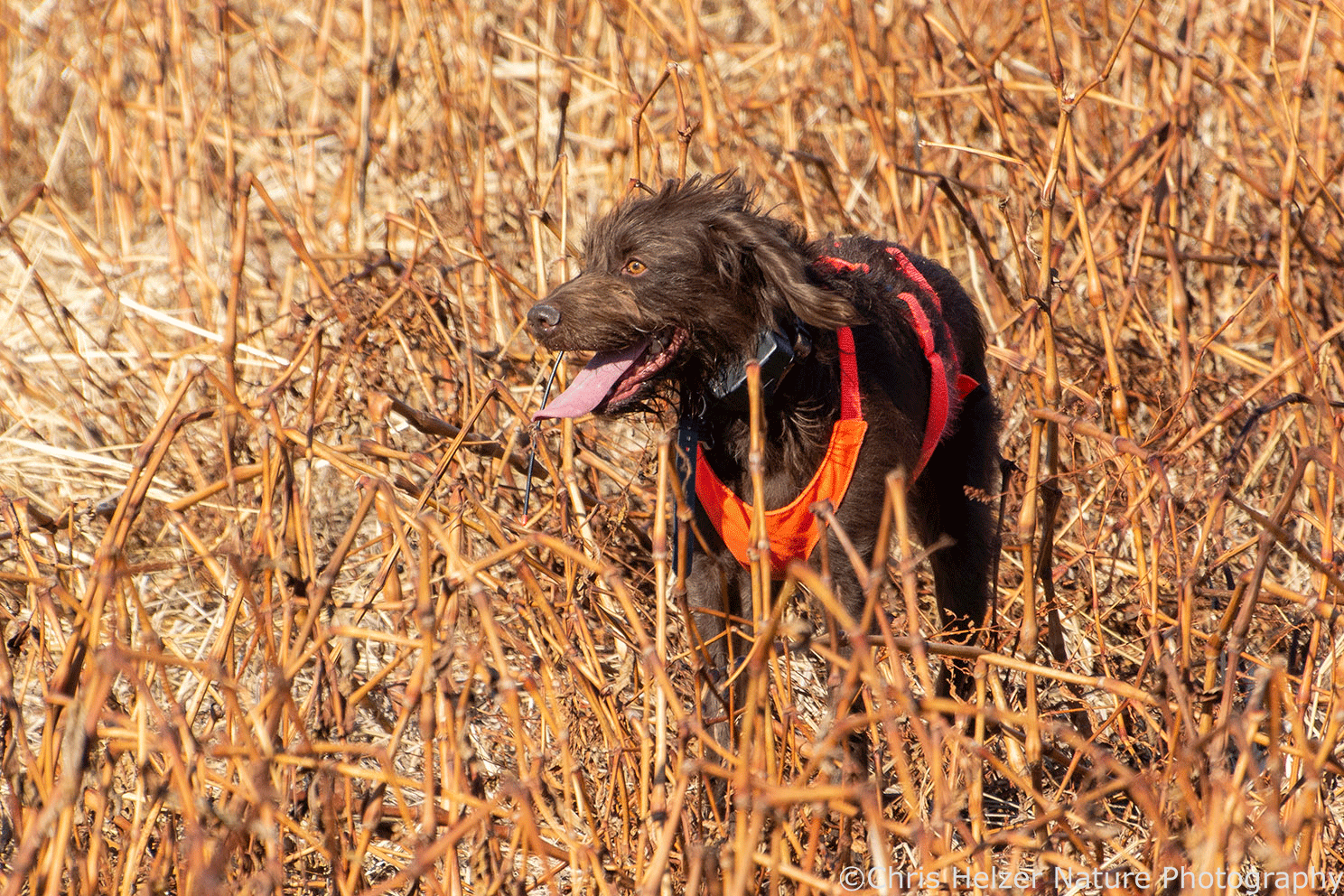
Equally importantly, my hunter friends ate what they shot. In fact, for many of them, wild game made up a big part of their diet and they felt good about both knowing where their food came from and feeling self-sufficient about their food supply. That made sense to me. The meat I bought at the grocery store came from animals that had been killed for my benefit. My hunter friends were just killing their food themselves – and taking responsibility for doing it humanely. As they pointed out, I was (probably naively) relying on others to raise and kill animals in a compassionate or moral way for my consumption. It was a lot to think about.
After college, I took possession of my late grandpa’s old shotgun and was guided by a few friends on some pheasant hunts. I shot a few pheasants, and even a quail or two, though I missed way more than I hit. Rabbit hunting became briefly interesting to me as well. I ate what I shot and enjoyed it well enough but found I didn’t really have a passion for hunting and most of my family didn’t really care to eat wild game.
Mostly, the activity that had pulled me away from fishing – photography – was also a bigger draw than hunting. I didn’t have time for photography and those other activities, and it wasn’t a difficult decision to spend my time on photography. I was grateful for the opportunity to learn about hunting, though, and to do enough of it to better understand why my friends and many other people enjoy it so much. Like most things in the world, being able to see something through the eyes of others makes it much easier to understand those other perspectives.
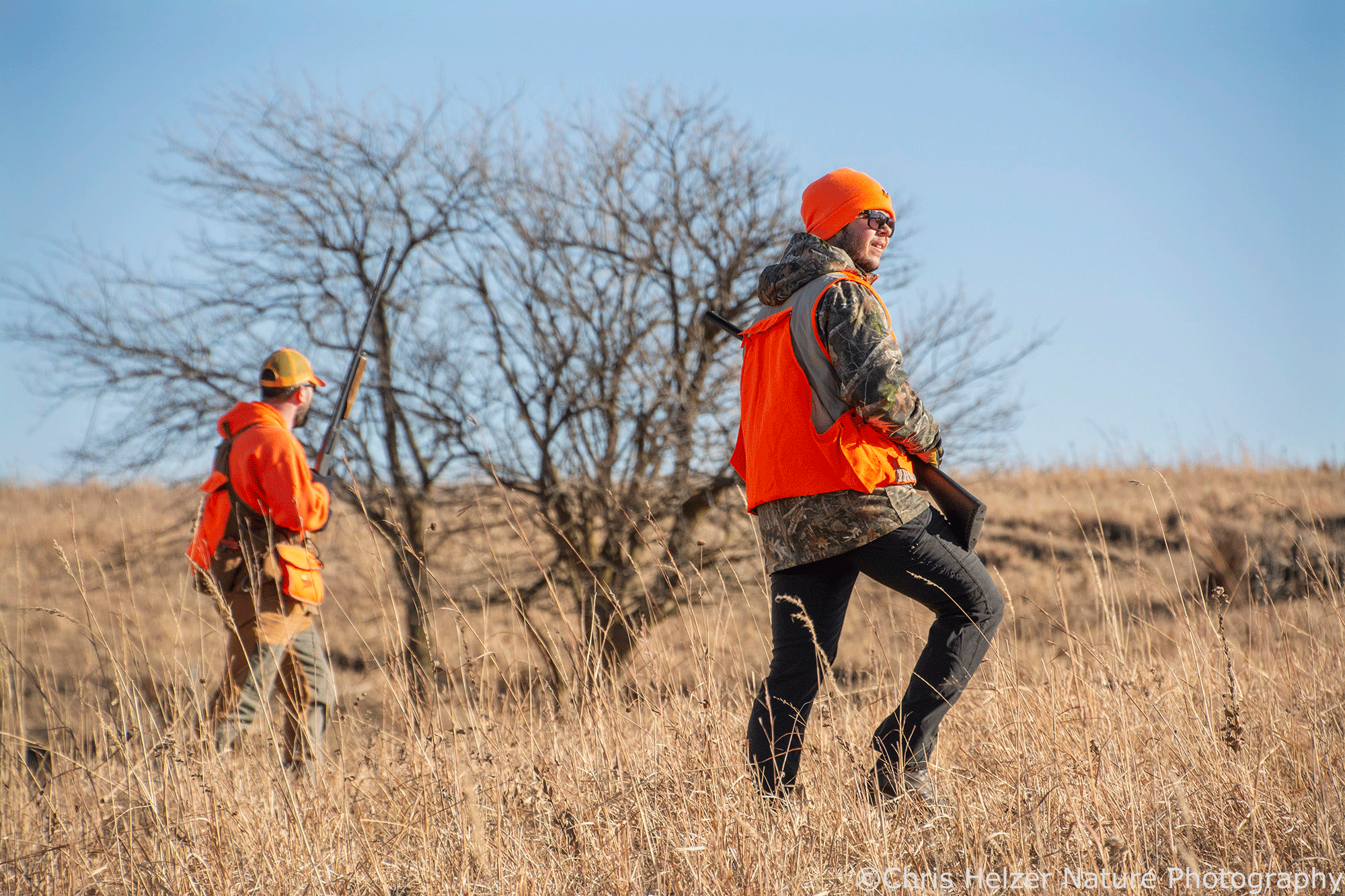
Having said all that, there are some aspects of hunting that still bother me. That’s mostly because not all hunters have the same approach that my friends in college and present day have. Plenty of people are really ‘shooters’ instead of ‘hunters’ and I have a hard time with that. I don’t particularly care for what I consider to be ‘wildlife farming’, in which people plant food plots designed to grow bigger deer antlers or to make game easier to locate during hunting season.
In addition, while I recognize the economic, and even conservation value of trophy hunting, especially in parts of Africa and other places outside the U.S., the attitude displayed by many high profile trophy hunters strikes me as pretty abhorrent. However, I also am ok with people having different opinions on this topics and interacting with nature differently than I do. We can disagree and still work together – coming at conservation from multiple angles. Unfortunately, a lot of the loudest voices within the hunting community are the ones who come across least well to a public already skeptical of the practice.
You may or may not know that our model of conservation funding in North America has been strongly tied to licenses and supplies sold to hunters and anglers. As a result, hunters correctly state that they provide much of the money that helps conserve natural areas and manage habitat. Of course, much of that habitat management – especially in the past – has been targeted specifically at the species people most like to hunt, and that doesn’t always jive with (or conflicts with) the needs of whole ecosystems. Some hunters also take a little too much credit for replacing large predators in ecosystems, especially those who solely pursue large bucks or other trophies, rather than choosing prey based on population control factors.
To be fair, in recent years, wildlife agencies that answer to hunters have dramatically improved the way they manage habitat, moving toward the facilitation of biodiversity and away from food plots and habitat strips for a few species. I’ve seen a huge change in that approach (which is usually – eventually – mirrored by private landowners) just over the course of my career. It’s a generational change and we still have a way to go, but it’s nice to see movement in a good direction. Funding models are also becoming at least a little more diverse and less reliant on ‘consumptive uses’ of the outdoors, which is helpful.
I’m not here to convince anyone to change their stance on hunting. However, if you’re like I was in high school and see hunting primarily as senseless or obnoxious, I’d encourage you to investigate further, especially if you can find some hunters and listen to them talk about why they hunt. It might not be your thing, but you might be surprised by what you hear from people who are conservation-minded hunters. If you’re a hunter who feels defensive about your pastime and are afraid it’s disappearing, you might reflect on how you can tell your story more effectively to those whose support you need. Like most things in the world, hunting is complicated, and so are the people with strong views (pro or con) about it. A little listening and thoughtfulness can go a long way toward understanding and productive conversation.


 The Prairie Ecologist