
Welcome back to the annual FORBY awards! In this punchy Part 2, we’ll recognize another series of very special prairie animals for their contributions during the year 2022. If you missed Part 1, you can still go back and vote for your favorites in a couple audience-selected categories. (Only animals photographed for The Prairie Ecologist blog during 2022 can be nominated for 2022 FORBY awards.)
How to vote: If you receive this blog via email, click on the title at the top to open the blog on the web page and enable the poll features. (Clicking on that title will always give you a better reading experience anyway, since the formatting is a little weird in email.)
Let’s start with a couple awards in categories that have already been decided by our judges. These were easy decisions with very little opportunity for controversy.
The first category is ‘Best Eyebrows’. This year’s winner is a sharp-tailed grouse photographed on a lek at the Niobrara Valley Preserve back in April. Look at that expression! Of course, the downside of the grouse winning this category is that it becomes ineligible for another category featured below. That’s a shame.
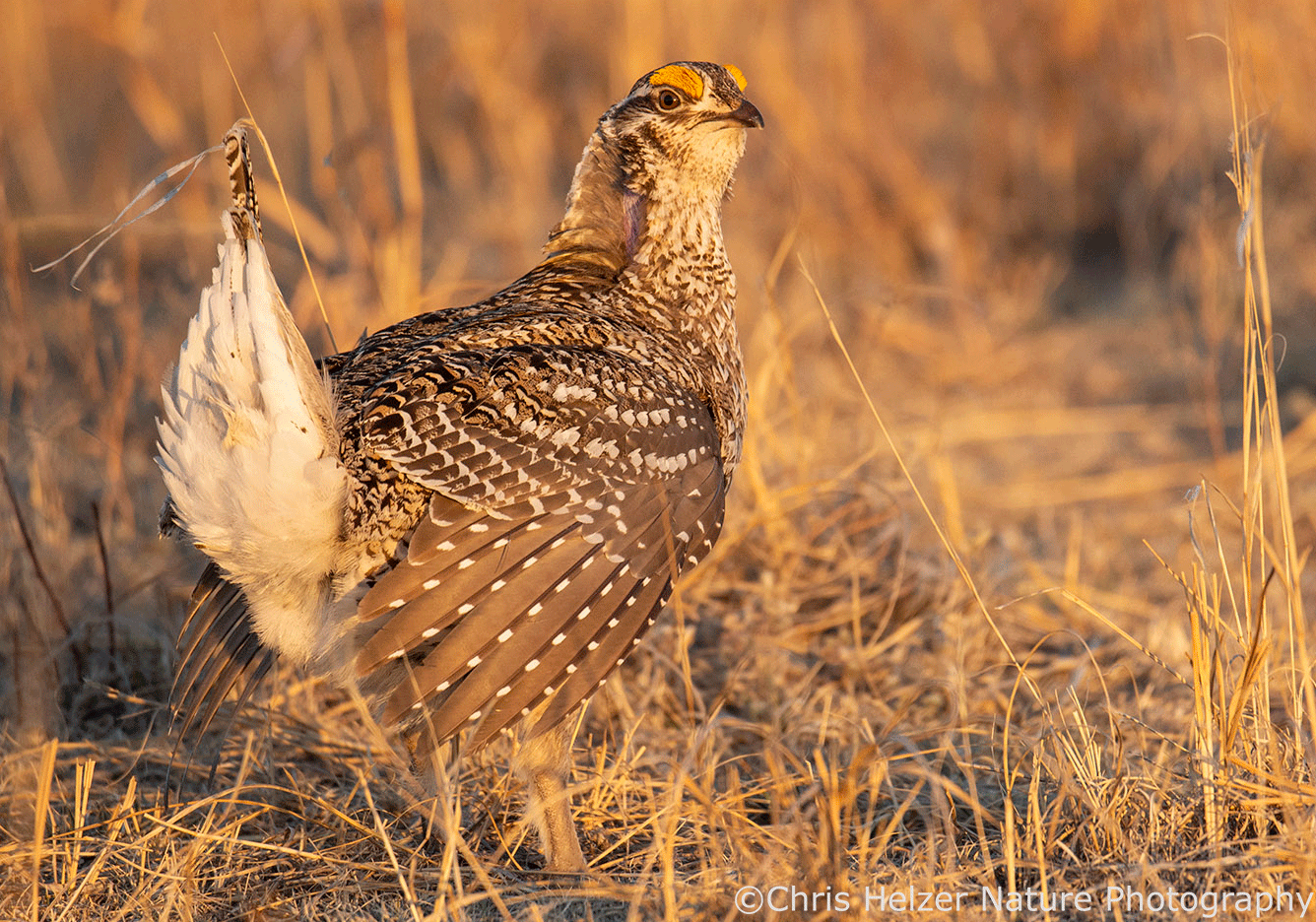
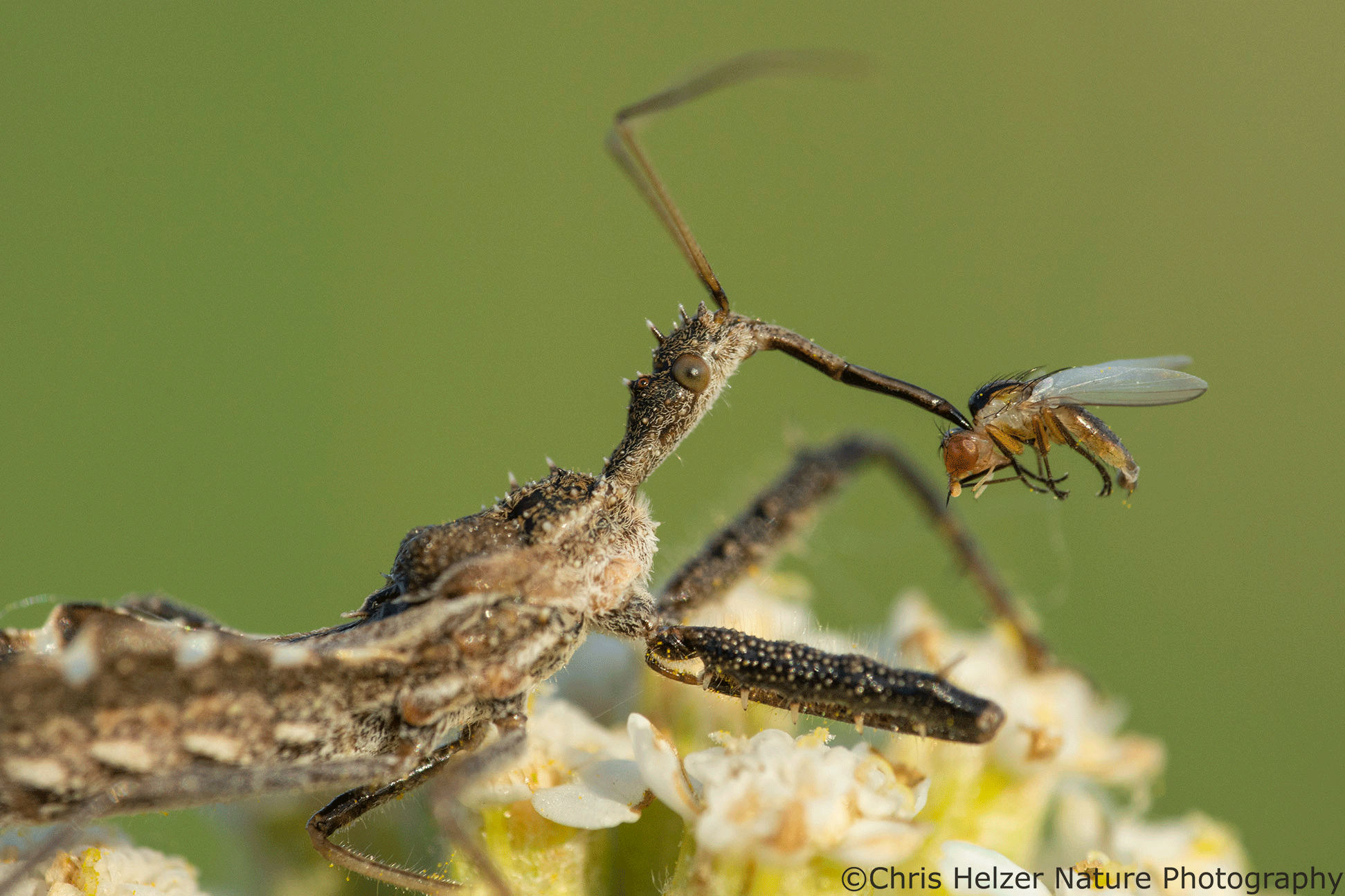
If we had a FORBY category for ‘Best Tail’, this grouse would have been competitive for that one too. Unfortunately, we can only have so many categories, so we have to stick to the basics and not get too wacky about it. Anyway, let’s move on and admire the winner of this year’s ‘Best Impaled Fly’ award!
This fantastic assassin bug managed to capture and then impale this tiny fly immaculately, hitting the sweet spot between head and thorax with precision. It then injected a paralyzing venom that also “pre-digested” the fly’s insides, allowing the bug to just slurp its meal out of the remaining fly husk. You might say the assassin bug got its award and the fly went to its reward. Or you might not.
.
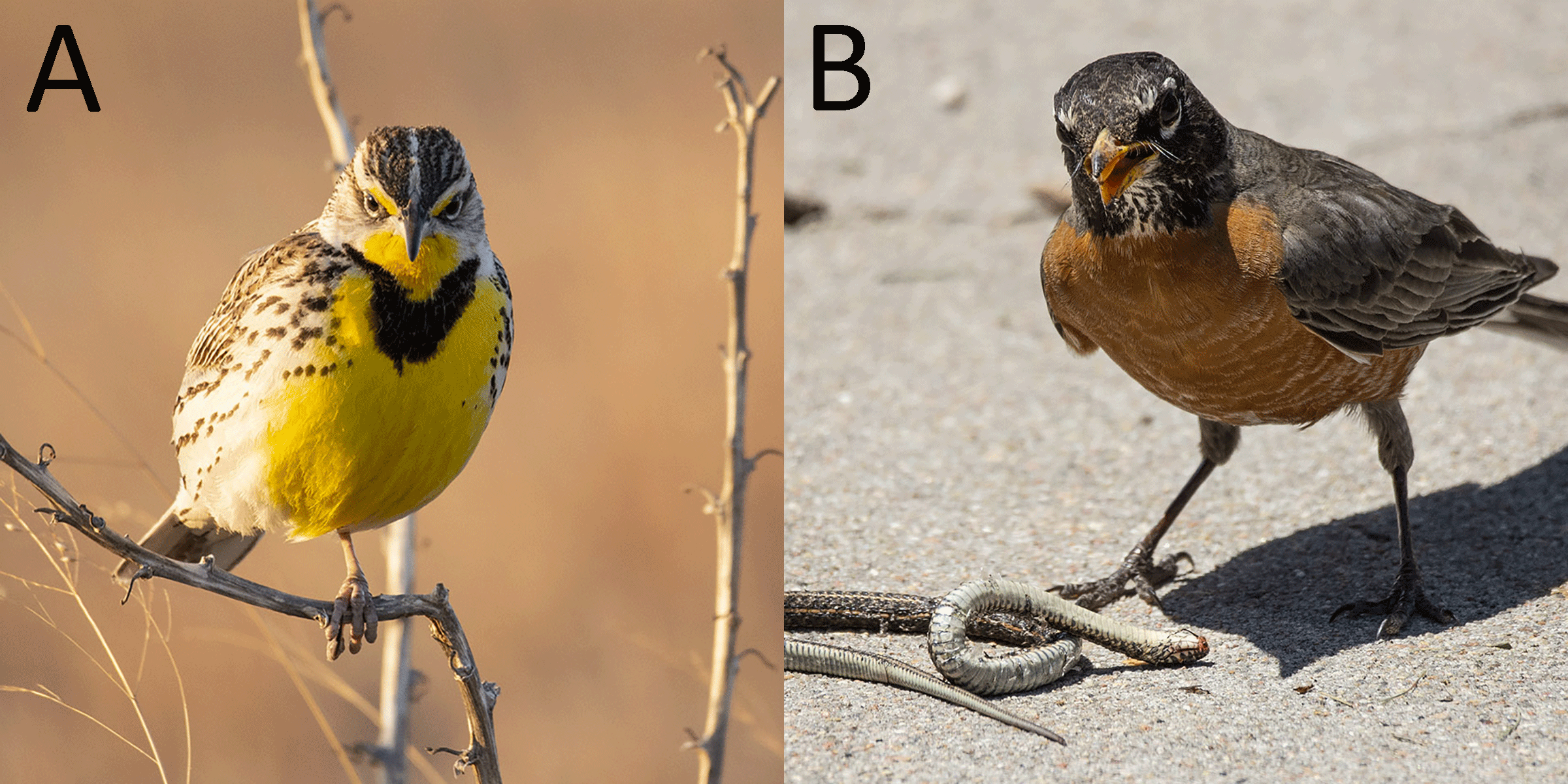
We now come to the first of today’s audience-selected awards. The category is entitled ‘Best Tough-Looking Bird’. You can now see why the sharp-tailed grouse would have qualified for this category if it hadn’t already won for ‘Best Eyebrows’. It seems unfair, doesn’t it, that nominees are only allowed to win one category per year? It’s almost as if the rules are spurious and haphazard.
Anyway, we move forward with the two remaining nominees, both of which seem worthy of consideration. The first is a very stern-looking western meadowlark defending its territory back in April. The meadowlark would like you to know that the melodic sounds of its territorial song do not represent any leniency in terms of boundary enforcement. The second nominee is an American robin that just finished slamming a garter snake to death on a concrete sidewalk. The robin says it doesn’t feel it needs to make any additional statements.
You can vote for your favorite below. (Again, if you’re not seeing a poll show up with options to click on, click on the title of this blog post to open up a better version that will let you interact with it.)
.
WAIT, WAIT!! HOLD EVERYTHING.
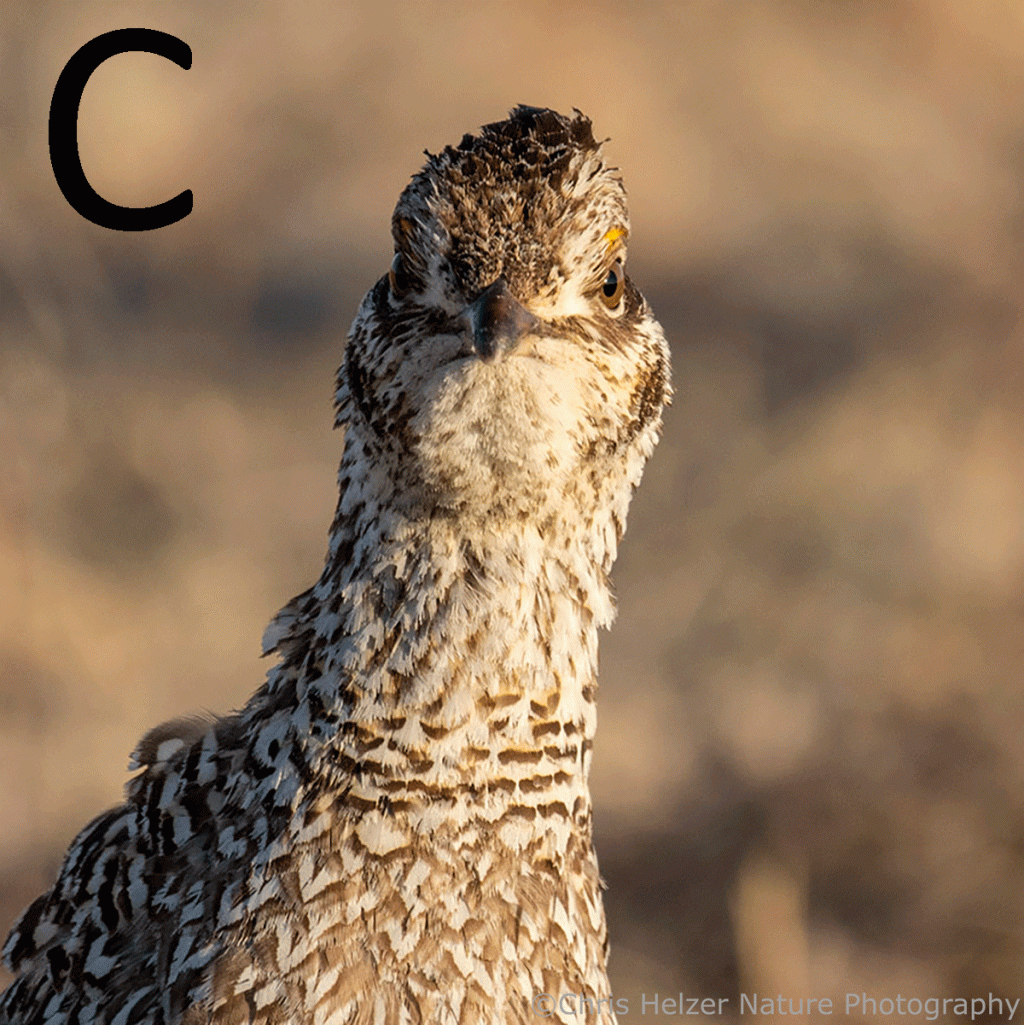
This is wholly unprecedented. I’ve just been informed that the judges have made a last minute decision to allow a sharp-tailed grouse to be considered for the ‘Best Tough-Looking Bird’ after all. Apparently, eligibility is tied to an individual animal rather than an entire species, providing a loophole. Since the below grouse is not the same individual as the one who won ‘Best Eyebrows’ it is eligible for consideration in this category. The judges want to assure you that they made this decision impartially and not at all as a result of any intimidation by a grouse that looks like it might pop off at any moment.
Wow, what a turn of events!
So, I’m very sorry for the hassle, but let’s vote again – this time, with all three candidates included.
.
We return, briefly, to another category decided by our judges – the always popular ‘Best Silhouette’. There were several candidates for this award this year, but after much deliberation, this striped lynx spider came out on top. To clarify, the judges deliberated, not the spider. I mean, I guess the spider might have deliberated as well, but in this case, I was deliberately referring to the judges’ deliberations.
‘Deliberate’ is a funny word, huh? The term ‘liberate’ means ‘to set free’. You’d think, then, that ‘deliberate’ would mean ‘to capture’. Nope. It means ‘to consider’. Or, sometimes, it means ‘on purpose’. I guess you’re free to consider how purposefully this word’s definitions were designed to confuse us.

As a special bonus, here is another photo of the same striped lynx spider, but from the other side of the leaf. Isn’t she a beaut?
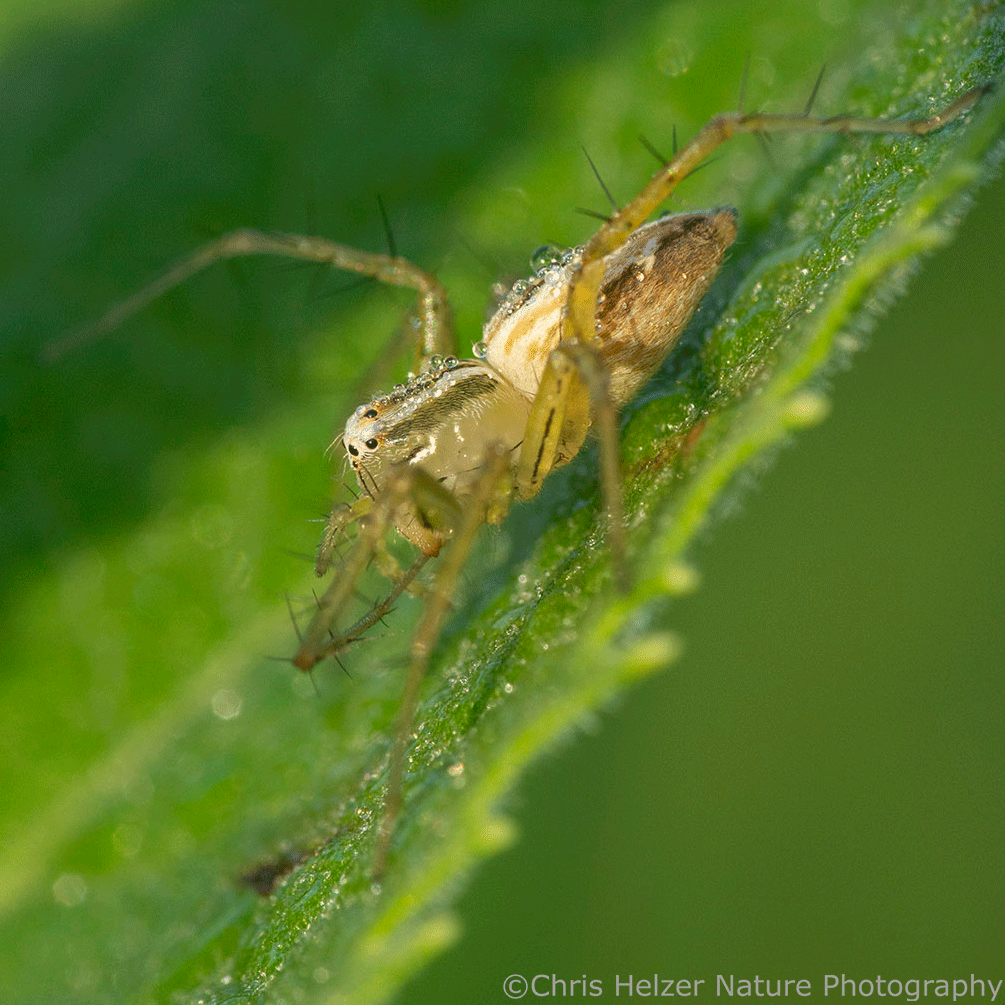
You may know that lynx spiders, like jumping spiders, hunt prey without a web. They use a combination of stealth and speed to sneak up on and capture food. Alternatively, you might say they sneak up on and deliberate food. But that would be wrong, apparently.
Anyway, another fascinating fact about lynx spiders is that their diet preferences are apparently determined by whatever prey species are most abundant when they’re very young. They may then continue to pursue those same species throughout their lives. In fact, there is evidence that individual lynx spiders choose to live and hunt where the smell of their favorite prey is strongest.
This particular lynx spider was sitting in the sunshine on a June morning, getting warmed and dried by the sun. Surely you agree she is a deserving FORBY award winner?
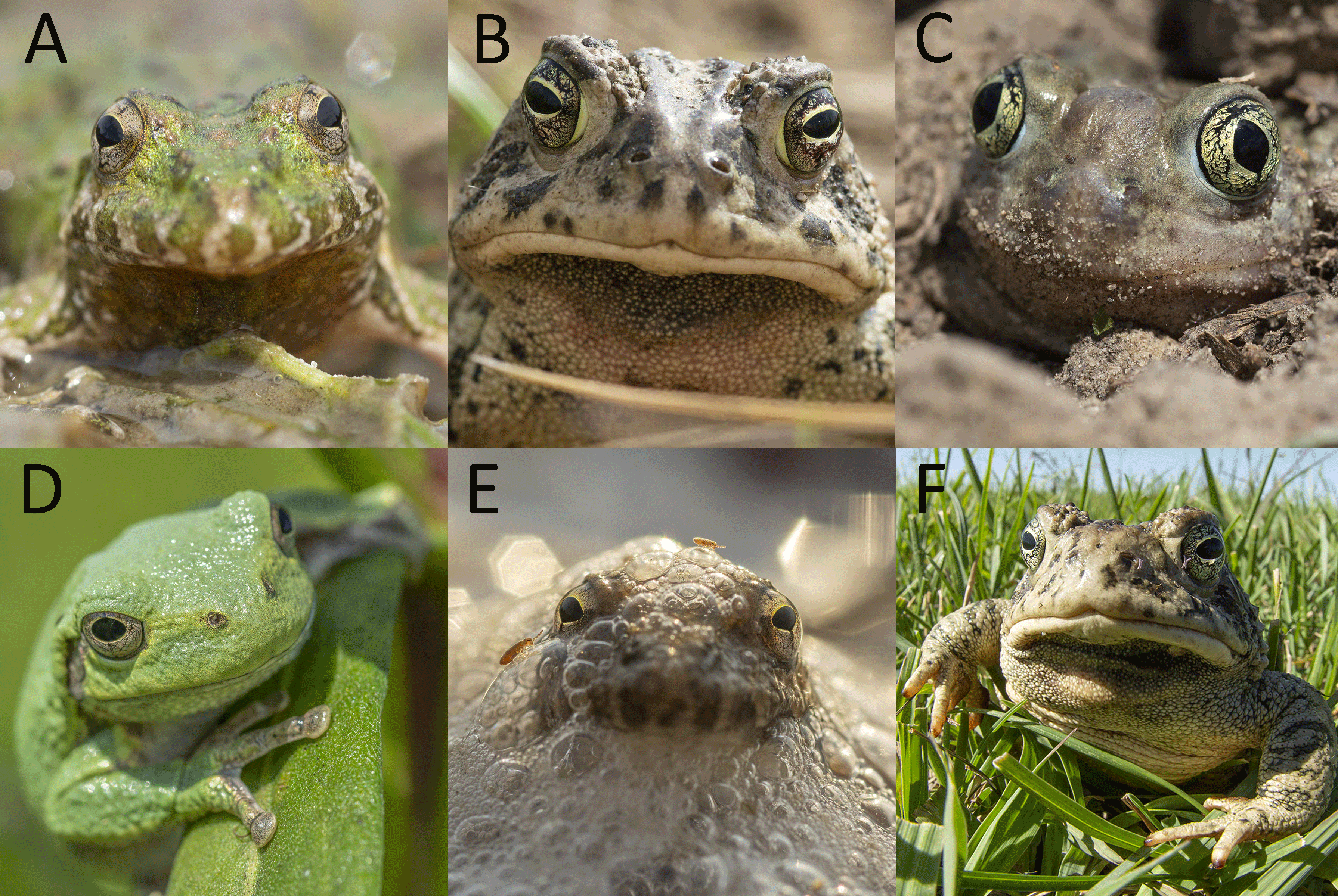
We’ll end today’s edition of the 2022 FORBY award celebration with two final categories whose winners will be decided by you. The first of those is ‘Best Face – Anuran Division’. Anuran, of course, refers to members of the tail-less (as adults) amphibians in the taxonomic order Anura. In Part 1, we got to meet the nominees for the equally-popular ‘Best Face – Insect Division’. This week, you get to vote for frogs and/or toads.
Select your favorite in the poll below the photo.
The last category for this edition of the FORBYs is ‘Best Milkweed Seed(s)’. As you know, milkweed seeds are massively popular among our judges, so this category always receives numerous nominees and is one of our highest profile awards. You can choose from the following eight nominees as you pick your favorite.
Well, that was eventful.
Thank you all again for your participation in Part 2 of the 2022 FORBY awards. We’ll be back with Part 3 very soon.






 The Prairie Ecologist