Hubbard Fellowship Blog – Planning a Prairie Garden

A guest post by Anne Stine, one of our Hubbard Fellows:

It just recently turned cold out, which means I’ve started daydreaming about next year’s garden.  I am a native plant enthusiast, and I have decided that I’ll be planting a prairie garden filled with my favorite flowers that I’ve learned with The Nature Conservancy in Nebraska over the past six months.  I’ve poured through the internet searching for propagation information and bloom times.  I want to make sure I have a continuous bloom period, both because it makes for pleasant viewing and because I want to provide native bee habitat across the growing season.  I also need to know which seeds require stratification or scarification. Because I am me, I made a spreadsheet of all this information (at the bottom of this post).

Who wouldn't want flowers like this in a garden?  Blue lobelia and cardinal flower in The Nature Conservancy's Platte River Prairies.

Who wouldn’t want flowers like this in a garden? Blue lobelia and cardinal flower in The Nature Conservancy’s Platte River Prairies.

Ultimately, I want my garden to be a great pollinator resource filled with unique native plants. If it attracts birds and butterflies too, that’s a huge plus. Lastly, if it’s going to survive my schedule, it needs to be low-maintenance.  I am pleased to note that gardening with native plants can fulfil all these objectives.  My table of appealing native plants, though not comprehensive, will help me design my garden to satisfy these requirements.  I’d love to hear everyone’s thoughts on favorite native plants and propagation tricks.

Happy plann(t)ing!

Click on the tables below to see a larger/clearer version of them.  Or click HERE to see the same information in a PDF format.

plantlist2

plantlist3

*Information on propagation, soil moisture requirements, and bloom period gathered from the USDA Plants Database, http://www.wildflower.org/plants Native Plant Database, and the Missouri Botanical Garden Plantfinder Database.

.

Hubbard Fellowship Blog: A Few Steps More for Foxtail Dalea

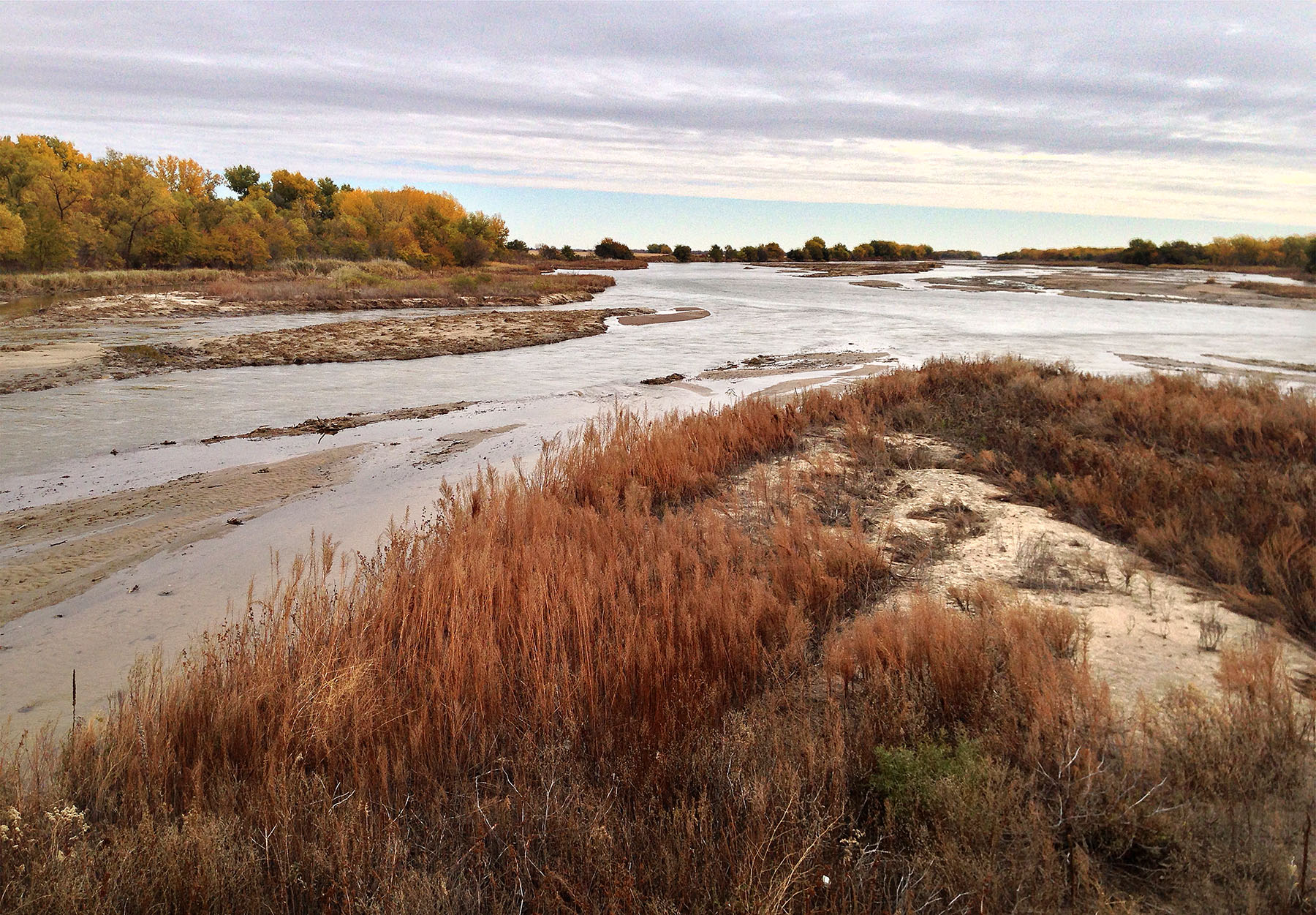
South channel of the Platte River, facing west.

South channel of the Platte River, facing west.

.

A guest post by Anne Stine, one of our Hubbard Fellows.  All photos are by Anne.

The birds are flocking up and the cottonwoods are yellow on the Platte River Prairies, so our seed harvest days are officially over.  Last week, I was scrambling to gather some seeds that I’d wanted a smidgen of before the wind scatters them and we miss out for the year.  Foxtail prairie clover (Dalea leporina) was number one on my list. Strangely enough, the only property where you can reliably find foxtail clover this year is a first year prairie planting that is fairly unimpressive looking in all other respects.

Hidden in the dead ragweed, sweet clover, and buffalo bur you can find some ‘good’ plants.  Dalea leporina is just one example.  As you can see in the picture below, despite the tangle of ‘ick’, there’s still bundleflower and maximillian sunflower. Chris often says that, on our properties, annual weeds are not really a problem. They pass. More desirable plants are often just hanging out in the understory.

A fairly unimpressive prairie.

A fairly unimpressive prairie.

Another thing Chris often mentions when we’re assessing sites dominated by annual weeds is that they make good quail habitat.  The mixture of dense cover and open runways protect the baby quail but allow them to move through the patch. I was not musing on the benefits of thick weeds as I thrashed through until I flushed a fat covey of mourning doves. They were probably drawn by the thick cover and forage.  Rocky mountain bee plant, which I’ve previously written about as a major boon to pollinators, was common on the site.  This annual produces abundant seeds that are much loved by mourning doves.

Good for baby quail?

Good for baby quail?

I’d only found one foxtail dalea plant in the tangled mess and I was so cold I was having trouble keeping snot out of my seed bucket, so I was ready to call it and head back.  The very next moment I noticed steaming fresh deer scat in the center of a visible deer trail.  I decided to follow the trail for a bit, hoping to catch up with the deer.  Sneaking up on deer is quality entertainment when you live on the prairie. I’d only gone a few steps when I found a large patch of the plant I’d been seeking. I don’t know if there’s a lesson here (other than “Anne can justify following her bliss” or “when you want to give up go a few steps more”), but it was nice to end the morning with a full bucket.

For more on foxtail dalea, you can read an earlier post by Chris.

South channel of the Platte, facing east.

South channel of the Platte, facing east.