
Last Gasp of Summer

Below are photos taken a week or so ago from a prairie here in Aurora, Nebraska.  It’s the time of year when everything is preparing for winter.  Most plants are done blooming and entering dormancy.  A few are squeezing a couple last flowers out while they still can.  Meanwhile, insects are scrambling around trying to find something to eat before they either die or find a way to survive the winter.  Any still-blooming flower is literally crawling with insects trying to eat the pollen, nectar, seeds, and any other part of the flower that’s available.  Makes you wonder if it’s really worth it to the plant to make the effort…
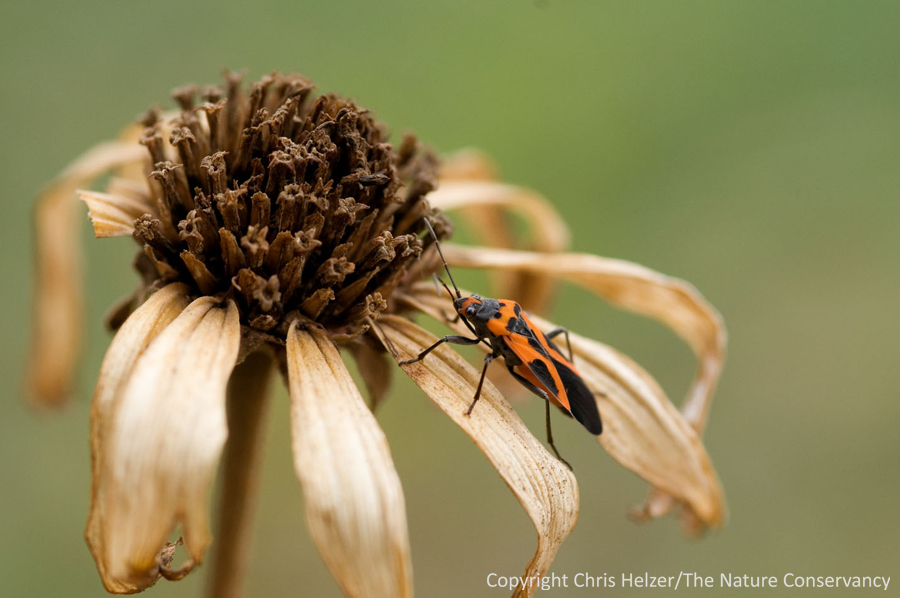
A false milkweed bug on a false sunflower. (The photo, however, is real)

.

Butterfly milkweed seeds ready to fly.

.

Crab spider (Tibellus sp) on grass.

.

The same crab spider as above. If I nudged the grass stem it was sitting on, the spider would quickly jump to nearby stem or leaf, crawl to the top of it, turn around, and freeze in this tight position - often making it nearly impossible to see.

.
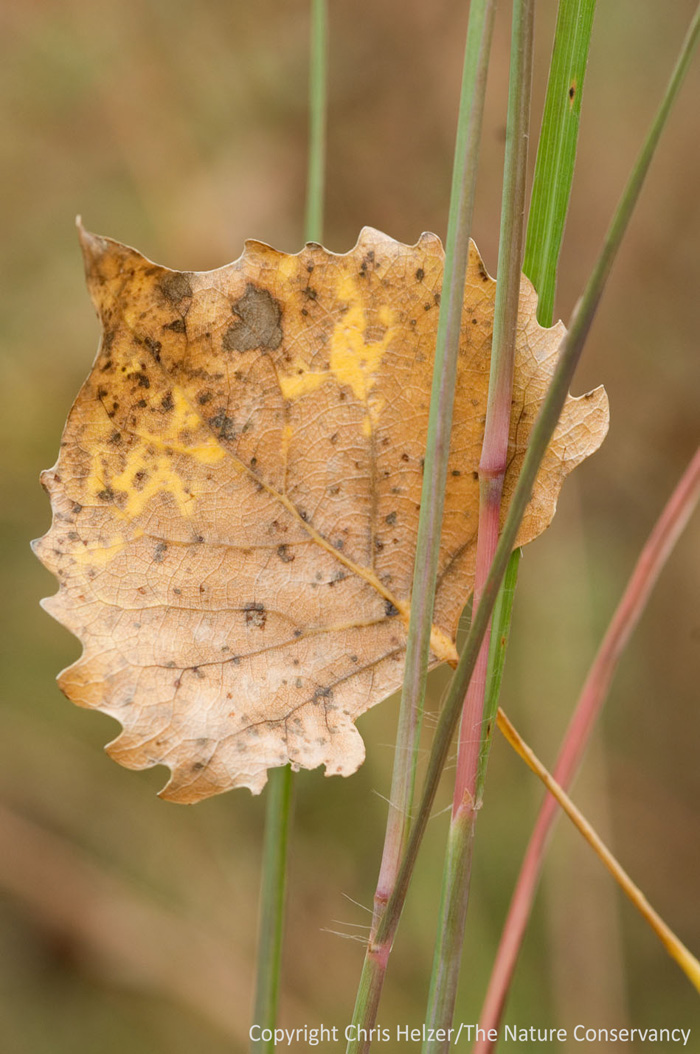
I actually saw this cottonwood leaf fall and lodge in the grass. I took the photo about 10 seconds later.

.

Pitcher sage (Salvia azurea) was one of the plant species that still had a few flowers.

.
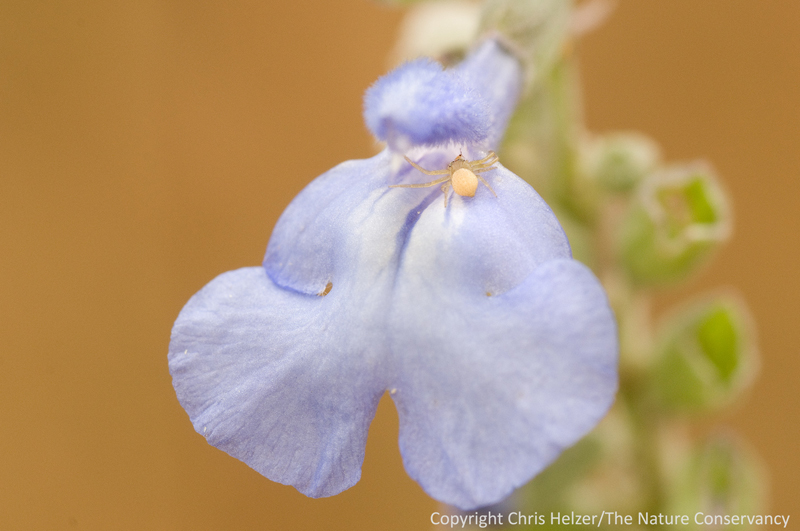
This tiny crab spider is dwarfed by a pitcher sage bloom. I'm not sure if the spider was waiting for prey or just resting.

.

We haven’t had a hard freeze here yet, but it probably won’t be long.  That first freeze brings the end of life for many living things, but just signals the beginning of a long wait till spring for many others.  In the meantime, it’s work work work, tying up loose ends before the winter comes.  That applies to prairie species and prairie ecologists alike!
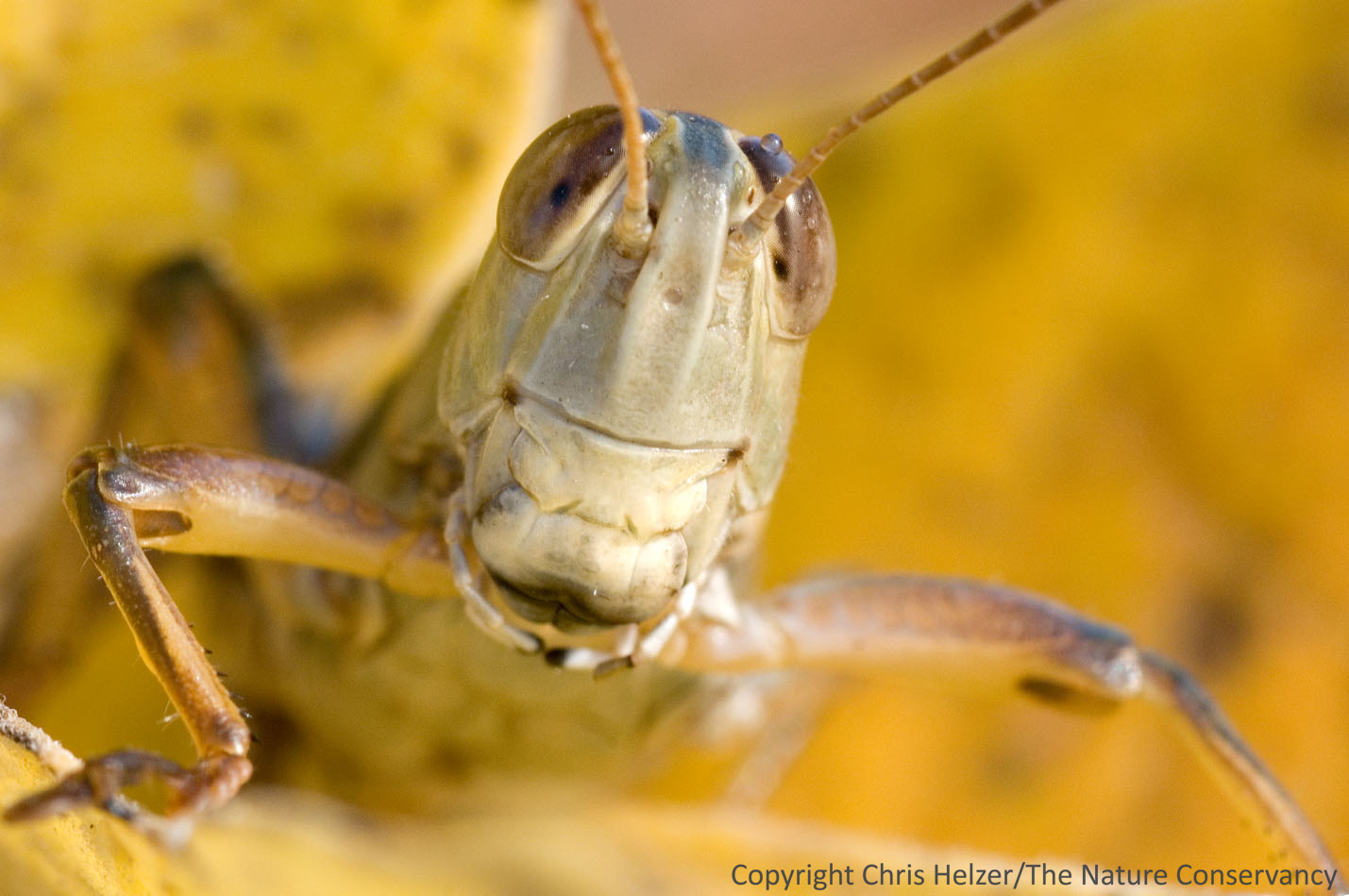
Photo of the Week – The Prairie Ecologist

Grasshoppers are a major ecological force in prairies.  They’re also fascinating creatures when you really look at them closely.

This grasshopper was photographed last week on a milkweed plant that had turned its autumn yellow color. It's nice that this one can keep grinning, in spite of the negative reputation grasshoppers have with many people... Lincoln Creek Prairie - Aurora, Nebraska.

To many gardeners, farmers, and ranchers, grasshoppers are seen as an adversary.  Unfortunately, that categorization ignores a much more complex story.  First of all, only a very small subset of grasshopper species do any significant damage to crops or garden plants.  Most live their own lives quite happily without any help or interaction with humans, thank you very much. 

Some grasshoppers are generalist feeders, but others feed only on particular species or groups of plants.  There are grasshopper species that forage high in the prairie canopy and others who feed along the ground – some by chopping down plants like little long-legged lumberjacks.  In addition, most grasshoppers feed largely on actively growing vegetation, but others eat what’s fallen to the ground (including some of what the lumberjack hoppers knock down).  Grasshoppers use sensitive organs at the tips of their antennae to determine whether a particular plant is something they want to eat or not.

In the above photo, you can see some of the anatomy that makes grasshoppers the fascinating creatures they are.  I could spend an entire blog post describing the mouthparts alone, but to keep it short I’ll just point out the four palps (the little appendages that look like extra arms) at the bottom of its face that help manipulate the leaves or other food before it gets to the mandibles.  I wonder if I can get something like that for my kids…  Based on the state of our kitchen floor after meals, silverware doesn’t seem to suffice for transporting food cleanly between their plates and their mouths…

Another feature that stands out in this photo is the circular spot in the middle of the grasshopper’s “nose”.  That spot is one of three ocelli, or simple eyes, that complement the two large compound eyes.  (The other two ocelli are right above the base of the antennae.)  Many invertebrates have these ocelli, but there is some apparent disagreement among scientists about what they’re used for.  One possibility is that they simply register light and dark  – perhaps to help see the shadow of a little kid trying to catch the grasshopper and pull its legs off?

What I love most about this photo is the leg joint on the left side of the photo.  It looks just like a hinge I’d expect to see in one of my son’s Lego sets.  Very robotic – who knew?

If you want to read more about grasshoppers – including their complex communication strategies – you might be interested in a short article I wrote for NEBRASKAland magazine.  You can read that here.

I wonder if there are any insects that AREN’T fascinating?  I’ve not met one yet.