Photo of the Week – September 10, 2015

A few weeks ago, I took my camera across town for a walk in a small local prairie.  There were numerous flowers blooming, but the stiff sunflowers (Helianthus pauciflorus) were stealing the show.  I shot quite a few photos of them from various angles.

Hover fly on Stiff sunflower (Helianthus pauciflorus) Lincoln Creek Prairie, Aurora, Nebraska.

This little hover fly was enjoying a meal of stiff sunflower pollen.  Lincoln Creek Prairie, Aurora, Nebraska.
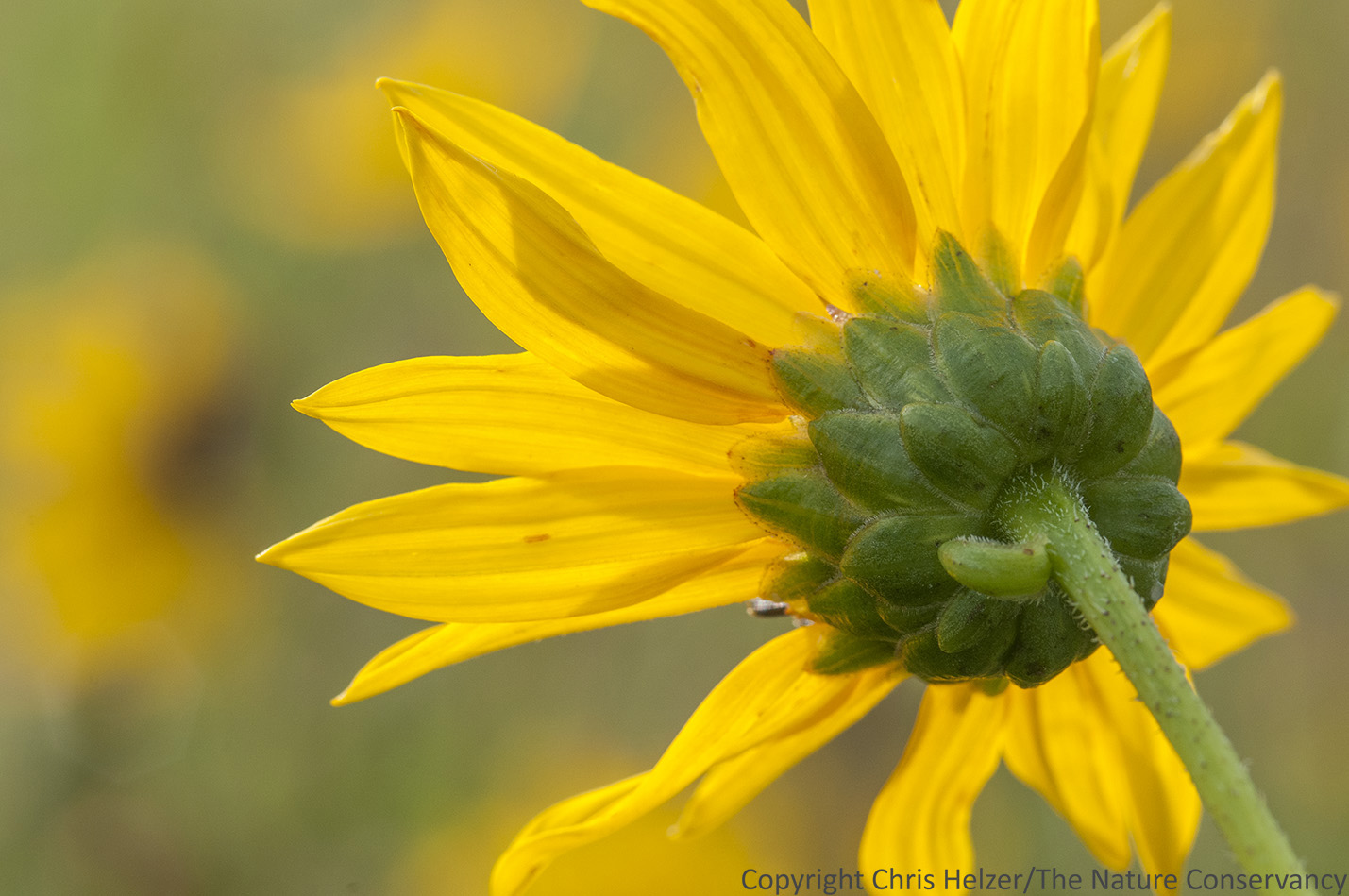
Stiff sunflower (Helianthus pauciflorus) Lincoln Creek Prairie, Aurora, Nebraska.

The sunflower perspective.

I noticed that a few sunflowers seemed to have their “petals” (technically speaking, they are the ray flowers) folded in toward the center of the flower.  I’d seen this quite a few times before, but this time I decided to investigate.  I gently pulled the petals apart and found they’d be held down with what appeared to be silk.  Beneath them, an insect larva was hiding and, presumably, feeding on pollen or other flower parts.

Caterpillar in Stiff sunflower (Helianthus pauciflorus) Lincoln Creek Prairie, Aurora, Nebraska.

A closed-up stiff sunflower.

Caterpillar in Stiff sunflower (Helianthus pauciflorus) Lincoln Creek Prairie, Aurora, Nebraska.

The larva revealed.  Note the remnants of silk and the anthers still sticking to the petal after I pulled everything apart.

Caterpillar in Stiff sunflower (Helianthus pauciflorus) Lincoln Creek Prairie, Aurora, Nebraska.

A close up of the caterpillar (?)

I’m not expert enough with insect larva identification to know for sure, but I’m guessing the larva is a moth larva – I know at least some of those have the ability to make silk.  Some of you reading this will surely know more about them and comment below.  (Thanks for your help.)

A few days later, I ran across some similarly closed up flowers in a different prairie.  When I opened those up, there was another larva inside, but it was much darker in color.  I wonder how many different species have this behavior?

The larva I found was just one of many examples of insects that create safe hiding places for their young to feed in.  Spittle bugs and gall-forming insects are two others that are common in prairies.  Of course, for every great hiding strategy, there is at least one predator that has developed a counter strategy.  I don’t know what eats the petal-tying larvae, but I bet there’s something out there.  I’m pretty sure guys-with-cameras are not the only ones who can find them.  Fortunately, for the larva I found, I wasn’t hungry at the time.


Photo of the Week – August 28, 2014

I made a quick run out to our family prairie this week to see how our grazing management was looking.  It was a beautiful evening for a stroll, as the sun went down through layers of diffuse clouds.  The abundant rain this year has fueled tremendous growth in the prairie and has filled up the wetland to its rim.  As planned, a portion of the prairie is short-cropped by cattle grazing while other areas are either ungrazed or lightly grazed, and there was a lot of life on display.

Grasshoppers and katydids exploded around my feet as I walked around – most of them clearly adults since they were flying short distances before landing again (they only get wings after their final molt into adulthood).  They were joined by hordes of other invertebrates, including caterpillars, bees, butterflies, and many others.  I flushed a great horned owl from a big ash tree, and then was very pleased to see a rail (probably a Virginia rail) dangle its feet as it flew across our recovering wetland.  Here are a few photos from the night.

Caterpillar

I’ve seen this same species of caterpillar in a couple places this week.  This one was munching on false boneset.

.

Dotted gayfeather and stiff goldenrod were both abundant upslope of the wetland.

Dotted gayfeather and stiff goldenrod were both abundant uphill from the wetland.

.

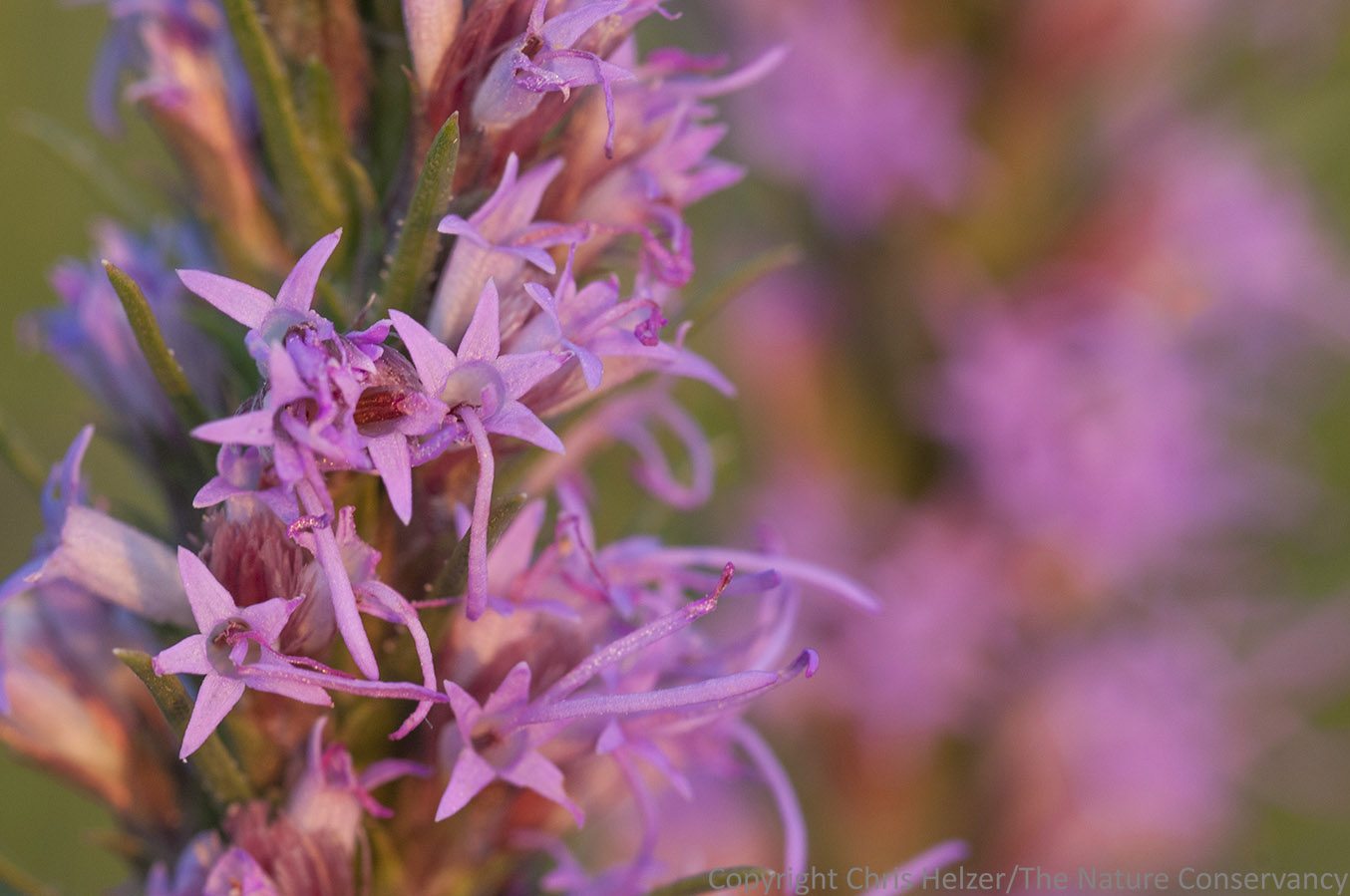
A close-up view of dotted gayfeather.

A close-up view of dotted gayfeather.

.

Our wetland at sunset.

Our wetland at sunset.  The addition of a couple solar-powered wells for livestock water has allowed us to exclude cattle from the pond/wetland area, and the habitat improvements are obvious.

A quick note of thanks:  This blog quietly passed two milestones this week.  I posted my 500th post, and we passed the 1,800 mark on blog subscribers.  Thank you for your continued support of this site – I hope it’s as useful and enjoyable to you as it is to me.