
Photo of the Week – October 30, 2014

I’ve always had a difficult time taking pleasing landscape photos in heavy fog.  I love the way prairies and wetlands look on foggy days, but I rarely come away with a scenic photo I’m happy with.  Fortunately, I can (and usually do) fall back on close-up photos…

Water droplets, gerardia and spider silk on a very foggy morning at a Platte River Prairies wetland last week.

Water droplets, false foxglove and spider silk on a very foggy morning.

One foggy morning last week, I waded into the shallow water of a wetland at our Platte River Prairies.  Everything was dripping wet because of the dense fog.  There was a light breeze, but not quite enough to blow the droplets off the plants or spider silk strands.
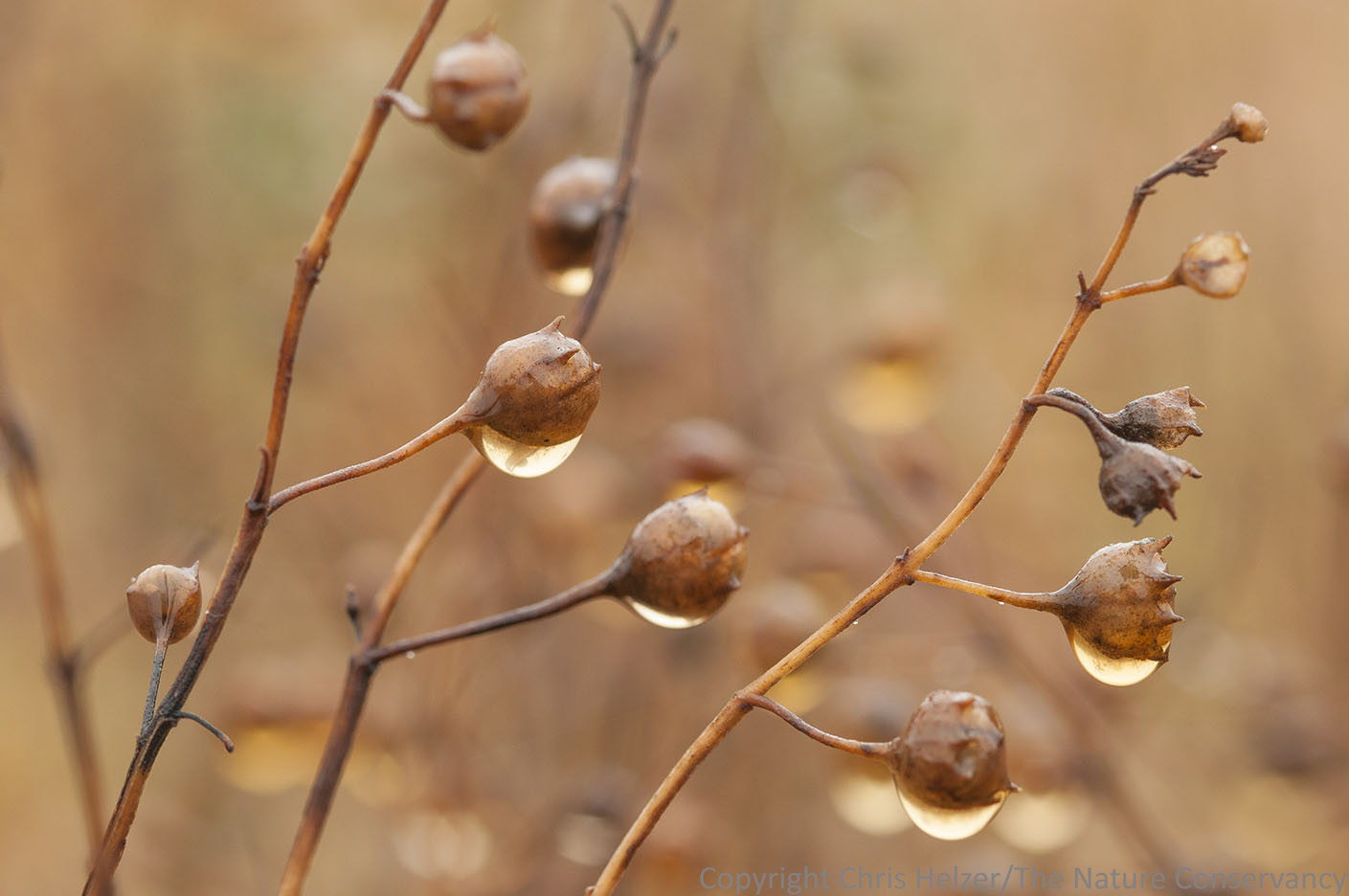
More gerardia in the fog.

More false foxglove in the fog.

Fog creates a “flat” light.  Flat light can be used for scenic photos, but it’s difficult to portray depth and texture because of the lack of any shadows.  However, that same light can work pretty well for close-ups, especially as the fog thins a little and the ambient light becomes a little brighter.
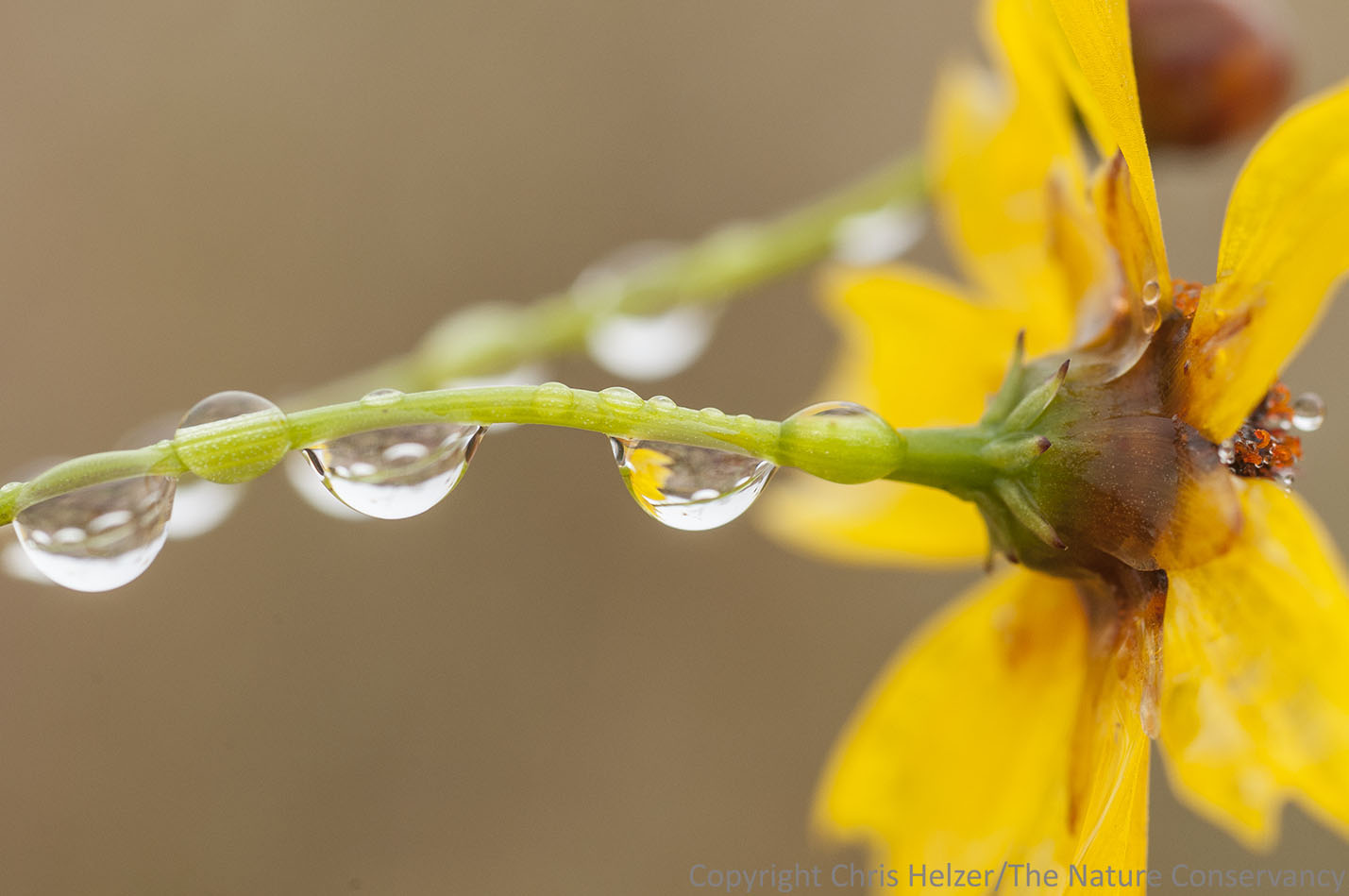
Droplets on a late-blooming plains coreopsis.

Droplets on a late-blooming plains coreopsis.

There were several patches of sand lovegrass along the sandy edge of the wetland last week.  The plants were bent almost to the ground under the weight of water drops.  Hidden among the sparkles was a cold wet grasshopper…

A grasshopper on a water-bejeweled sand lovegrass flower.

A grasshopper on a water-bejeweled sand lovegrass flower.

.
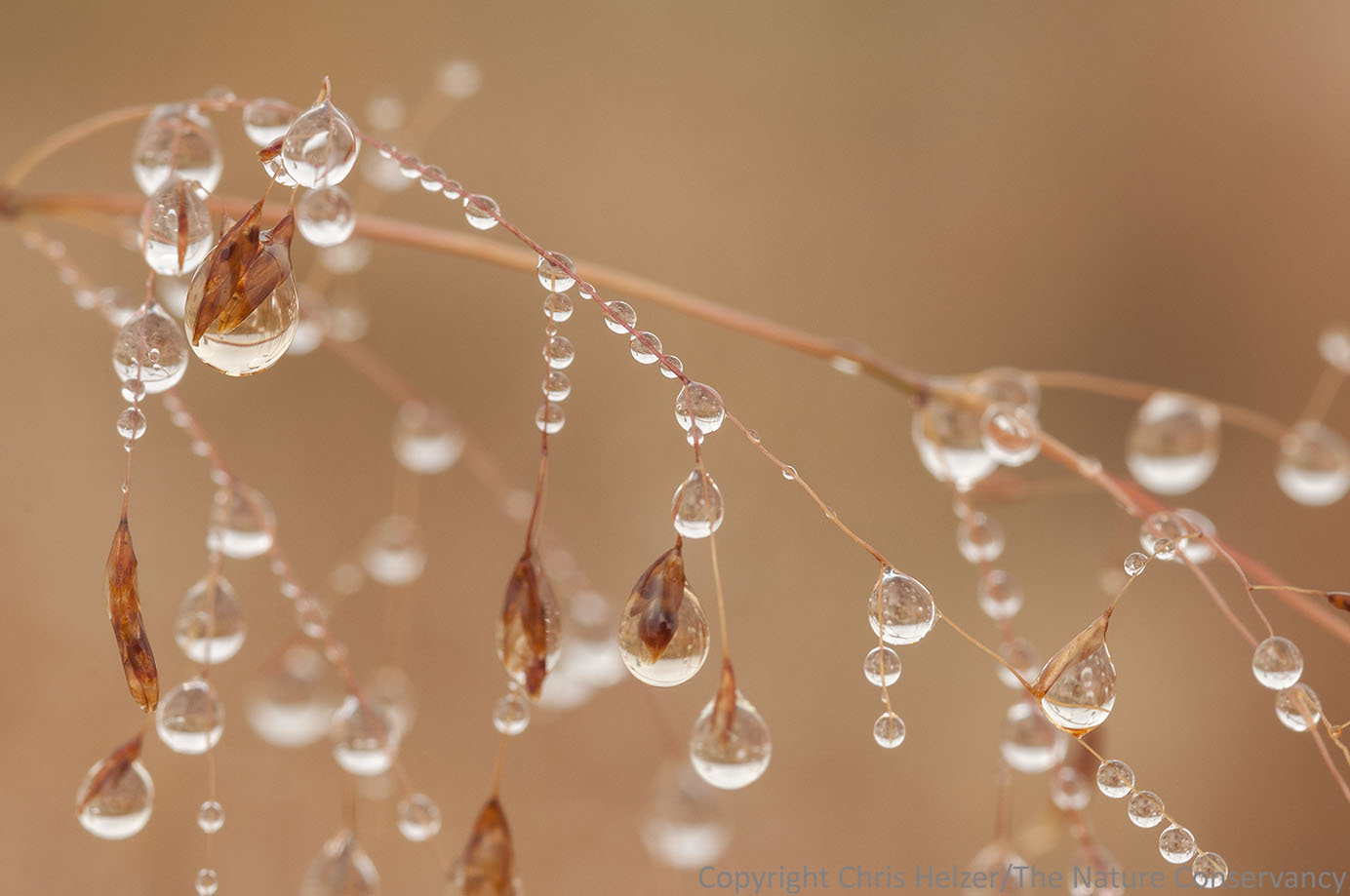
Sand lovegrass close-up.

Sand lovegrass close-up.

.

Sand lovegrass closer up.

Sand lovegrass closer up.

As the fog started to dissipate, the sun popped out periodically, providing a few opportunities for some landscape photos, but by then I was too intent on the little drops of water to pay much attention to the bigger picture.  I did take a few photos of the wetland, but quickly put the wide angle lens back away in favor of my macro lens.
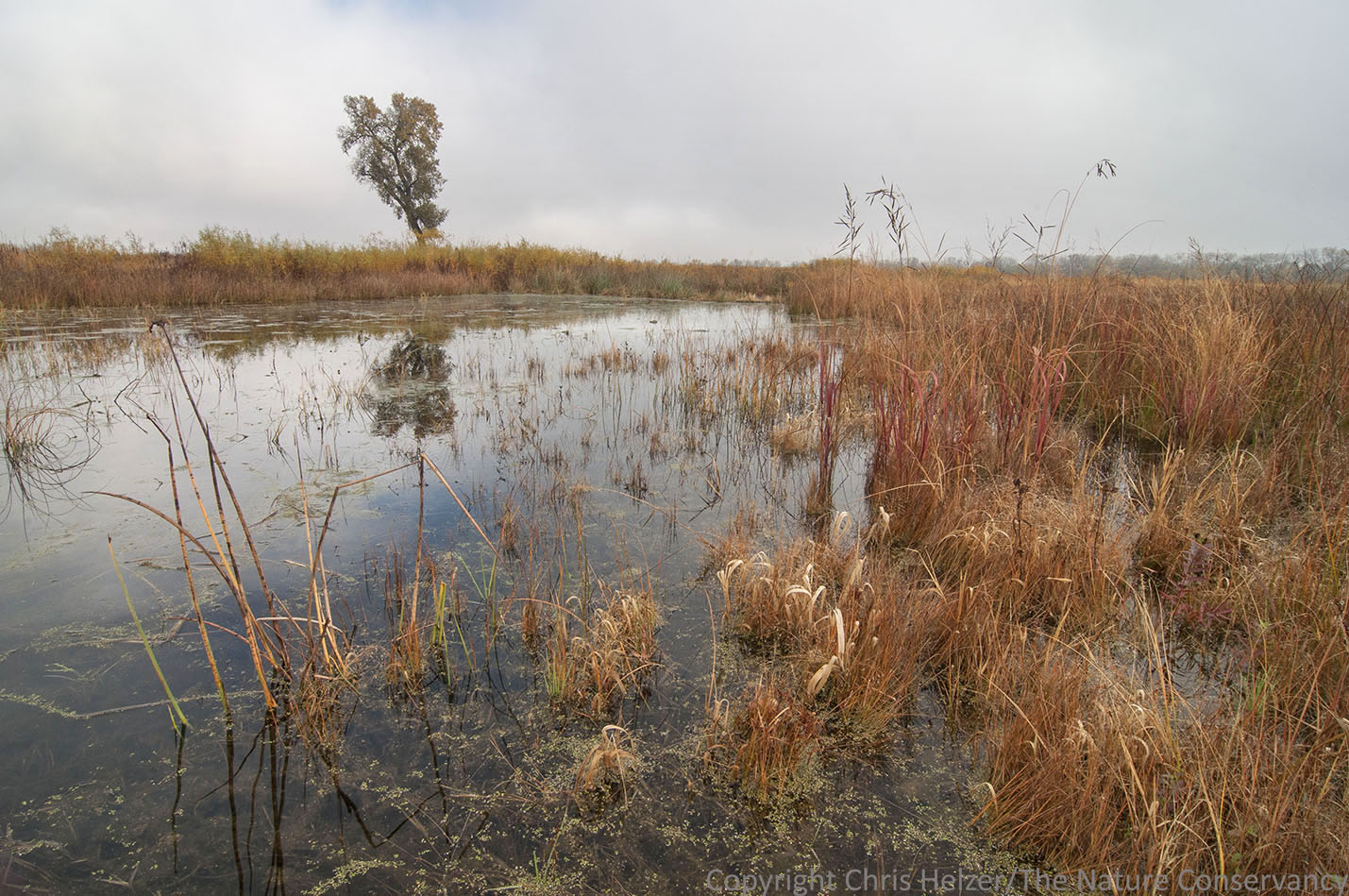
Here's what the wetland looked like as the fog started to lift.

Here’s what the wetland looked like as the fog started to lift…

.

Water droplets on spider silk.

…but it was the close-ups that continued to catch my eye.  Water droplets on the tip of a grass leaf and spider silk.


Seventeen-Year Cicadas are Back! (in Iowa, at Least)

I traveled to Iowa this week (more on that next week) and just happened to arrive during the emergence of one of the world’s most intriguing insects – the periodical cicada (Magicicada sp).  Made up of seven different species, periodical cicadas are found only in eastern North America and are named for their long life cycles of either 13 or 17 years.

This newly-emerged cicada (Magicicada sp) hadn't completely dried out yet, so it's wings weren't functional enough to fly away from me.  I put it on a stick for an easy photograph.

This newly-emerged cicada (Magicicada sp) hadn’t completely dried out yet, so it’s wings weren’t functional enough to fly away from me. I put it on a stick for an easy photograph.

All cicadas (that I know of) spend most of their lives underground as larvae before emerging for a brief, noisy life aboveground.  What makes periodical cicadas unique is not so much the length of time spent as larvae – though it’s longer than other cicada species – but rather the synchronization of their emergence.  The common dog-day cicada, for example spends multiple years underground as a larva, but we see adults every year because their emergence is staggered across years.  In contrast, periodical cicadas synchronize their emergence so the entire population in a particular area is on the same schedule.  That timing of emergence, however, does vary by region across North America, so while seventeen-year cicadas are out in Iowa, Illinois, and Missouri this year, they emerged last year in an area covering states including Maryland, New York, and Virginia.  People living in eastern Nebraska will get a chance to see them in 2015.

Emerging as adults in hordes probably helps ensure the survival of individual periodical cicadas (and their species) because predators can’t eat nearly enough to put a dent in the population.  If periodical cicadas showed up in huge numbers every year or two, there would surely be predators with life cycles timed to take advantage of the abundant food source.  However, the extreme length and synchronization of the cicada life cycle has apparently kept any predator species from being able to take advantage (evolutionarily) of the phenomenon.  Fortunately for us, cicadas are harmless to people, and even the damage they do to trees by feeding and laying eggs in stems is almost always temporary.

There is much more fascinating information about periodical cicadas, but others have already covered it far more completely than I can.  If you’re interested, I strongly encourage you to visit the magicicada.org to learn more.