
I’ve had a number of requests to post something on techniques for close-up photography (macro photography). To keep long technical details out of a short blog post, I’m presenting some basic tips here and providing a link to a more detailed PDF document for those interested in it.
Carrying a camera with a good macro lens is a fantastic way to explore prairies. I notice things I wouldn’t otherwise see when I’m looking for close-up photos because my mind has developed a search image for small objects.
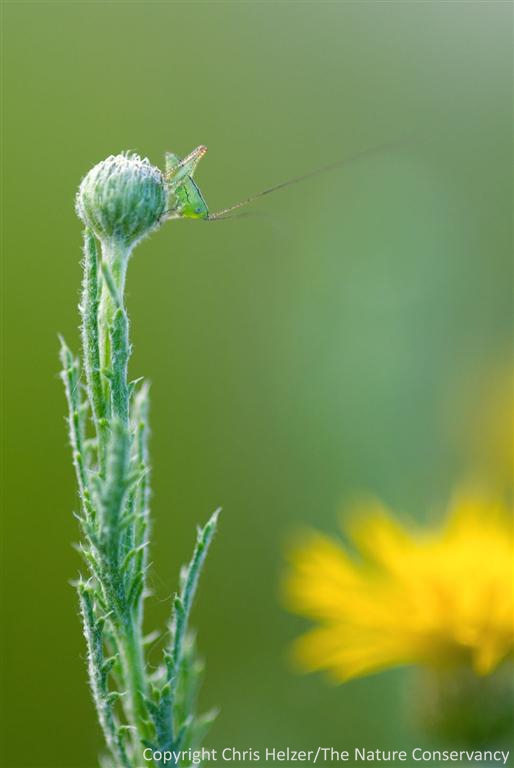
This tiny katydid nymph is sitting on cutleaf ironplant. I never would have seen it if I hadn't been carrying my camera and looking for small things to photograph.
Rather than looking for specific subjects (such as dragonflies or violets) I try to look for things that are well-lit and have interesting colors/backgrounds/patterns. Early in the day, I often work the edges between shadows and light, trying to find flowers or insects that are catching the warm light but have shadows behind them. On bright overcast days, everything is evenly lit and saturated with color, so I look for appealing patterns and colors – but just about any subject is fair game. I rarely pull my camera out on bright sunny days unless I’m documenting something. The light from a bright mid-day sun is just like the color of the sun – harshly bright and colorless.
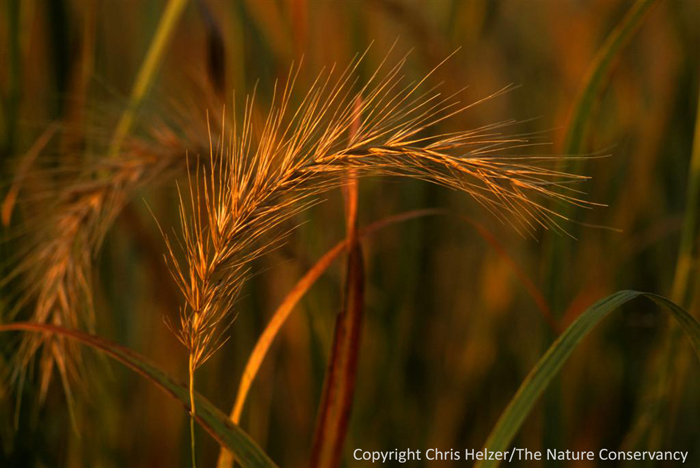
This Canada wildrye seed head is reflecting beautiful golden early morning light.
Close-up photography doesn’t require a lot of equipment, but an SLR camera with manual focus and aperture control, a good macro lens, and a tripod are all necessary items. Slow shutter speeds (the amount of time the camera’s shutter is open) allow small aperture settings, which helps maximize depth-of-field (the amount of space, front to back, that’s in focus) – something that is very important when focusing in on small subjects. In order to shoot with slow shutter speeds, it’s impossible to hold a camera still without a tripod. It’s also difficult to use slow shutter speeds on windy days, so calm wind is a close-up photographer’s best friend.
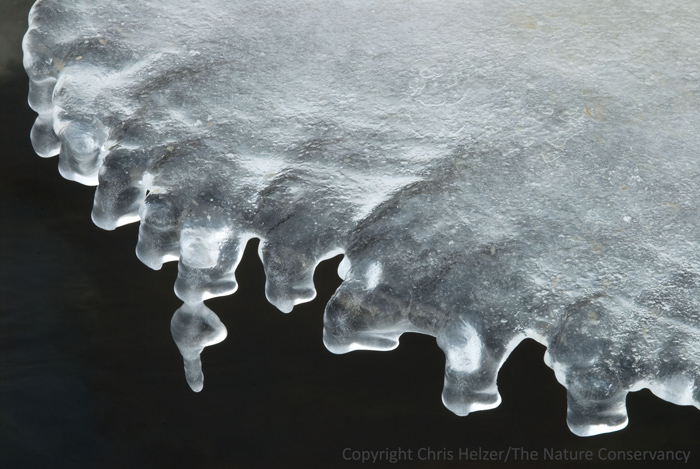
This photograph of ice along a creek was taken at a shutter speed of 1/6 second - much too slow to hand hold (especially with shivering hands). A tripod was a must for this photograph.
The most important – and often overlooked – aspect of a close-up photo may be the background. When photographing an insect or flower, photographers tend to focus solely on that subject and forget about what is behind it. An errant grass leaf or stem has been the downfall of many otherwise very nice photos. An experienced photographer is always conscious of what’s behind the subject, and knows how to make slight adjustments to the position of the camera to create the most interesting (or least distracting) background possible.
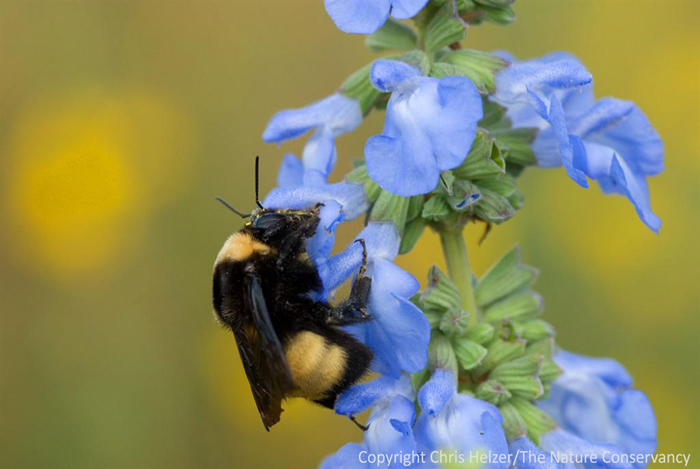
A bumblebee on pitcher sage. I positioned my camera to get the blurred sunflowers in the background as texture and context.
I’ve been lucky to have opportunities to share my photos with others through multiple avenues – magazines, books, slide presentations, and now this blog. I enjoy being able to show people animals and plants they might not otherwise have seen on their own. It’s also educational for me because I can’t identify many of the subjects at the time I photograph them, but a good photograph allows me the opportunity to research both the identification and ecology of those species later. I’ve learned a tremendous amount about prairies just by photographing its small citizens. If you enjoy photography but don’t own a macro lens, I encourage you to look into getting one – it’s a ticket into a whole new world.
For more photos and tips on macro photography, click to see a PDF of more detailed guidance (macro photography 2010) or a short article I wrote on the same subject for NEBRASKAland magazine back in 2007 (Macro-June2007).
 The Prairie Ecologist