A Plot-Sized Biodiversity and Photography Project

Today, I’m beginning a new photography project aimed at exploring and celebrating the small scale diversity and complexity of prairies.   I’ve picked out a 1 x 1 meter plot in a small patch of restored prairie here in Aurora, Nebraska, and I will be photographing everything I can within that tiny area over the next year or so.  My objectives are to find and document as much beauty and diversity as I can and to show the dynamic nature of prairie life, even at a very small scale.
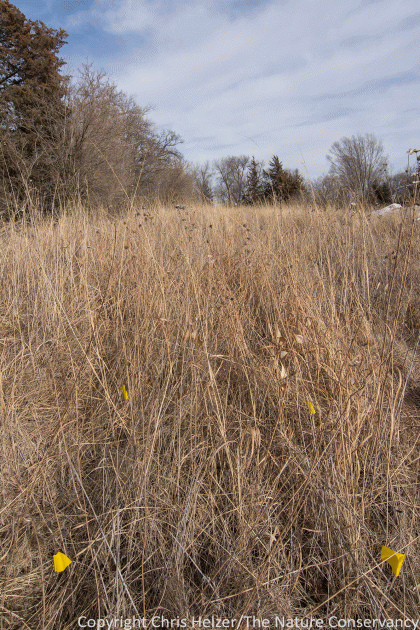
Lincoln Creek Prairie, with the yellow flags marking my square meter plot.

The plot sits in a narrow strip of land restored in the 1980’s by Bill Whitney and Prairie Plains Resource Institute.  I picked Lincoln Creek Prairie because it’s right across town from me, and therefore easy for me to get to frequently.  It’s also a great restored site that was planted with a diverse mixture of prairie species (over 100 species) and is well-established.  However, the prairie is small enough that it doesn’t host any grassland-nesting birds or other animal species that need relatively large and open prairie habitats, and suffers from all the other issues that come along with tiny prairies.  I anticipate that most or all of the organisms I photograph during the coming year will be plants and invertebrates, but I’m confident that I won’t find a shortage of subject matter.
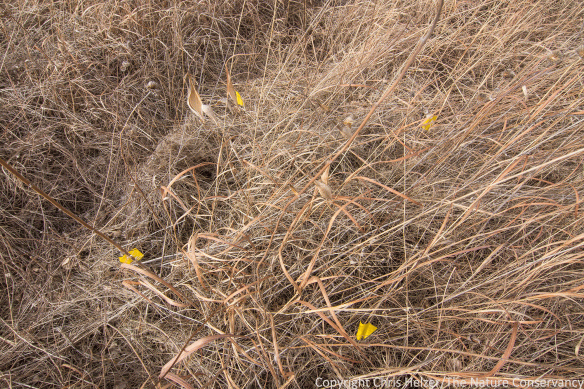
A view of the 1 x 1 plot from above

I didn’t pick the small plot randomly, but I also didn’t try to find a spot with more diversity than any other nearby.  Instead, I looked for a place that would catch the light well during most of the year but was out of the way enough to not be disturbed by people hiking the nearby trail.  I freely admit that I chose the exact location of the 1 x 1 plot because it has a butterfly milkweed plant in it – it’s a nicely photogenic species.  This isn’t research, after all, and I don’t have to select my plot in a completely unbiased way!  However, I’m confident that the 1 x 1 plot I chose is representative of the rest of the prairie around it.
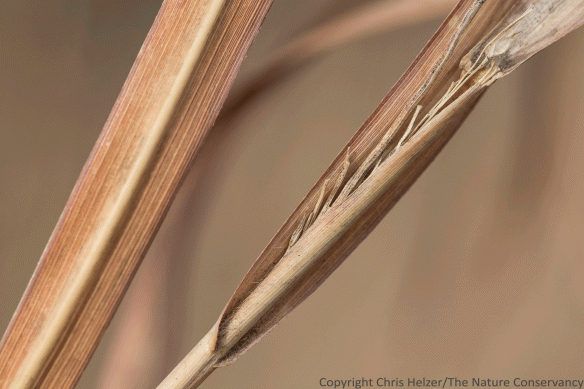
Switchgrass (Panicum virgatum) with a flower that never completely came out of its sheath last summer.

I began my photography journey within the plot yesterday, and took the photos you see here in this post.  I’ve already discovered one big challenge regarding my plans – it’s going to be difficult to avoid crushing or breaking the vegetation within the plot during my frequent visits.  I don’t see any way to avoid matting down the vegetation around the edge of the plot, but I’ll try not to do any more of that than necessary, and hopefully that won’t excessively impact what I see inside the plot.
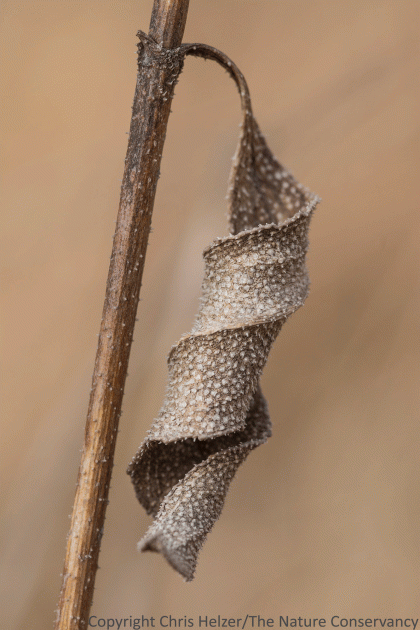
The curled and dried leaf of stiff sunflower (Helianthus pauciflorus)

Right now, the plot is fairly uniformly brown, and perhaps drab looking from a distance.  However, I didn’t have much trouble finding interesting shapes and textures to photograph during the 10 minutes or so I spent there yesterday.  Even without green vegetation or crawling invertebrates, there was plenty to look at.  That bodes well for the coming year, I think!  Stay tuned…
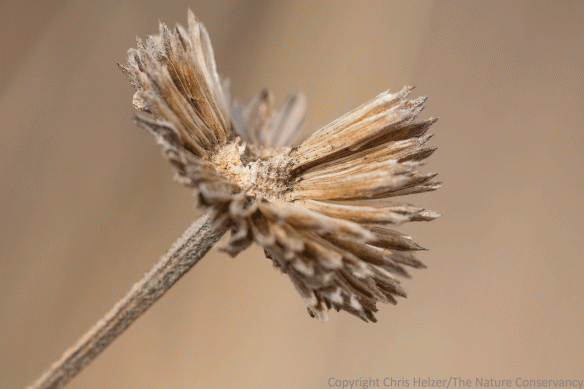
Maximilian sunflower (Helianthus maximiliani) seed head, minus the seeds.  Birds, mammals, and/or other creatures likely picked it clean last fall.
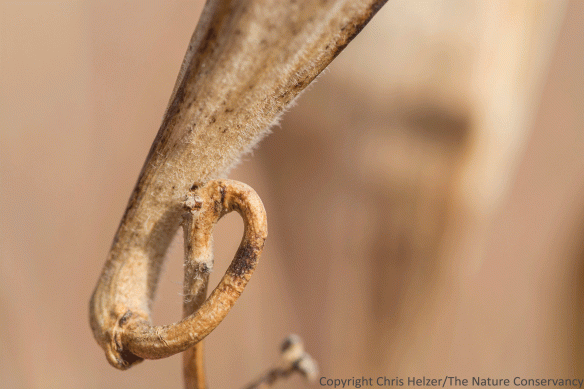
A butterfly milkweed (Asclepias tuberosa) seed pod on a curled stem.

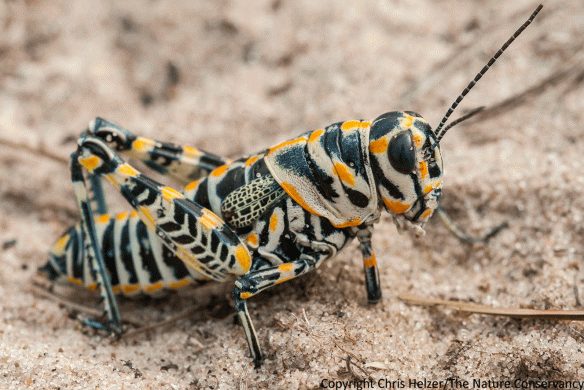
The Diversity, Beauty, and Secret Lives of Grasshoppers

I know I say this about a lot of different insects, but grasshoppers are truly amazing creatures.  Grasshoppers have a reputation as voracious consumers of crops and forage grasses, and that reputation is well-earned.  However, the pest tag is far too often and broadly applied.  There are something like 400 species of grasshoppers in the western United States, and only about 20 species are categorized pests.  In Nebraska, we have 108 grasshopper species, with only a handful that ever cause economic damage, and that damage occurs sporadically – mainly in years when those species have population booms.

The differential grasshopper is one of only a few grasshopper species that can cause economic damage to farmers, ranchers, and gardeners. It’s a native species that has adapted very well to the way we’ve altered its world.

Unfortunately, the “Grasshoppers Destroy Crops” headline tends to swamp the many and much more interesting grasshoppers stories we should be talking about.  Let’s start with the numbers I’ve already presented.  THERE ARE 400 SPECIES OF GRASSHOPPERS IN THE WESTERN UNITED STATES AND 108 SPECIES IN NEBRASKA ALONE!  That doesn’t include katydids or crickets, by the way, just grasshoppers.  I’m guessing most of you had no idea there were that many kinds of grasshoppers.  Am I right?

I’m including a half dozen grasshopper photos in this post to show off just a taste of the beauty and diversity of grasshoppers in prairies.  If you want to read more about this, you can read an article I wrote for the August/September issue of NEBRASKAland Magazine.  While you could be forgiven for thinking there are two kinds of grasshoppers in the world – green and brown – you would be very wrong.  There are grasshoppers with much more color and pattern variation than many species of birds, but nobody makes movies about people circling the globe to see more grasshopper species than anyone else, do they?  Many band-winged grasshoppers show off gorgeous red or yellow wings as they fly, wings that rival those of butterflies, but you don’t hear about historically-prominent British Prime Ministers collecting grasshoppers, do you?

The painted grasshopper (Dactylotum bicolor) rivals any bird for beauty in color and pattern.

Now let’s discuss grasshoppers’ diet, which can include far more than just grasses.  Some grasshopper species feed high up in the canopy of prairie vegetation, while others stay on the ground.  Many have a very wide diet, including both grasses and wildflowers, but others are much more specialized, including grasshoppers that feed almost completely on one or a few wildflower species.  Grasshoppers are often seen feeding on the pollen of flowers, especially sunflowers, providing further evidence that they are much more than just grass eaters.  Most grasshopper species prefer the newest, most tender leaves of plants, but some – especially those that live mostly on the ground – make their living off of older leaves, including some dropped by their brethren living above them.  Regardless of what they like to eat, grasshoppers have very sensitive organs on the tips of their antennae that help them determine the forage quality of a leaf before they eat it.

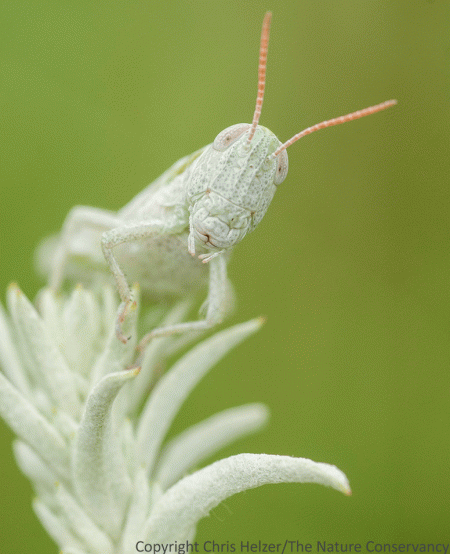
The cudweed grasshopper (Hypochlora alba) is named for its favorite food plant – cudweed sagewort, aka white sage (Ambrosia ludoviciana), on which it is supremely well camouflaged.

When you think about animals that have sophisticated communication systems, you probably think about creatures like apes, whales, and even prairie dogs, right?  You might be surprised to learn that grasshoppers have their own complex methods of communication as well.  Every grasshopper species produces its own unique set of sounds, most of them created by rubbing their hind legs against their abdomen.  In addition, some employ what’s called “crepitation” – a loud clacking sound made by snapping their hind wings while flying.

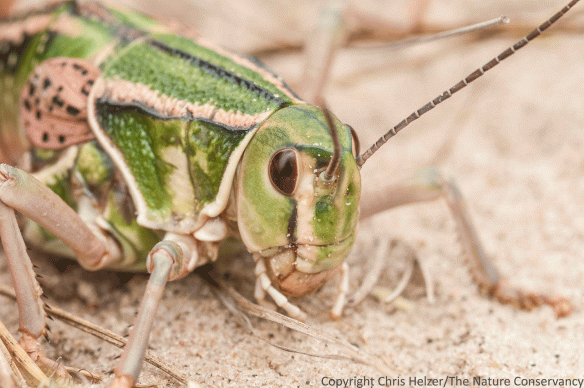
The huge and flightless plains lubber (Brachystola magna) is as gorgeous as it is large.

Grasshoppers can also communicate visually.  They can do this by rubbing their legs against their wings, flashing their wings, and making a variety of motions with their legs.  Those visual signals can help them attract mates, defend breeding territories and feeding areas, and ward off unwanted suitors.  I’m not saying we should make documentaries about people trying to teach grasshoppers how to communicate with American Sign Language, but I’m not NOT saying it either…

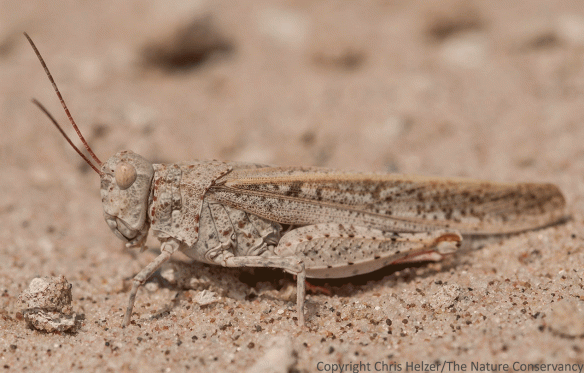
This bandwing grasshopper (Oedepodinae) is about as well camouflaged as you could hope for against its sandy background.  When it flies, though, it displays very colorful wings (color and pattern varies by species).

If you’re someone who doesn’t care about the beauty, diversity, or communication abilities of grasshoppers, maybe their utilitarian value will make an impression.  As a major consumer of vegetation in prairies, grasshoppers play a huge role in nutrient cycling, a role that becomes even more important in prairies without large vertebrate grazers.  Perhaps most importantly, though, grasshoppers are a crucial food source for many other animals, including birds and other wildlife species you (hopefully?) enjoy having around.  They are large and packed with nutrients, as well as abundant and fairly easy to catch.  In addition, while they aren’t a particularly popular food item among people here in North America, grasshoppers are an important source of protein for humans in other parts of the globe.

When grasshoppers start to emerge next spring, please take a little extra time to notice and appreciate them.  See how many different colors and shapes of grasshoppers you can find in your neighborhood prairies (remembering that if their antennae are as long as their body or more, they are katydids, not grasshoppers.)  Look for the grasshoppers with big colorful wings as they clatter noisily away from your feet.  And if you’re a person of financial means, and are interested in making a movie about grasshopper watchers or people trying to teach grasshoppers how to talk to humans, call me.  I know people who know people.

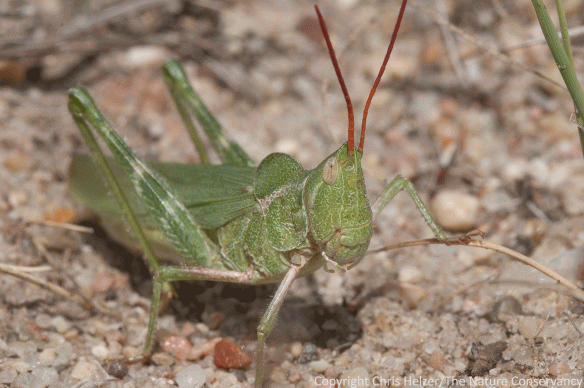
How can you not like and admire the green fool grasshopper (Acrolophitus hertipes), with its raised back ridge, bright red antennae and charming face?