
Spring is a good time to think about buds. Most of us are familiar with buds on the branches of trees and shrubs because they’re easy to see – and at this time of year, they begin opening and exposing new leaves and flowers. Most prairie plants, however start their spring growth from buds at or below the soil surface.
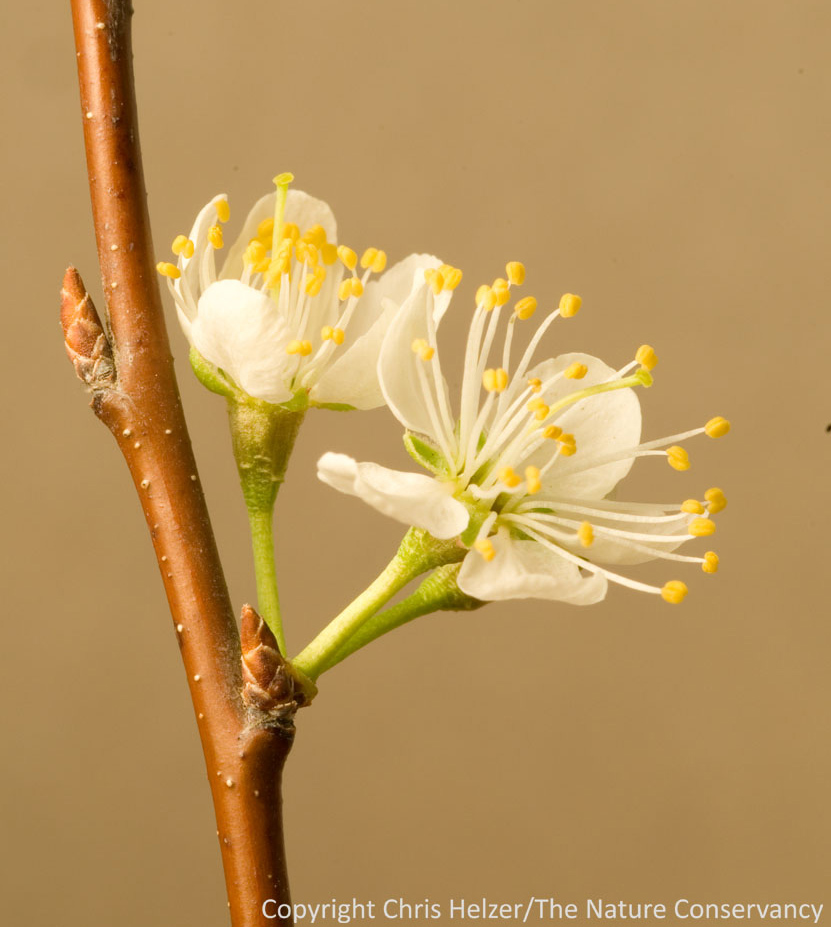
Blossoms and buds of a wild plum. The flower buds have already opened, but the leaf buds are still tightly closed.
Before I go any further, I need to thank Jackie Ott, who provided the background information and photo interpretation for this post. Jackie is a PhD candidate, and one of a group of researchers at Kansas State University who are working to learn more about the buds of prairie plants and the role those buds play in the ecology of plant populations. Just as the collective seeds in the soil beneath a prairie is called a “seed bank”, the buds beneath a prairie can be called a “bud bank”. Jackie and others are trying to find out how those bud banks work, and (among other things) how they help plants and populations respond to stress. I’ve enjoyed several opportunities to learn about buds from Jackie and her colleagues over the last several years, and will write a future post about some of what they’re learning about bud banks. In this post, though, I present a short introduction (with photos) on the belowground buds of prairie grasses and wildflowers.
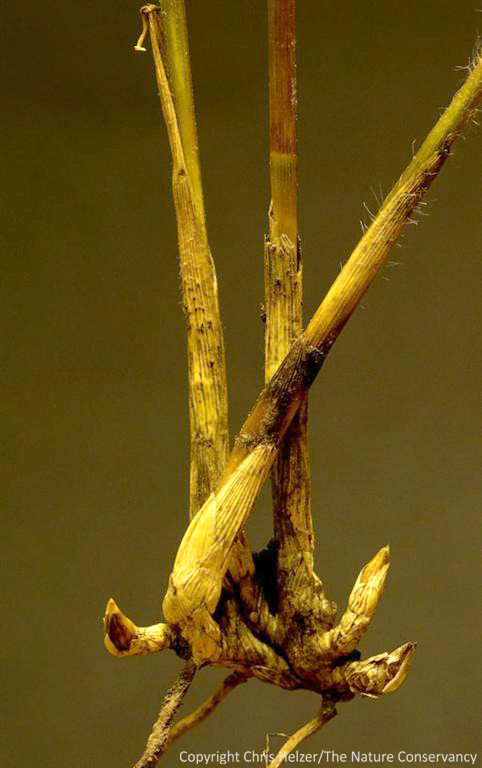
Buds of sand lovegrass (Eragrostis trichodes) - one on the left and two on the right.
Buds are essentially packages of plant tissue full of cells that can divide very quickly. They are usually protected from moisture, temperature extremes, and other damage by a thick waxy coating. All of the buds on grasses are located below ground, so all growth comes from there. When a grass is clipped or grazed off, it just keeps pushing the growth up from the original underground bud. Forbs start their growth each spring from buds located near or below ground too, but they can also grow “adventitious” buds at any point along their stems. When a forb is clipped, it can create a new bud near the clipped tip and restart growth from there. If it is clipped too close to the ground, it may start a new stem from a belowground bud instead of from an adventitious bud.
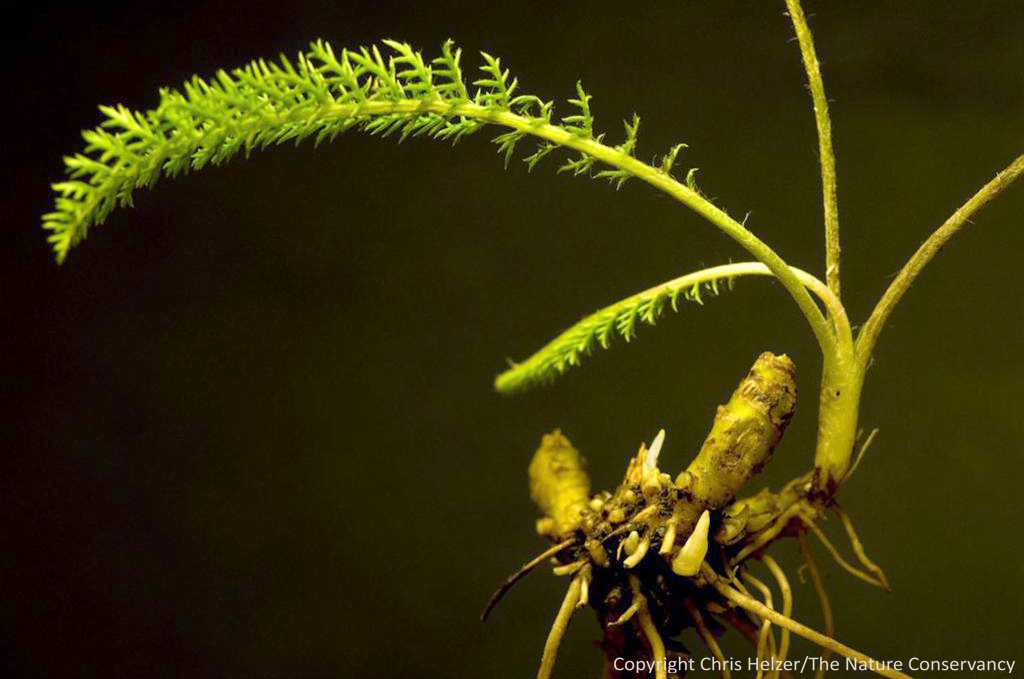
Western yarrow (Achillea millefolium), showing belowground buds and roots. There is one big bud in the foreground, and another one (very white) in the background.
According to Jackie, more than 90% of the stems you see in a tallgrass prairie each year started as buds, rather than seeds, that spring. Buds allow the “parent” plant to provide nutrients to the new stem and support its growth – as opposed to a seed, which has a limited supply of food in its endosperm and then is on its own to survive.
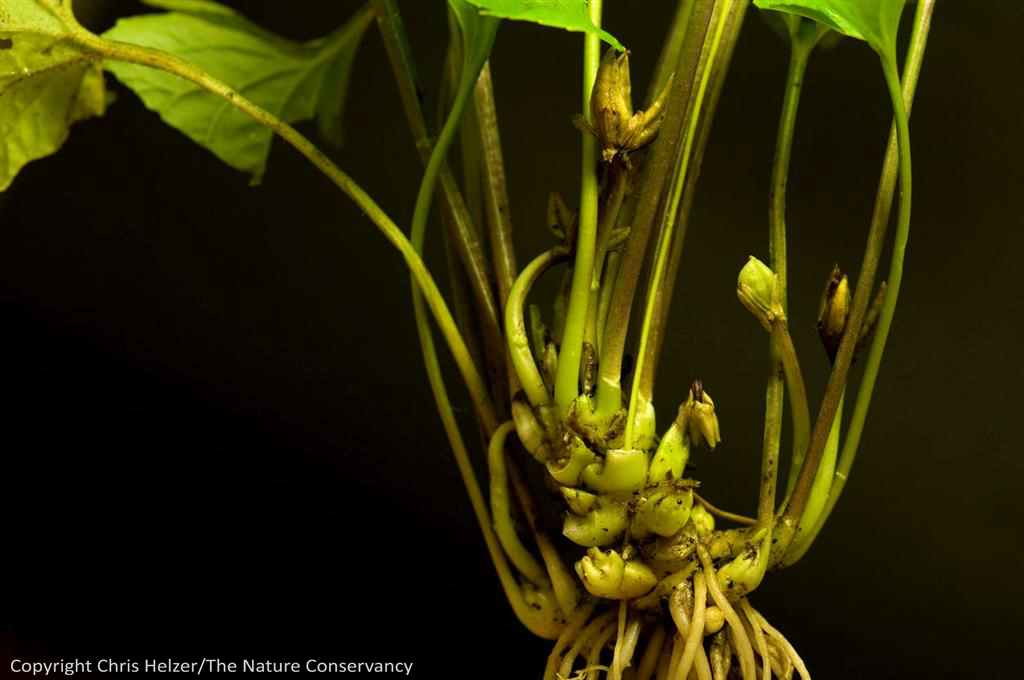
Large stacked buds on a violet plant. In this photo you can still see the shape of the bulky buds at the base of each of the existing leaves/stems.
If you dig up a prairie grass or forb, you can easily find the buds around the base of the plant. Generally, there are multiple buds – each able to grow into a new stem if/when needed. Those buds represent the ability of that plant to produce new growth each season, but also following a disturbance such as fire, drought, or intensive grazing, that forces the plant to restart its growth mid-season. The larger collection of buds among all the plants in a prairie represents the prairie’s “bud bank.” The capacity of that bud bank to respond during stressful conditions is one of the most intriguing parts of what Jackie and her colleagues at Kansas State University are researching.
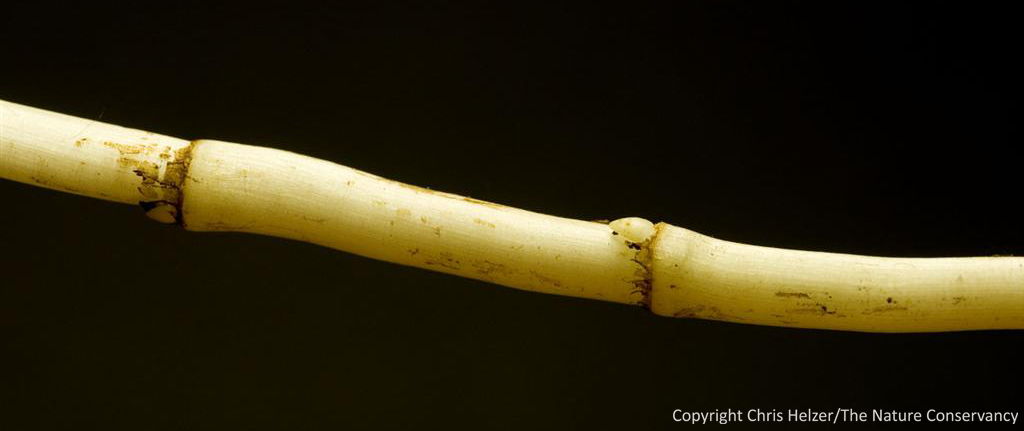
Buds on a spiderwort (Tradescantia bracteata) rhizome. Rhizomes are underground stems that allow perennial plants to expand their reach by stretching out and growing new aboveground stems at some distance from the parent stem. That new growth, though, still has to come from buds - such as these.
All of the photos in this post were taken in an indoor studio.
 The Prairie Ecologist