Photo of the Week – August 1, 2014

A couple weeks ago, I was walking around in my family’s prairie and spotted this tiny silhouette.  The morning sun was shining through the leaves of a stiff goldenrod plant and a fly was (apparently) warming itself in those rays.  Since I was on the opposite side of the leaf from the fly, I was able to sneak up, get my tripod set up, and take a couple photographs before it flew off.

The silhouette of a fly on a stiff goldenrod leaf.  Helzer Family Prairie, Stockham, Nebraska.

The silhouette of a fly on a stiff goldenrod leaf. Helzer Family Prairie, Stockham, Nebraska.

Have a great weekend!

Wild Rose Galls

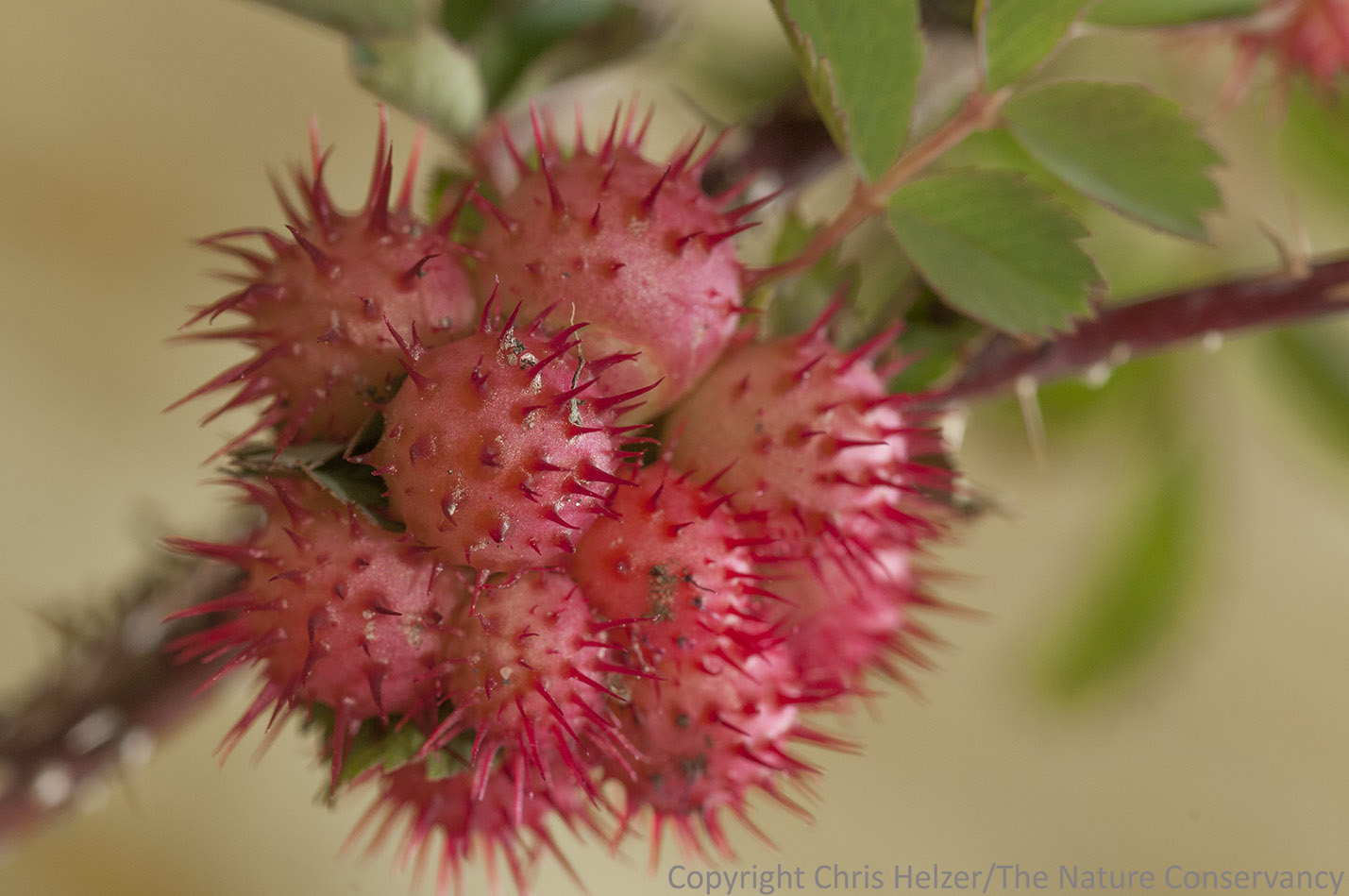
We came across these galls on a wild rose plant last week, and Eliza insisted I do a blog post about them.  So here you go.

Insect galls on prairie wild rose - TNC's Platte River Prairies, Nebraska.

Insect galls on prairie wild rose – TNC’s Platte River Prairies, Nebraska.

Galls like this are formed when an insect lays an egg on or in a plant and the feeding of the recently hatched larva stimulates excess growth of plant tissue.  The result is that the plant creates a little structure that contains both food and protection for the young larva.  The most familiar example of this in prairies is the goldenrod gall, which can be seen in just about any prairie containing goldenrod plants.  In this case, a wasp laid eggs on this wild rose (Rosa arkansana) plant and inside each of the resulting galls is a tiny white larva.

More galls on the same plant.

More galls on the same plant.

For much more information on galls and the insects that create them on wild rose, click here.