Photo of the Week – October 3, 2014

I made my first ever visit to The Nature Conservancy’s Smoky Valley Ranch in western Kansas this week.  It won’t be my last.  Situated along the boundary between mixed-grass and shortgrass prairie, the Smoky Valley Ranch contains 16,800 acres of grassland – including a wide variety of prairie types – along with bison, lesser prairie chickens, prairie dogs, and even black-footed ferrets.  It’s quite a place…

A rock outcrop above an oxbow.  The Nature Conservancy's Smoky Valley Ranch - western Kansas.

Exposed rock above an oxbow. The Nature Conservancy’s Smoky Valley Ranch – western Kansas.

I was at the ranch as part of a small group invited to help the Conservancy’s Kansas staff think about their conservation strategies at the ranch, including fire and grazing management, restoration work, neighbor relations, and their research and monitoring approach.  The peer review team included Conservancy staff from Nebraska, Kansas, and Oklahoma, as well as several local landowners and partners from the local area.

Matt Bain of the Conservancy, discusses grazing strategies with other biologists and neighbors.

Matt Bain (left) of the Conservancy, discusses grazing strategies with other biologists and neighbors.

The thoughtful work being done by the staff at the ranch was really impressive.  They have been reconsidering their objectives and making some significant adjustments to their management approach.  Our job was to give them some feedback on the changes they’re already making and help them think about some additional possibilities.  It was two days of thought-provoking and stimulating conversation – mostly while standing in the middle of impressive grassland scenery.
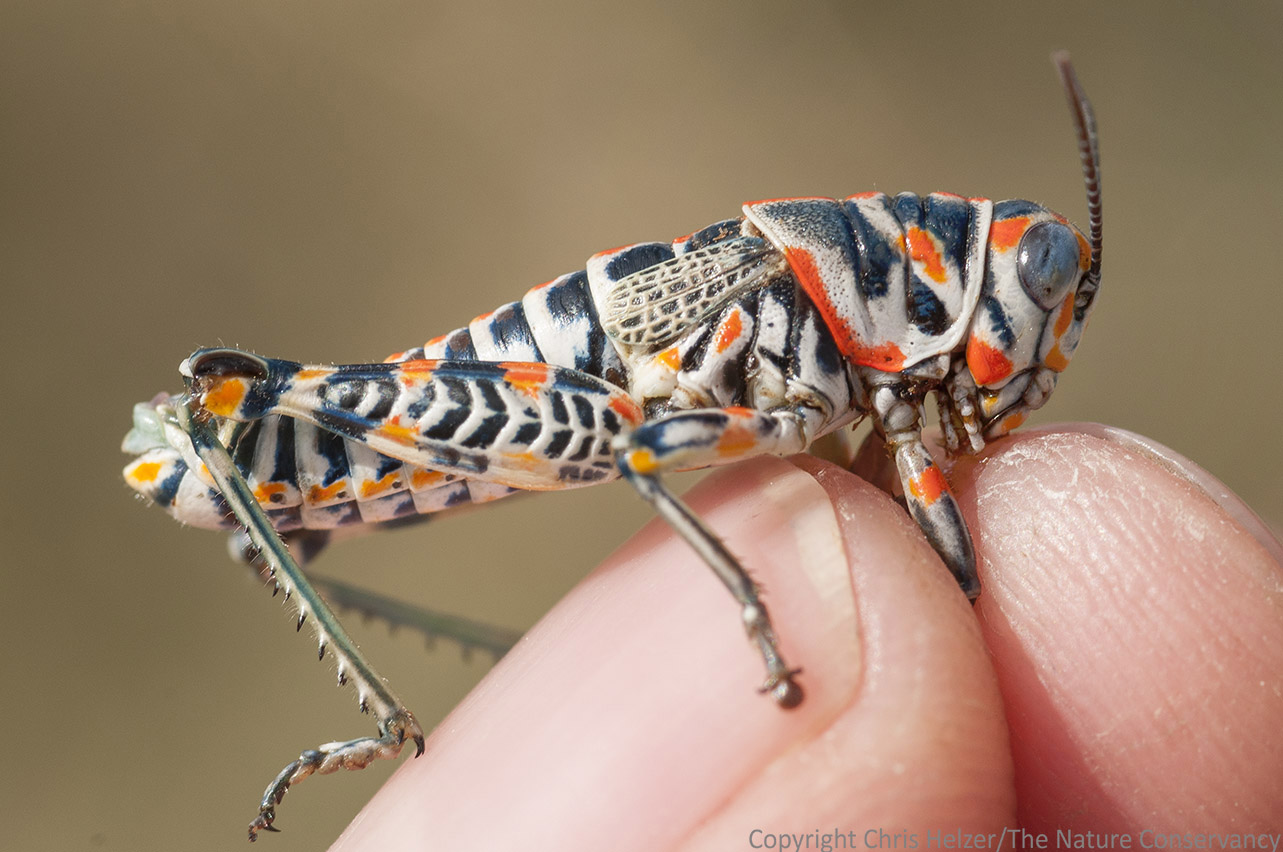
A very colorful grasshopper.

A very colorful grasshopper.  (Pictured Grasshopper – Dactylotum bicolor)

.

Sandsage prairie.

Sandsage prairie – one of several different prairie types found at the Smoky Valley Ranch.

.
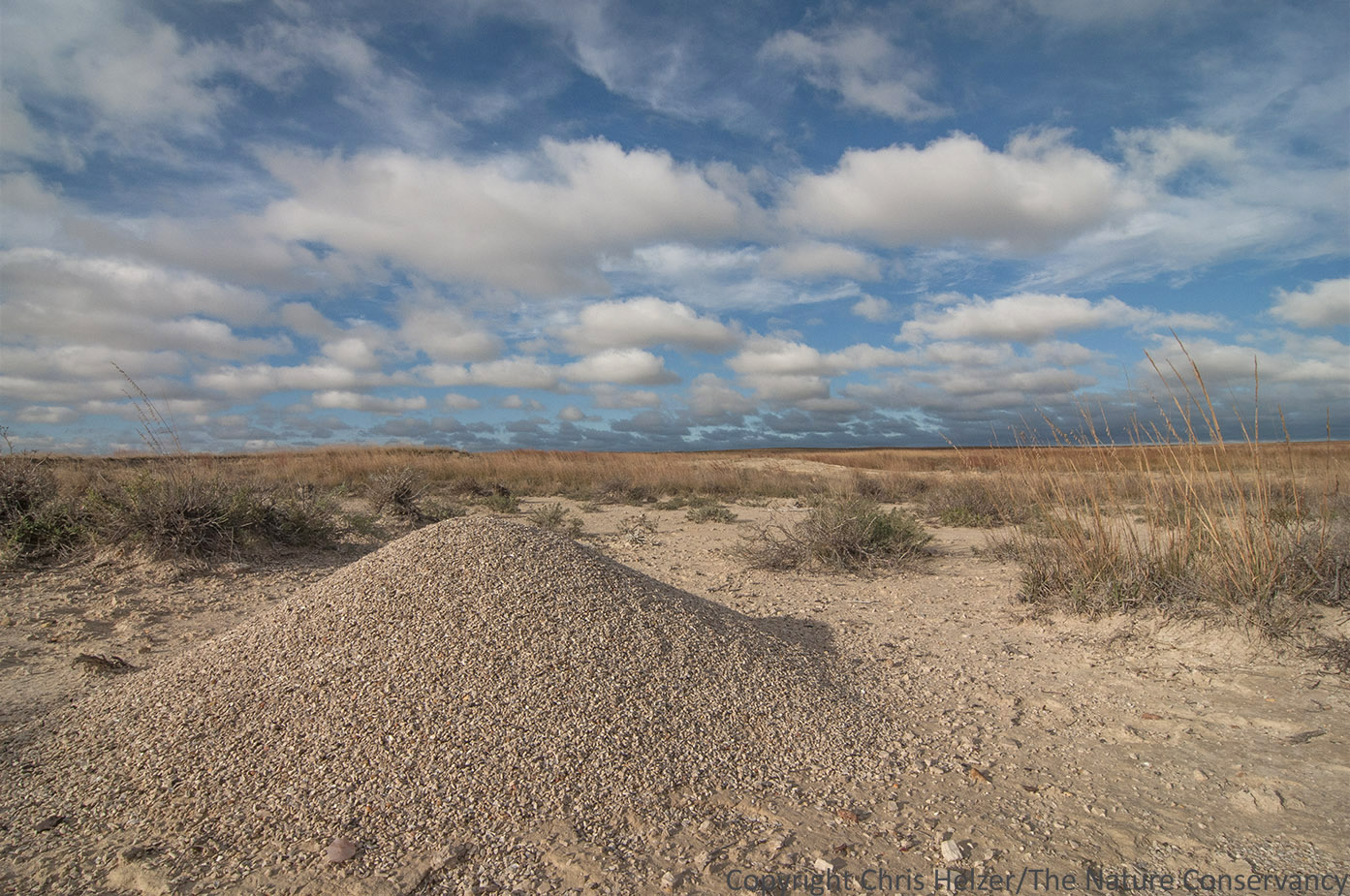
A giant ant hill.

A giant ant hill, made by harvester ants (Pogonomyrmex sp.)

I need to learn more about shortgrass prairie and the drier end of mixed-grass prairie.  Plant and animal communities respond very differently to management and restoration treatments with less annual rainfall and under more frequent/longer droughts.  However, I don’t feel like I have a good grasp of those differences.  Looks like I’ll have to start making some trips to western Kansas….

Oh darn.

Prickly pear cactus.

Prickly pear cactus.


Photo of the Week – September 12, 2014

It’s grasshopper season!

Vehicles driving through the prairie on a late summer morning are quickly covered with dew, grass pollen, and GRASSHOPPERS.

Vehicles driving through the prairie on a late summer morning are quickly covered with dew, grass pollen, and GRASSHOPPERS.

By the end of summer, most grasshoppers have completed their five or so molts and have become adults – complete with functional wings.   Now, as we walk and drive through our prairies, these fully-formed adult grasshoppers (along with katydids and tree crickets) seem to be everywhere.  They explode from our feet like popcorn – especially in areas of shorter vegetation.  And they’re hungry.  We see them feeding on sunflowers, goldenrod, grasses and almost every other kind of plant in the prairie.  As in other groups of species, the diversity of grasshopper species (108 species in Nebraska) leads to a diversity of feeding habits.  Some feed high in the canopy, others low.  Some feed mainly on grasses, others on forbs.  Some eat from a wide range of species, others from just a few.

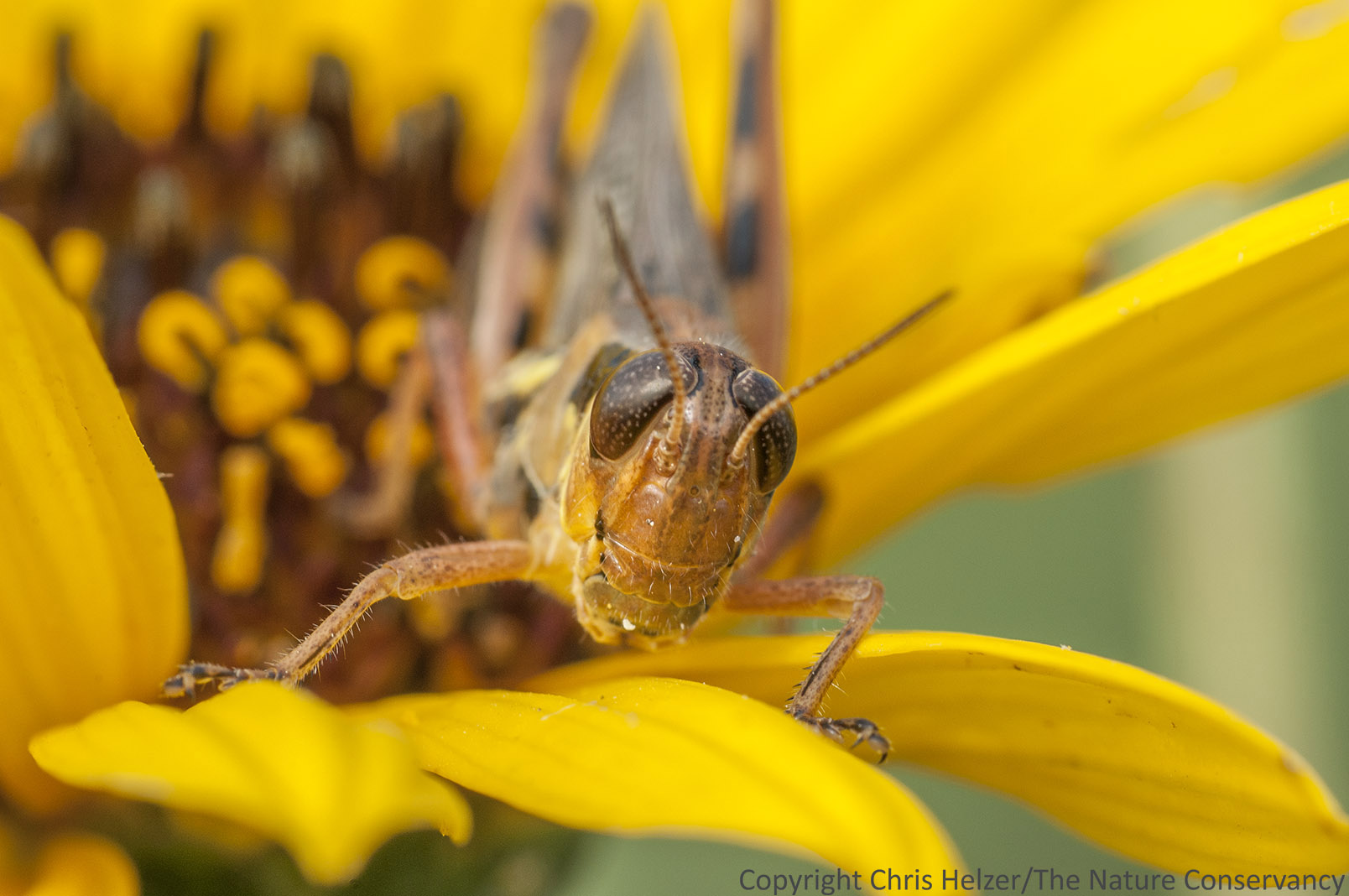
This grasshopper was feeding on the pollen of stiff sunflower - an apparent favorite of many adult grasshopper, katydid, and tree cricket species.

This grasshopper was feeding on the pollen of stiff sunflower (Helianthus pauciflorus) – an apparent favorite of many adult grasshopper, katydid, and tree cricket species.

Another grasshopper species (probably) also feeding on stiff sunflower.

Another grasshopper species (probably) – also feeding on stiff sunflower.

Tree crickets get in on the stiff sunflower pollen feeding frenzy too.

Tree crickets get in on the stiff sunflower pollen feeding frenzy too.

Predators, of course, respond enthusiastically to the profusion of grasshoppers.  Rather than taking over the world, late summer grasshoppers become the targets of any creature that can catch up with them.  This includes birds, mammals, reptiles, and large invertebrate predators, but also tiny parasites and microbes.  To hungry predators, grasshoppers are just tasty machines that convert vegetation into protein-rich food – and they’re EVERYWHERE!

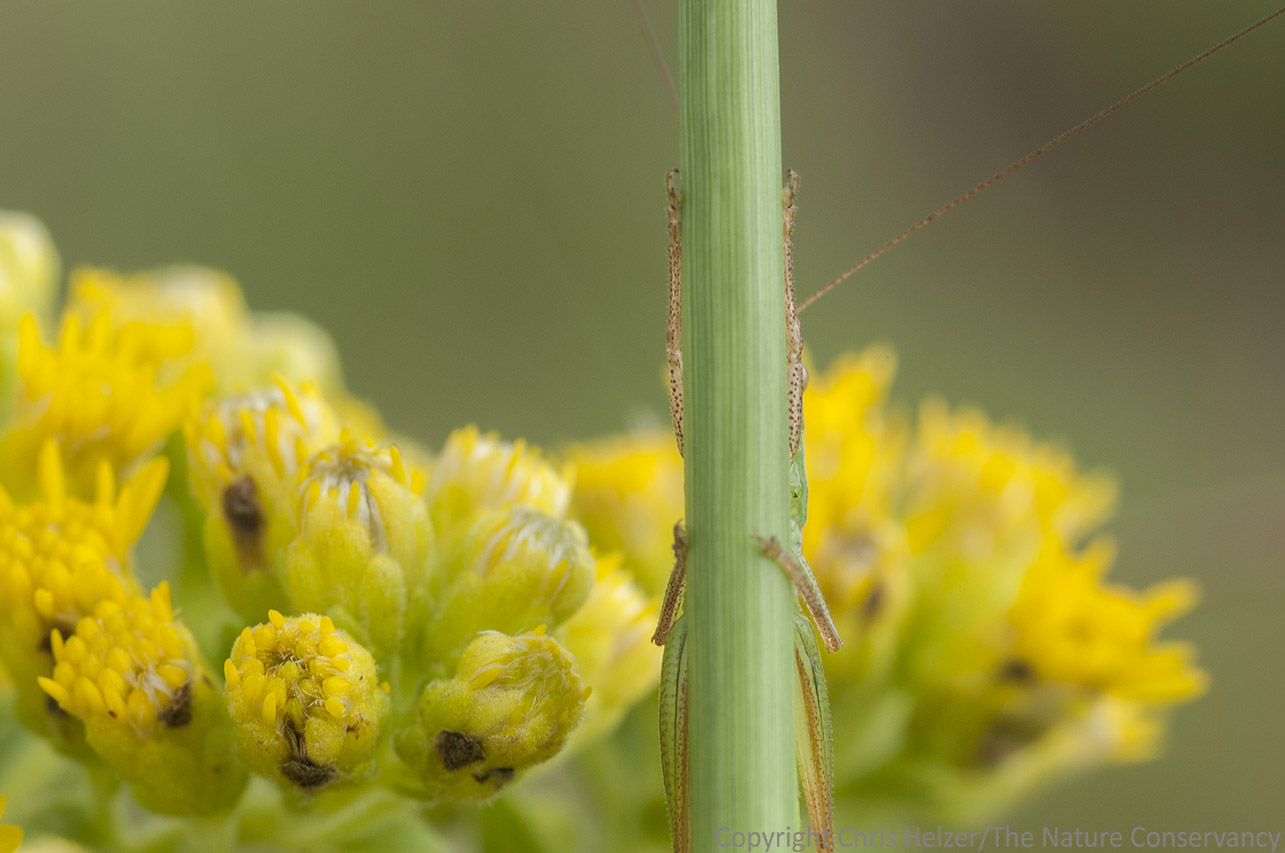
'Hoppers and their kin, but they can also be skilled at keeping themselves hidden when they see a potential predator.  This katydid didn't like me sticking my camera lens in its direction.

‘Hoppers and their kin, but they can also be skilled at keeping themselves hidden when they see a potential predator. This katydid didn’t like me sticking my camera lens in its direction.

The prairie is also a noisy place when grasshoppers, katydids, and tree crickets reach adulthood.  Much of the communication between these species is through sound, and it can be hard to hear the rustling of autumn prairie leaves in the wind over the buzzes and whines of insect courtship.

Besides leading females to males, that incessant insect noise acts as a warning to herbivore and predator alike…

“You’d better eat up now – winter is coming!”