A Plot-Sized Biodiversity and Photography Project

Today, I’m beginning a new photography project aimed at exploring and celebrating the small scale diversity and complexity of prairies.   I’ve picked out a 1 x 1 meter plot in a small patch of restored prairie here in Aurora, Nebraska, and I will be photographing everything I can within that tiny area over the next year or so.  My objectives are to find and document as much beauty and diversity as I can and to show the dynamic nature of prairie life, even at a very small scale.
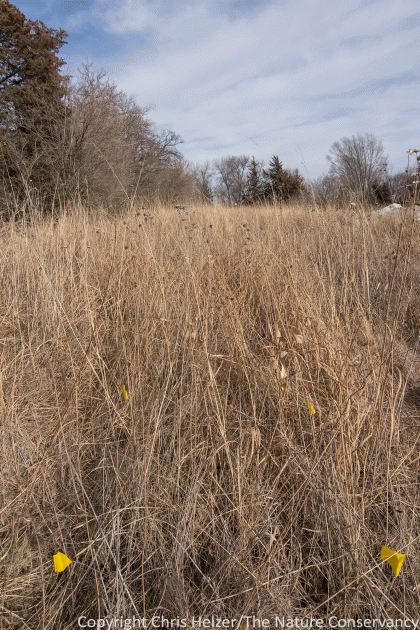
Lincoln Creek Prairie, with the yellow flags marking my square meter plot.

The plot sits in a narrow strip of land restored in the 1980’s by Bill Whitney and Prairie Plains Resource Institute.  I picked Lincoln Creek Prairie because it’s right across town from me, and therefore easy for me to get to frequently.  It’s also a great restored site that was planted with a diverse mixture of prairie species (over 100 species) and is well-established.  However, the prairie is small enough that it doesn’t host any grassland-nesting birds or other animal species that need relatively large and open prairie habitats, and suffers from all the other issues that come along with tiny prairies.  I anticipate that most or all of the organisms I photograph during the coming year will be plants and invertebrates, but I’m confident that I won’t find a shortage of subject matter.
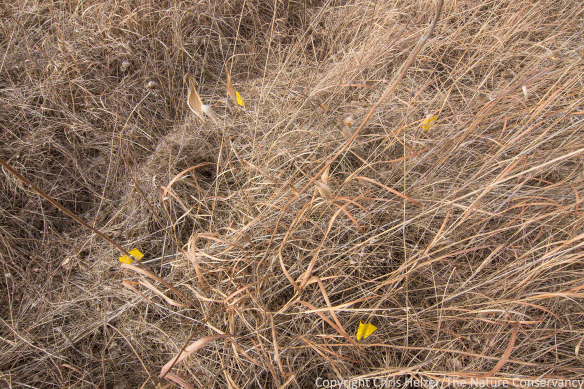
A view of the 1 x 1 plot from above

I didn’t pick the small plot randomly, but I also didn’t try to find a spot with more diversity than any other nearby.  Instead, I looked for a place that would catch the light well during most of the year but was out of the way enough to not be disturbed by people hiking the nearby trail.  I freely admit that I chose the exact location of the 1 x 1 plot because it has a butterfly milkweed plant in it – it’s a nicely photogenic species.  This isn’t research, after all, and I don’t have to select my plot in a completely unbiased way!  However, I’m confident that the 1 x 1 plot I chose is representative of the rest of the prairie around it.
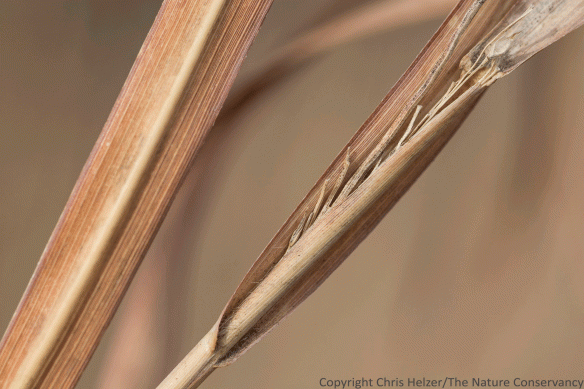
Switchgrass (Panicum virgatum) with a flower that never completely came out of its sheath last summer.

I began my photography journey within the plot yesterday, and took the photos you see here in this post.  I’ve already discovered one big challenge regarding my plans – it’s going to be difficult to avoid crushing or breaking the vegetation within the plot during my frequent visits.  I don’t see any way to avoid matting down the vegetation around the edge of the plot, but I’ll try not to do any more of that than necessary, and hopefully that won’t excessively impact what I see inside the plot.
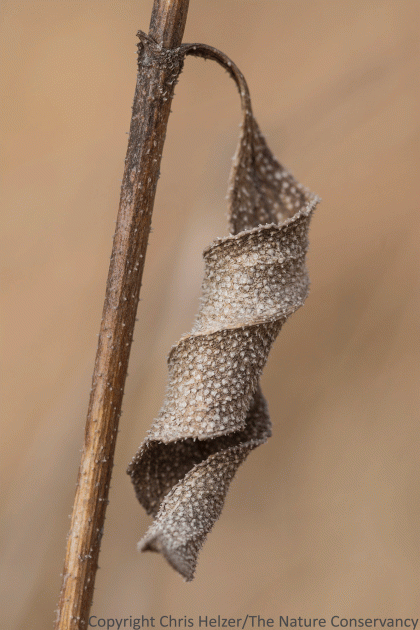
The curled and dried leaf of stiff sunflower (Helianthus pauciflorus)

Right now, the plot is fairly uniformly brown, and perhaps drab looking from a distance.  However, I didn’t have much trouble finding interesting shapes and textures to photograph during the 10 minutes or so I spent there yesterday.  Even without green vegetation or crawling invertebrates, there was plenty to look at.  That bodes well for the coming year, I think!  Stay tuned…
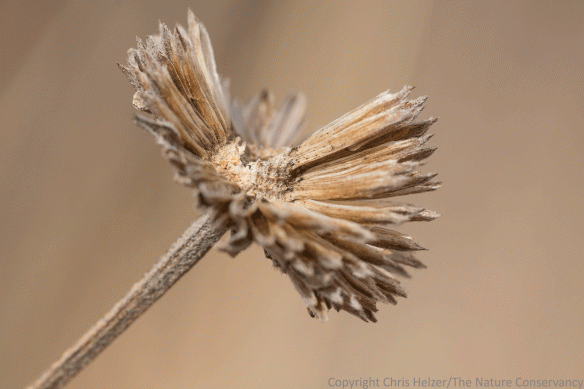
Maximilian sunflower (Helianthus maximiliani) seed head, minus the seeds.  Birds, mammals, and/or other creatures likely picked it clean last fall.
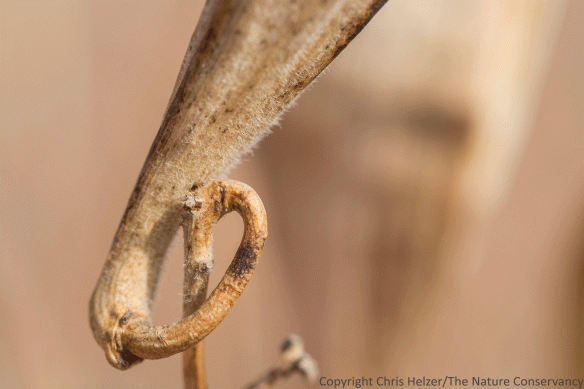
A butterfly milkweed (Asclepias tuberosa) seed pod on a curled stem.
Pondering Winter Wildlife Cover From My Comfy Couch

It’s a good ol’ fashioned blizzard here today.  As I’m sitting snugly in my warm house, I’m feeling a little badly for some of wildlife out there in the snow and wind.  The boys went outside to play in the snow for a little while, and both of them spent most of their time building shelters from the weather.  Many wildlife species, of course, migrate to warmer places or find/build themselves underground burrows to overwinter in, but there are some animals out there in the prairie right now, and this has to be a bad day for them.

Calvin was able to dig out a little shelter in a drift. He was still pretty glad to come in and get some hot chocolate a few minutes later…

Sitting here on my comfortable couch, I’ve been thinking about the prairies I manage or help with, trying to remember what kind of cover is out there.  Overall, I feel pretty good about the situation.  Our shifting habitat mosaic approach involves providing a wide range of vegetation structure types in each of our prairies, including everything from short sparse vegetation to the kind of thick dense cover wildlife are probably seeking out today.  Nelson  (our Platte River Prairies land manager) and I have periodic conversations in which we try to envision ourselves as creatures that prefer various habitat types.  How far would we have to travel to find cover?  If we burn one patch of dense cover, where is the next closest patch of similar cover, and what would animals have to travel through to get to it?  We have a lot of factors to consider and balance as we discuss management plans each year, so it’s always helpful to see the world through the eyes of the various species that will have to live with (literally) the decisions we make.

To be completely honest, I probably don’t think enough about winter cover as I’m trying to consider the perspective of various creatures.  I’m more often thinking about nesting habitat for birds, breeding cover for small mammals, or sunning areas for invertebrates and reptiles that need to thermoregulate during the growing season.  Days like today are a great reminder that while all those considerations are important, at least some species will probably live or die based on what kind of shelter they can find during winter storms like the one roaring outside right now.

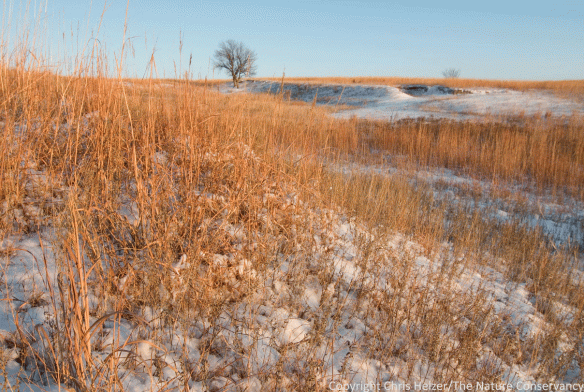
Many parts of our family prairie have pretty short vegetation structure during the winter, but we always try to leave some patches of taller grass as well.  This is kind of in-between.  It’s not really dense enough to provide great cover from the wind, but has places for small animals to hide while they’re out feeding.

I’m thinking today about meadowlarks, for example.  As I’ve walked our prairies during the last month or two, I’ve seen a lot of meadowlarks flying around in small groups.  My understanding is that meadowlarks that breed around here head south to Kansas or Oklahoma, and the ones we see during the winter come from up in the Dakotas.  In other words, meadowlarks don’t migrate en masse to one general destination.  Instead, each bird just goes a little southward from where they spent the summer.  I wonder if they each wait until they start seeing birds from the north show up and then head south to get away from the crowd…

Regardless, birds like western meadowlarks need some kind of shelter out in the prairie on days like this.  We know a lot less about the winter habitats used by grassland birds than we do about summer habitat use, and as far as I know, no intrepid biologist has yet gone out to see where meadowlarks or other birds are hanging out during blizzards.  (If you’re an intrepid biologist who HAS done this, please let me know!)  I think it’s fair to assume that most birds (and any other wildlife who aren’t underground) try to get out of the wind during this kind of storm.  It’d be interesting to know whether they stay in open grassland and look for tall dense vegetation or venture into brushy or wooded areas where they might not normally go.

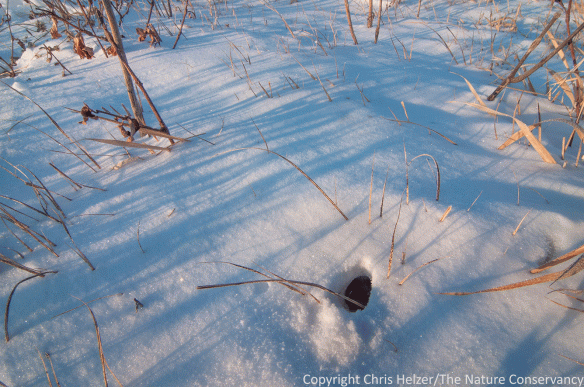
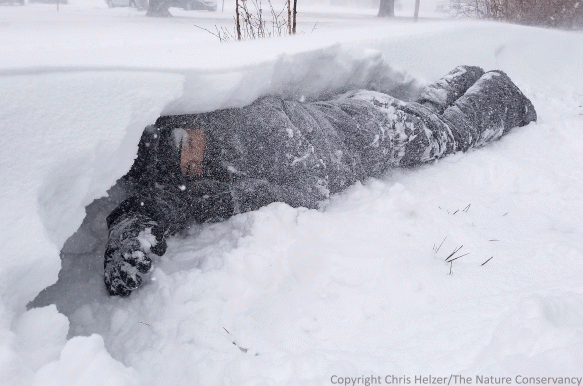
Somebody is apparently sheltering in place under the snow here.  Probably not a meadowlark…

Not knowing much about individual wildlife species and how they each choose to shelter from winter storms, I guess the best strategy is to provide as many habitat types as possible so they can all find what they need.  That way, meadowlarks can forage in short or “weedy” areas during pleasant sunny days, but move to a nearby patch of dense grass (or whatever other cover they like) when they need to nestle in thatchy vegetation and get out of the wind.

Here in our comfy house, we’ve been talking about trying to fix the drafty corner of our kitchen, where one of our walls needs a little better insulation.  Our poor little feet get cold when we’re making toast on windy winter mornings!  It’d be really nice to get that fixed.  On the other hand, it’s just the kind of hardship that helps me understand what meadowlarks are going through on days like this.  I bet their feet were cold at breakfast time too…


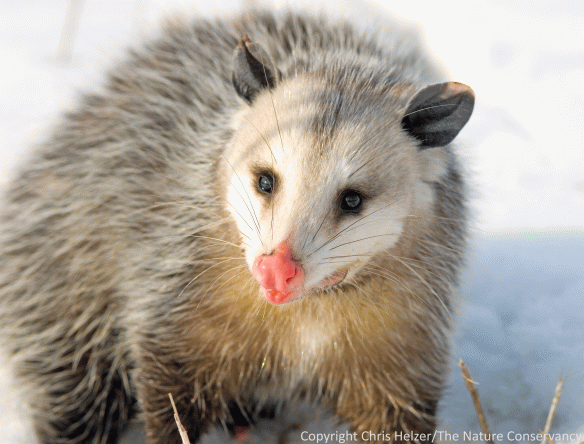
Meadowlarks could learn from opossums, who either take over abandoned burrows from other mammals or find a nice wood pile to shelter in during cold weather and blizzards.