Photo of the Week – January 9, 2014

Earlier this week, I found myself lying on my back in the tight crawlspace beneath a house at our Platte River Prairies, helping our land manager fix a ruptured water line.  For this claustrophobic prairie ecologist, the dark cramped space under that double wide trailer house was a test of psychological endurance.  As soon as the repair was finished, I found myself in desperate need of a walk under the big open sky.  Fortunately, that sky was mottled with attractive clouds, and one of our restored wetlands was close by, so I grabbed my camera and took a nice restorative hike.

ice

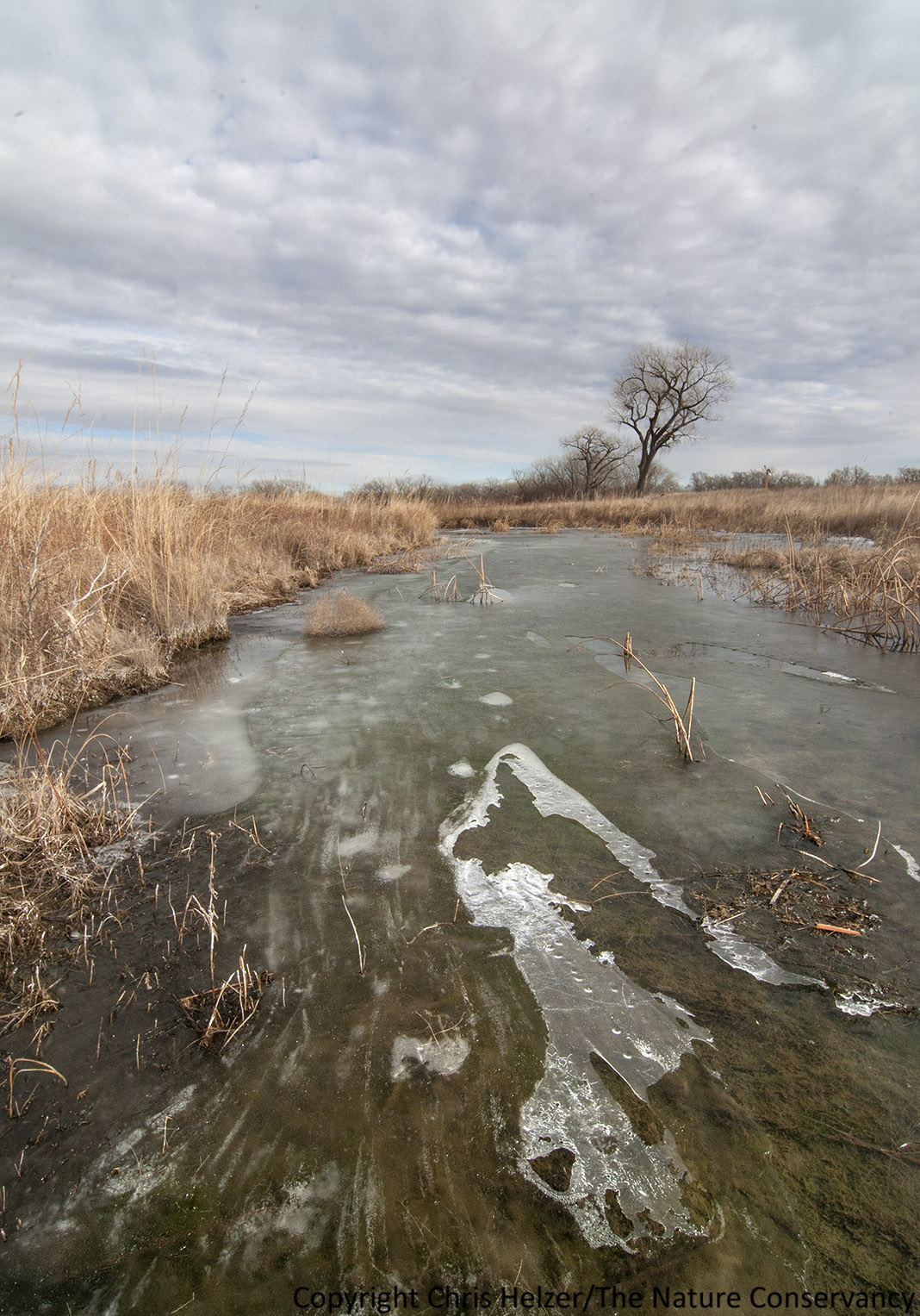
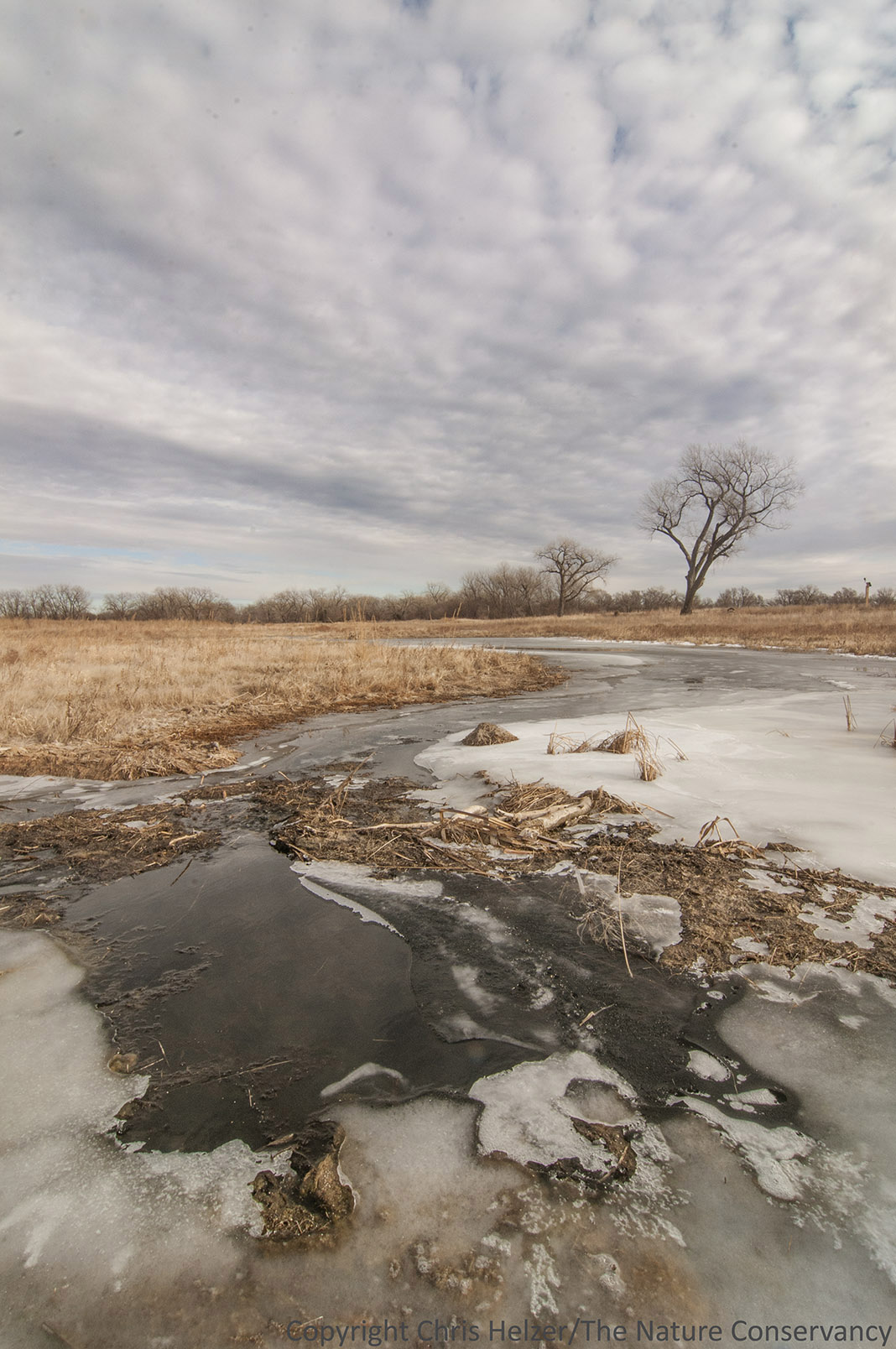
This frozen stream/wetland had plenty of interesting textures and shapes to look at and photograph.  Most importantly, however, it was big, wide, and open.  The Nature Conservancy’s Platte River Prairies, Nebraska.

.
frozen

The white streaks in the ice created an impression of flowing water even though they weren’t moving.  There was, however, water flowing beneath the ice, despite the cold snap we’ve had.

.
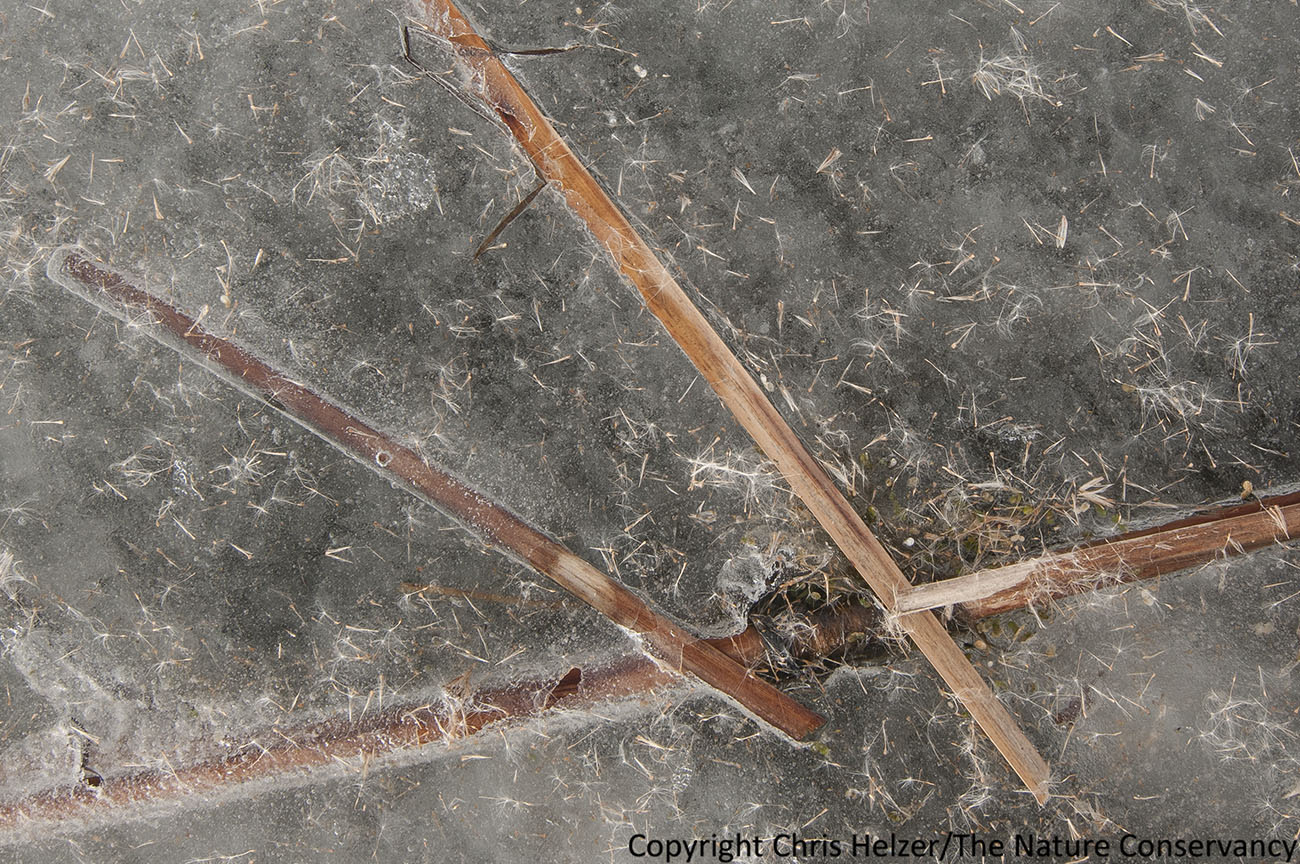
Cattail seeds

Recent strong winds scattered hybrid cattail seeds around the ice in a few places, making interesting photographs, but spelling work for us next year as we try to keep those cattails from taking over too much of the site.

.
ice

Beavers have dammed up much of this restored stream/wetland area, helping us in our effort to create a variety of habitat conditions.  The strong groundwater influence of the stream usually keeps it from freezing up completely, even during the coldest periods of winter.

.

Frozen Bugs (and Beetles)

My family and I spent some time exploring the frozen pond/wetland at our prairie during the holiday break.  We even got a couple days of great ice skating weather.

My three kids had a great time ice skating on the pond over the holidays.

My kids had a great time ice skating on the pond over the holidays.

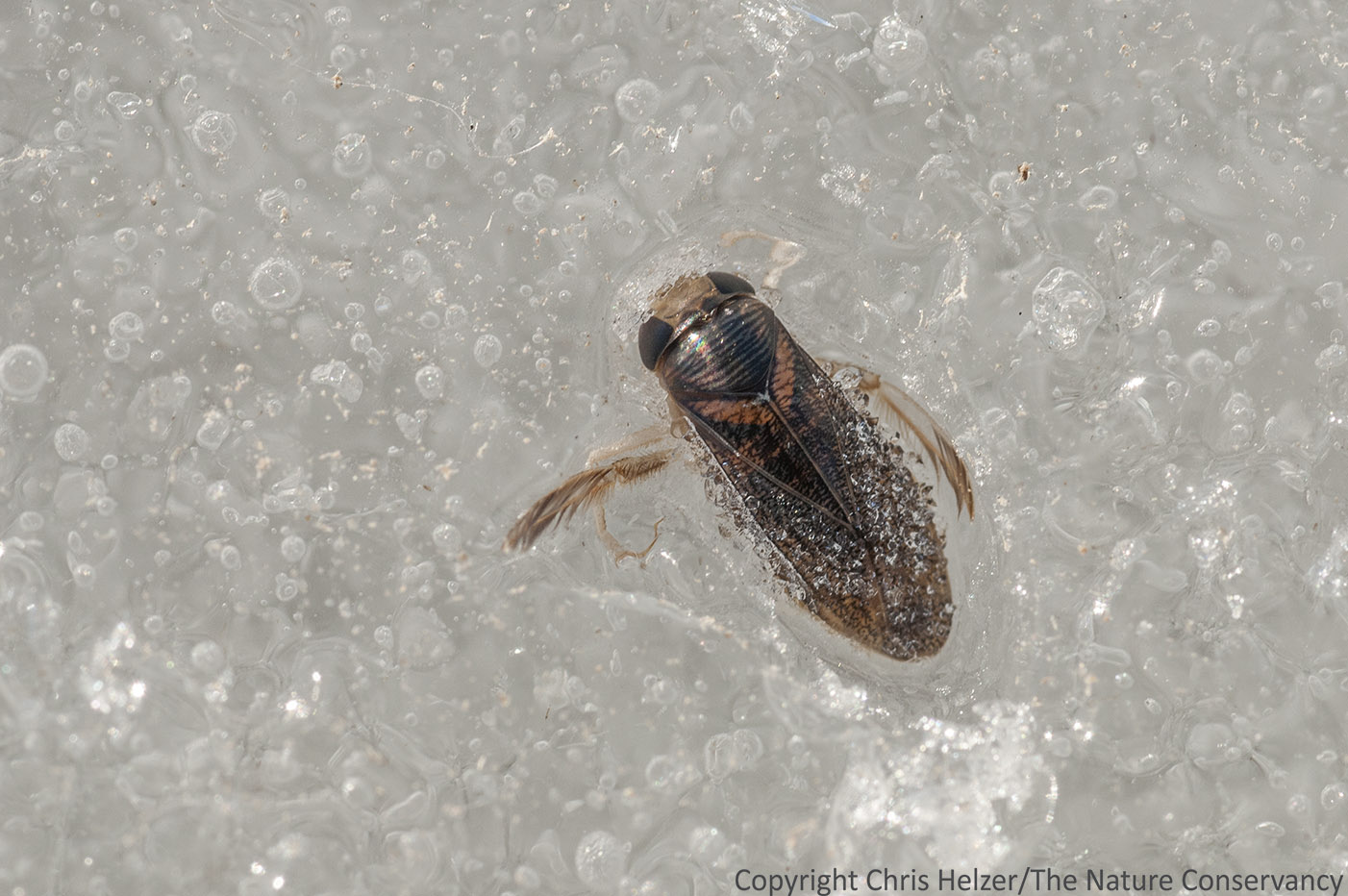
While we were on the ice, we found some great patterns (see earlier post), but we also found quite a few frozen insects.  In particular, there seemed to be two species of insects – one bug and one beetle – encased in ice.  The bug was a species of Corixidae, or water boatman.  Its name comes from the fact that two of its legs are extra long and sport hairs that make the legs look and function like the oars on a boat.  Water boatmen suck the juices from algae and plants through their long straw-like beak and are common inhabitants of just about any freshwater body around here.  They are also frequently seen in the ice when those water bodies freeze up in the winter.  Apparently, water boatmen can survive freezing and just start swimming again when the ice thaws.  A pretty neat trick for an aquatic bug that lives in a temperate climate.

A frozen water boatman

A frozen water boatman

.

Another one

Another one

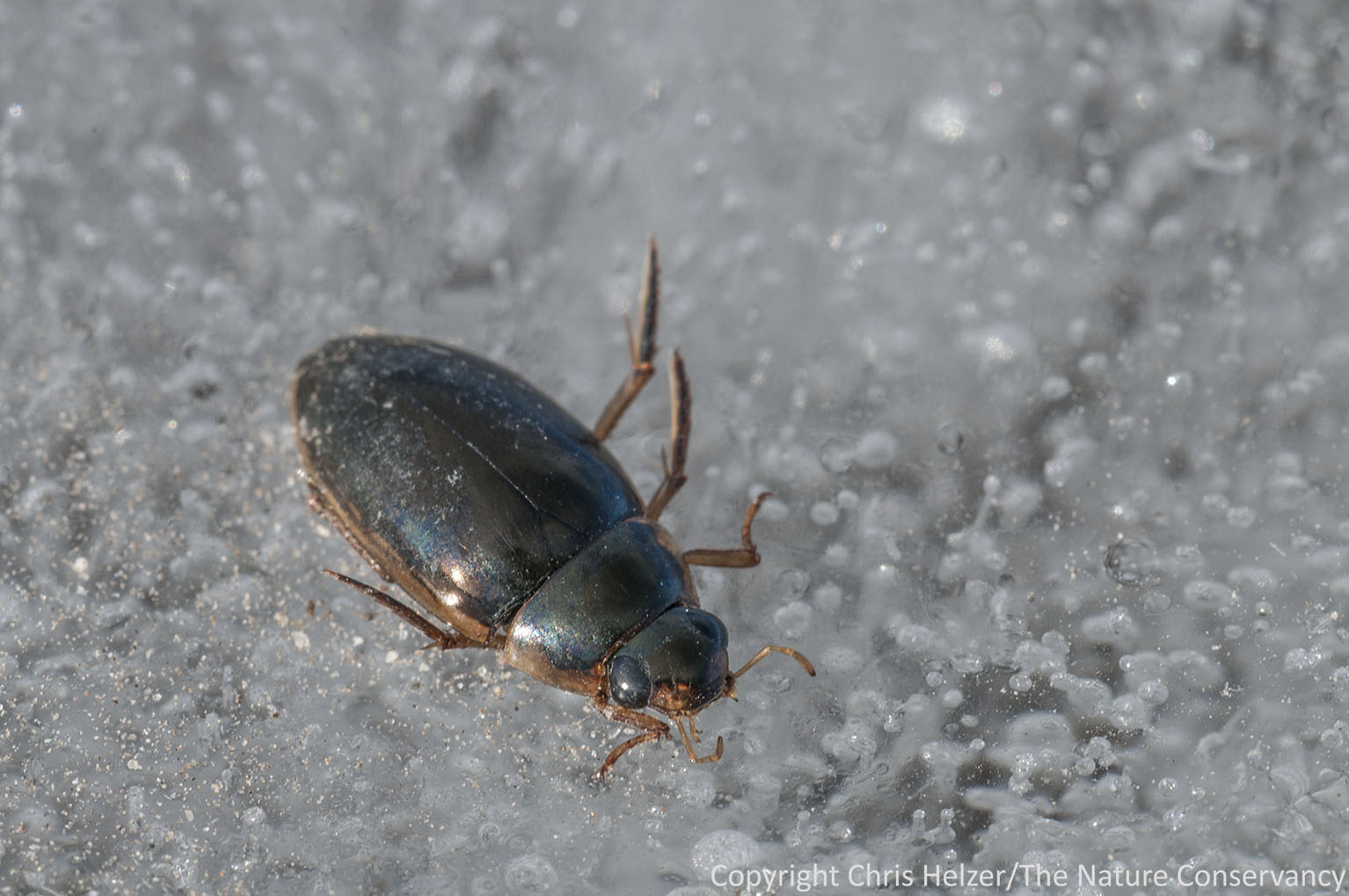
We had a two day period over the holidays during which the temperature briefly climbed up to about 60 degrees (Fahrenheit).  The warmth didn’t last long enough to spell an end to our ice skating, but did melt some of ice along the edges of the pond.  Apparently, the warm temperatures also encouraged a number of individuals of one particular beetle species to go exploring.  Unfortunately, it appears quite a few of those beetles wandered out onto the ice and didn’t make it back.  We didn’t see any of them on the ice before the warm spell, but found lots of them afterward.

Here's one of the beetles that froze after (apparently) getting caught out on the ice after a warm day.  I'm hoping one of my entomologically-inclined friends can help me out with identification and/or natural history info?

Here’s one of the beetles that froze after (apparently) getting caught out on the ice after a warm day. I’m hoping one of my entomologically-inclined friends can help me out with identification and/or natural history info?

.

This beetle apparently got flipped over before freezing.

This beetle apparently got flipped over before freezing.

I was curious to know whether those frozen beetles could do the same thaw-out-and-re-energize trick as the water boatmen, so I broke off a chunk of ice containing a frozen beetle and brought it home to thaw it.  The beetle has been thawed out for more than a week now, and hasn’t moved, so I’m pretty sure it’s dead…  The next question is: where were those beetles staying during the very cold weather earlier this winter, and how did they prevent themselves from freezing to death then?

Always more questions…

For more information on how water boatmen and other creatures weather the winter, see this earlier post from 2011.