Photo of the Week – September 10, 2015

A few weeks ago, I took my camera across town for a walk in a small local prairie.  There were numerous flowers blooming, but the stiff sunflowers (Helianthus pauciflorus) were stealing the show.  I shot quite a few photos of them from various angles.

Hover fly on Stiff sunflower (Helianthus pauciflorus) Lincoln Creek Prairie, Aurora, Nebraska.

This little hover fly was enjoying a meal of stiff sunflower pollen.  Lincoln Creek Prairie, Aurora, Nebraska.
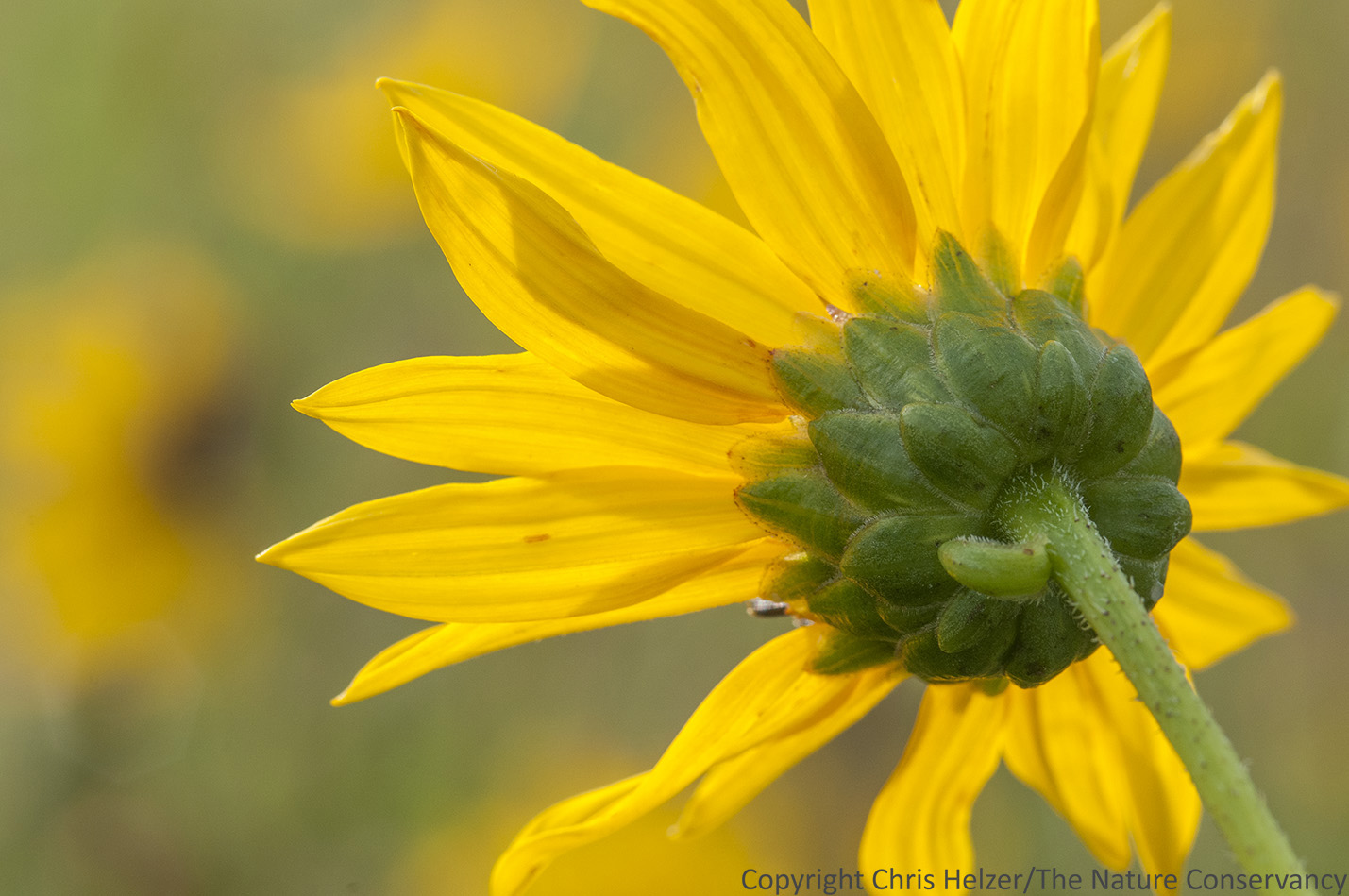
Stiff sunflower (Helianthus pauciflorus) Lincoln Creek Prairie, Aurora, Nebraska.

The sunflower perspective.

I noticed that a few sunflowers seemed to have their “petals” (technically speaking, they are the ray flowers) folded in toward the center of the flower.  I’d seen this quite a few times before, but this time I decided to investigate.  I gently pulled the petals apart and found they’d be held down with what appeared to be silk.  Beneath them, an insect larva was hiding and, presumably, feeding on pollen or other flower parts.

Caterpillar in Stiff sunflower (Helianthus pauciflorus) Lincoln Creek Prairie, Aurora, Nebraska.

A closed-up stiff sunflower.

Caterpillar in Stiff sunflower (Helianthus pauciflorus) Lincoln Creek Prairie, Aurora, Nebraska.

The larva revealed.  Note the remnants of silk and the anthers still sticking to the petal after I pulled everything apart.

Caterpillar in Stiff sunflower (Helianthus pauciflorus) Lincoln Creek Prairie, Aurora, Nebraska.

A close up of the caterpillar (?)

I’m not expert enough with insect larva identification to know for sure, but I’m guessing the larva is a moth larva – I know at least some of those have the ability to make silk.  Some of you reading this will surely know more about them and comment below.  (Thanks for your help.)

A few days later, I ran across some similarly closed up flowers in a different prairie.  When I opened those up, there was another larva inside, but it was much darker in color.  I wonder how many different species have this behavior?

The larva I found was just one of many examples of insects that create safe hiding places for their young to feed in.  Spittle bugs and gall-forming insects are two others that are common in prairies.  Of course, for every great hiding strategy, there is at least one predator that has developed a counter strategy.  I don’t know what eats the petal-tying larvae, but I bet there’s something out there.  I’m pretty sure guys-with-cameras are not the only ones who can find them.  Fortunately, for the larva I found, I wasn’t hungry at the time.
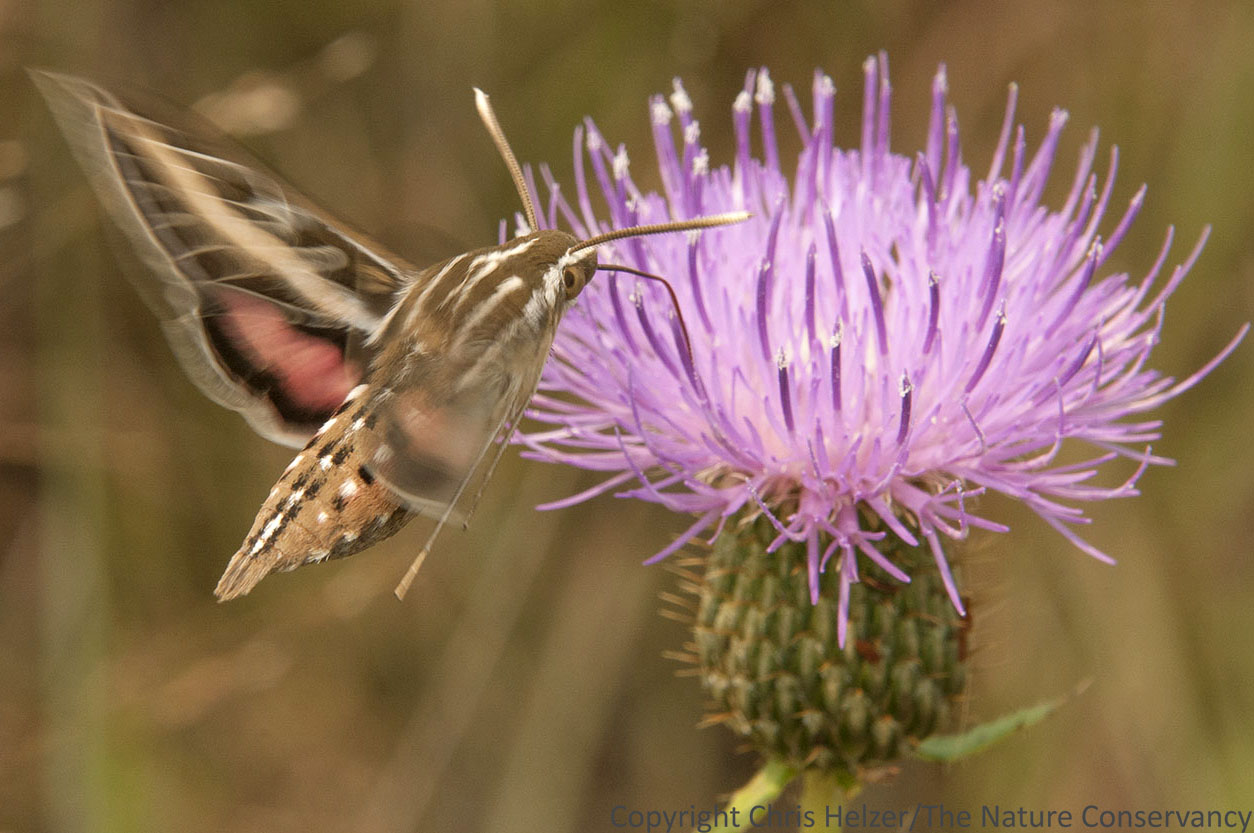
 

Photo of the Week – September 3, 2015

Recently, we’ve been seeing some very pretty sunrises and sunsets (and moon rises, for that matter) because of a thin veil of smoke in the sky from the western U.S. wildfires.  That diffused light makes pretty good opportunities for photos, and I’ve been trying to take advantage of those when I can.

Last Saturday, I drove to a nearby town to do some shopping, but took my camera along.  I ended up stopping briefly at a restored prairie on both the way there and back because the light was so nice – even at around noon – and the wind was barely blowing.  Here is a selection of photos from the day.

Sphinx moth. Deep Well Wildlife Management Area.

A sphinx moth feeds on nectar from a tall thistle (Cirsium altissimum). Thistles were abundant in this prairie, as were bumblebees, other bees, butterflies, moths, and many other insects feeding on pollen and nectar from them.  Deep Well Wildlife Management Area, near Phillips, Nebraska.

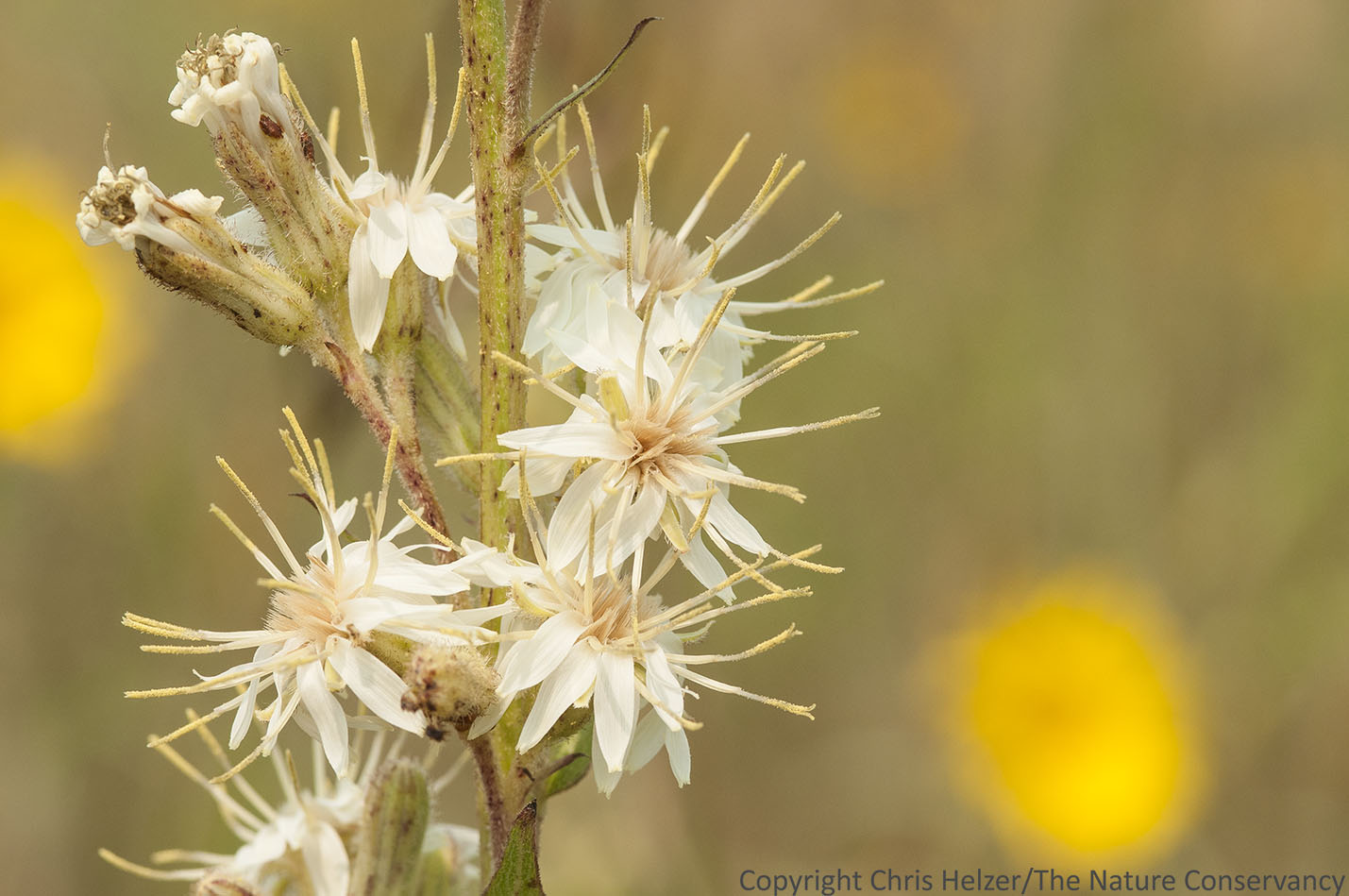
Rough white lettuce (Prenanthes aspera) Deep Well Wildlife Management Area.

Rough white lettuce (Prenanthes aspera).  This is not a common species in this area, so it was nice to see a healthy population growing in a cropfield-converted-to-prairie.  The site was restored by Prairie Plains Resource Institute and owned/managed by Nebraska Game and Parks Commission.

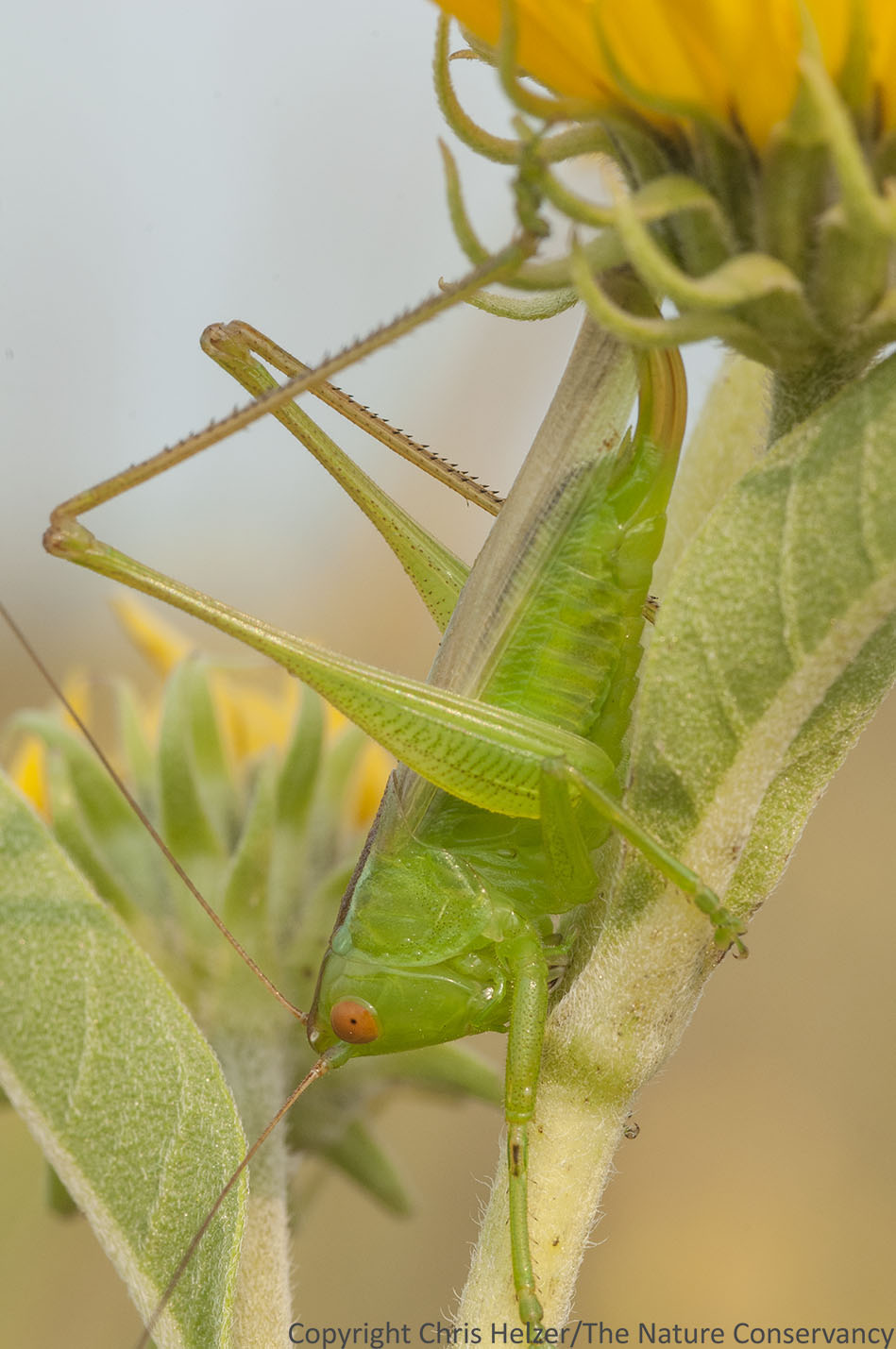
Katydid. Deep Well Wildlife Management Area.

This is a very attractive little katydid (a female because of the ovipositor – the egg-laying tube coming out the back).  However, I couldn’t ever manage to photograph an even more attractive katydid that was colored both bright green and purple.  Gorgeous, but skittish.

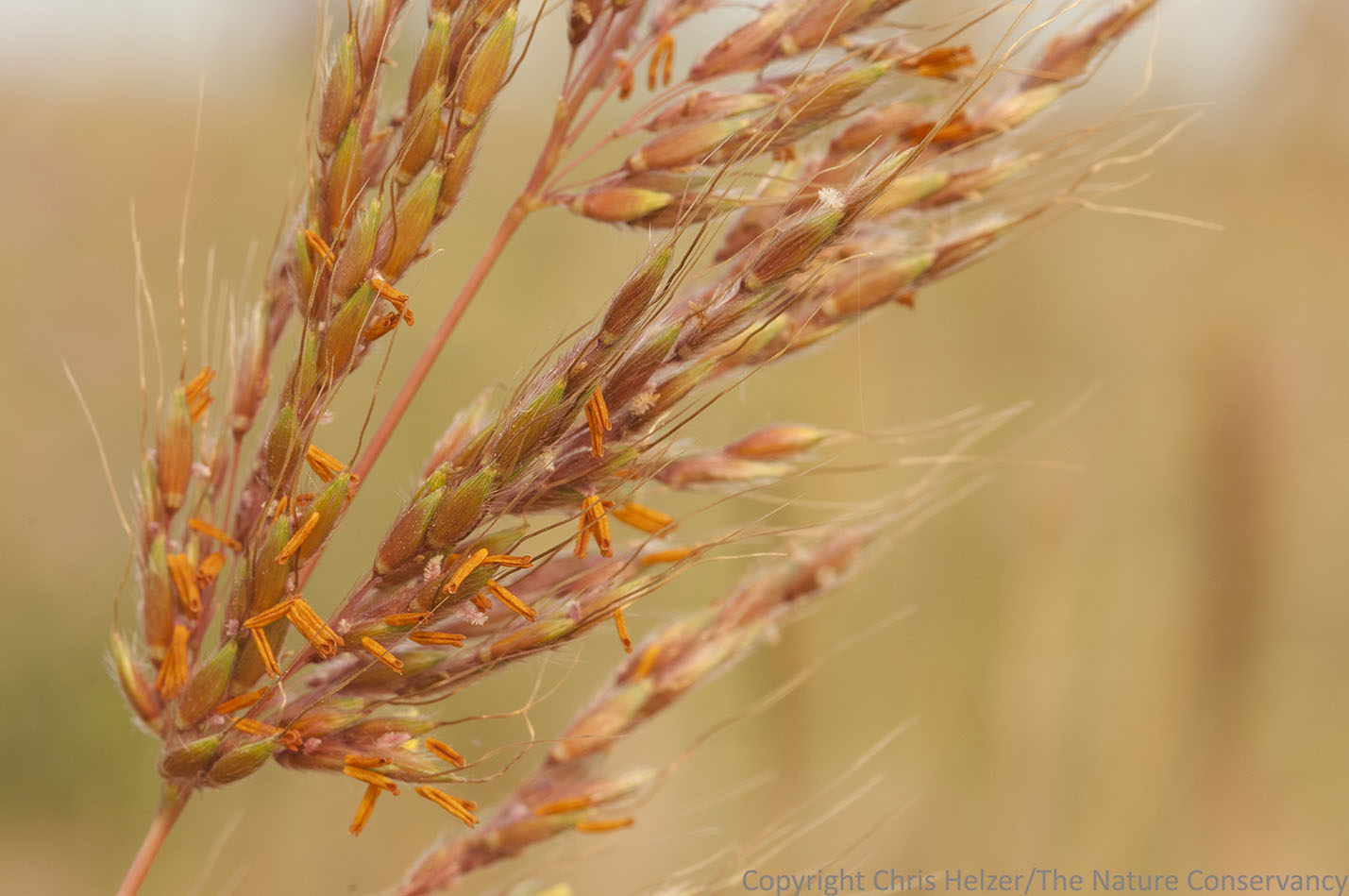
Indiangrass. Deep Well Wildlife Management Area.

Indiangrass (Sorghastrum nutans) was reaching the tail end of its blooming period.   These anthers have lost their bright yellow color and will probably fall soon.

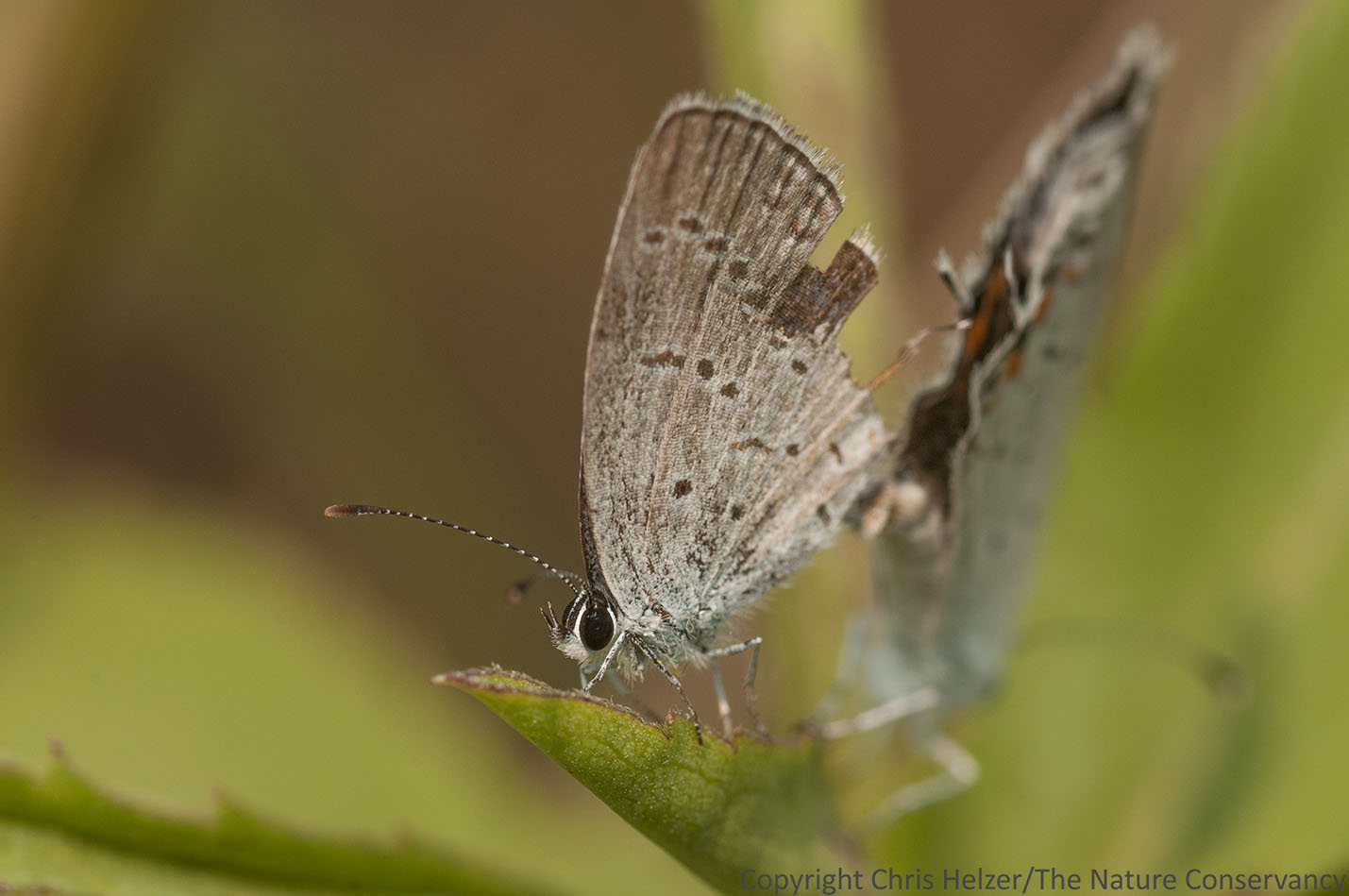
Butterflies. Deep Well Wildlife Management Area.

These eastern-tailed blue butterflies let me get close enough for a photo before flying off (still attached) to a more private location.

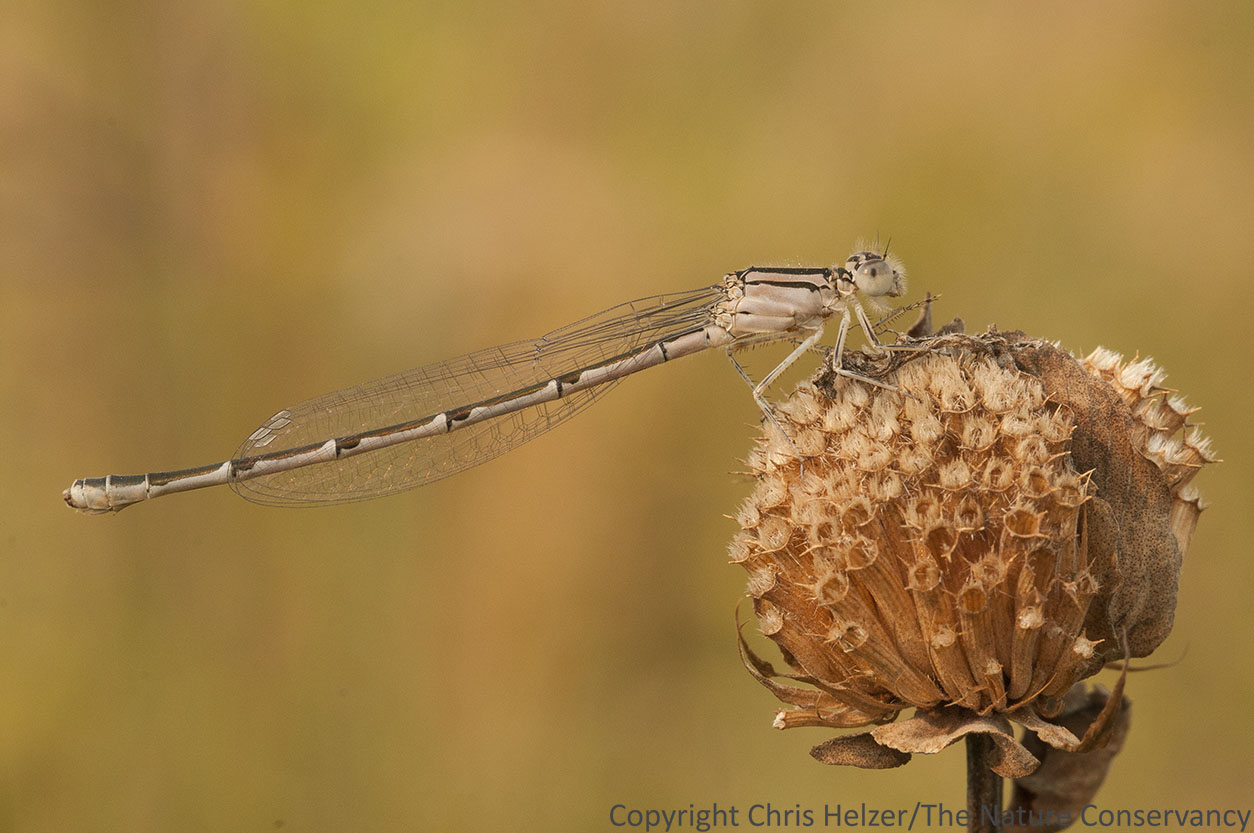
Damselfly on monarda. Deep Well Wildlife Management Area.

I had fun watching this damselfly but am still not sure what it was doing.  It was flying up to plants and bumping its “nose” against them repeatedly while moving up and down the stems.  I wonder if it was looking for insects to eat but I’ve never noticed this kind of behavior before.  It would bump plants for 15 or 20 seconds and then find a perch to sit on for a while before starting out again.

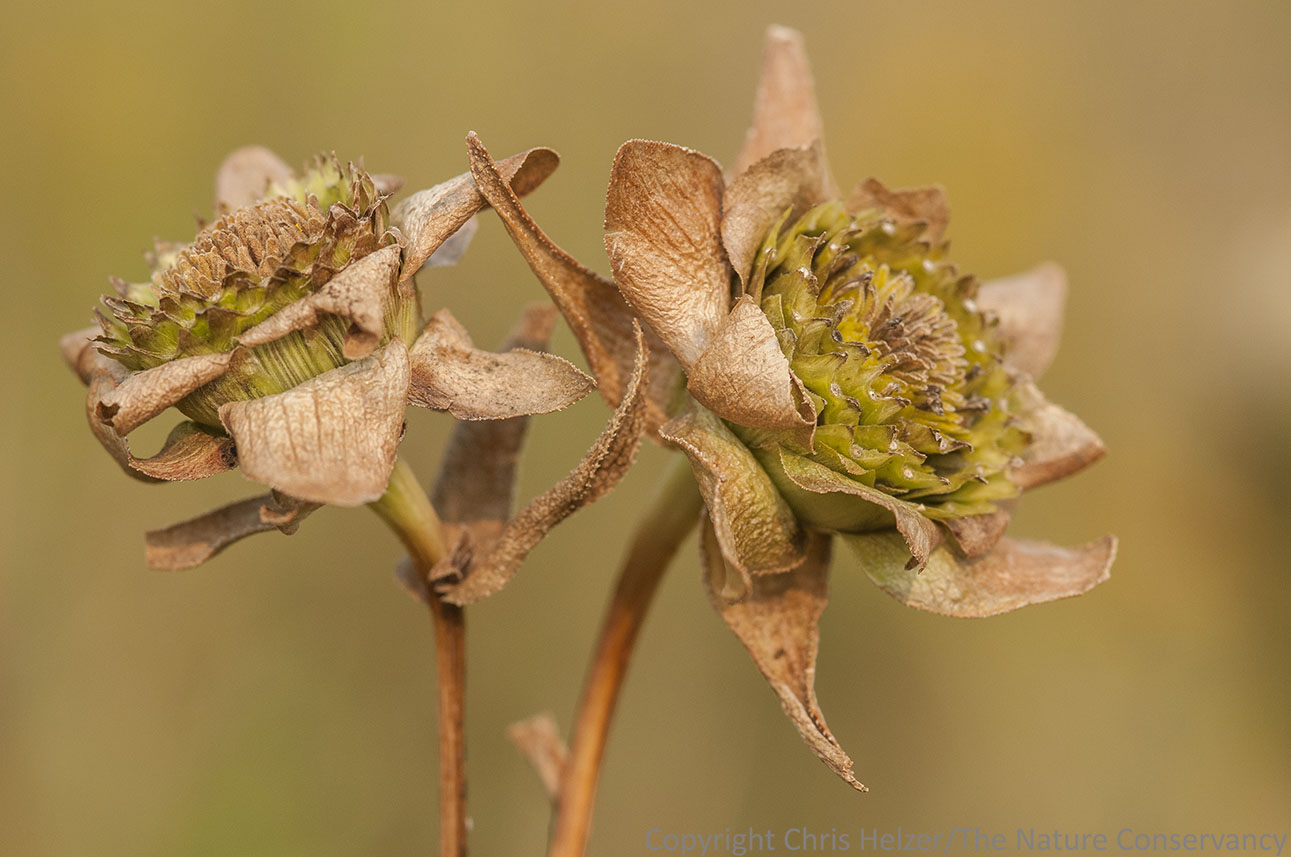
Rosinweed (Silphium integrifolium) Deep Well Wildlife Management Area.

Entire-leaf rosinweed (Silphium integrifolium) was done blooming and well into its senescence last weekend.  Summer must be nearly over…  That was quick.