Photo of the Week – July 9, 2015

Upright yellow coneflower (Ratibida columnifera), aka Mexican hat, is blooming all over the Platte River Prairies right now.  As with most showy flowers, the coneflowers are crawling with insects of many kinds.  I spent a fun half hour (31 minutes, to be exact) last week, trying to photograph as many of those insects as I could before I had to pop into our field headquarters for a meeting.
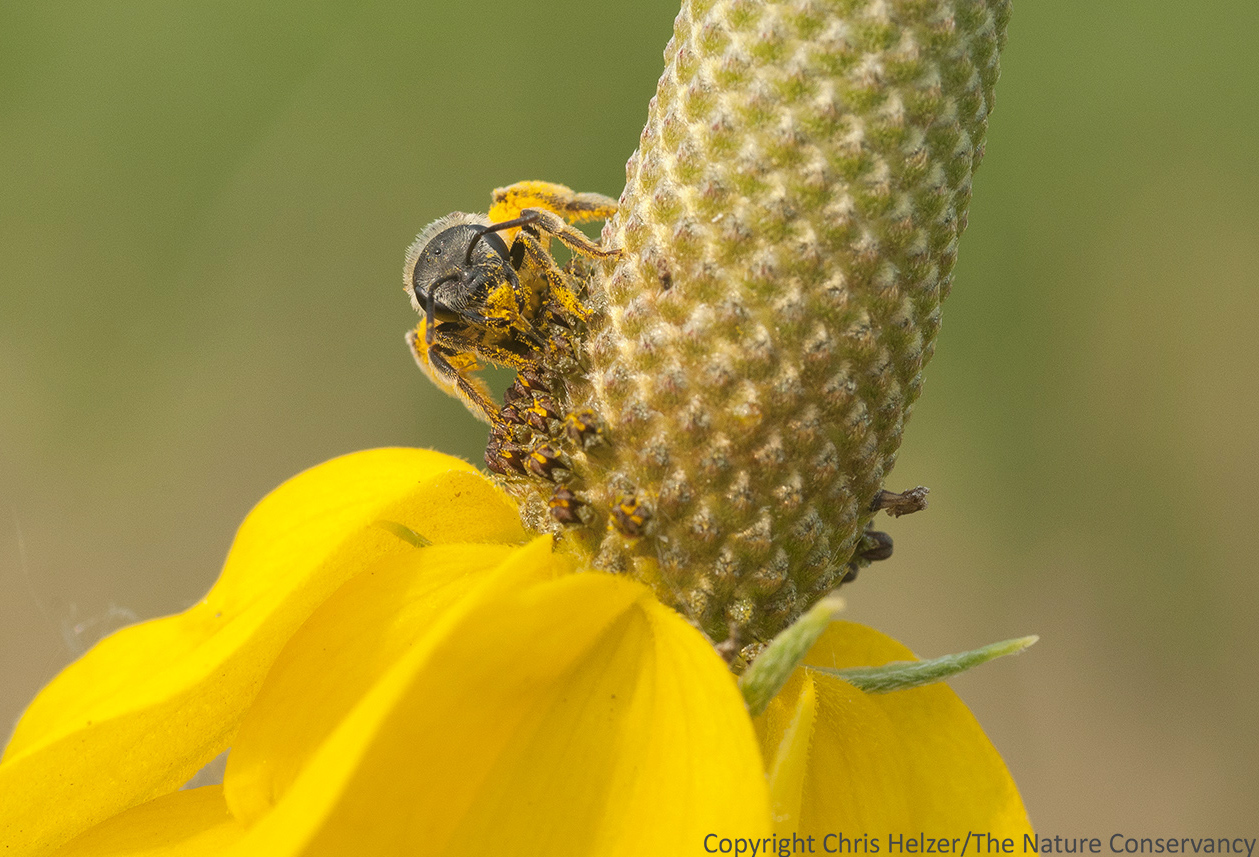
Bee on upright prairie coneflower.  The Nature Conservancy's Platte River Prairies, Nebraska.

Sweat bee (Halictus ligatus, I think) on upright prairie coneflower. The Nature Conservancy’s Platte River Prairies, Nebraska.

Bee and beetle on upright prairie coneflower.  The Nature Conservancy's Platte River Prairies, Nebraska.

The same sweat bee species on a different flower, this time joined by a small brown beetle.
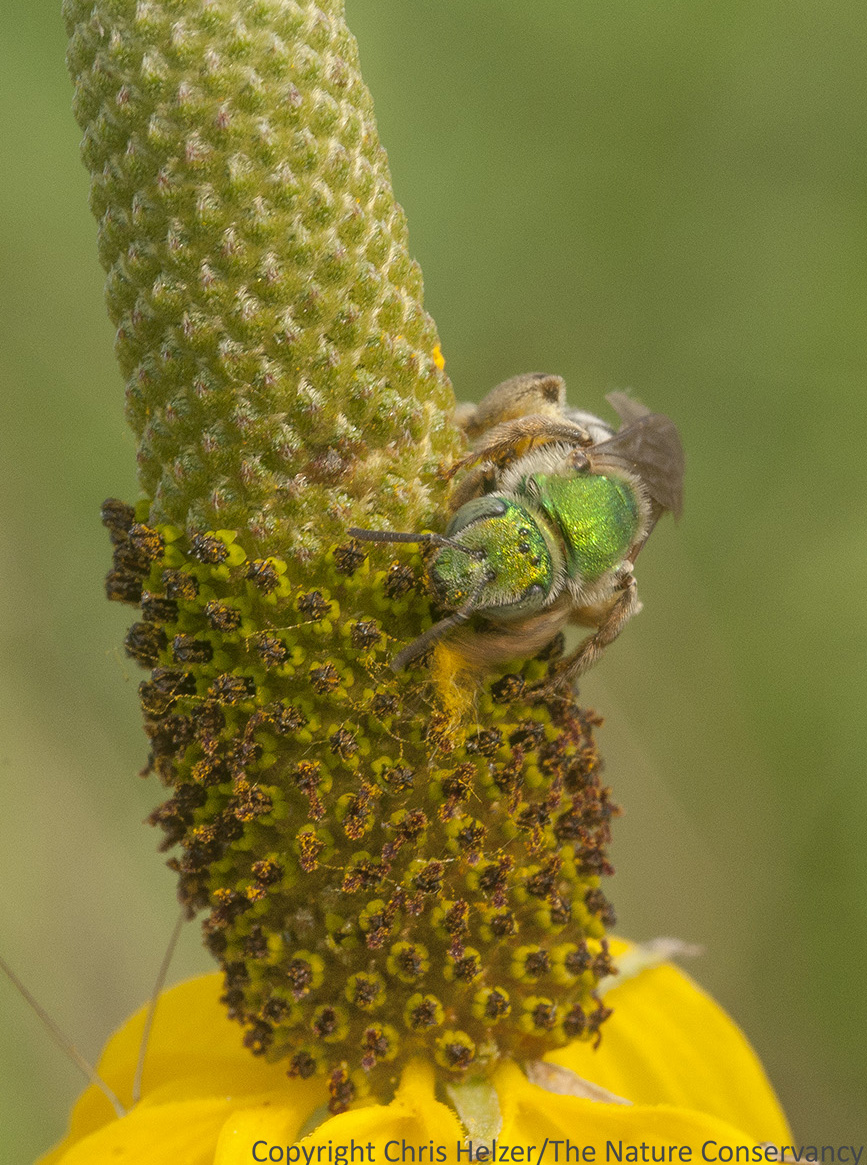
Bee on upright prairie coneflower.  The Nature Conservancy's Platte River Prairies, Nebraska.

A different bee with the antennae of another insect beneath it.

Hover fly (Syrphid) on upright prairie coneflower.  The Nature Conservancy's Platte River Prairies, Nebraska.

It took me a while to finally capture an image of one of these syrphid flies (hover flies).  They were a lot more skittish than the bees.
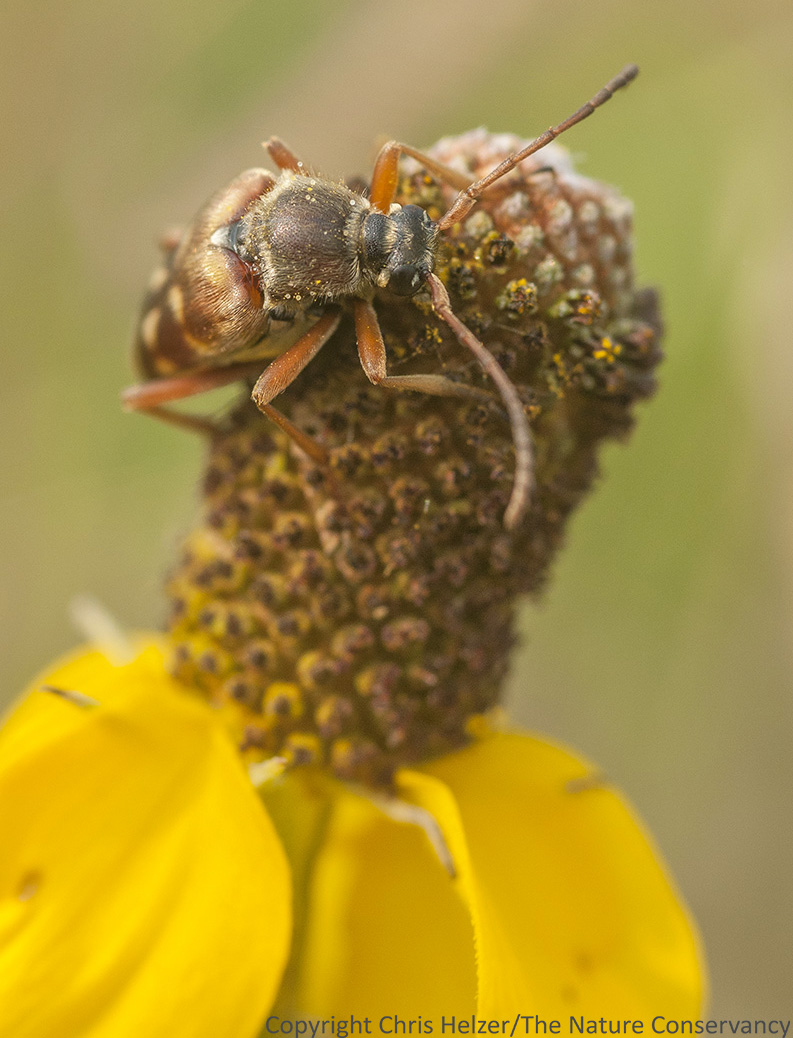
Long-horned beetle on upright prairie coneflower (Ratibida columnifera).  The Nature Conservancy's Platte River Prairies, Nebraska.

Long-horned beetle feeding on pollen.

I wrote about long-horned beetles last summer after photographing them on the same flower species.  I think this one is Typocerus confluens, but I’m just guessing based on photos from last year.  You might remember from last year that adult long-horned beetles feed on flowers, but larvae are wood borers or subterranean root feeders.
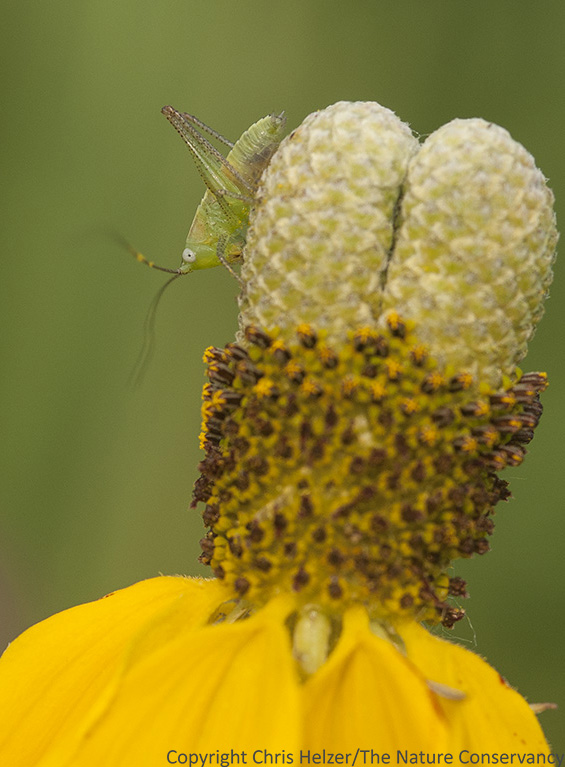
Katydid nymph on upright prairie coneflower.  The Nature Conservancy's Platte River Prairies, Nebraska.

A tiny katydid nymph.

Tree cricket nymph on upright prairie coneflower.  The Nature Conservancy's Platte River Prairies, Nebraska.

A tree cricket nymph.

As is always the case in prairies (and nature in general), the closer you look, the more you see.  The number of insect species feeding on this one flower (and, in some cases, pollinating it) is a great example of the complexity of life found in prairies.  Complexity leads to resilience because there are multiple species that can play fill similar roles.  If one species has a bad year, others will fill in for it.  That redundancy helps keep all systems functioning all the time.

Hurray for complexity!

Photo of the Week – June 12, 2014

While I was in Iowa last week, I took advantage of some free time just before sunset to return to one of the restored (reconstructed) prairies we’d visited earlier in the day at the Kellerton Wildlife Management Area.  As I walked into the prairie, I could hear a few straggler (desperate?) prairie chickens booming on their lek and I flushed a pair of northern bobwhites from the fenceline.  Bobolinks, dickcissels, eastern meadowlarks and grasshopper sparrows were noisily announcing themselves across the prairie, and upland sandpipers were whistling and chattering above.  The insects were less noisy but were abundant, once I started looking closely for them.

Tall white indigo in restored prairie at the Iowa Department of Natural Resources' Kellerton Wildlife Management Area.

Tall white indigo in restored prairie at the Iowa Department of Natural Resources’ Kellerton Wildlife Management Area.

As the sun lowered itself toward the horizon, I reflected upon the various ways the success of this particular prairie restoration effort could be measured.  It was certainly aesthetically pleasing, plant diversity was high, wildlife and insects certainly seemed to be responding well to it, and by replacing cropland with prairie, the Iowa DNR had – at least incrementally – defragmented the grassland landscape.  Seems like success to me!  …I decided to focus on the aesthetics for a while, and took advantage of the golden evening light until the sun disappeared completely.

A stinkbug on purple coneflower.

A stinkbug on purple coneflower.


Crab spider on Ohio spiderwort.

Crab spider on Ohio spiderwort.


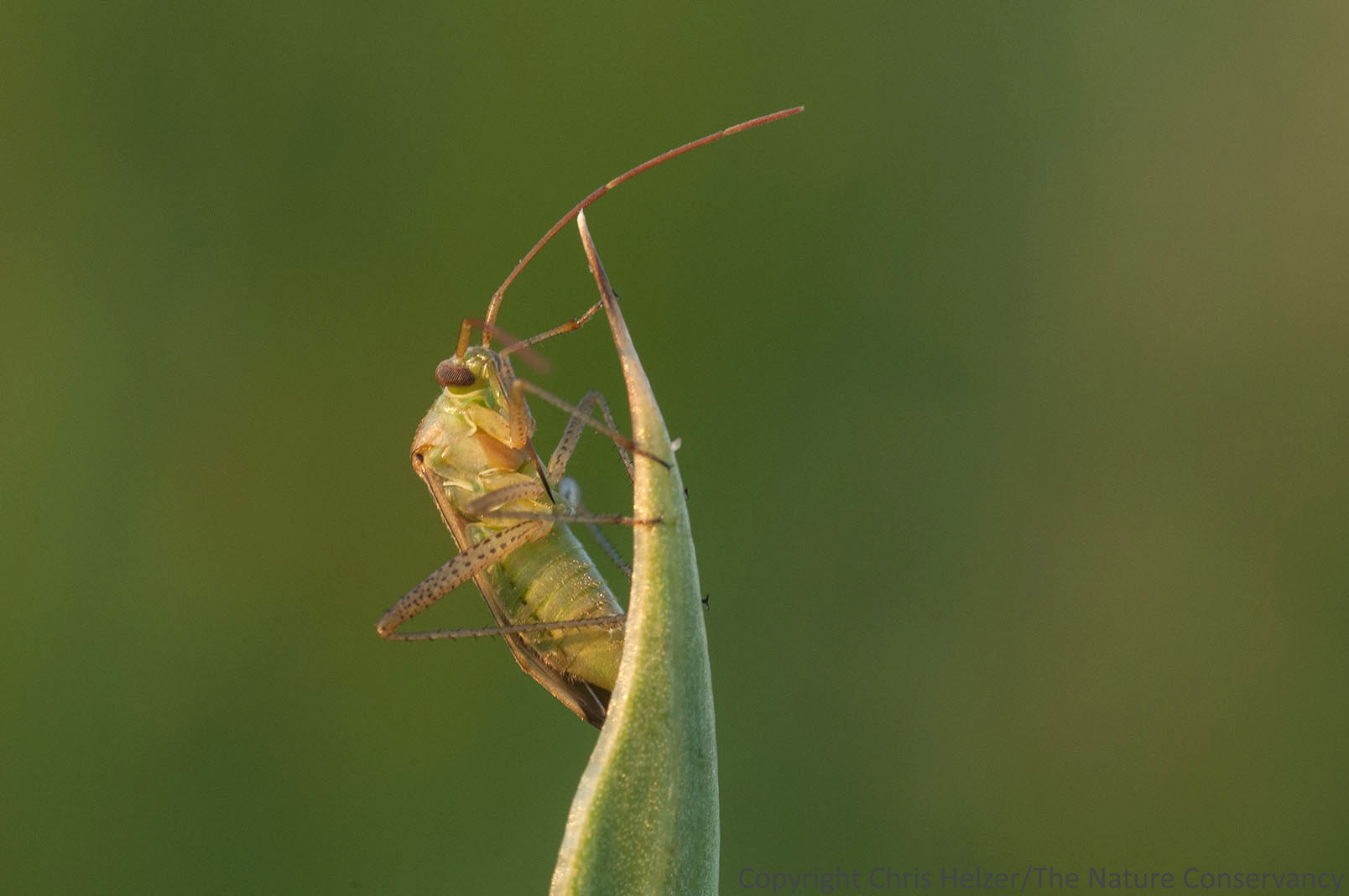
A bug (Hemiptera) sits perched in the late day sunlight.

A bug (Hemiptera) perches in the late day sunlight.


Ohio spiderwort.

Ohio spiderwort in the afterglow of the sunset.