Photo of the Week – February 27, 2014

For a nature photographer like me, Nebraska winters can get pretty long.  Especially winters like this one with very little snow.  How many photos of brown grass and dried flowers can I take, after all?  I don’t have the equipment or patience to photograph wildlife very well, so I’m kind of stuck with landscapes and close-up photos.

Well, a guy’s gotta photograph something…  While I was visiting my in-laws in Sarpy County, Nebraska (south of Omaha) last weekend, I decided to challenge myself to find something interesting to photograph within the small restored prairies on their property.  I guess you’ll have to judge whether or not I was successful.

Indiangrass.  Weiss Acres - Sarpy County, Nebraska.

Indiangrass (Sorghastrum nutans).  Weiss Acres – Sarpy County, Nebraska.

.

A false sunflower seed head is backlit by the setting sun.

A false sunflower (Heliopsis helianthoides) seed head is backlit by the setting sun.

.
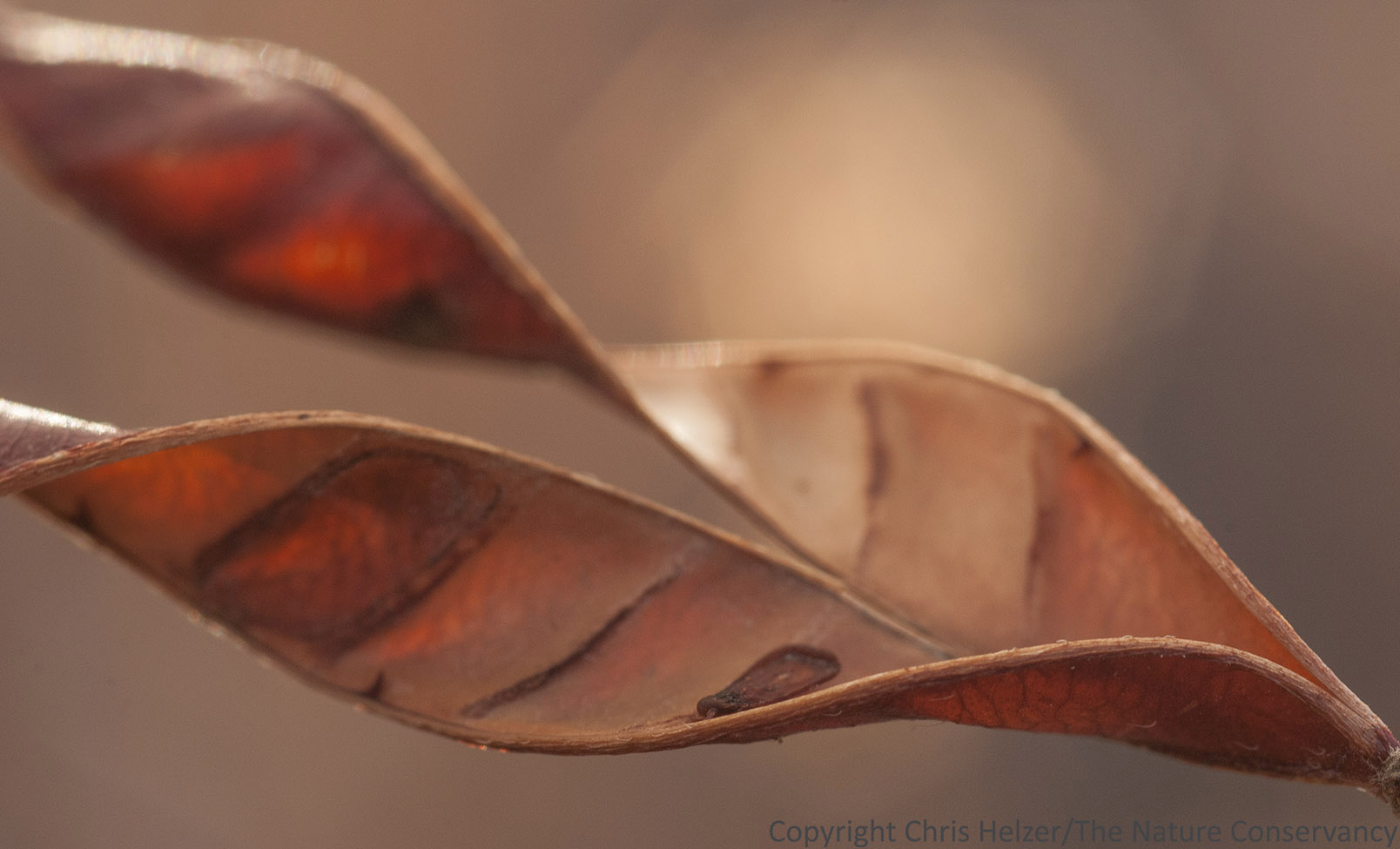
The double helix pattern of an open partridge pea seed pod.

The double helix pattern of an open partridge pea (Chamaecrista fasciculate) seed pod.

.
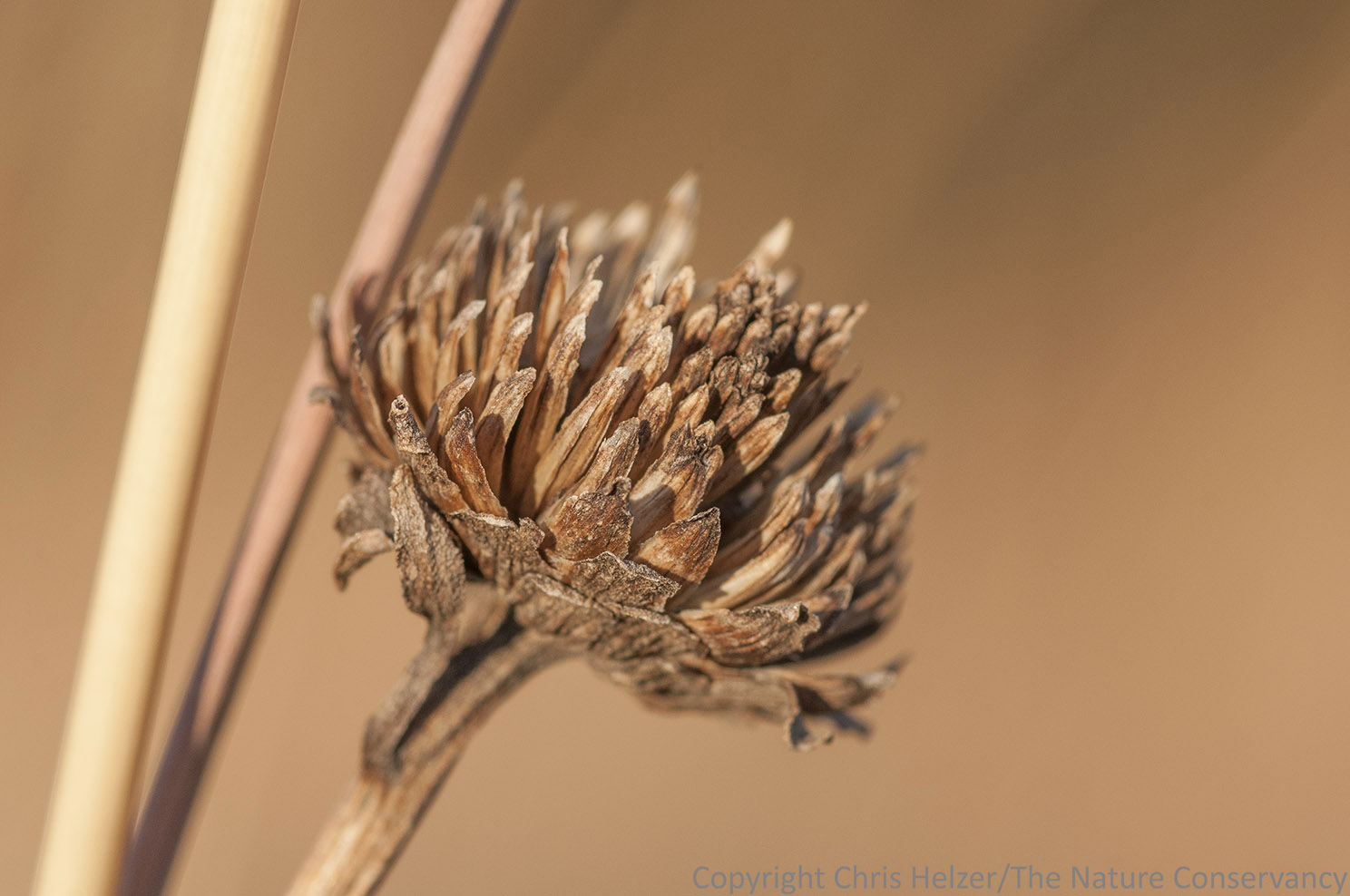
Another false  sunflower seed head.

Another false sunflower seed head…

.

Another (yawn) sunflower seed head.  This time it's Maximilian sunflower.  The light was kind of interesting, though.

Another (yawn) sunflower seed head. This time it’s Maximilian sunflower. What can I say?  The light was kind of interesting.

So, there you go.  Now, how about a little snow?  Or some nice hoar frost?  Ice storm??

Spring is coming soon, right?

Sigh.

Flowers of the Night

Not many plants wait for the sun to go down before they open their flowers…

Missouri evening primrose in tallgrass prairie at Camp Cornhusker (Boy Scouts of America) near Humboldt, Nebraska

Missouri evening primrose in tallgrass prairie at Camp Cornhusker (Boy Scouts of America) near Humboldt, Nebraska.  This photo was taken half an hour after sunset in early June.  Light for the image was provided by both the afterglow of sunset and the rising moon.

Like other evening primroses, Missouri evening primrose blooms overnight rather than during the day.  The plants can produce multiple flowers, which open at about sunset, but each individual flower blooms for only a single night.  The pollen grains of evening primroses are attached to each other by very thin elastic threads, which apparently stick very well to sphinx moths, their primary pollinators.  Night-flying bees also feed on evening primroses but are not thought to be effective carriers of pollen from one flower to another.

Flowers

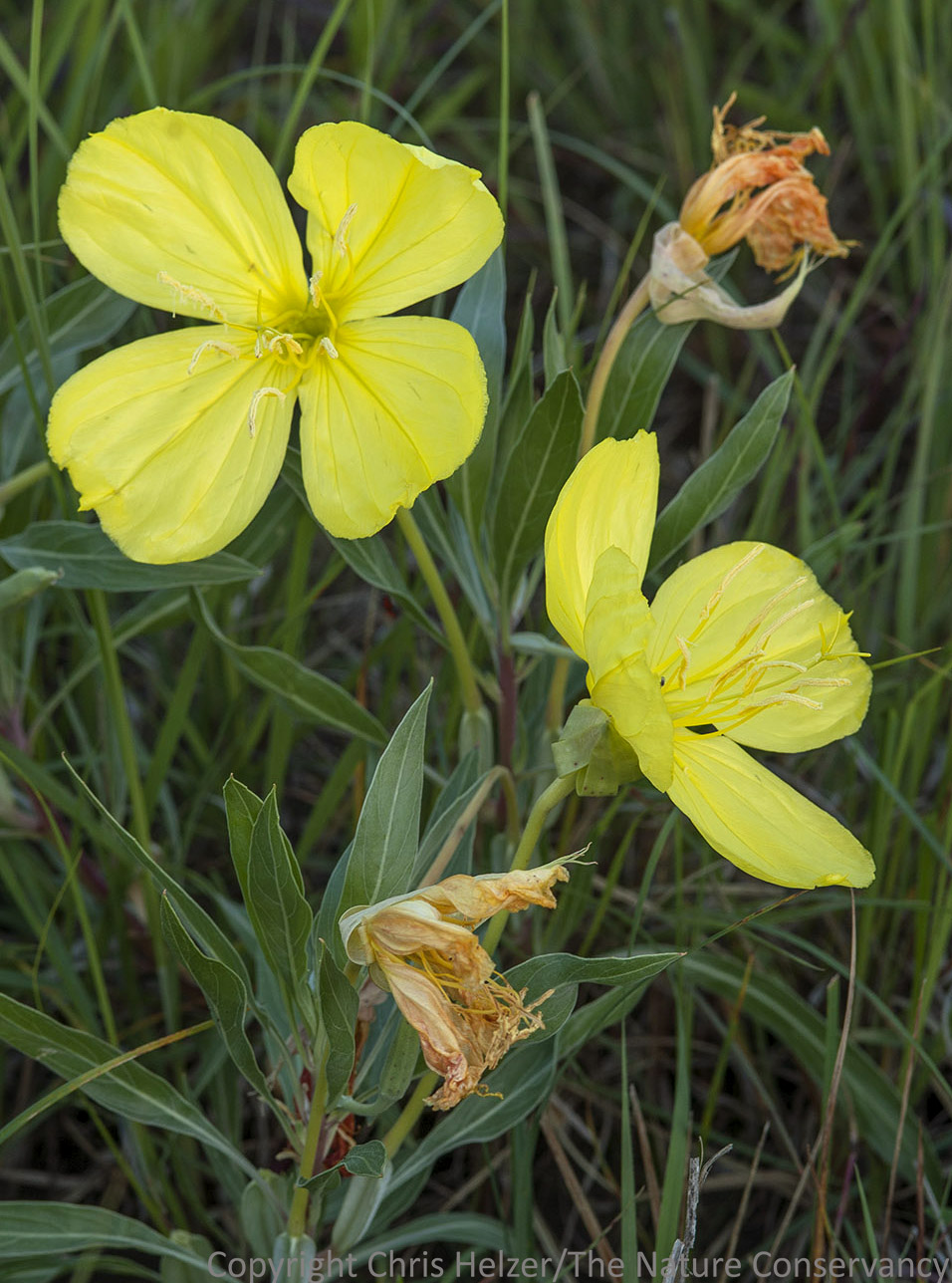
A closer view of a Missouri evening primrose plant.

As some of you more botanically-aware readers surely know, the contemporary name for this plant is Oenothera macrocarpa, or bigfruit evening primrose (macro = big, carpa = fruit).  Many of us, however, still refer to it as Missouri evening primrose because it used to be Oenothera missouriensis, and I’m choosing not to break that habit.  So there.

Regardless, it is a beautiful prairie wildflower that typically grows less than a foot tall and has large yellow flowers.  Its four-petaled blossoms turn into very distinctive four-winged seed pods, which are often used in floral displays (there happens to be a glass vase full of them on my dining room table right now!)  Missouri evening primrose has a long taproot and usually grows best in soils with relatively little organic matter.

Most flowers bloom during the day, taking advantage of the numerous pollinators that fly around when the sun is high in the sky.  That’s a fine thing to do, but I can appreciate the strategy of evening primroses.  Why fight the crowds when you can monopolize the attention of a few specialized pollinators during the off hours?