I’ve always admired black and white photographers.
(Or at least photographers who take black and white photos…)
The photo below, however, is a color photograph. It just happened that the scene was black and white.
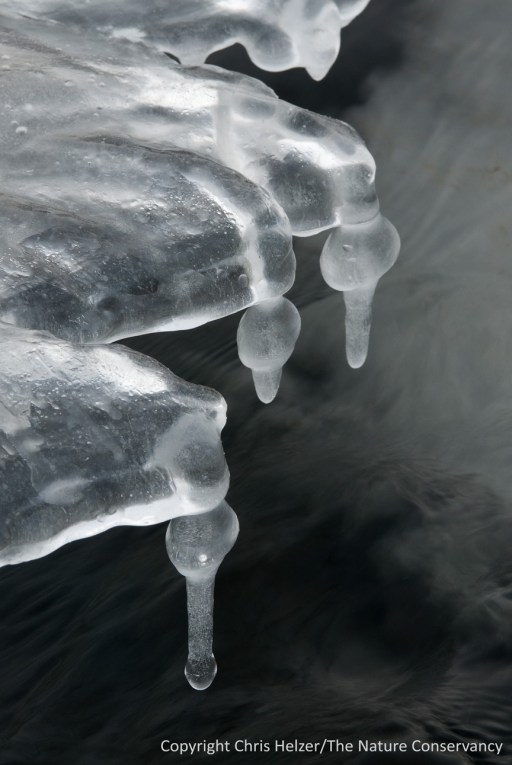
Ice stalactites on the edge of a hole in a frozen stream. Lancaster County, Nebraska.
This photo was taken along a frozen stream in Lancaster County, Nebraska – just north of Lincoln. The surface of the stream was frozen solid enough that I was able to walk on it, but there were a few places where the water beneath the ice was flowing strongly enough that it kept small holes in the ice open. This image shows a portion of the edge of one of those holes. (The hole was probably 2 or 3 feet in diameter.)
Because the water was flowing fairly fast, it splashed periodically, and those splashes – and subsequent drips – created stalactites of ice from the flat roof of ice over the water. There were several holes with similar formations, but this was the most dramatic of the stalactites.
It was a bright overcast day with high thin clouds that eliminated shadows but still created a well-lit scene. Cameras can only handle a certain range of light from bright to dark, so the degree of contrast between the white ice and the darker water below is what results in the black and white look of this image. I wanted to be sure I captured the details in the bright white ice, but in doing that, the camera was unable to also capture the full range of colors and tones in the much darker water below. As a result, the water shows up in the photo as black. In a delightful bit of serendipity, the glare from the bright sky reflecting on the dark water created some terrific highlights that both break up the dark background behind the ice and show the movement of the water beneath.


 The Prairie Ecologist