
Ecologically speaking, grasslands might be considered a “transitional community”. In the absence of fire and/or drought, grasslands tend to progress toward a shrubby, and eventually woody ecological community. For as long as prairies have existed in central North America, they have been restrained from making that transition to woodland by periodic drought and frequent fires ignited by both lightning and people. While I consider prairies to be their own distinct ecological community, the fact remains that they are always trying to turn into something else.
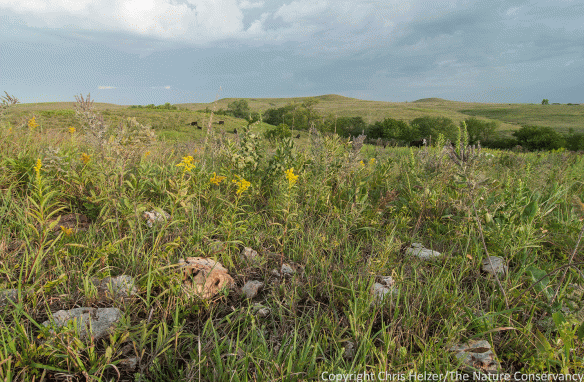
Flint hills prairie in Kansas is constantly moving toward shrubland, held back largely by frequent prescribed fire.
Maybe it’s not surprising, then, that modern human society also seems to view grasslands as transitional. During a lecture here in Nebraska this week, Dr. David Briske, professor of rangeland ecology at Texas A&M University, highlighted this phenomenon as part of his (much broader, and excellent) presentation. If you think about it, humans are always trying to turn prairies into something else.
Prairies tend to be a placeholder until we can come up with something more useful to do with land. We can plow up the prairie and raise crops in the soil. We can cover the prairie with asphalt and concrete and create places to live and travel. We can plant trees in the prairie to make it look better and provide better habitat for the wildlife species we most value. We can come up with all kinds of replacements for prairie.
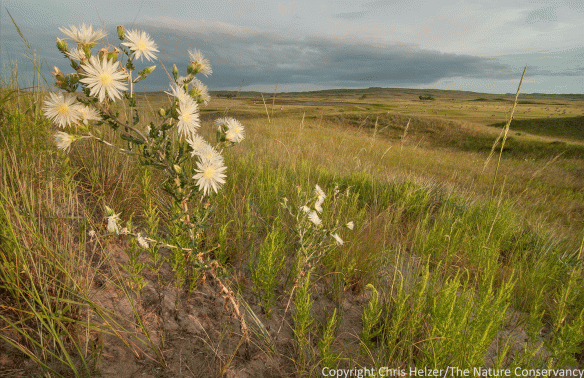
Mentzelia and Sandhills prairie. The Sandhills is a great example of the subtle beauty of prairies, but also a landscape with a strong emotional pull for those of us who appreciate grassland.
There is certainly a need for cropland, and for houses, roads, and other developments that allow us to inhabit prairie landscapes. I guess it’s even ok to plant a few trees around those developments to provide shade, shelter, and fruits/nuts (though we tend to take that WAY too far.) However, I think it’s clear that the reason most prairies are “transitioned” to something else is that we don’t really see them as important in their own right. “Surely,” we say, “we can come up with something better than THAT.”
So how do we change people’s minds about prairie? We can make lots of arguments about carbon sequestration, water filtration, and pollinators, but we’ve been making those arguments for a long time and haven’t made much progress. In fact, we continue to lose prairie at an alarming rate – not just here, but around the world. Helping people understand the functional value of prairie is one thing, but we’re always going to be competing against the functional values of the alternatives (cropland, housing, roads, woodland, etc.) and so far, those alternatives are clearly more popular. We’ve got to get people to appreciate prairies for what they are.
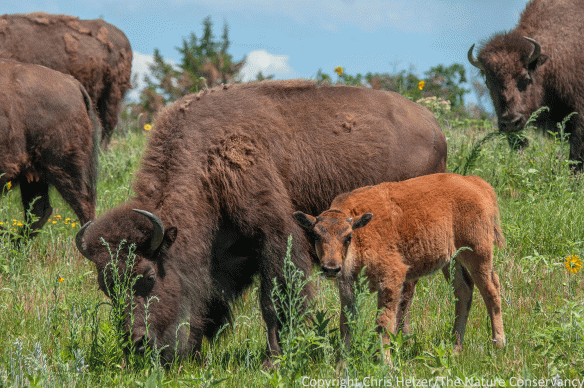
Bison are charismatic creatures and can be great ambassadors for prairie. Unfortunately, only a small percentage of publicly-accessible prairies have bison, and they aren’t creatures you can easily (safely) get close to.

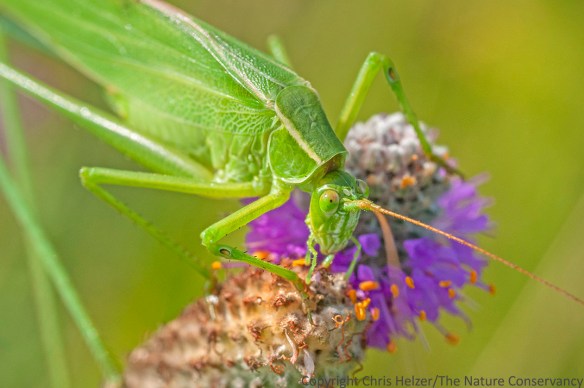
Katydids are easy to find in prairies, but lack some of the overt charisma of bison – at least until you get to know them a little better.
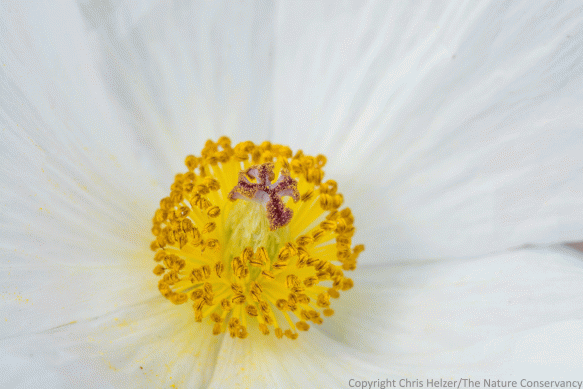
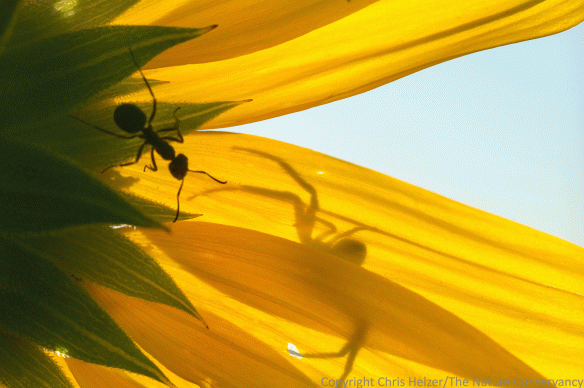
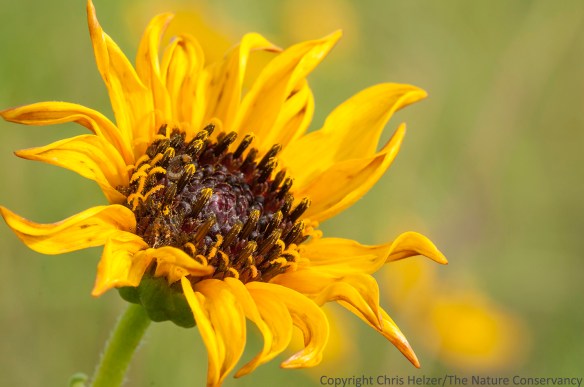
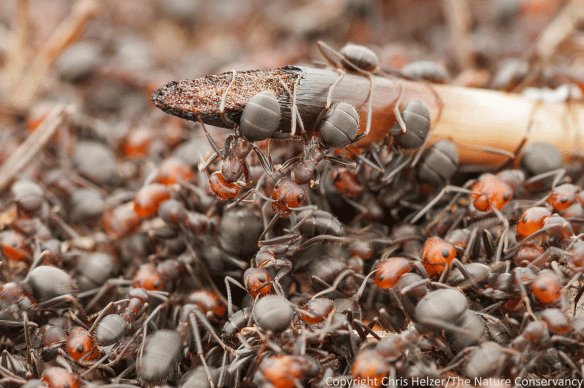
Sharing photos that highlight the beauty of prairie is a great tactic (feel free to use these), but those photos are most valuable as the first component of a longer process that ends with people hiking out into actual prairies to learn about them personally. It’s easy to dismiss grasslands as unimportant when you only see them as wastelands of grass that stand between you and the mountains or forests you really want to see. It’s harder to dismiss them once you’ve gotten to know them a little better.
If we’re going to save the prairie we have left, we’ve got to move beyond purely functional/utilitarian arguments and get people to also see the cultural and aesthetic values of prairie. Because the beauty of prairies can be subtle, it often takes a while for those unfamiliar with it to understand and appreciate that beauty. As a result, those of us that know and love prairies have a deep responsibility to spread that appreciation to as many people as we can. I’m not saying we have to go door to door, though maybe that wouldn’t hurt… (“Have you heard the good news?”)



 The Prairie Ecologist