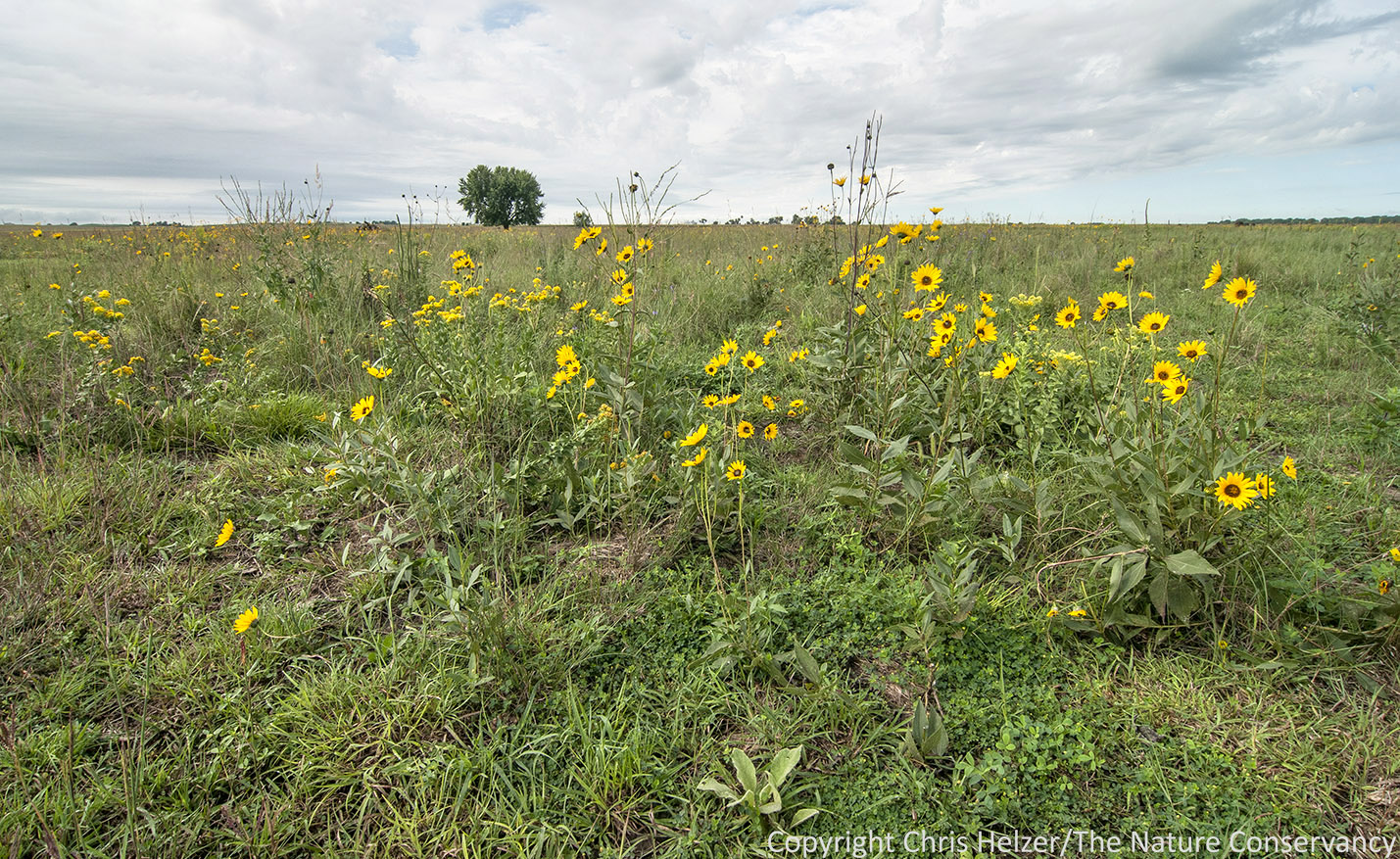
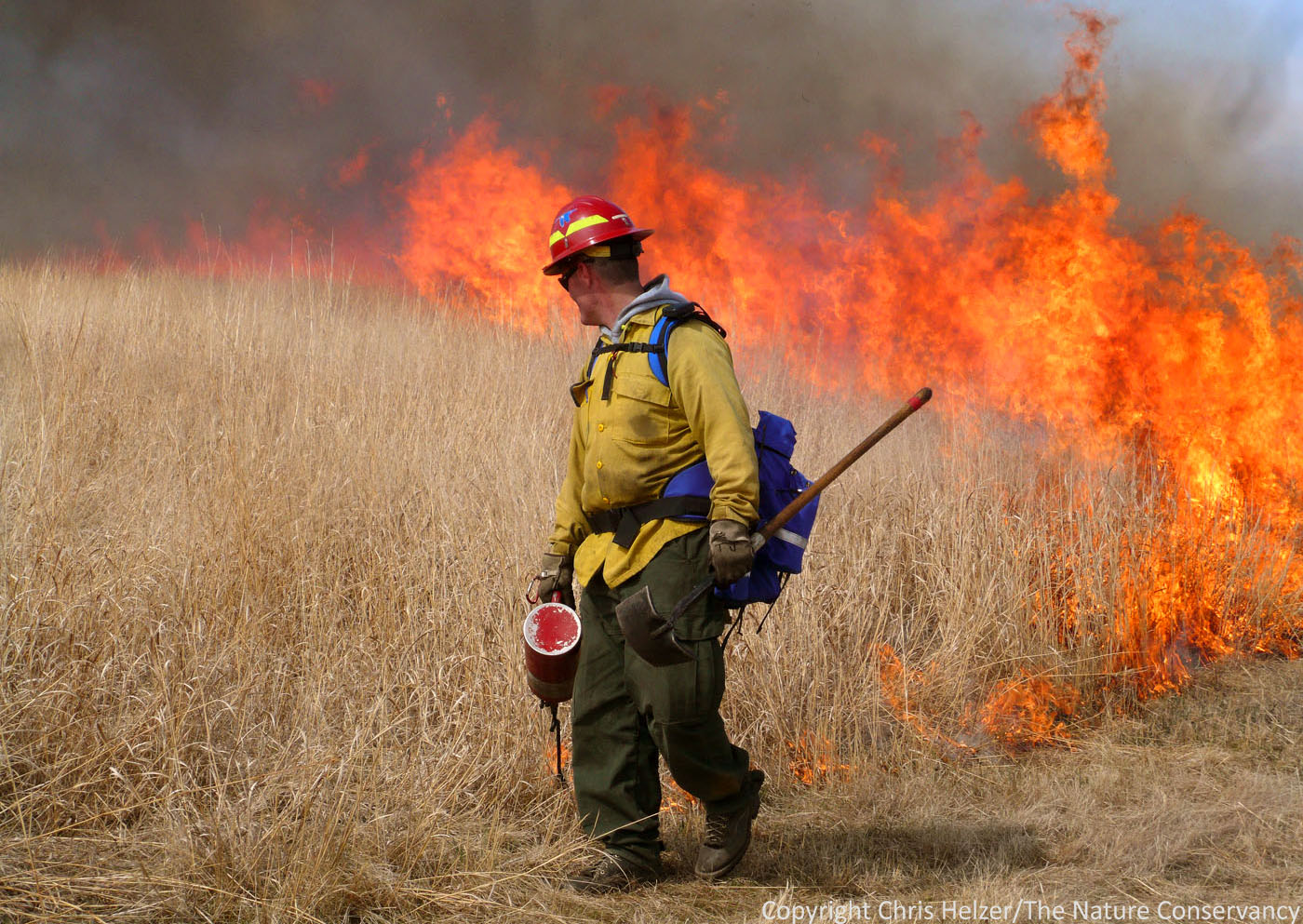
Hubbard Fellowship Post – Grasshopper Mice

This post was written by Jasmine Cutter, one of our Hubbard Fellows.  Jasmine has written earlier about her independent research project looking at small mammals (or s’mammals, as she calls them) in our Platte River Prairies.  All photos are by Jasmine unless otherwise credited.

S’mammal Spotlight: the Fearsome Northern Grasshopper Mouse

While I finish up the data entry for my independent project on small mammals, I thought it’d be fun to share some more information about some of the s’mammals out in our prairies. Some of them are really, especially awesome, and hopefully knowing a little more about them will elucidate why we think they’re worth studying!

The northern grasshopper mouse.  Note the big eyes and ears.

The northern grasshopper mouse.  See the note at the end of this post about how this photo was taken.

I thought I’d kick off this series with one of my favorites, the northern grasshopper mouse (Onychomys leucogaster). There is no other way to describe this critter except beefy. This is a mouse made for fighting, for pouncing, for striking fear in the hearts of the other lil s’mammals (I haven’t obtained any critter statements about the last part, but if I was pocket mouse-sized, I’d be wary). They are a handful to work with – very aggressive, and surprisingly agile. They’re able to shrink out of pretty much any corner I try to limit them to, and their pointy carnivorous teeth ensure that I am very aware of the distance between my fingers and their mouth!

If you’re wondering if you’ve seen one, northern grasshopper mice have big eyes, big ears, and relatively short tails that are consistently about 42 mm long (Mike and I measured many grasshopper mouse tails). The majority of them are silky gray-brown on top and white below, though there are a few whose backs are more cinnamon-y than gray. Juveniles tend to be lighter colored. Most of the grasshopper mice I caught were approximately the size of my fist, maybe a little smaller, about 33-45g (for reference, pocket mice are generally 8-12 grams).
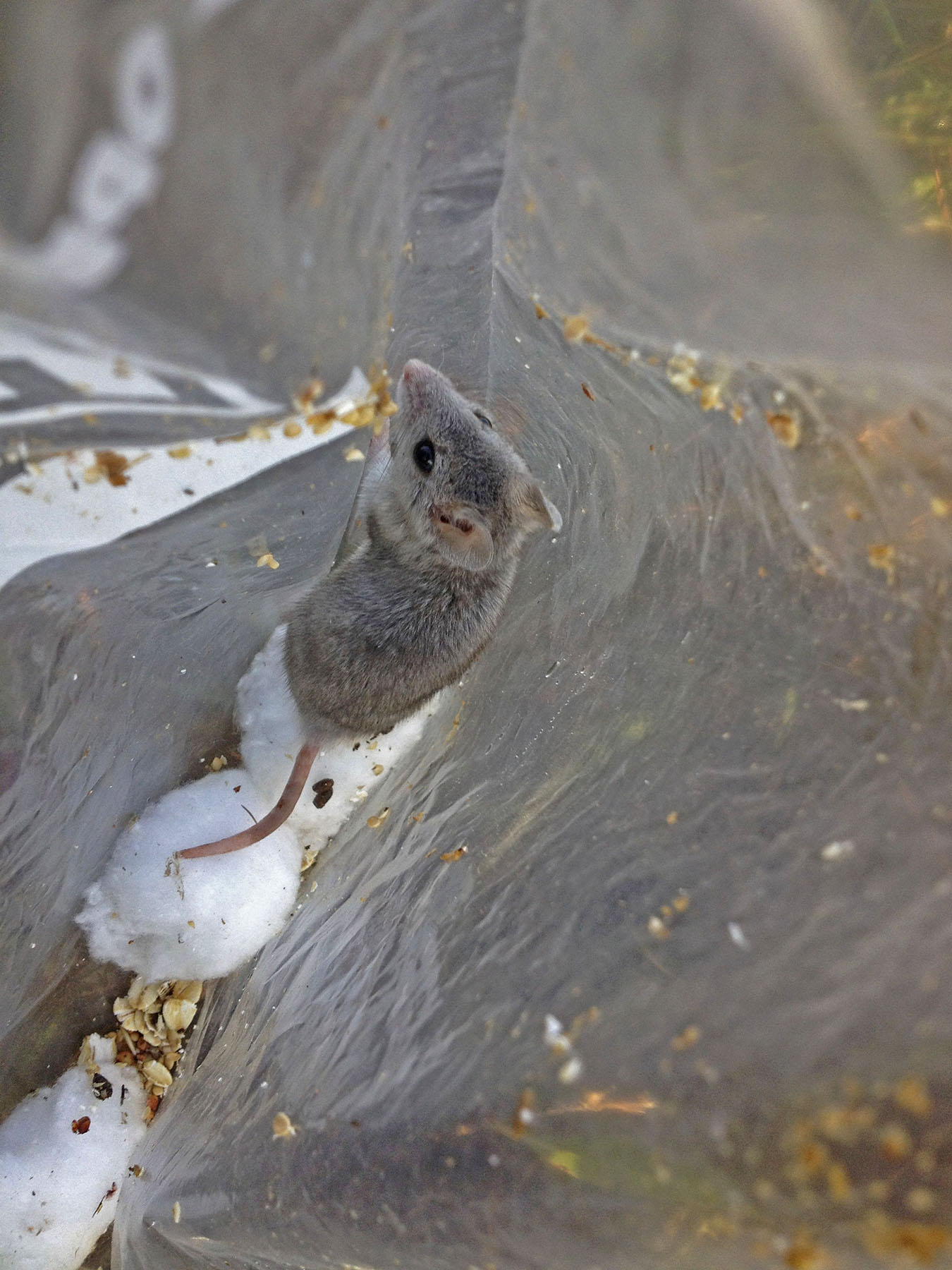
cute lil grey guy. I would guess this one is on the younger side of things. Its fur has some of that downy, juvenile look to it. [good ones for the disclaimer? When I open a trap, I gently plop the critter into a bag in order to minimize handling exposure. I can weigh, identify and sex the critter while it’s in the bag. It’s safer for me, and the animal is only in there for a few seconds to a minute.

Cute lil grey guy. I would guess this one is on the younger side of things. Its fur has some of that downy, juvenile look to it. DISCLAIMER: When I open a trap, I gently plop the critter into a bag in order to minimize handling exposure. I can weigh, identify and sex the critter while it’s in the bag. It’s safer for me, and the animal is only in there for a few seconds to a minute.

This is one of more cinnamon-y colored ones.

This is one of more cinnamon-y colored ones.

The impressive muscle mass of a northern grasshopper mouse is achieved by a largely carnivorous diet. True to their name, grasshopper mice consume a lot of grasshoppers, as well as other insects, and sometimes other mice, including others of their species. Allegedly, grasshopper mice stalk their prey and will emit a shrill cry before attacking. It is thought that they tend to have a longer period of maternal care than most mice (which isn’t saying much) so that young grasshopper mice can be taught to hunt. Ideally, I’d like to camp out by their burrows in the spring so that I can hear them sing and see their fearsome predatory skills in action.

This is probably one of the youngest-looking grasshopper mice I found. It is fairly small, its fur is still more downy than silky, and its head/eyes to body ratio makes me think it's pretty young. Also it wasn't very good at being elusive or aggressive compared to most, so hopefully mom is still giving it some lessons! [The clip on its tail is attached to my mouse scale. While it is undoubtedly a little uncomfortable, there is no permanent damage. Using the clip means I am touching them less, and speeds up the photo taking process so they can be released faster!]  This is probably one of the youngest-looking grasshopper mice I found. It is fairly small, its fur is still more downy than silky, and its head/eyes to body ratio makes me think it's pretty young. Also it wasn't very good at being elusive or aggressive compared to most, so hopefully mom is still giving it some lessons! [The clip on its tail is attached to my mouse scale. While it is undoubtedly a little uncomfortable, there is no permanent damage. Using the clip means I am touching them less, and speeds up the photo taking process so they can be released faster!]

This is probably one of the youngest-looking grasshopper mice I found. It is fairly small, its fur is still more downy than silky, and its head/eyes to body ratio makes me think it’s pretty young. Also it wasn’t very good at being elusive or aggressive compared to most, so hopefully mom is still giving it some lessons! [The clip on its tail is attached to my mouse scale. While it is undoubtedly a little uncomfortable, there is no permanent damage. Using the clip means I am touching them less, and speeds up the photo taking process so they can be released faster!]


The underside of a grasshopper mouse. If you look closely, there's a faint orange circle on this one's chest, suggesting that I marked it on a previous week's transect.

The underside of a grasshopper mouse. If you look closely, there’s a faint orange circle on this one’s chest, suggesting that I marked it on a previous week’s transect.

If you’re looking for a northern grasshopper mouse, you are mostly likely to find them in sandy soils. They seem to prefer sandy areas that had sparser and often shorter vegetation. Apparently the sandhills portion of our Platte River Prairies are ideal habitat because they are loaded with northern grasshopper mice. It is exciting that we have such a robust population, especially because it gives us a chance to learn more about them.
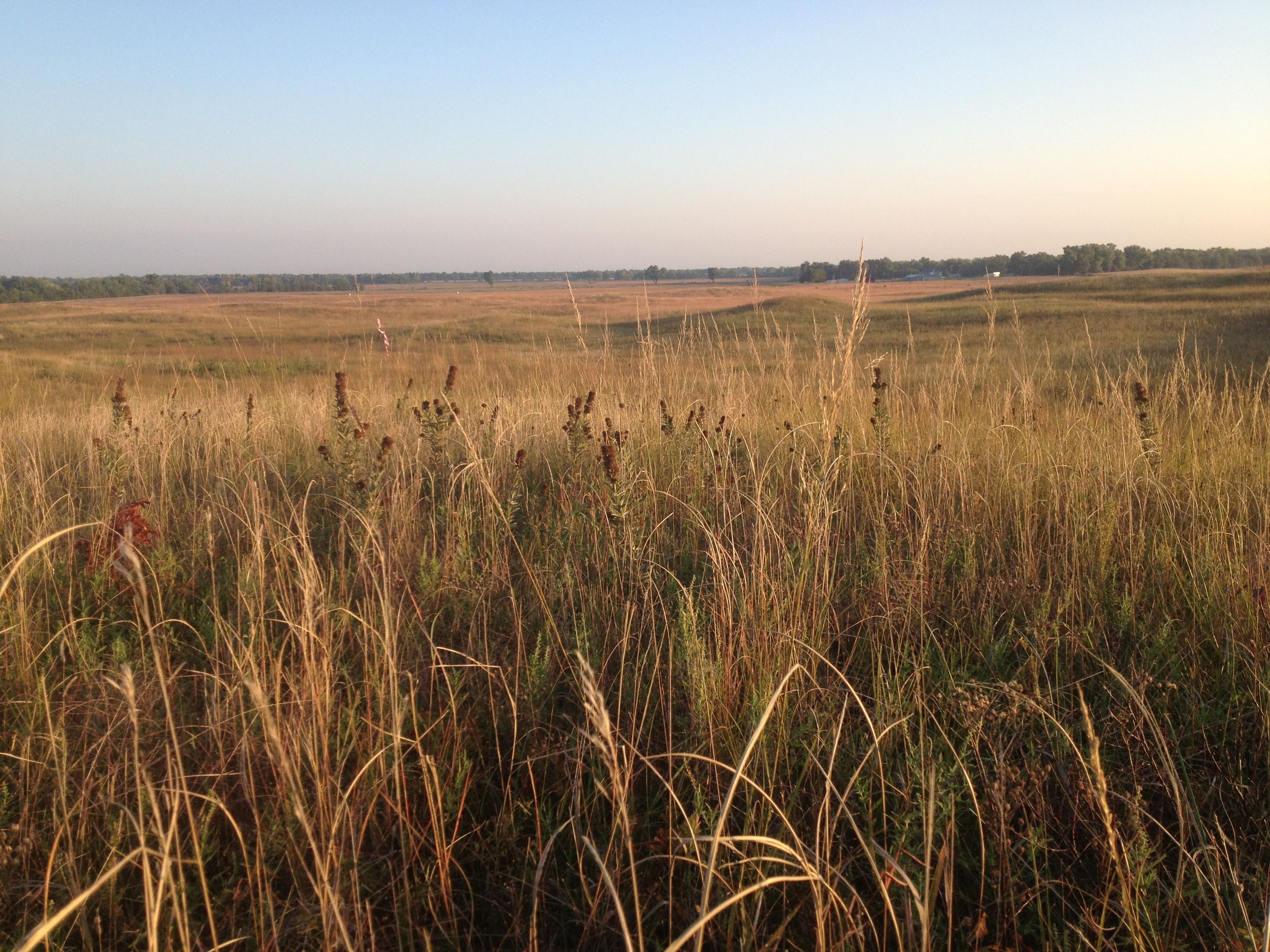
The sandhills area of the Platte River Prairies - habitat of the northern grasshopper mouse.  Can you spot the flag marking a trap location?

The sandhills portion of the Platte River Prairies – habitat of the northern grasshopper mouse.

Learning more about their habits will not only aid in our management of our prairie, but could potentially help fill some gaps in the broader scientific literature. While the life histories of some small mammals are pretty well understood, it seems to me that there is some updating to do in terms of the natural history descriptions of northern grasshopper mice. For example, most natural history sources will tell you that the northern grasshopper mouse is very territorial and will fight to the death any other grasshopper mouse that wander into its territory. However, Mike and I have been catching several northern grasshopper mice within 10-14 meters of each other. This seems like a much higher density than one would expect for a highly territorial species, especially one that is known to have a fairly large home range in relation to its size.

Greg Wright, a wildlife biologist at the Crane Trust says he’s seen reports that grasshopper mice might hunt as family units, which could explain the densities we were catching. [It will be intriguing to see if our data supports that idea]. It could also be that northern grasshopper mice are only especially territorial during the mating season? A small study in Colorado found that several individuals shared a burrow in the winter.

I think these critters have a compelling story, and I look forward to our future studies and new research questions so that we can expand our understanding of the awesome, fierce northern grasshopper mouse.

BEHIND THE SCENES

Can you spot Chris' black camera? You may think that Chris spends a lot of time wander through prairies flipping over leaves, but really, the majority of his photos are staged in a cardboard box... This is a behind-the-scenes look at the photo assistant setup during our first field day, when Mike and I brought a grasshopper mouse to show people before we released it. Can you spot Chris' black camera? You may think that Chris spends a lot of time wander through prairies flipping over leaves, but really, the majority of his photos are staged in a cardboard box... This is a behind-the-scenes look at the photo assistant setup during our first field day, when Mike and I brought a grasshopper mouse to show people before we released it.

Can you spot Chris’ black camera? You may think that Chris spends a lot of time wandering through prairies flipping over leaves, but really, the majority of his photos are staged in a cardboard box… This is a behind-the-scenes look at his photo setup during our first field day, when Mike and I brought a grasshopper mouse to show people before we released it.  The result was the first photo used in this post.

Editor’s Note:  Ok, two things, gigglepants.  First, have YOU ever tried to take a photo of a grasshopper mouse in the wild?  Exactly.  They don’t tend to sit still and pose, do they?   Second, I have not hidden my photo techniques in the past, and on the rare occasion when I use something like a cardboard box to get a photo that would be otherwise impossible, I try to be transparent about it.  Many readers will remember my very serious technical piece on how to use a wheelbarrow as a photo studio, for example.  At least I don’t use something silly like a plastic bag…  : )

Jasmine’s favorite s’mammal information sources:

University of Michigan’s Museum of Zoology Animal Diversity Web. This site has photos, skeletons/skulls, life history information, range, and usually some tidbits from recent studies.   http://animaldiversity.ummz.umich.edu/

Mammals of Kansas
Clearly, most of the range information is specific to Kansas. But has good pictures, good descriptions (lengths, weights, color), and succinct life history information.
http://kufs.ku.edu/libres/Mammals_of_Kansas/list.html.

The Colorado paper I mentioned:
Size and Habitat Characteristics of Home Ranges of Northern Grasshopper Mice (Onychomys Leucogaster). Paul Stapp. The Southwestern Naturalist, Vol. 44, No. 1 (Mar., 1999), pp. 101-105
Konza Prairie Trip Part 3 – Questions About Frequent Prairie Burning

A few weeks ago, I wrote about our trip to the Konza Prairie Biological Station in eastern Kansas.  On that trip, we learned about research results showing that frequent spring fires (one or two year frequency) can prevent encroachment of tallgrass prairie by trees and shrubs.  Less frequent fire allows shrubs, especially dogwood and sumac, to invade.  Pretty simple – we should be burning tallgrass prairie at least every two years, right?

Hang on just a minute, Sparky.

As you might expect, there is more to the story.  It turns out that the frequent spring fire (with no grazing) regimes at Konza has other impacts.  One example is that frequent fire favors grasses over forbs and decreases plant diversity over time.  Prairies that are burned every year or ever two years develop a grass-dominated plant community in which many forb species are difficult to find.  So, frequent fire is bad for plant communities…  Right?

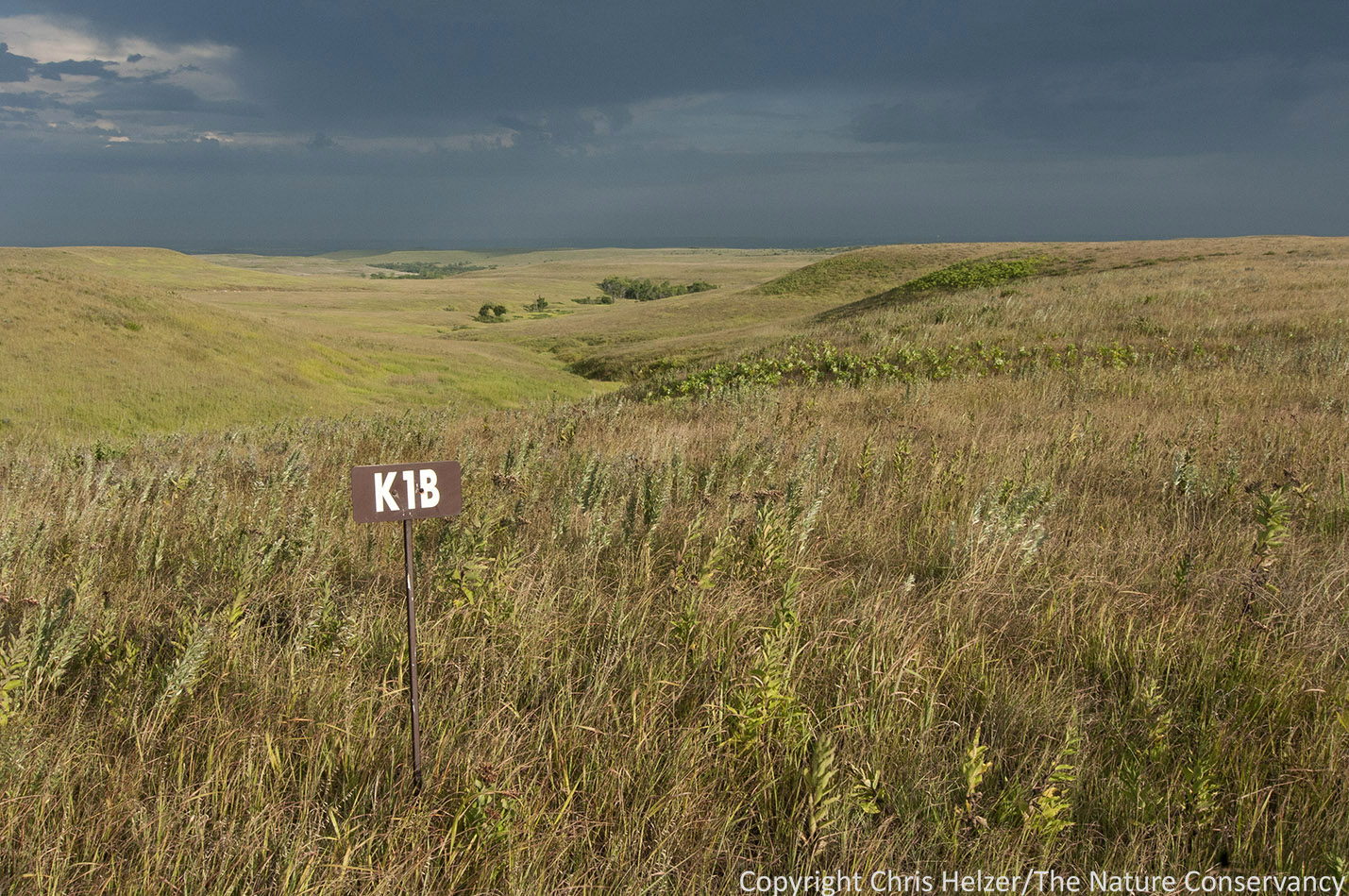
Annually-burned tallgrass prairie at Konza Prairie, in the Flint Hills of eastern Kansas.

Annually-burned tallgrass prairie at Konza Prairie, in the Flint Hills of eastern Kansas.  August 2014.

But in other tallgrass prairies, especially in more eastern prairies such as those in Illinois, researchers are seeing very different impacts of frequent fire.  A paper by Marlin Bowles and Michael Jones, for example, found that frequent fire “stabilizes” plant communities in the Chicago, Illinois area, and that plant diversity was positively correlated with fire frequency.  In fact, their results are almost the exact opposite of what was seen at Konza.  In the Illinois study, frequent fire decreased the dominance of warm-season grasses and increased the diversity of summer wildflowers.

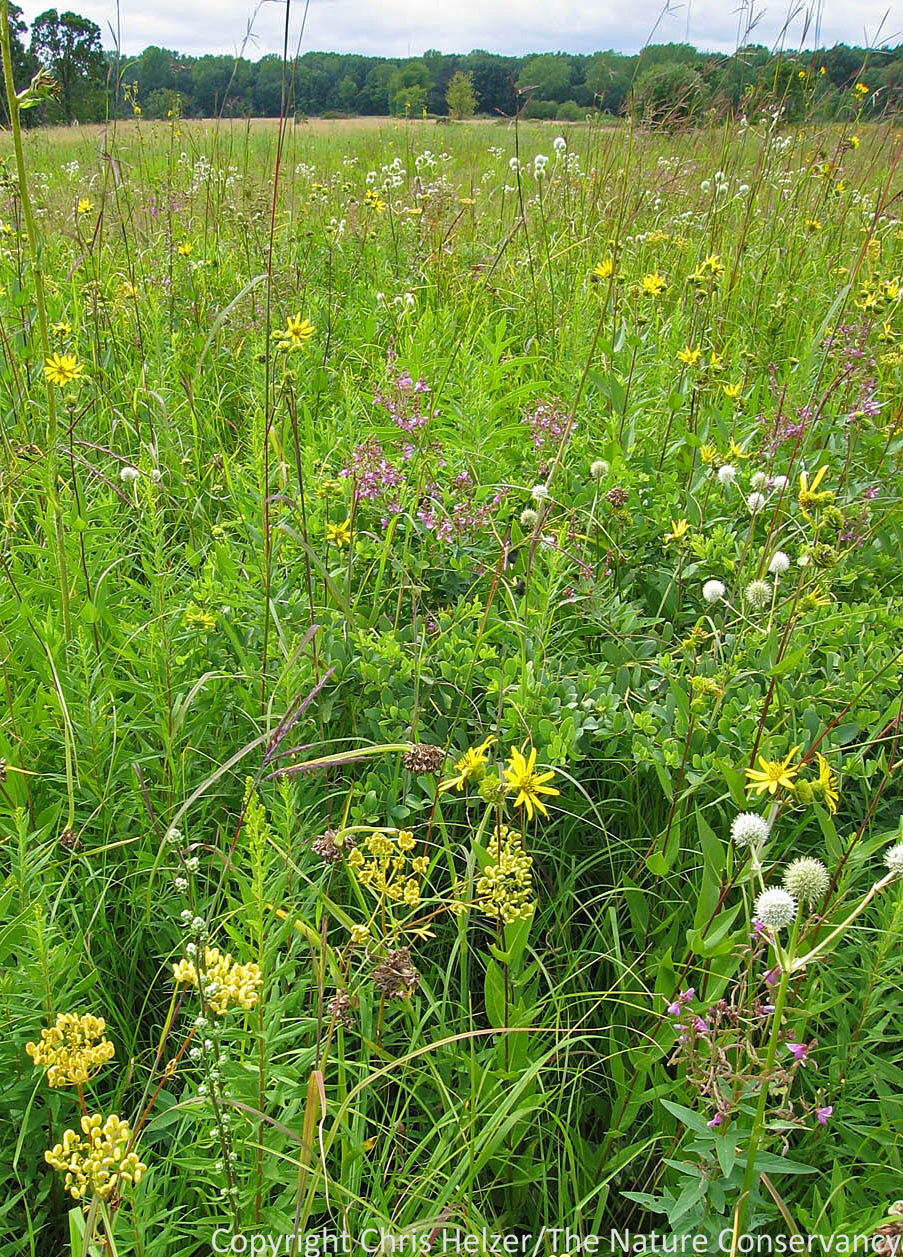
Frequently-burned prairie at the University of Wisconsin-Madison Arboretum.  Clearly, frequent fire is not incompatible with plant diversity...

Frequently-burned prairie at the University of Wisconsin-Madison Arboretum. Clearly, frequent fire is not incompatible with plant diversity…

What the heck is going on??

If we could answer that question, we’d be miles ahead of where we are now in terms of understanding prairie ecology.  I can come up with lots of potential reasons for the difference between frequent fire application in Illinois versus Kansas, but I can’t confirm or deny any of them – we simply don’t know.  As I think about why prairie plant communities might become more dominated by grasses over time, I wonder about factors such as small scale plant diversity, soil productivity, and the soil microbe community – all of which may correlated with each other.

Eastern remnant (unplowed) prairies tend to have a higher density of plant species (e.g., plant species per square meter) than western prairies. High species density could potentially help suppress grass dominance because of the variety of competition strategies each of those plant species employs to take and defend territory.  Those strategies include allelopathy (releasing chemicals that retard growth of nearby plants), rhizomes (underground stems that can connect even fairly distant stems of the same plant together), root density/depth, and many others.  It seems logical that communities with that kind of well-established complex competitive environment would present a major challenge for any species (grasses or otherwise) trying to become dominant.  Maintaining consistent growing conditions by burning or haying annually might facilitate stability within those plant communities because it essentially maintains a stalemate; no plant species is ever given a window of opportunity to gain advantage over its neighbors.  Or this could all be balderdash – I’m just throwing out ideas here.

Does the rich soil organic matter content of eastern tallgrass prairies help suppress grass dominance?  It’s probably the major reason for the higher plant species density in those prairies, so maybe.  On the other hand, research at Konza and elsewhere in more western prairies shows that adding nitrogen to prairies (increasing productivity) increases grass dominance and lowers plant diversity.  Hmm.

Soil microbial communities surely have a very important influence on plant diversity, but (as discussed in a previous post) we don’t know much about them yet.  I’m optimistic that our understanding of soil microbes will grow tremendously during the next few decades, but the complexity of that world might mean that it will take many more decades before we start to get a grasp on it.  In the meantime, we can use it as a convenient scapegoat.  If something you don’t like is happening to your prairie, it’s probably a soil microbe problem…

Those of you who read this blog frequently may be surprised that I haven’t mentioned insects or other animals yet.  Let’s talk about them now, shall we?

It’s very important to remember that even if frequent burning seems to maintain high plant diversity in (some) prairies, a prairie is much more than just plants.  The use of frequent fire tends to create fairly homogenous habitat conditions across a prairie.  Regrowth rates are similar across the whole burned area, so vegetation height and density is relatively uniform.  Dead material, including both litter and standing dead vegetation, is scarce.  Because habitat diversity is limited, so is the diversity of creatures that rely on that habitat.  In taxonomic groups ranging from grasshoppers and spiders to mice and birds, research shows that habitat diversity is positively correlated with species diversity.  Creating habitat heterogeneity – through grazing, patchy mowing, or other means can help facilitate a more diverse animal community.  Burning in a less regimented way can help too, especially if that means splitting a prairie into multiple management units and burning only a subset of those each year.

Habitat

Heterogeneous habitat structure, including tall, short, and mixed-height vegetation – like that shown here – can help maintain diverse invertebrate and wildlife communities.  Grazing is one great way to manipulate vegetation structure, but isn’t feasible at all sites.  Grazed prairie at The Nature Conservancy’s Platte River Prairies, Nebraska.

In small isolated prairies, it’s also critically important not to burn (or mow) the entire prairie at the same time.  With limited opportunities for species to recolonize from other prairies, a fire that kills all of the individuals of a particular species (e.g., an insect that overwinters in the stems of grasses or in the litter along the ground) can mean the end of that species’ existence in that prairie.  Maintaining a floristically diverse prairie without a full complement of invertebrates doesn’t seem like success to me.  On the other hand, I also appreciate the difficulties associated with managing small prairies.

To wrap this up, I think there are two really important points to make about fire frequency in prairie management.  First, there are some big questions about why frequent fire seems to maintain high plant diversity in some prairies but encourages grass dominance in others.  Figuring out the answers to those questions may be one of the more important keys to prairie conservation success.  Second, even if frequent fire maintains high plant diversity and repels invasion by shrubs and trees, it still might not be the best choice for a prairie management strategy.  There is much more to a prairie than its plants, and even if you don’t much care for invertebrates, birds, reptiles, or mammals (and how could you not?) those species – especially the invertebrates – are strongly tied to the long-term viability of the plant community, so it’s probably not good to ignore them.  To be clear, I’m not saying people who use frequent fire are evil destroyers of animals.  I’m just raising a flag of caution and pointing out some potential tradeoffs.

Prescribed burning is an important management tool, but its impacts on prairie communities can be complicated.

Prescribed burning is a valuable management tool, but its impacts on prairie communities can be complicated.  It’s important for prairie managers to recognize and account for both the negative and positive impacts of fire.

Those of us who work with prairies are used to the seemingly overwhelming complexity of grassland communities and the way those communities respond to management.  In fact, for many of us, it’s a big reason we love prairies as much as we do.  While we still have more questions than answers about effective prairie management, we have enough information to go forward with.  Most importantly, prairies are pretty tough, so excepting drastic measures such as broadcast spraying with 2,4-D (and maybe burning an entire tiny prairie), we have the latitude to try out lots of ideas and see what works.  We’ll learn as we go.

In the meantime, it’d be great if all you researchers out there would get cracking on the issue of disparate effects of frequent fire in eastern versus western prairies.  It should only take a few decades to figure it out…  Right?