
Most of us who work in prairies think mostly about what we see aboveground. I guess that’s understandable, but to ignore the complex and critical functioning of the soil and its inhabitants is to ignore much of what really drives grassland ecology. Of course if we DID want to focus belowground, what would we actually focus on? How much do you know about soil fungi or bacteria?
Exactly. Me too.
This is why I was excited that Sarah Hargreaves agreed to an interview about the mysterious world of soil microbes. Sarah is finishing up her PhD in microbial ecology at Iowa State University. That means she’s not only up to speed on what’s known about soil microbes in the scientific literature, she’s also been studying them herself for the last several years. A perfect person to throw hard questions at.
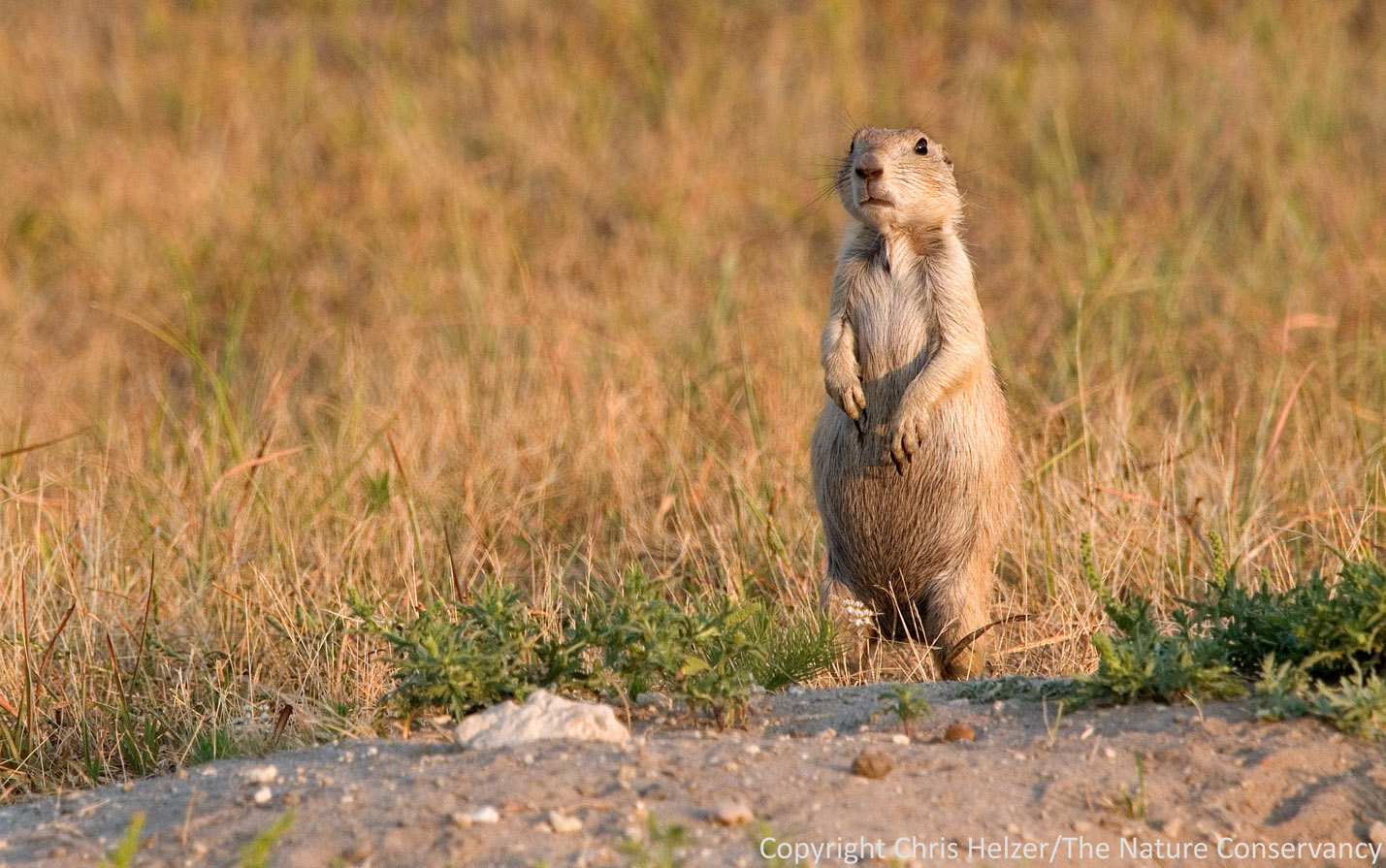
What do you know the little creatures that live belowground in prairies? And no, prairie dogs don’t count.
So, here are my initial questions for Sarah, followed by her answers. As you’ll see, she’s an excellent writer, and can communicate complex ideas in a very accessible way. Because of that, I’ve also asked her if she’d be willing to answer follow up questions from both me and you – and she agreed (though she asked if she could wait until she finishes her dissertation, which I think is due TODAY!)
So, after you read this post, leave any questions you have in the comments section, and we’ll see if Sarah can answer a few of them in a future post.
What is a soil microbe? What broad taxa are we really talking about?
Soil microbes span all three domains of life and include bacteria, archaea, fungi. They are the most diverse group of organisms, comprising the vast majority of living organisms on earth! Bacterial and archaea are single-celled and not visible to the naked eye unless clumped together in biofilms. Although bacteria and archaea are similar in many ways, archaea often live in extreme environments, like hot springs or salt lakes, and perform more obscure functions, like transforming methane. Fungi, in contrast, are multicellular organisms. Because of the visible fruiting bodies (“mushrooms”) of some fungi, it may seem odd that they are “microorganisms”. The vast majority of a soil fungus, however, lives below the soil surface in the form of mycelia, which consist of root-like structures called hyphae.
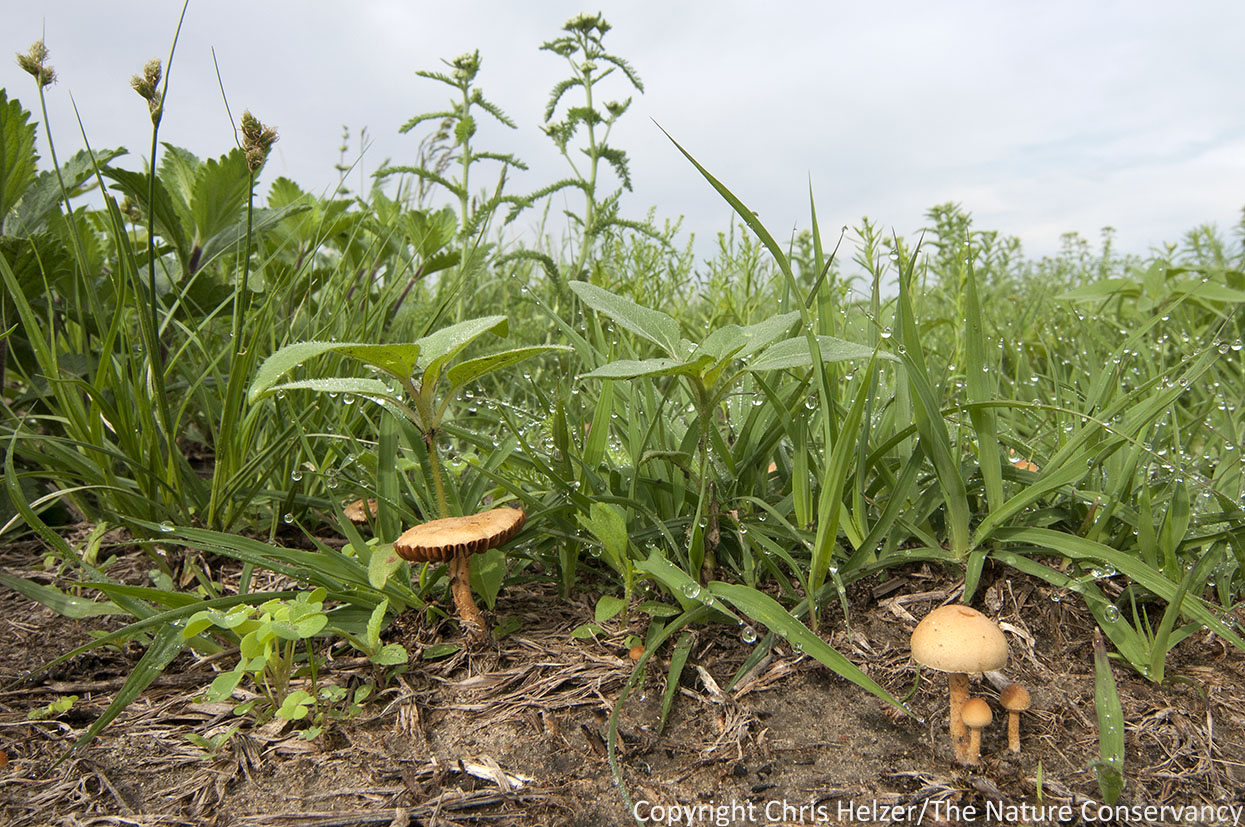
Now and then we get a look at soil fungi, but only when they pop up above ground.
What roles do microbes play in prairie soils?
By releasing digestive enzymes into the soil environment, microbes break down dead plants, animals, and other microbes. This process of recycling makes nutrients available to living plants, soil microfauna and microbes. Decomposition by microbes also builds soil organic matter, which gives prairie soil its beautiful dark color, provides rich texture, and stores nutrients, carbon, and water. All of these factors combine to create a healthy environment for the web of life to thrive: for plants to grow, soil microfauna to explore, and animals to burrow. Soil microbes are also important partners to plants. In exchange for carbon from the plant, symbiotic bacteria (e.g. nitrogen fixers associated with legumes) and fungi (i.e. mycorrhizae associated with prairie plants) greatly enhance plant nutrient uptake.
Is it fair to compare our ability to describe the world of soil microbes to looking into a room through the keyhole?
Microbes are the most diverse type of organism on earth and soil is arguably the most complex matrix, so for microbes, it’s more like looking into a room through a pinhole – this means the field of soil microbiology is a very exciting place to be! While we have cultured (grown) some microbes in the laboratory for over a century, soil microbiology was previously limited by our ability to isolate and cultivate the vast majority of them. Largely as a result of the human genome and human microbiome projects, new sequencing technologies now make it possible to sequence the immense diversity of the soil microbiome directly from DNA extracted from soil. From these studies, we have learned that microbes are far more diverse and ecologically important than we previously thought. Sequencing has also put pressure on culturing techniques, and we are becoming much better at growing microbes in the lab. My hope is that future advances in soil microbiology will couple sequencing with culturing in order to understand the ecology of specific microbes and identify keystone microbes that can be targeted in restoration.
What else would you want someone interested in prairie ecology to understand or think about in terms of soil microbes?
Microorganisms, and microbial communities, are not all equal. For example, fungal-to-bacterial ratios are critical to soil health and sustainability. This is because soils with more fungi relative to bacteria (higher fungal to bacterial ratios) regain structure faster, retain more nitrogen and are more resilient to drought and floods. In addition, all bacterial and fungi aren’t equal. Ideally, a prairie soil has a mix of fast and slow growing bacteria and a diversity of symbiotic fungi so that prairie plants can find an ideal match. Finally, while microbes are the foundation of a healthy soil, they are part of a larger soil food web that must be intact in order to sustain the microbial community.

As prairie managers and ecologists, we think a lot about the relative abundance of plants, but not necessarily fungi or bacteria…
So, is there an optimal ratio of fungi to bacteria in soils?
“Healthier” soils generally have a fungal-dominated community. Given variability in the measurements we use and differences across sites, it is hard to pinpoint an optimal ratio; it is fairer to say that the ratio should increase with restoration.
The fungal to bacterial ratio is important because of the different lifestyles of bacteria and fungi. Bacteria have faster turnover rates (i.e. short life cycles), such that bacterial-dominated communities are linked to faster rates of nitrogen cycling and subsequent N losses from soil. In contrast, fungi have slower life cycles, which result in greater retention of nitrogen in the soil. Due to their extensive hyphal networks, fungi are also thought to be larger contributors to both the production of enzymes involved in decomposition and aggregate formation, and resistant to drought. On a community-level, fungal hyphae are the “internet of the soil” – they facilitate connections among other microbes and plants, helping plants to acquire nutrients and alleviate plant water stress. This doesn’t mean bacteria aren’t good! It is the balance between bacteria and fungi that seems to be most important.
What’s known about how prairie restoration and management can impact soil microbial communities?
First, diversity begets diversity, so it’s important to start with a diverse mixture of native prairie plants. There is also some evidence to show that prairie burns help maintain
a good fungal to bacterial ratio by promoting fungal abundance.
However, while we know some groups of microbes are very important in prairie soils – like Verrucomicrobia bacteria that dominate native prairie soils and arbuscular mycorrhizal fungi that form symbiotic relationships with plants – there is still a lot of work to be done to understand how to manage restoration for these and other specific groups of microbes. Even more, past land use has a legacy that will determine what might be needed to restore a rich diversity of soil microbes. Nitrogen fertilization, pesticides and tillage can all have lasting impacts on the types of organisms that are active in a soil. That said, the microbes are there, often in a dormant state, so they do have the capacity to come back and improve soil health when and if the conditions are right.
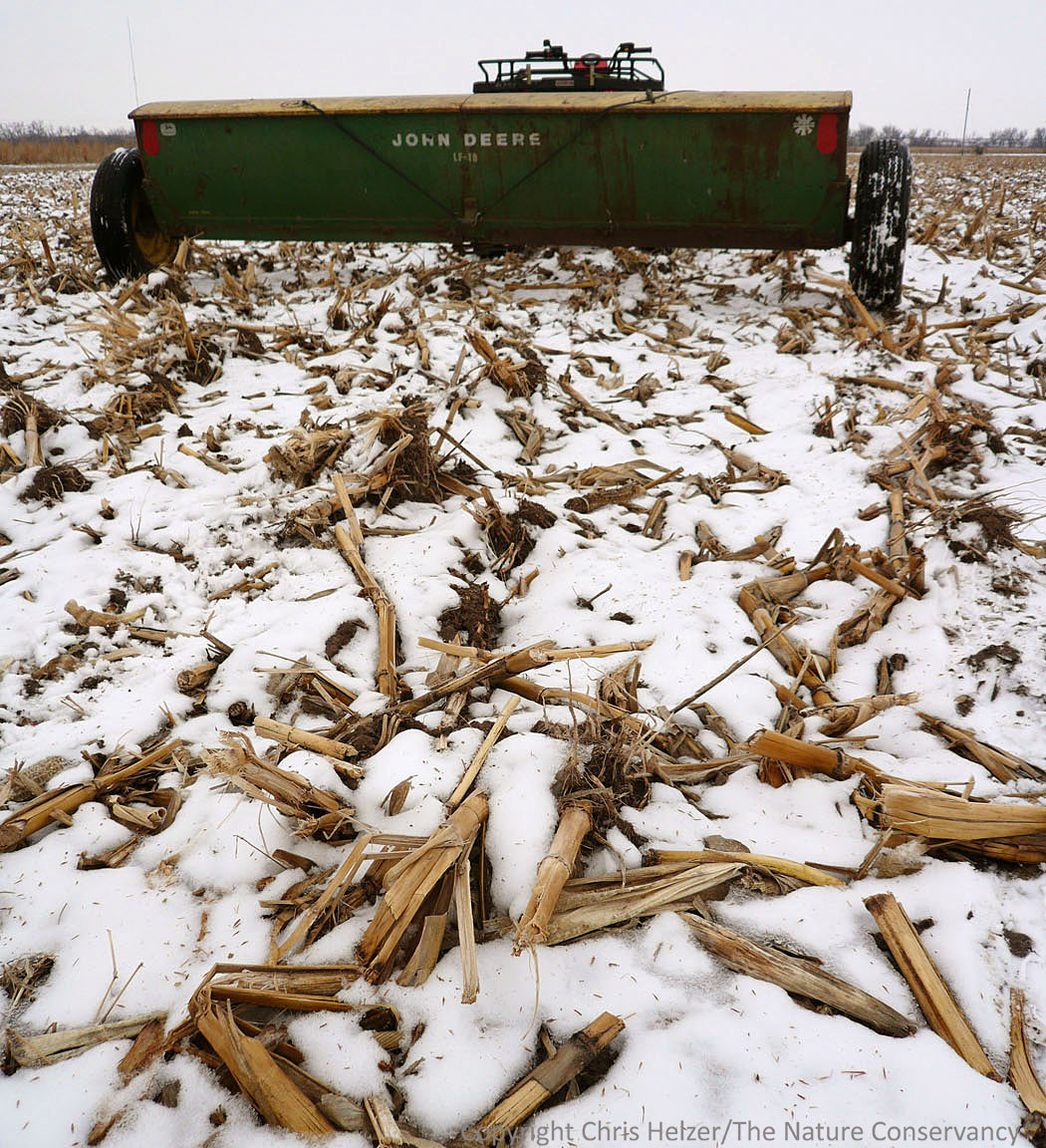
When we convert cropland to prairie, we just broadcast seeds on top of the ground, but what’s belowground has a huge impact on what kind of plant community is formed.
There is certainly lots to learn… Speaking of that, what story is emerging from your particular research on soil microbes in agricultural systems?
My graduate research contrasts soil microbial communities in conventional corn-based agricultural systems with alternative agricultural systems that incorporate perennial plants. The idea is that, by providing microbes with perennial root systems, they have a richer “buffet” of food that they can use to restore soil health. What I am finding is that newly established perennial cropping systems improve the function of the microbial communities but I have not yet seen dramatic changes in the diversity of the microbial communities. The perennial cropping system that I work with is a switchgrass monoculture and my results are mirrored by work in a diverse prairie cropping system. Overall, these results tell me that perennial plants in agricultural ecosystems can restore soil microbes, but practices such as fertilization and harvesting likely limit the rate and extent of restoration.
(THANK YOU to Sarah for taking time away from her dissertation writing to help us understand more about soil microbes!)


 The Prairie Ecologist