Close-up But With Context

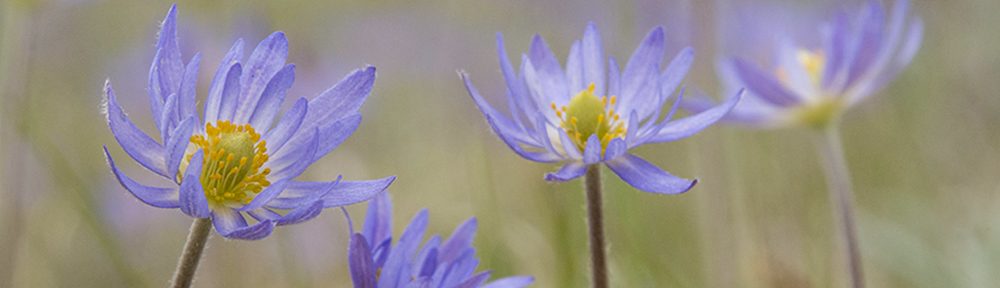
Blue violets (Viola sororia) in the Platte River Prairies. Photographed with a Tokina 12-28mm lens at 28mm and a 12mm extension tube. ISO 1000, f22, 1/400 sec.

Clearly, I enjoy macro photography, aka close-up photography. One reason is that I like showing people the diversity of life in prairies, most of which comes in small packages. Additionally, though, macro photography just fits the way my brain and eyes explore the world. I tend to walk around with my head tilted down, examining leaves, flowers, and anything I find perched or crawling around on them.

Many of my close-up photos are intimate portraits of a particular flower or insect – or maybe even an insect ON a flower. I often strive for a clean background, free of stray stems, leaves, sky or other distractions. That way, the viewer can clearly see and enjoy the subject of the photo.

The downside of that portrait-style nature photography is that it tends to show organisms in isolation, rather than within the context of their chosen habitat. In that way, the photo half of my brain is in conflict with the science half of my brain, which focuses on interconnections and ecosystems. One way I’ve found to merge those conflicting approaches is through wide-angle macro photography.

Dandelions (Taraxacum officianale) in the Platte River Prairies. Photographed with a Tokina 12-28mm lens at 23mm and a 12mm extension tube. ISO 1000, f22, 1/400 sec.

Wide-angle macro photography combines the broad scene captured by a wide-angle lens with the close-focusing ability of a macro lens. It still allows me to showcase the intricate details of a flower or insect, but it also shows that organism in the context of its surroundings. The basic trick to wide-angle macro photography is the use of a small extension tube, which is essentially a ring placed between the lens and the camera. The extension tube moves the lens further from the camera, allowing the photographer to focus on a subject much closer to the front of the lens than would otherwise be possible. If you want to learn more about the technique and equipment associated with wide-angle macro photography, I highly recommend this book by Paul Harcourt Davies and Clay Bolt.
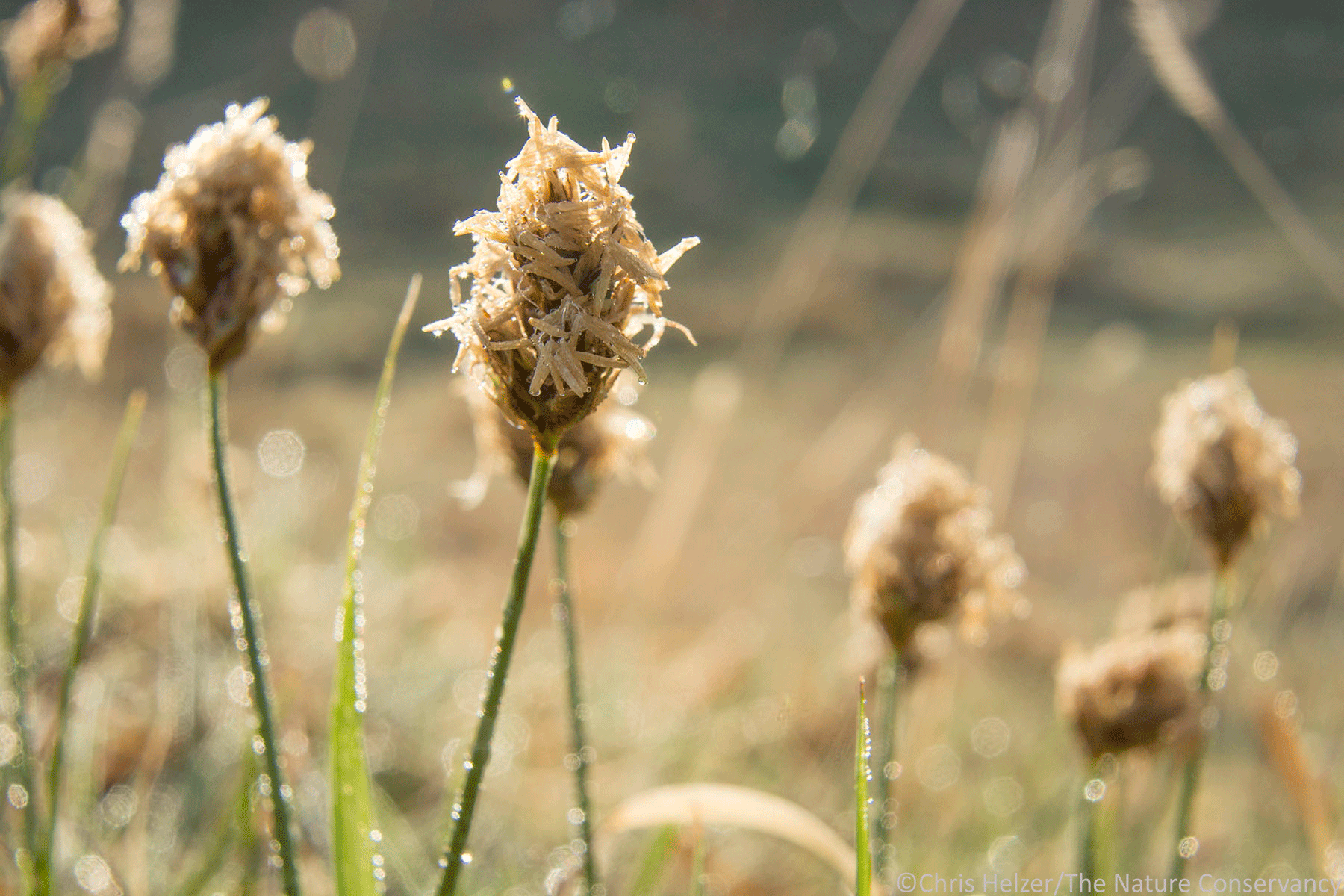
Spikerush sedge (Carex eleocharis) at Gjerloff Prairie. Photographed with a Nikon 28-300 lens at 28mm and a 12mm extension tube. ISO 500, f13, 1/160 sec.

I’ve been in a kind of wide-angle close-up mode this spring. In part, this is because I feel like I’ve photographed the same early spring wildflowers over and over, and I’m looking for ways to make images of those same species interesting and fun for myself. Additionally, however, I’m rediscovering the power of including context with each of the flowers and other species I photograph. I’m no expert in this technique, but it’s a lot of fun to play around with.

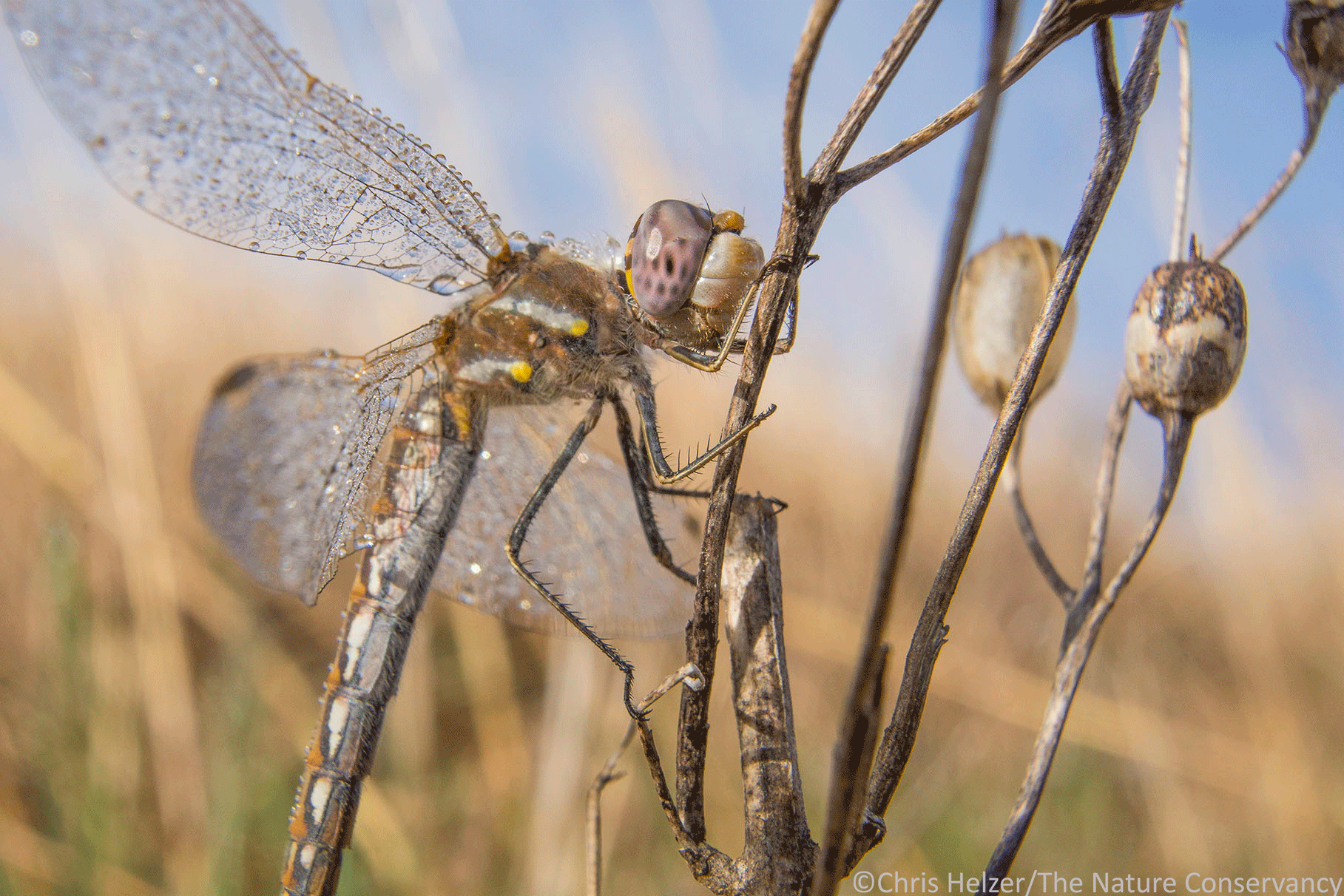
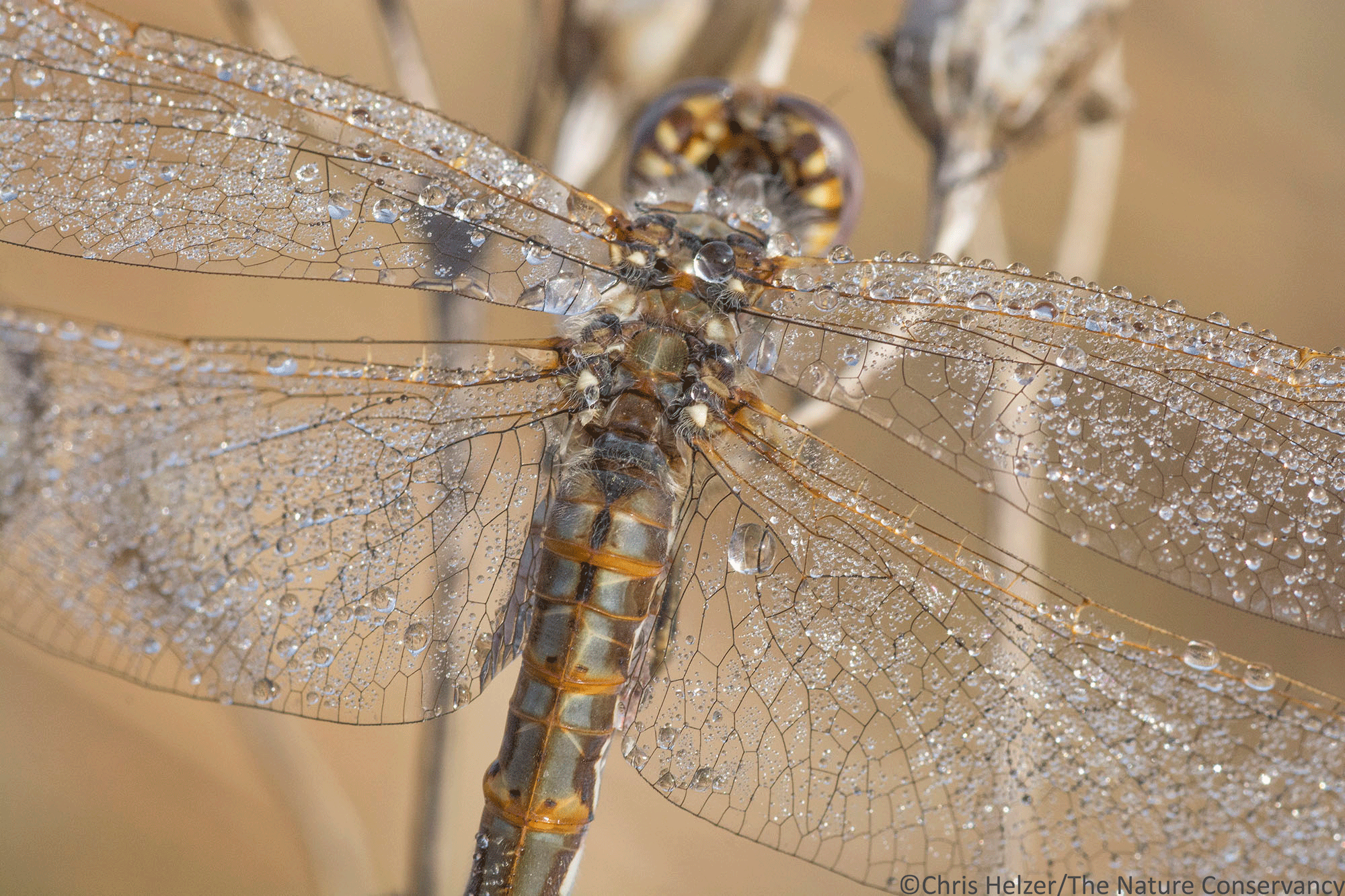
This photo of a variegated meadowhawk was taken with a 105mm macro lens , which shows the form and detail of the dragonfly very clearly. I used an aperture setting that reduced depth-of-field and blurred the background. ISO 500, f11, 1/320 sec.
In contrast, this photo was taken with a Nikon 28-300mm lens at 30mm and a 12mm extension tube. It shows the gerardia plant the dragonfly was perching on and some of Gjerloff Prairie in the background, but still shows off the details of the insect itself. ISO 500, f14, 1/320 sec.

One of biggest challenges with wide-angle macro photography is that I have to get extremely close to my subject – often within an inch or so. That is clearly problematic when dealing with animals who are plenty skittish when I photograph them with my 105mm macro lens at a distance of a foot or two. However, in the cases where I can edge up to a dewy grasshopper or – more easily – a flower, I really enjoy the results.
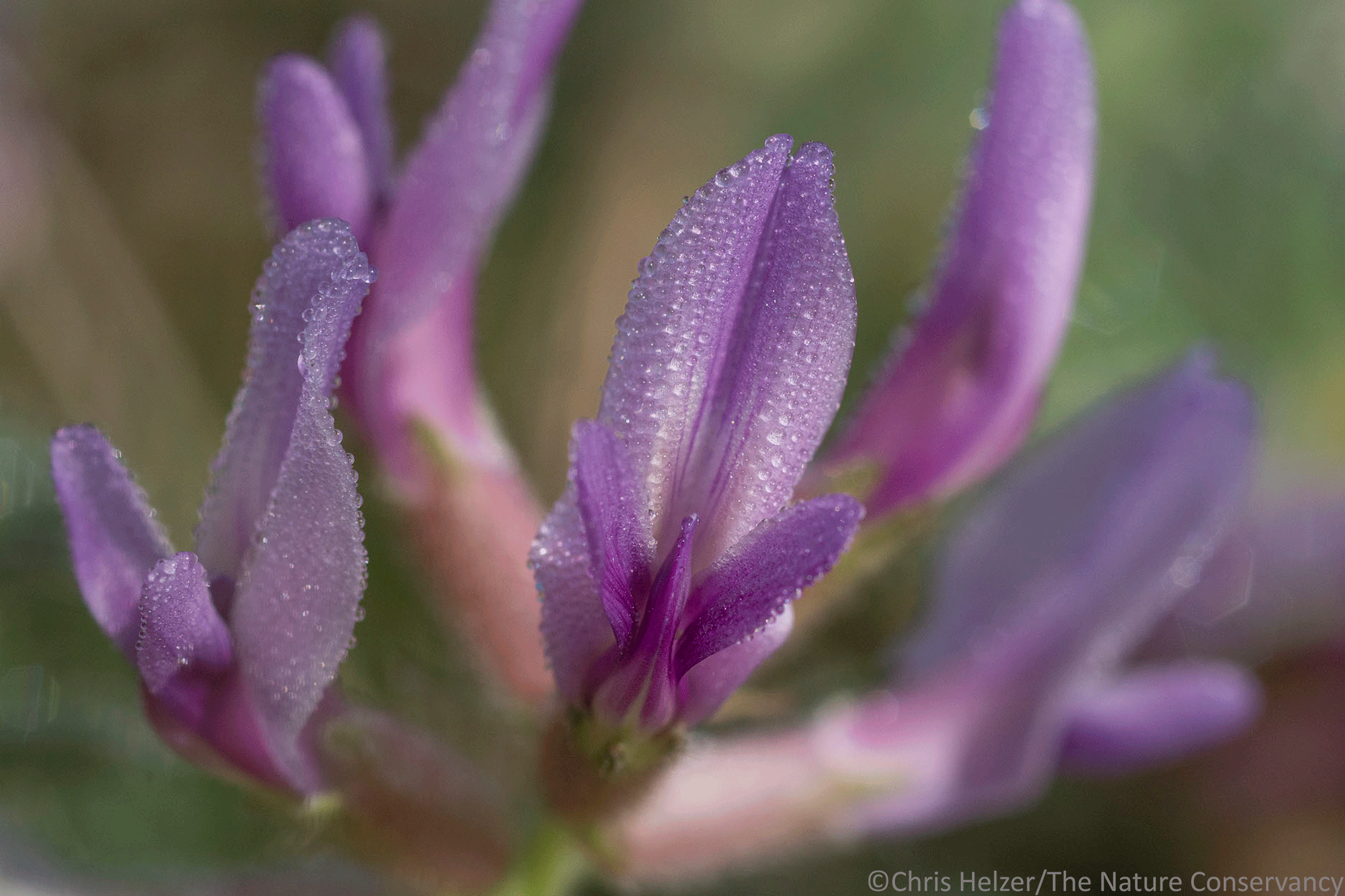
A 105mm macro lens helps show off the texture and form of these buffalo pea (Astragalus crassicarpus) flowers and dew drops. ISO 500, f16, 1/400 sec.
This photo was taken with a Nikon 28-300mm lens at 28mm and a 12mm extension tube. It allows the viewer to see the details of the flowers but also the plant that produced it. ISO 500, f14, 1/100 sec.

Digital photography – mostly, the ability to take unlimited photos without paying for film or processing – gives me a lot of freedom to experiment with new approaches like this. I can shoot a lot of images to make sure I get something in focus, despite obstacles like wind and cramping muscles (from contorting my body into shapes that allow me to photograph 2-inch-tall flowers at their level). The results have been very gratifying so far, and I’m looking forward to improving my technique over time.

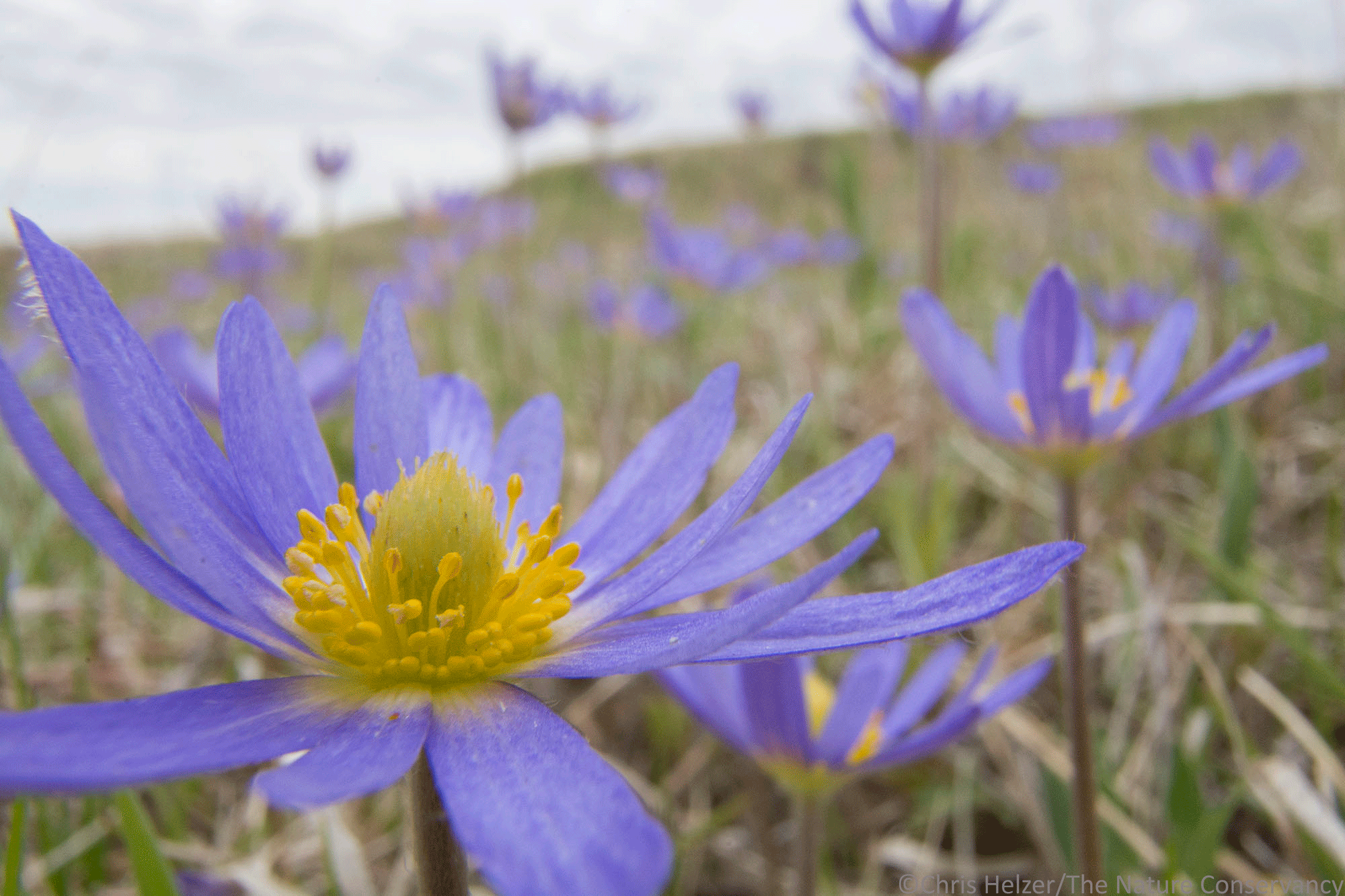
I like this photo a lot because it shows what a patch of Carolina anemone (Anemone caroliniana) looks like at Gjerloff Prairie, but it’s hard to see the details of the flowers themselves. This image was taken with a Nikon 10-20mm lens at 10mm. ISO 500, f22, 1/250 sec.
This image still shows the patch of flowers (in a different way) but also showcases the anthers and petals of one of the blossoms. This was taken with the same Nikon 10-20mm lens, but with a 12mm extension tube. The bottom-most petal was actually touching the front of the lens when I took the photo. ISO 500, f22, 1/250 sec.

Regardless of whether or how you choose to take nature photos, I hope you’ll get out and enjoy this spring in a prairie near you. The prairie is very dynamic at this time of year – plants are growing quickly, new flowers are appearing daily, and bees, butterflies, and other insects are rapidly increasing in abundance. Larger animals are also showing up to raise new families. The other day, I walked through our family prairie and spotted a flash of fur disappearing into what I think was a coyote den, flushed a red-tailed hawk off its nest, and enjoyed listening to grasshopper sparrows and meadowlarks advertising their nesting territories. Happy Spring!

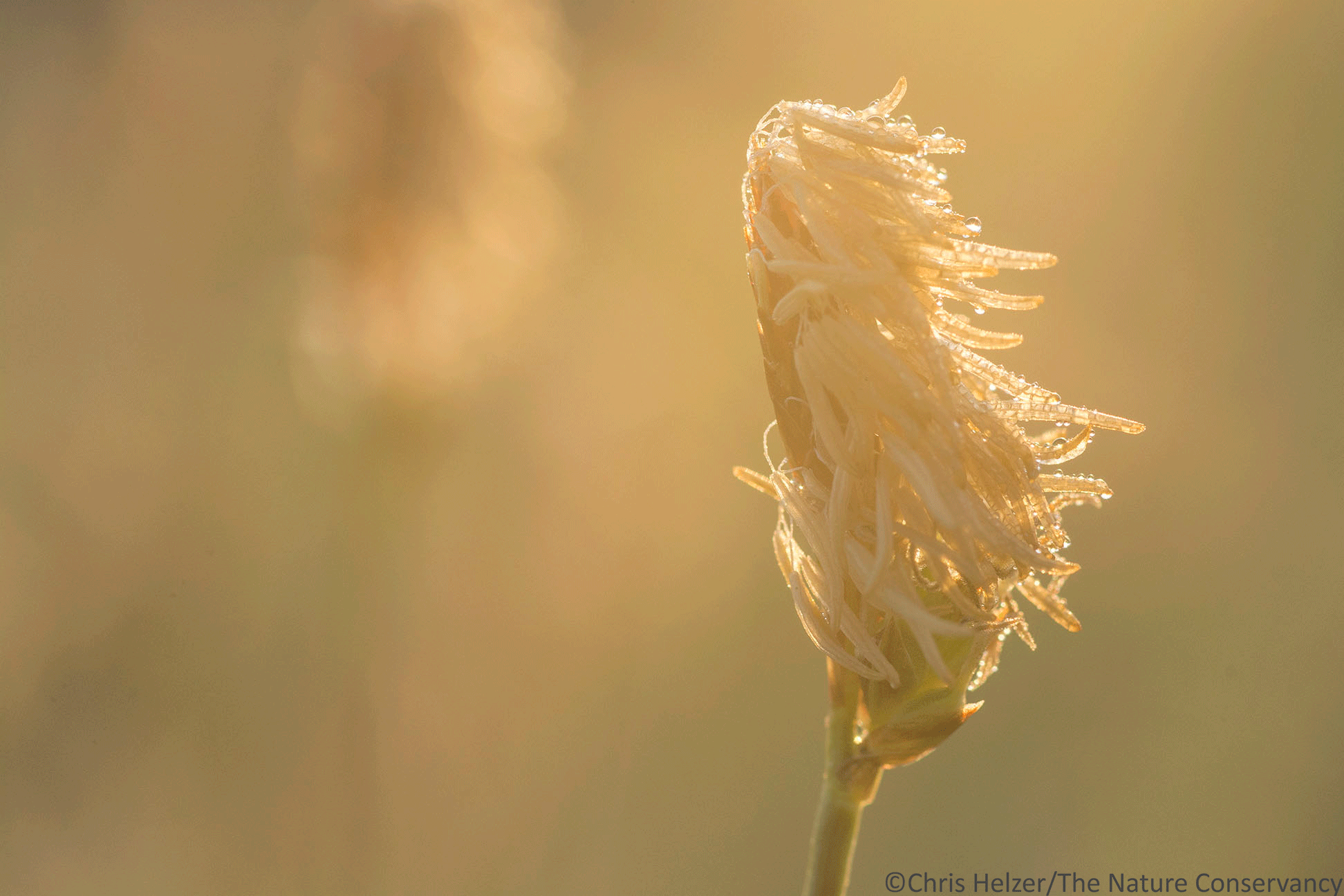
Photo of the Week – April 26, 2019

Looking for prairie wildflowers in the spring is much like an Easter egg hunt. Spring wildflowers tend to be small and difficult to see until you get close to them. From a distance, prairies might look like they haven’t yet woken up, but if you take the time to wander out into them, there’s abundant color and movement – albeit in small scattered bits.

Spikerush sedge (Carex eleocharis) is a small-statured sedge that hides for most of the year, but becomes more apparent when it blooms each spring.

Earlier this week, I spent a wonderful morning exploring Gjerloff Prairie (owned and managed by Prairie Plains Resource Institute). As I hiked up and down the steep loess hills, it felt like catching up with an old friend.

“So, how’s your spring going so far?”

“Ah, I see your anemones and early milkvetches are blooming, but the puccoon isn’t quite…oh – there’s one!”

“It was a wet winter, but the soil is sure dry now, isn’t it?”

“It’s nice to see the dragonflies migrating back north again and hear the grasshopper sparrows and western meadowlarks singing.”

…Here are some photos from that cool dewy morning at Gjerloff Prairie.

Spikerush sedge framed against the morning sun.
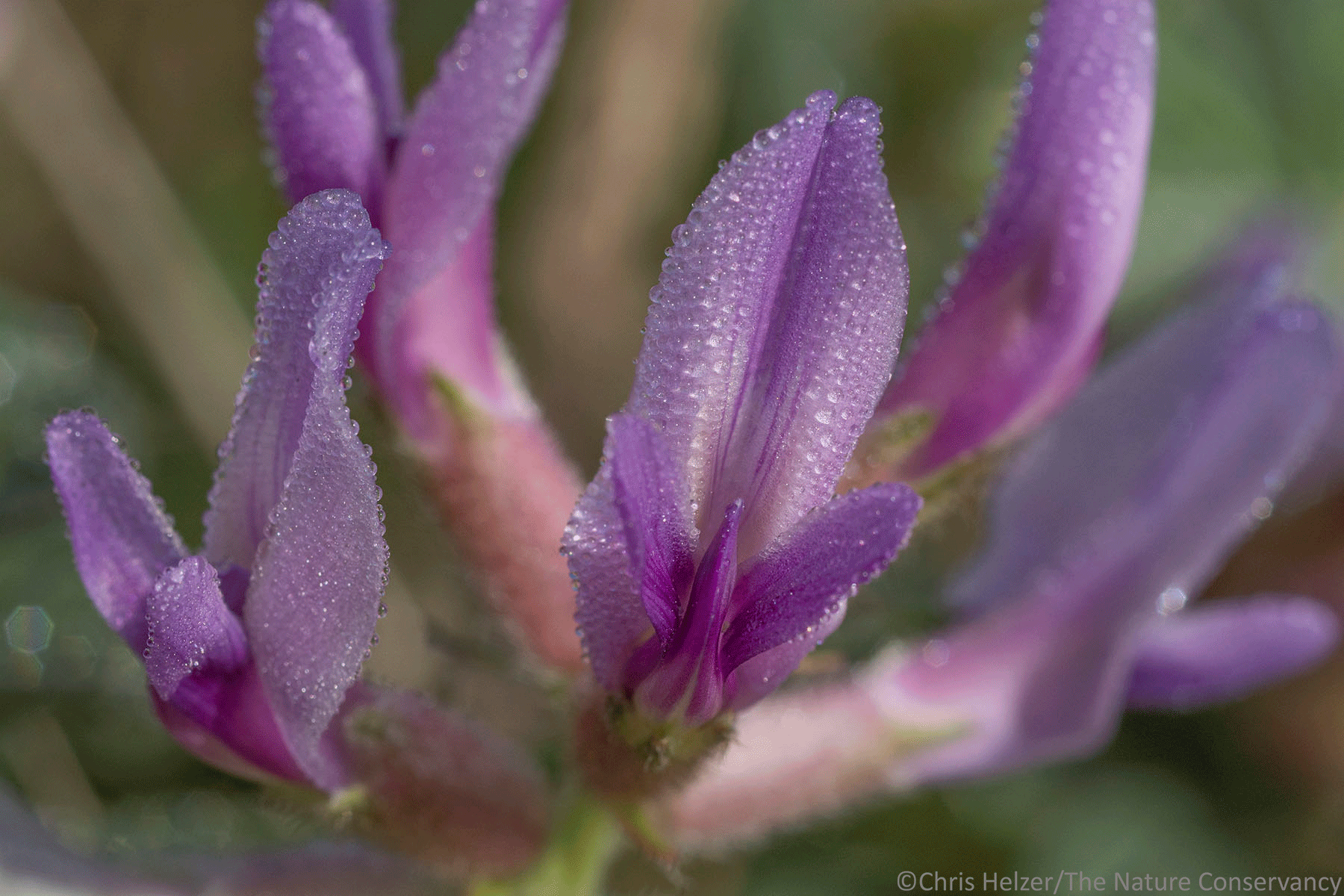
Missouri milkvetch (Astragalus missouriensis) is a tiny legume that grows on dry ridgetops and especially thrives when those areas have been recently short-cropped by grazers.
More Missouri milkvetch.
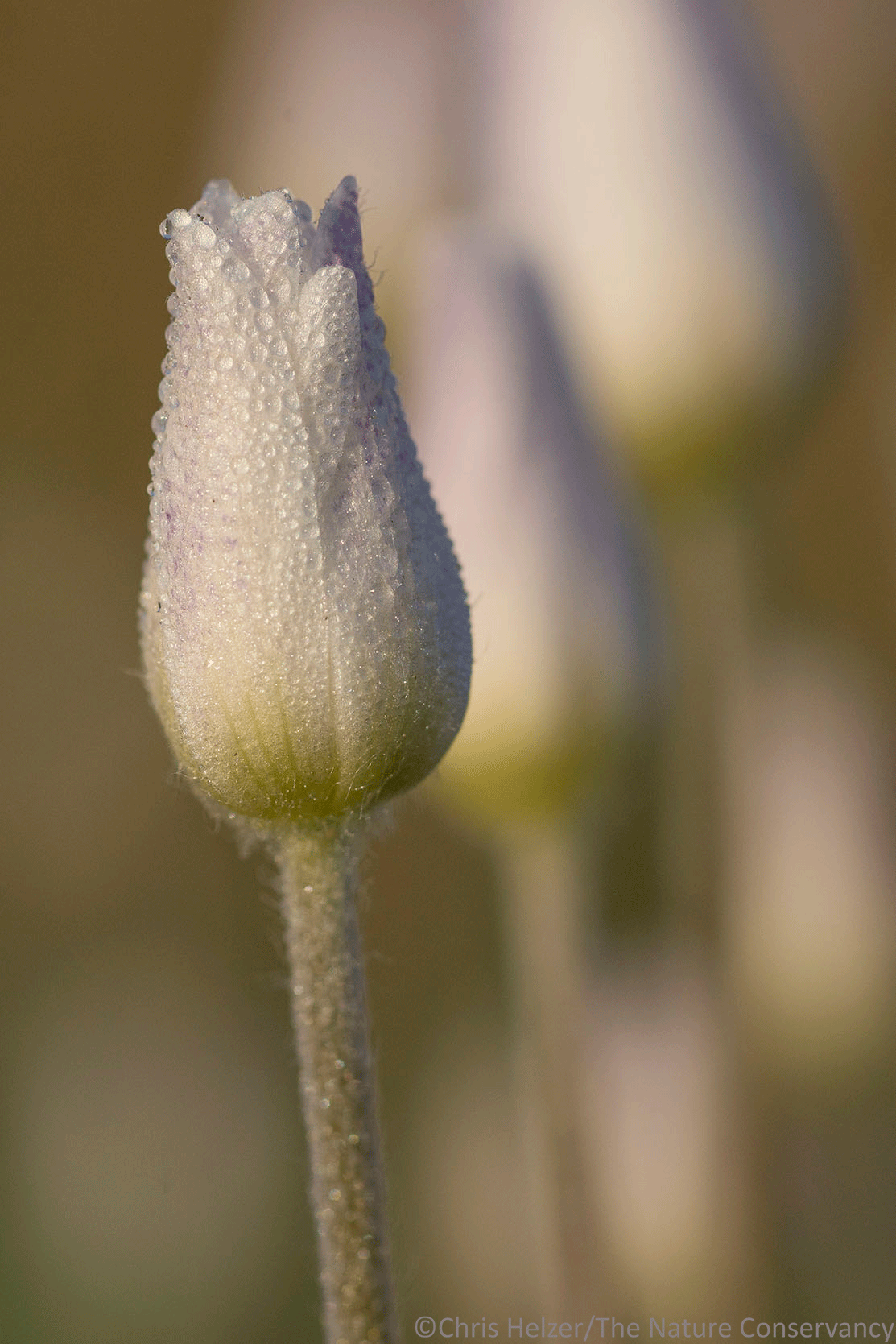
Carolina anemone, aka windflower (Anemone carolinianum) hadn’t opened up for the day.
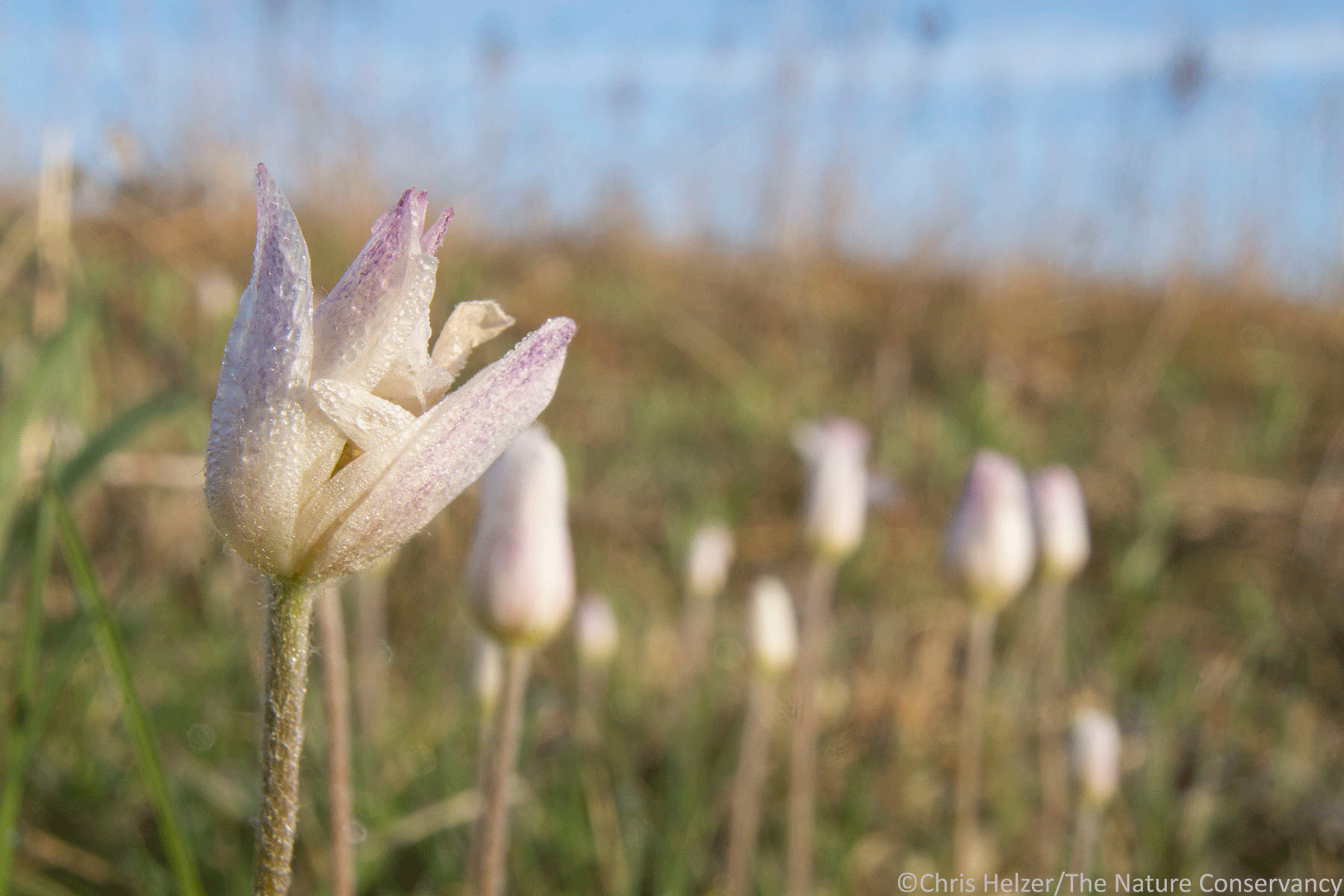
Carolina anemone photographed with a wide-angle lens, showing more of the clone and prairie in the background. The front blossom was either starting to open or didn’t close property the night before.
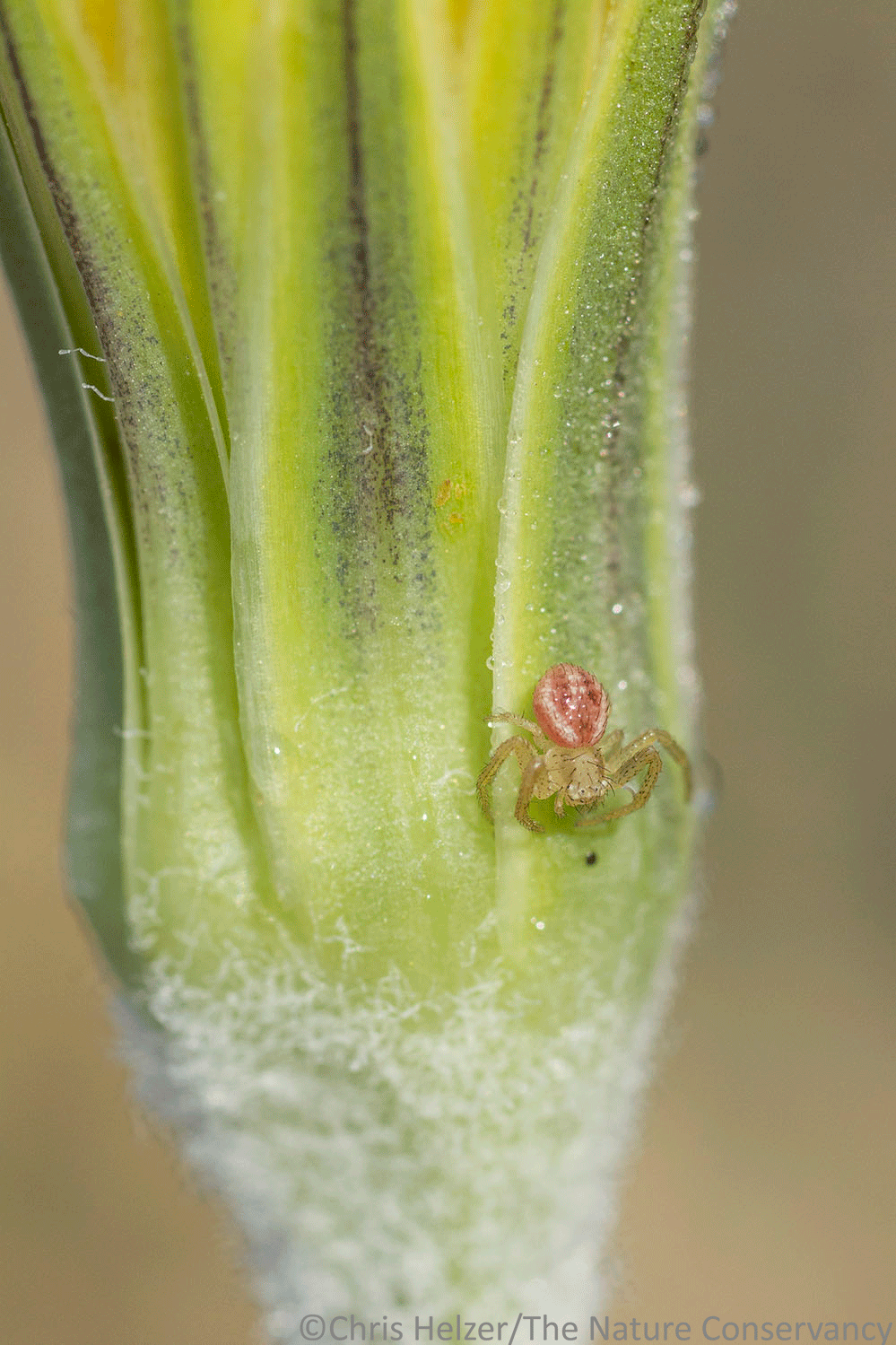
A tiny crab spider on prairie dandelion (Nothocalais cuspidata).
Buffalo pea, aka ground plum (Astragalus crassicarpus).
Buffalo pea is like an exponentially larger version of Missouri milkvetch – in terms of footprint – but still only reaches 3-4 inches in height.
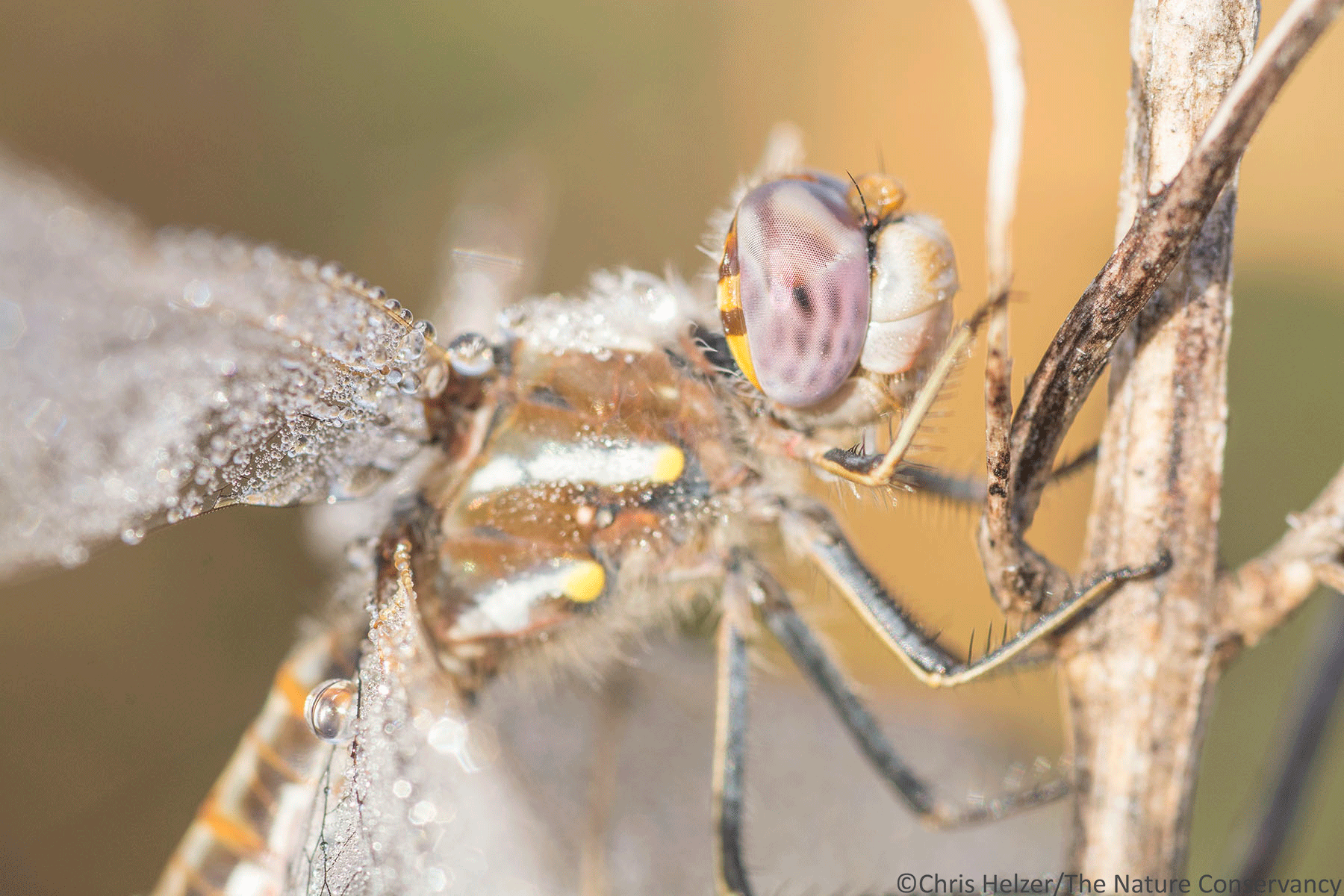
A variegated meadowhawk dragonfly, presumably a recently-arrived migrant, was cold and dew-covered.
The same dragonfly from a different angle.