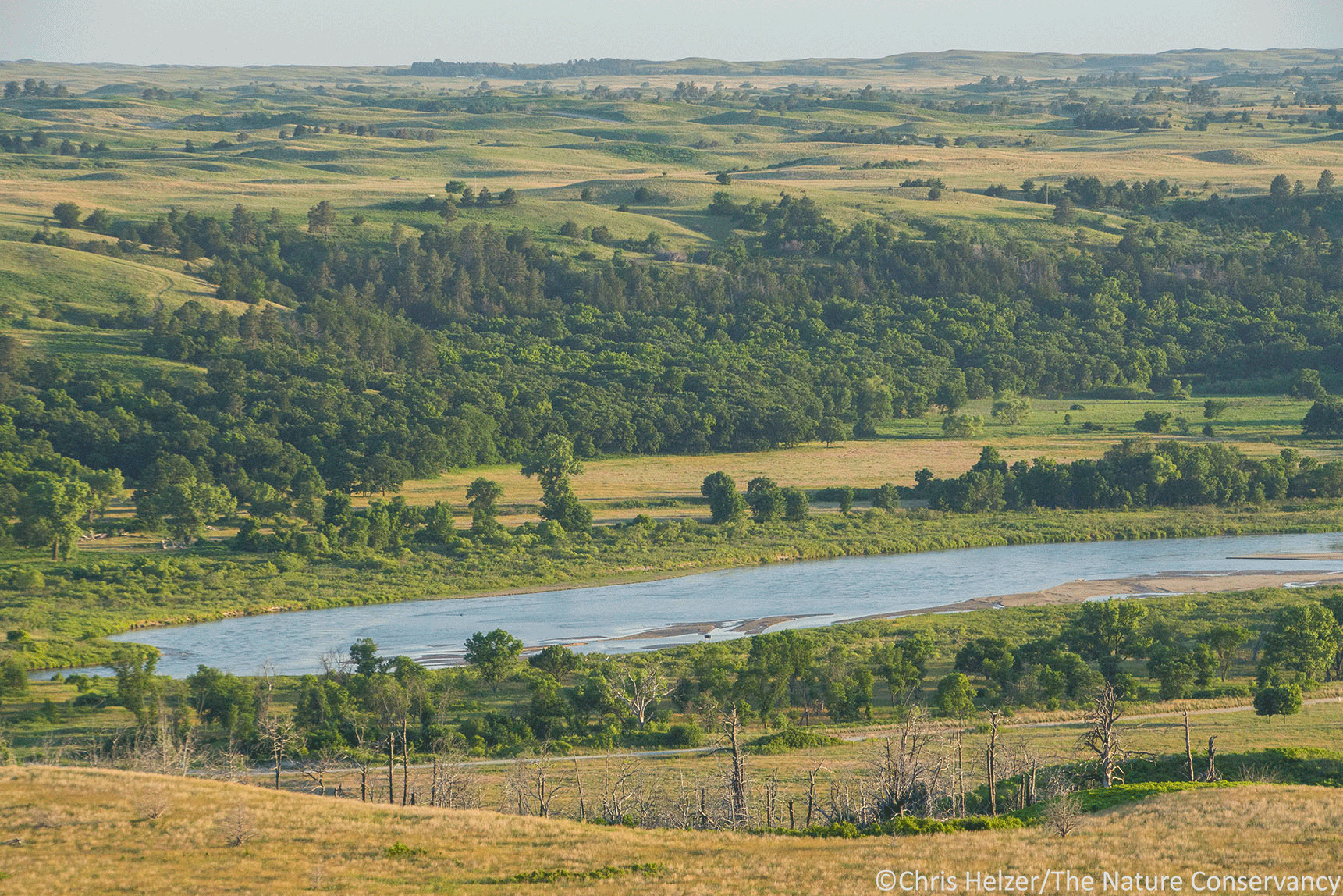
This week, I made a trip up the Niobrara Valley Preserve. A colleague from Idaho was visiting Nebraska to discuss grazing and other prairie management strategies and I couldn’t very well let him leave without seeing the Niobrara Valley. In addition to Matthew, the Fellows (Chelsea and Mary) also came along. Here are a few photos from the quick visit.
The Niobrara Valley, photographed by drone, just east of The Nature Conservancy’s headquarters. Backlit ridges with tree skeletons from the 2012 wildfire. This area north of the river is recovering, but we are still discussing how to best guide that recovery to avoid re-invasion by eastern red cedar.Matthew Ward at “The Chute”, a local landmark waterfall just upstream of the Norden Bridge .A Rorschach ponderosa pine bark test. What do you see?A portion of our east bison pasture (10,000 acres), as viewed from across the river.Chad Bladow points out a potential route for a fire break as we discuss a future prescribed fire on the north side of the river. Chelsea is taking photos and Matthew is just below, enjoying the scenery.Fungus grows on a log in the middle of a spring-fed creek along the south side (north-facing slope) of the Niobrara River. We started where the creek emerged from the ground and followed it quite a way downstream, enjoying the cool moist air along the way.Mary (left) and Chelsea (right), photographing slightly different views of the Niobrara River.Looking southeast from the ridge north of the river.
This post was written and wonderfully illustrated by Mary Parr, one of our Hubbard Fellows. I hope you’ll enjoy her perspective on our trip to western Nebraska a couple weeks ago. It’s a fantastic landscape and it’s fun to see it through the eyes of people who are experiencing it for the first time.
Last week, I experienced northwestern Nebraska for the very first time. The landscape was vast and not flat at all! Chris, Chelsea, Olivia and I explored the Murphy Ranch in the Wildcat Hills, the Cherry Ranch in the High Plains, and Fort Robinson in the Pine Ridge. As we made our way west last Wednesday, my anticipation built as the landscape changed from sandhills to buttes and gravely sandstone outcrops. I could not help but reminisce on stories and cowboy lullabies my Chadron alumna father reared my siblings and I up on. I can hear it now, the Nebraskan remix of “Country Roads”.
Cherry Ranch with flowers in the mid-morning.
As we arrived at Cherry Ranch in the high plains (as my dad
would call it), a mosaic of mixed grass and short grass prairie, I looked out at
the expansive grasslands, not an eastern red cedar or other tree in sight. I
felt as if I was staring at an ancient sacred landscape. Grassland rolling by,
with abrupt pauses of exposed rock, sculpted by the elements. I imagined bison
by the millions scattering across the hills. I looked down at the Niobrara River
headwaters in the valley below me and envisioned bands of Lakota watering their
horses. I could see the pioneers pulling wagons with oxen navigating around the
steep bluffs. I stood on land that has served countless individuals and
weathered immeasurable storms.
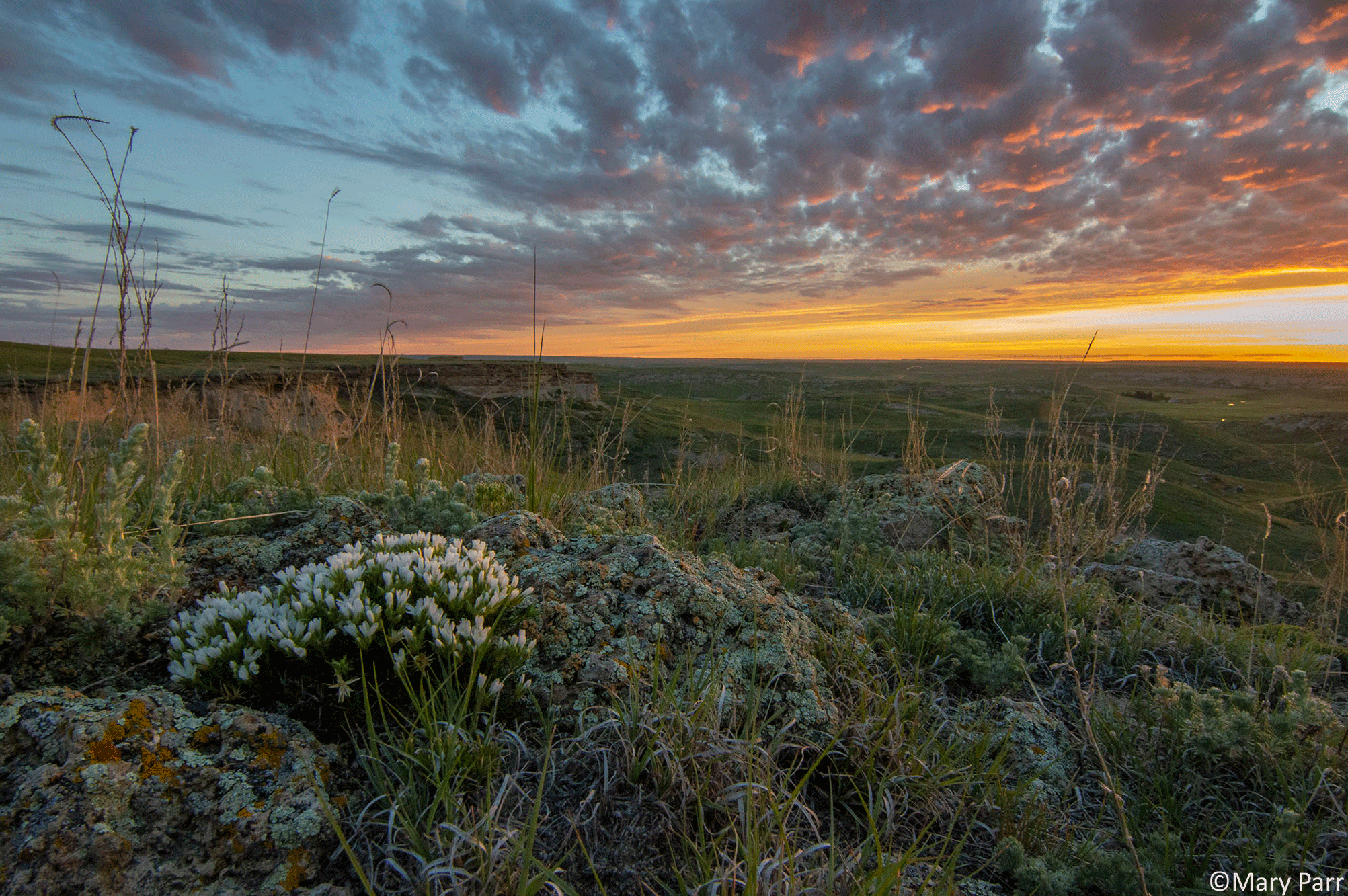
Desert sandwort (Eremogone hookeri) and a spectacular sunrise view.Desert sandwort close up.
On the Cherry Ranch, we chatted with Travis, our lessee and
generational local rancher, about plants and livestock forage. Travis explained
how much the cattle love the native sedges, sun sedge and thread leaf, “They
eat it up like ice cream and it is incredibly nutritious”. Chris went on say
that those sedges spread extremely slow by rhizomes and some colonies are likely
thousands of years old! I looked down at the sedges near my feet in amazement,
feeling guilty for stepping on the old souls.
Can you see the thin film of hair all over this crested penstemon (Penstemon eriantherus)?
Fascinated, I made my way to the edge of the rocky bluff. The
exposed rock was painted with a crusty texture of vibrant lichens of orange and
pastel green – as if the rock itself was alive. There was an array of plants
growing out of the cracks and in small pockets of soil medium. It is amazing to
think there is so much life in a region that receives an average of 17 inches
of rain annually.
Look at this prairie buck-bean (Thermopsis rhombifolia) growing out of a long crack in the exposed rock.
These rock plants are excellent survivalists, especially in
terms of water retention. Often these plants have very deep taproots or very fibrous
roots that make the most of the little soil available. The leaves have adapted
to reduce heat absorption and water loss through a few mechanisms: thin rigid
leaves, having a light gray-green color, or even hairs to provide shading. Some
plants produce especially hard seed coats that prolong their viability and can
only germinate when there is sufficient soil moisture. I always enjoy thinking
about plants and observing their strategies, especially in abiotically
stressful areas. They are truly ingenious.
Drone photo of Mary by Chris.
I was disappointed our trip was so brief, but a taste was all I needed to begin plotting my return. Until next time northwest Nebraska!
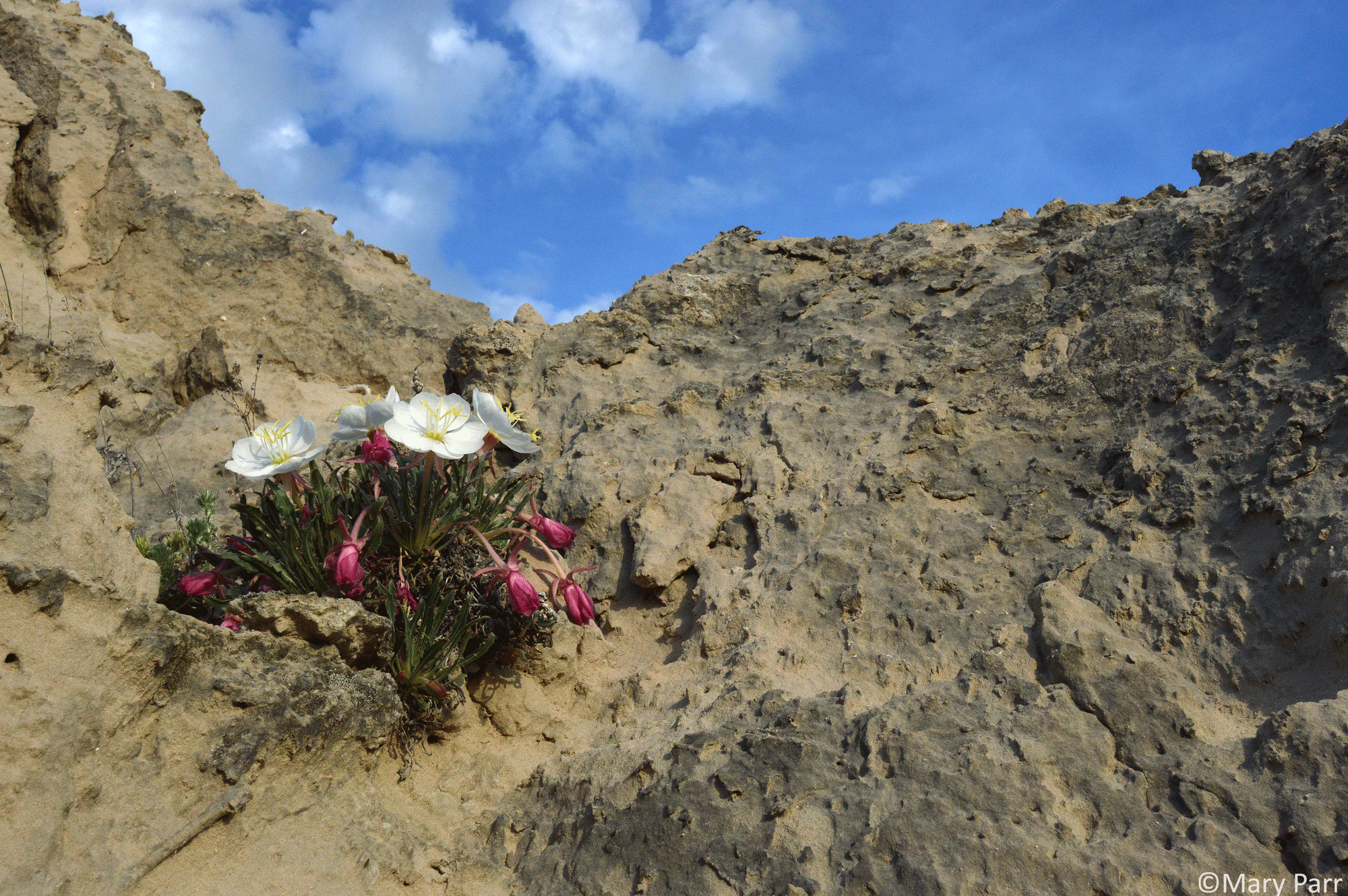
Gumbo-lily (Oenothera caespitosa) prefers gravelly soils, buttes, and rocky banks. According to Jon Farrar’s Wildflowers of Nebraska and the Great Plains, it has a very deep taproot that was used by Native Americans for food and medicine for respiratory ailments.





 The Prairie Ecologist