REMINDER! Our Butterfly Bioblitz is one week away (June 29) at the Platte River Prairies. Please RSVP if you’re coming. You can see more information here.
So much has happened over the last few weeks, I’m pretty far
behind on sharing photos. On the way
back from the North American Prairie Conference, Kim and I stopped at a couple
different sites. One of those was the
Clymer Meadow Preserve northeast of Dallas, where site manager Brandon Belcher
and his interns gave us a tour. Clymer
is a beautiful example of blackland prairie, and was resplendent in color,
especially where they had done a summer prescribed fire in 2018. Brandon is a really thoughtful land steward
and it was fun to learn from him and see a prairie type that is very different
from our Nebraska sites.
The Nature Conservancy’s Brandon Belcher walks through Clymer Meadow Preserve a few weeks ago.
Among all the blooming wildflowers, I recognized the genera of many of them, but not the species. A lot of the flowers were clearly different, but some – like the Silphium growing at Clymer – looked just like a our rosinweed at home, but wasn’t. It’s always an eerie, but fun, feeling to almost recognize a bunch of plants…
Dark clouds dissipated as we walked, providing some nice photographic light, so I was that annoying person who slows the tour by repeatedly stopping to take pictures. Since I did that, I feel like I should at least share some of the nicer ones I got. Here they are:
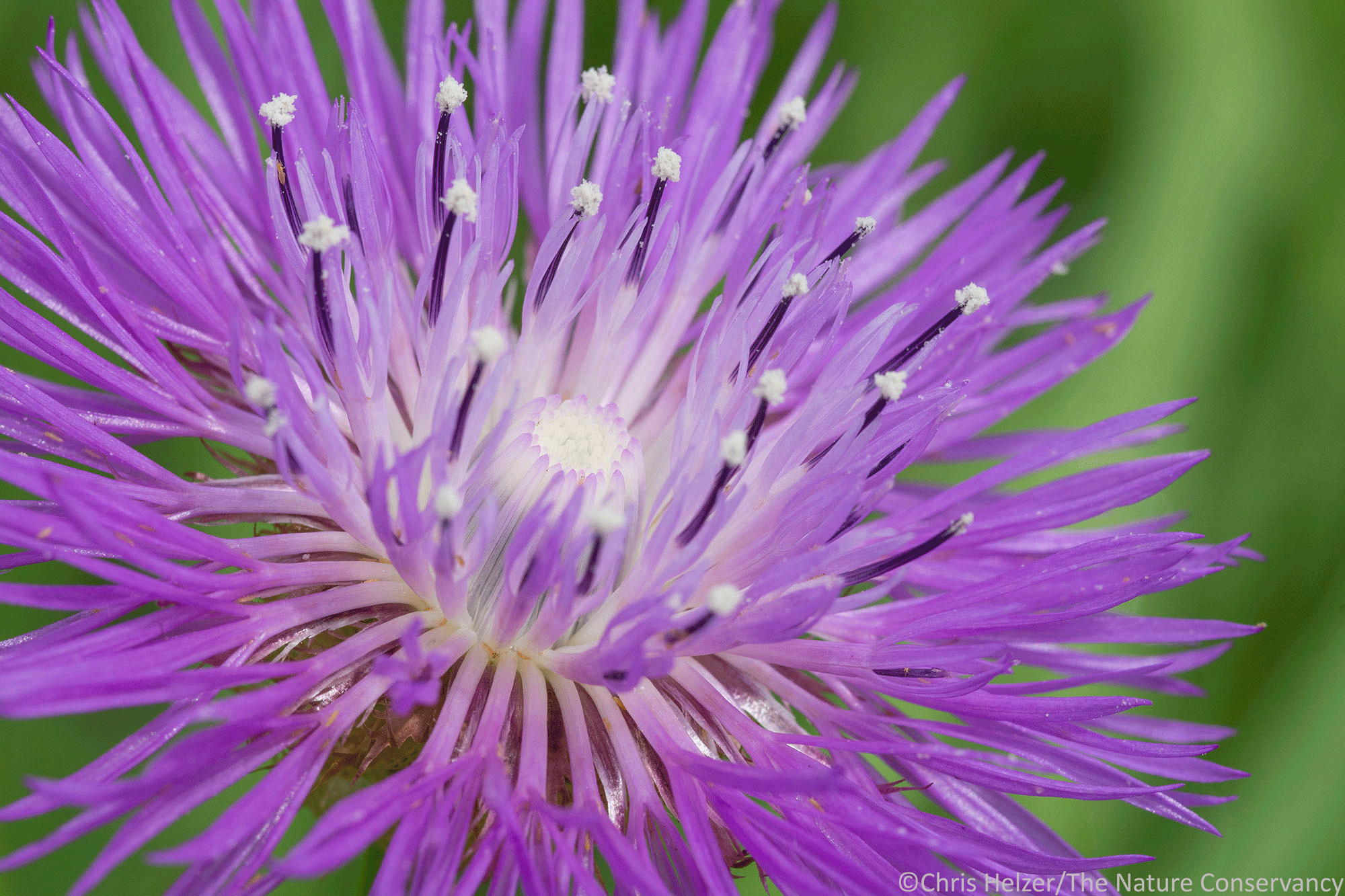
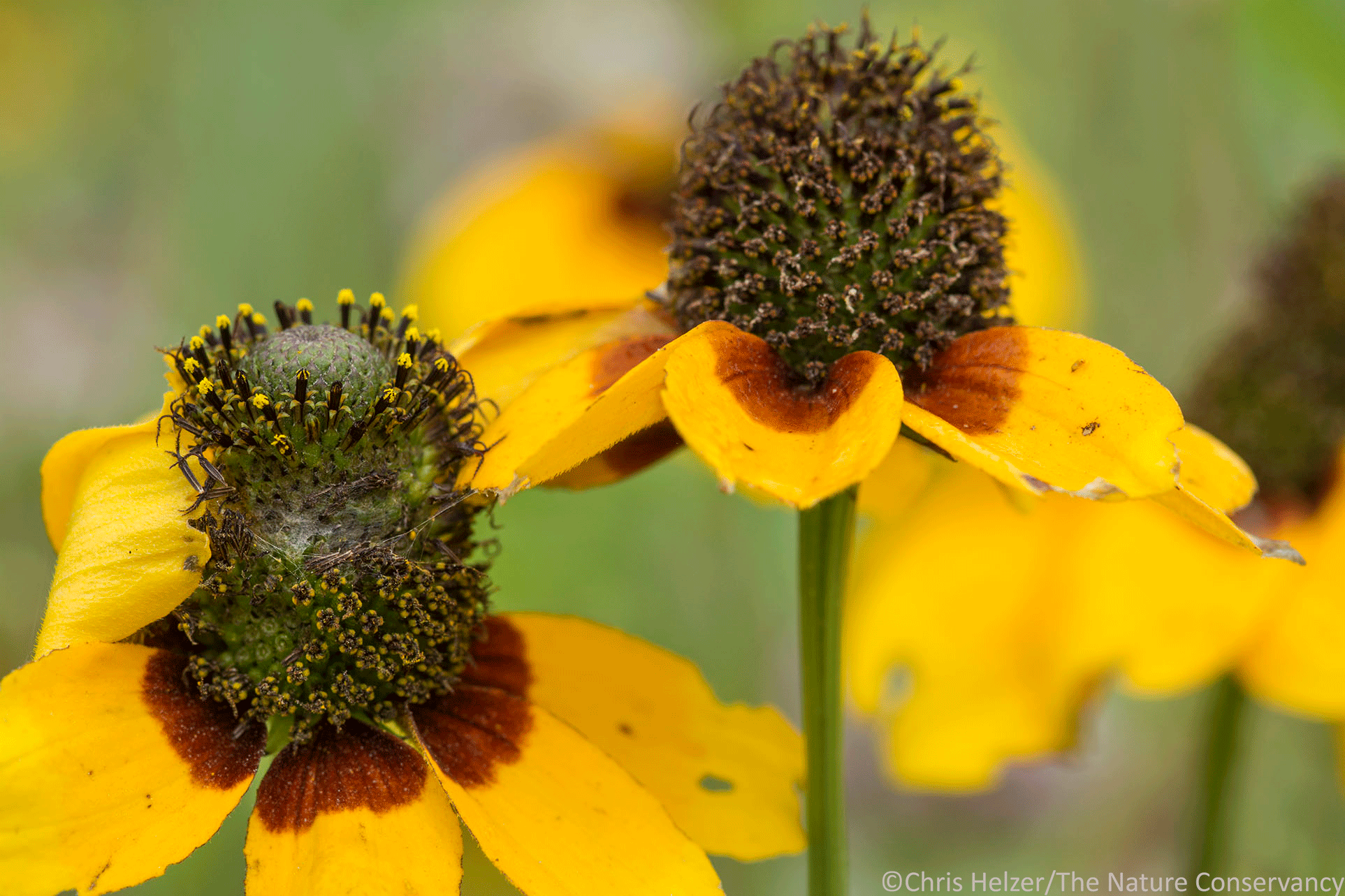
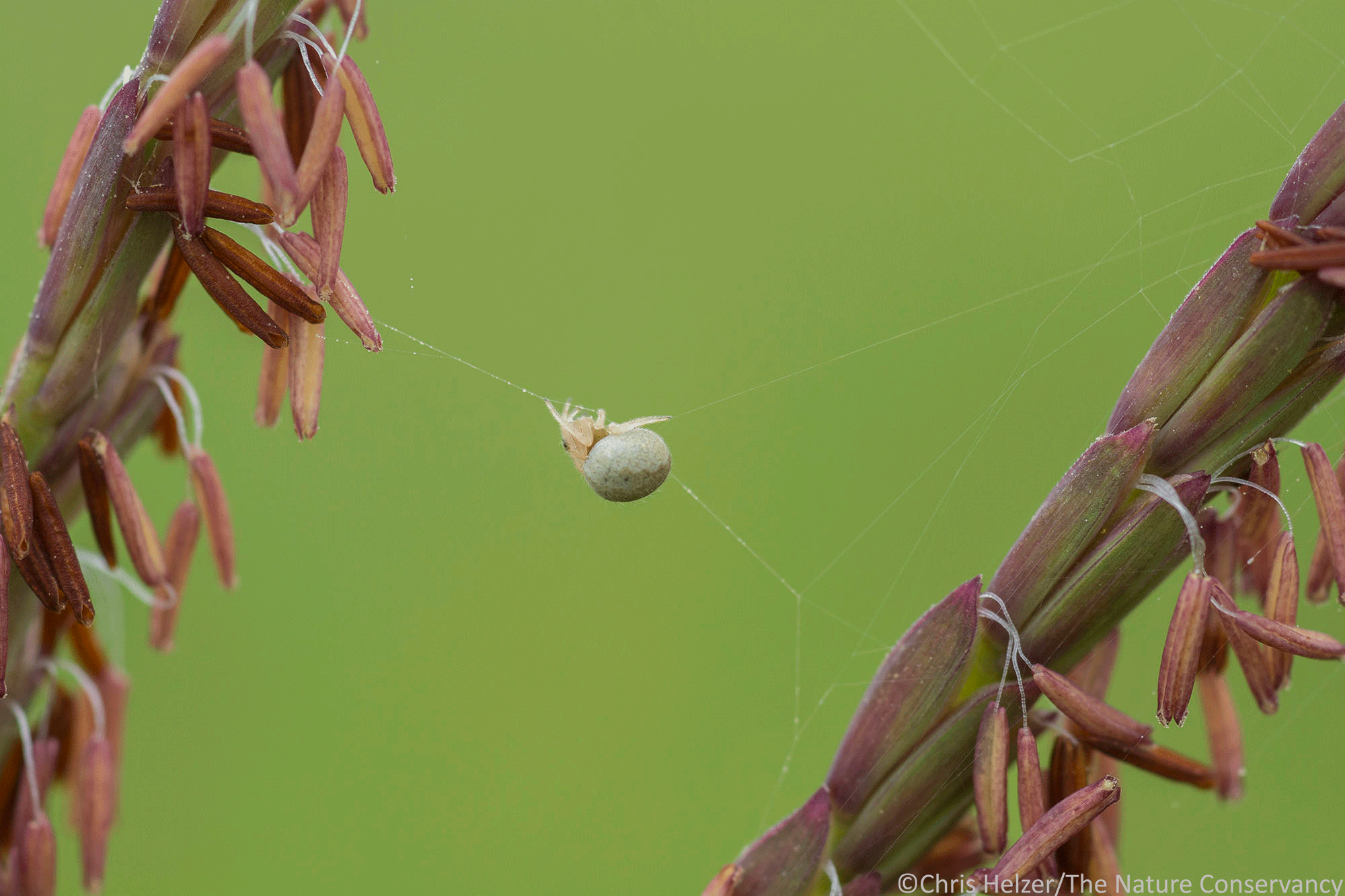
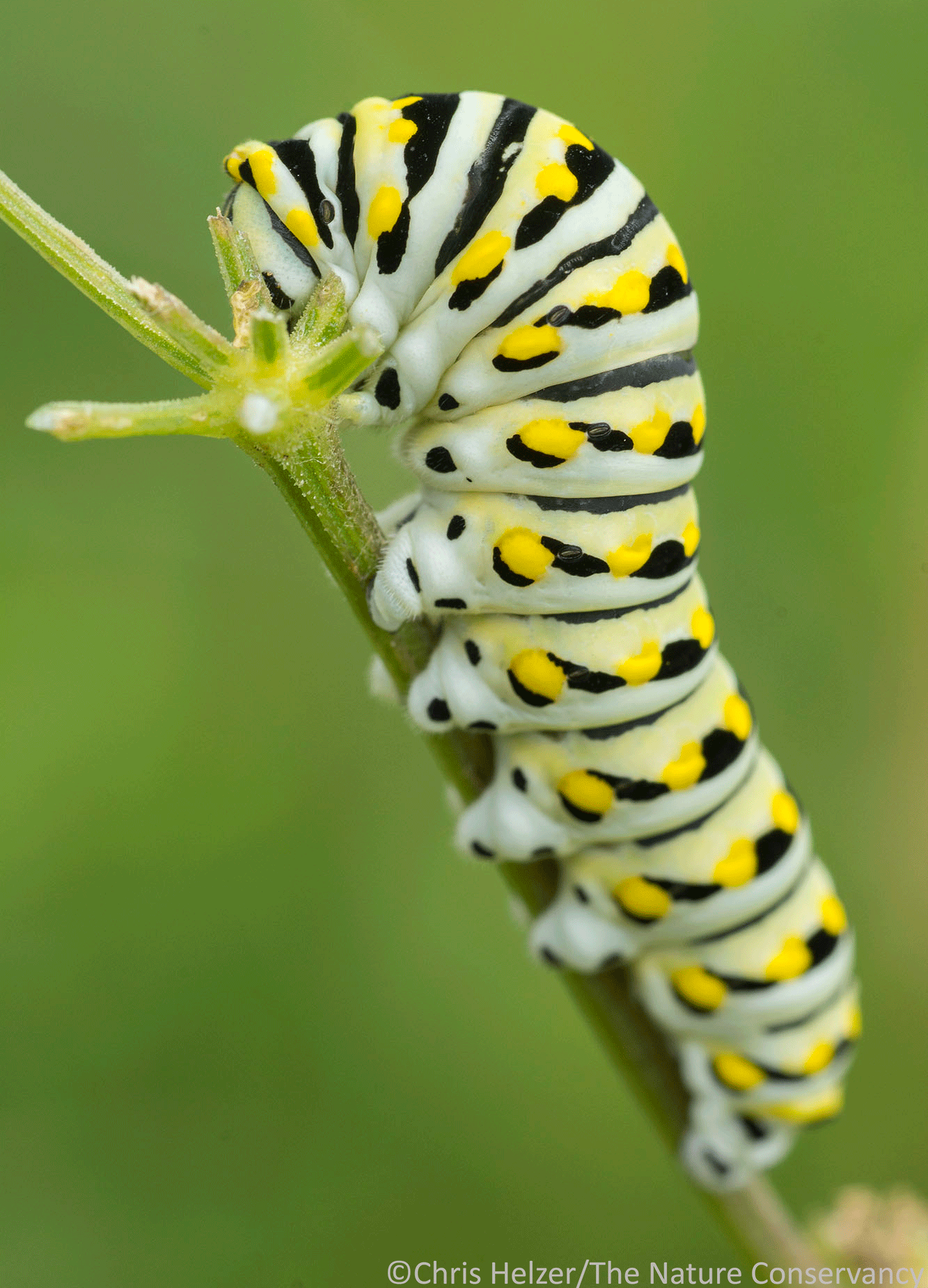
Centaurea americana (American basketflower).We spotted several stick insects as we walked around, which probably means there were thousands of them…Another of the stick insects.If you look closely at the flower (Dracopsis amplixicaulis) on the left, you can see a couple petals are folded up. Often, there is either a spider or caterpillar inside a folded petal like that. In this case… (next photo)…it was a caterpillar. I don’t know what kind, but maybe a savvy reader will save me the trouble of looking it up!Eastern gamagrass (Tripsacum dactyloides) is a species that just makes it into the southeastern corner of Nebraska. I also see it now and then in planted populations, but it was fun to see and admire it in its native habitat.This little spider also seemed to enjoy having eastern gamagrass around…I believe this is a black swallowtail larva and Kim and I both think we remembered that it was on prairie parsley (Polytaenia), but I won’t guarantee that.The wildflowers were just stunning in the 2018 summer fire units. This is not a selected photo that makes it look like there were more flowers than there really were – it really looked like this across much of the site.
My current job title is “Director of Science”, which I have to admit is a pretty cool title. It’s almost as good as the best job title I’ve ever held, which was “Land Steward”. I’ve worked hard to get my current job title, but also to shape the job description that goes with it. Specifically, throughout my career, I’ve fought to keep myself in the field, where I’m consistently able to explore and study prairies up close.
All the photos in today’s post are from the last couple of weeks, and illustrate minor discoveries of sorts that I’ve made while acting as a naturalist. In this case, I’ve been keeping track of the kinds of insects that visit spiderwort plants, and the vast majority are flies. As a result, seeing this bee feeding from spiderwort was noteworthy. Ok, it’s not an observation that will change the world, but it was interesting, nonetheless.
I’ve fought those battles because my sanity and well-being depends upon the sense of discovery I get whenever I’m in a prairie or other natural area. I recognize that I’m really fortunate to have been able to shape my career as I have, but even if I had to work outside of the arena of conservation, I’d still find time to be a naturalist. Heck, even now, I’m in the field during the majority of my work time, but I still spend a lot of my off hours in prairies.
I’m guessing most of us in the conservation arena got here because we were inspired by outdoor experiences as kids or young adults. I remember collecting snails in the road ditch across from my house when I was 6 or 7 years old, for example, and regularly riding my bike to the fishing pond across town when I was in 3rd grade. My aspirations for college were to get a degree and become a park ranger in a remote place where I could somehow get paid for exploring nature (like many people that age, I didn’t have a very realistic idea of what jobs are like).
I’ve seen many butterfly species feeding on minerals left behind by evaporation around mud puddles, etc. but I’d never seen a regal fritillary doing so until I spotted a couple along the trail at the Tallgrass Prairie National Preserve in Kansas.
There is certainly a lot more to my job duties than simply “exploring nature”, but I will defend that facet of my job vigilantly. I encourage everyone else in conservation to do the same. Not only does spending time as a naturalist help keep us inspired and energized, it’s how new discoveries and forward leaps in natural history happen. Despite the wealth of knowledge we have about the natural world, there are still gargantuan gaps in our understanding. Many times, we don’t even know what questions need to be asked, let alone how to answer them. As a simple example, I direct you to a short post written by Katharine Hogan, our Hubbard Fellow a few years ago about something I’ve noticed as well. We don’t yet know why all those silken strands sometimes appear in prairies, but I bet the answer will be a doozy when we find it!
I first learned about clustered broomrape (Orobanche fasciculata) while at the Cedar Point Biological Station in college. It’s a parasitic plant, and I was told at the time that it pulls nutrients from fringed sage (Artemisia frigida). I spotted several last week at Cherry Ranch in western Nebraska, and most were next to sage, but not all of them. I went looking for more information and found that its host plant selection is much broader than I’d previously thought. Aha!
Aside from the scarcity of natural areas in many places, it’s never been an easier time to be a naturalist, and it’s a pursuit open to anyone, of any level of experience. First of all, of course, there’s no requirement to identify what you see in order to enjoy finding it. However, if you do want to learn what species you’re admiring, there are now countless digital resources to help you, in addition to the standard books and experts that have been around forever. In addition, not only can you easily share discoveries with friends and potential friends through online communities, your discoveries can contribute to the growth of global scientific knowledge through programs like iNaturalist, Journey North, Bugguide, and many others.
Everyone knows that convergent ladybird beetles (and other species) feeds on aphids, right? Well, just yesterday, I spotted this one clearly feeding on pollen, so I went in search of more information. It turns out pollen and nectar are both important sources of food when aphids aren’t readily available. I certainly wasn’t the first to discover that, but it’s the kind of discovery that can be made by any of us if we’re observant.
The old adage about stopping to smell the roses applies just as much today as ever. It’s what makes life worthwhile. When I’m working in the field, I frequently interrupt what I’m doing to follow a trail or check out a spider web. I feel no guilt about that at all. First of all, I consider it part of my job to increase my experience and skill as a naturalist – and to pursue opportunities for scientific discovery. And second, it’s a tiny investment in my job satisfaction and energy level, from which my employer will reap many benefits. I would encourage everyone reading this to carve out your own naturalist time, regardless of whether that happens at work or not. Besides being good for you, it will be good for the world too.








 The Prairie Ecologist