If you haven’t already, please pass along the information about our Hubbard Fellowship to any recent college graduates you think might be interested. Fellowship applications for 2020 are due on September 30, 2019. Thanks for your help!
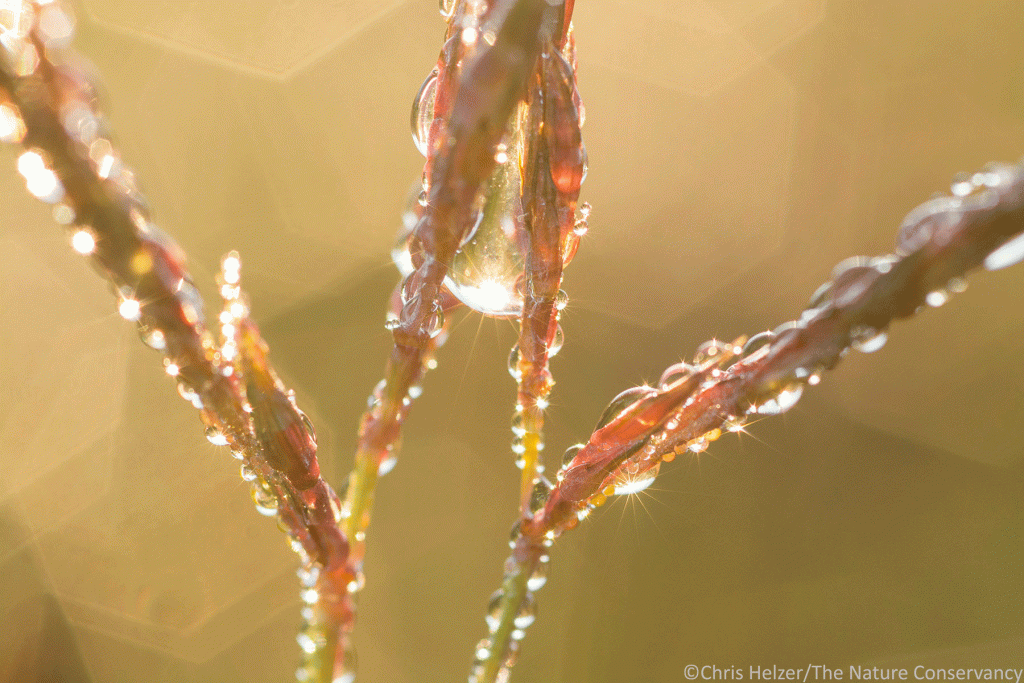
Big bluestem in glittering prairie.
Last weekend, I spent a magical morning in dew covered prairie along Lincoln Creek, here in Aurora. Everything around me glittered in the early morning light and I found easy photographic subjects everywhere I looked. I’ll share more photos from that morning in the future, but today am featuring big bluestem and the tiny flower flies that were feeding on its pollen.
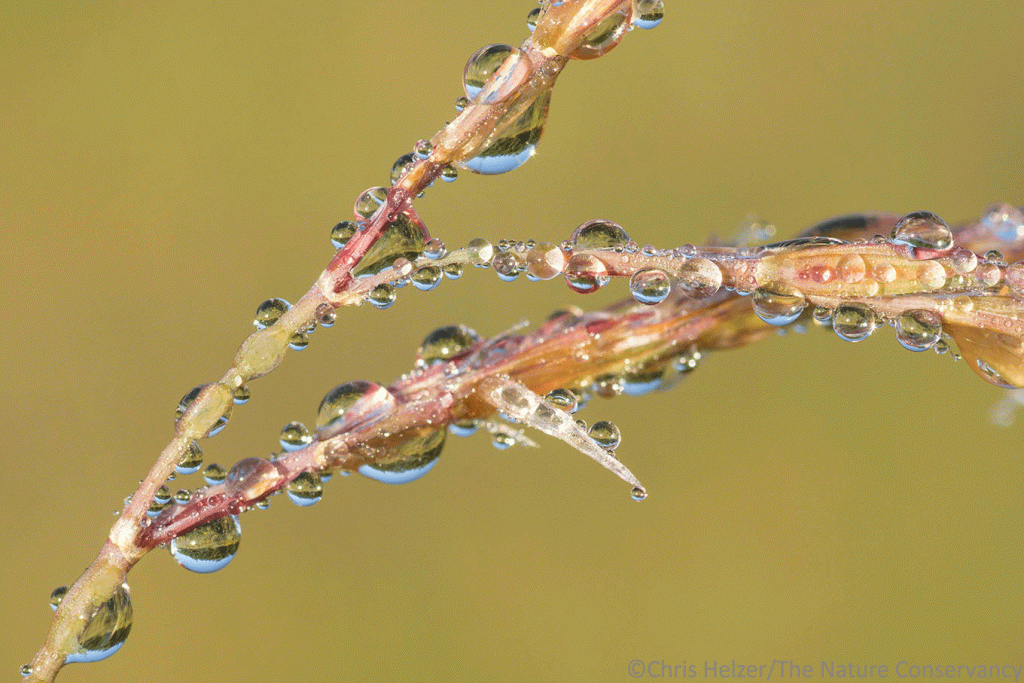
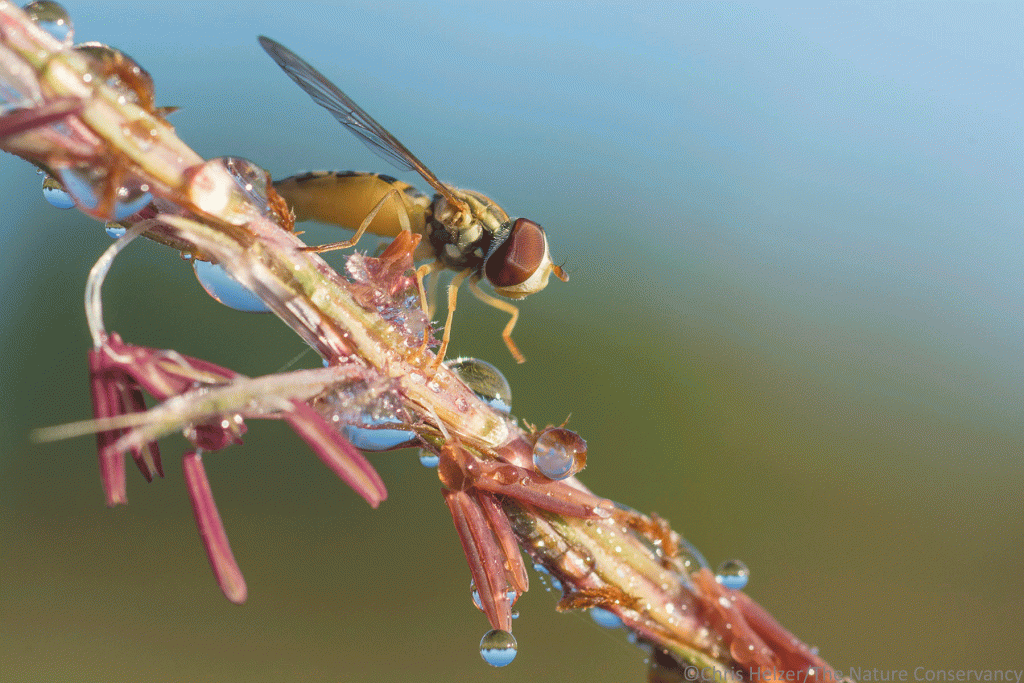
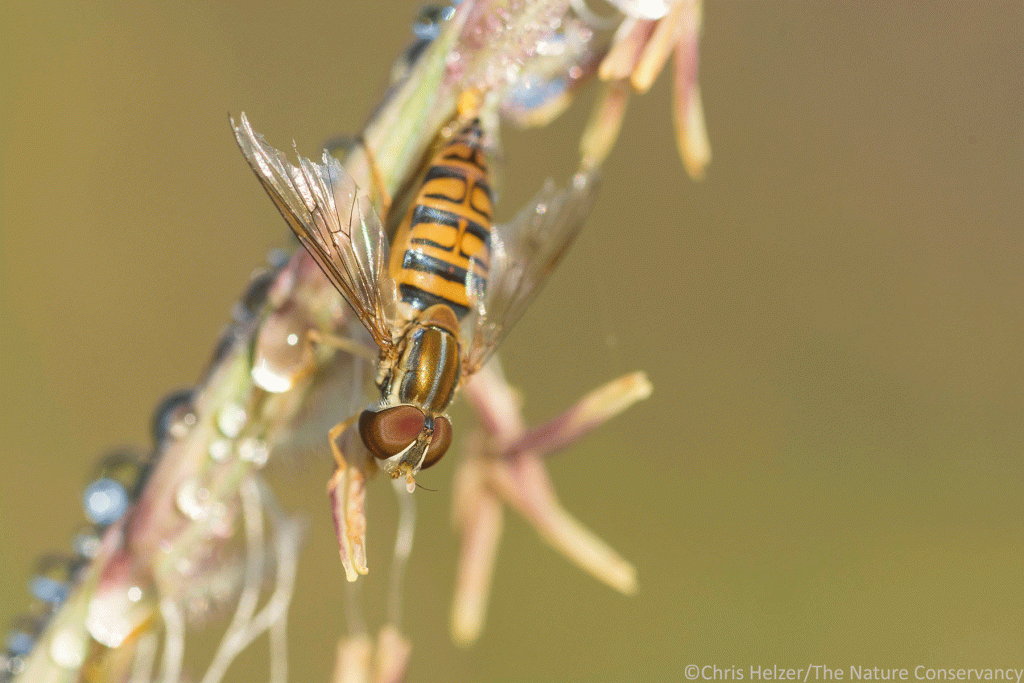
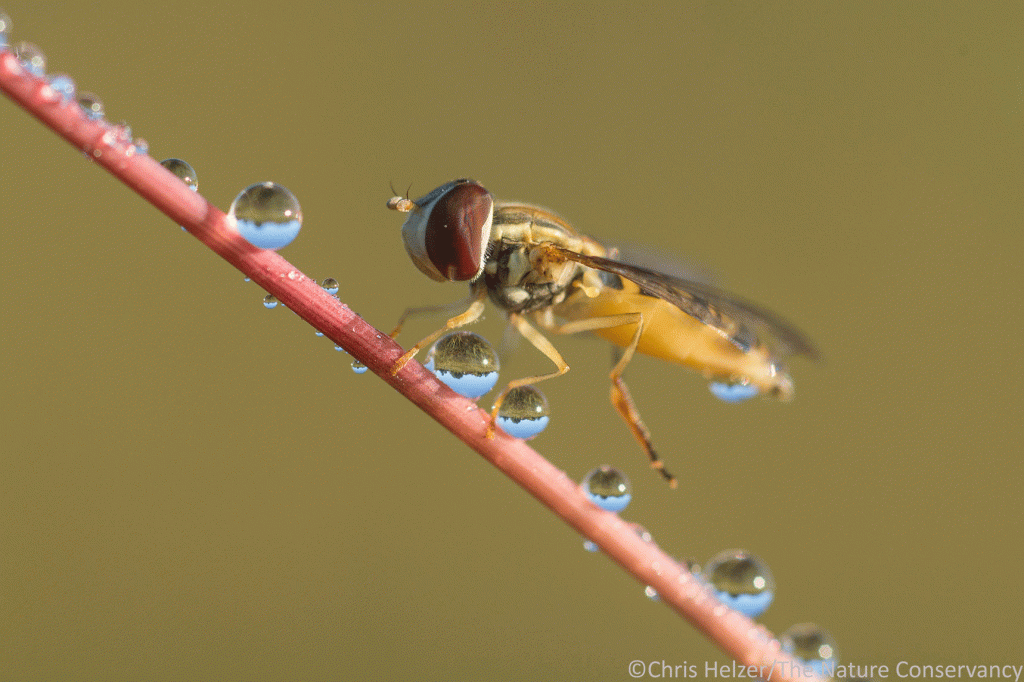
More dew-covered big bluestem A tiny flower fly (Syrphidae) patrolling big bluestem in search of pollen
It was hard to ignore the statuesque big bluestem flower heads all around me as I walked through the prairie, especially since they were covered in sparkling dew drops. I was particularly drawn to the anthers hanging from the actively-blooming flowers. As I was examining and photographing those anthers, I became aware of lots of tiny flower flies that seemed even more interested in them. I watched as the flies clambered about the dew-covered flowers, stopping to feed intently on anthers. Periodically, they would stop eating and zip away, circling back to land on the stem below the flower. There, they sat still for a minute or two – maybe scanning for predators or just catching their breath? Then they’d take off and fly back to the same flower to resume foraging.
Big bluestem anthers covered in dew. I’m telling you, it was a magical morning…This flower fly with ragged wings was feeding on pollen while holding the anther in its front legs.A flower fly during one of its rest breaks between feeding bouts
Once I established the pattern of feeding/resting, it was pretty easy to sidle up to a fly, set up my tripod, and photograph it for a while. If I moved too quickly and spooked it away, the fly usually returned to the same flower after a few moments. Among a morning with many highlights (literally and figuratively), the chance to spend some intimate time with those grass-feeding flower flies was pretty spectacular.
Anyone familiar with prairies has likely seen drawings and photographs showing the incredibly deep root systems of prairie grasses and other grassland plants. The prairie ecologist J.E. Weaver, in particular, is well known for his illustrations of long roots extending below prairie plants. That root depth is frequently held up as a major factor that influences the resilience of prairies in the face of summer drought. After all, deep roots allow those plants to draw water from far down in the soil profile when rainfall becomes scarce. It’s one of the defining components of prairie ecosystems.
There’s just one problem.
Prairies don’t actually work that way.
Yes, prairie grasses and wildflowers have very deep roots, but research over the last decade or so has built a strong case against the idea that those plants use their deep roots to find moisture during times of scarcity. In fact, they might not be using them to draw moisture at all.
This prairie has survived droughts, grazing, and fire. The root system beneath these plants plays a major role in that resilience, but not in the way many of us have been taught.
This revelation was first shared with me by Dr. Dave Wedin at the University of Nebraska-Lincoln and it has been reinforced during discussions I’ve had with Dr. Jesse Nippert and his graduate students at Kansas State University. Increased attention to this topic and continued improvements in technology have allowed researchers to measure how, where, and when plants are drawing water from the soil. What they’re learning doesn’t fit the story we’ve all bought into.
Here’s what we know.
Despite having very deep roots, most prairie grasses pull water
primarily from the top 10 inches or so of the soil. Grasses dominate that shallow root zone with
a very dense web of roots. Those grass
plants also have deeper roots, but researchers have shown that those deep roots
are rarely, if ever, used to draw water or nutrients, even during periods of
drought. Jesse says that’s been well
documented within the Great Plains, but also in South Africa and Australia, so
it seems to be a widespread phenomenon.
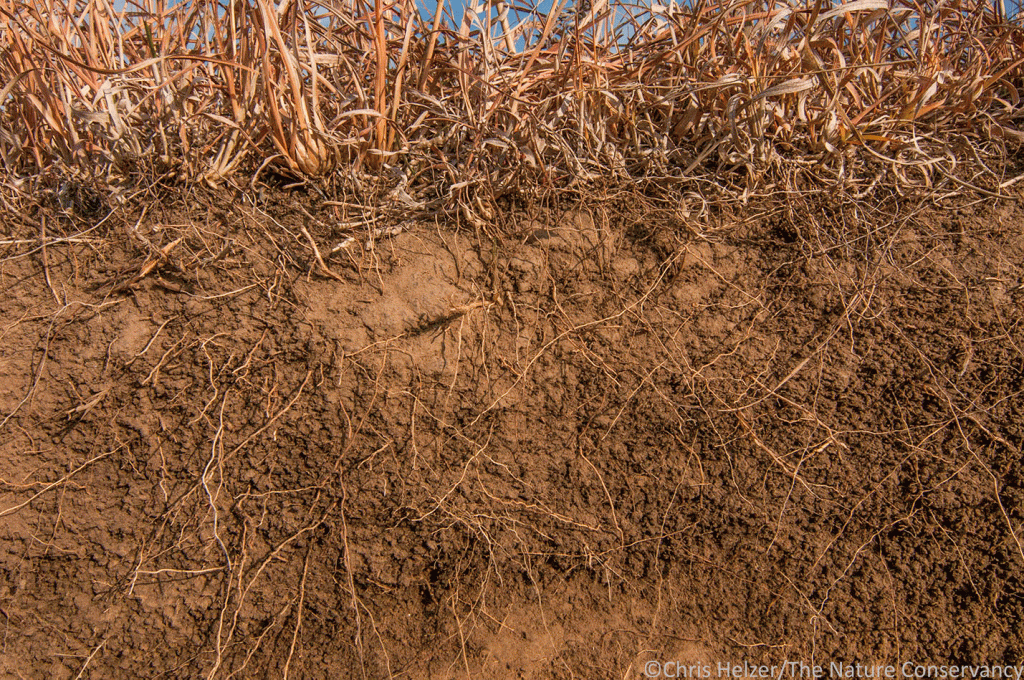
Prairie grasses have a dense mass of roots in the upper reaches of the soil profile. They dominate the access to water within that zone, especially during times of drought. However, while they have deeper roots too, they don’t seem to use them to access water from deep in the soil.
The way forbs use their roots is a little less well-known at
this point, but progress is being made. Jesse
says forbs seem to pull water from shallow depths when they can, but often get their
moisture from below that zone of dense grass roots. However, even during droughts, they don’t
seem to access water below the top 30 inches of soil. Work from Dave Wedin and his colleagues in
Nebraska supports what the Nippert lab in Kansas has found. In the Nebraska Sandhills, researchers found
that vegetation doesn’t have much impact on soil moisture below about three
feet, even during drought years.
What about woody vegetation?
Jesse’s students have found that shrubs pull water from much deeper in
the soil than grasses and forbs, starting at about 18 inches and reaching down
to 8 or 10 feet. As with forbs, shrubs
can draw water from shallower depths during times of plenty, but they seem focus
mainly water from depths below what grasses and forbs can reach. This, by the way, applies to shrub species
such as sumac (Rhus sp) and dogwood (Cornus sp), but not to more forb-like
shrubs such as leadplant (Amorpha
canescens) or New Jersey tea (Ceanothus
sp).
Grasses dominate the upper most zone of the soil profile with a dense mass of roots and rarely get water from greater depths. Forbs may pull water from near the surface when it is available, but usually get moisture from below the “grass zone” (but still within the top 30 inches). Shrubs can obtain water from any depth, but mainly get it from 18 inches and below – and down to deep as 8 to 10 feet or more. The purpose of deep roots for forbs and grasses is still under investigation.
So, during droughts, grasses and forbs don’t seem to be
drawing water from deep in the soil, but shrubs do. This probably gives them a major advantage
during those times of stress. Prairie grasses
can survive drought, but it’s not because they access water from great depths. Instead, at least some of them have just
developed the capacity to continue functioning with very little available soil moisture.
Shrubs, however, don’t seem to suffer much
when the stop layers of soil are dry – they can just reach down deeper into the
moist soil below.
Some of those shrubs have an additional advantage because
they are clonal and can share water between the multitude of their aboveground
stems, which are connected by underground rhizomes. The Nippert lab has shown that the more mature
stems in the center of clone can pull water from deep in the soil and then
transport it to the more shallow-rooted stems along the expanding outer edge of
the clone. In that way, the young stems
on the outside are better able to outcompete surrounding vegetation and allow
the overall shrub clone to grow larger.
As if that wasn’t enough, Jesse says it also appears that the big thick
roots of shrubs alter water infiltration, speeding the passage of rainwater
down through the soil to where only shrub roots can access it. This is especially true after those roots die
and leave open channels behind.
Fortunately, while shrubs seem to have some serious advantages belowground, they still have a major disadvantage above ground, which is that their growing points are up in the air. Grasses produce new tillers (aboveground stems) from buds at or below the ground surface. That means that when they are grazed or burned off, they only lose the aboveground plant material they’ve invested in during the current growing season. If that defoliation occurs during the dormant season, it really doesn’t bother them at all because all their living biomass is safely belowground. Shrubs, however, put on new growth from the tips of their aboveground stems. When fire comes through and destroys all their aboveground tissue, they lose a considerable investment, even during the dormant season, and have to start rebuilding from the ground – where they have to compete for light with surrounding grasses. Frequent fire, then, creates big problems for shrubs, but grasses and forbs can more easily take it in stride.
Two students of Jesse Nippert (Marissa Zaricor and Seton Bachle) examine prairie roots as part of a project at our Platte River Prairies.
So why have we been so wrong about how prairie plant roots work? Dave Wedin points out that some of it is because we’ve paid attention to Weaver’s drawings and ignored his data. Even in the 1940’s, Weaver was publishing data showing that the vast majority of grass root biomass was found in the upper 6-12 inches of the soil. However, people have focused more on the depth of those roots than where the bulk of their mass exists. In addition, the idea that prairie plants are pulling water from great depths is just an attractive – and logical – story. The accompanying illustrations are also really compelling. It’s easy to see how the myth has been perpetuated over time.
Our new understanding of prairie roots and how they work has important implications for prairie ecology and management. Over the last several years, I’ve found myself re-thinking the way plants are competing with each other belowground and how fire and grazing management can influence that competition. Of course, I also have lots of unanswered questions for researchers. For example, most work so far has focused on perennial plants – how do annuals fit into the equation? How much variation is there between grass and forb species in their rooting strategies? Most importantly, of course, what the heck are those deep roots for if they aren’t obtaining water?
Additional reading on this topic, if you’re interested:





 The Prairie Ecologist