Quarantine Quiz #8

Another week, another quarantine quiz. This one has snakes!

Don’t forget – you can click on any photo to see a larger, more clear version of it. Answers are listed at the bottom of this post. Good luck – and stay safe out there.

.

1) Which of these creatures is a tiger beetle?
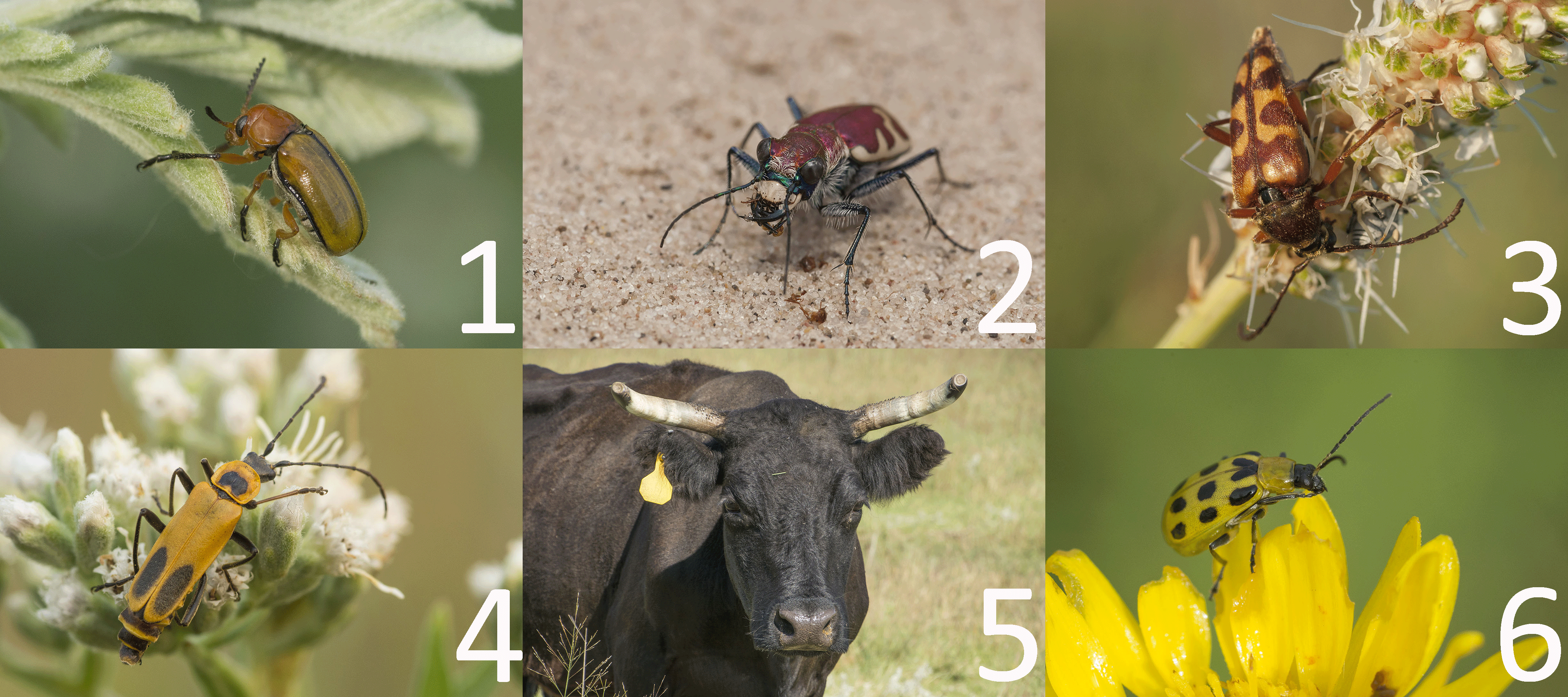
A. I mean, obviously not 5, but the rest are tiger beetles.

B. #6 is spotted, so it must be a leopard beetle.

C. 1

D. 2

E. 3

F. 4

.

2) What is going on here?
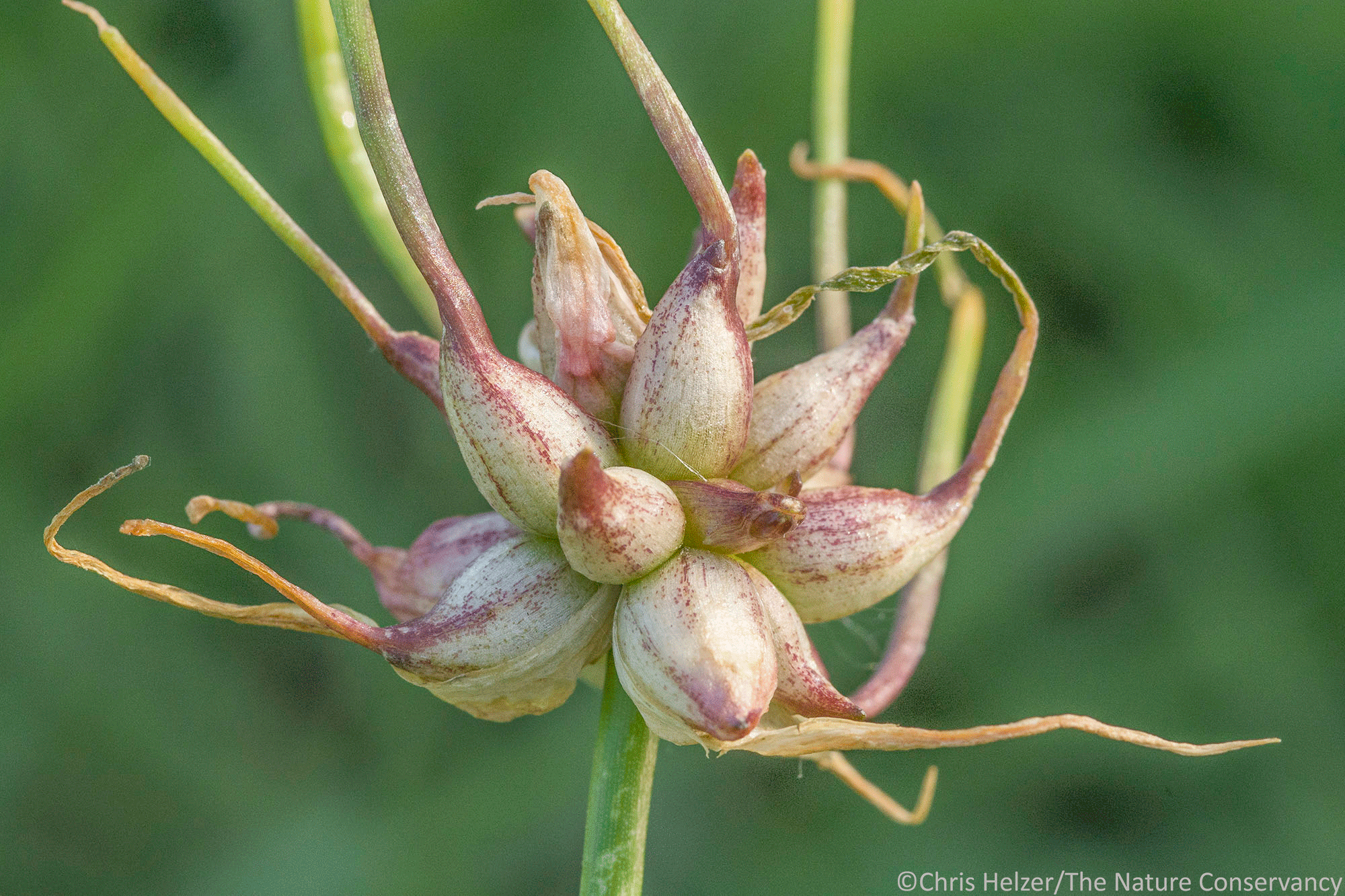
A. These are insect galls. Each one contains the larva of a fly.

B. These are ‘sets’ of wild garlic. Edible and tasty.

C. These are seed pods that will burst open upon maturation.

D. These are seed pods that will not burst open upon maturation.

E. These are balloons that have mostly deflated.

.

3) What the heck is this??
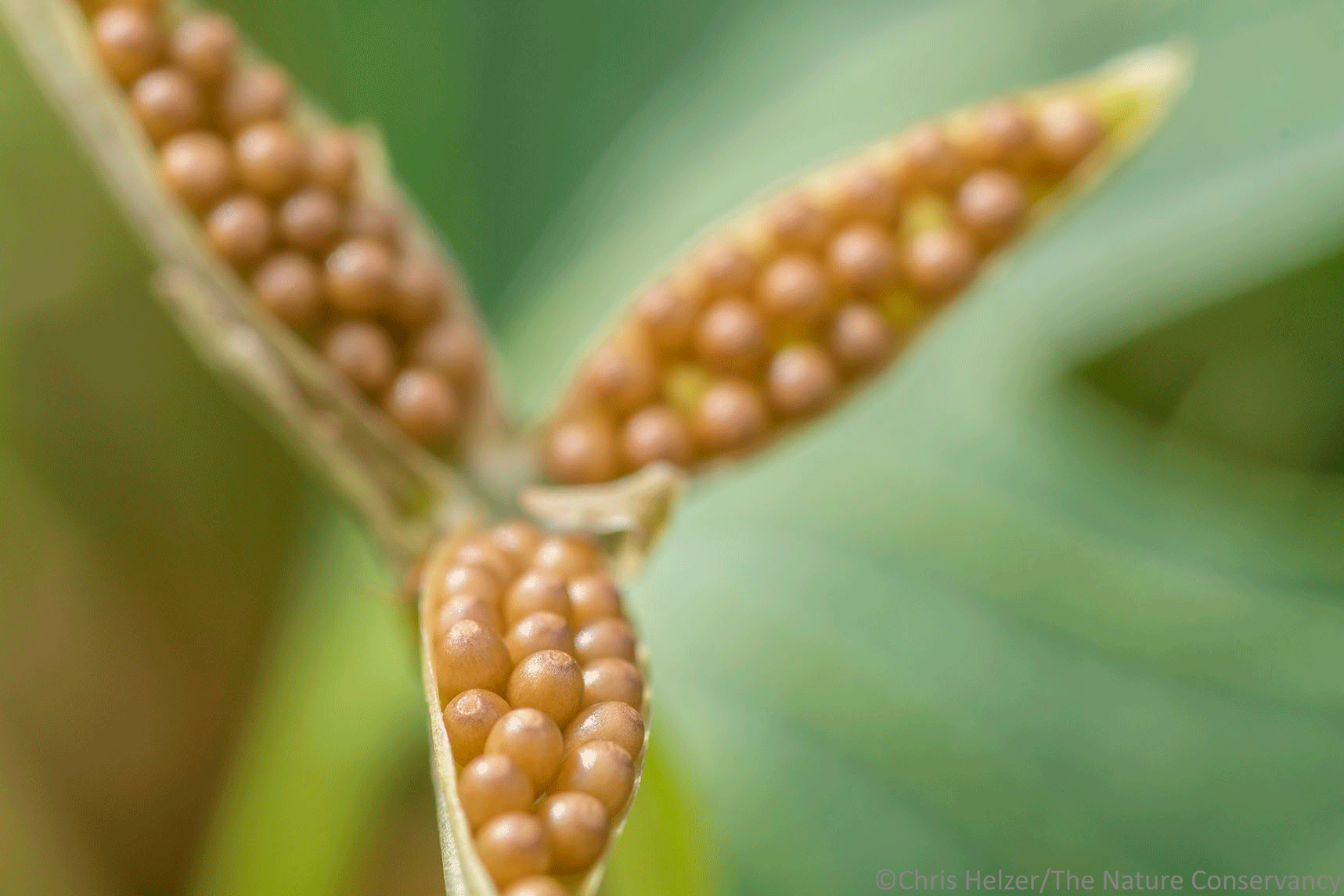
A. A three-jawed water snake, with rows of teeth ready to grab its prey and pull it back underwater to its horrible death.

B. Rows of wasp eggs laid on leaves.

C. A prairie violet seed pod, opened and ready to drop seeds.

D. Insect galls on leaves. Inside each gall is a fly larva.

.

4) What do you call a snake that has been hired by the federal government?

A. What??

B. Oh, this is a joke, right? You did this once before.

C. Ok, I give up, what do you call a snake hired by the federal government?

D. You’ll have to look in the answers below!

.

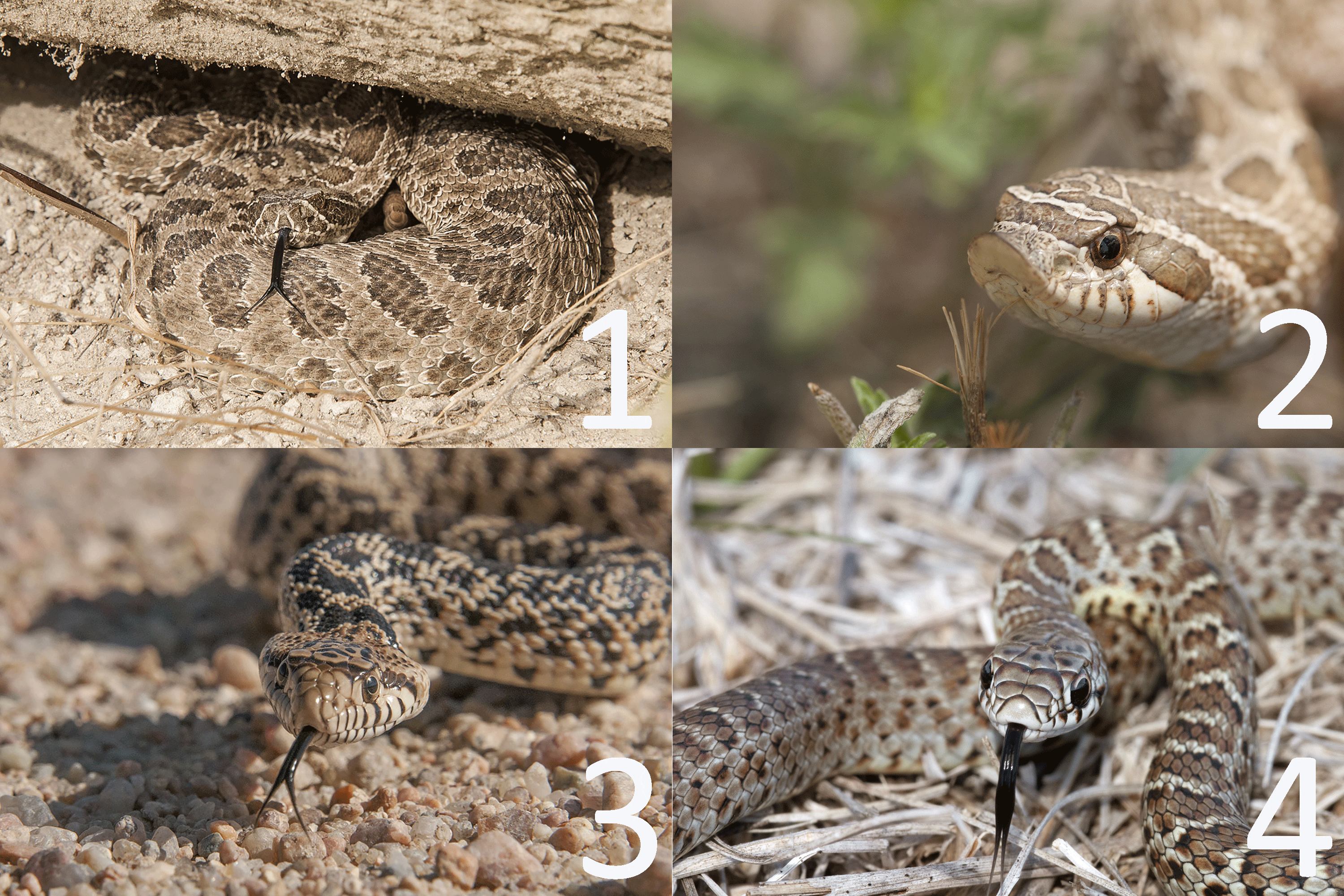
5) Which of these charming snakes have a venomous bite? (Clicking on the image to see it more clearly will probably be helpful.)
A. #1 only

B. #1 and #2

C. #1 and #3

D. #3 only

E. #4

F. All snakes are venomous and creepy and deserving of death.

.

6) Which of these snakes has a very different appearance as a juvenile than as an adult?
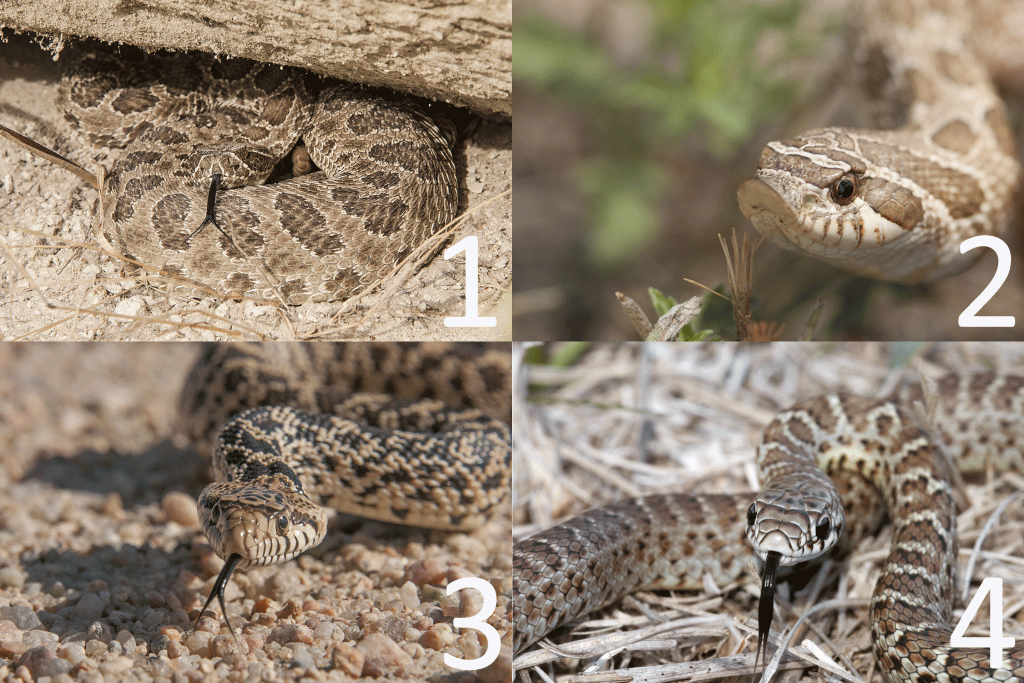
A. # 1 starts out with legs but loses them after the first year or two of life.

B. #4 turns a solid color (on its back) when it matures.

C. #3 has the reverse pattern of dark and light on its back as a juvenile.

D. #2 spends its first year underground and is a very pale color with no noticeable pattern until it comes above ground in its second season.

E. Well, they all start out as eggs. Does that count?

F. No

.

7) Which of these brown colored snakes is officially a ‘Brown Snake’ by name?
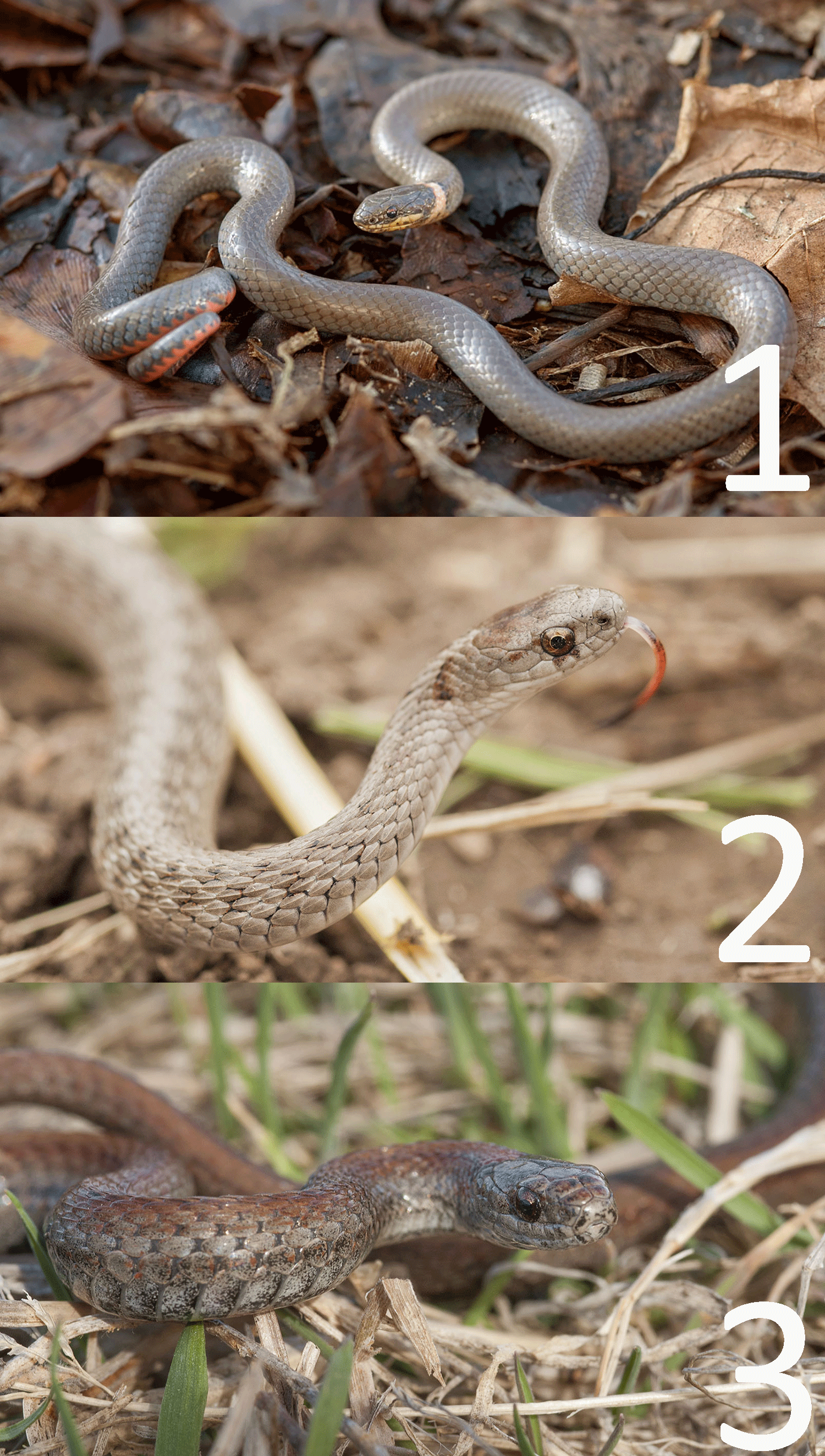
A. #1

B. #2

C. #3

D. Some biologist actually named a species ‘brown snake’??

E. Apparently

.

.

.

Answers:

  1. The answer is D. #2 is the only tiger beetle. I don’t know what #1 is. #3 is a longhorned beetle, #4 is a soldier beetle, #5 is Bos taurus, and #6 is a cucumber beetle.
  2. B. The sets of wild garlic (Allium canadense) can be harvested and sown like seeds. They are also very tasty.
  3. C. I’ve never seen a three jawed snake, but wouldn’t that be cool?
  4. A civil serpent! HA HA HA HA HA HA!
  5. #’s 1 and 2 are both venomous. However, #1 (Prairie rattlesnake) is the one that can be dangerous to humans because its venom-delivering fangs are at the front of its mouth. The hognose snake (#2) does have venomous fangs, but they are at the back of its mouth where they deliver a mild toxin to help neutralize toads, frogs, and other similar prey. Hognose snakes are not a threat to people. Plus they have that cute upturned nose… #3 is a bullsnake (aka gopher snake) and #4 is a juvenile eastern racer. Neither is venomous. Bull snakes (including the one in this photo) can imitate rattlesnakes by flattening their heads when threatened. They may also wiggle the tips of their tails rapidly in dry vegetation, which can sound much like a rattlesnake too. Snakes are the best.
  6. B. The eastern racer is brown with a distinctive pattern as a juvenile snake but becomes a solid color (on its back) as an adult – with a solid white belly. Often called ‘green racers’ or ‘blue racers’, eastern racers can range in color from olive green to greenish-blue. They are known to kill and eat rattlesnakes, and are apparently immune to their venom.
  7. B. Brown snakes are gorgeous little snakes that hit their maximum length at about 13 inches. They eat small prey like slugs and earthworms.

Lessons from a Yellow Tub

Last Friday night, I went to our family prairie for a last check of fence and water before cattle came in on Saturday. Shortly after the sun dropped below the horizon, I was preparing to head back home when I noticed an old yellow mineral tub that had been sitting upside down at the bottom of a small draw. I’d seen it many times before but had left it there, thinking maybe our lessee (owner of the cattle) would salvage it. This time, I figured I’d waited long enough and just picked it up. That’s when I realized how long it must have been sitting there.

The yellow tub and the results of the accidental experiment it created. For scale, the tub is 16 inches deep.

When I lifted the plastic tub and saw the mass of yellow-green grass beneath it, a rapid fire series of thoughts passed through my brain. As I processed all those thoughts, I realized there were a number of interesting ecological observations and conclusions that could be made from the situation. In other words, that empty livestock mineral feeding tub, emptied, blown by the wind, and then abandoned, had accidentally become an educational tool. Here are some of the lessons that I believe we can draw from the yellow tub of the prairie.

Let’s start with a little context. We’re managing our prairie with the ‘Open Gate Rotational Grazing System’ I described in a post a couple years ago. The prairie is split into four main pastures and a couple smaller units. Last year, the pasture containing the yellow tub was grazed intensively for most of the season, resulting in most plants being repeatedly cropped short. This year, it will rest all season, as well as most of next year.

Also, the tub landed in the former location of a big tree the cows used to cluster around for shade until I recently cut it down. That shade and consistent disturbance pushed the plant community toward brome/bluegrass dominance. As a result, most of the yellow-green grasses appear to be Kentucky bluegrass, with a little smooth brome mixed in.

A first observation is that the bluegrass and brome under the tub must have gotten an early start on the season because the tub acted as a kind of hot house this spring, providing much warmer temperatures inside the tub than out. That allowed those grasses to start growing well before most of their neighbors. Apparently, the tub was translucent enough to allow those plants to photosynthesize too, though based on the color of the grasses, they wouldn’t have minded a little more light (more on that below).

However, the disparity in height between the grasses inside and outside the tub seems too great to be explained only by warmer temperatures this spring. Instead, I believe two other factors influenced the height of those in-tub grasses. First, that tub was probably sitting there long enough to protect those grasses from last year’s grazing. The grasses outside the tub have barely managed to grown a few inches tall this spring. Those inside were touching the top (bottom?) of the tub, which is about 16 inches deep. That’s really tall for Kentucky bluegrass, even with an early start.

The impact of grazing on the grasses around the outside of the tub can be seen by looking at the other three pastures across the prairie. For example, in the pasture that didn’t get grazed at all last year, the brome is about 10 inches tall right now. Bluegrass is a little shorter, averaging around 6-8 inches. That’s way taller than the grasses in the ‘tub pasture’, which are showing stress from being repeatedly grazed last year. That grazing affected the size of their root mass and energy reserves, from which it will take them a full year or more to recover. Inside the tub, the grasses were unaffected by that grazing (just low light), so they had more energy for growth this year.

The second reason the grasses inside the tub were so small is due to a term I learned from my wife over the weekend: etiolation. Those of you who follow me on Instagram might have just caught that ‘etiolation’ is the second term I’ve learned from Kim in the last week or so. The other was ‘guttation’, which is when water droplets come out of plant leaves overnight because of a build-up of water pressure as roots continue acquiring water while transpiration has shut down.

Early morning droplets on a spiderwort leaf last week. I remarked to Kim that the drops were on spiderwort plants, but not on the other plants in the garden. That’s when she taught me about etiolation.

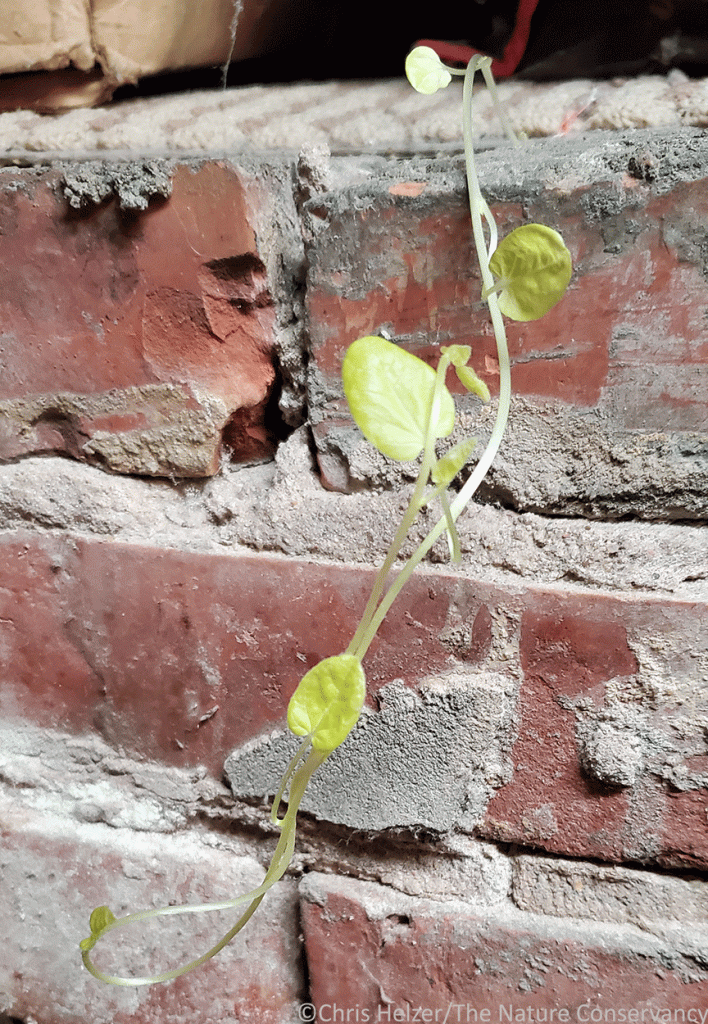
I digress. Etiolation, it turns out, is the name for the phenomenon that occurs when plants grow under insufficient light. Those plants are a pale color (sometimes nearly white under extreme circumstances) and tend to grow extra long and skinny in an apparent desperate attempt to reach better light. You’ve probably seen this before – I have an example in our basement right now where a bindweed plant is trying to grow from between the bricks. Anyway, I think the combination of etiolation, early warm temperatures, and grazing exclosure were probably responsible for the crazy difference in height between the grasses inside and outside of the yellow tub.

The bindweed growing in our basement. We already have enough of it to deal with in the garden – we don’t really need more. And yet, I can’t bring myself to yank it out either… It’s trying SO HARD!

Now, to really figure this out, I could get 6 or 8 identical yellow tubs and scatter them around the prairie for replication. I could put half of the tubs in areas of recent grazing and the other half where plants are recovered from grazing. If I let them sit between now and next May and then measure grass heights I should have enough statistical power to determine the relative contributions of the ‘hothouse effect’, etiolation, and grazing exclusion toward what I saw under the tub this year.

(Don’t hold your breath. I think I’ll stick with my current observations and educated guesses on this one.)

Look at how much that abandoned tub taught us! Isn’t it a good thing I waited so long to pick it up? Maybe that’s the real lesson here. I wonder what educational value I can find from the clutter in my garage. Most of that has been around much longer than the tub…