
This time of year, when I’m walking through wetlands, there’s a good chance I’ll have hundreds of beggarticks seeds stuck to my clothing when I emerge. Woodlands have their own set of these annual plants, so the same risk is present if I duck into riparian forests. Variously known as beggarticks, bur-marigold, Spanish needles, and a series of epithets, these plants in the genus Bidens have a really effective seed architecture that helps them stick to any animal that brushes past.

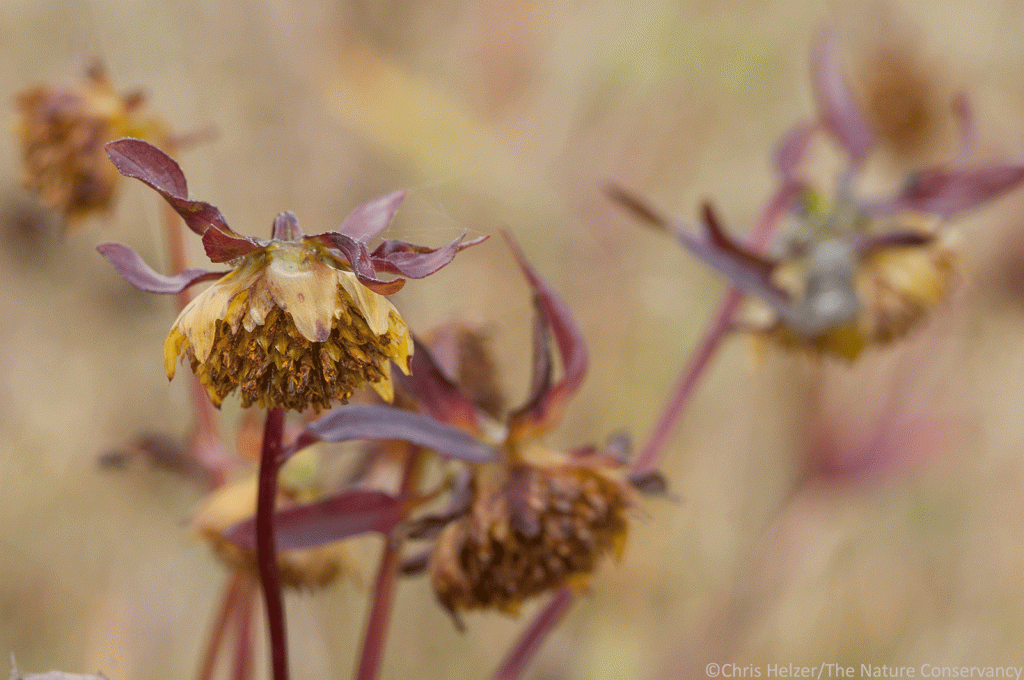
As I’m picking the seeds off my jeans, sweatshirt, and socks, I try to remember that earlier in the season, at least some beggarticks species have really pretty flowers, and all of them provide pollen, nectar, and seeds as food for animals. During the summer, I appreciate seeing these plants in wetlands, especially, and even spend a fair amount of time photographing them. Below are a few examples of Bidens flowers I’ve photographed over the last few years.



 The Prairie Ecologist
I have always thought that Bidens is an overlooked native. It would be spectacular in a rain garden. If it just wasn’t for their super effective seed dispersal system!
We have Bidens pilosa, and it’s a lovely autumn/winter flower here.
I found great colonies of Bidens aristosa in east Texas recently. So pretty!
Wonderful photographs and description of these important natives.
I love your posts. I’ll have to look up the word riparian – thank you for that! I’m teaching a new grade level and they had to learn about seed dispersal. I’ll share this post with them!
Happy Days to you and yours!