
The Flat Tops Wilderness in northwest Colorado is flat and boring and no one should go there.
At least, that seems to be its reputation, given the scarcity of people during my backpacking trip last week. That was nice in terms of my desire for solitude, but it’s a shame more people don’t take advantage of this huge and gorgeous landscape.

In 2022, my son Daniel and I tested out the Flat Tops Wilderness Area with a short backpacking trip that started at Trapper’s Lake and let us explore that area. This year, I went by myself and started further east at Stillwater Reservoir. It was fantastic.
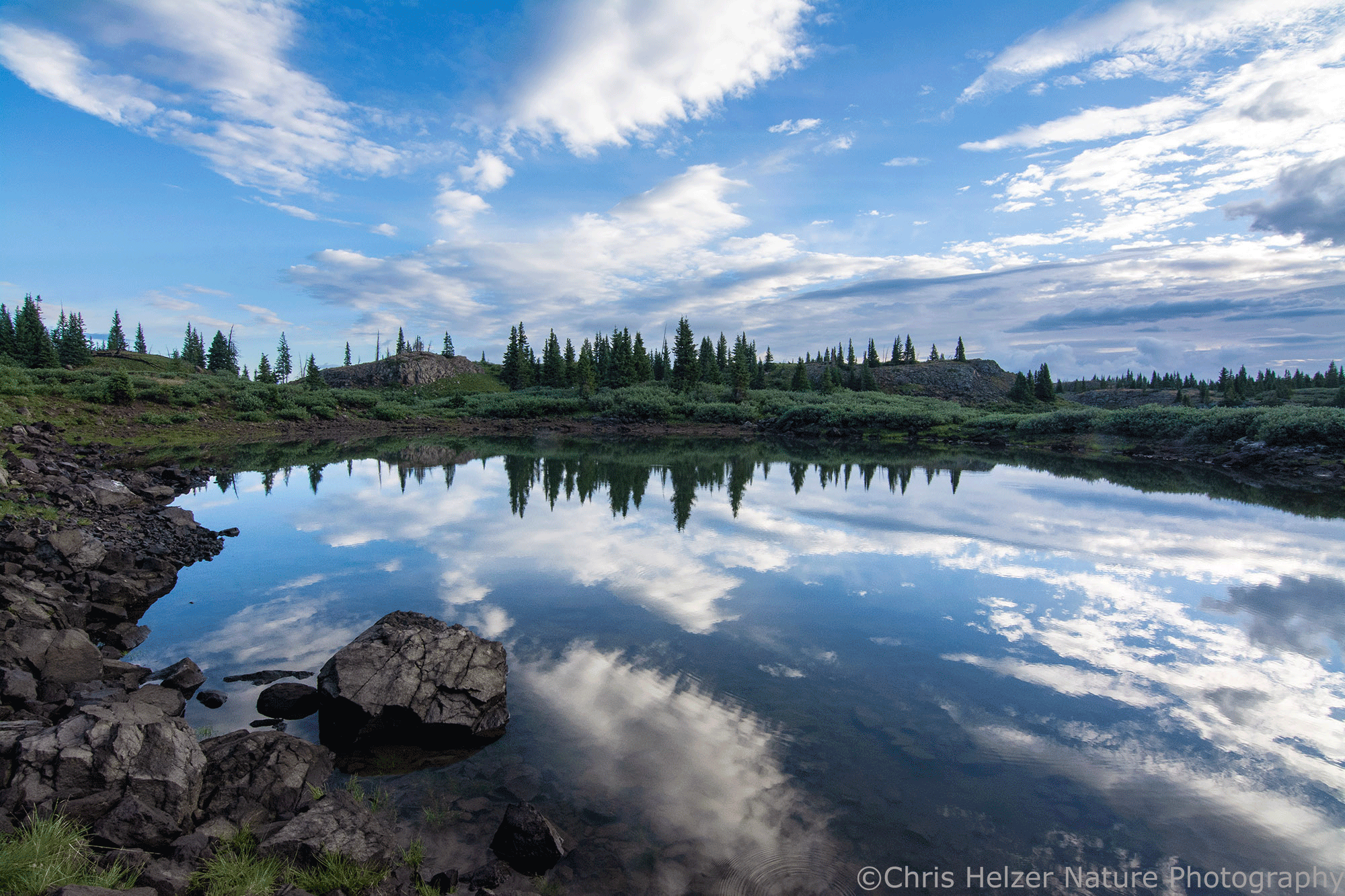
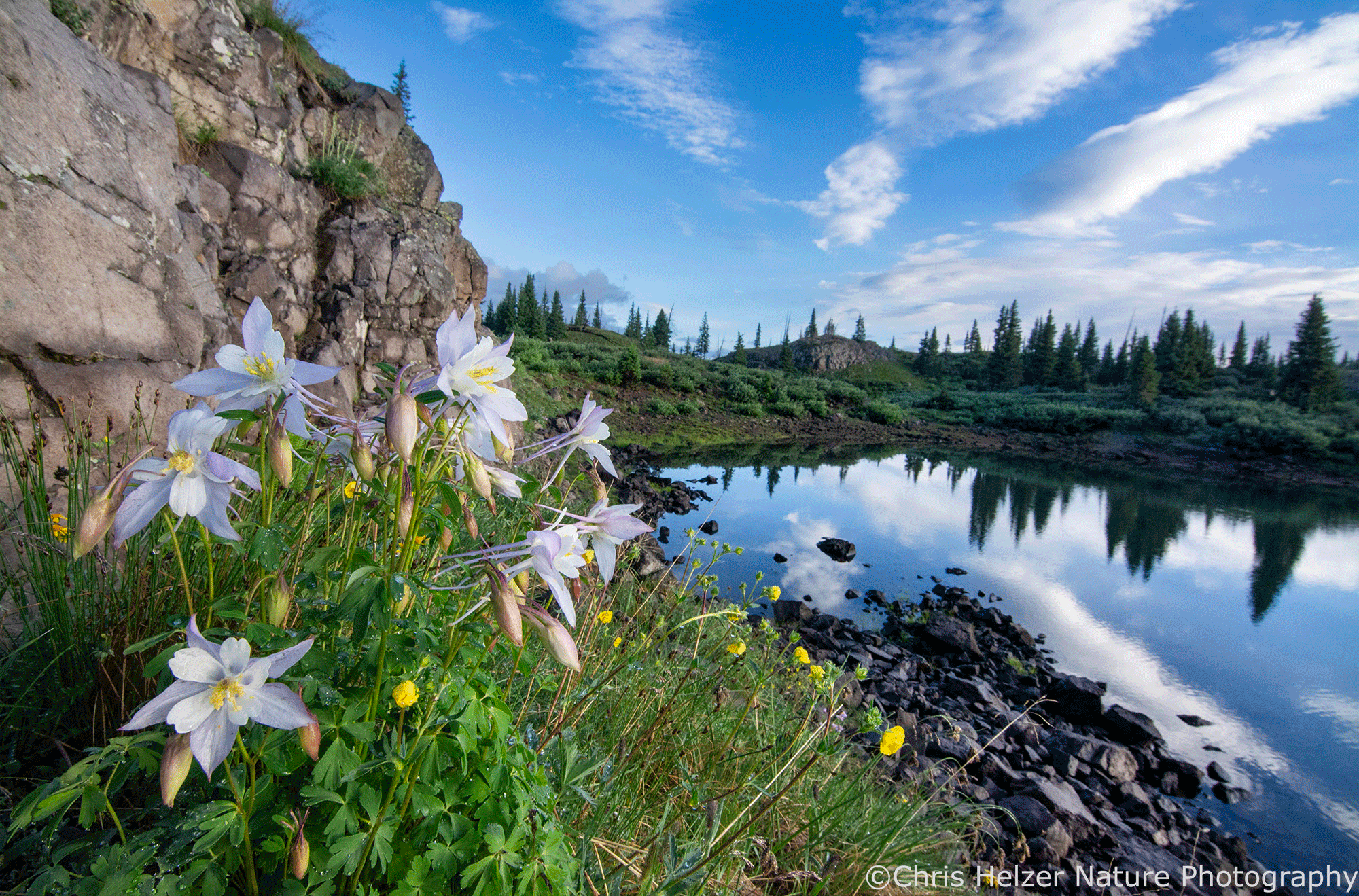
If you’re interested, I started at Stillwater Reservoir and hiked up to the plateau on Bear River Trail. I then followed Chinese Wall trail south for a while before heading off trail to the west toward a few small lakes I’d found on Google Earth that looked like they’d provide a great place to camp. I was right – it was a terrific spot. I camped there two nights and then hiked back out. During the days, I explored the area with my camera, not going too far because of the frequent thunderstorm activity.

My goal was an easy trip that gave me plenty of time to wander. I wanted to backpack just far enough to find a good campsite and use that as a hub for day hiking. That worked out really well.
Only two things got in my way. One was the near-constant threat of thunderstorms that made me a little nervous to get too far from camp, especially up on the high flat (exposed) ground between a lot of the places I wanted to explore. I still got to see a lot, but there were a couple spots I’ll have to hit on future trips. That’s fine.
The second was my own fault, which was that I did a poor job of acclimating to the altitude. I camped one night near Stillwater Reservoir before heading out on my trip. The reservoir is at about 10,000 feet, which is a lot of feet higher in elevation than Aurora, Nebraska (1,800 feet). My backpacking campsite was even highat about 11,300 feet… I figured I’d be uncomfortable for the first day or two, as has happened before, but my symptoms never did clear up and I actually cut my trip short by a day as a result. I’ll be smarter next time.


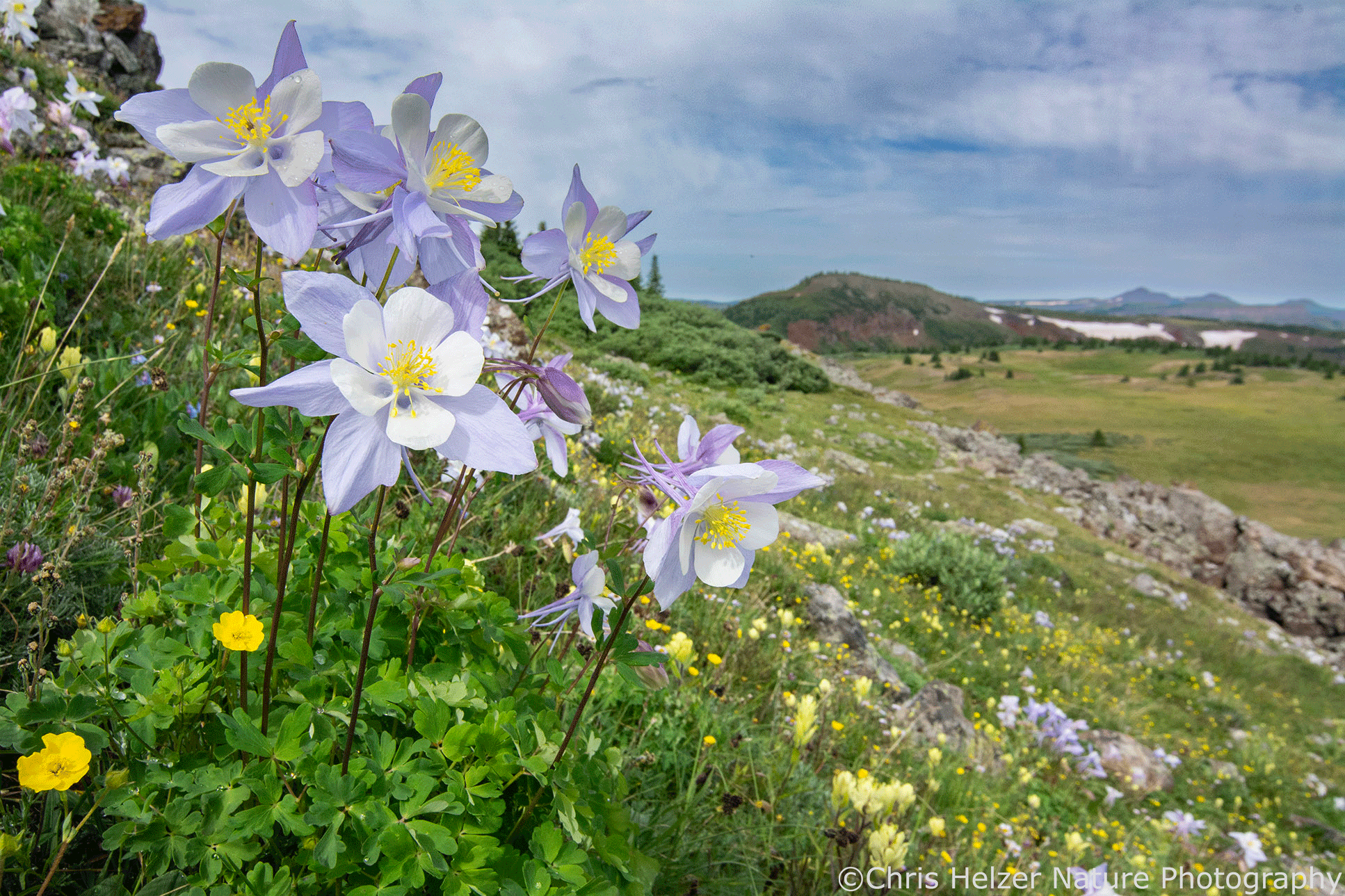
For someone who loves the aesthetics of wide open plains, the Flat Tops Wilderness is a pretty perfect mountain vacation destination. Being on a high elevation plateau full of grasslands eliminates the claustrophobia I feel when surrounded by tall mountains and trees. I could see storms coming from miles away and didn’t have to wait hours for the sun to climb over high peaks before it hit me in the morning.
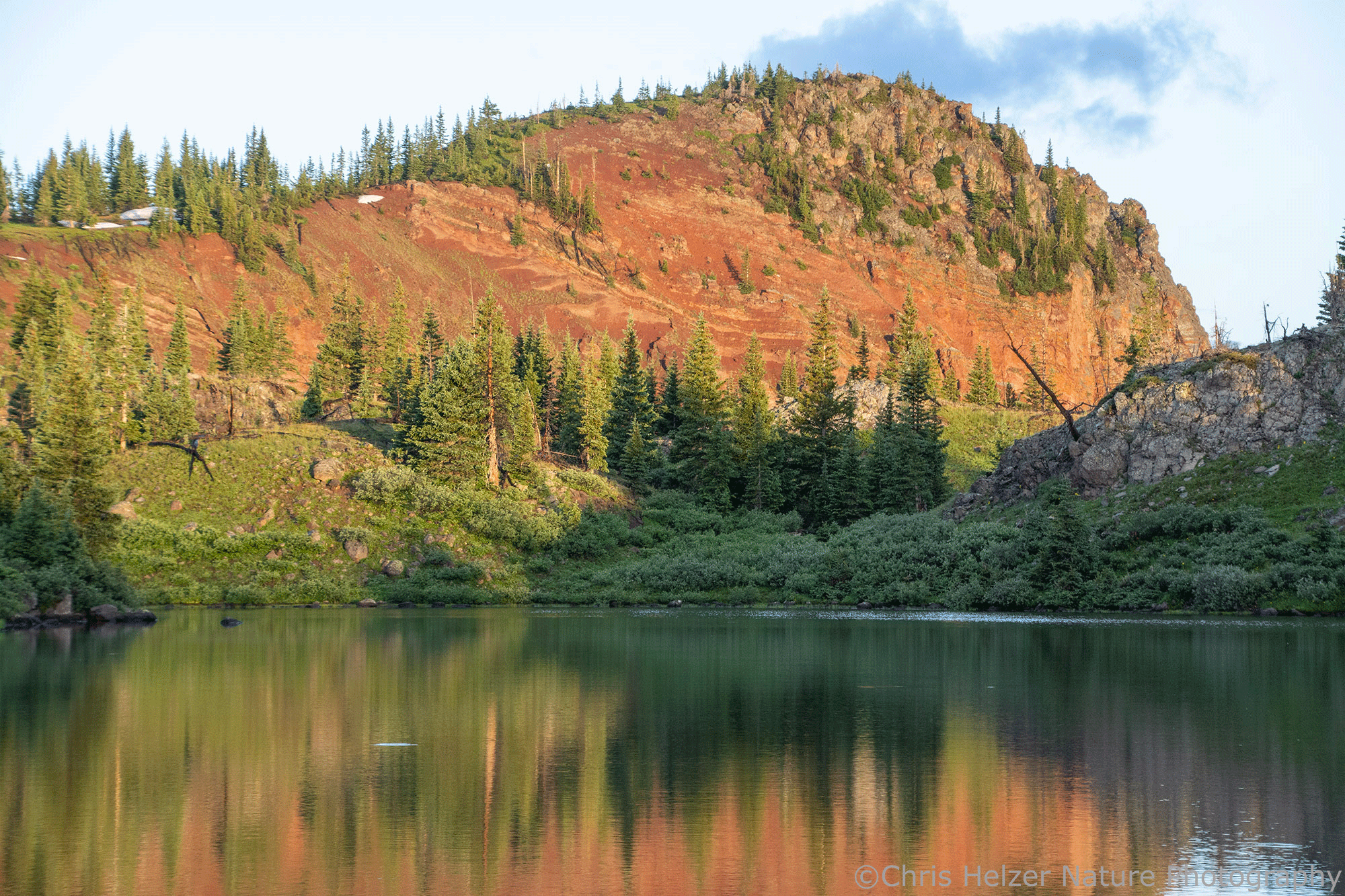
At the same time, there is plenty of topography to create spectacular views. The plateau has lots of embedded peaks and ridges to climb and countless little lakes and streams to explore. Once up on the plateau, though, traveling between those features is really easy – and navigation is aided by the fact that you can see lots of landmarks the whole time you hike.



Since I only carried my backpack 7 miles in and 7 miles out, I figured I could pack a little heavier than I otherwise would. I didn’t bring a stove and used Kim’s very lightweight one-person tent (uses hiking poles for support). Because of that, I gave myself permission to bring quite a bit of camera gear. I didn’t weigh my pack because I knew the result would be well above the recommendations of people who know about such things (like Kim).
On the other hand, photography and a couple books (for rainy periods) were the two primary objectives for my trip. It was a vacation, after all. I didn’t want to spend all my time trudging along trails with a big pack. I wanted to scramble up ridges with a camera and wait patiently for marmots and butterflies to pose for photos. I wanted to take afternoon naps, if I felt like it. I wanted to watch hundreds of salamanders hanging out in the shallows of an alpine lake. …Ok, I hadn’t anticipated that last one, but was glad for the opportunity! (More on that in a future post.)
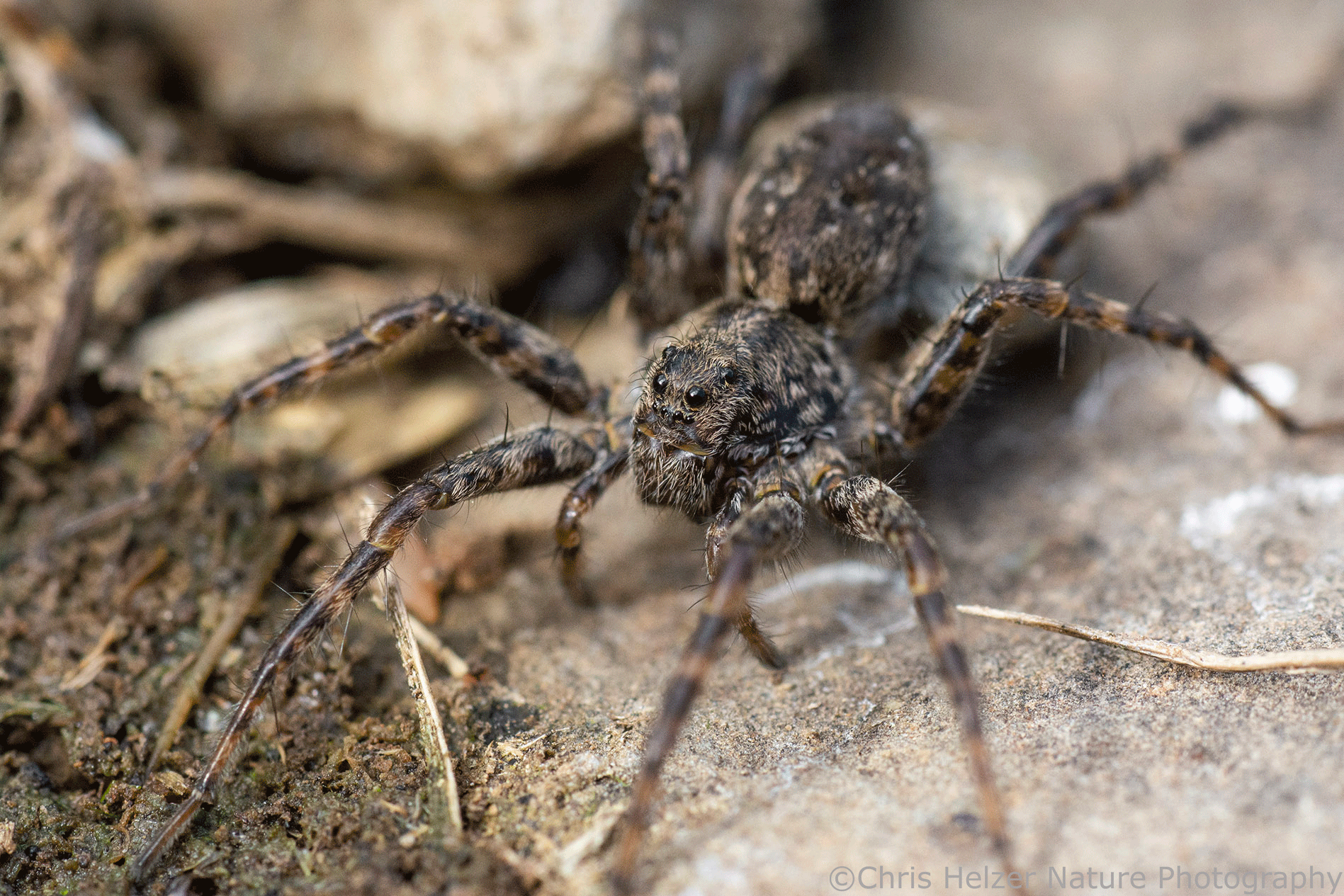
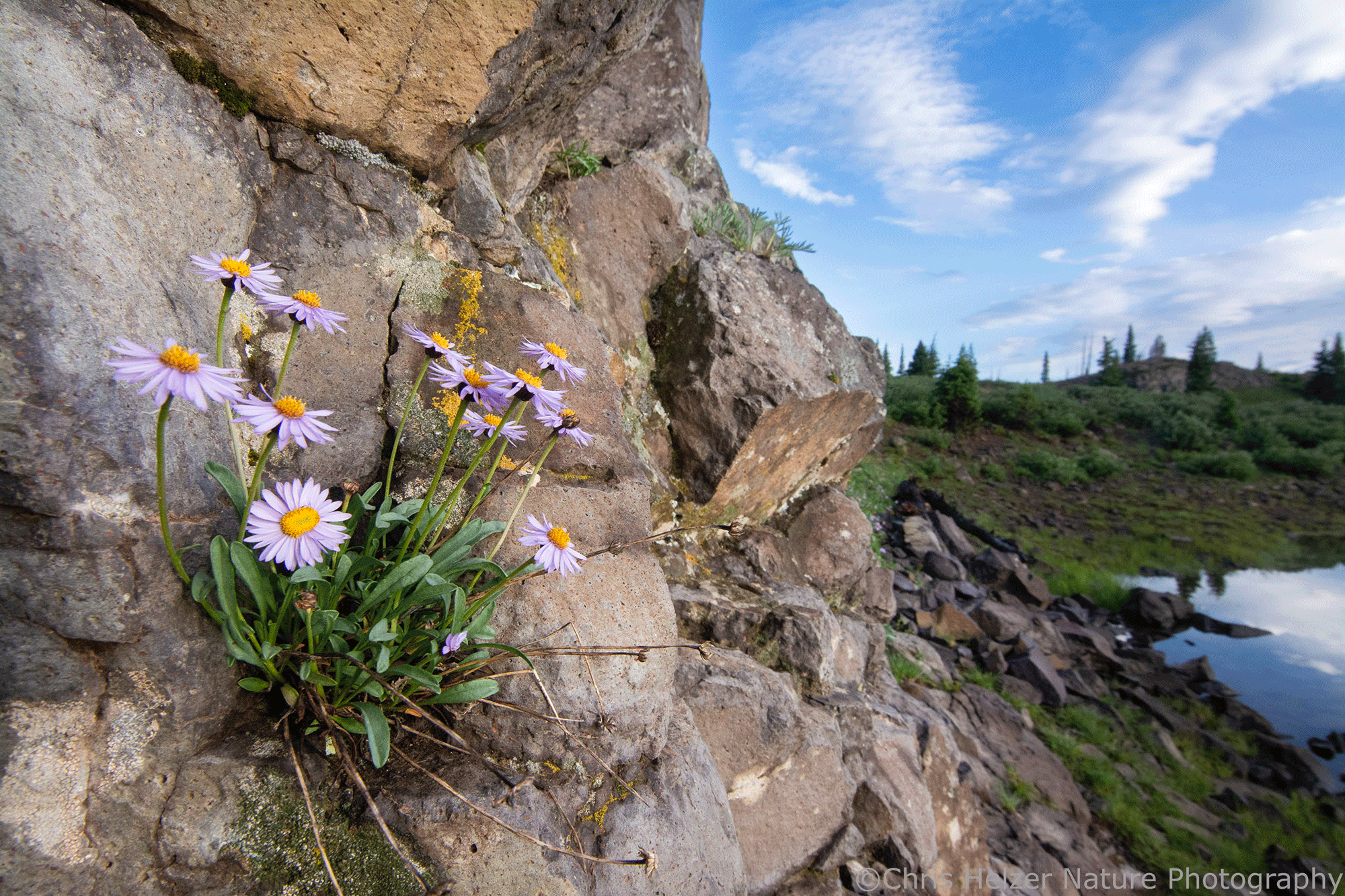

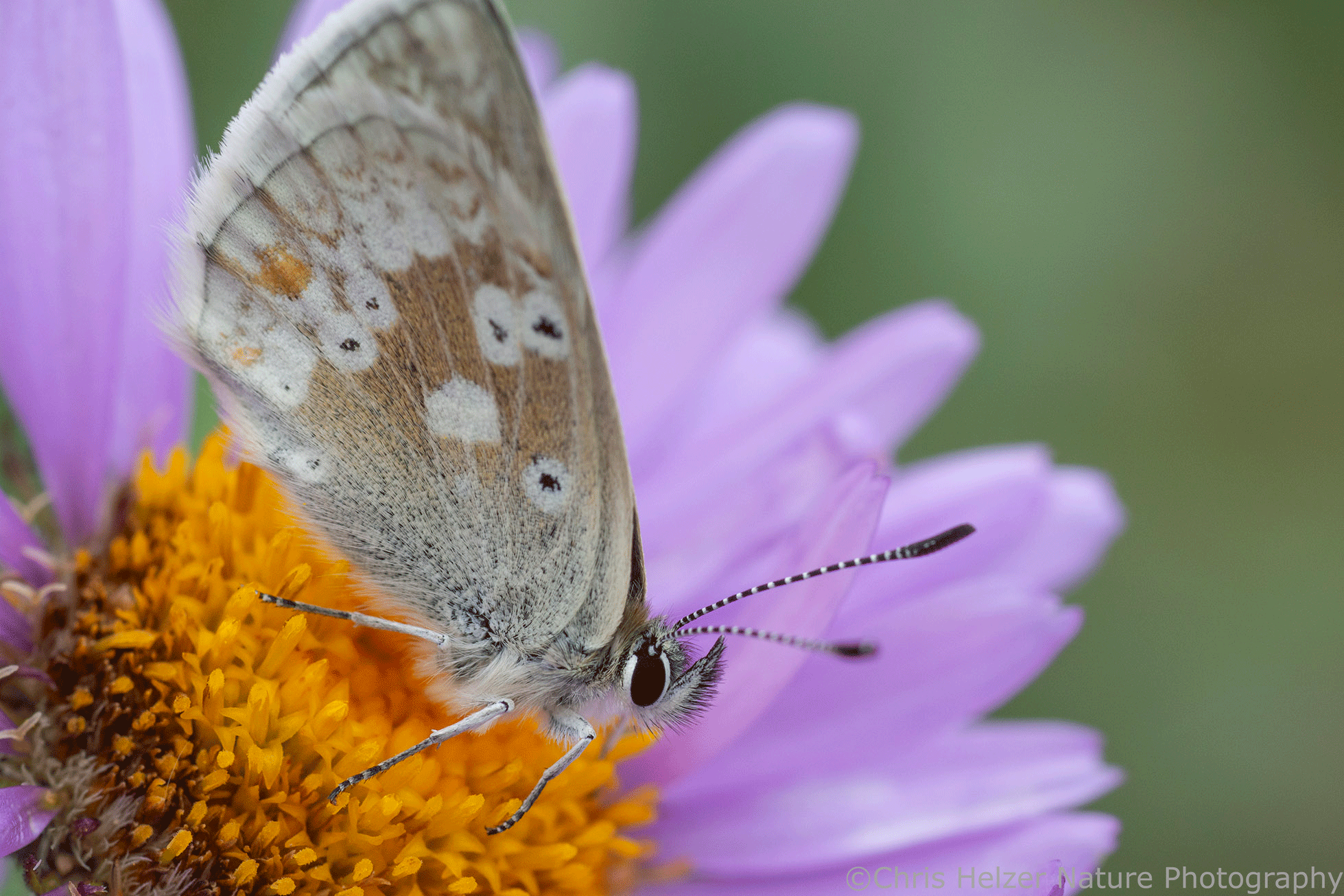
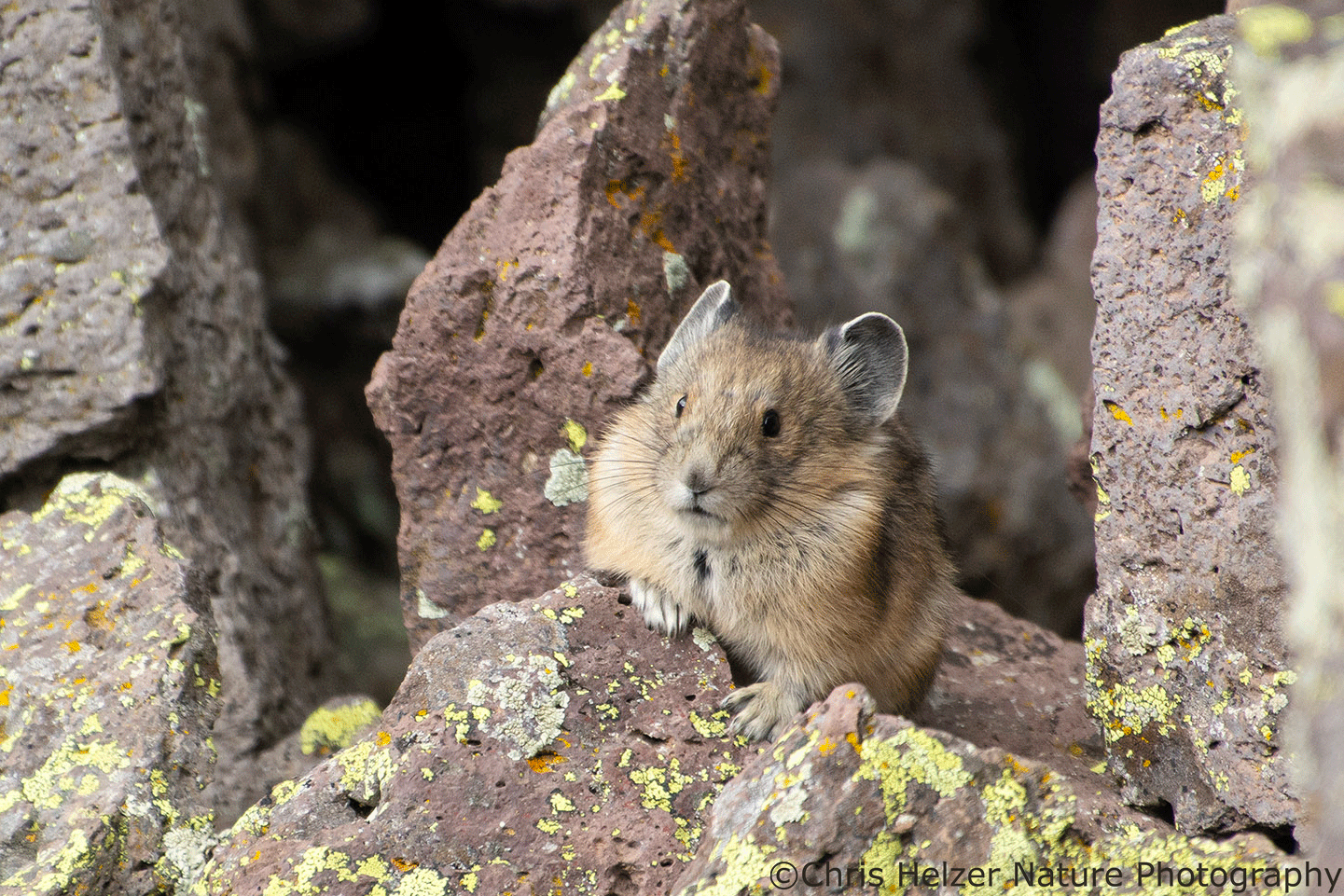
I didn’t see any really big wildlife species, but that didn’t bother me. There were plenty of marmots and pika, along with a fox that played peek-a-boo with me for a while from the top of a ridge. Birds sang all around me, including some I knew and some I didn’t. Most importantly, I saw multitudes of bees, flies, butterflies, spiders, and other invertebrates and had plenty of time to photograph them (in-between thunderstorms).



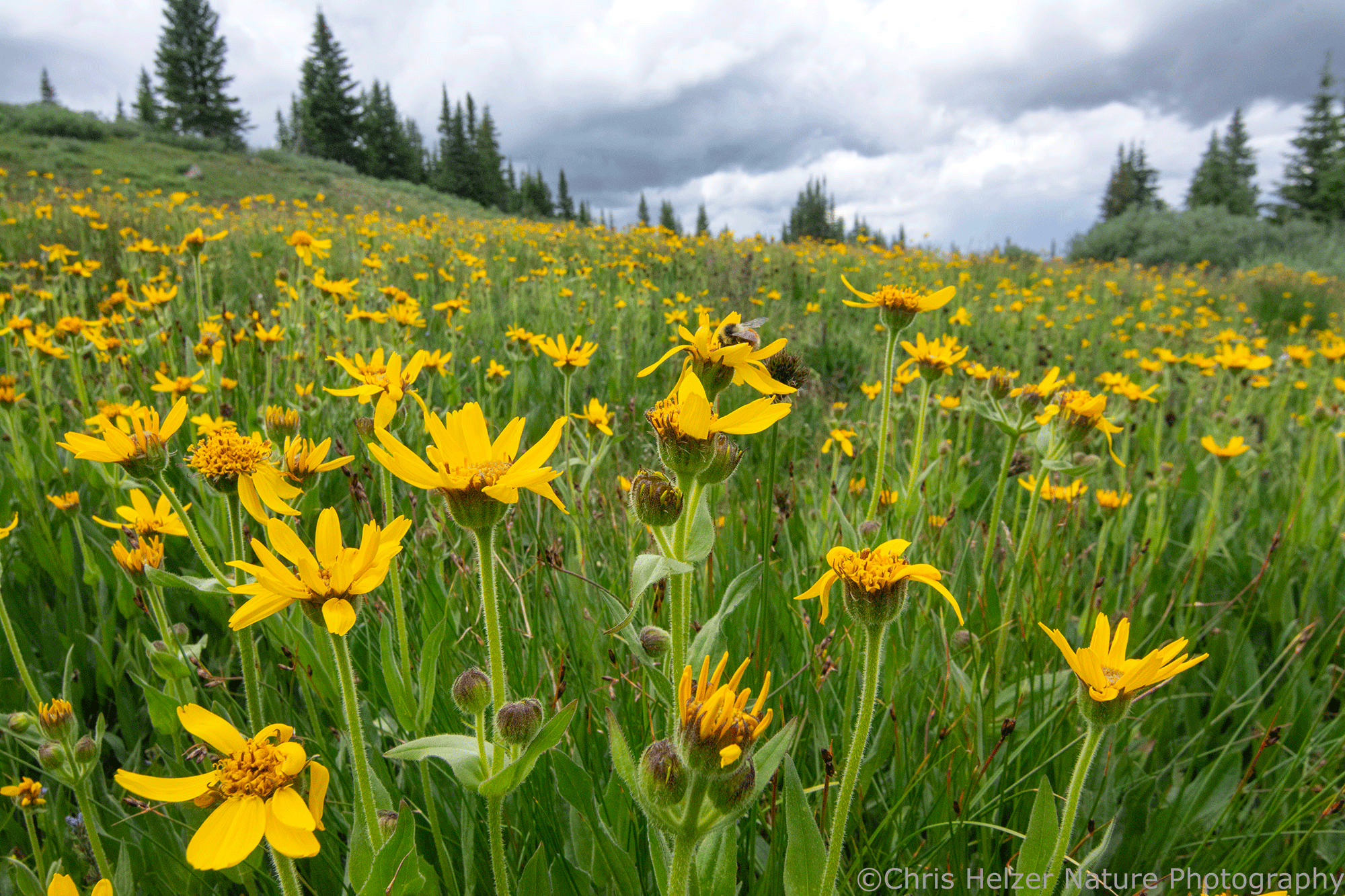

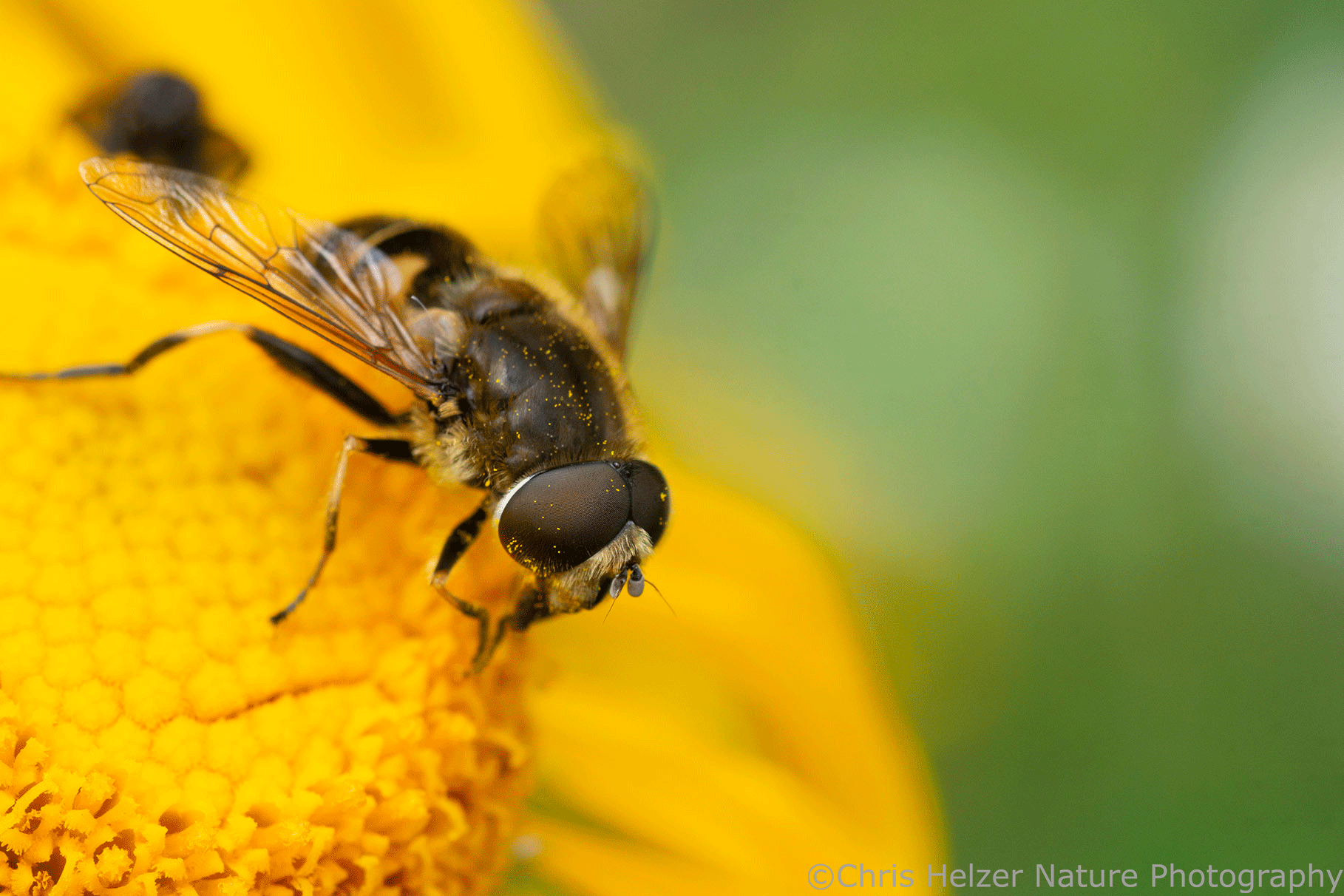

The American West has no shortage of great public land to explore, and I hope to keep finding new spots. The Flat Tops, though, is a place I will definitely return to in the future. Maybe I’ll run into you there sometime. If so, I’ll probably be lying prone trying to photograph an arctic blue butterfly or something when you hike past, so please don’t step on me.
 The Prairie Ecologist
Wonderful. My father took us backpacking there several times in the 1960’s and it was always a special place, marred only by the abuse from the herds of domestic sheep. From your post, and the photos it would appear that the sheep are gone. Awesome! Best to you, John
It looks like the sheep may still be there. Looking at the USFS web site for the Chinese Wall Trail says that “Domestic sheep may be grazing in the area.” I wonder what Chris has to say about grazing by sheep here?
https://www.fs.usda.gov/recarea/whiteriver/recreation/hiking/recarea/?recid=40767&actid=51
There is certainly still sheep grazing going on, though I’ve not seen any sheep during my two trips. I see manure around, but haven’t seen any physical evidence of grazing on any plants (leaves that have clearly been nipped off, etc.). I don’t feel like I know the plant communities there well enough to speak about what kinds of impacts sheep might be having on plant species or composition. I’m sure there must be some impact…
There are definitely noticeable differences between flats (where sheep are probably spending more time) and rougher terrain (where I see less manure and there is probably less sheep influence?). However, a lot of those differences could just be tied to soil and terrain rather than grazing. If I keep going back there, I might try to learn more and talk to people who can help me see the landscape through more informed eyes. For now, I am plenty happy with the diversity of plants I’m seeing.
This sounds like a wonderful area to visit; however it looks like it is hard to get to, and of course the elevation difference.
I just came back from the North Shore. One of my favorite things to do there is walking along the rocky shore, I have a great spot I always visit, just to see the wildflowers and shrubs growing in the cracks between rocks, namely Aster ptarmicoides, Campanula rotundifolia, barren Strawberry, Potentilla fruticosa and very stunted Physocarpos opulifolius, so beautiful!
Chris, At 73 I’m no longer up for hiking anywhere very much, but your pictures are just breath-takingly gorgeous!
Donna Hughes Iowa
“hundreds of salamanders hanging out in the shallows of an alpine lake” Sounds like you may have been looking at Axolotls?
These were barred tiger salamanders, many of them in a paedomorphic form (stay tuned for a future post that talks more about that). It was pretty amazing to see.
Cool!
Fabulous, as always. Thank you! your east coast (Frederick, MD) friend.
Fantastic sales job, Chris. I’d love to tag along and wander (leaving you to your camera of course!).
Pingback: It Seemed Like Such A Great Plan | The Prairie Ecologist