
Can you feel the end coming? The season is slowly sliding toward first frost.
I hope we’ve got a little while, but the pressure in my mind is building. “Chris!”, it shouts, “You’re running out of time! Winter will be here soon and all the butterflies, bees, and dragonflies will be gone…”
“Fine,” I think, “I’m getting up.”
This weekend, I spent both Saturday and Sunday mornings with the sunrise. Saturday, I was at the Platte River Prairies, and Sunday I was just across town from my house at Lincoln Creek Prairie. (I’m joking about it seeming like a chore, by the way – I had a great time. The pressure, though, is real. Temperatures are dropping, and while it feels terrific to be outside, it’s fleeting.)

When I first arrived at the Platte River Prairies on Saturday morning, I decided to head to our diversity research plots, where we’ve planted little tracts of prairie at different levels of plant diversity. I knew there were a lot of tall flowers there, and I figured the heavy dew would mean lots of insects hanging on or around those flowers. As soon as I got out of the truck, I spotted a little butterfly silhouetted against the dimly lit horizon (above).

I photographed the little eastern tailed-blue from both sides, using the low-intensity pre-sunrise light. Three minutes later, as the pink-orange sun lifted above the horizon, I photographed the little critter again, this time with the sun as a background.

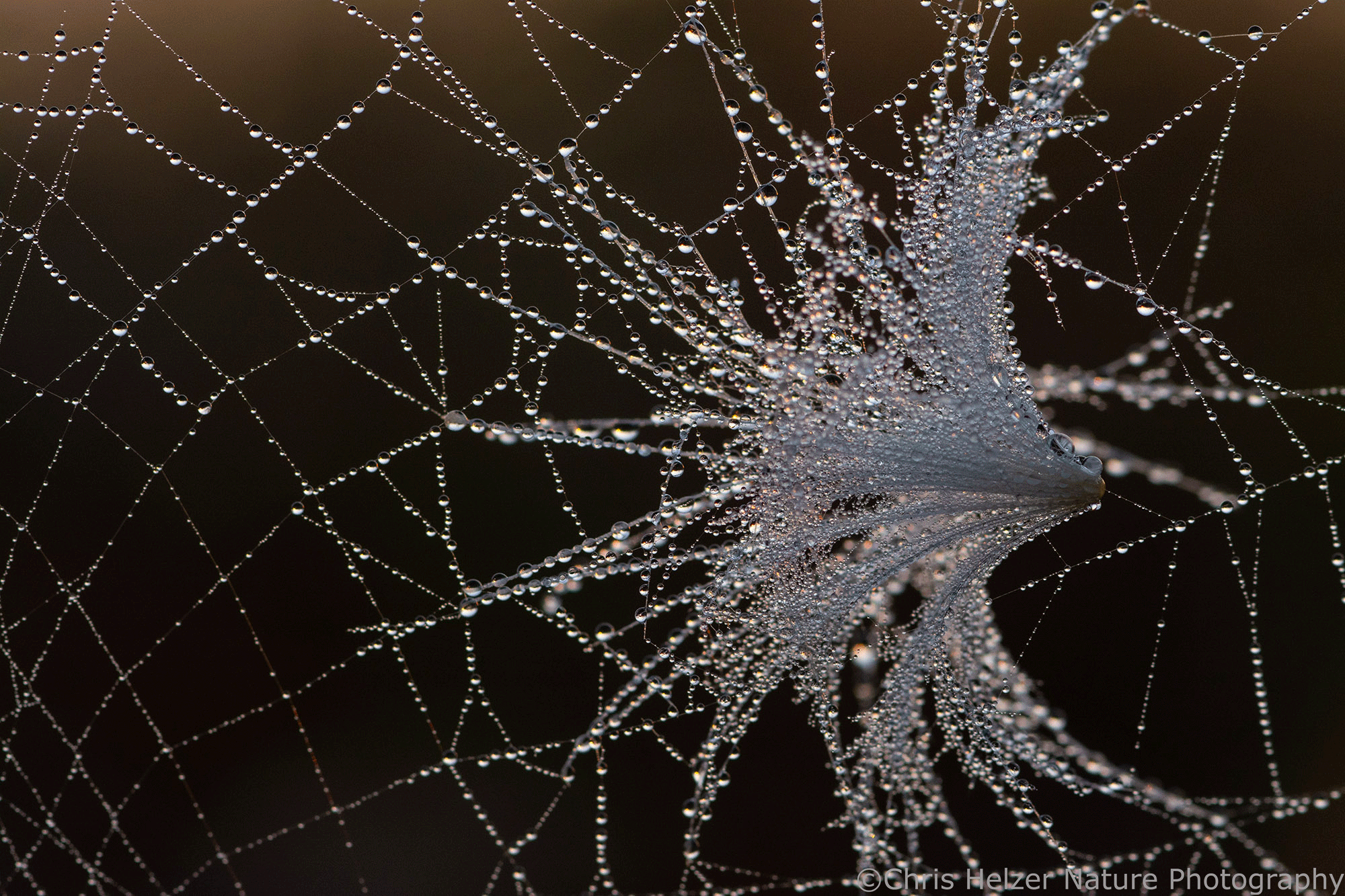
As the sun ascended, I scanned the prairie with my eyes toward the sun so all the dew drops glittered brightly. I looked for patterns and congregations of those droplets. I found several spider webs that way, but the spiders on them either didn’t hang around for photos or weren’t situated well. The webs themselves, though…

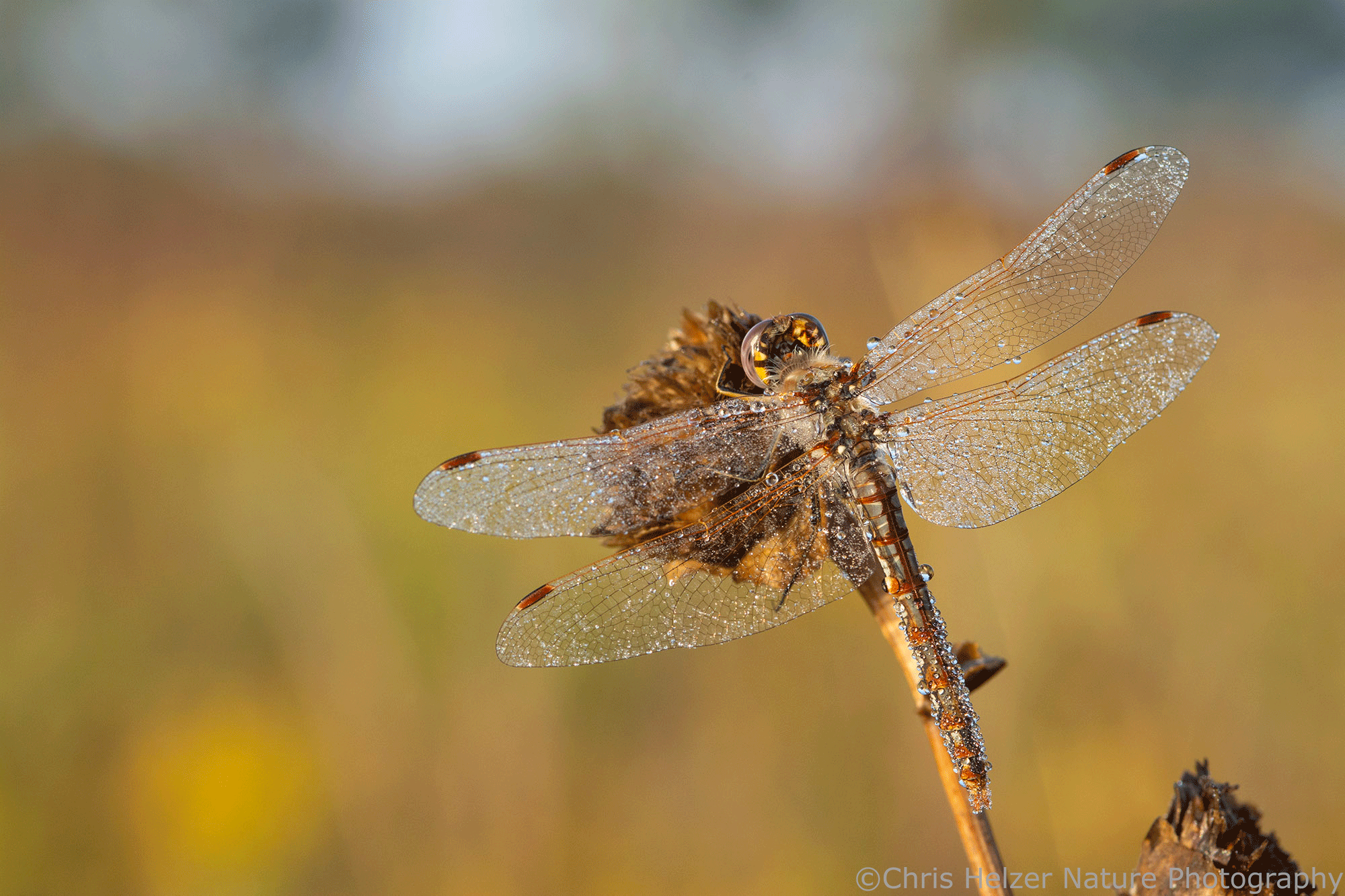
The sun continued its rise and I started to find dragonflies. Here’s how you find dragonflies in a dewy prairie: Look toward the rising sun (NOT AT IT!). See that set of four glittering wings? That’s a dragonfly. This time of year, as they’re migrating through, when you find one, there are usually many others nearby.

Most of the dragonflies I found were my old friends the variegated meadowhawks, which I featured in a post last week. I’d feel bad about spamming you with even more meadowhawk photos except for two things. First, no one is forcing you to read this blog post. And second, they’re so gosh darn amazing! Aren’t they gorgeous??
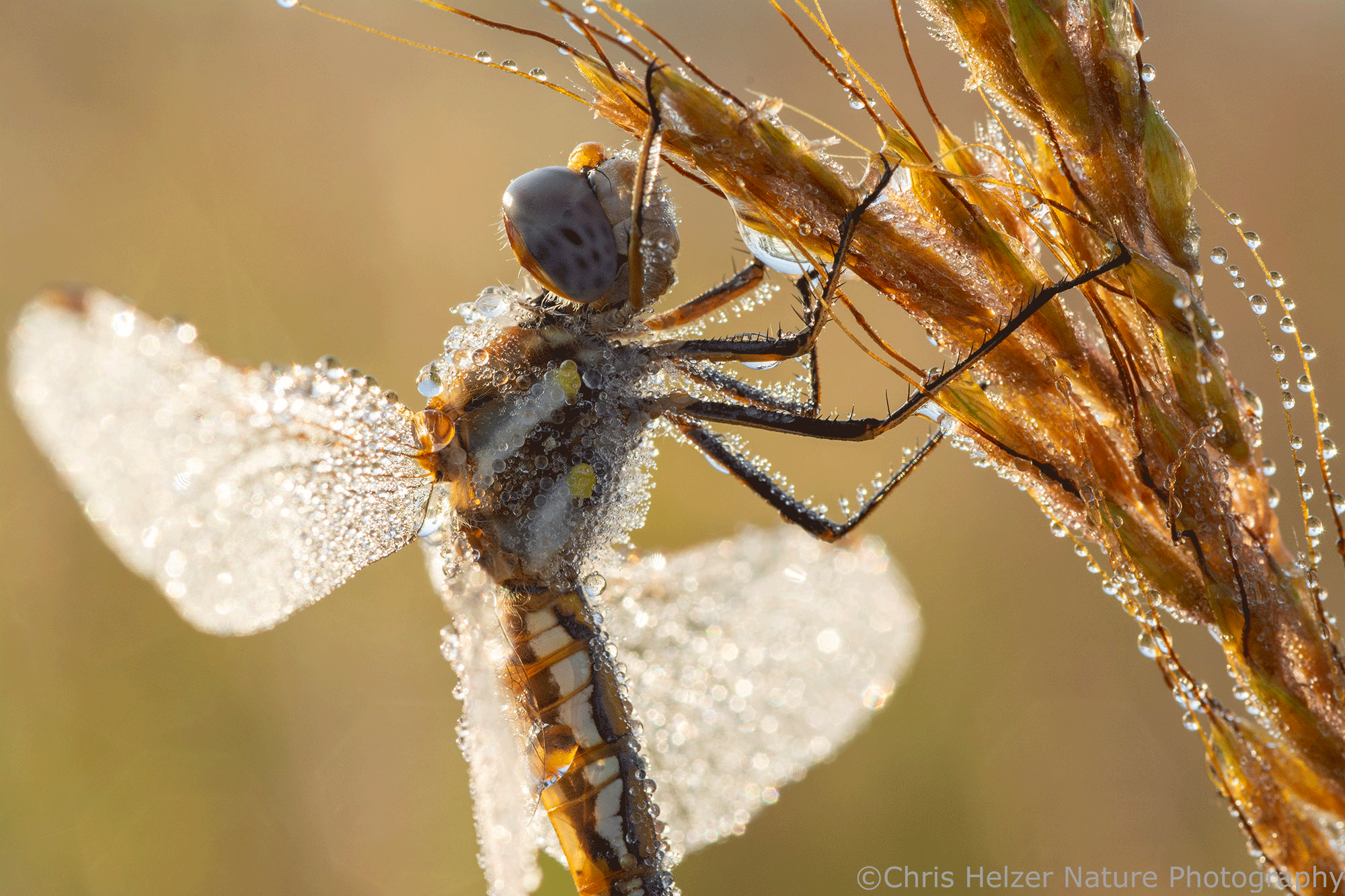

Have you ever noticed how concave the back of a dragonfly’s head is? The shape helps it swivel its head around to scan for prey, which it does very effectively. If you click on the photo above, you’ll get a nice view of what I’m talking about. (And if you’re reading this in an email, you’ll first need to click on the title of the post to open it online so you can click on photos and enlarge them.)

I did find one green darner, which was probably also migrating through. I don’t know where all its friends were. When you compare green darners to meadowhawks, it’s pretty obvious that their faces are shaped differently. Green darners have much bigger ‘noses.’ Don’t tell the entomologists that I just called that a nose.
It’s not a nose? What is it, then? It’s technically called a frons. If you look it up online, many people will call it a “frons (forehead)”. I don’t think it looks like a forehead, but what do I know. It’s a protuberance above the mouthparts and in front of the eyes. Sounds like a nose to me. They don’t use it to smell (they have tiny olfactory sensors in their antennae for that), but still.
Anyway, whatever it is, it looks really different on green darners than on meadowhawks.


I found more butterflies as I continued to explore, including more eastern tailed-blues, but also a few Melissa blues, which have more orange on their wings. Both species are small – roughly nickel-sized in diameter.

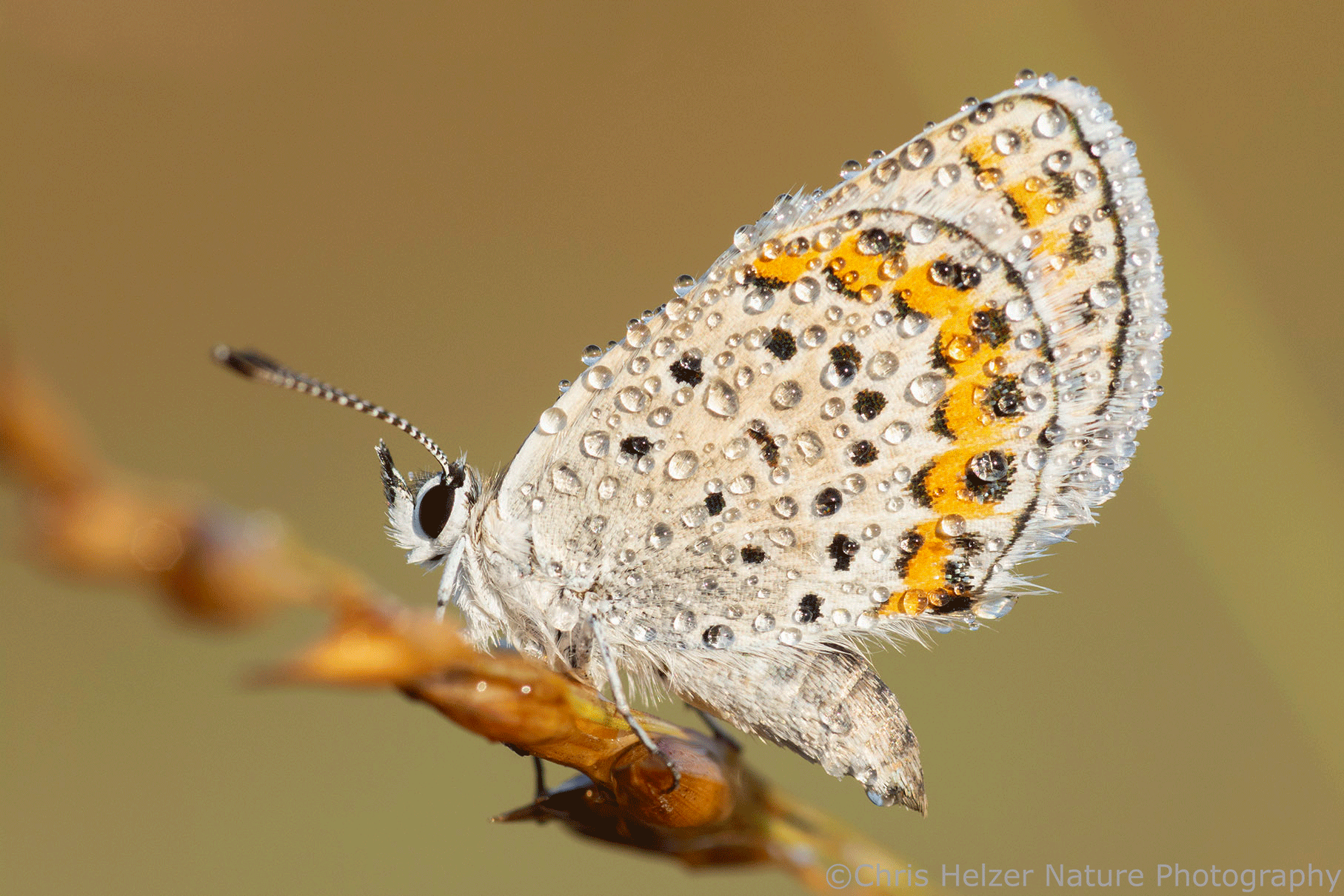
There were, of course, many other creatures besides dragonflies and butterflies encased in the morning dew. I saw lots of flies, grasshoppers, katydids, wasps, and stinkbugs, among others. It was just hard to turn away from the glittering dragonflies and sparkling butterflies.
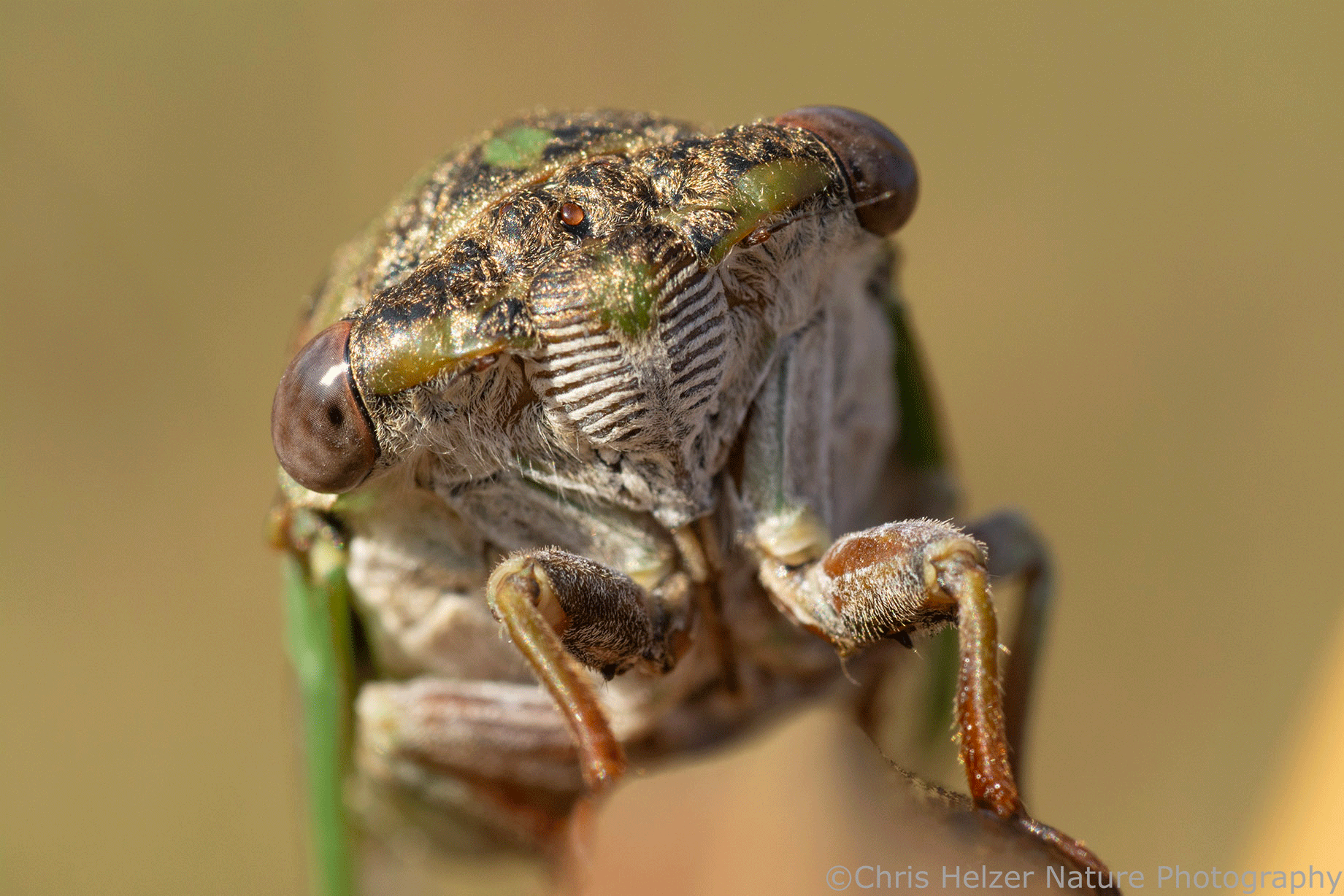
I did manage to find and photograph a two-lined plant hopper (below), which is an amazingly-camouflaged bugger. I also spotted a plains dog day cicada early in the morning, which wasn’t situated well for photography. On my way out of the prairie, though, I checked on it again and it had moved into the light, so I gratefully took its portrait before it warmed up enough to fly off.

Sunday morning, I stayed close to home and hung out at Lincoln Creek Prairie (a mile from my house) for sunrise. There’s a skinny little strip of planted prairie between the trees/creek and a crop field where the light hits just right in the morning. It doesn’t look like much from the highway that runs past it, but I never come away without finding lots of photo subjects.

On this trip, the tall, blue-flowered pitcher sage plants (Salvia azurea) were packed with bumble bees. They looked like they’d been feeding right up until they got too cold to keep moving. Then, like toddlers, they just fell asleep with their heads on their plate. Although I’ve already got many photos of dewy bumble bees on pitcher sage in my files, I couldn’t help myself. The photo above and below are the same bee, photographed (and backlit by the sun) from two slightly different angles.

As some bees were stuck in the (relatively light) dew, others were already moving around and feeding. I should have paid more attention because I bet the mobile ones were females that had spent the night in the nest with their sisters. The males, not allowed in the nest, just made do (dew?) with whatever roost site they ended up in. The bumble bee below (a male) was front lit, turning a gorgeous golden color in the warm light of the early sun.

If I was a bird, I’d just patrol pitcher sage plants every morning and eat as many bumble bees as I felt like. Or, maybe the fuzz-to-food ratio is a little high on bumble bees? Maybe not, since it doesn’t stop birds from eating moths and butterflies, which are both fuzzy-bodied and scaly-winged. It’s probably good that I’m not a bird…
I only saw one southern plains bumble bee (Bombus fraternus) among the horde of American bumble bees (Bombus pensylvanicus). He stood out because of his size, but also because of his neat, short-cropped hair. I photographed him early in the morning and then again on my way out, since he was still in the same spot. The photo below is from the second encounter, when the light was a little stronger and lit up his face well.


I saw several broad-headed bugs, also known as ant bugs, and they were mostly on the seeds of Illinois tickclover. They’re known as ‘ant bugs’ because their nymphs look an awful lot like ants, at least from a distance. They feed on legumes, presumably including tickclover, as well as crops like soybeans. I’m sure it was just a coincidence that I saw so many along the edge of the prairie closest to the adjacent soybean field…
A couple big black and yellow garden spiders were hanging out, but only one of them was set up well for photos. I shot her with both my fisheye and macro lenses and resisted the urge to grab a grasshopper to toss in her web. It’s always fun to watch a spider make quick work of an insect like that, but I also feel bad for the grasshopper.
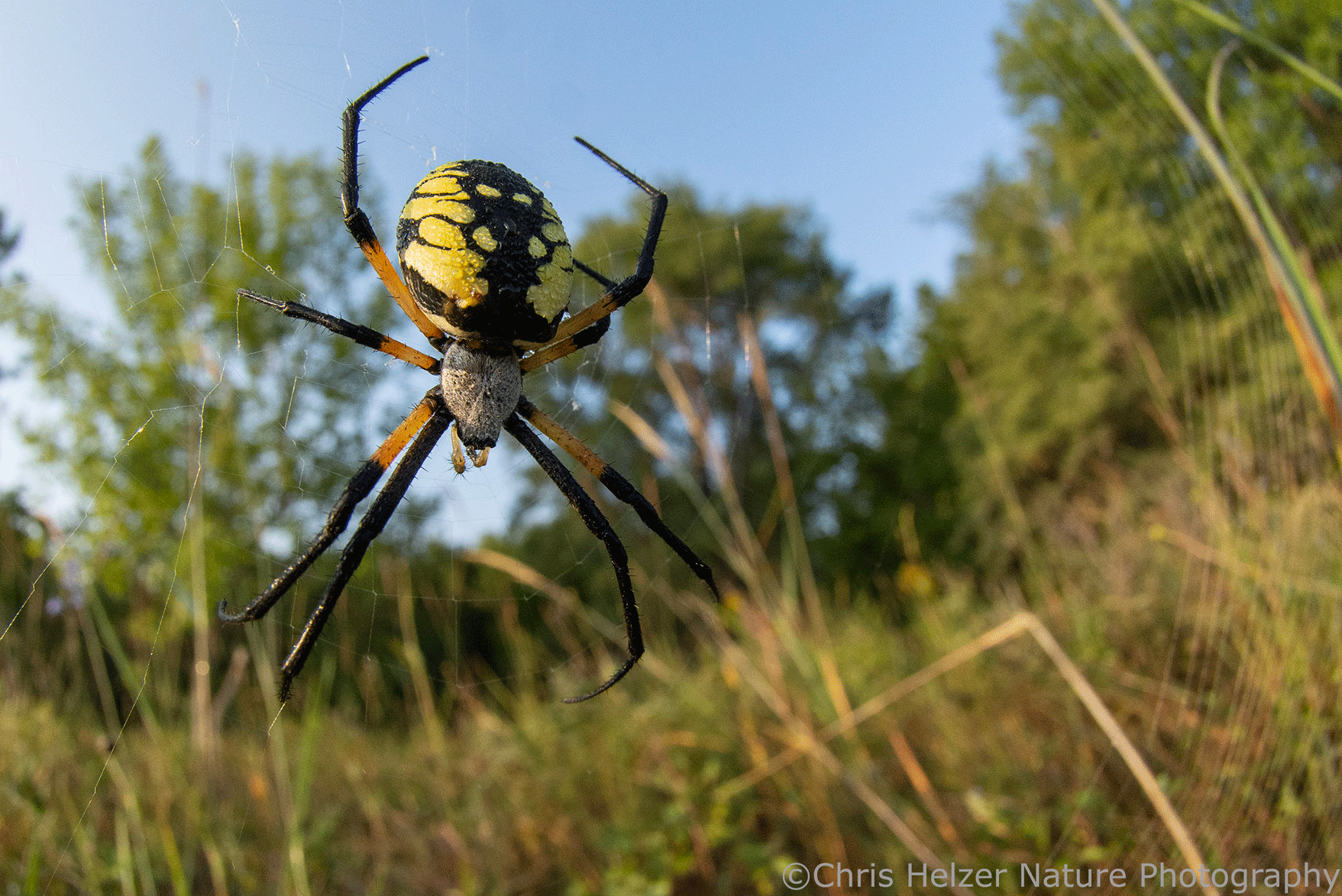
A while back, I gently freaked out some high school kids by letting a big garden spider crawl on my hand for a while before returning her to her web. It’s part of my continued mission to fight human instinct and try to show people that spiders aren’t evil people-killing machines. I’ve still never been bitten by a spider, despite holding hundreds – maybe thousands – in my hands to examine them or show them to others.

Of course, the biggest sign of impending fall is the appearance of milkweed seeds. Some of you might remember the free ebook I wrote about last fall, which features a few of my milkweed seed photos. Looking through it, you might think I’ve got more than enough milkweed seed photos. You’d be wrong.

I hope your brain is allowing you to enjoy the fall season without obsessing about the rapidly-advancing end of the season. It’s a terrific time of year, with pleasant temperatures, lots of color, and plenty of animals and activity. (Yes, autumn is still several days away, officially, but calendars don’t know everything.)
 The Prairie Ecologist
Such beauties! Fall is my favourite time of the year
It is difficult to add a comment without recognizing the beauty that preceded it. Thank you for the challenge! Also thanks for the reminder to jump from the email to where the photos could be enlarged. Most enjoyed the dew beads on the web. When enlarged, to be able to remember that a dew drop is now viewing the prairie, the world, upside down. Some times needed, I think. Once again you’ve awakened my soul.
Harold e
Alas, I share the same boat of season’ end anxiety for a number of reasons, it’s real. Good on you for harnessing that and bringing more of this to the world before it goes to sleep for a few months.
Thank you for this beautifully observed post. I second the seasonal emotions and pollinator activity here in northern Oklahoma.
Amazing photos! And, as someone else commented, thanks for the tip on enlarging them. It’s like a whole new world. I am new to your blog posts and am very curious what the late fall and winter months will bring.