
As often happens, watching something closely doesn’t necessarily help me understand what I’m seeing. Fortunately, a lack of clarity doesn’t detract from my enjoyment of the observation! I have guesses about what was going on with the two banded garden spiders I hung out with Sunday morning, but I’ll be curious to know if any of you have additional thoughts.
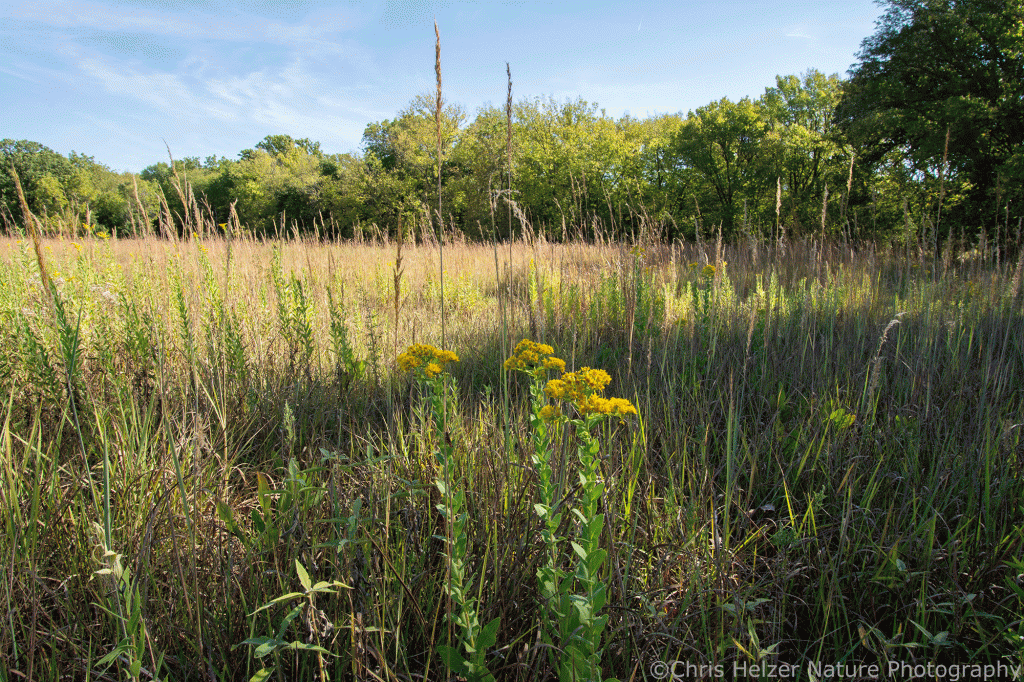
Last weekend, Kim and I traveled down to Konza Prairie Biological Station, a deservedly-famous site for both prairie and research in the Kansas Flint Hills. Kim’s reason for the trip was that she wanted a site with some hills and scenery for a long training run. I was more than happy to tag along. We arrived before sunrise and both took off up the public hiking trail – at very different speeds and for very different reasons.
It wasn’t an ideal morning for photography, but was still a great day and place to enjoy a prairie hike. The strong breeze was nice for Kim, but frustrating for me, and once the sun cleared the horizon, its light became overly intense pretty quickly. After an hour or so of pleasant hiking, but limited photography options, I retreated back down to the trailhead.
There, I took advantage of some trees that were blocking some of the wind and providing a little diffused light. I looked around for insects to photograph and laughed at myself for being grateful for having trees in a prairie. That doesn’t happen very often.
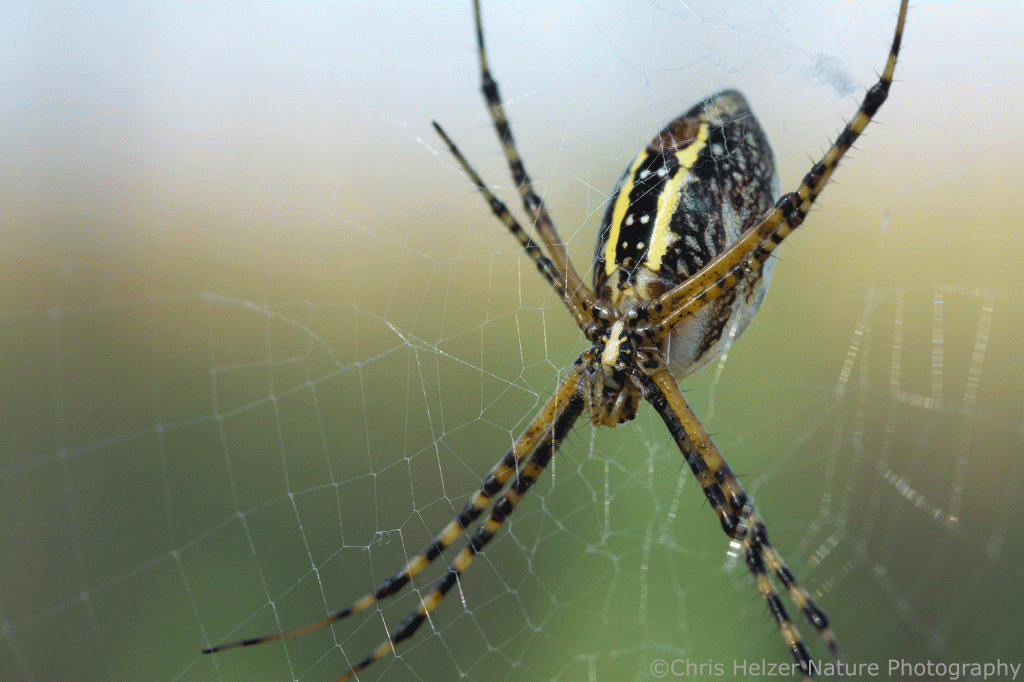
I did find some interesting insects to photograph, but also spotted several big banded garden spiders (Argiope trifasciata). Since the trees were blocking some of the breeze, I decided to try photographing them on their gently-undulating webs. As I tried to decide where to start, I noticed a smaller male spider hanging out at the top of a big female’s web. It was far enough away that I had to back off and use a long telephoto lens to get both spiders in the same shot.
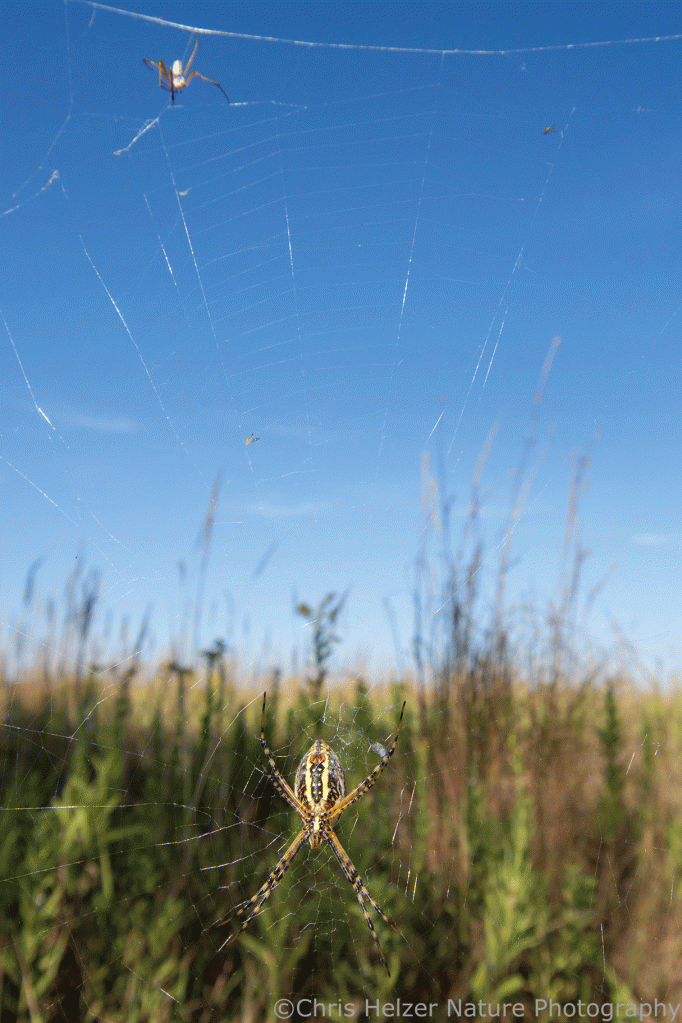
When a male shows up on a female’s web, it’s usually because it’s mating time. This is a very tricky situation for males, who often get caught and eaten as soon as copulation is completed. You might say the trick for the male is to get mating wrapped up without getting himself wrapped up.
As I watched, the male carefully made his way down the web toward the female. Based on prior reading, I knew there were signals he could give to alert the female that he wasn’t prey (yet) but I couldn’t pick up on anything specific he was doing. He stopped a few inches from the female and waited. That was when I noticed his missing legs. I wondered if he’d escaped a previous mating situation, but lost his legs in the attempt (this is apparently common).

After several minutes of sitting still, the male started moving again. This time, it looked like he was intentionally ‘plucking’ the web to alert the female to his presence again before crawling down to her. He quickly scrambled around her body until he was in position to deposit sperm from his pedipalps (the little appendages by his mouth) into her epigynum (the place sperm goes into a female spider).

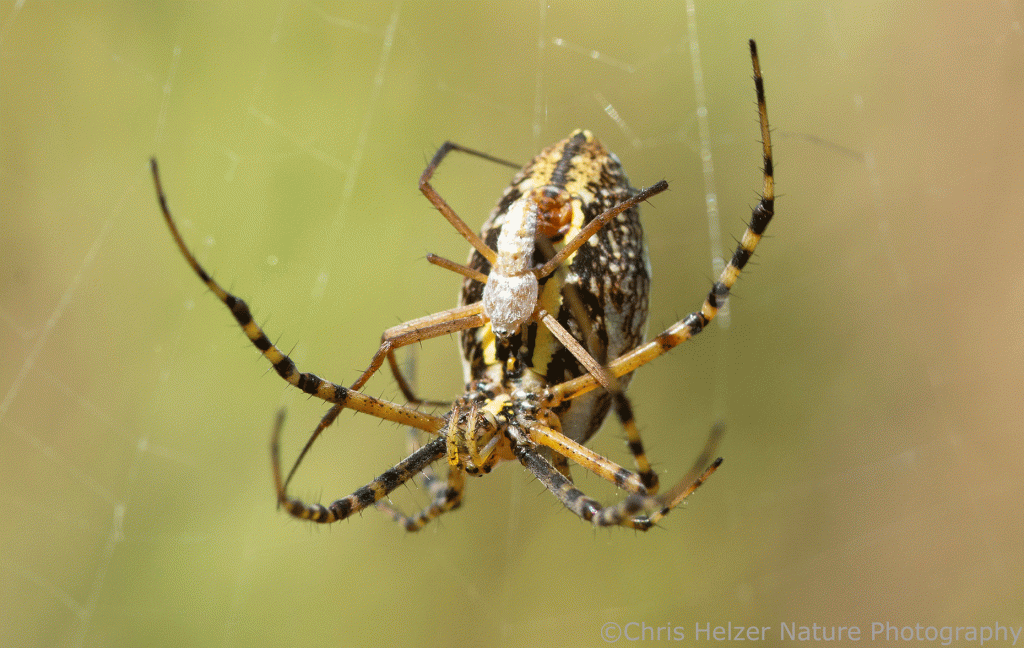
Once he was in position, I figured the drama would ramp up as the female tried to grab him and hold him there until he did his job. She didn’t. Also, he only stayed in position very briefly (a second or so) before quickly skedaddling up onto the web again. He stopped a couple inches away and sat for a while.
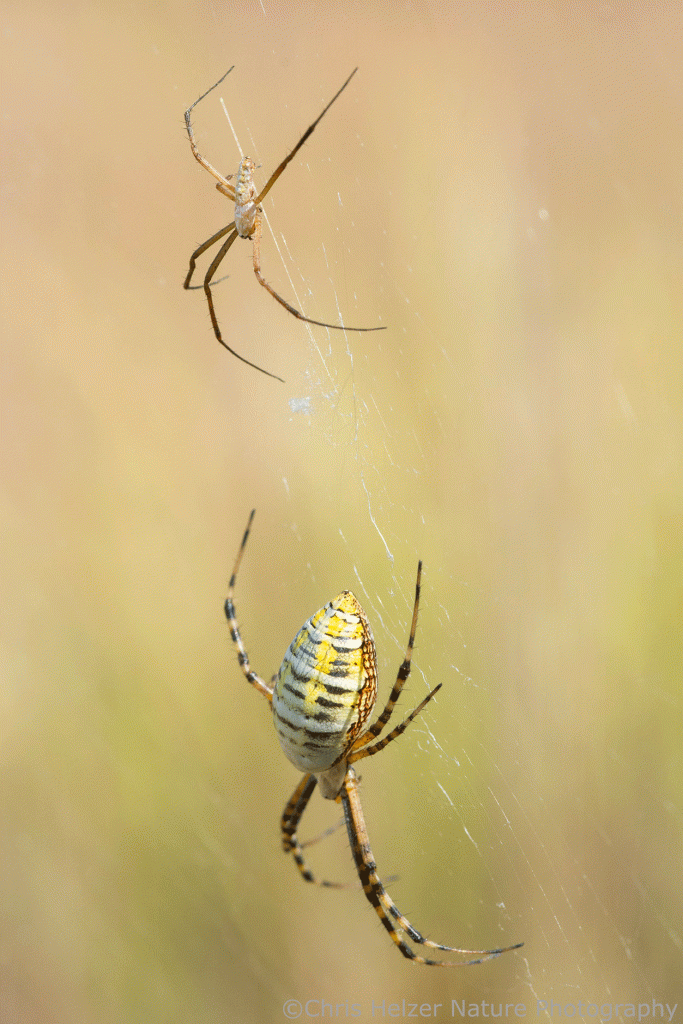
Hmm…
Did he lose his nerve? Did something go wrong? I waited a few more minutes, and sure enough, he tried again. The same process occurred – he plucked the web, ran down onto her, got into position, and then quickly climbed back up again. She was making some movements with her legs in response to him approaching, but I didn’t know how to interpret those.
I ended up spending the better part of an hour watching the spiders. During that time, the male approached and left the female at least half a dozen times. From a photography standpoint, that was great because it gave me multiple chances to capture the action. It seemed odd, though.
When I got home, I looked closely at the photos I’d taken and did some online research. I have a hypothesis now. See what you think.
I read more about the risks of mating, from the male’s standpoint. Many of them are killed during the first attempt, but some (20%, according to one source) escape and try to find a second female to mate with. Usually, that second mating is their last, and there was some suggestion that the male will voluntarily succumb to the female after that second occasion.
One reason mating might be limited to two tries is that some male spiders actually break off a pedipalp inside the female’s genitalia – presumably as a way to block sperm from other males who might stop by after he leaves (or dies). Spiders only have two pedipalps, so after two mating attempts using that strategy, I guess there’s no point in continuing. Maybe that’s why the male often gives himself up to that second female. If nothing else, he’s ensuring she gets a good meal and is in better condition to raise his kids.
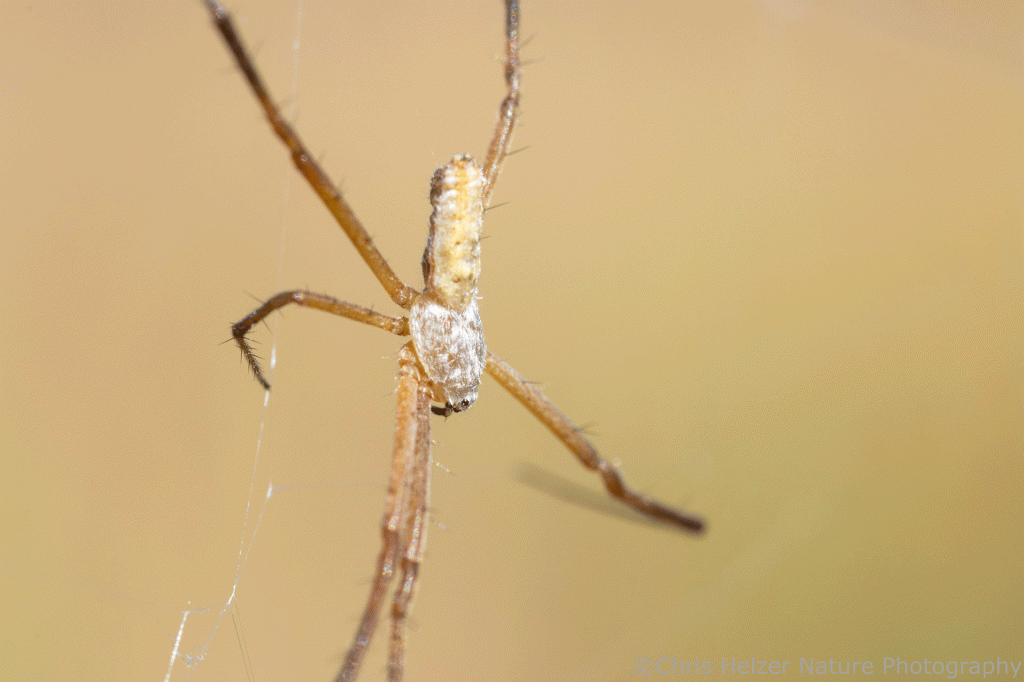
After reading all that, I went back to my photos and saw something that triggered my hypothesis. Look at this last photo of the male. Those pedipalps don’t look right to me. Male spiders should have bigger pedipalps than that.
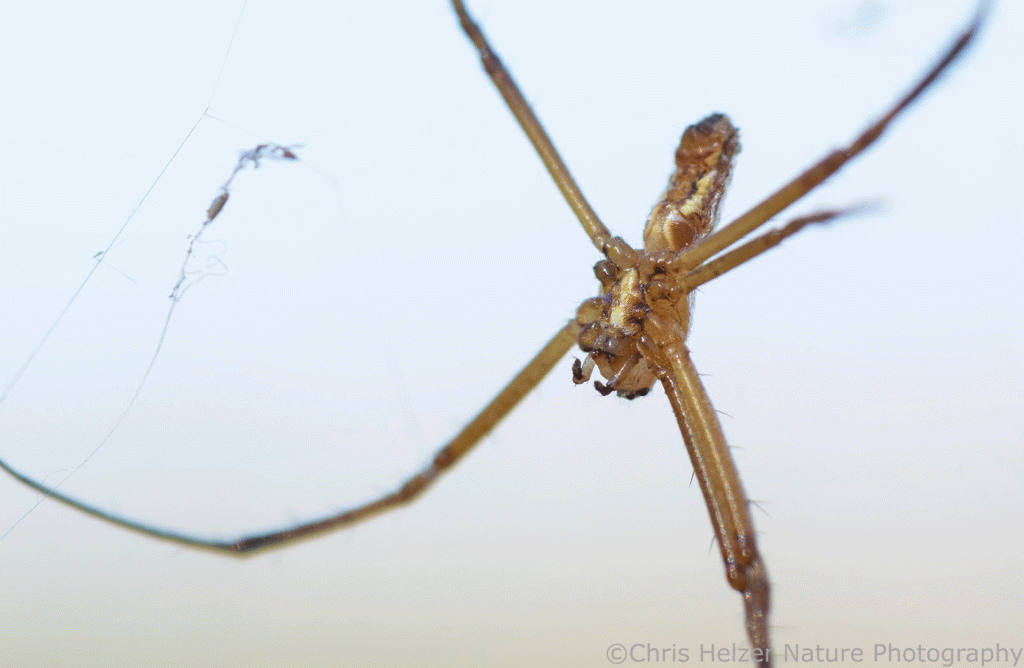
Did this male already mate twice, losing a couple legs during his escape(s) and leaving the tips of both pedipalps behind? If so, instead of giving up, he apparently decided to live on, and maybe was driven by instinct to keep trying to mate (without the appropriate equipment to do so). That might explain his quick visits and retreats from the female.
If that’s true, I feel really bad for him. He worked up the nerve to approach a very dangerous female spider (maybe for the third time!), but when he arrived, he couldn’t actually do anything. That had to be confusing, and likely frustrating, depending upon how spiders experience emotions in situations like this. The poor little guy then just kept trying, each time hoping he’d have better luck.
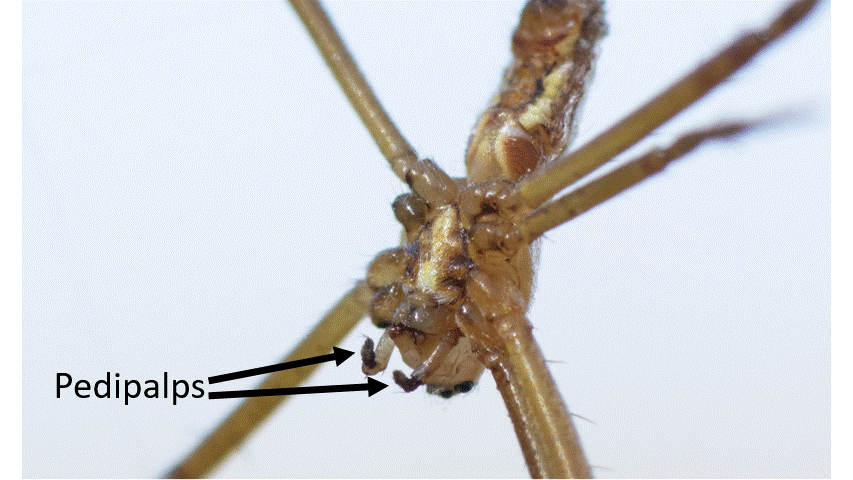
Another possibility is that the male spider was born with deformed pedipalps. That would create an equally-sad scenario. Well, maybe even more sad because in the first scenario, at least the male got to mate a couple times. In the second, he didn’t even get that opportunity.
Long after the day got way too hot for my comfort, Kim finished her 25 mile run. Once she cooled off, I took her over to see the two spiders. They were still sitting two inches apart, which I figured meant the male was still making periodic (and fruitless?) approaches. They’d been there for more than three hours at that point.
I wonder how the story ended. Did the female eventually give up and just eat the poor guy? Did he eventually give up and wander off? Either way, it’s not a real heartwarming story, huh?
If one of my two hypotheses is right, I’m hoping it’s the first one – that he mated twice and then didn’t know when to stop. At least in that case, he’s got a decent chance of passing his genes onto a future generation.
Anyone have a better explanation for what I saw?
 The Prairie Ecologist
No guesses, but this is very interesting! Thanks for sharing!
sex is so biological and ‘Genetic’!
We couldn’t make up this story!!
So, this is proof that ‘homosexuality’ is a ‘birth defect’ (genetic) and not a ‘Choice’!
With the lost legs too, I’m wondering if his final molt went really poorly, resulting in both the lost legs and the shriveled pedipalps? I guess their shriveled appearance doesn’t look like “broken off” to me?
Interesting. I agree that the shriveled look is odd, and might not match up with a ‘break’, though I don’t know what the healing process might look like for something like that. I read a couple places about missing legs on males being linked to encounters with females, but I’m not sure I see how it would happen. Regardless, the behavior is the part that’s most fascinating, right?
really a very fascinating observation!
I can’t even imagine the cause of that sad shriveling, but while poking around among the journals and web pages, I found this fascinating article about a midwestern spider, published by researchers from the U. of Nebraska. It is rough out there!
Pingback: Photos of the Week – October 6, 2023 | The Prairie Ecologist
thank you!